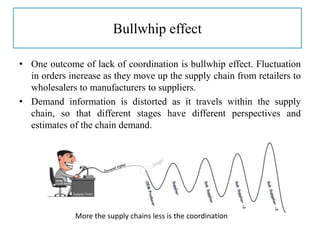
The document discusses the importance of supply chain coordination in enhancing performance and reducing inefficiencies such as the bullwhip effect, which leads to fluctuating orders and increased costs. Key obstacles to achieving coordination are identified, including information processing, operational, pricing, incentive, and behavioral challenges. Strategies for improved coordination, such as aligning incentives, enhancing information accuracy, and implementing collaborative practices like vendor-managed inventories and collaborative planning, are also explored.