VOMITING REFLEX
(Emetic Reflex)
CHHABI LAL MAHATARA(32)
PUSPA PARAJULI(62)
KATHMANDU UNIVERSITY
DEPATMENT OF PHARMACY
BATCH 2013(III Sem.)
12/8/2014 1
TERMINOLOGY
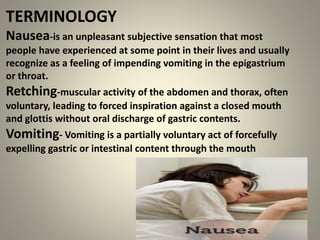
Nausea-is an unpleasant subjective sensation that most
people have experienced at some point in their lives and usually
recognize as a feeling of impending vomiting in the epigastrium
or throat.
Retching-muscular activity of the abdomen and thorax, often
voluntary, leading to forced inspiration against a closed mouth
and glottis without oral discharge of gastric contents.
Vomiting- Vomiting is a partially voluntary act of forcefully
expelling gastric or intestinal content through the mouth
VOMITING CENTER
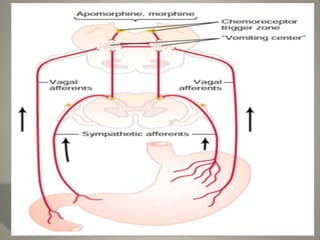
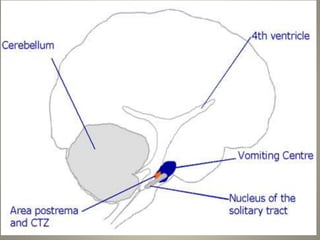
Vomiting center is situated bilaterally in
medulla oblongata near the tractus solitarius
The sensory impulses from the irrited part of
GIT or other organs are transmitted to the
vomiting center through vagus and sympathetic
afferent fibers.
The motor impulses causing act of the vomiting
are transmitted from vomiting center through V,
VII,IX, X and XII cranial nerves to the upper part
of gastrointestinal tract and through spinal
nerves to diaphragm and abdominal muscle.
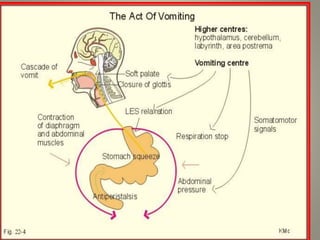
MECHANISM OF VOMITING (EMESIS)
Movements in the GIT start even before actual
vomiting
During the excessive irritation of the stomach or
upper part of intestine ,the antiperistalsis begins.
And vomiting occurs few minutes after this.
The antiperistalsis in the ileum and runs backward
through the intestine pushing the intestinal
contents into duodenum and stomach within 3-5
minutes. The rate of antiperistalsis is about 2-3 cm
per second.
After the antiperistalsis movements the voluntary
muscle are put into action. At the same time,
there is relaxation of lower esophageal
sphincter. After inspiratory movement, there is
closure of glottis. This is followed by contraction
of abdominal muscle with a characteristics jerk
called retching. This compress the stomach
against contracted diaphragm and abdominal
organs. And the pressure inside the stomach
increased. This increased pressure causes
emptying of contents through the relaxed
esophagus.
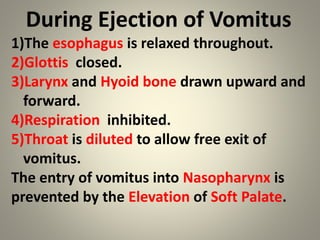
During Ejection of Vomitus
1)The esophagus is relaxed throughout.
2)Glottis closed.
3)Larynx and Hyoid bone drawn upward and
forward.
4)Respiration inhibited.
5)Throat is diluted to allow free exit of
vomitus.
The entry of vomitus into Nasopharynx is
prevented by the Elevation of Soft Palate.
VOMITING REFLEX (EMETIC REFLEX)
There are three steps in the vomiting reflex
First -Nausea develops.
Second-retching occurs as a result
of activation of spasmodic
contractions of the diaphragm and
intercostal muscles combined with
closure of the glottis.
Third- the act of vomiting occurs.
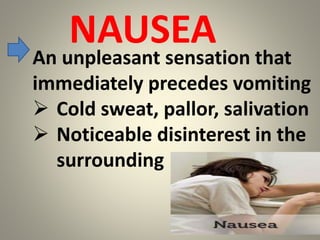
NAUSEA
An unpleasant sensation that
immediately precedes vomiting
 Cold sweat, pallor, salivation
 Noticeable disinterest in the
surrounding
Without any expulsion of gastric
contents.
Can occur without vomiting
But normally it generates the
pressure gradient that leads to
vomiting.
Retching
Follows Nausea
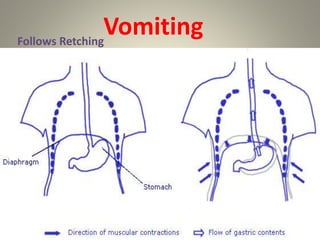
VomitingFollows Retching
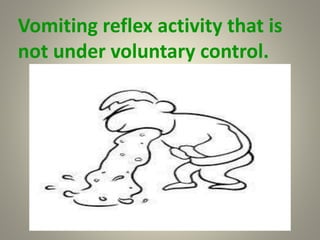
Vomiting reflex activity that is
not under voluntary control.
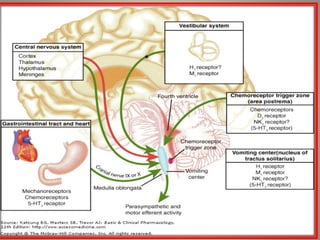
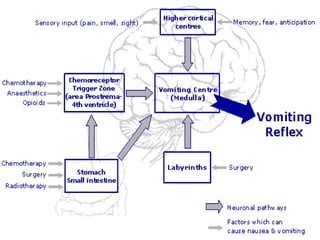
The vomiting center receives input from four
major areas
1) GI tract(Irritation of the mucosa of upper
GIT is the strong stimulus for vomiting.
Irritation of Duodenum provide the strongest
stimulus )
2) Chemoreceptor trigger zone
3) Vestibular apparatus
4) Higher Cerebral
cortex.(SMELL,TASTE,PAIN,MEMORY, FEAR)
RECEPTOR IN VOMITING
CENTER(MEDULLA)
1) Histamtne
2) Muscuranic
3) 5-HT
Chemoreceptor Trigger Zone
It is the small area located bilaterally on the floor of
4th ventricle.
A chemoreceptor(DOPAMINE 2, 5-HYDROXY
TRYPTOMINE) cell initiate vomiting when they are
electrically stimulated by certain circulating chemical
agents.
It is lies outside the blood brain barrier(BBB)
Administration of certain crude drugs morphine,
amorphine, digitalis derivative stimulate
chemoreceptor zone and initiate vomiting.
Destruction of this area inhibits vomiting but does not
inhibit vomiting due to irrigative stimulation of upper
GIT.
Vestibular Apparatus
Emesis due to Motion Sickness
Rapidly changing direction of the motion
of the body causes Vomiting
This is because motion stimulates the
labyrinth organs → abnormally stimulates
a Vestibulocochler nerve(VIII)→Vestibular
nucleus(HISTAMINE1,MUSCURINIC)→
Chemoreceptor trigger zone → Vomiting
center → vomiting
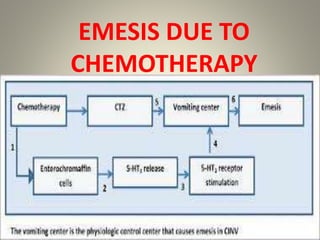
EMESIS DUE TO
CHEMOTHERAPY
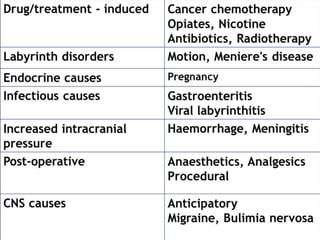
CAUSES OF
VOMITING
References
Gyton, H. (2006). Textbook of Medical
Physiology.
Krishna, A. (2014). Textbook of Medical
Physiology. Deilhi: Dynamic Print Graffix.
ANY
QUESTIONS
???
Vomiting reflex

Vomiting reflex

  • 1.
    VOMITING REFLEX (Emetic Reflex) CHHABILAL MAHATARA(32) PUSPA PARAJULI(62) KATHMANDU UNIVERSITY DEPATMENT OF PHARMACY BATCH 2013(III Sem.) 12/8/2014 1
  • 2.
    TERMINOLOGY Nausea-is an unpleasantsubjective sensation that most people have experienced at some point in their lives and usually recognize as a feeling of impending vomiting in the epigastrium or throat. Retching-muscular activity of the abdomen and thorax, often voluntary, leading to forced inspiration against a closed mouth and glottis without oral discharge of gastric contents. Vomiting- Vomiting is a partially voluntary act of forcefully expelling gastric or intestinal content through the mouth
  • 3.
    VOMITING CENTER Vomiting centeris situated bilaterally in medulla oblongata near the tractus solitarius The sensory impulses from the irrited part of GIT or other organs are transmitted to the vomiting center through vagus and sympathetic afferent fibers. The motor impulses causing act of the vomiting are transmitted from vomiting center through V, VII,IX, X and XII cranial nerves to the upper part of gastrointestinal tract and through spinal nerves to diaphragm and abdominal muscle.
  • 6.
    MECHANISM OF VOMITING(EMESIS) Movements in the GIT start even before actual vomiting During the excessive irritation of the stomach or upper part of intestine ,the antiperistalsis begins. And vomiting occurs few minutes after this. The antiperistalsis in the ileum and runs backward through the intestine pushing the intestinal contents into duodenum and stomach within 3-5 minutes. The rate of antiperistalsis is about 2-3 cm per second.
  • 7.
    After the antiperistalsismovements the voluntary muscle are put into action. At the same time, there is relaxation of lower esophageal sphincter. After inspiratory movement, there is closure of glottis. This is followed by contraction of abdominal muscle with a characteristics jerk called retching. This compress the stomach against contracted diaphragm and abdominal organs. And the pressure inside the stomach increased. This increased pressure causes emptying of contents through the relaxed esophagus.
  • 9.
    During Ejection ofVomitus 1)The esophagus is relaxed throughout. 2)Glottis closed. 3)Larynx and Hyoid bone drawn upward and forward. 4)Respiration inhibited. 5)Throat is diluted to allow free exit of vomitus. The entry of vomitus into Nasopharynx is prevented by the Elevation of Soft Palate.
  • 10.
    VOMITING REFLEX (EMETICREFLEX) There are three steps in the vomiting reflex First -Nausea develops. Second-retching occurs as a result of activation of spasmodic contractions of the diaphragm and intercostal muscles combined with closure of the glottis. Third- the act of vomiting occurs.
  • 11.
    NAUSEA An unpleasant sensationthat immediately precedes vomiting  Cold sweat, pallor, salivation  Noticeable disinterest in the surrounding
  • 12.
    Without any expulsionof gastric contents. Can occur without vomiting But normally it generates the pressure gradient that leads to vomiting. Retching Follows Nausea
  • 13.
  • 14.
    Vomiting reflex activitythat is not under voluntary control.
  • 15.
    The vomiting centerreceives input from four major areas 1) GI tract(Irritation of the mucosa of upper GIT is the strong stimulus for vomiting. Irritation of Duodenum provide the strongest stimulus ) 2) Chemoreceptor trigger zone 3) Vestibular apparatus 4) Higher Cerebral cortex.(SMELL,TASTE,PAIN,MEMORY, FEAR)
  • 16.
    RECEPTOR IN VOMITING CENTER(MEDULLA) 1)Histamtne 2) Muscuranic 3) 5-HT
  • 17.
    Chemoreceptor Trigger Zone Itis the small area located bilaterally on the floor of 4th ventricle. A chemoreceptor(DOPAMINE 2, 5-HYDROXY TRYPTOMINE) cell initiate vomiting when they are electrically stimulated by certain circulating chemical agents. It is lies outside the blood brain barrier(BBB) Administration of certain crude drugs morphine, amorphine, digitalis derivative stimulate chemoreceptor zone and initiate vomiting. Destruction of this area inhibits vomiting but does not inhibit vomiting due to irrigative stimulation of upper GIT.
  • 18.
    Vestibular Apparatus Emesis dueto Motion Sickness Rapidly changing direction of the motion of the body causes Vomiting This is because motion stimulates the labyrinth organs → abnormally stimulates a Vestibulocochler nerve(VIII)→Vestibular nucleus(HISTAMINE1,MUSCURINIC)→ Chemoreceptor trigger zone → Vomiting center → vomiting
  • 19.
  • 21.
  • 24.
    References Gyton, H. (2006).Textbook of Medical Physiology. Krishna, A. (2014). Textbook of Medical Physiology. Deilhi: Dynamic Print Graffix.
  • 25.