AllYou Jokers
CoderFaire Nashville
17 Aug 2013
Paul M. Jones
@pmjones
http://paul-m-jones.com
Read These
???
Let's Play A Game
• Make Paul Feel Old!
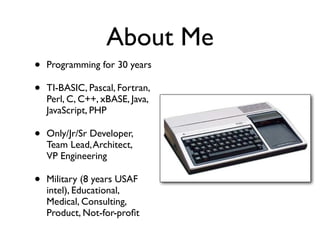
About Me
• Programming for 30 years
• TI-BASIC, Pascal, Fortran,
Perl, C, C++, xBASE, Java,
JavaScript, PHP
• Only/Jr/Sr Developer,
Team Lead,Architect,
VP Engineering
• Military (8 years USAF
intel), Educational,
Medical, Consulting,
Product, Not-for-profit
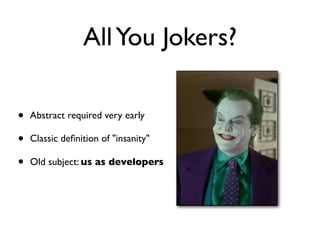
AllYou Jokers?
• Abstract required very early
• Classic definition of "insanity"
• Old subject: us as developers
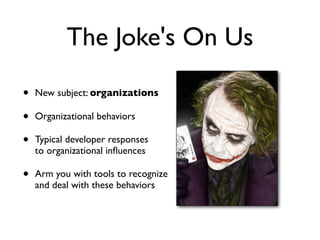
The Joke's On Us
• New subject: organizations
• Organizational behaviors
• Typical developer responses
to organizational influences
• Arm you with tools to recognize
and deal with these behaviors
Organizational
Structures
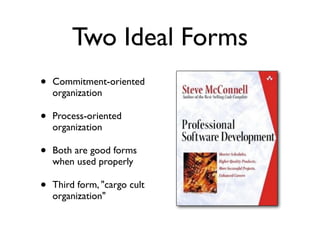
• Commitment-oriented
organization
• Process-oriented
organization
• Both are good forms
when used properly
• Third form, "cargo cult
organization"
Two Ideal Forms
Commitment-Oriented
• AKA "hero," "rock star", or
"individual empowerment"
• Best possible people
• Near-complete autonomy
• Empowered with wide
decision-making authority
• Voluntary, personal
commitments
• Highly motivated
• 60+ hour weeks
• Reap rewards/failure
directly
Microsoft, Google, agile startup
Process-Oriented
• Planning, specifications
• Standardized processes
• Attention to schedule
• Software best practices
• Continuous
improvement
• Administrative and
bureaucratic
• Documentation-heavy
• Meeting-heavy
• Regular and methodical
• 40-hour work week
NASA, IBM, medical
Cargo Cult Mix
• Little autonomy or
authority, but need
"commitment"
• Schedule paramount;
long hours to cover
missed estimates
• Top-down processes
until schedule slips,
then heroes needed
• Documentation- and
meeting-heavy
• No way to exceed
expectations
• Few rewards other
than "thanks"
• Repeated over and
over and over
Why Do This?
• Use appealing elements, justify with
"IBM does this" or "Microsoft does that"
• Failure to realize that elements are
part of a system with tradeoffs/feedback
• Normal human behavior, but destructive
Power Imbalance
• Decision-makers get all
upside and no downside
(short project vs long)
• Bad schedule decisions?
Get "commitment" to
"do what's needed"
• Failure rested on backs
of developers who did
not make the decisions
• Never learn because
insulated from failure
• No incentive to change
• Trying to get stuff for
free: commitment
without authority
• You suffer through
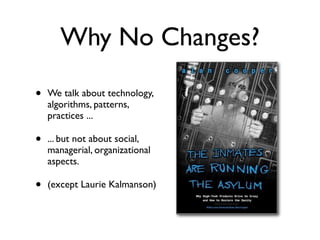
Why No Changes?
• We talk about technology,
algorithms, patterns,
practices ...
• ... but not about social,
managerial, organizational
aspects.
• (except Laurie Kalmanson)
It Keeps Happening
• You train others how to treat you
• Using your good will against you
• "If I do it one more time, I'll be rewarded"
(aka "This time will be different")
• Abusive relationship ("It's not that bad")
• Dump and find another just like the old one
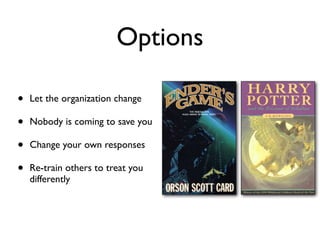
Options
• Let the organization change
• Nobody is coming to save you
• Change your own responses
• Re-train others to treat you
differently
The Work Of Change
RethinkYour Relationship
• Not going to be there for 20 years (5?)
• Only two exits: quit/resign, fired/laid off
• No need to suffer through bad treatment
Objections
• "I like to do the work."
• "I want to be seen as loyal."
• "They have the money."
• "I have to do what they say."
• "I need this job."
• "I have no power in the relationship."
Power OfYour Own
Engineers have the power
to create and sustain.
Non-engineers can order people
around, but in a typical software
company [they] can create nothing
on their own, and only have the
power that engineers grant them.
They can create and sustain
nothing without engineers.
-- "How To Be A Programmer,"
R. L. Read
Recalibrate
• Not "disloyal" or "uncommitted"
• Calibrate your attitude/expectations/
responses appropriately
• What will happen in response?
• Begin to deflect inappropriate demands
• Re-train others on how to treat you
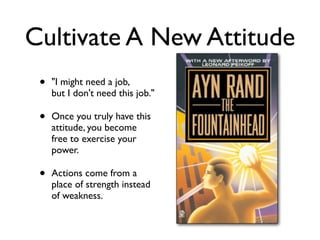
Cultivate A New Attitude
• "I might need a job,
but I don't need this job."
• Once you truly have this
attitude, you become
free to exercise your
power.
• Actions come from a
place of strength instead
of weakness.
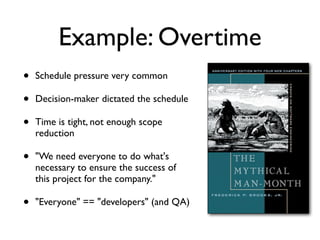
Example: Overtime
• Schedule pressure very common
• Decision-maker dictated the schedule
• Time is tight, not enough scope
reduction
• "We need everyone to do what's
necessary to ensure the success of
this project for the company."
• "Everyone" == "developers" (and QA)
Response From Weakness
• "OK boss."
• Nights and weekends
• Missed personal/family time
• No commensurate reward
• Impose on your team
• Organization never changes
Response From Strength (1)
• Calibrate properly
• Asking is different than demanding
• "Emergency" or "predictable"?
• What's the worst that can happen?
• Point out how the problem was predictable
• "Who decided on this schedule? Who else
is working overtime?"
Response From Strength (2)
• "I have other commitments."
• "What should I stop doing to do this instead?"
• "I'll do what I can, but I can't make any promises."
• "When should I take the overtime as days off?"
• "Can do."
Response From Strength (3)
• Cultivate and honor these responses from
your team members
• Send them home at the end of the day
• Your job is both to lead and to defend
• Point out mismatches from the Ideal Forms
(e.g., demanding long hours but not
granting commensurate authority)
Consequences (1)
• Resentment (employer and employee)
• Bad reviews, lower raises, lower bonuses
• Pressure to commit under duress
• Fired
• Result of changing attitude after being hired
• Start new employer in strength
Consequences (2)
• "Office Space" scenario
• Change organizational behavior
(feeling effects of poor decisions)
• Confidence and respect
With Great Power...
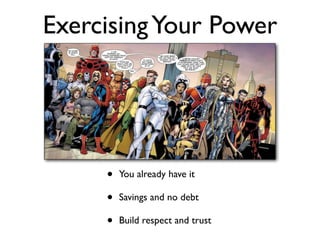
• You already have it
• Savings and no debt
• Build respect and trust
ExercisingYour Power
Constraints To Power
• Use for good or evil
• Honest, faithful, true
• Integrity and responsibility
Don't Get Defensive
• No whining, no indignation, no extended
explanation, no ultimatums
• Maintain dignity, maintain frame
• Just start looking for other work
Disagree Agreeably
• Team cohesion is still important
• State your position so you know they
understand what you mean
• If others do not agree, let them disagree
• Go along with the consensus plan but note
your disagreement
• If you end up being right, be kind but direct
about it
Don't Be A Bully
• Physically powerful people usually learn that
physical intimidation is not socially
acceptable
• Mentally powerful people rarely learn that
mental intimidation is not socially
acceptable
• You are a social animal
• Do not burn your social bridges
Conclusion
• Commitment, process, and "cargo cult"
• Recognize and exercise your own power
• Act from strength, not weakness
• Do with responsibility and integrity
• Not trying to make you a monster
• Trying to put you ahead of the curve
Thanks!
@pmjones
http://paul-m-jones.com/archives/4691

All You Jokers

  • 1.
    AllYou Jokers CoderFaire Nashville 17Aug 2013 Paul M. Jones @pmjones http://paul-m-jones.com
  • 2.
  • 3.
    Let's Play AGame • Make Paul Feel Old!
  • 4.
    About Me • Programmingfor 30 years • TI-BASIC, Pascal, Fortran, Perl, C, C++, xBASE, Java, JavaScript, PHP • Only/Jr/Sr Developer, Team Lead,Architect, VP Engineering • Military (8 years USAF intel), Educational, Medical, Consulting, Product, Not-for-profit
  • 5.
    AllYou Jokers? • Abstractrequired very early • Classic definition of "insanity" • Old subject: us as developers
  • 6.
    The Joke's OnUs • New subject: organizations • Organizational behaviors • Typical developer responses to organizational influences • Arm you with tools to recognize and deal with these behaviors
  • 7.
  • 8.
    • Commitment-oriented organization • Process-oriented organization •Both are good forms when used properly • Third form, "cargo cult organization" Two Ideal Forms
  • 9.
    Commitment-Oriented • AKA "hero,""rock star", or "individual empowerment" • Best possible people • Near-complete autonomy • Empowered with wide decision-making authority • Voluntary, personal commitments • Highly motivated • 60+ hour weeks • Reap rewards/failure directly Microsoft, Google, agile startup
  • 10.
    Process-Oriented • Planning, specifications •Standardized processes • Attention to schedule • Software best practices • Continuous improvement • Administrative and bureaucratic • Documentation-heavy • Meeting-heavy • Regular and methodical • 40-hour work week NASA, IBM, medical
  • 11.
    Cargo Cult Mix •Little autonomy or authority, but need "commitment" • Schedule paramount; long hours to cover missed estimates • Top-down processes until schedule slips, then heroes needed • Documentation- and meeting-heavy • No way to exceed expectations • Few rewards other than "thanks" • Repeated over and over and over
  • 12.
    Why Do This? •Use appealing elements, justify with "IBM does this" or "Microsoft does that" • Failure to realize that elements are part of a system with tradeoffs/feedback • Normal human behavior, but destructive
  • 13.
    Power Imbalance • Decision-makersget all upside and no downside (short project vs long) • Bad schedule decisions? Get "commitment" to "do what's needed" • Failure rested on backs of developers who did not make the decisions • Never learn because insulated from failure • No incentive to change • Trying to get stuff for free: commitment without authority • You suffer through
  • 14.
    Why No Changes? •We talk about technology, algorithms, patterns, practices ... • ... but not about social, managerial, organizational aspects. • (except Laurie Kalmanson)
  • 15.
    It Keeps Happening •You train others how to treat you • Using your good will against you • "If I do it one more time, I'll be rewarded" (aka "This time will be different") • Abusive relationship ("It's not that bad") • Dump and find another just like the old one
  • 16.
    Options • Let theorganization change • Nobody is coming to save you • Change your own responses • Re-train others to treat you differently
  • 17.
  • 18.
    RethinkYour Relationship • Notgoing to be there for 20 years (5?) • Only two exits: quit/resign, fired/laid off • No need to suffer through bad treatment
  • 19.
    Objections • "I liketo do the work." • "I want to be seen as loyal." • "They have the money." • "I have to do what they say." • "I need this job." • "I have no power in the relationship."
  • 20.
    Power OfYour Own Engineershave the power to create and sustain. Non-engineers can order people around, but in a typical software company [they] can create nothing on their own, and only have the power that engineers grant them. They can create and sustain nothing without engineers. -- "How To Be A Programmer," R. L. Read
  • 21.
    Recalibrate • Not "disloyal"or "uncommitted" • Calibrate your attitude/expectations/ responses appropriately • What will happen in response? • Begin to deflect inappropriate demands • Re-train others on how to treat you
  • 22.
    Cultivate A NewAttitude • "I might need a job, but I don't need this job." • Once you truly have this attitude, you become free to exercise your power. • Actions come from a place of strength instead of weakness.
  • 23.
    Example: Overtime • Schedulepressure very common • Decision-maker dictated the schedule • Time is tight, not enough scope reduction • "We need everyone to do what's necessary to ensure the success of this project for the company." • "Everyone" == "developers" (and QA)
  • 24.
    Response From Weakness •"OK boss." • Nights and weekends • Missed personal/family time • No commensurate reward • Impose on your team • Organization never changes
  • 25.
    Response From Strength(1) • Calibrate properly • Asking is different than demanding • "Emergency" or "predictable"? • What's the worst that can happen? • Point out how the problem was predictable • "Who decided on this schedule? Who else is working overtime?"
  • 26.
    Response From Strength(2) • "I have other commitments." • "What should I stop doing to do this instead?" • "I'll do what I can, but I can't make any promises." • "When should I take the overtime as days off?" • "Can do."
  • 27.
    Response From Strength(3) • Cultivate and honor these responses from your team members • Send them home at the end of the day • Your job is both to lead and to defend • Point out mismatches from the Ideal Forms (e.g., demanding long hours but not granting commensurate authority)
  • 28.
    Consequences (1) • Resentment(employer and employee) • Bad reviews, lower raises, lower bonuses • Pressure to commit under duress • Fired • Result of changing attitude after being hired • Start new employer in strength
  • 29.
    Consequences (2) • "OfficeSpace" scenario • Change organizational behavior (feeling effects of poor decisions) • Confidence and respect
  • 30.
  • 31.
    • You alreadyhave it • Savings and no debt • Build respect and trust ExercisingYour Power
  • 32.
    Constraints To Power •Use for good or evil • Honest, faithful, true • Integrity and responsibility
  • 33.
    Don't Get Defensive •No whining, no indignation, no extended explanation, no ultimatums • Maintain dignity, maintain frame • Just start looking for other work
  • 34.
    Disagree Agreeably • Teamcohesion is still important • State your position so you know they understand what you mean • If others do not agree, let them disagree • Go along with the consensus plan but note your disagreement • If you end up being right, be kind but direct about it
  • 35.
    Don't Be ABully • Physically powerful people usually learn that physical intimidation is not socially acceptable • Mentally powerful people rarely learn that mental intimidation is not socially acceptable • You are a social animal • Do not burn your social bridges
  • 36.
    Conclusion • Commitment, process,and "cargo cult" • Recognize and exercise your own power • Act from strength, not weakness • Do with responsibility and integrity • Not trying to make you a monster • Trying to put you ahead of the curve
  • 37.