Management:
Doing the non-obvious!
Diego Pacheco
@diego_pacheco
❏ Cat's Father
❏ Head of Software Architecture
❏ Agile Coach
❏ SOA/Microservices Expert
❏ DevOps Practitioner
❏ Speaker
❏ Author
diegopacheco
http://diego-pacheco.blogspot.com.br/
About me...
https://diegopacheco.github.io/
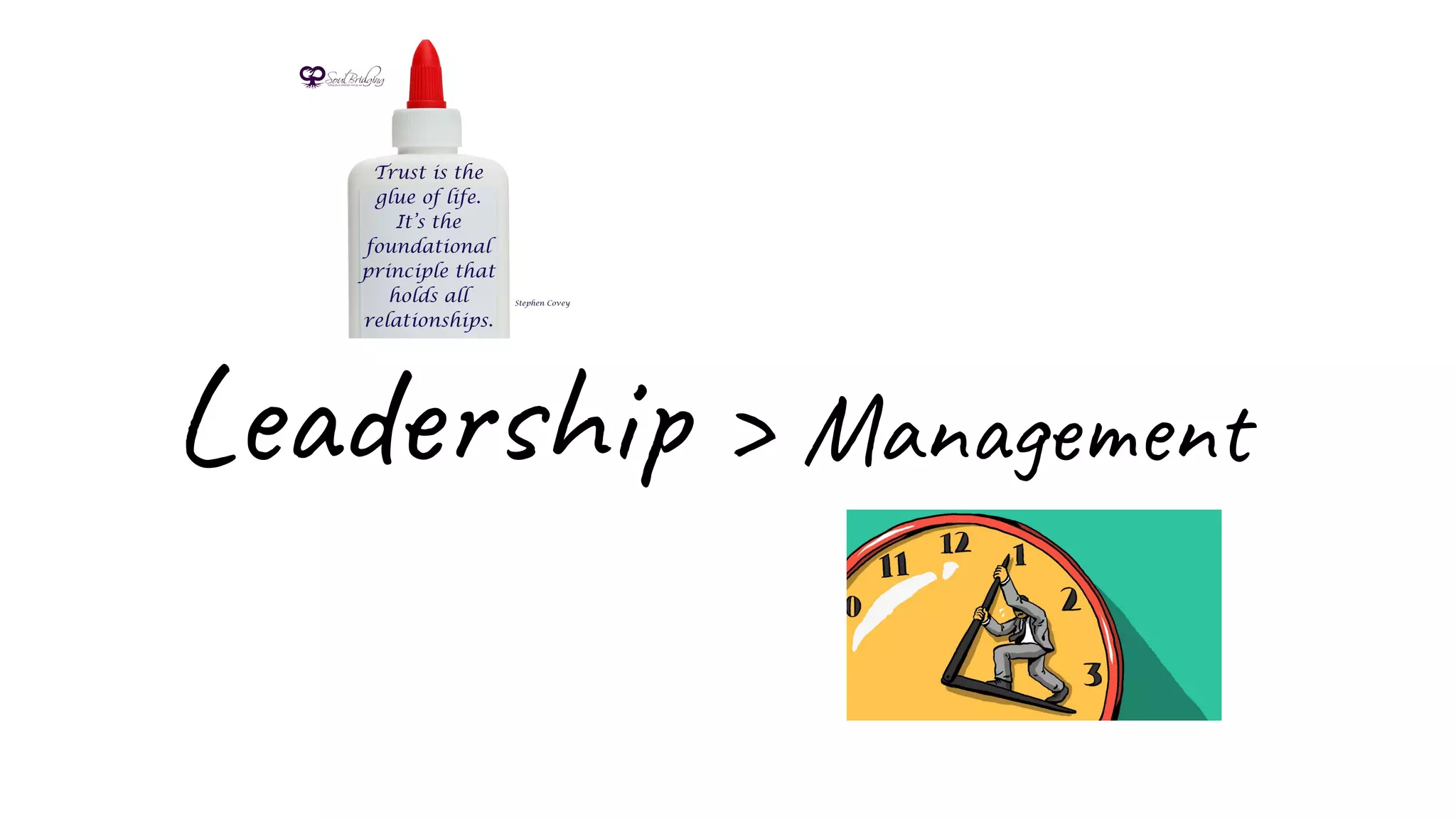
Leadership > Management
Forget Simple
Tunneling Effect (Top Performance can be Gamed)
Ego is the Enemy
❏ Ego: is unhealthy to believe in our own importance.
❏ Ego Distocerce the reality around us.
❏ Ego is the enemy of Building, maintaining, and recovery (Innovation)
❏ Removing ego widens our perspective.
❏ Having a clear head is like sobriety (no ego).
❏ I.e: Kirk Hammett(Metallica/Satriani), Ken Shamrock(+,-,=)
❏ Solution: Suppress/Channel Ego early with Humility
Require everybody communicate with everybody is
a recipe for mess.
Org Chart != Innovation
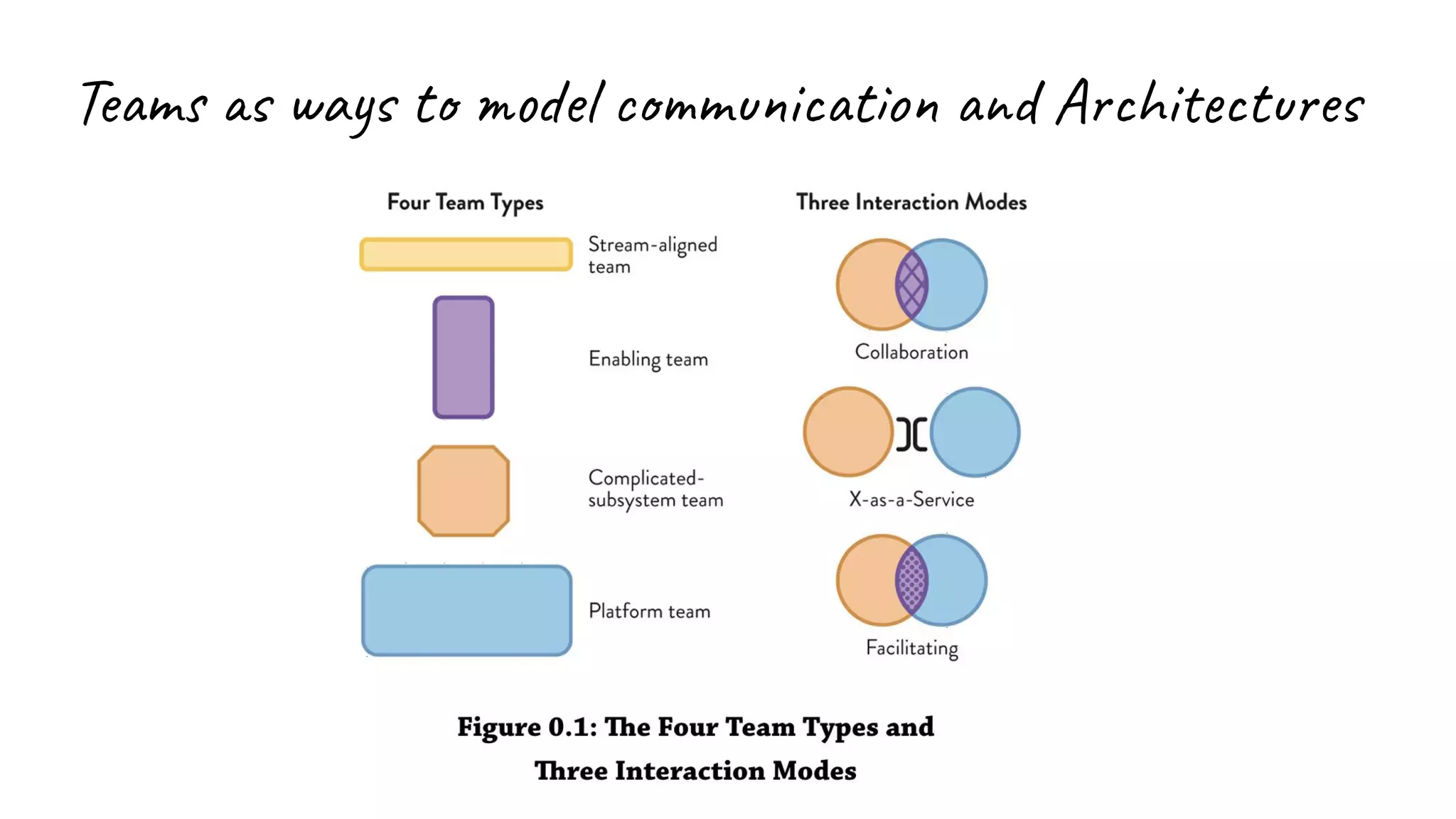
Teams as ways to model communication and Architectures
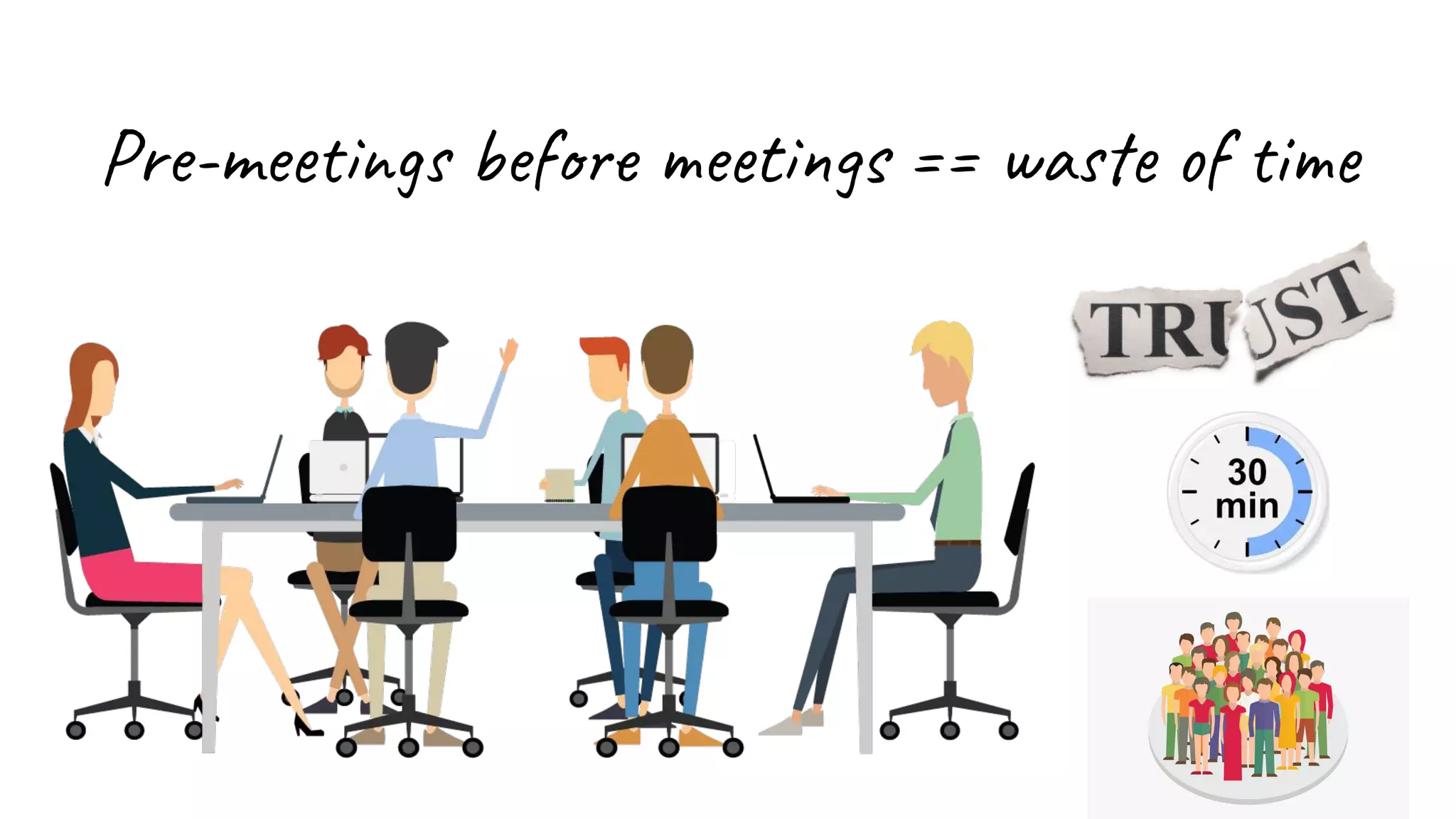
Pre-meetings before meetings == waste of time
Why Feedback is hard
❏ Feedback is hard - post of people and companies just give up.
❏ People don't want to give feedback because often, the result is a
catastrophe.
❏ Learning about ourselves can be painful.
❏ Trigger reactions - we need to understand our reactions (you cannot
deal with fire by shutdown fire alarm)
❏ Sometimes 90% of feedback is wrong but that 10% could be enough for
you to grow.
❏ Decouple the Feedback from the relationship (we never do that).
Why Feedback is hard
❏ When giving feedback we feel right. When we receive feedback feels
wrong.
❏ The better you understand them better you make it useful for you or to
understand why you are being misunderstood.
❏ Emotion trigger derail feedbacks (disqualify by HOW/WHEN/WHO did
it).
❏ IF anything the person says would trigger something on you - maybe
you should say your thing first.
❏ Emotions distort the feedback.
Types of Feedback
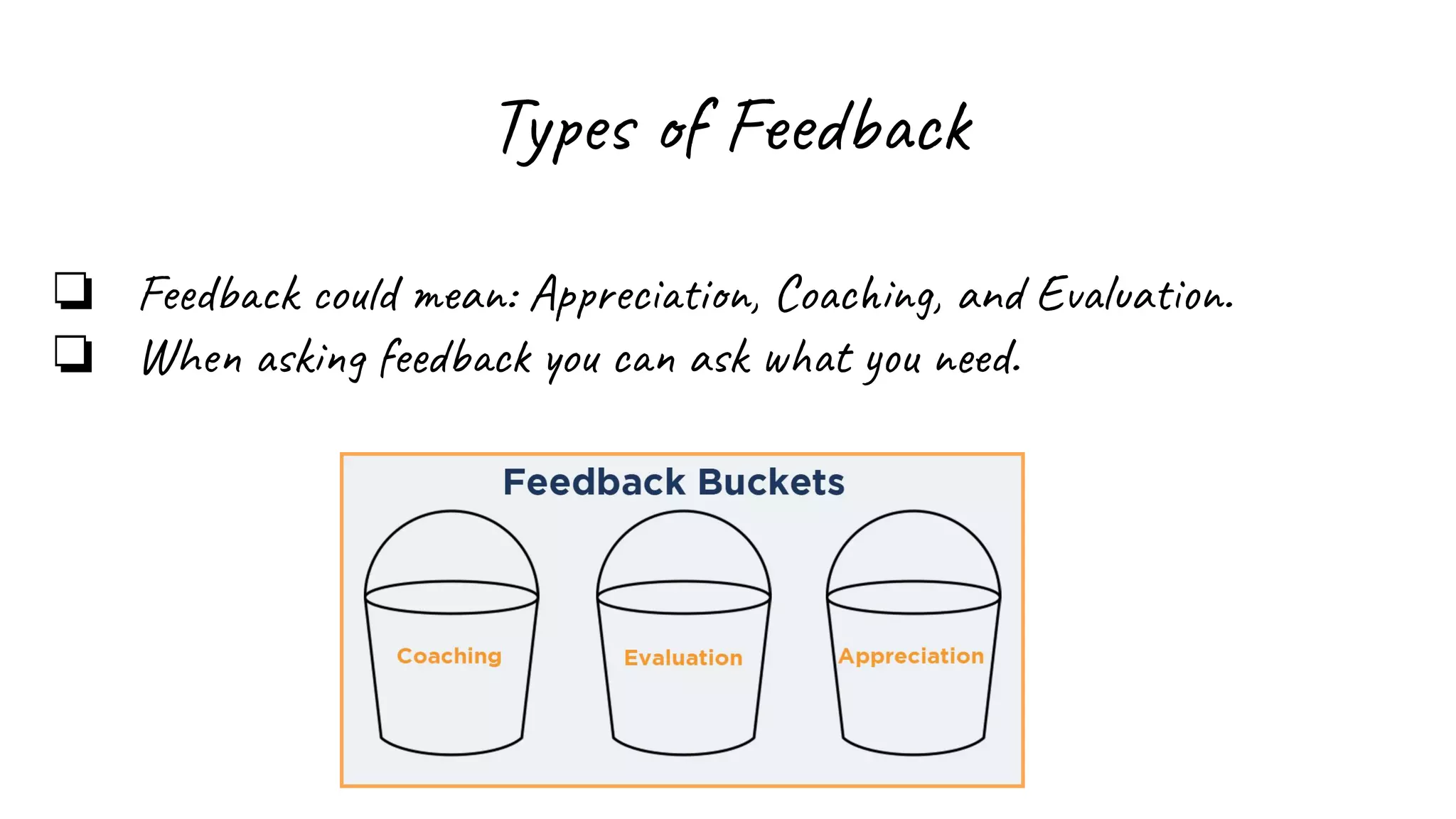
❏ Feedback could mean: Appreciation, Coaching, and Evaluation.
❏ When asking feedback you can ask what you need.
Ask for advice - might get feedback.
❏ Laughing about yourself makes things much easier (destroy anxiety
and takes much less energy).
❏ Learning from feedback is also how we hold our identity to make us
more resilient from feedback adverse.
❏ Move from fixed mindset to growth mindset - give up simple labels and
cultivate complexity.
❏ Simple Labels == All or Nothing (Smart of Stupid)
❏ Growth vs fixed mindset - is not who you are but what you do.
Debugging Teams
❏ You will need to change scope!
❏ There is a way to get more with less?
❏ Sometimes compromises need to be done?
❏ Schedule
❏ Technical solution
❏ It’s a coaching issues(Missing guidance?)
❏ It’s a relationship issue?
❏ It’s lack of skills or personal issue going on?
Pre-Modertens to find issues
❏ Scenario modeling
❏ We can imagine issues before they happen
❏ This can be useful to detect problems before they happen
❏ Some ideas:
❏ Would the software scale?
❏ Would the dependencies honor the contract?
❏ Would we be able to rollback?
❏ Would work without parameter x,y,z?
❏ What is dependency X is not done?
Role Playing to Train Leaders
❏ Coders do dojos and managers do what(... nothing)?
❏ How we train leaders? Only through experience?
❏ No. We can do role playing exercises.
❏ Easily see the struggles in training before they happen in real life.
❏ Easy start: Use cases + Questions
❏ Full role playing games(effective and fun)
Release First, fix the bug later
Policies Vs Judgement (Netflix way)
❏ Netflix risk is lack of innovation. However, Netflix does not have
innovation Fridays instead they give employees space
❏ Don't seek to please your boss - do what is better for the company
❏ Treat people as grown ups
❏ Expect people to have amazing judgement
❏ No Need to have policies for everything
❏ Metaphor is a high sports team, not a family.
❏ Keeper Test: Would you try to save person X if they quit tomorrow? If
not you might replace the person now.
Policies Vs Judgement (Netflix way)
❏ 4A Feedback Guidelines: Aim to Assist, Actionable, Appreciate, Accept
or Discard.
Emotional Bank Account
Win-Win or NO DEAL!
❏ What I want is not more
important than my relationship
with you. Short term win could be
a long term loss.
❏ In the long term if is not a
win-win for both will be a
win-lose or lose-lose.
❏ Focus on interest, not on
positions.
Win-Win or NO DEAL!
❏ Listen twice as much as you speak.
❏ Principled Negotiation(Roger Williams)
❏ Look for Options for mutual gain:
❏ 1 - See the problem from another point of view
❏ 2 - Identify the key issues and concerns (not positions)
❏ 3 - Determine what results would be acceptable
❏ 4 - Identify new options for results.
The Tower - Fight shallowness
❏ 1922 Carl Young retreat (The tower)
❏ 2h non-interrupted writing (no electricity) + long walks
❏ Deep work necessary to improvement
❏ Only way to learn or do complex work
❏ Depth Destroy behavior:
❏ Immediate email response
❏ Social media presence
The Tower - Fight shallowness
❏ Free time is unstructured and requires more work to be
enjoyed
❏ Dive Deeper rather than keep answer emails faster like your
exhausted peers. (i.e Amazon Deep Dive Principles)
❏ Internet sabbath
❏ Schedule Internet usage at Home and at Work.
Even after work.
The Tower - Fight shallowness
❏ How long can you do Deep work in a day? Beginner = 1h a day,
used to it = 4h but not more.
❏ Schedule every minute of your day.
❏ Make yourself hard to access.
❏ Offices are Interruption Factories
❏ Favor Async(37 signals)
❏ Urgency != Anxiety
Management:
Doing the non-obvious!
Diego Pacheco

Management: doing the nonobvious!

  • 1.
  • 2.
    @diego_pacheco ❏ Cat's Father ❏Head of Software Architecture ❏ Agile Coach ❏ SOA/Microservices Expert ❏ DevOps Practitioner ❏ Speaker ❏ Author diegopacheco http://diego-pacheco.blogspot.com.br/ About me... https://diegopacheco.github.io/
  • 5.
  • 6.
  • 7.
    Tunneling Effect (TopPerformance can be Gamed)
  • 8.
    Ego is theEnemy ❏ Ego: is unhealthy to believe in our own importance. ❏ Ego Distocerce the reality around us. ❏ Ego is the enemy of Building, maintaining, and recovery (Innovation) ❏ Removing ego widens our perspective. ❏ Having a clear head is like sobriety (no ego). ❏ I.e: Kirk Hammett(Metallica/Satriani), Ken Shamrock(+,-,=) ❏ Solution: Suppress/Channel Ego early with Humility
  • 9.
    Require everybody communicatewith everybody is a recipe for mess.
  • 10.
    Org Chart !=Innovation
  • 11.
    Teams as waysto model communication and Architectures
  • 12.
  • 13.
    Why Feedback ishard ❏ Feedback is hard - post of people and companies just give up. ❏ People don't want to give feedback because often, the result is a catastrophe. ❏ Learning about ourselves can be painful. ❏ Trigger reactions - we need to understand our reactions (you cannot deal with fire by shutdown fire alarm) ❏ Sometimes 90% of feedback is wrong but that 10% could be enough for you to grow. ❏ Decouple the Feedback from the relationship (we never do that).
  • 14.
    Why Feedback ishard ❏ When giving feedback we feel right. When we receive feedback feels wrong. ❏ The better you understand them better you make it useful for you or to understand why you are being misunderstood. ❏ Emotion trigger derail feedbacks (disqualify by HOW/WHEN/WHO did it). ❏ IF anything the person says would trigger something on you - maybe you should say your thing first. ❏ Emotions distort the feedback.
  • 15.
    Types of Feedback ❏Feedback could mean: Appreciation, Coaching, and Evaluation. ❏ When asking feedback you can ask what you need.
  • 16.
    Ask for advice- might get feedback. ❏ Laughing about yourself makes things much easier (destroy anxiety and takes much less energy). ❏ Learning from feedback is also how we hold our identity to make us more resilient from feedback adverse. ❏ Move from fixed mindset to growth mindset - give up simple labels and cultivate complexity. ❏ Simple Labels == All or Nothing (Smart of Stupid) ❏ Growth vs fixed mindset - is not who you are but what you do.
  • 17.
    Debugging Teams ❏ Youwill need to change scope! ❏ There is a way to get more with less? ❏ Sometimes compromises need to be done? ❏ Schedule ❏ Technical solution ❏ It’s a coaching issues(Missing guidance?) ❏ It’s a relationship issue? ❏ It’s lack of skills or personal issue going on?
  • 18.
    Pre-Modertens to findissues ❏ Scenario modeling ❏ We can imagine issues before they happen ❏ This can be useful to detect problems before they happen ❏ Some ideas: ❏ Would the software scale? ❏ Would the dependencies honor the contract? ❏ Would we be able to rollback? ❏ Would work without parameter x,y,z? ❏ What is dependency X is not done?
  • 19.
    Role Playing toTrain Leaders ❏ Coders do dojos and managers do what(... nothing)? ❏ How we train leaders? Only through experience? ❏ No. We can do role playing exercises. ❏ Easily see the struggles in training before they happen in real life. ❏ Easy start: Use cases + Questions ❏ Full role playing games(effective and fun)
  • 20.
    Release First, fixthe bug later
  • 21.
    Policies Vs Judgement(Netflix way) ❏ Netflix risk is lack of innovation. However, Netflix does not have innovation Fridays instead they give employees space ❏ Don't seek to please your boss - do what is better for the company ❏ Treat people as grown ups ❏ Expect people to have amazing judgement ❏ No Need to have policies for everything ❏ Metaphor is a high sports team, not a family. ❏ Keeper Test: Would you try to save person X if they quit tomorrow? If not you might replace the person now.
  • 22.
    Policies Vs Judgement(Netflix way) ❏ 4A Feedback Guidelines: Aim to Assist, Actionable, Appreciate, Accept or Discard.
  • 23.
  • 24.
    Win-Win or NODEAL! ❏ What I want is not more important than my relationship with you. Short term win could be a long term loss. ❏ In the long term if is not a win-win for both will be a win-lose or lose-lose. ❏ Focus on interest, not on positions.
  • 25.
    Win-Win or NODEAL! ❏ Listen twice as much as you speak. ❏ Principled Negotiation(Roger Williams) ❏ Look for Options for mutual gain: ❏ 1 - See the problem from another point of view ❏ 2 - Identify the key issues and concerns (not positions) ❏ 3 - Determine what results would be acceptable ❏ 4 - Identify new options for results.
  • 26.
    The Tower -Fight shallowness ❏ 1922 Carl Young retreat (The tower) ❏ 2h non-interrupted writing (no electricity) + long walks ❏ Deep work necessary to improvement ❏ Only way to learn or do complex work ❏ Depth Destroy behavior: ❏ Immediate email response ❏ Social media presence
  • 27.
    The Tower -Fight shallowness ❏ Free time is unstructured and requires more work to be enjoyed ❏ Dive Deeper rather than keep answer emails faster like your exhausted peers. (i.e Amazon Deep Dive Principles) ❏ Internet sabbath ❏ Schedule Internet usage at Home and at Work. Even after work.
  • 28.
    The Tower -Fight shallowness ❏ How long can you do Deep work in a day? Beginner = 1h a day, used to it = 4h but not more. ❏ Schedule every minute of your day. ❏ Make yourself hard to access. ❏ Offices are Interruption Factories ❏ Favor Async(37 signals) ❏ Urgency != Anxiety
  • 31.