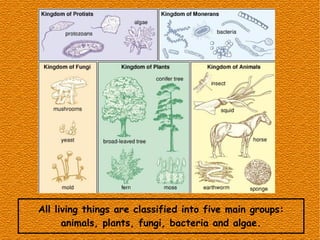

All living things are classified into five main groups:
animals, plants, fungi, bacteria and algae.
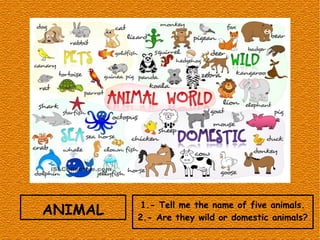
ANIMAL 1.- Tell me the name of five animals.
2.- Are they wild or domestic animals?
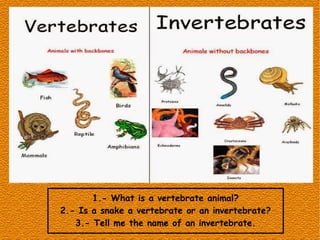
1.- What is a vertebrate animal?
2.- Is a snake a vertebrate or an invertebrate?
3.- Tell me the name of an invertebrate.
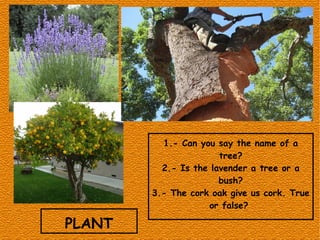
PLANT
1.- Can you say the name of a
tree?
2.- Is the lavender a tree or a
bush?
3.- The cork oak give us cork. True
or false?
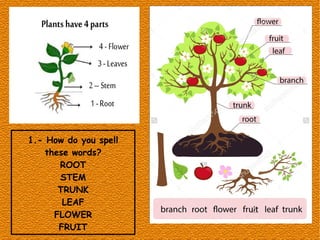
1.- How do you spell
these words?
ROOT
STEM
TRUNK
LEAF
FLOWER
FRUIT
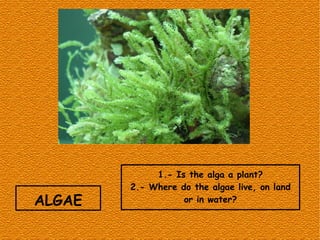
ALGAE
1.- Is the alga a plant?
2.- Where do the algae live, on land
or in water?
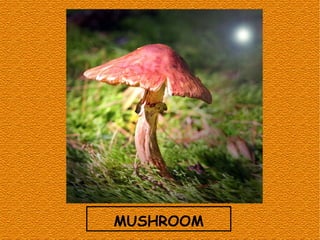
MUSHROOM
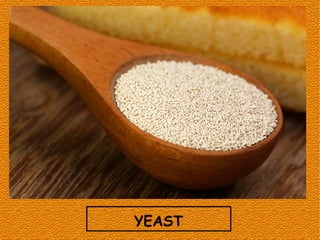
YEAST
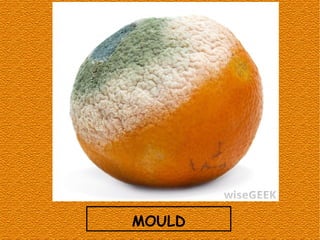
MOULD
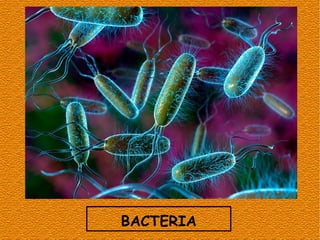
BACTERIA
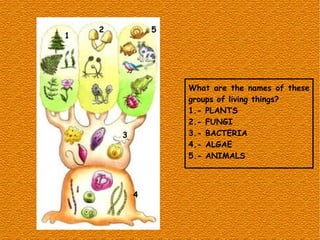
What are the names of these
groups of living things?
1.- PLANTS
2.- FUNGI
3.- BACTERIA
4.- ALGAE
5.- ANIMALS
1
5
4
3
2
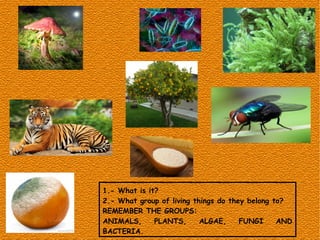
1.- What is it?
2.- What group of living things do they belong to?
REMEMBER THE GROUPS:
ANIMALS, PLANTS, ALGAE, FUNGI AND
BACTERIA.
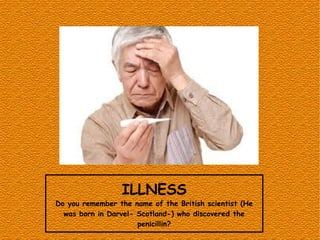
ILLNESS
Do you remember the name of the British scientist (He
was born in Darvel- Scotland-) who discovered the
penicillin?
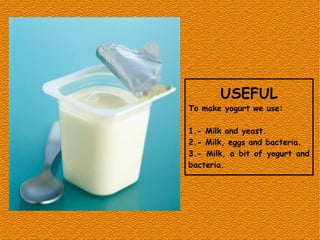
USEFUL
To make yogurt we use:
1.- Milk and yeast.
2.- Milk, eggs and bacteria.
3.- Milk, a bit of yogurt and
bacteria.
THAT´S ALL FOR TODAY!

Living things classification

  • 2.
    All living thingsare classified into five main groups: animals, plants, fungi, bacteria and algae.
  • 3.
    ANIMAL 1.- Tellme the name of five animals. 2.- Are they wild or domestic animals?
  • 4.
    1.- What isa vertebrate animal? 2.- Is a snake a vertebrate or an invertebrate? 3.- Tell me the name of an invertebrate.
  • 5.
    PLANT 1.- Can yousay the name of a tree? 2.- Is the lavender a tree or a bush? 3.- The cork oak give us cork. True or false?
  • 6.
    1.- How doyou spell these words? ROOT STEM TRUNK LEAF FLOWER FRUIT
  • 7.
    ALGAE 1.- Is thealga a plant? 2.- Where do the algae live, on land or in water?
  • 8.
  • 9.
  • 10.
  • 11.
  • 12.
    What are thenames of these groups of living things? 1.- PLANTS 2.- FUNGI 3.- BACTERIA 4.- ALGAE 5.- ANIMALS 1 5 4 3 2
  • 13.
    1.- What isit? 2.- What group of living things do they belong to? REMEMBER THE GROUPS: ANIMALS, PLANTS, ALGAE, FUNGI AND BACTERIA.
  • 14.
    ILLNESS Do you rememberthe name of the British scientist (He was born in Darvel- Scotland-) who discovered the penicillin?
  • 15.
    USEFUL To make yogurtwe use: 1.- Milk and yeast. 2.- Milk, eggs and bacteria. 3.- Milk, a bit of yogurt and bacteria.
  • 16.