“Malaysia:
A New Route for
Submarine Cables”
Submarine Cable
crossing between the
Indian Ocean and
South China Sea
V1.0 JULY 2019
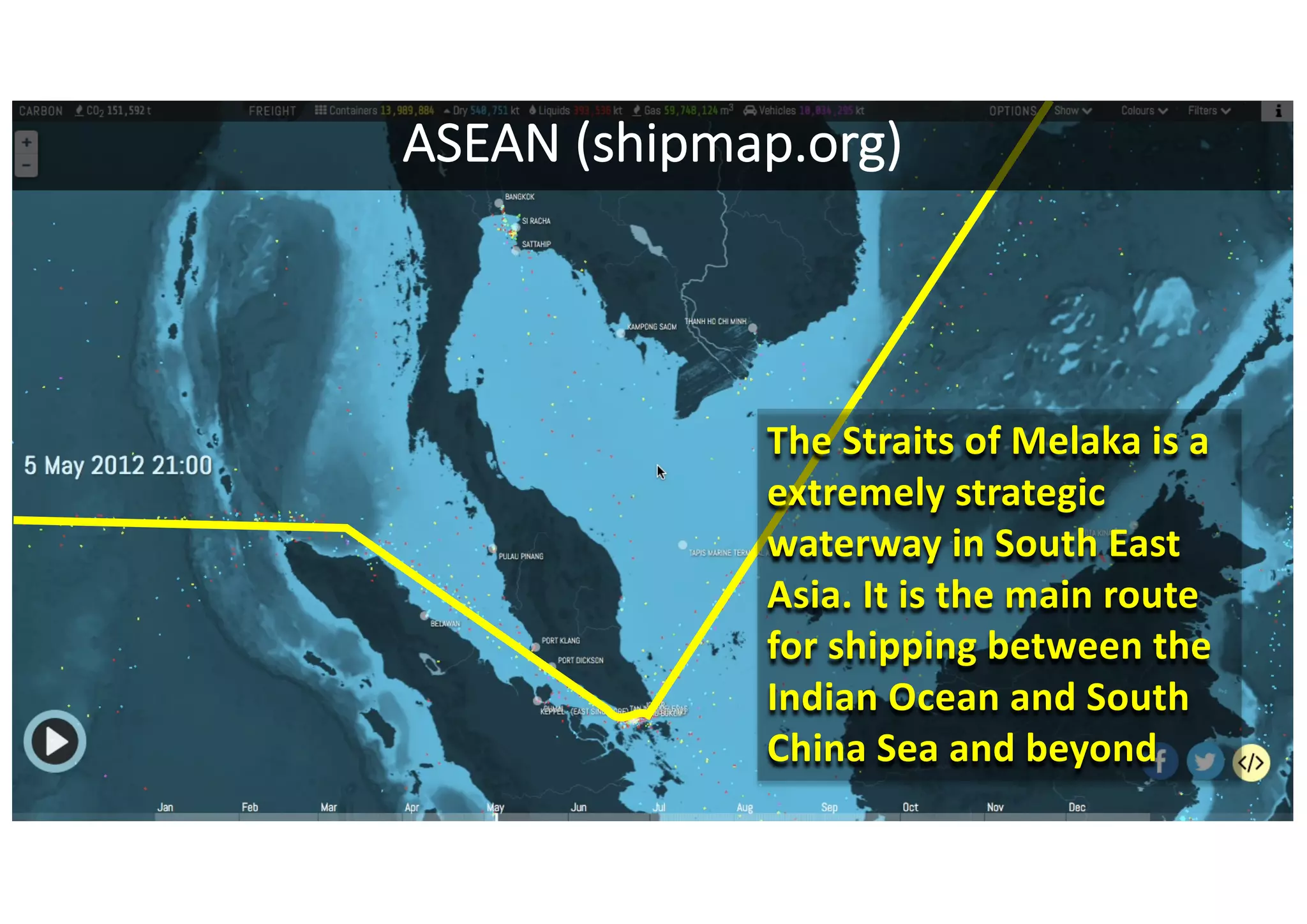
ASEAN (shipmap.org)
The Straits of Melaka is a
extremely strategic
waterway in South East
Asia. It is the main route
for shipping between the
Indian Ocean and South
China Sea and beyond
The Straits of Melaka is ALSO
the main route for submarine
cables between the Indian
Ocean and South China Sea
and beyond.
So both ships and submarine
cables squeeze down the
narrow and shallow Straits of
Melaka – a less than ideal
situation
Singapore is an Entrepôt in both container cargo and
communications cables. Currently estimated to have about 400 Tbps
of sub sea capacity (lit and unlit) with about 15-20 Tbps (5%)
supplying the island.
Concentration Risk?
The Isthmus of Kra, Thailand
Talks of a canal (like Panama and Suez) for shipping have
been on and off since 1677. Potentially saving 1200 km.
In 1996 the FLAG (Fiber-Optic Link Around the Globe)
Europe Asia cable built 2 diverse paths across here.
<This Space Intentionally Left Blank>
In 2018 AAE-1 (Asia Africa Europe 1) crossed here.
We have many SCLC’s in Malaysia but they are all termination points
for subsea cables: no subsea cables transit Malaysia currently.
Cables only land in Malaysia to supply demand IN Malaysia.
The only major transit business in Malaysia appears to be taking
traffic down to Singapore. This is a growing business, new north
south fiberization projects are being planned. They may benefit
Malaysia but these also strengthen Singapore’s role as a hub.
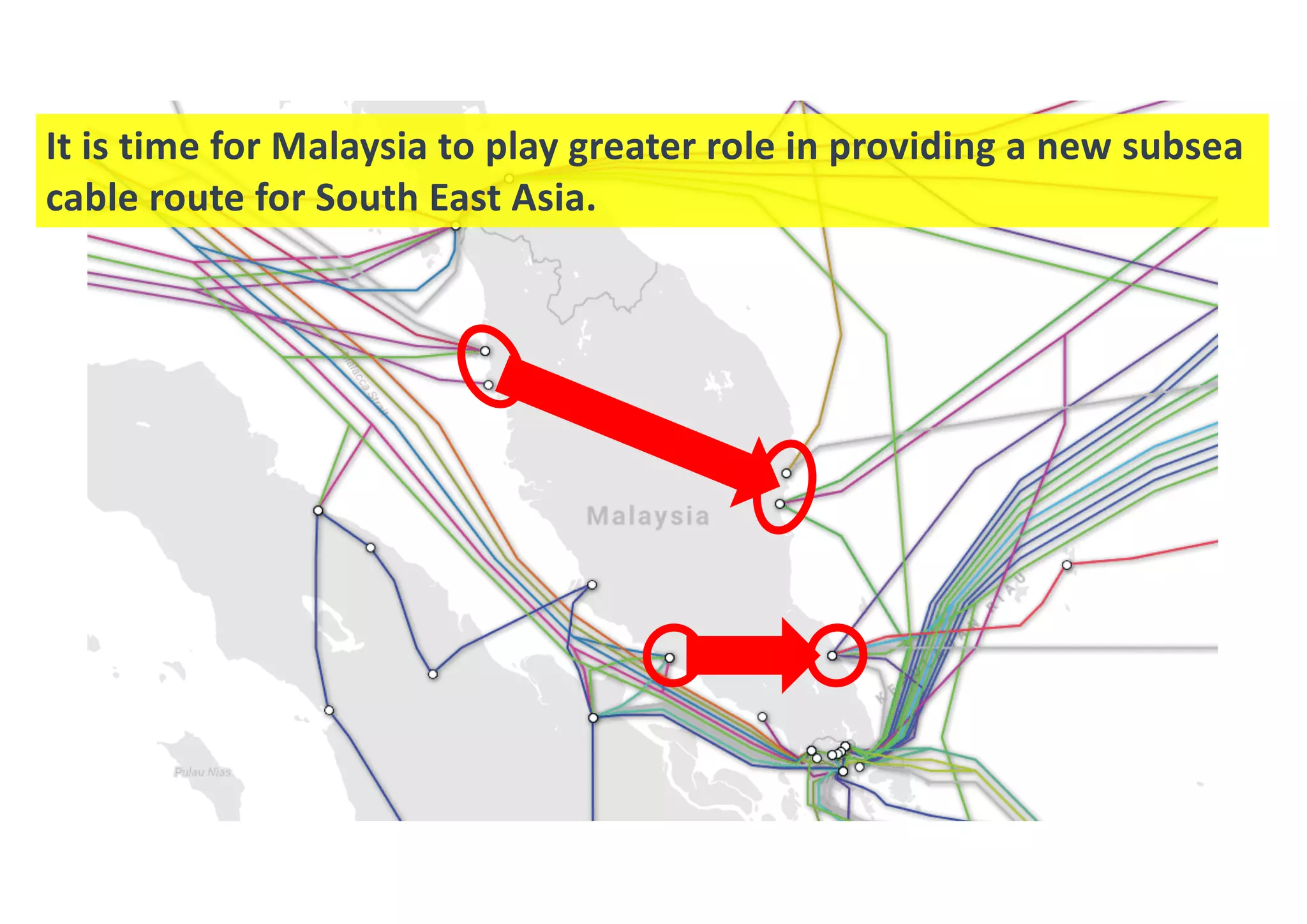
It is time for Malaysia to play greater role in providing a new subsea
cable route for South East Asia.
You may rightly ask, is there demand for such a route ?You may rightly ask, is there demand for such a route ?
Instead, ask this question:
Do you think anyone will want an alternative route from the Straits of Melaka
with potentially lower latency, lower risk and maybe even lower cost?
Lets say, hypothetically, if there are people who want to land
cables in Malaysia, what would they want?
[1] Regulatory and Licensing Clarity (Not in the scope of this paper)
[2] Competitive cost based on Fibre Pairs, not bandwidth
[3] Open Carrier Neutral Cable Landing Station / Data Centre
[4] Extension of the Front-Haul from BMH inland to terminate at
SLTE in a City PoP / Data Centre
DC
DC
BMH SLTE TLTE TLTE
BMH SLTE
Terrestrial Back-HaulFront-Haul
Front-Haul
Conventional CLS vs City PoP
BMH SLTE TLTE DC
Beach
Man-Hole
Submarine
Line Terminal
Equipment
Terrestrial
Line Terminal
Equipment
Data Centre
Cable Landing
Station
Image by Pexels from Pixabay
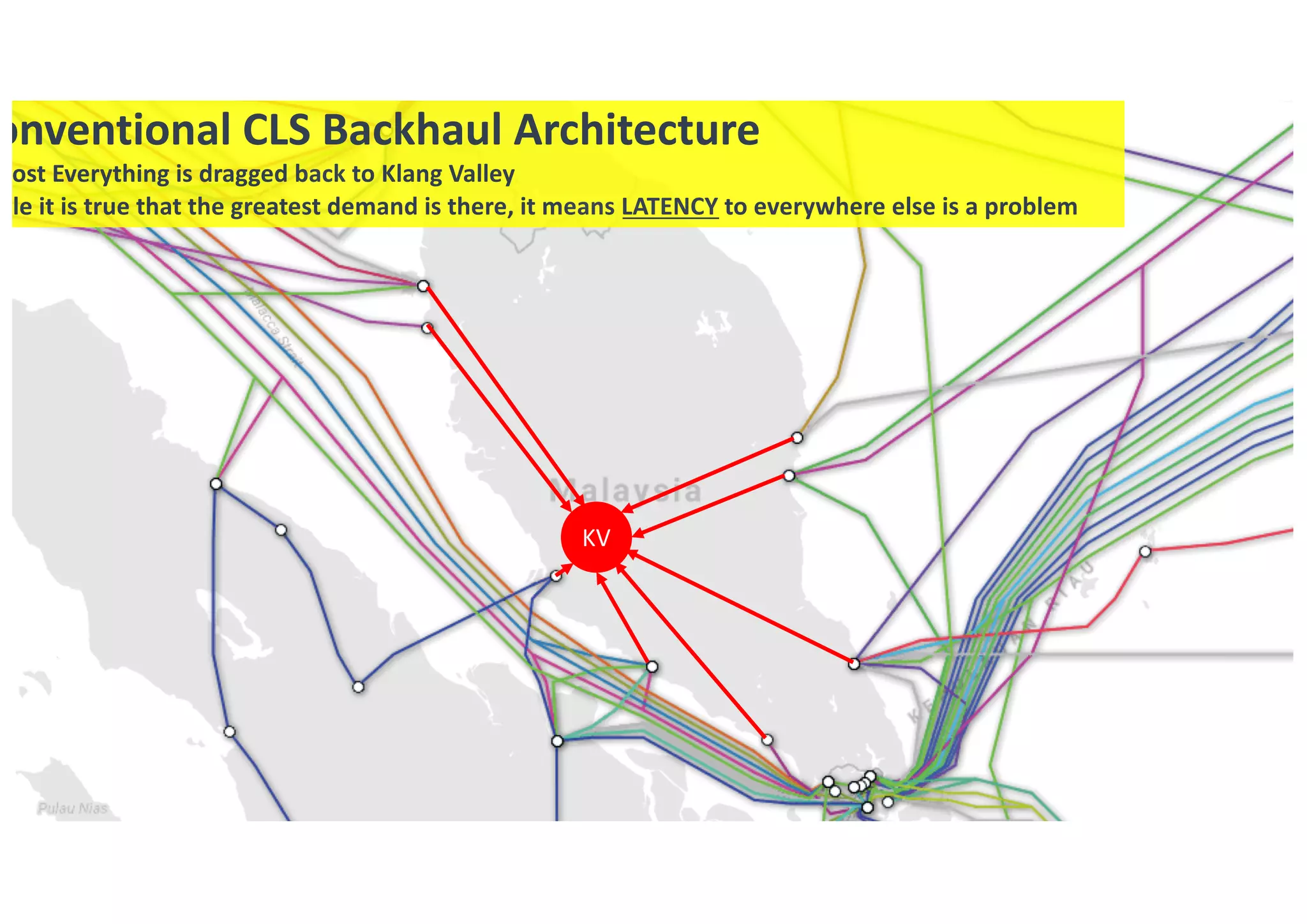
KV
onventional CLS Backhaul Architecture
most Everything is dragged back to Klang Valley
hile it is true that the greatest demand is there, it means LATENCY to everywhere else is a problem
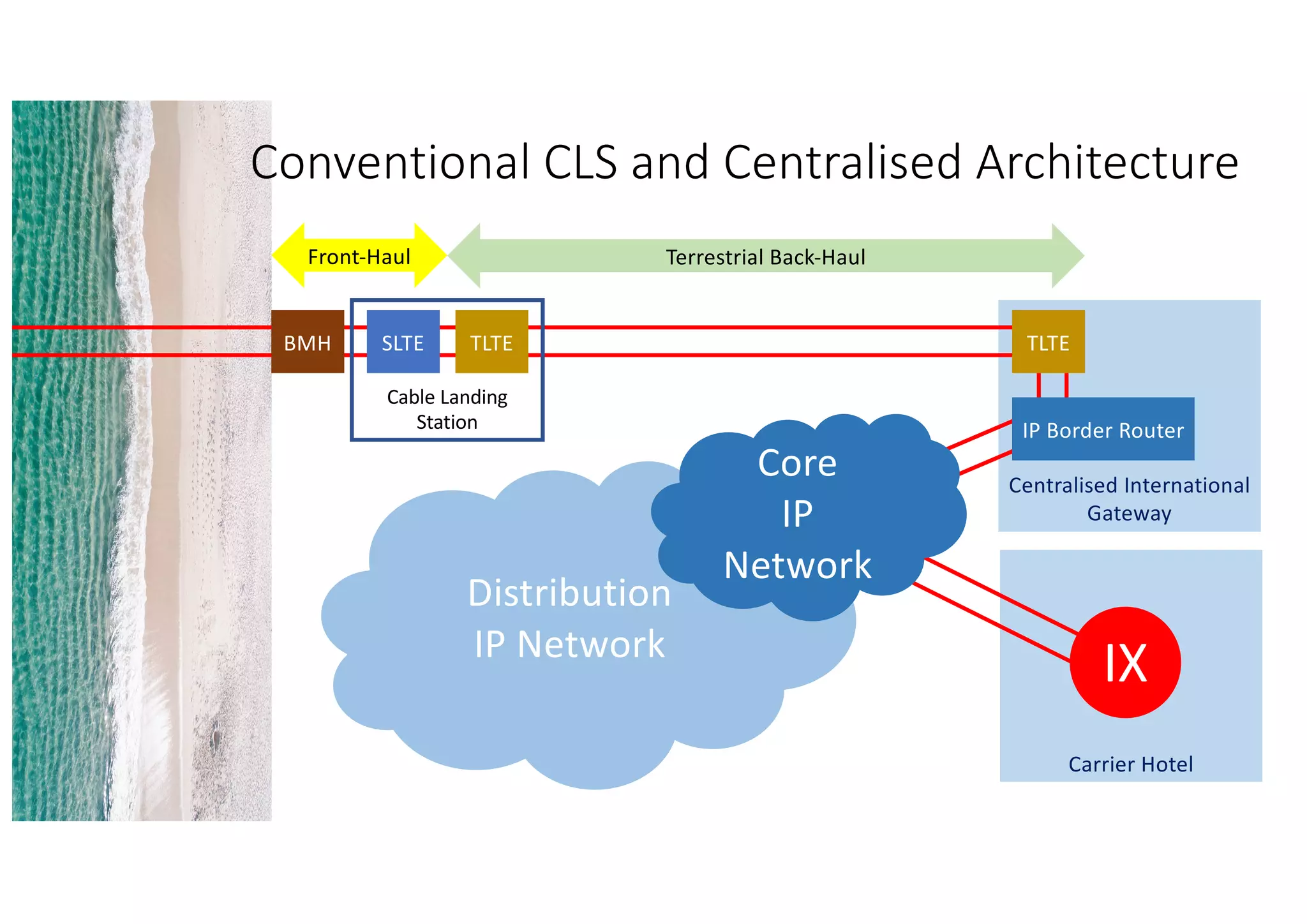
Carrier Hotel
Centralised International
Gateway
BMH SLTE TLTE
Terrestrial Back-HaulFront-Haul
Conventional CLS and Centralised Architecture
Cable Landing
Station
TLTE
IP Border Router
IX
Distribution
IP Network
Core
IP
Network
Neutral City PoP
BMH SLTE
Front-Haul
Crazy Idea = Optical Internet Exchange
Image by Pexels from Pixabay
AS 1
SLTE
ROADM – Reconfigurable Optical Add/Drop Multiplexer
AS 2
AS 3
IP Border Router
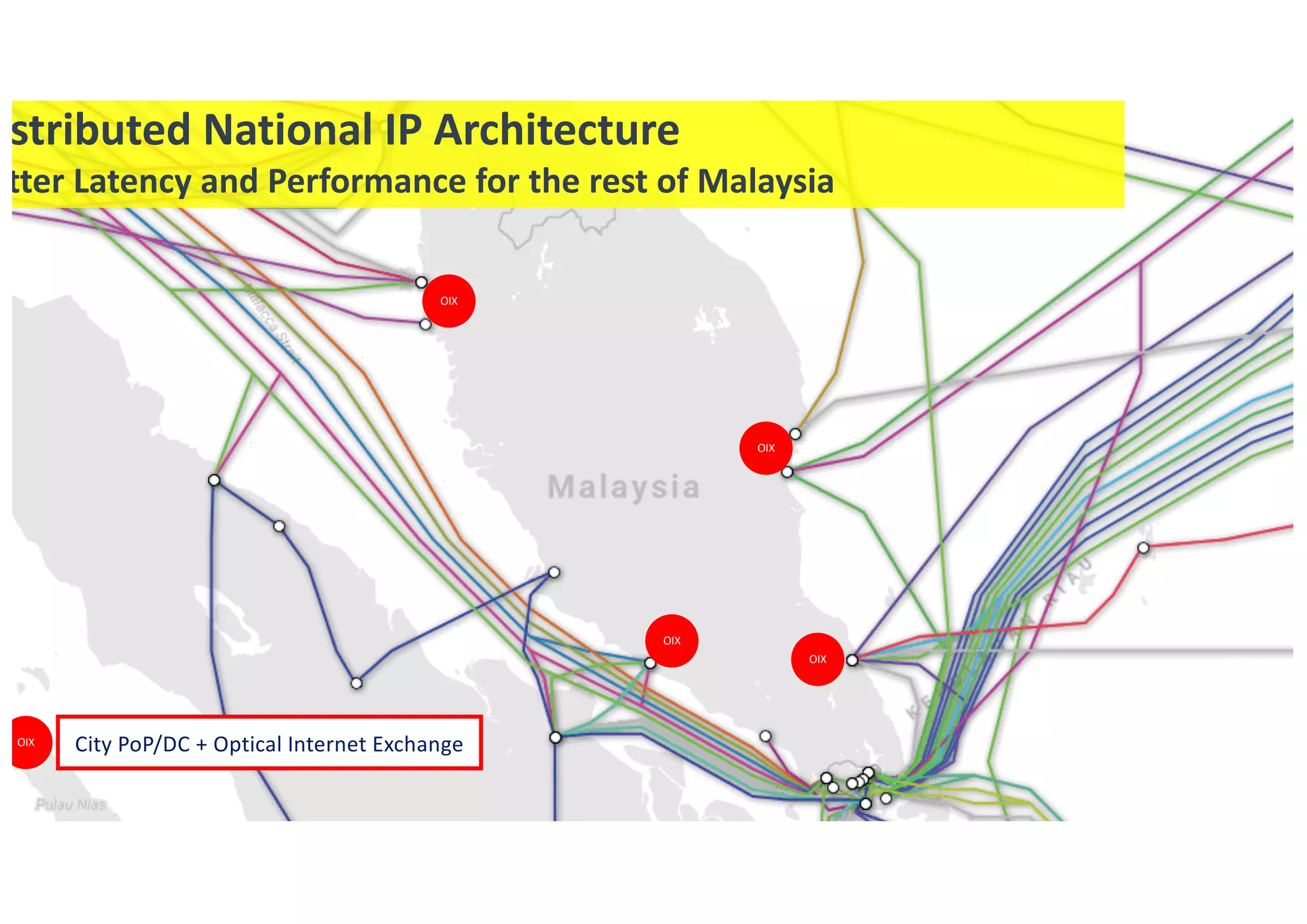
City PoP/DC + Optical Internet ExchangeOIX
OIX
OIX
OIX
OIX
istributed National IP Architecture
etter Latency and Performance for the rest of Malaysia
“Malaysia:
A New Route for
Submarine Cables”
Thank You
Contact me if you
want to play a part in
making this happen
V1.0 JULY 2019

A New Route for Submarine Cables

  • 1.
    “Malaysia: A New Routefor Submarine Cables” Submarine Cable crossing between the Indian Ocean and South China Sea V1.0 JULY 2019
  • 2.
    ASEAN (shipmap.org) The Straitsof Melaka is a extremely strategic waterway in South East Asia. It is the main route for shipping between the Indian Ocean and South China Sea and beyond
  • 3.
    The Straits ofMelaka is ALSO the main route for submarine cables between the Indian Ocean and South China Sea and beyond. So both ships and submarine cables squeeze down the narrow and shallow Straits of Melaka – a less than ideal situation
  • 4.
    Singapore is anEntrepôt in both container cargo and communications cables. Currently estimated to have about 400 Tbps of sub sea capacity (lit and unlit) with about 15-20 Tbps (5%) supplying the island. Concentration Risk?
  • 5.
    The Isthmus ofKra, Thailand Talks of a canal (like Panama and Suez) for shipping have been on and off since 1677. Potentially saving 1200 km. In 1996 the FLAG (Fiber-Optic Link Around the Globe) Europe Asia cable built 2 diverse paths across here. <This Space Intentionally Left Blank> In 2018 AAE-1 (Asia Africa Europe 1) crossed here.
  • 6.
    We have manySCLC’s in Malaysia but they are all termination points for subsea cables: no subsea cables transit Malaysia currently. Cables only land in Malaysia to supply demand IN Malaysia.
  • 7.
    The only majortransit business in Malaysia appears to be taking traffic down to Singapore. This is a growing business, new north south fiberization projects are being planned. They may benefit Malaysia but these also strengthen Singapore’s role as a hub.
  • 8.
    It is timefor Malaysia to play greater role in providing a new subsea cable route for South East Asia.
  • 9.
    You may rightlyask, is there demand for such a route ?You may rightly ask, is there demand for such a route ? Instead, ask this question: Do you think anyone will want an alternative route from the Straits of Melaka with potentially lower latency, lower risk and maybe even lower cost?
  • 10.
    Lets say, hypothetically,if there are people who want to land cables in Malaysia, what would they want? [1] Regulatory and Licensing Clarity (Not in the scope of this paper) [2] Competitive cost based on Fibre Pairs, not bandwidth [3] Open Carrier Neutral Cable Landing Station / Data Centre [4] Extension of the Front-Haul from BMH inland to terminate at SLTE in a City PoP / Data Centre
  • 11.
    DC DC BMH SLTE TLTETLTE BMH SLTE Terrestrial Back-HaulFront-Haul Front-Haul Conventional CLS vs City PoP BMH SLTE TLTE DC Beach Man-Hole Submarine Line Terminal Equipment Terrestrial Line Terminal Equipment Data Centre Cable Landing Station Image by Pexels from Pixabay
  • 12.
    KV onventional CLS BackhaulArchitecture most Everything is dragged back to Klang Valley hile it is true that the greatest demand is there, it means LATENCY to everywhere else is a problem
  • 13.
    Carrier Hotel Centralised International Gateway BMHSLTE TLTE Terrestrial Back-HaulFront-Haul Conventional CLS and Centralised Architecture Cable Landing Station TLTE IP Border Router IX Distribution IP Network Core IP Network
  • 14.
    Neutral City PoP BMHSLTE Front-Haul Crazy Idea = Optical Internet Exchange Image by Pexels from Pixabay AS 1 SLTE ROADM – Reconfigurable Optical Add/Drop Multiplexer AS 2 AS 3 IP Border Router
  • 15.
    City PoP/DC +Optical Internet ExchangeOIX OIX OIX OIX OIX istributed National IP Architecture etter Latency and Performance for the rest of Malaysia
  • 16.
    “Malaysia: A New Routefor Submarine Cables” Thank You Contact me if you want to play a part in making this happen V1.0 JULY 2019