For more best practices on talent management and employee engagement, visit monsterthinking.comWe Conducted the Survey, Now What? Turning Data Into Action®Presented by:Chris DustinExecutive Vice President of ConsultingHR Solutions, Inc.August 11, 2011http://www.facebook.com/monsterww@monster_works @monsterww http://www.monsterthinking.com/http://www.youtube.com/user/MonsterVideoVault
AgendaWhy Employee Surveys Are ValuableThe Importance of Action PlanningWhat is Employee Engagement and Why Does It Matter?Turning Data Into Action®Action Planning ProcessAction Planning Best PracticesFinal ThoughtsQ & A
Why Employee Surveys Are Valuable
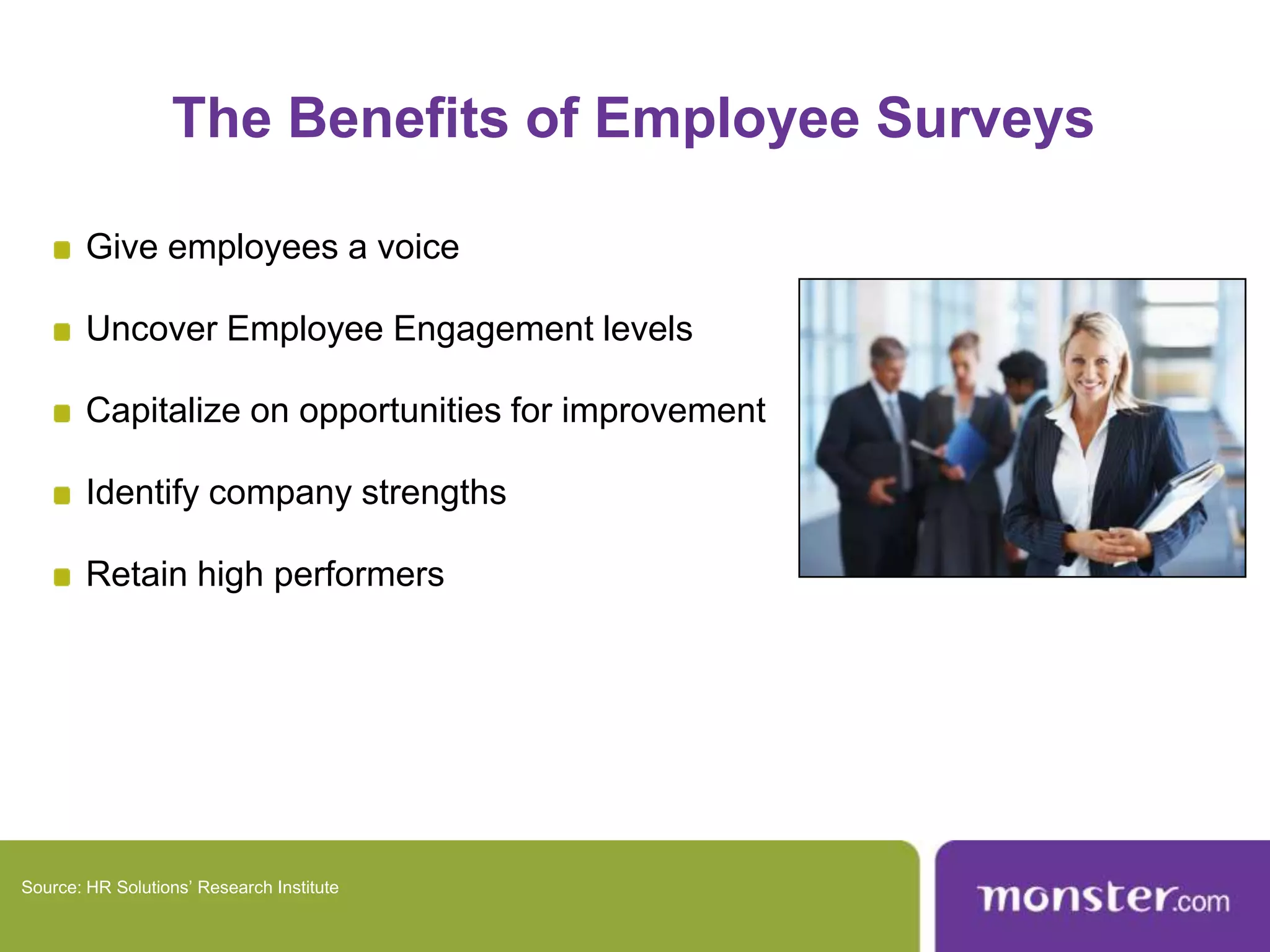
The Benefits of Employee SurveysGive employees a voiceUncover Employee Engagement levelsCapitalize on opportunities for improvementIdentify company strengthsRetain high performersSource: HR Solutions’ Research Institute
The Importance of Action Planning
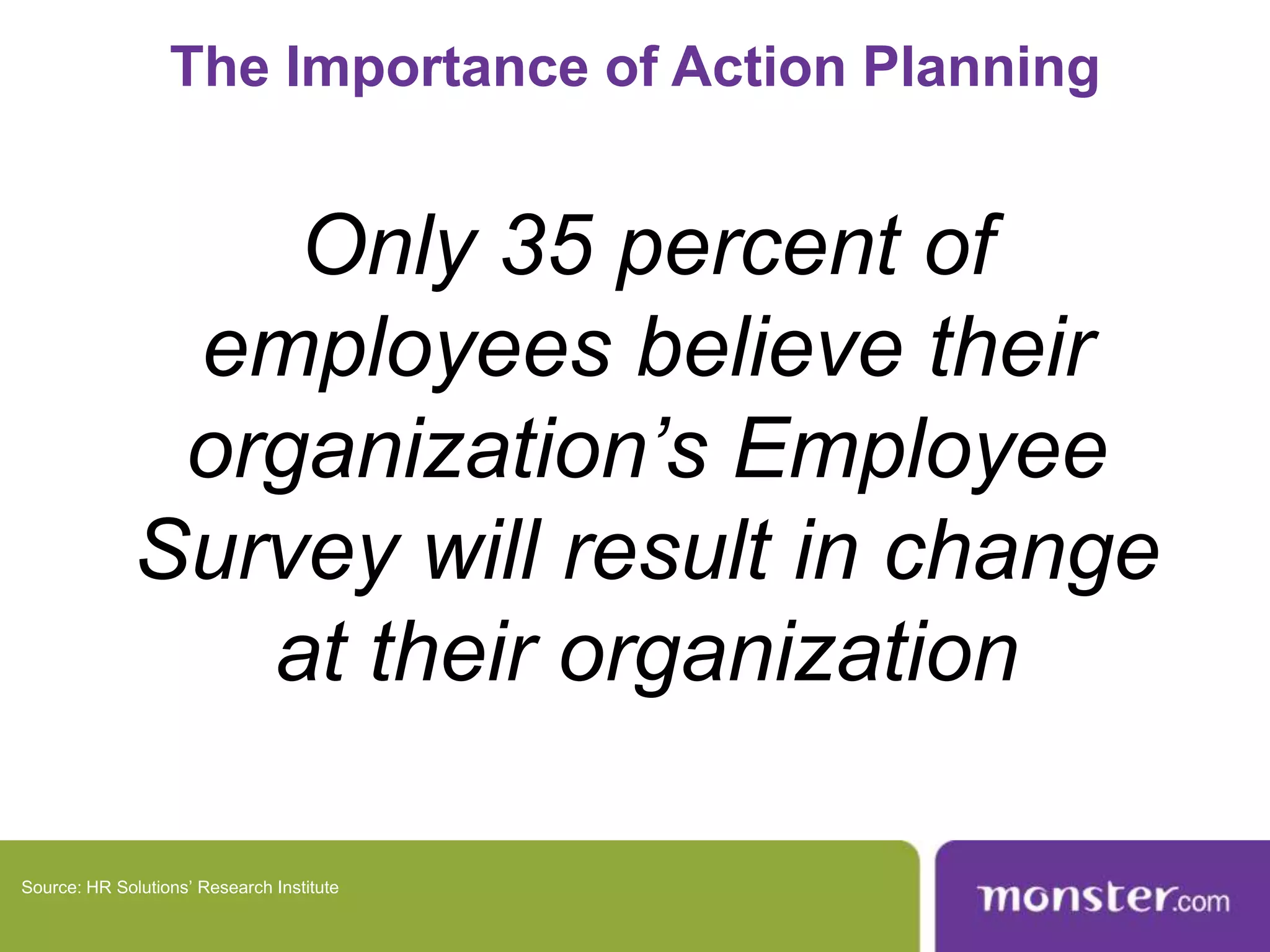
The Importance of Action PlanningOnly 35 percent of employees believe their organization’s Employee Survey will result in change at their organizationSource: HR Solutions’ Research Institute
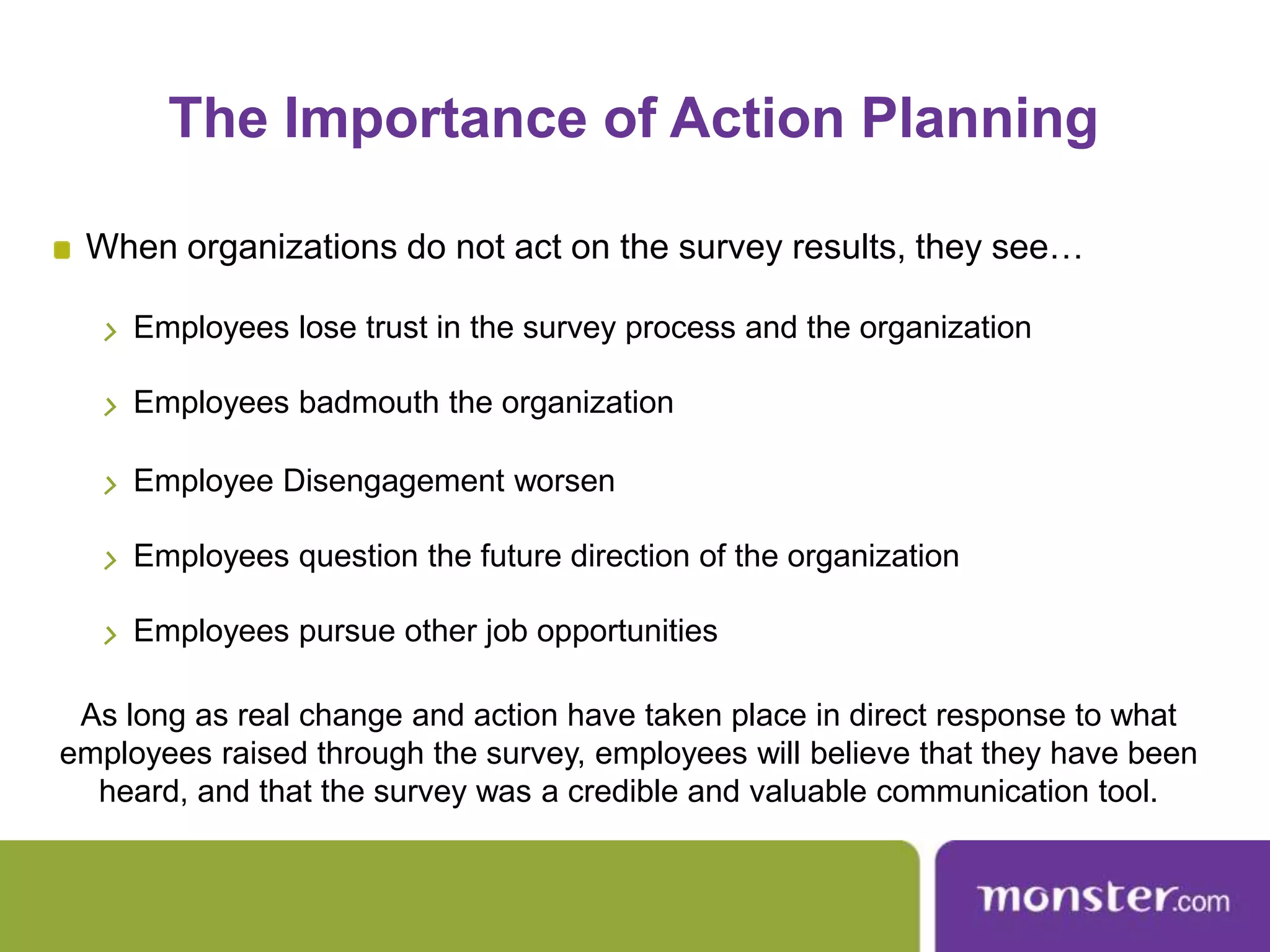
The Importance of Action PlanningWhen organizations do not act on the survey results, they see…Employees lose trust in the survey process and the organization
Employees badmouth the organization
Employee Disengagement worsen
Employees question the future direction of the organization
Employees pursue other job opportunitiesAs long as real change and action have taken place in direct response to what employees raised through the survey, employees will believe that they have been heard, and that the survey was a credible and valuable communication tool.
What Is Employee Engagement and Why Does It Matter?
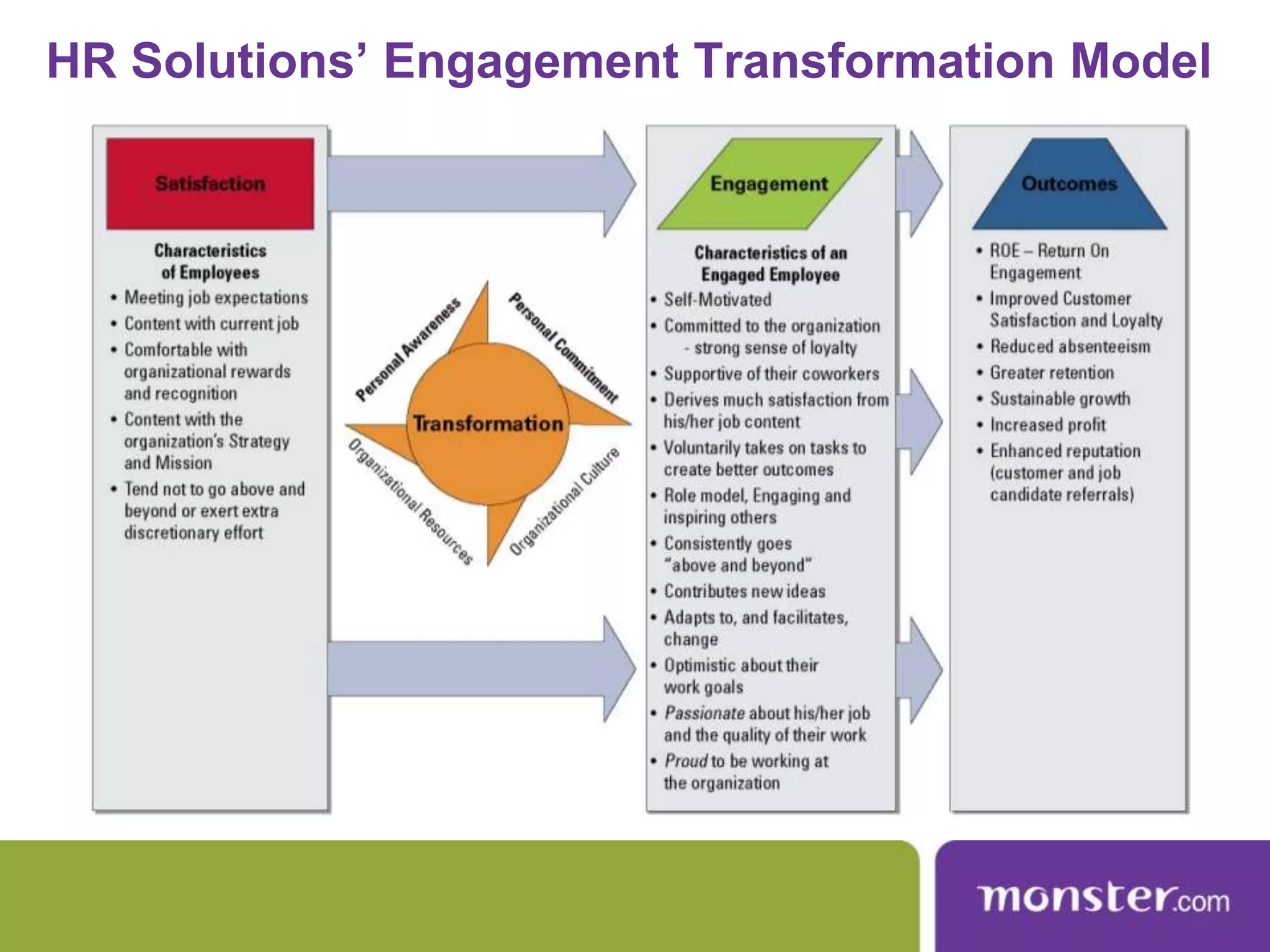
What is Employee Engagement?Engaged Employeesshare a strong desire to be part of the value that the organization creates.These are the employees who: Feel a strong emotional bond and intellectual commitment to the organization that employs them Choose to exert discretionary effort to provide better outcomes for customers and the organization
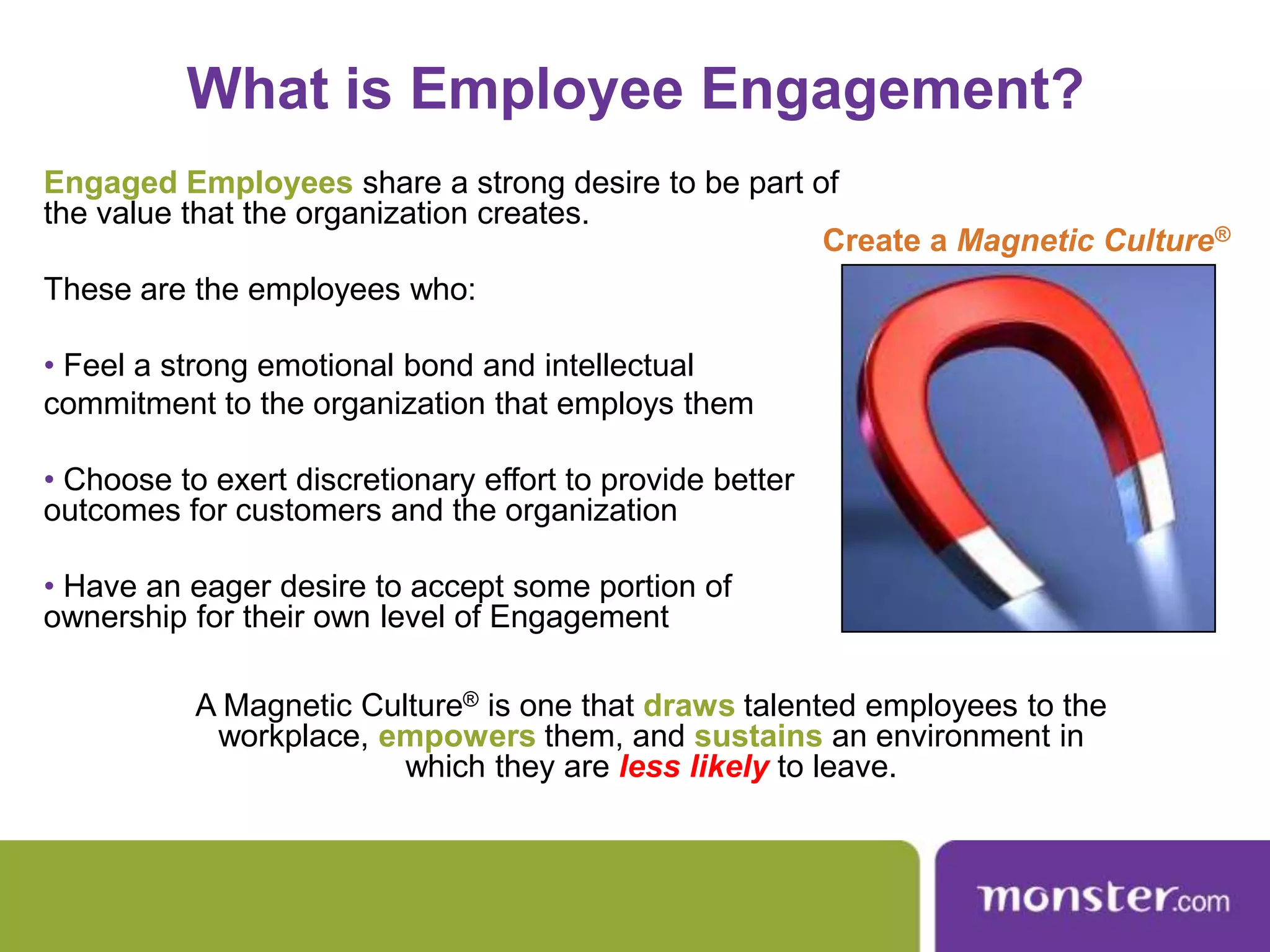
 Have an eager desire to accept some portion of ownership for their own level of EngagementCreate a Magnetic Culture®A Magnetic Culture® is one that draws talented employees to the workplace, empowers them, and sustains an environment in which they are less likely to leave.
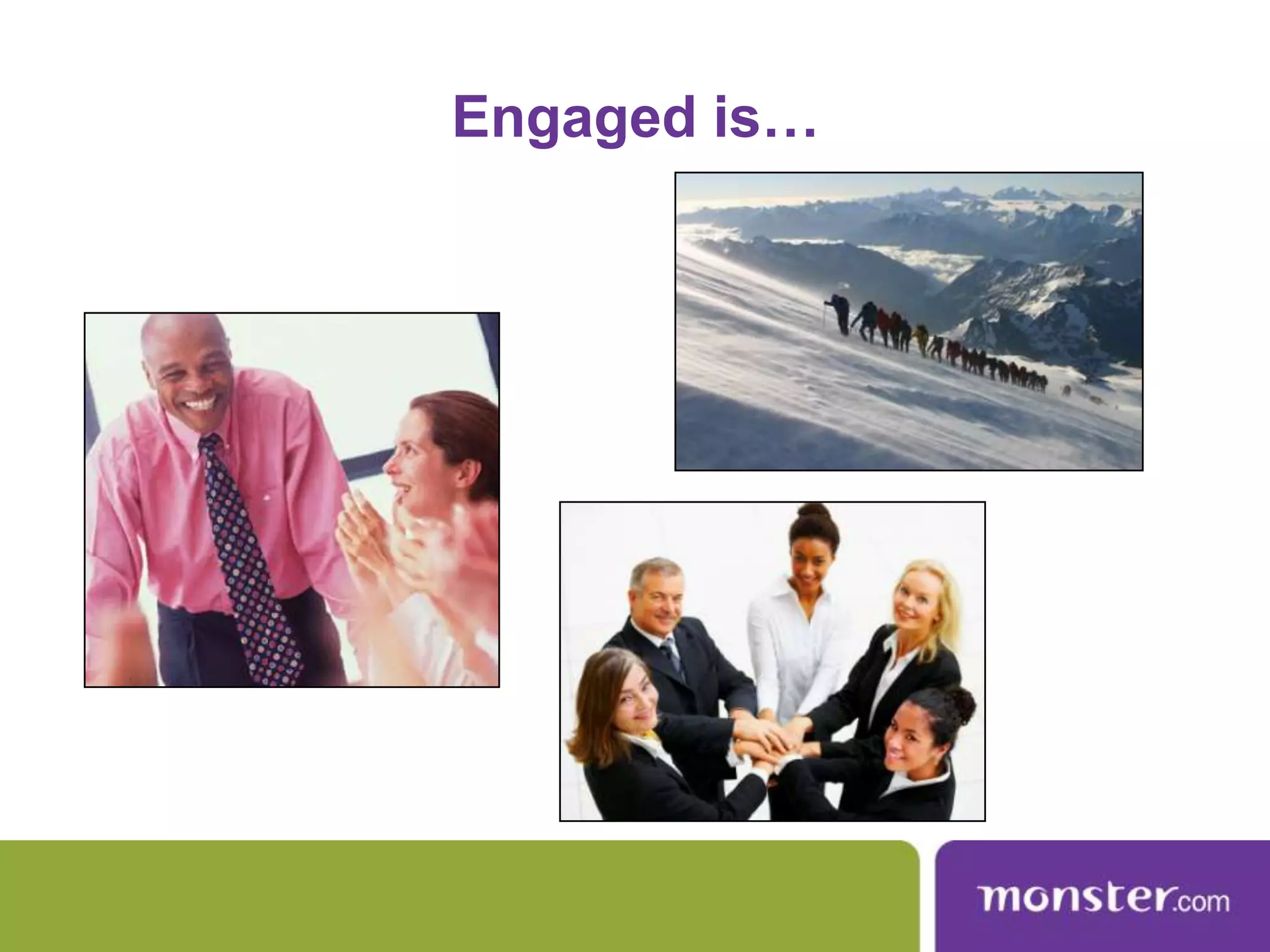
Engaged is…
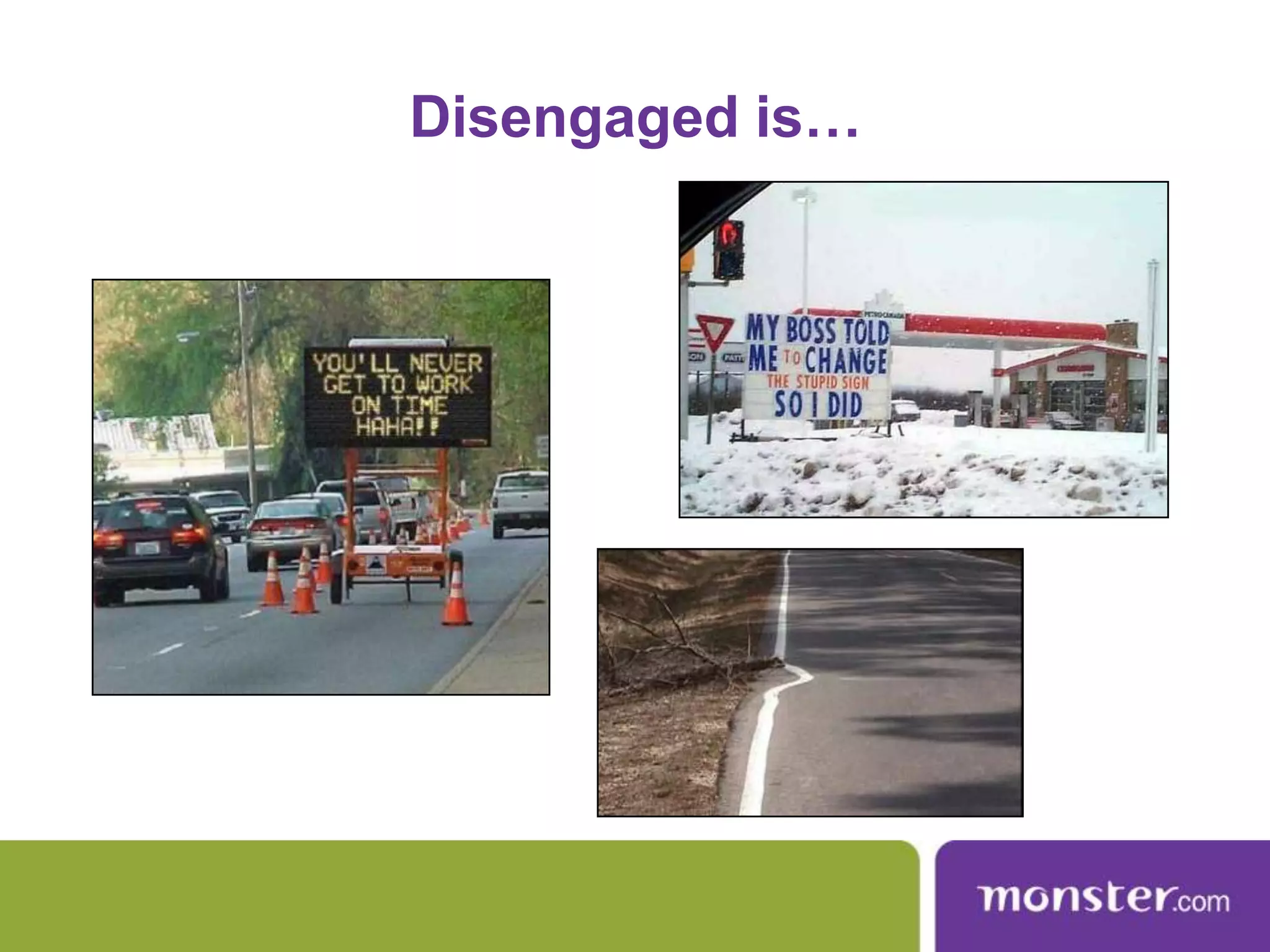
Disengaged is…
HR Solutions’ Engagement Transformation Model
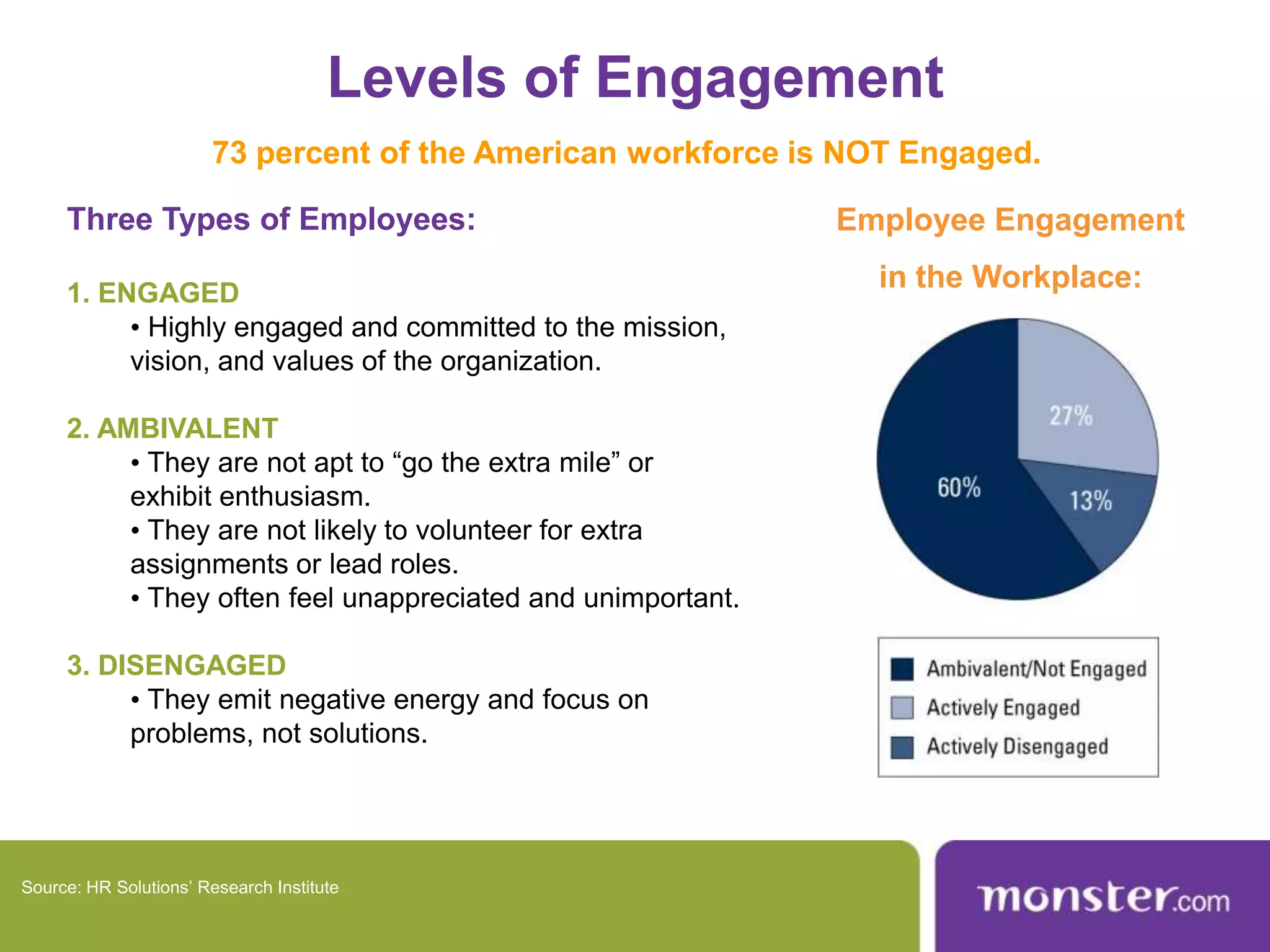
Levels of Engagement73 percent of the American workforce is NOT Engaged.Three Types of Employees: ENGAGED Highly engaged and committed to the mission, vision, and values of the organization. AMBIVALENT  They are not apt to “go the extra mile” or exhibit enthusiasm. 
 They are not likely to volunteer for extra assignments or lead roles. 
 They often feel unappreciated and unimportant.  DISENGAGED They emit negative energy and focus on problems, not solutions.Employee Engagement in the Workplace:Source: HR Solutions’ Research Institute
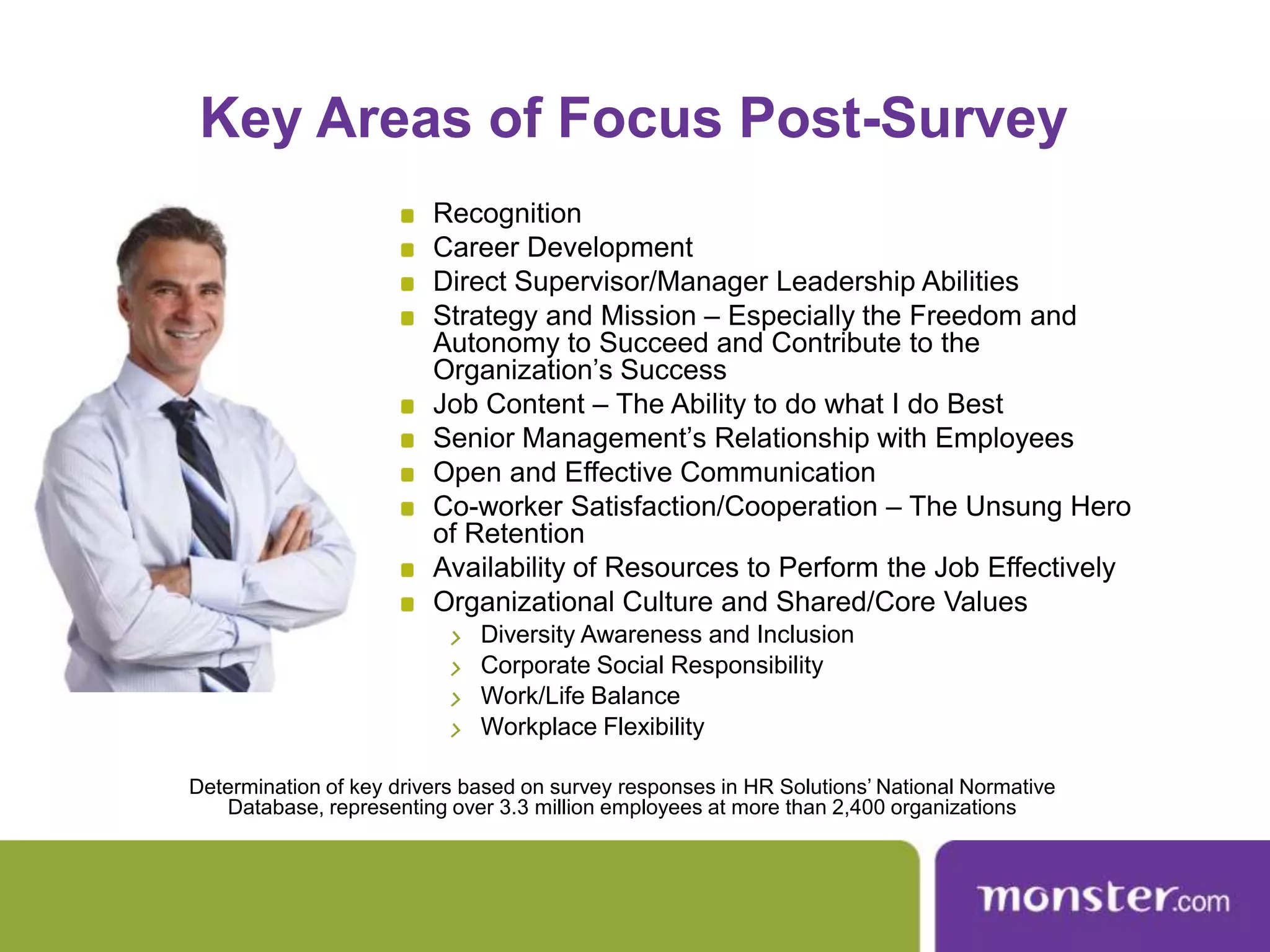
Key Areas of Focus Post-SurveyRecognitionCareer DevelopmentDirect Supervisor/Manager Leadership AbilitiesStrategy and Mission – Especially the Freedom and Autonomy to Succeed and Contribute to the Organization’s SuccessJob Content – The Ability to do what I do BestSenior Management’s Relationship with EmployeesOpen and Effective CommunicationCo-worker Satisfaction/Cooperation – The Unsung Hero of RetentionAvailability of Resources to Perform the Job EffectivelyOrganizational Culture and Shared/Core ValuesDiversity Awareness and Inclusion
Corporate Social Responsibility
Work/Life Balance
Workplace FlexibilityDetermination of key drivers based on survey responses in HR Solutions’ National Normative Database, representing over 3.3 million employees at more than 2,400 organizations
Effective Action Planning Leads to Return on Engagement™ (ROE)What is ROE?An engaged, productive workforce leads to a higher bottom lineEngaged employees are 3.5 times more likely to stay with their employer, reducing employee turnover costs Engaged employees are more likely to recommend/speak positively of their organization to friends and familySatisfied employees are linked to satisfied customers at a correlation coefficient of .85Source: HR Solutions’ Research Institute
Turning Data Into Action®
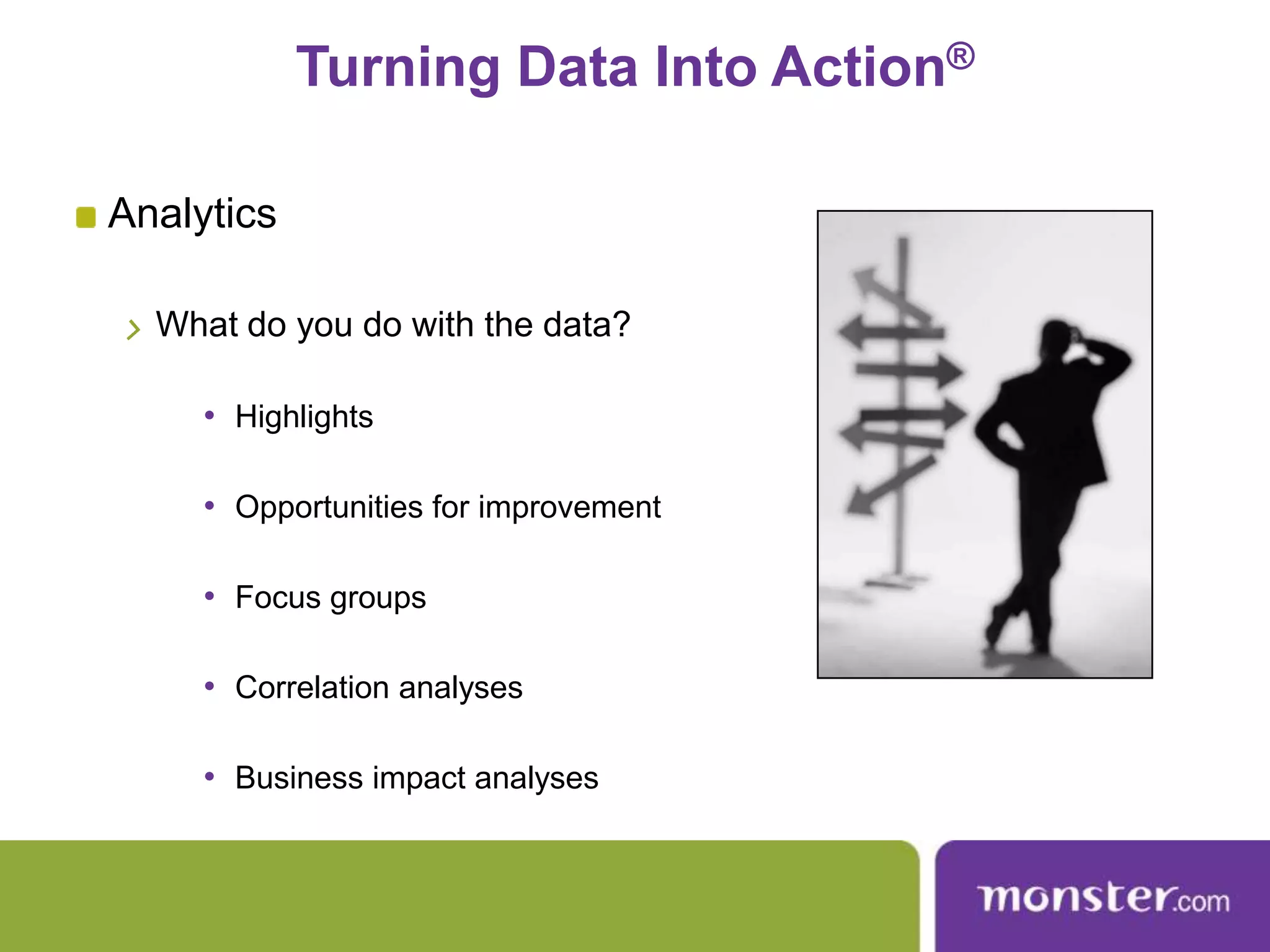
Turning Data Into Action®AnalyticsWhat do you do with the data?HighlightsOpportunities for improvementFocus groupsCorrelation analysesBusiness impact analyses

Turning Employee Survey Data Into Action

  • 1.
    For more bestpractices on talent management and employee engagement, visit monsterthinking.comWe Conducted the Survey, Now What? Turning Data Into Action®Presented by:Chris DustinExecutive Vice President of ConsultingHR Solutions, Inc.August 11, 2011http://www.facebook.com/monsterww@monster_works @monsterww http://www.monsterthinking.com/http://www.youtube.com/user/MonsterVideoVault
  • 2.
    AgendaWhy Employee SurveysAre ValuableThe Importance of Action PlanningWhat is Employee Engagement and Why Does It Matter?Turning Data Into Action®Action Planning ProcessAction Planning Best PracticesFinal ThoughtsQ & A
  • 3.
  • 4.
    The Benefits ofEmployee SurveysGive employees a voiceUncover Employee Engagement levelsCapitalize on opportunities for improvementIdentify company strengthsRetain high performersSource: HR Solutions’ Research Institute
  • 5.
    The Importance ofAction Planning
  • 6.
    The Importance ofAction PlanningOnly 35 percent of employees believe their organization’s Employee Survey will result in change at their organizationSource: HR Solutions’ Research Institute
  • 7.
    The Importance ofAction PlanningWhen organizations do not act on the survey results, they see…Employees lose trust in the survey process and the organization
  • 8.
  • 9.
  • 10.
    Employees question thefuture direction of the organization
  • 11.
    Employees pursue otherjob opportunitiesAs long as real change and action have taken place in direct response to what employees raised through the survey, employees will believe that they have been heard, and that the survey was a credible and valuable communication tool.
  • 12.
    What Is EmployeeEngagement and Why Does It Matter?
  • 13.
    What is EmployeeEngagement?Engaged Employeesshare a strong desire to be part of the value that the organization creates.These are the employees who: Feel a strong emotional bond and intellectual commitment to the organization that employs them Choose to exert discretionary effort to provide better outcomes for customers and the organization
  • 14.
    Have aneager desire to accept some portion of ownership for their own level of EngagementCreate a Magnetic Culture®A Magnetic Culture® is one that draws talented employees to the workplace, empowers them, and sustains an environment in which they are less likely to leave.
  • 15.
  • 16.
  • 17.
    HR Solutions’ EngagementTransformation Model
  • 18.
    Levels of Engagement73percent of the American workforce is NOT Engaged.Three Types of Employees: ENGAGED Highly engaged and committed to the mission, vision, and values of the organization. AMBIVALENT They are not apt to “go the extra mile” or exhibit enthusiasm. 
  • 19.
    They arenot likely to volunteer for extra assignments or lead roles. 
  • 20.
    They oftenfeel unappreciated and unimportant. DISENGAGED They emit negative energy and focus on problems, not solutions.Employee Engagement in the Workplace:Source: HR Solutions’ Research Institute
  • 21.
    Key Areas ofFocus Post-SurveyRecognitionCareer DevelopmentDirect Supervisor/Manager Leadership AbilitiesStrategy and Mission – Especially the Freedom and Autonomy to Succeed and Contribute to the Organization’s SuccessJob Content – The Ability to do what I do BestSenior Management’s Relationship with EmployeesOpen and Effective CommunicationCo-worker Satisfaction/Cooperation – The Unsung Hero of RetentionAvailability of Resources to Perform the Job EffectivelyOrganizational Culture and Shared/Core ValuesDiversity Awareness and Inclusion
  • 22.
  • 23.
  • 24.
    Workplace FlexibilityDetermination ofkey drivers based on survey responses in HR Solutions’ National Normative Database, representing over 3.3 million employees at more than 2,400 organizations
  • 25.
    Effective Action PlanningLeads to Return on Engagement™ (ROE)What is ROE?An engaged, productive workforce leads to a higher bottom lineEngaged employees are 3.5 times more likely to stay with their employer, reducing employee turnover costs Engaged employees are more likely to recommend/speak positively of their organization to friends and familySatisfied employees are linked to satisfied customers at a correlation coefficient of .85Source: HR Solutions’ Research Institute
  • 26.
  • 27.
    Turning Data IntoAction®AnalyticsWhat do you do with the data?HighlightsOpportunities for improvementFocus groupsCorrelation analysesBusiness impact analyses
  • 28.
    Turning Data IntoAction®Action planningSet realistic timelines Determine people responsible for creating and fulfilling action plansEstablish accountability through bonus metrics/performance evaluations
  • 29.
  • 30.
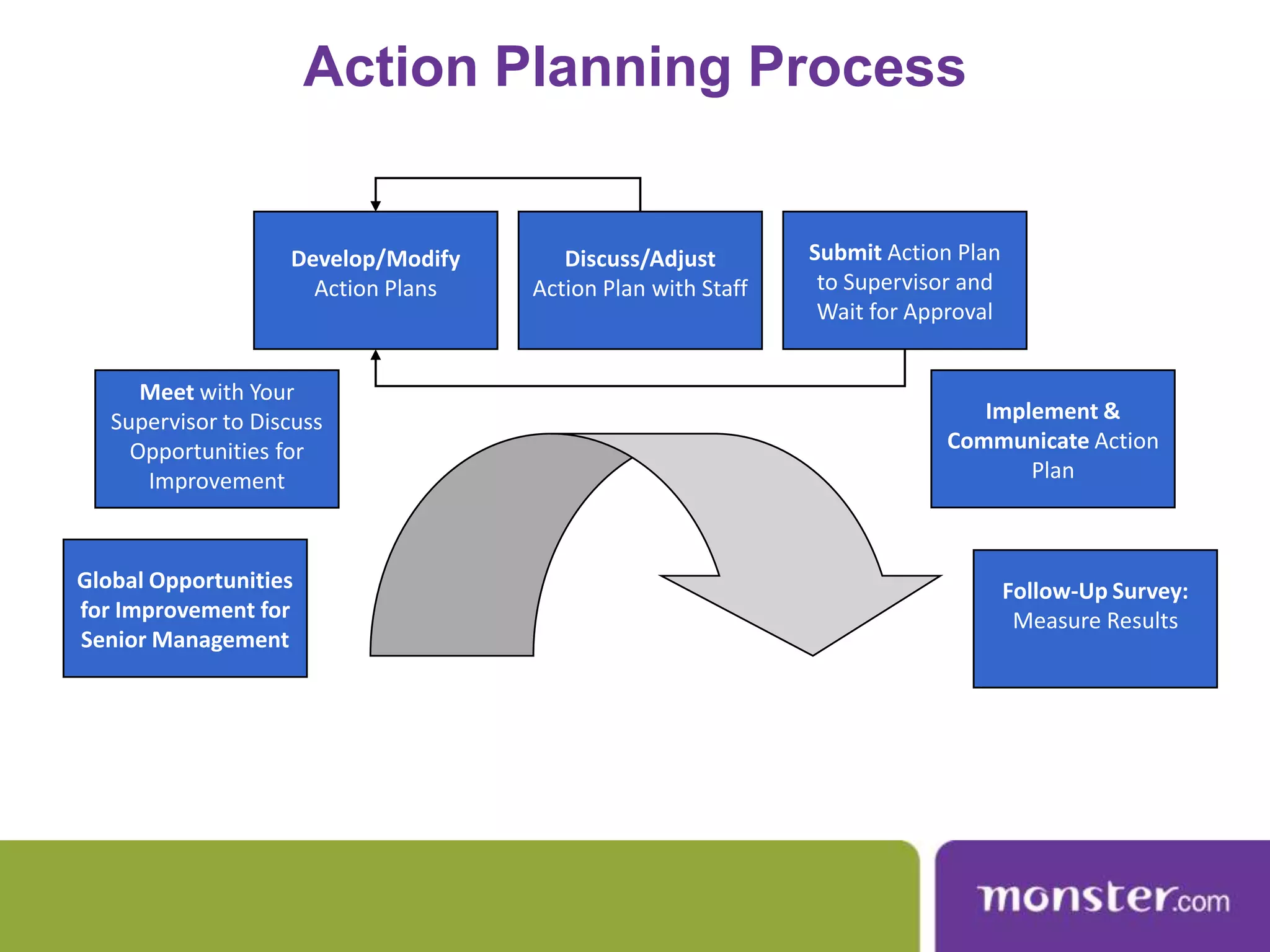
    Action Planning ProcessGlobalOpportunities for Improvement for Senior ManagementMeet with Your Supervisor to Discuss Opportunities for ImprovementDevelop/Modify Action PlansDiscuss/Adjust Action Plan with StaffSubmit Action Plan to Supervisor and Wait for ApprovalImplement & Communicate Action PlanFollow-Up Survey: Measure Results
  • 31.
  • 32.
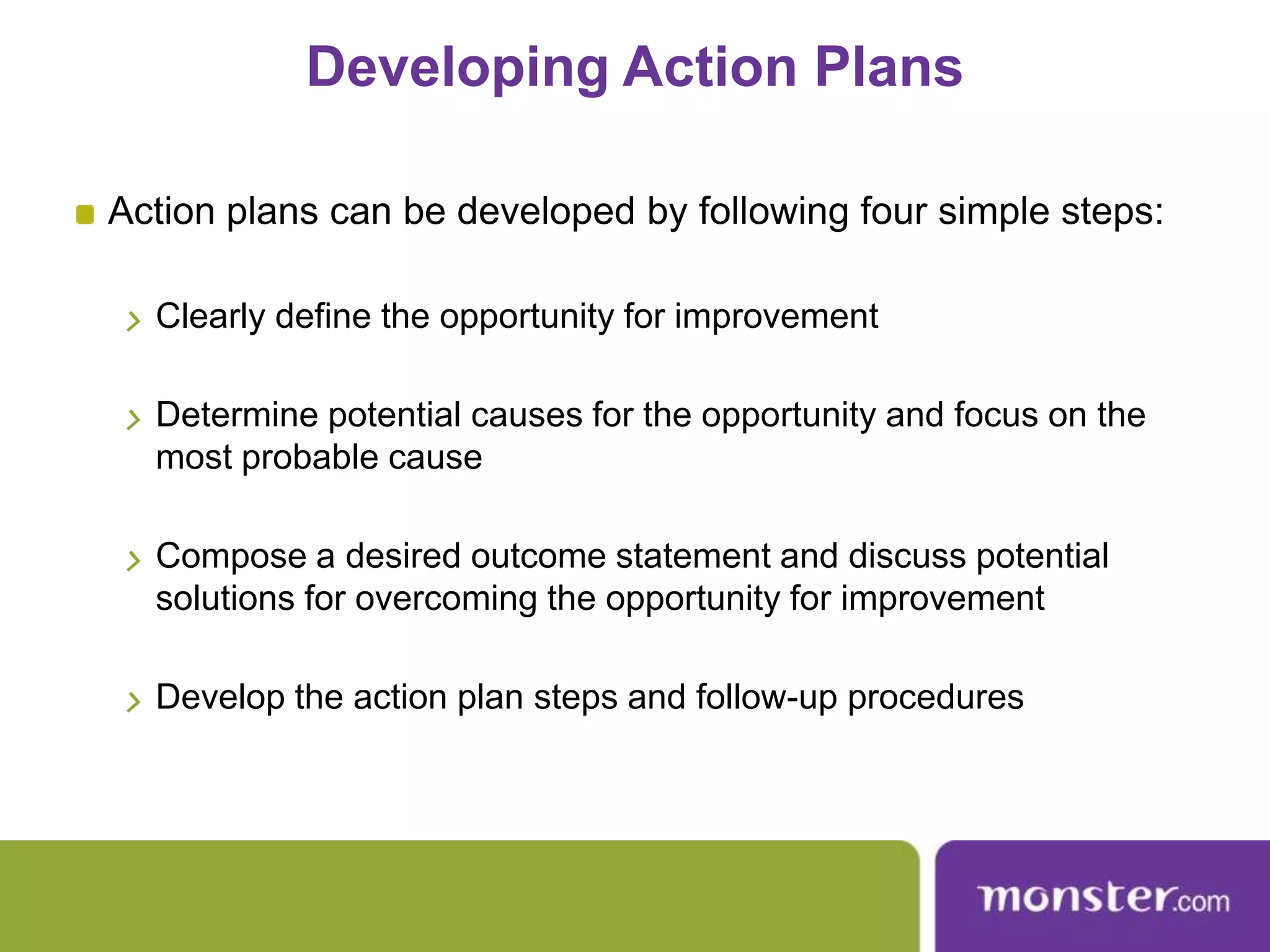
    Developing Action PlansActionplans can be developed by following four simple steps:Clearly define the opportunity for improvementDetermine potential causes for the opportunity and focus on the most probable causeCompose a desired outcome statement and discuss potential solutions for overcoming the opportunity for improvementDevelop the action plan steps and follow-up procedures
  • 33.
    Action Planning BestPracticesOpenly communicate the results of the survey to highlight the strengths and link the areas in need of improvement with specific action plans
  • 34.
    Department heads shouldmeet with supervisors in their department to discuss/clarify the survey results and design a plan for action
  • 35.
    As the implementationprocess unfolds and changes take place, the organization should send periodic updates to employees regarding the status of the action plan items
  • 36.
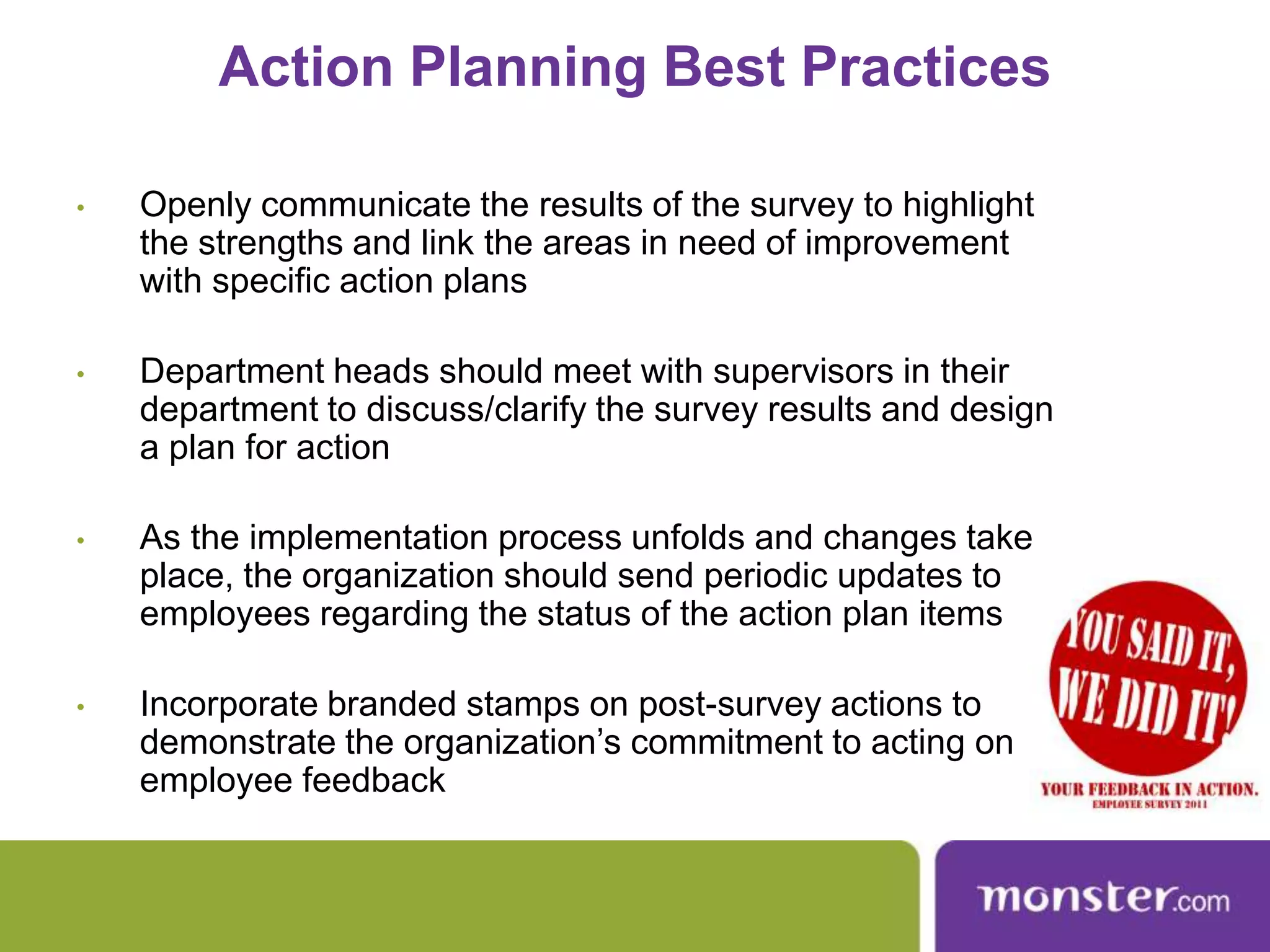
    Incorporate branded stampson post-survey actions to demonstrate the organization’s commitment to acting on employee feedbackAction Planning Best PracticesMake managers accountable for action planning
  • 37.
    Explain to employeesthat they play an active role in developing action plans
  • 38.
    Measure the resultsof the action planThree months after the action plans have been implemented, the organization should measure the results
  • 39.
  • 40.
    Final ThoughtsEmployee EngagementSurveys are valuable tools organizations can use to identify, improve and maintain their overall level of EngagementEmployee Surveys should be ongoing, not one-time eventsOrganizations must act on employee feedbackAccountability is the crucial ingredient for implementing action plans; without it, little or no change will occur
  • 41.
    Questions/Comments?Please e-mail anyadditional questions to: info@hrsolutionsinc.comwww.twitter.com/engageemployees | www.hrsolutionsinc.com/emporium