Biomaterials and its
applications
Presented by:-
Mohan Agrawal
Department of Biotechnology
G.IET,Gunupur
Roll no.11Bt 002.
 Definition
 Characteristics of biomaterials.
 Examples of biomaterials.
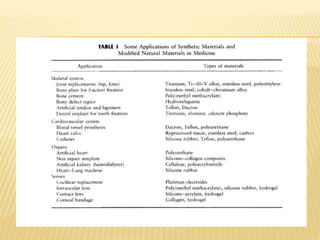
 Some applications of synthetic materials and modified
natural materials in medicine.
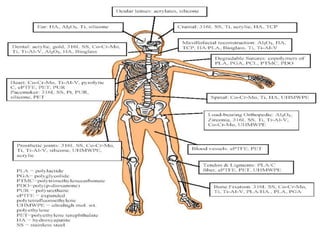
 Materials used in body.
 Properties of biomaterials.
outline
Biomaterials:
 The material that are biocompatibility with the living tissues of our
body or to adjust with the tissue of biology.
 OR
 A non-viable material used in medical device, intended to interact
with biological system.
Biocompatibility:
 Physiological State of mutual co-existence between a biomaterial
and the environment such as neither has an undesirable effect on
the other.
 OR
 It also means that materials described display good or harmonious
behavior in contact with tissue & body fluid.
Definition
Bioinert:
 No host response to the material.
Bio functionality:
 Playing a specific function in physical and mechanical terms.
Characteristics of biomaterials
Physical requirements
. Hard materials.
 Flexible materials.
Chemical requirements
 Must not react with any tissue in the body.
 Must be non-toxic to the body.
 Long term replacement must not be biodegradable.
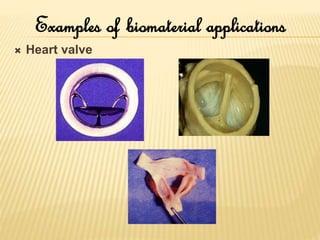
 Heart valve
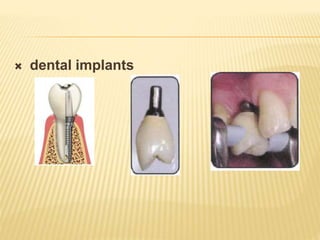
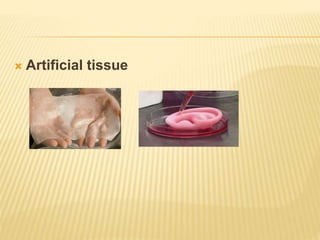
Examples of biomaterial applications
 dental implants
 hip replacements
 Intra ocular lenses
 Artificial tissue
 vascular grafts
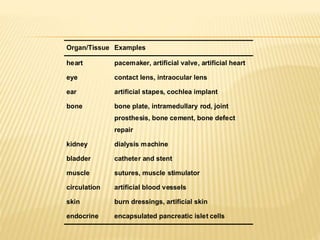
Organ/Tissue Examples
heart pacemaker, artificial valve, artificial heart
eye contact lens, intraocular lens
ear artificial stapes, cochlea implant
bone bone plate, intramedullary rod, joint
prosthesis, bone cement, bone defect
repair
kidney dialysis machine
bladder catheter and stent
muscle sutures, muscle stimulator
circulation artificial blood vessels
skin burn dressings, artificial skin
endocrine encapsulated pancreatic islet cells
 Mechanical properties
 Thermal properties
 Optical properties
 Electrical properties
 Surface properties
Properties of biomaterials
 Mechanical properties include those characteristics of
material that describe the behavior under the action of
external force.
 Mechanical properties can be determined by conducting
experimental test on the material specimen.
 Mechanical properties determine the behavior of
engineering Material under applied forces and loads. the
response of the material to applied forces will depends on
the type of bonding and structural arrangement of atom and
molecules.
 Force applied will lead to deformation and if continued
beyond a certain point will lead to ultimate failure
 The force ----- STRESS and
 Deformation is known as STRAIN
Mechanical properties
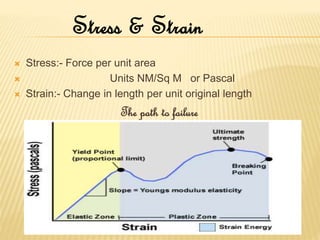
 Stress:- Force per unit area
 Units NM/Sq M or Pascal
 Strain:- Change in length per unit original length
The path to failure
Stress & Strain
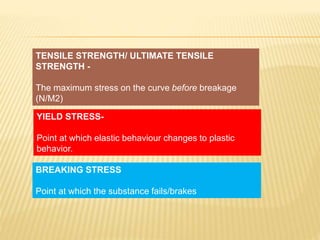
TENSILE STRENGTH/ ULTIMATE TENSILE
STRENGTH -
The maximum stress on the curve before breakage
(N/M2)
YIELD STRESS-
Point at which elastic behaviour changes to plastic
behavior.
BREAKING STRESS
Point at which the substance fails/brakes
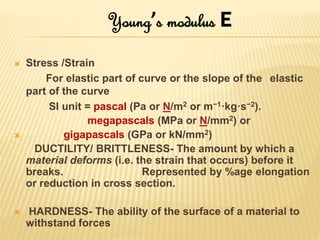
 Stress /Strain
For elastic part of curve or the slope of the elastic
part of the curve
SI unit = pascal (Pa or N/m2 or m−1·kg·s−2).
megapascals (MPa or N/mm2) or
 gigapascals (GPa or kN/mm2)
DUCTILITY/ BRITTLENESS- The amount by which a
material deforms (i.e. the strain that occurs) before it
breaks. Represented by %age elongation
or reduction in cross section.
 HARDNESS- The ability of the surface of a material to
withstand forces
Young’s modulus E
 The Yield Point = marks the onset of plastic deformation
 Plastic Region = Beyond the yield point, irreversible (plastic)
deformation takes place
 Various mechanical properties are:
 Elasticity
 Plasticity
 Toughness
 Tensile strength
 Yield strength
 Ductility
 Malleability
 Brittleness
 Hardness
 Fatigue
 Wear resistance
 By thermal properties is meant the response of a
material to the application of heat, as a solid absorb
energy in the form of heat, its temperature rises and its
dimension increases.
 The thermal properties of material are essential in order
to evaluate the thermal behavior of solid i.e. their
response to thermal changes, the lowering or rising of
temperature.
 The thermal properties are:
 heat capacity
 thermal expansion
 thermal conductivity
Thermal properties
 thermal stability
 specific heat
 Melting point
 thermal shock resistance
Electrical properties
 Material is then ability to permit or resist the flow of
electricity
 resistivity
 conductivity
 dielectric strength
 Thermoelectricity
 Temperature co-efficient resistance
electrical properties are:
The optical properties are:
 absorptivity
 color
 luminosity
 photosensitivity
 reflectivity
 refractive index
 scattering
 transmittance
 electromagnetic radiations
Optical properties
Biomaterials and its applications.

Biomaterials and its applications.

  • 1.
    Biomaterials and its applications Presentedby:- Mohan Agrawal Department of Biotechnology G.IET,Gunupur Roll no.11Bt 002.
  • 2.
     Definition  Characteristicsof biomaterials.  Examples of biomaterials.  Some applications of synthetic materials and modified natural materials in medicine.  Materials used in body.  Properties of biomaterials. outline
  • 3.
    Biomaterials:  The materialthat are biocompatibility with the living tissues of our body or to adjust with the tissue of biology.  OR  A non-viable material used in medical device, intended to interact with biological system. Biocompatibility:  Physiological State of mutual co-existence between a biomaterial and the environment such as neither has an undesirable effect on the other.  OR  It also means that materials described display good or harmonious behavior in contact with tissue & body fluid. Definition
  • 4.
    Bioinert:  No hostresponse to the material. Bio functionality:  Playing a specific function in physical and mechanical terms.
  • 5.
    Characteristics of biomaterials Physicalrequirements . Hard materials.  Flexible materials. Chemical requirements  Must not react with any tissue in the body.  Must be non-toxic to the body.  Long term replacement must not be biodegradable.
  • 6.
     Heart valve Examplesof biomaterial applications
  • 7.
  • 8.
  • 9.
  • 10.
  • 11.
  • 12.
    Organ/Tissue Examples heart pacemaker,artificial valve, artificial heart eye contact lens, intraocular lens ear artificial stapes, cochlea implant bone bone plate, intramedullary rod, joint prosthesis, bone cement, bone defect repair kidney dialysis machine bladder catheter and stent muscle sutures, muscle stimulator circulation artificial blood vessels skin burn dressings, artificial skin endocrine encapsulated pancreatic islet cells
  • 15.
     Mechanical properties Thermal properties  Optical properties  Electrical properties  Surface properties Properties of biomaterials
  • 16.
     Mechanical propertiesinclude those characteristics of material that describe the behavior under the action of external force.  Mechanical properties can be determined by conducting experimental test on the material specimen.  Mechanical properties determine the behavior of engineering Material under applied forces and loads. the response of the material to applied forces will depends on the type of bonding and structural arrangement of atom and molecules.  Force applied will lead to deformation and if continued beyond a certain point will lead to ultimate failure  The force ----- STRESS and  Deformation is known as STRAIN Mechanical properties
  • 17.
     Stress:- Forceper unit area  Units NM/Sq M or Pascal  Strain:- Change in length per unit original length The path to failure Stress & Strain
  • 18.
    TENSILE STRENGTH/ ULTIMATETENSILE STRENGTH - The maximum stress on the curve before breakage (N/M2) YIELD STRESS- Point at which elastic behaviour changes to plastic behavior. BREAKING STRESS Point at which the substance fails/brakes
  • 19.
     Stress /Strain Forelastic part of curve or the slope of the elastic part of the curve SI unit = pascal (Pa or N/m2 or m−1·kg·s−2). megapascals (MPa or N/mm2) or  gigapascals (GPa or kN/mm2) DUCTILITY/ BRITTLENESS- The amount by which a material deforms (i.e. the strain that occurs) before it breaks. Represented by %age elongation or reduction in cross section.  HARDNESS- The ability of the surface of a material to withstand forces Young’s modulus E
  • 20.
     The YieldPoint = marks the onset of plastic deformation  Plastic Region = Beyond the yield point, irreversible (plastic) deformation takes place  Various mechanical properties are:  Elasticity  Plasticity  Toughness  Tensile strength  Yield strength  Ductility  Malleability  Brittleness  Hardness  Fatigue  Wear resistance
  • 21.
     By thermalproperties is meant the response of a material to the application of heat, as a solid absorb energy in the form of heat, its temperature rises and its dimension increases.  The thermal properties of material are essential in order to evaluate the thermal behavior of solid i.e. their response to thermal changes, the lowering or rising of temperature.  The thermal properties are:  heat capacity  thermal expansion  thermal conductivity Thermal properties
  • 22.
     thermal stability specific heat  Melting point  thermal shock resistance Electrical properties  Material is then ability to permit or resist the flow of electricity  resistivity  conductivity  dielectric strength  Thermoelectricity  Temperature co-efficient resistance electrical properties are:
  • 23.
    The optical propertiesare:  absorptivity  color  luminosity  photosensitivity  reflectivity  refractive index  scattering  transmittance  electromagnetic radiations Optical properties