M.K.Bhavnagar University
Department of English
Topic:- Psychoanalytical literary criticism
Roll no. 14
Enrollment no.:- 14101026
Semester:- 2
Course:- Criticism 2
Email:- parmarmilan1994@gmail.com
Submitted to:- Department Of English
M.K.Bhavnagar university
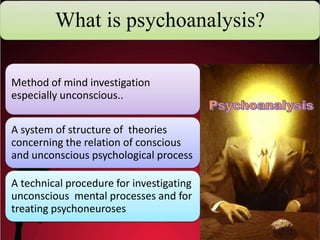
What is psychoanalysis?
Method of mind investigation
especially unconscious..
A system of structure of theories
concerning the relation of conscious
and unconscious psychological process
A technical procedure for investigating
unconscious mental processes and for
treating psychoneuroses
Psychoanalytic literary theory
It emerged in the 19th century.
In method, concept and form influenced by the tradition of
psychoanalysis begun by Sigmund Freud.
In romantic period it was belief that the details and the form of
literature are related with it’s author’s distinctive mind.
Three practices
1.reference to author’s personality in order to interpret or explain a
literary work.
2. Reference to literary works in order to establish, biographically
personality of the author.
3.Reading of literary work in order to experience distinctive subjectivity
or consciousness of its own author…
Celine Suprenant “psychoanalytic literary criticism does not constitute a
unified field. However, all variant endorse, at least to a certain degree, the
idea that literature…is fundamentally entwined with the psyche”
The object of psychoanalytic criticism, can be the psychoanalysis of the
author or a particular character in given work. In this directly therapeutic
form, the criticism is very similar to psychoanalysis itself, closely following
the analytic interpretive process discussed in Freud’s The Dream
Interpretation. Critic may see fictional character as case study..
Poetry for Keble “ is the indirect expression …of some overpowering
emotion or ruling taste or feeling the direct indulgence where of is
somehow repressed..” “a sefty valve, preserving men from madness”
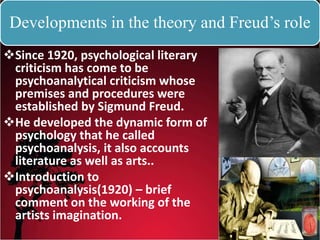
Developments in the theory and Freud’s role
Since 1920, psychological literary
criticism has come to be
psychoanalytical criticism whose
premises and procedures were
established by Sigmund Freud.
He developed the dynamic form of
psychology that he called
psychoanalysis, it also accounts
literature as well as arts..
Introduction to
psychoanalysis(1920) – brief
comment on the working of the
artists imagination.
Freud proposes that literature and other arts,
like dramas and neurotic symptoms, consist
of imagined or fantasized, fulfillment of
wishes that are either denied by reality or
prohibited by social standards of morality
and propriety..”
Artist find satisfaction in distorted forms that
serves to disguise their real motives and
objects from the unconscious mind.
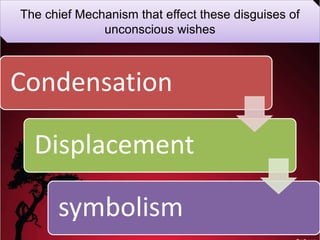
Condensation
Displacement
symbolism
The chief Mechanism that effect these disguises of
unconscious wishes
Literature and art therefore unlike dreams and
neuroses may serve the artist as a mode of
fantasy that opens the way back to reality.”
Freud 1920, theory later developed as the
theory of mental structure of dynamics and
processes..
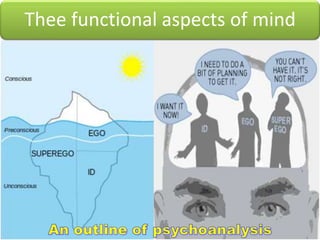
He gave such concepts like, Oedipus complex,
penis envy, Freudian slips, Id, ego and super
ego..
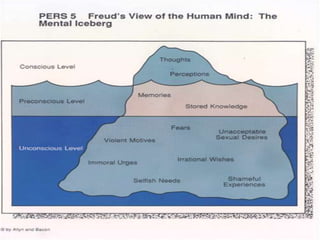
He divides mind on the base of its functional
aspects…
Thee functional aspects of mind
Psychoanalytical approach in practice
Freud applied psychoanalysis on the literary
works of Shakespeare like Hamlet, King Lear,
Macbeth, a mid summers night dreams..
Fyodor Dostoevsky’s The brother Karamazcv..-
Analysis..
After 1930 numbers of writers produced critical
analysis, modeled on classical Freudian theory..of
the lives of the author and their literary work/s..
Hamlet and Oedipus 1949- Earnest Jones
“Ego psychology”- literature and psychology-
Frederick C. Crews..
Charles Mauron:- he suggest four phase of the
method to interpret literary work via
psychoanalysis..
1. innate desires expressed and revealed by
metaphors and symbolically
2. the juxtaposition of the writer’s works lead
the critic to define symbolic theme.
3.these metaphorical networks are significant of
latent inner reality.
4.the last phase consist in linking the writer’s
literary creation to his own personal life..
The psychobiography
This term designates an account of the life of
an author that focuses on the subject’s
psychological development, relying for
evidence both on external sources and on the
author’s own writings..
Eric H. Erikson’s – young man Luther
Leon Edel’s –Henry James
Justin Kalpan – Mark Twain and his world
Carl Jung and Jacques Lacan
Carl Jung comes up with the study related to
archetype and the collective unconscious, his
influential works combine with the work of
Anthropologist such as Claude Levi- Strauss and Joseph
Campbell, it led to mythocriticism and archetype
analysis..
For Carl Jung all great literature are myths..
Jacques Lacan (French Freud) :- “ unconscious is
structured like language…human mind is not
preexisted to, but constituted by the language we use”
Conclusion
There is lots of criticism of Freud’s theory, such as for
feminist critics attacked the male centered nature of
Freud’s theory esp. Oedipus Complex..And penis
envy..
The danger is that the serious student may become
theory ridden, forgetting that Freud’s is not the only
approach to literary criticism.
To see a great poem primarily as a psychological case
study is often to miss wider significance and perhaps
even the essential aesthetic experience it should
provide..
Later analysts would conclude that ‘clearly one cannot
psychoanalyze a writer from his text; one can only
appropriate him..’

Term Psychoanalytical literary criticism

  • 1.
    M.K.Bhavnagar University Department ofEnglish Topic:- Psychoanalytical literary criticism Roll no. 14 Enrollment no.:- 14101026 Semester:- 2 Course:- Criticism 2 Email:- parmarmilan1994@gmail.com Submitted to:- Department Of English M.K.Bhavnagar university
  • 2.
    What is psychoanalysis? Methodof mind investigation especially unconscious.. A system of structure of theories concerning the relation of conscious and unconscious psychological process A technical procedure for investigating unconscious mental processes and for treating psychoneuroses
  • 3.
    Psychoanalytic literary theory Itemerged in the 19th century. In method, concept and form influenced by the tradition of psychoanalysis begun by Sigmund Freud. In romantic period it was belief that the details and the form of literature are related with it’s author’s distinctive mind. Three practices 1.reference to author’s personality in order to interpret or explain a literary work. 2. Reference to literary works in order to establish, biographically personality of the author. 3.Reading of literary work in order to experience distinctive subjectivity or consciousness of its own author…
  • 4.
    Celine Suprenant “psychoanalyticliterary criticism does not constitute a unified field. However, all variant endorse, at least to a certain degree, the idea that literature…is fundamentally entwined with the psyche” The object of psychoanalytic criticism, can be the psychoanalysis of the author or a particular character in given work. In this directly therapeutic form, the criticism is very similar to psychoanalysis itself, closely following the analytic interpretive process discussed in Freud’s The Dream Interpretation. Critic may see fictional character as case study.. Poetry for Keble “ is the indirect expression …of some overpowering emotion or ruling taste or feeling the direct indulgence where of is somehow repressed..” “a sefty valve, preserving men from madness”
  • 5.
    Developments in thetheory and Freud’s role Since 1920, psychological literary criticism has come to be psychoanalytical criticism whose premises and procedures were established by Sigmund Freud. He developed the dynamic form of psychology that he called psychoanalysis, it also accounts literature as well as arts.. Introduction to psychoanalysis(1920) – brief comment on the working of the artists imagination.
  • 6.
    Freud proposes thatliterature and other arts, like dramas and neurotic symptoms, consist of imagined or fantasized, fulfillment of wishes that are either denied by reality or prohibited by social standards of morality and propriety..” Artist find satisfaction in distorted forms that serves to disguise their real motives and objects from the unconscious mind.
  • 7.
    Condensation Displacement symbolism The chief Mechanismthat effect these disguises of unconscious wishes
  • 9.
    Literature and arttherefore unlike dreams and neuroses may serve the artist as a mode of fantasy that opens the way back to reality.” Freud 1920, theory later developed as the theory of mental structure of dynamics and processes.. He gave such concepts like, Oedipus complex, penis envy, Freudian slips, Id, ego and super ego.. He divides mind on the base of its functional aspects…
  • 10.
  • 11.
    Psychoanalytical approach inpractice Freud applied psychoanalysis on the literary works of Shakespeare like Hamlet, King Lear, Macbeth, a mid summers night dreams.. Fyodor Dostoevsky’s The brother Karamazcv..- Analysis.. After 1930 numbers of writers produced critical analysis, modeled on classical Freudian theory..of the lives of the author and their literary work/s.. Hamlet and Oedipus 1949- Earnest Jones “Ego psychology”- literature and psychology- Frederick C. Crews..
  • 12.
    Charles Mauron:- hesuggest four phase of the method to interpret literary work via psychoanalysis.. 1. innate desires expressed and revealed by metaphors and symbolically 2. the juxtaposition of the writer’s works lead the critic to define symbolic theme. 3.these metaphorical networks are significant of latent inner reality. 4.the last phase consist in linking the writer’s literary creation to his own personal life..
  • 13.
    The psychobiography This termdesignates an account of the life of an author that focuses on the subject’s psychological development, relying for evidence both on external sources and on the author’s own writings.. Eric H. Erikson’s – young man Luther Leon Edel’s –Henry James Justin Kalpan – Mark Twain and his world
  • 14.
    Carl Jung andJacques Lacan Carl Jung comes up with the study related to archetype and the collective unconscious, his influential works combine with the work of Anthropologist such as Claude Levi- Strauss and Joseph Campbell, it led to mythocriticism and archetype analysis.. For Carl Jung all great literature are myths.. Jacques Lacan (French Freud) :- “ unconscious is structured like language…human mind is not preexisted to, but constituted by the language we use”
  • 15.
    Conclusion There is lotsof criticism of Freud’s theory, such as for feminist critics attacked the male centered nature of Freud’s theory esp. Oedipus Complex..And penis envy.. The danger is that the serious student may become theory ridden, forgetting that Freud’s is not the only approach to literary criticism. To see a great poem primarily as a psychological case study is often to miss wider significance and perhaps even the essential aesthetic experience it should provide.. Later analysts would conclude that ‘clearly one cannot psychoanalyze a writer from his text; one can only appropriate him..’