18 NOVEMBRE
2016
Come ti "pusho" il web con
WebSockets:
da 0 a SignalRAlessandro Melchiori / @amelchiori
Web.vNext()
• Today’s applications demand real-time, low-latency
messaging
• Users expect to be able to interact with data as close
to real-time as possible
• No needs to hit refresh button
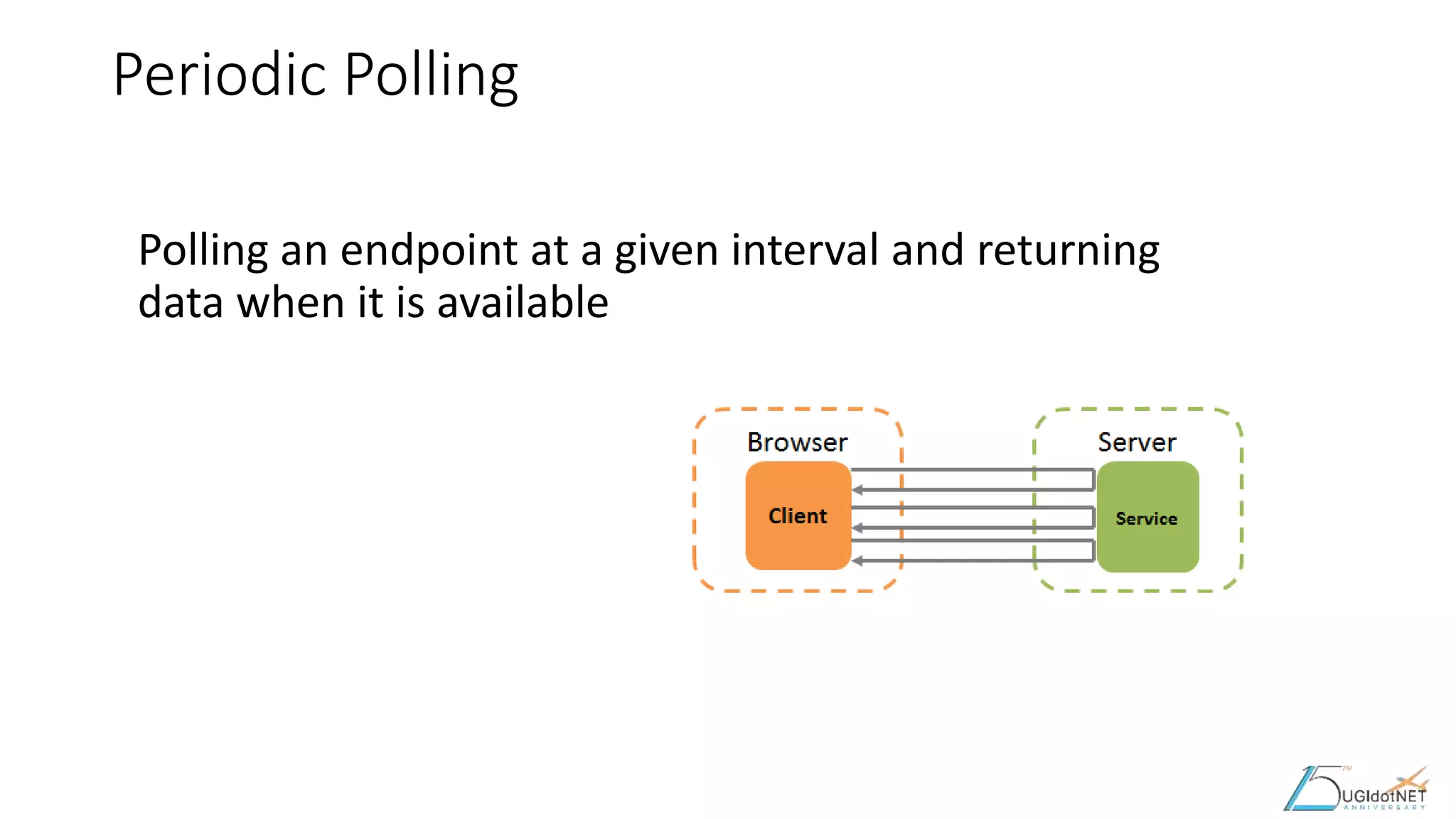
Periodic Polling
Polling an endpoint at a given interval and returning
data when it is available
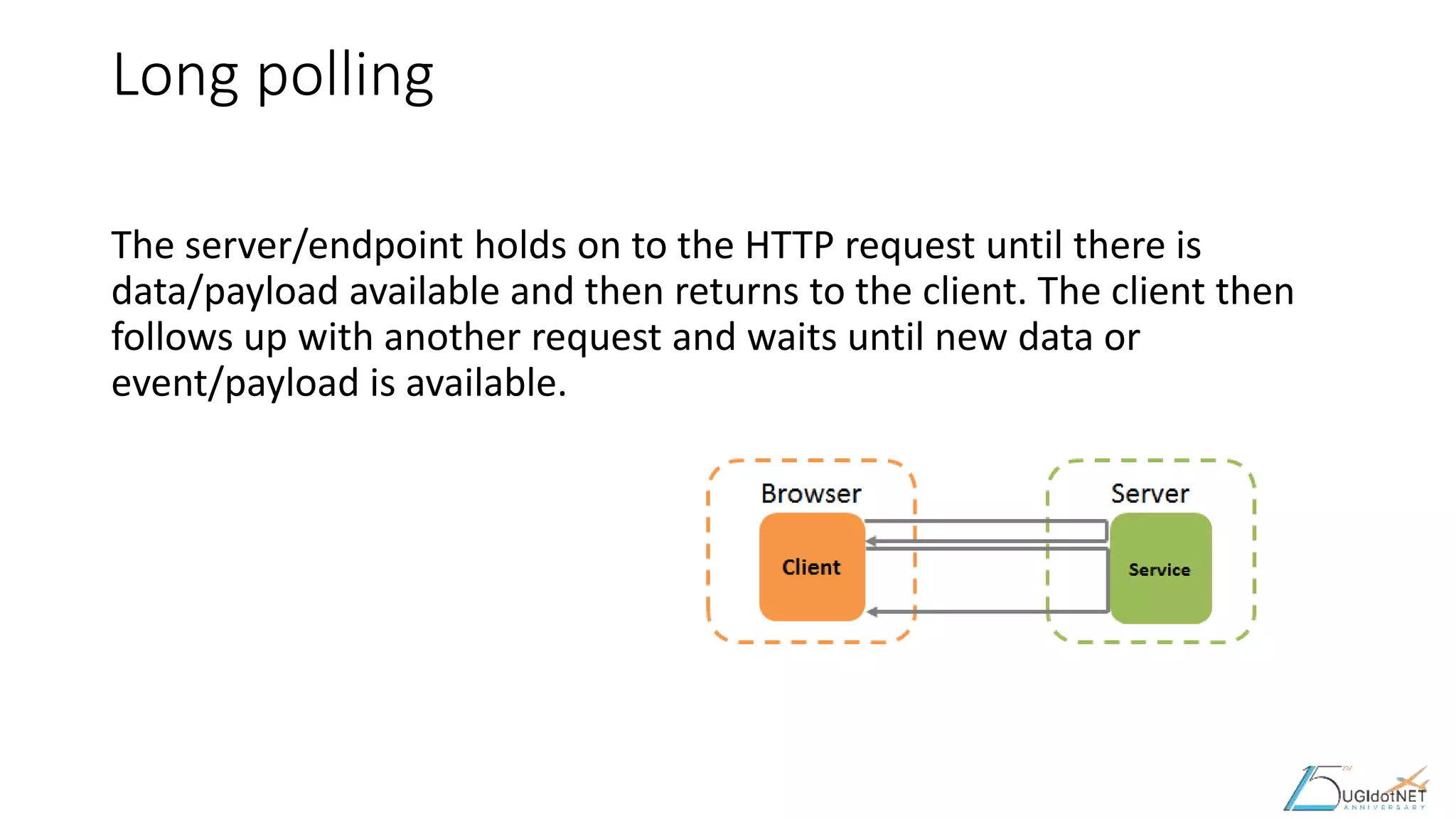
Long polling
The server/endpoint holds on to the HTTP request until there is
data/payload available and then returns to the client. The client then
follows up with another request and waits until new data or
event/payload is available.
The WebSocket protocol
The WebSocket Protocol enables two-way communication between a client running untrusted code
in a controlled environment to a remote host that has opted-in to communications from that code.
The security model used for this is the origin-based security model commonly used by web
browsers. The protocol consists of an opening handshake followed by basic message framing,
layered over TCP. The goal of this technology is to provide a mechanism for browser-based
applications that need two-way communication with servers that does not rely on opening multiple
HTTP connections (e.g., using XMLHttpRequest or <iframe>s and long polling).
https://tools.ietf.org/html/rfc6455
The WebSocket protocol
The WebSocket Protocol enables two-way communication between a client running untrusted code
in a controlled environment to a remote host that has opted-in to communications from that code.
The security model used for this is the origin-based security model commonly used by web
browsers. The protocol consists of an opening handshake followed by basic message framing,
layered over TCP. The goal of this technology is to provide a mechanism for browser-based
applications that need two-way communication with servers that does not rely on opening multiple
HTTP connections (e.g., using XMLHttpRequest or <iframe>s and long polling).
https://tools.ietf.org/html/rfc6455
WebSocket: how it works
• Client and server establish initial handshake over HTTP/S
• Client request upgrades
• Server accepts upgrade request and establish socket connection
• Client and/or server send messages
DEMO
Welcome SignalR
• SignalR is a library that allows bi-directional communication between
server and client.
• SignalR supports Web Sockets, and falls back to other compatible
techniques for older browsers.
• SignalR includes APIs for connection management (for instance,
connect and disconnect events), grouping connections, and
authorization.
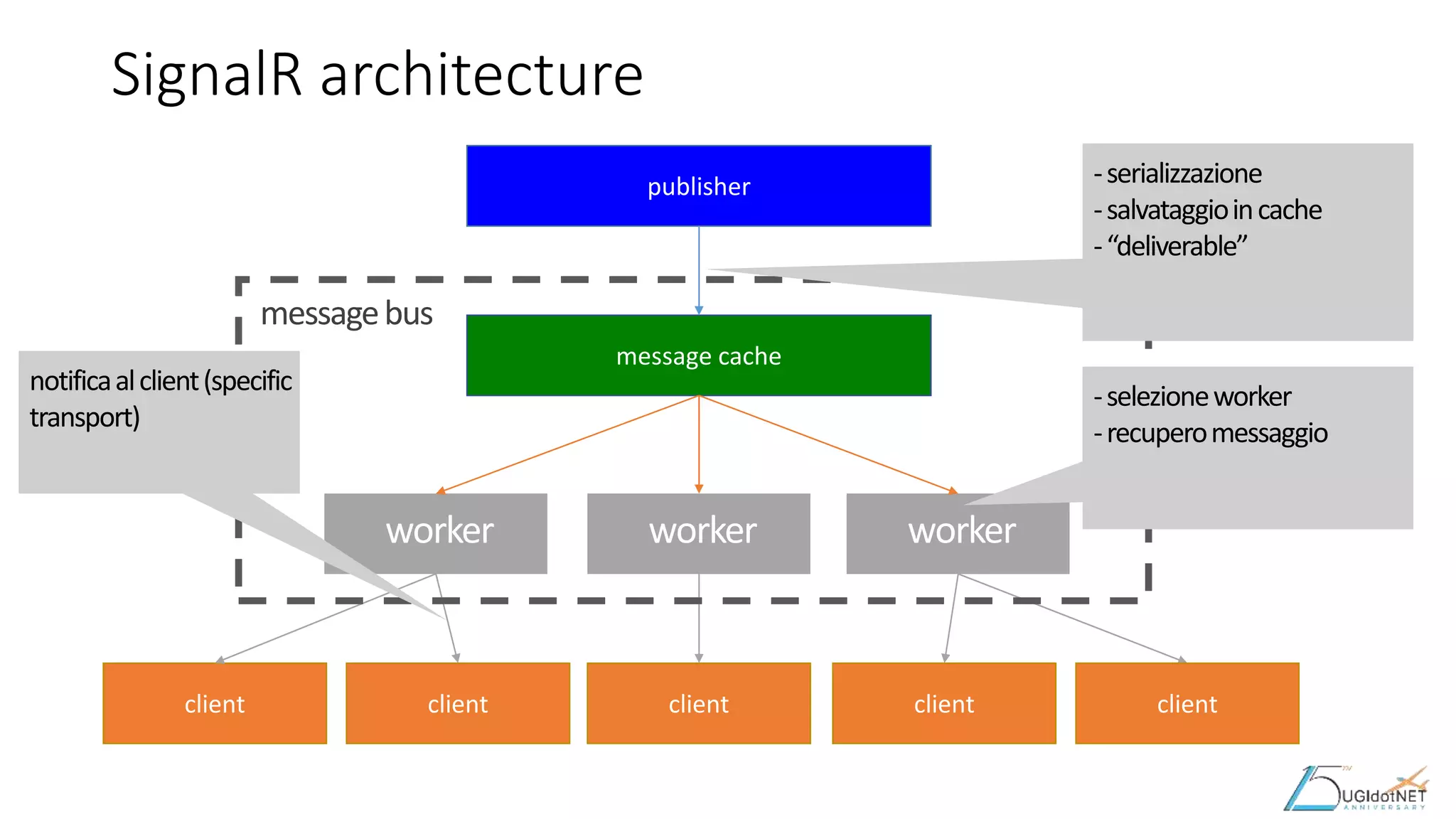
SignalR architecture
message cache
publisher
client client client client client
messagebus
-serializzazione
-salvataggioincache
-“deliverable”
-selezioneworker
-recuperomessaggio
notificaalclient(specific
transport)
DEMOInstall-Package Microsoft.AspNet.SignalR
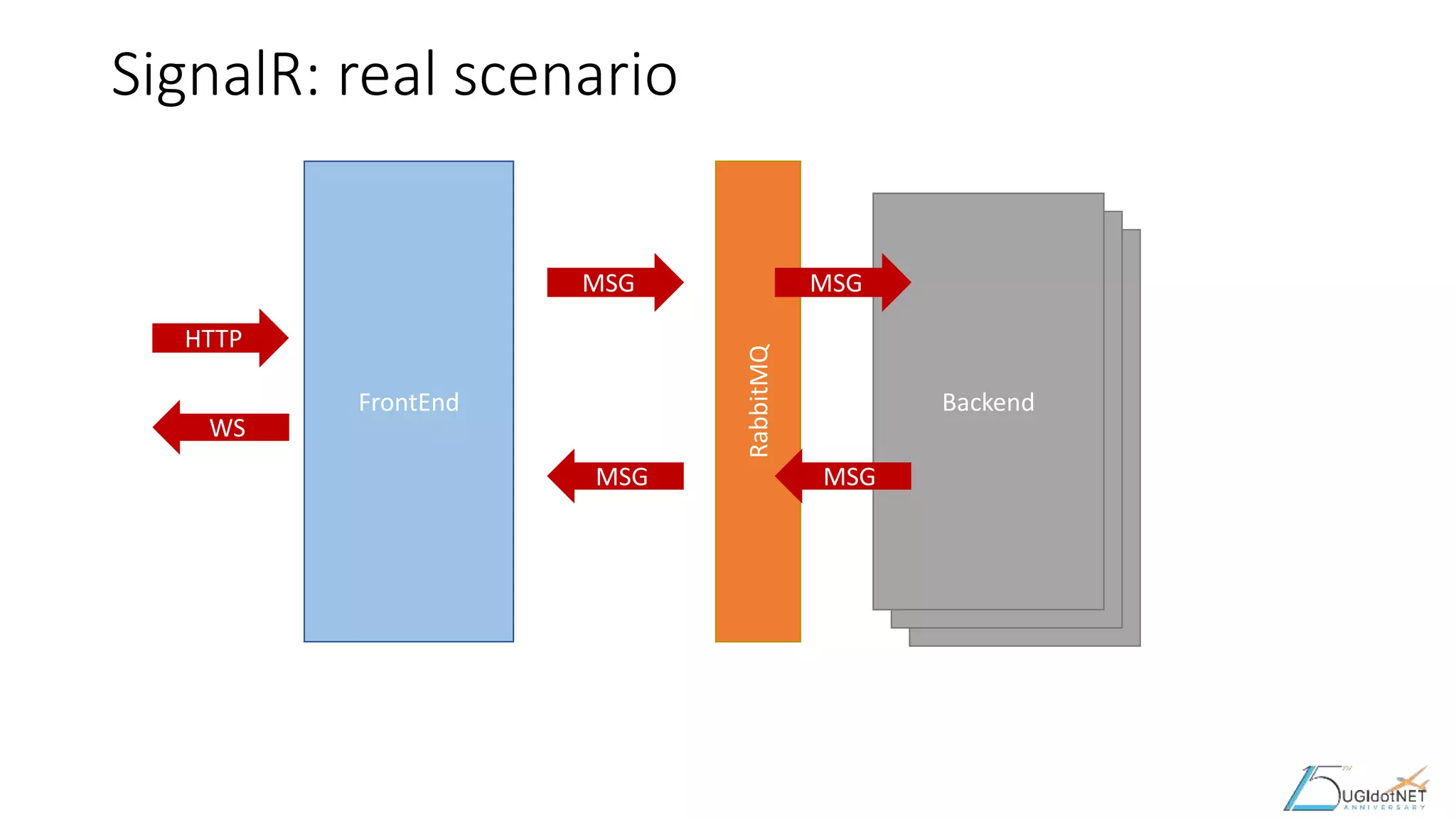
Backend
Backend
SignalR: real scenario
FrontEnd
RabbitMQ
Backend
MSG
HTTP
MSG
MSGMSG
WS
DEMO
FrontEnd
FrontEnd
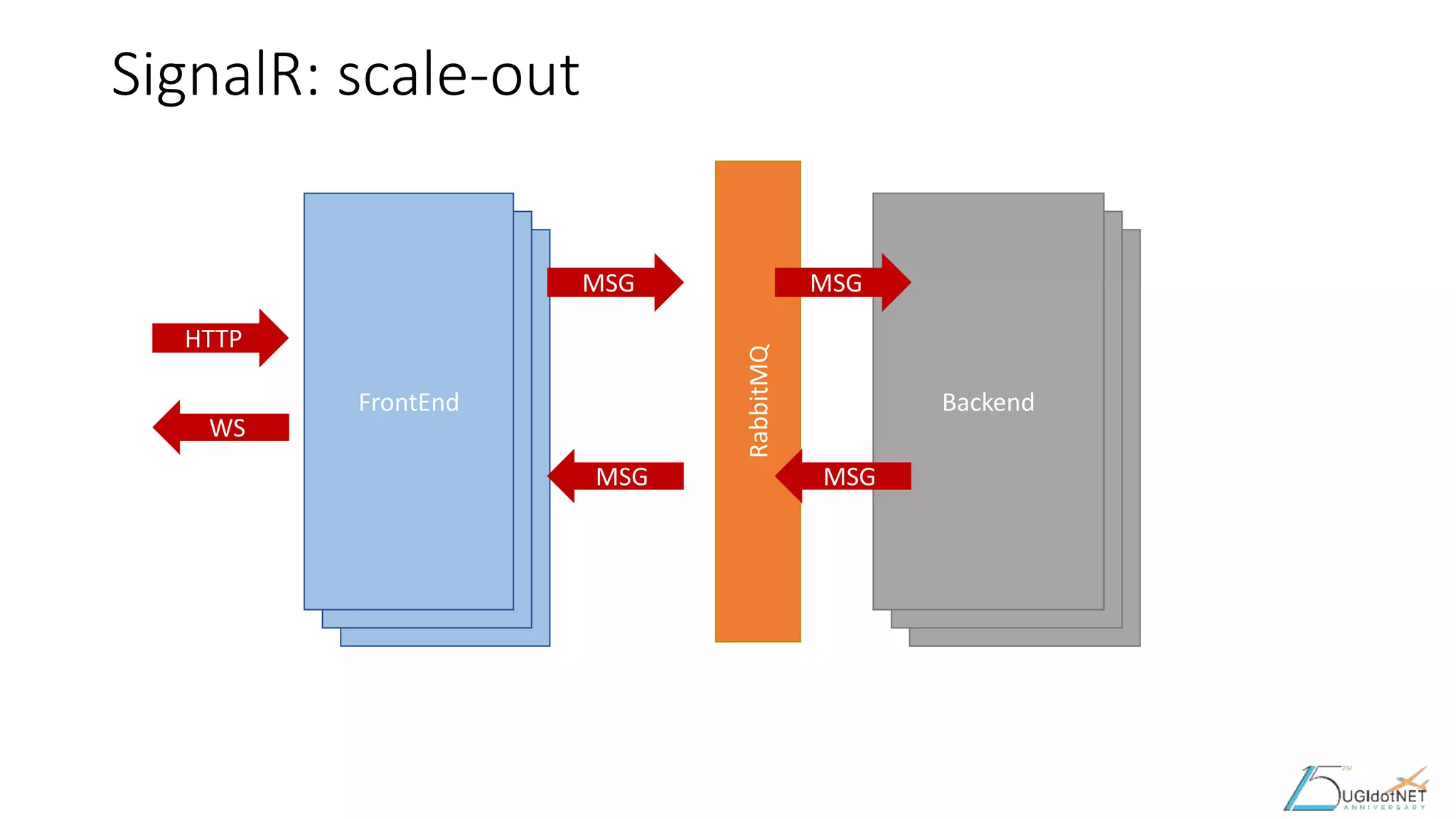
SignalR: scale-out
Backend
Backend
FrontEnd
RabbitMQ
Backend
MSG
HTTP
MSG
MSGMSG
WS
SignalR: scale-out
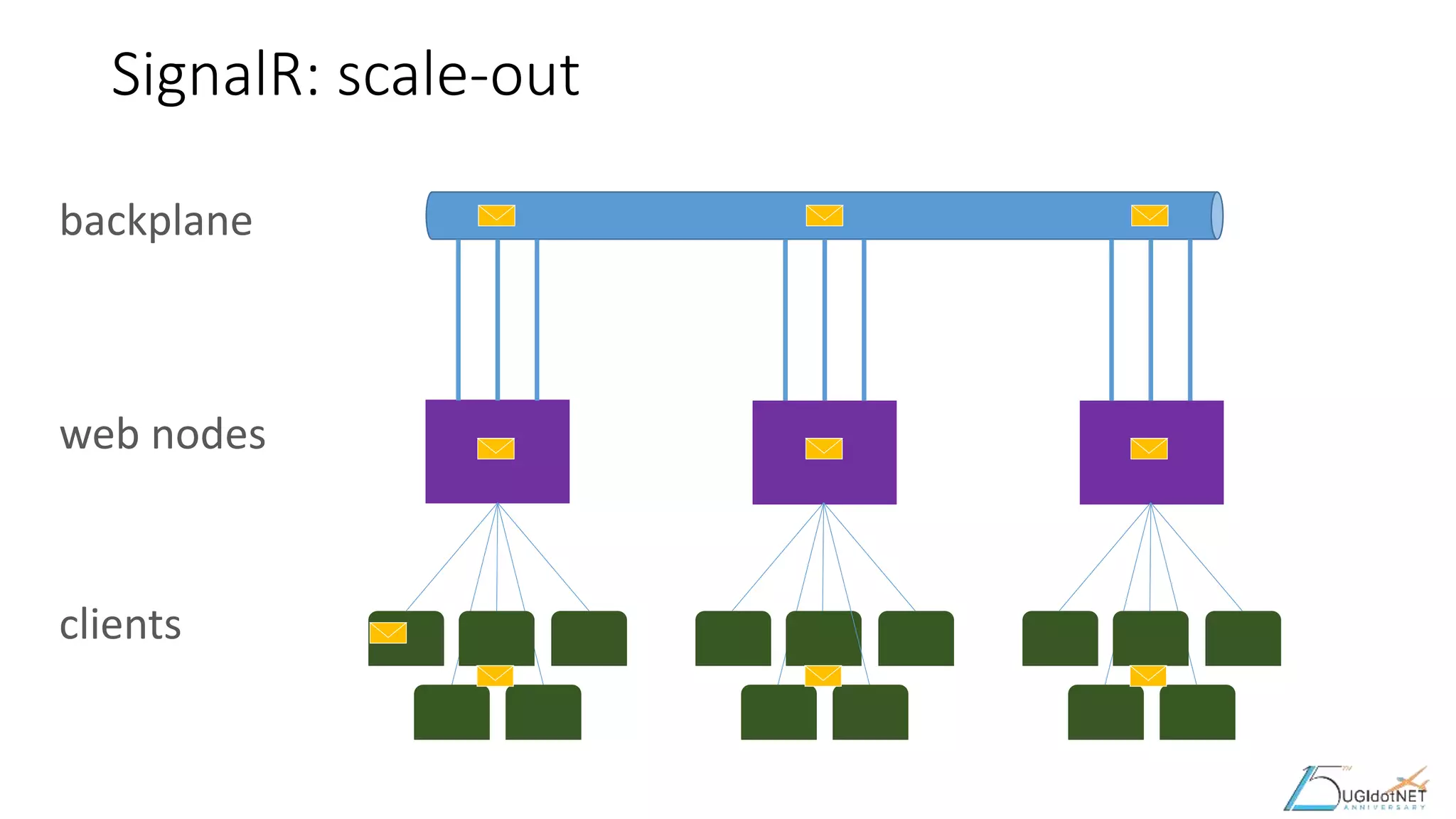
• How do messages from one server get to the other
servers in my web farm?
SignalR: scale-out
web nodes
clients
backplane
DEMO
SignalR: asp.net core?
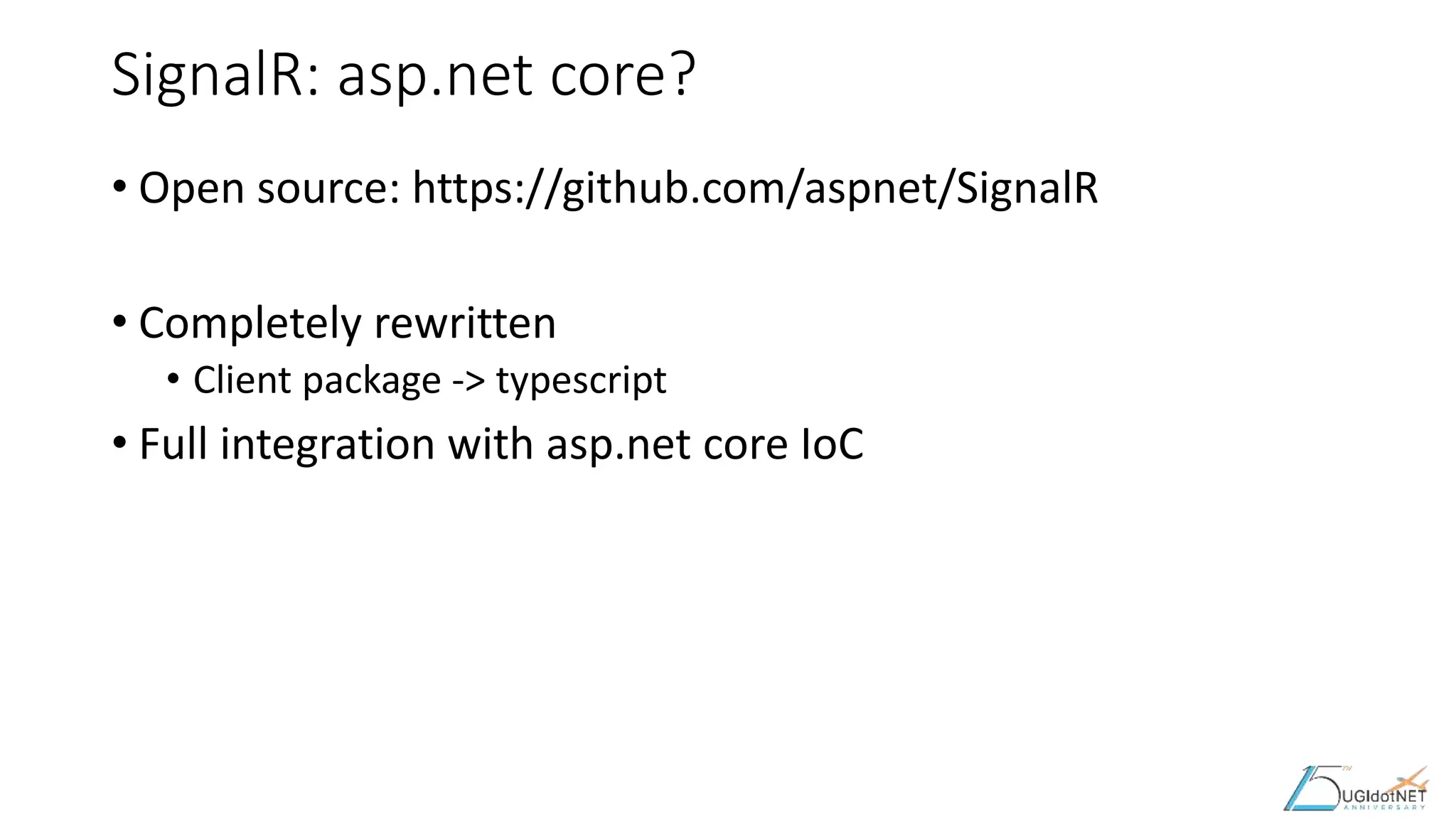
• Open source: https://github.com/aspnet/SignalR
• Completely rewritten
• Client package -> typescript
• Full integration with asp.net core IoC
SignalR: asp.net core?
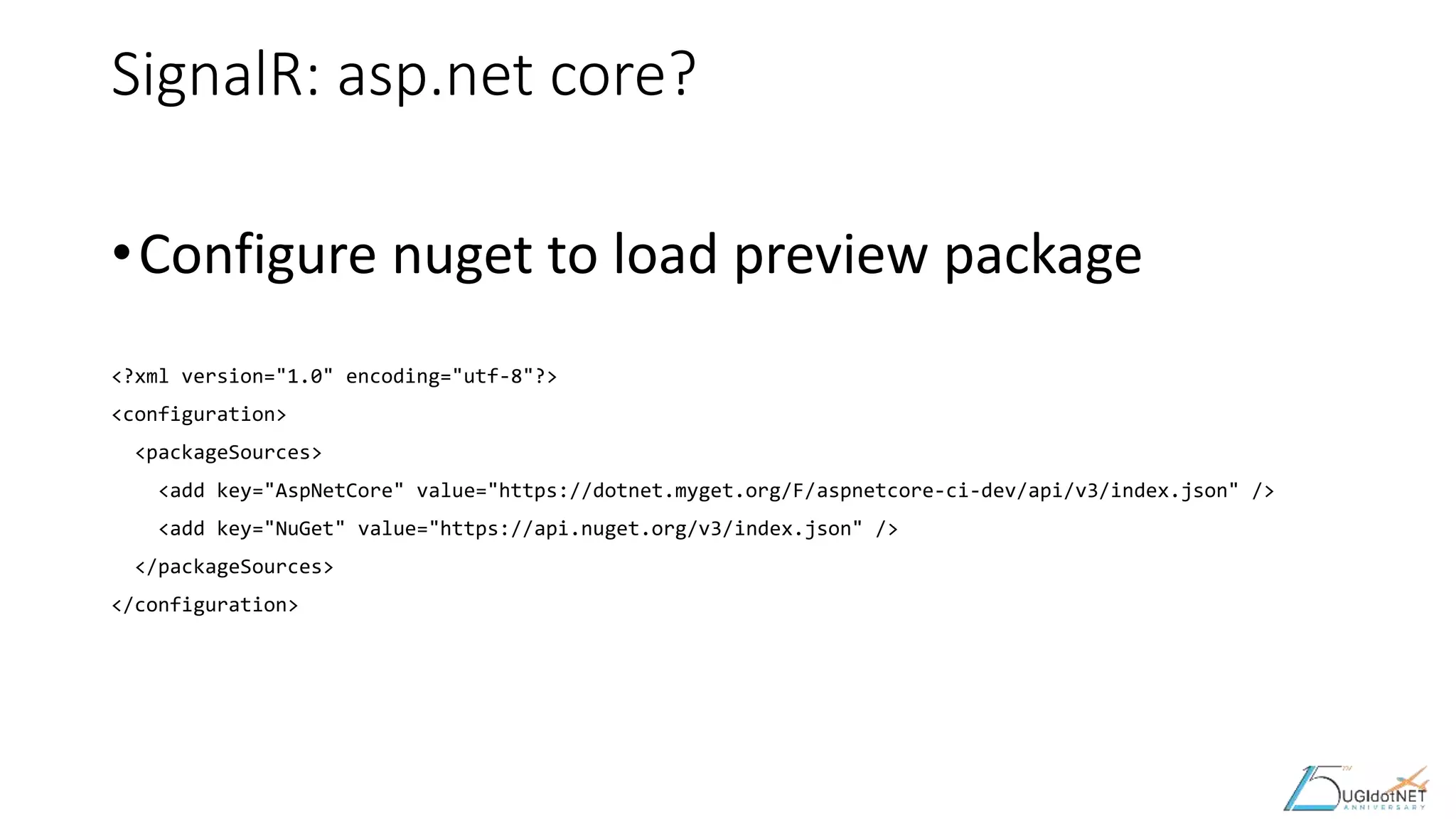
•Configure nuget to load preview package
<?xml version="1.0" encoding="utf-8"?>
<configuration>
<packageSources>
<add key="AspNetCore" value="https://dotnet.myget.org/F/aspnetcore-ci-dev/api/v3/index.json" />
<add key="NuGet" value="https://api.nuget.org/v3/index.json" />
</packageSources>
</configuration>
Grazie!
Contatti:
• https://twitter.com/amelchiori
• http://melkio.codiceplastico.com
• alessandro@codiceplastico.com
Thank you! Questions?
https://twitter.com/ugidotnet

Come ti "pusho" il web con WebSockets: da 0 a SignalR