Introduction to Process
                       Control
                               Control Components
                               Dr. Mohamed Sobh


Reference: Chapter 1, Process Control Instrumentation Technology, 8th, Johnson
Contents
• Automatic Control
• Data Representation
• Control Definitions


                          2
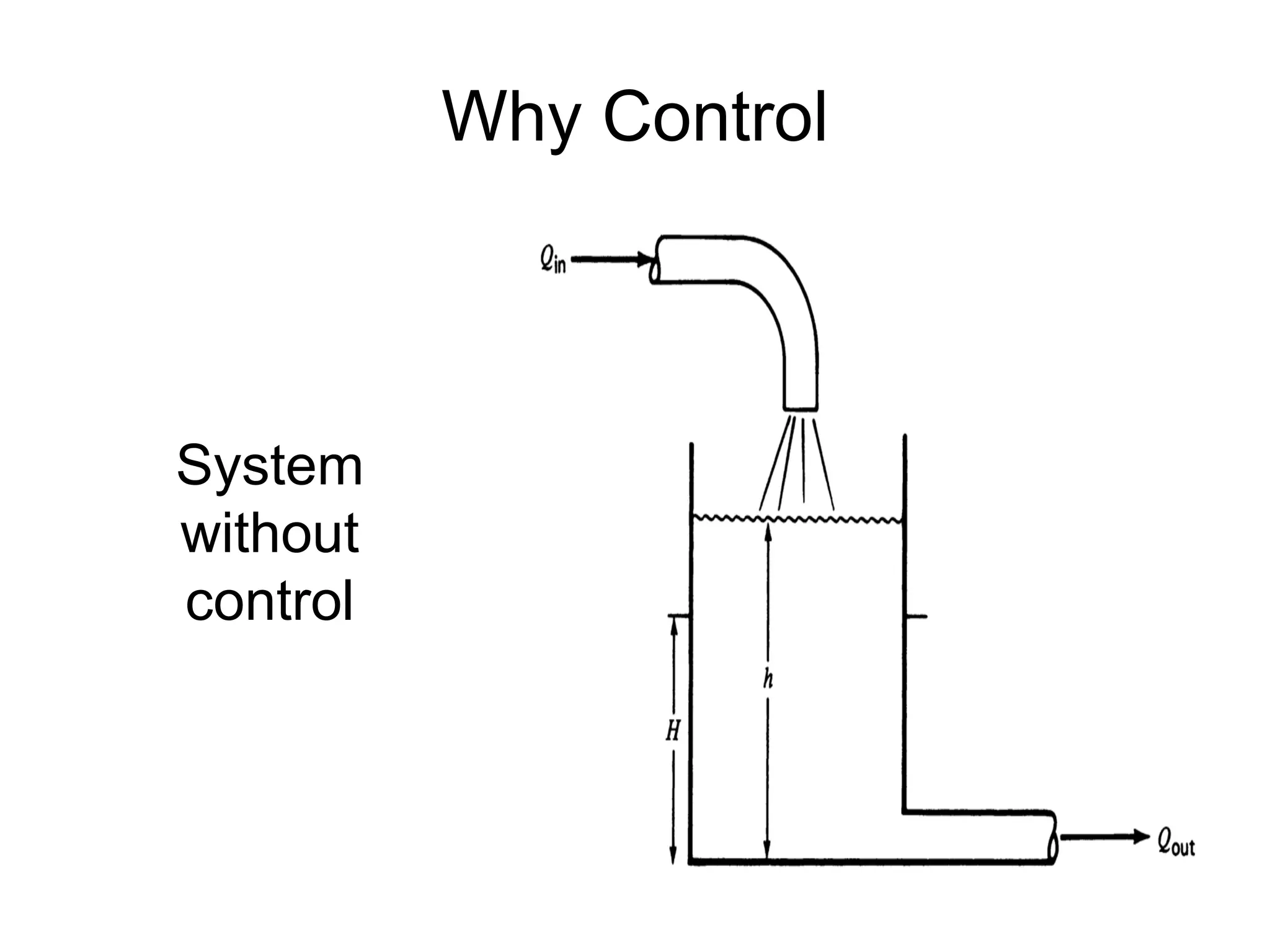
Why Control


System
without
control
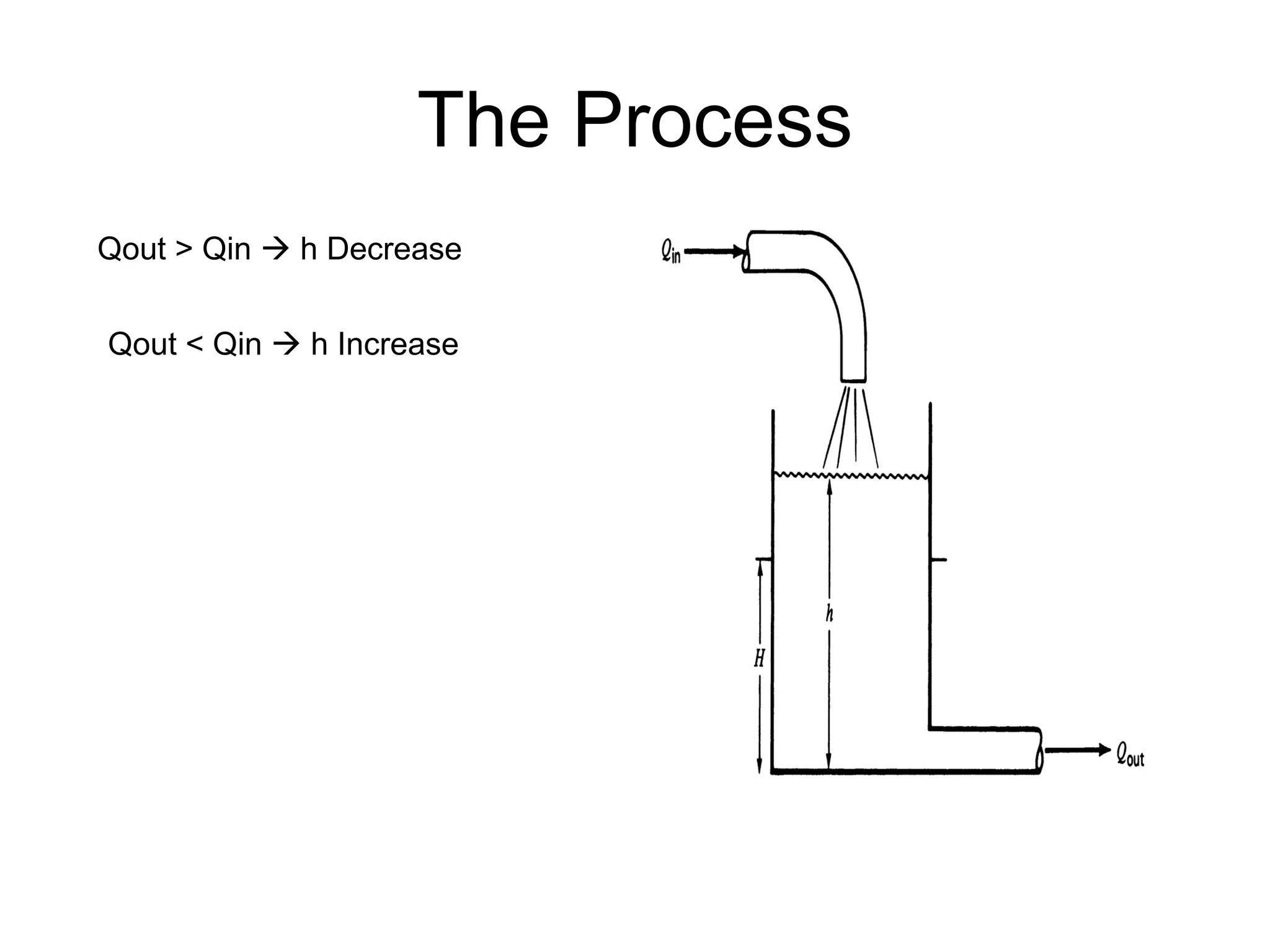
The Process
Qout > Qin  h Decrease


Qout < Qin  h Increase
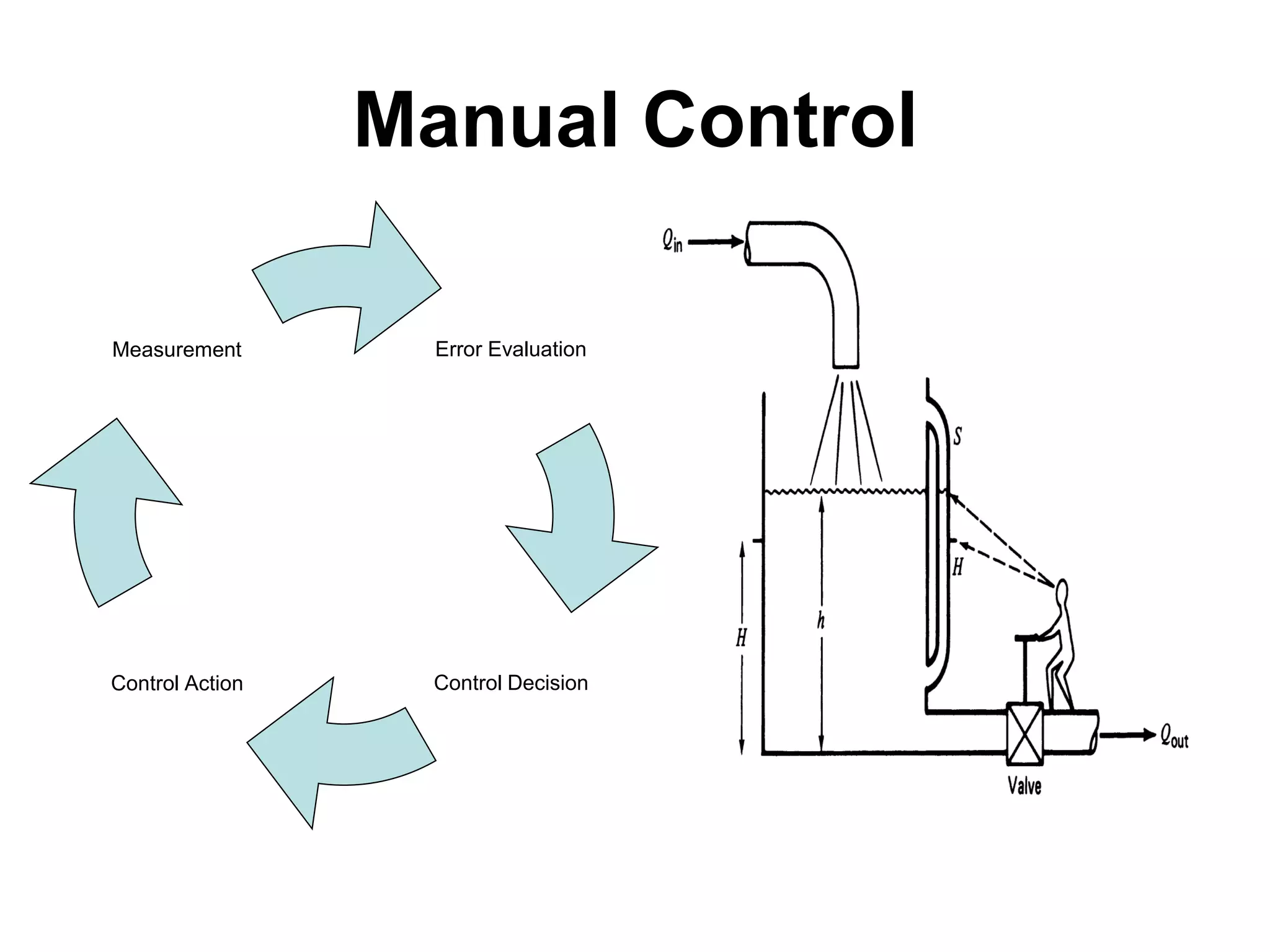
Manual Control

Measurement        Error Evaluation


Control Action     Control Decision
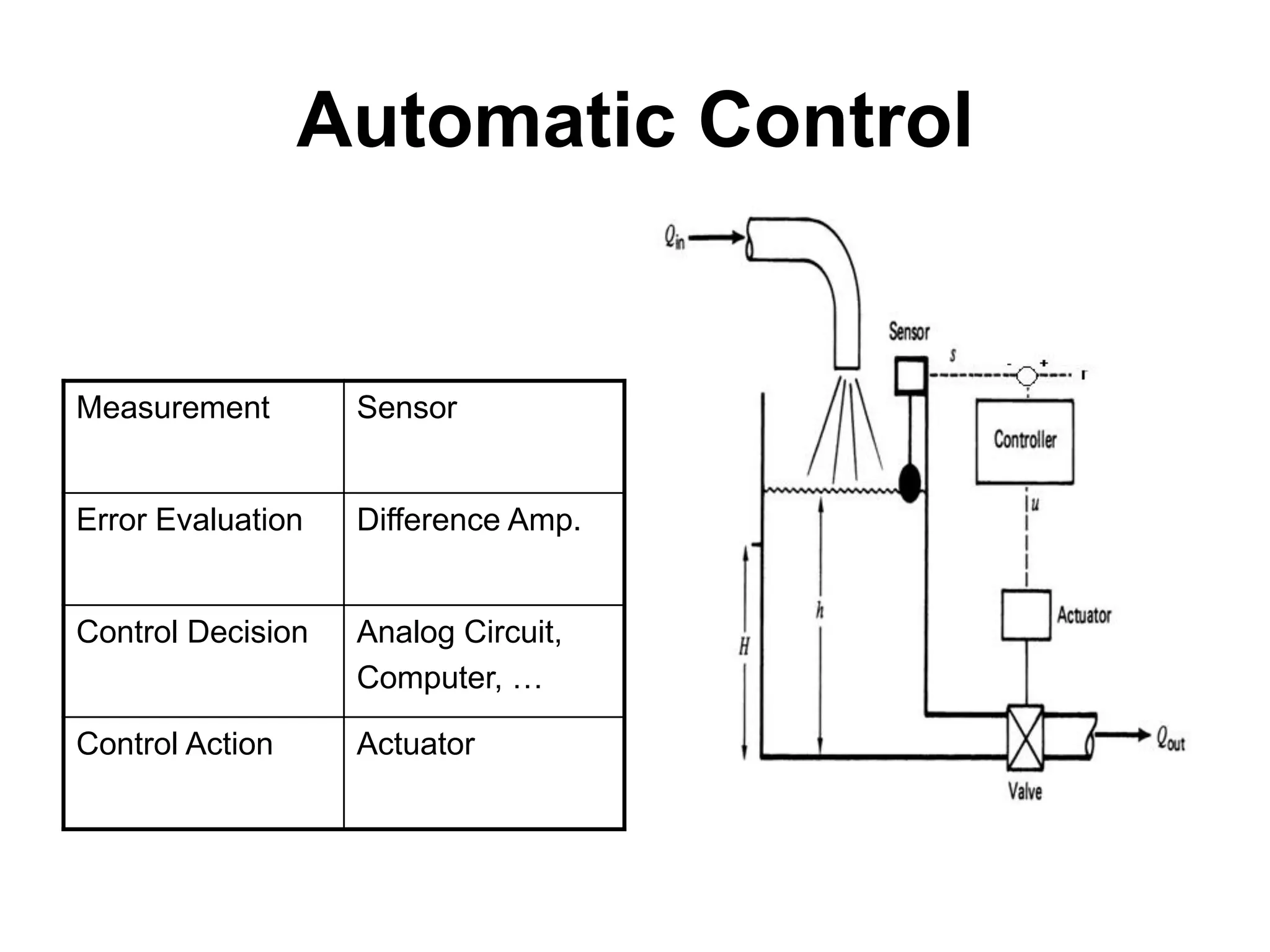
Automatic Control


Measurement        Sensor


Error Evaluation   Difference Amp.


Control Decision   Analog Circuit,
                   Computer, …

Control Action     Actuator
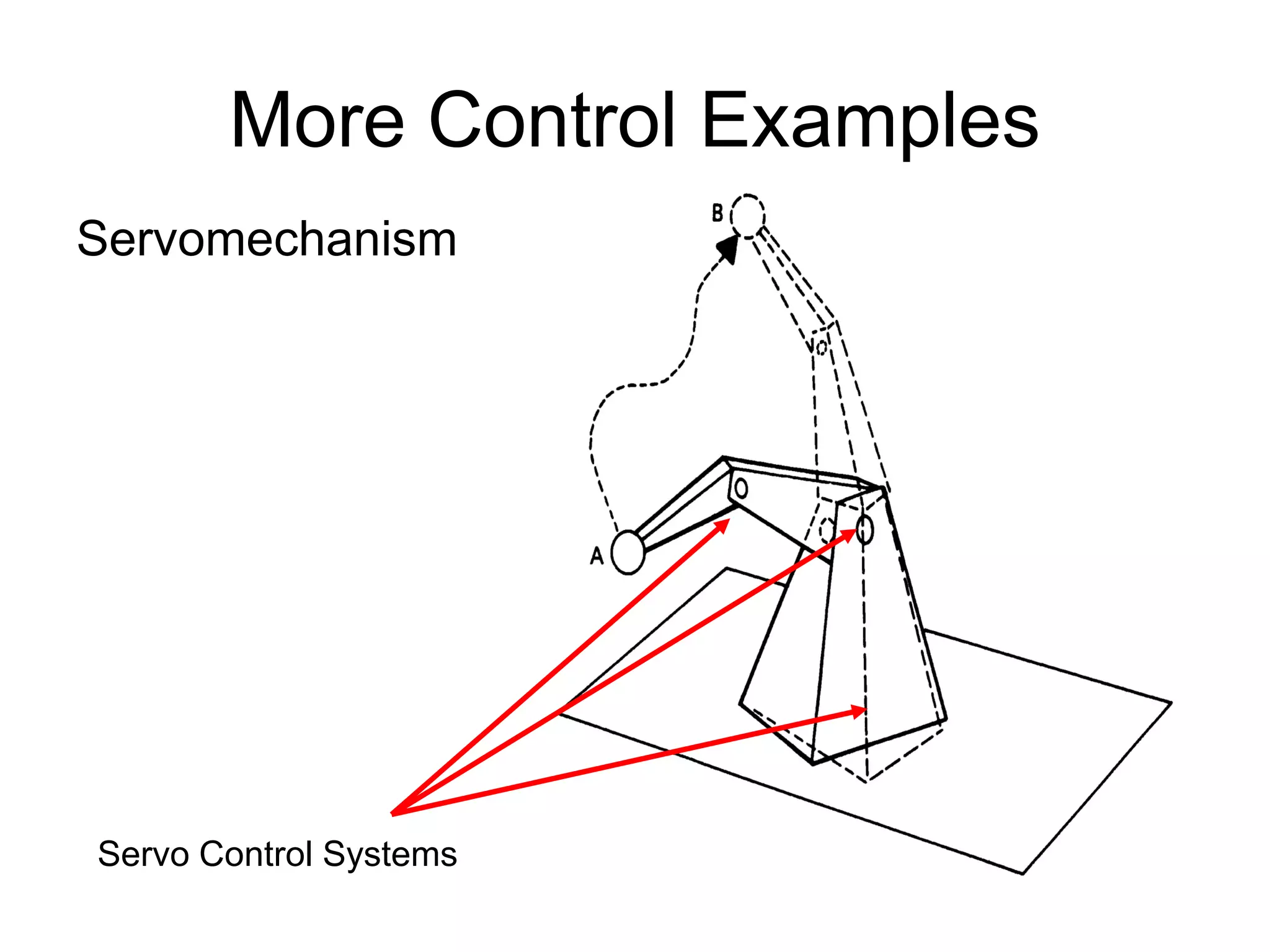
More Control Examples
Servomechanism


Servo Control Systems
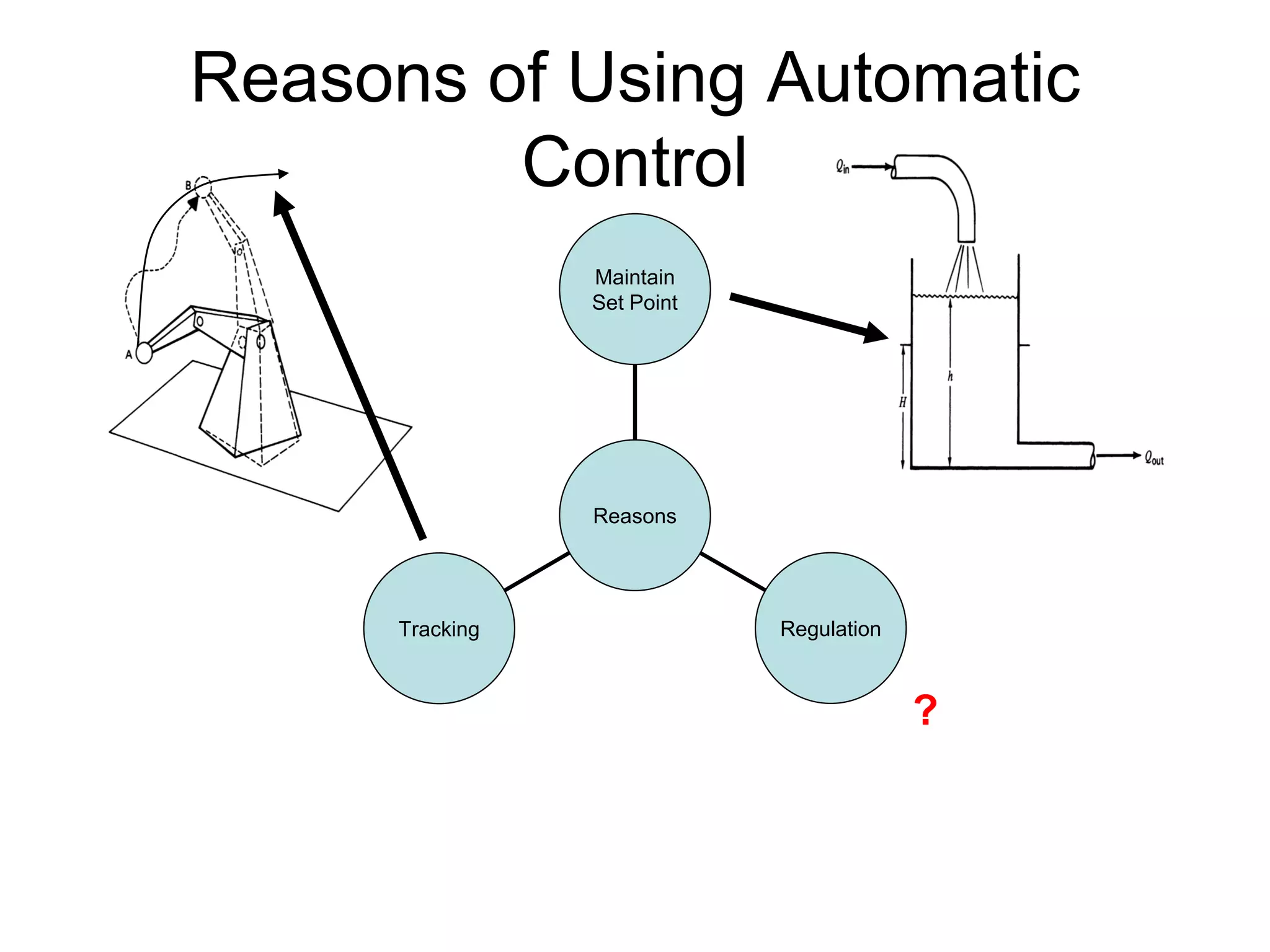
Reasons of Using Automatic
         Control
                 Maintain
                 Set Point


                 Reasons


      Tracking               Regulation


                                          ?
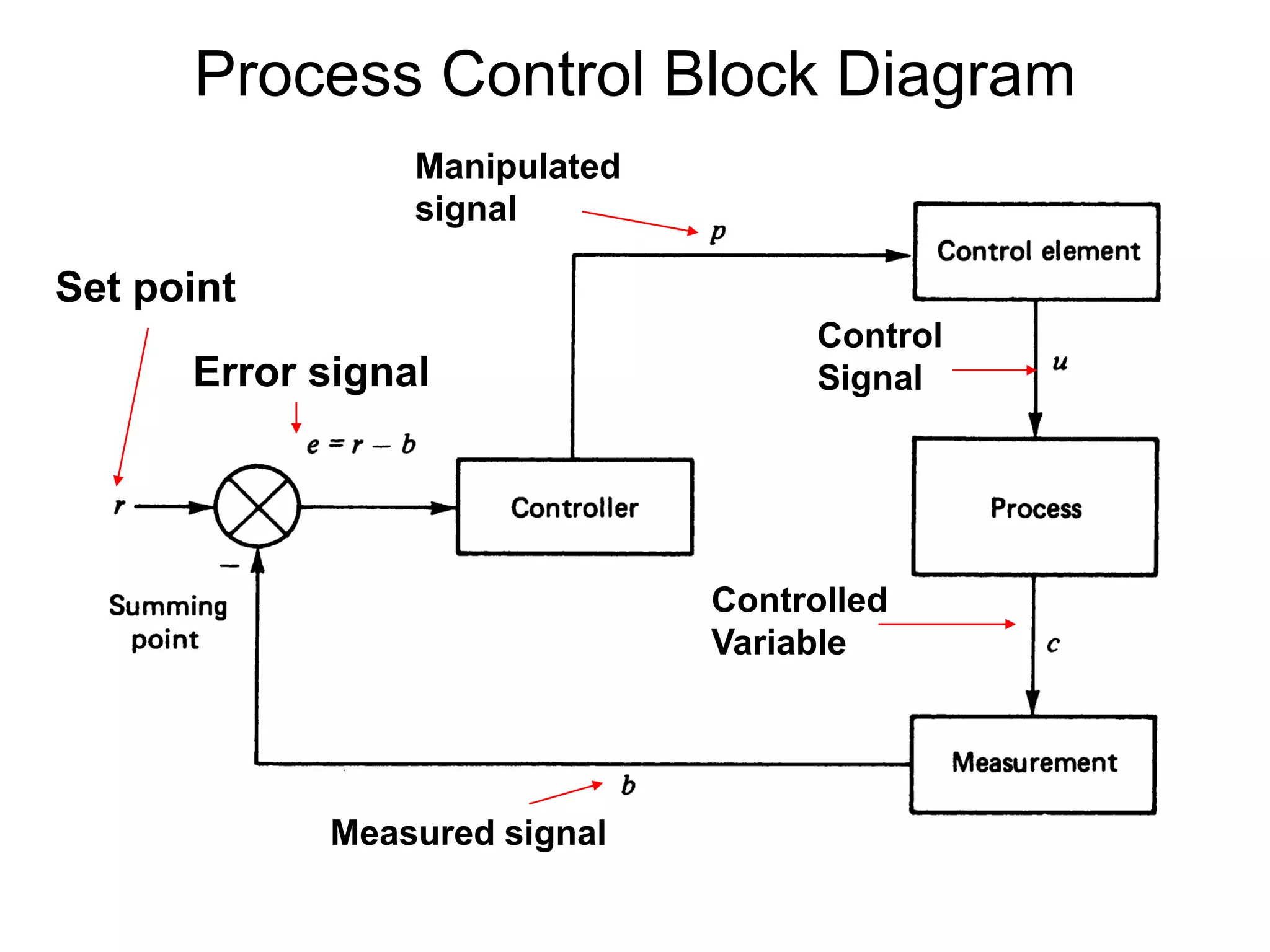
Process Control Block Diagram
                 Manipulated
                 signal

Set point
                                    Control
      Error signal                  Signal


                               Controlled
                               Variable


            Measured signal
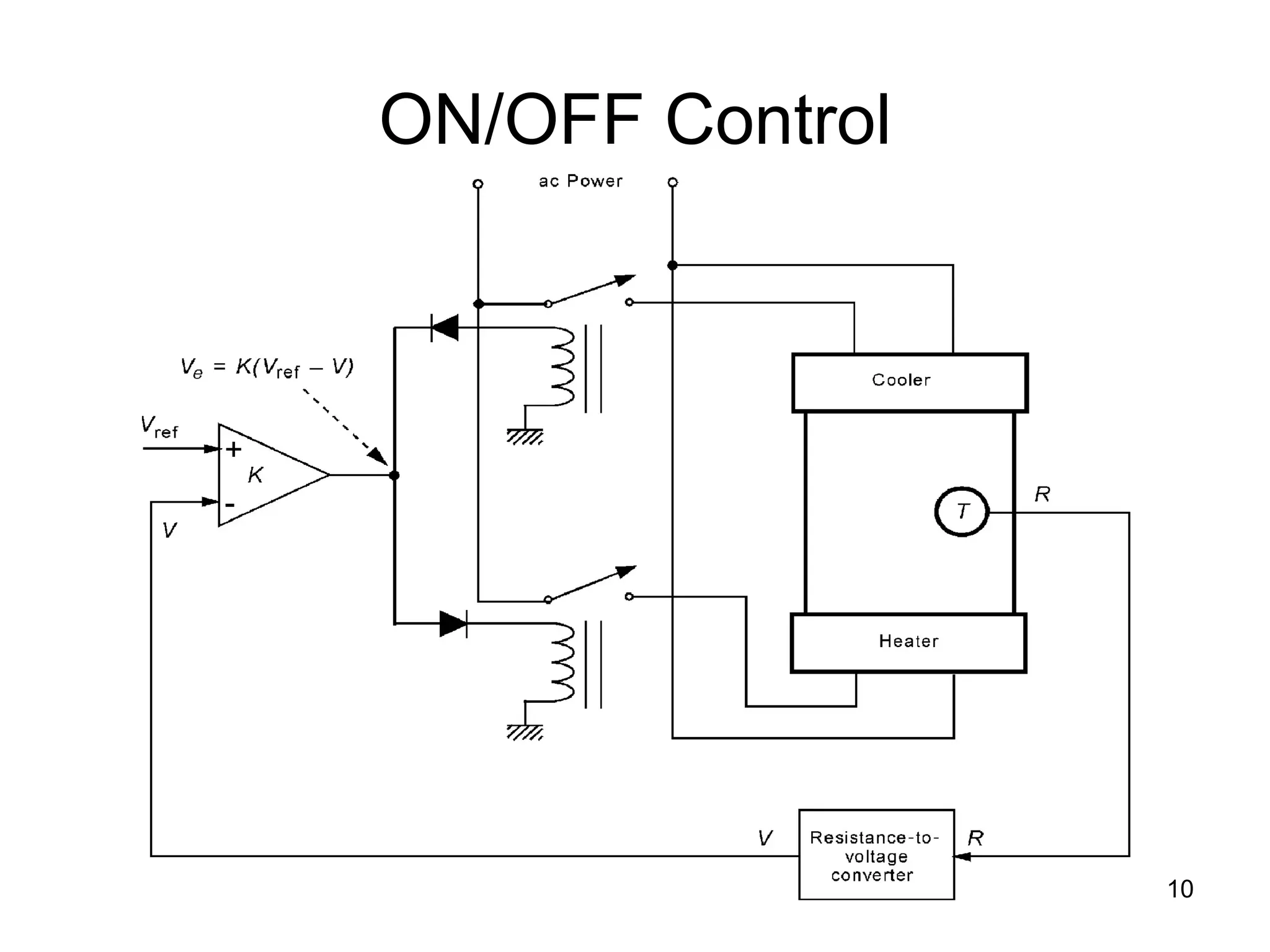
ON/OFF Control


+
-


                     10
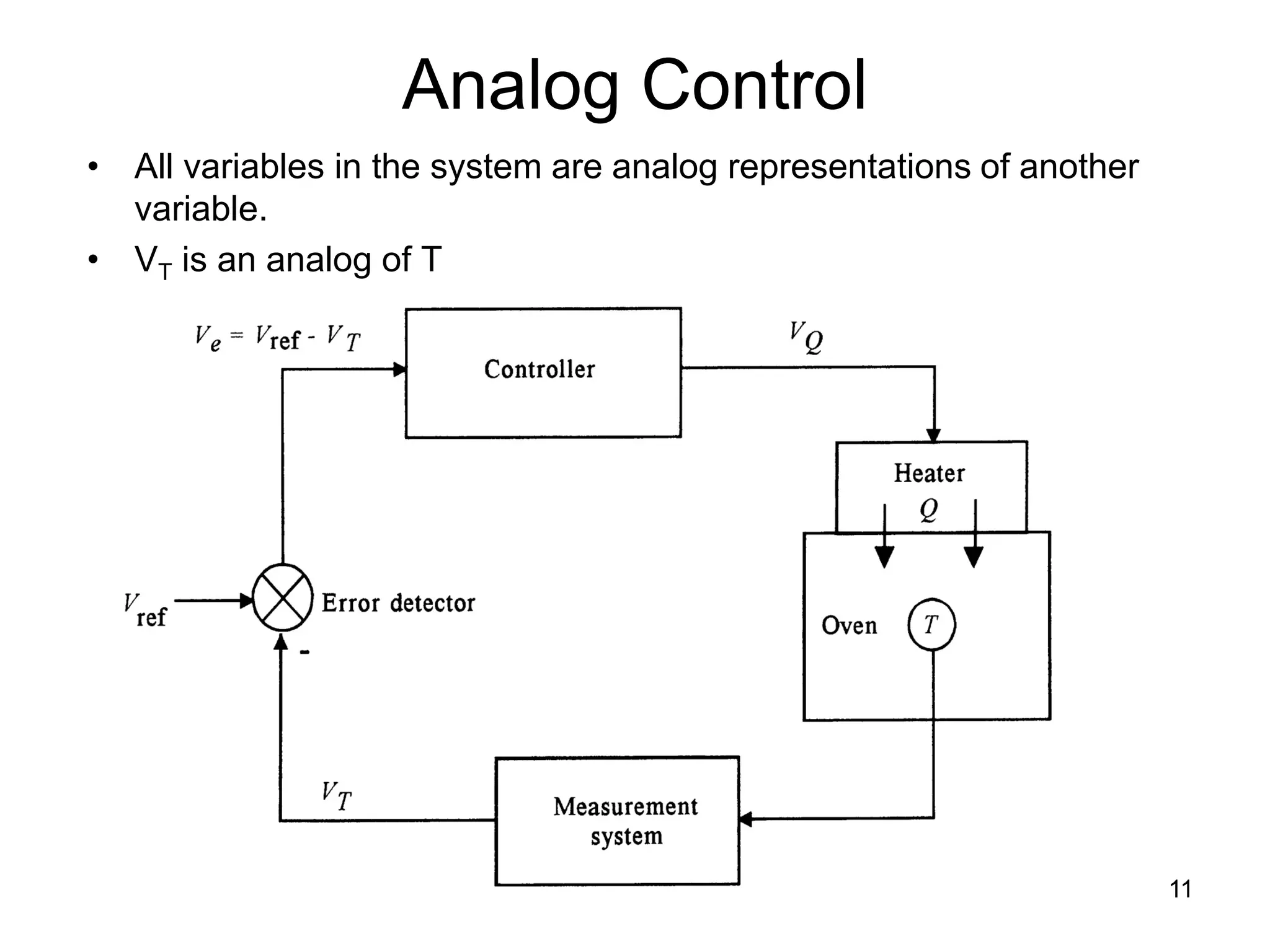
Analog Control
• All variables in the system are analog representations of another
  variable.
• VT is an analog of T


                                                                      11
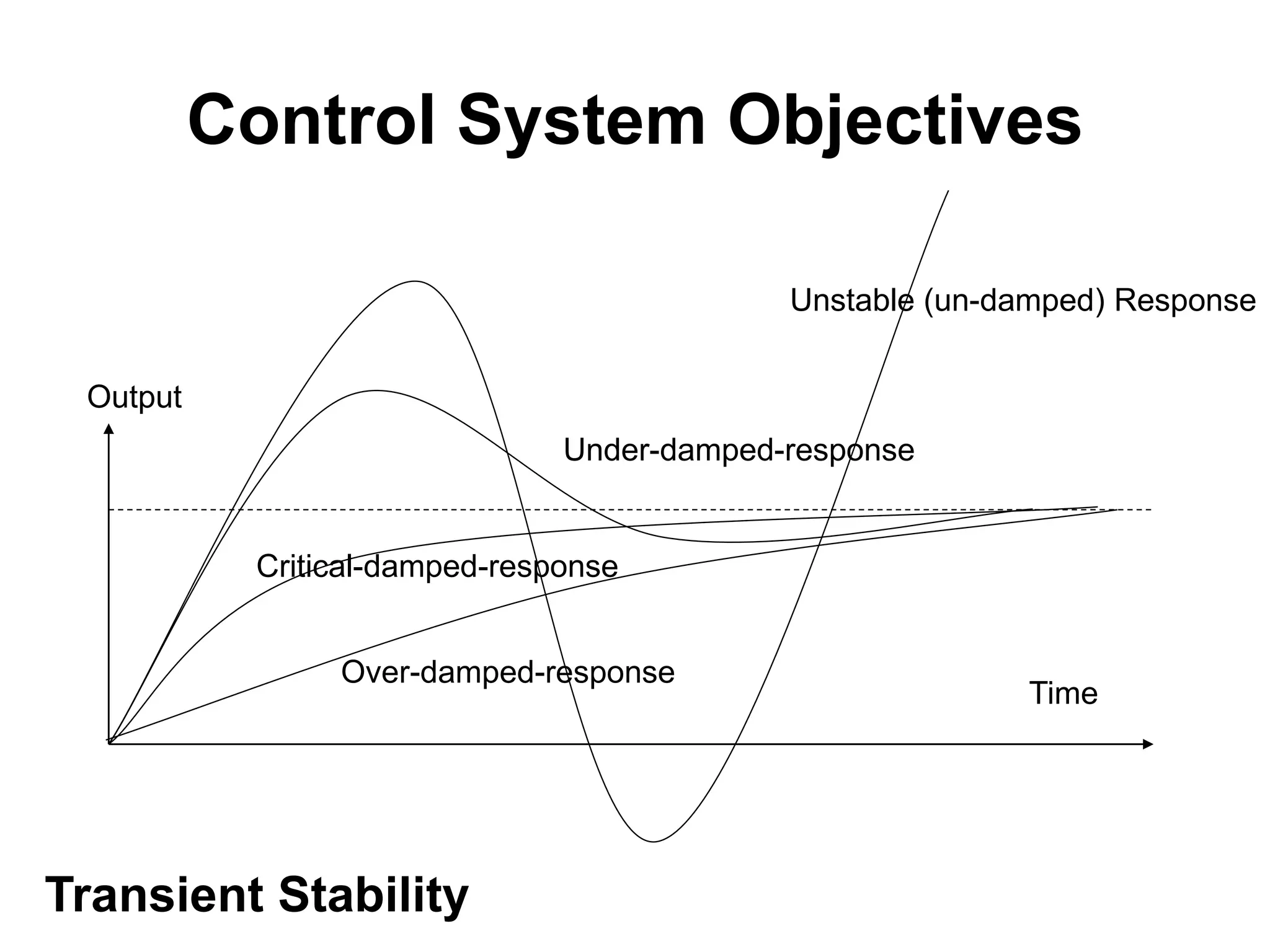
Control System Objectives
1. System stability
2. Steady-state regulation
3. Transient regulation.
Control System Objectives

                                            Unstable (un-damped) Response


 Output
                               Under-damped-response


           Critical-damped-response


                Over-damped-response
                                                          Time


Transient Stability
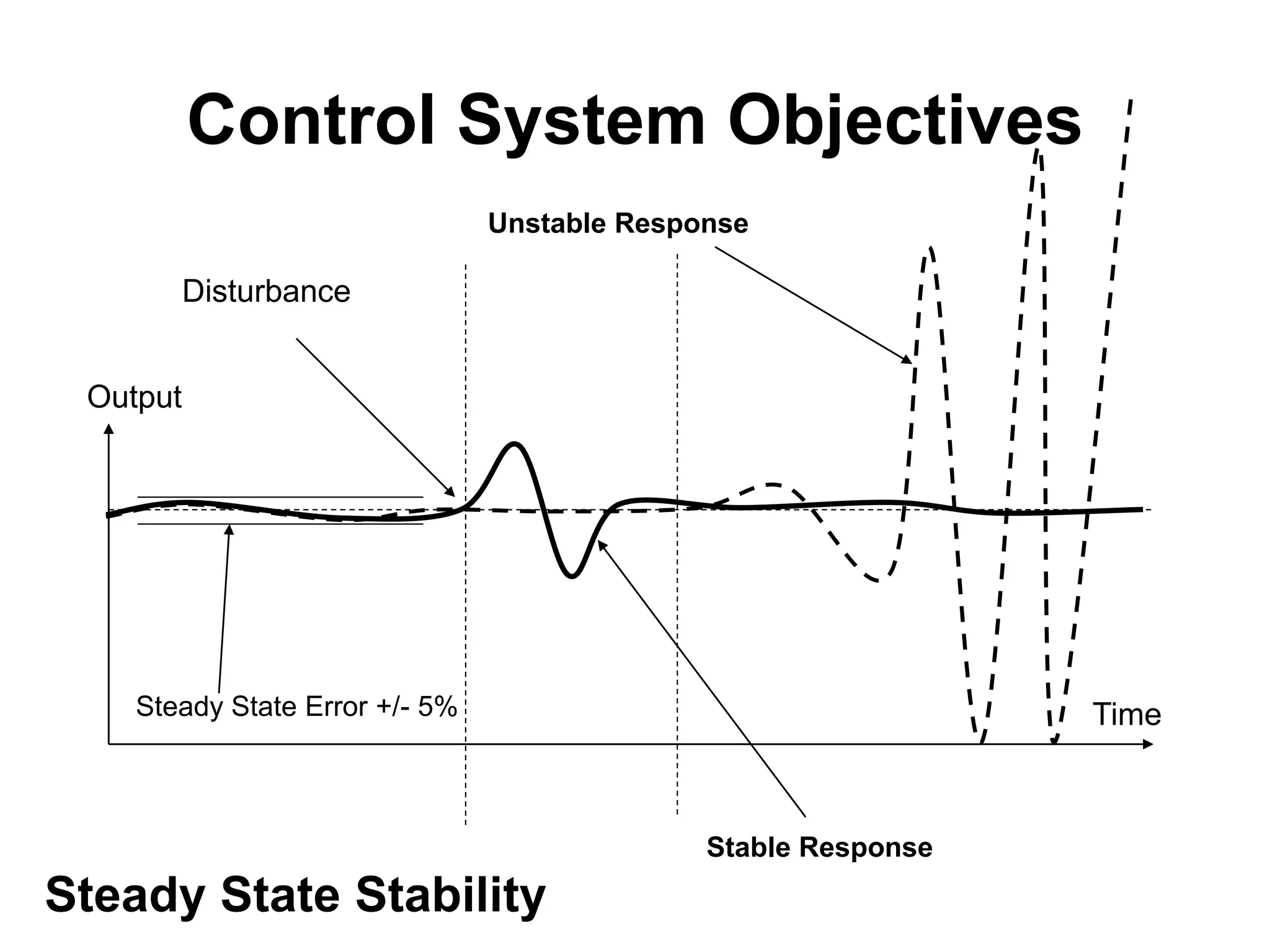
Control System Objectives
                                Unstable Response

          Disturbance


 Output


    Steady State Error +/- 5%                                   Time


                                              Stable Response
Steady State Stability
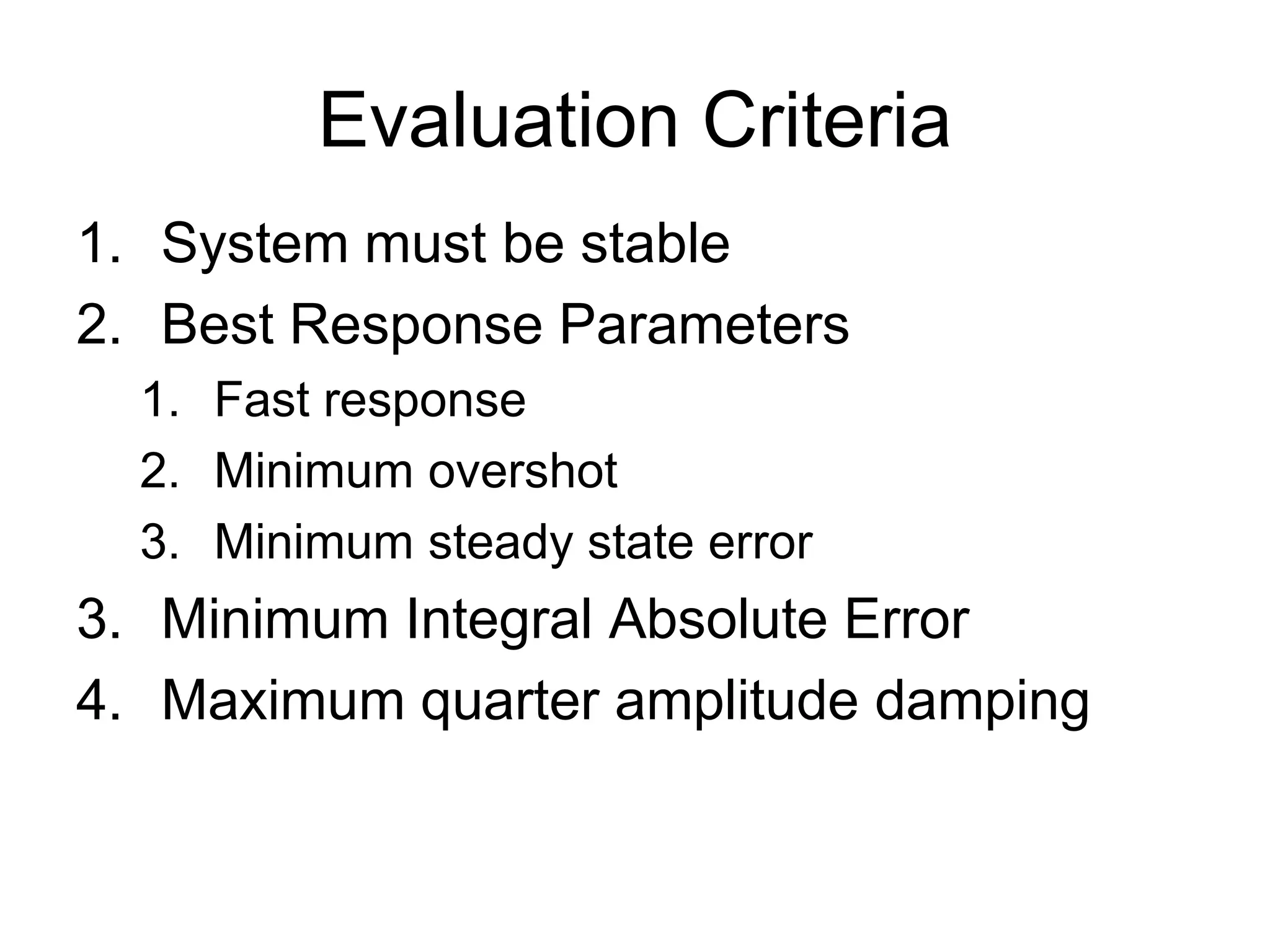
Evaluation Criteria
1. System must be stable
2. Best Response Parameters
  1. Fast response
  2. Minimum overshot
  3. Minimum steady state error
3. Minimum Integral Absolute Error
4. Maximum quarter amplitude damping
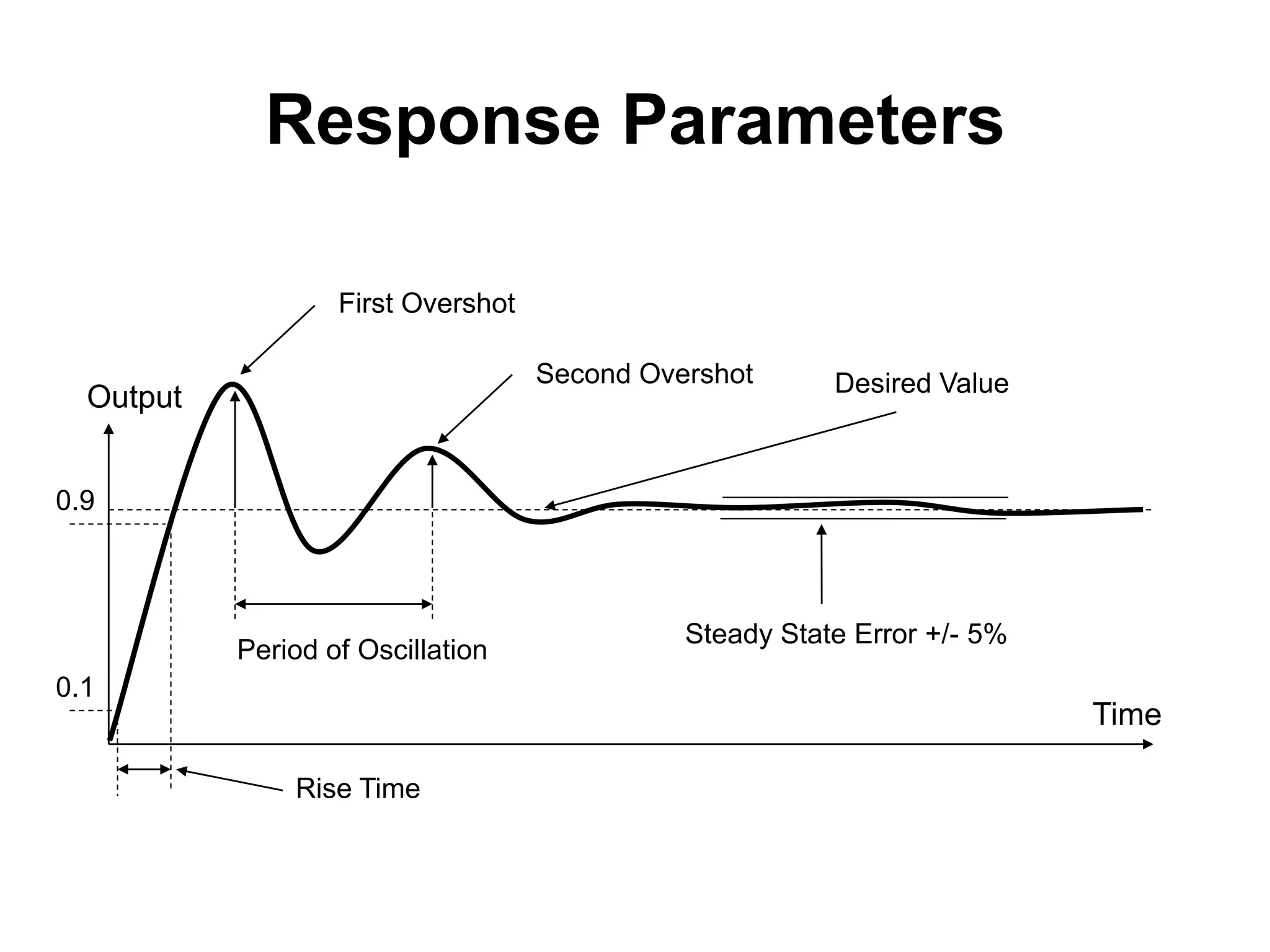
Response Parameters

                   First Overshot

                                    Second Overshot      Desired Value
  Output


0.9


                                              Steady State Error +/- 5%
           Period of Oscillation
0.1
                                                                          Time

               Rise Time
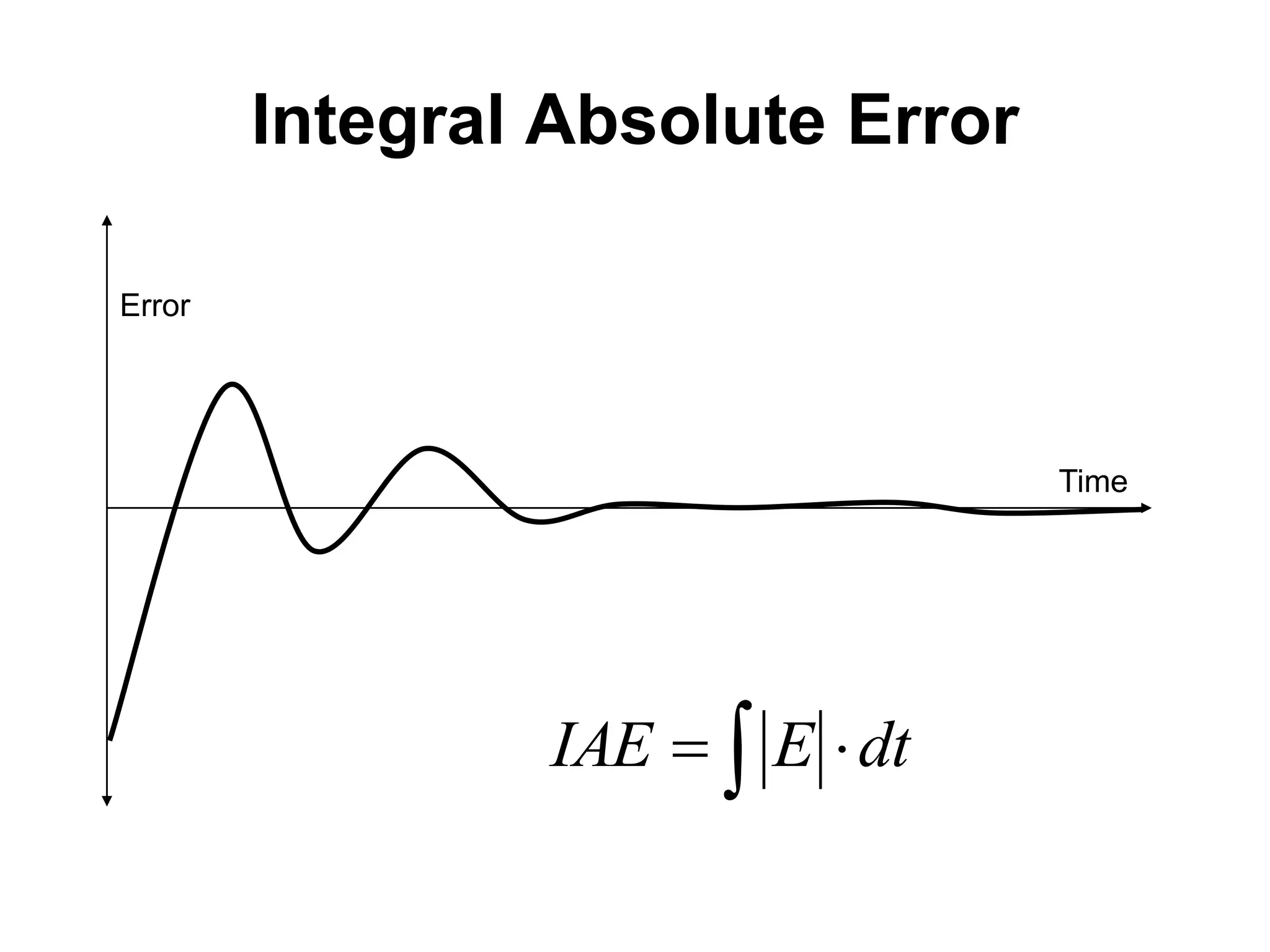
Integral Absolute Error

Error


                                  Time


                IAE   E  dt
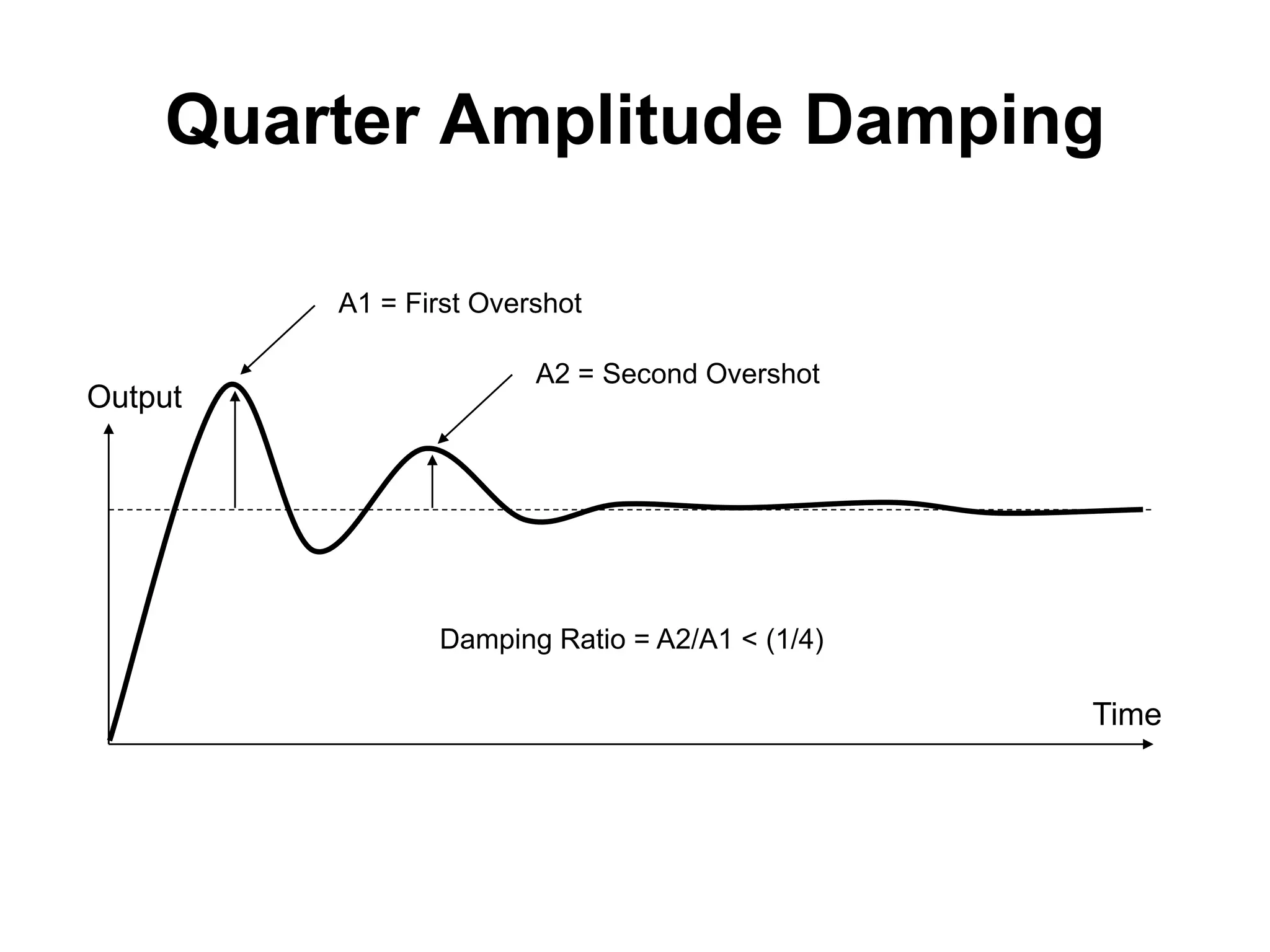
Quarter Amplitude Damping

         A1 = First Overshot

                        A2 = Second Overshot
Output


                Damping Ratio = A2/A1 < (1/4)

                                                Time
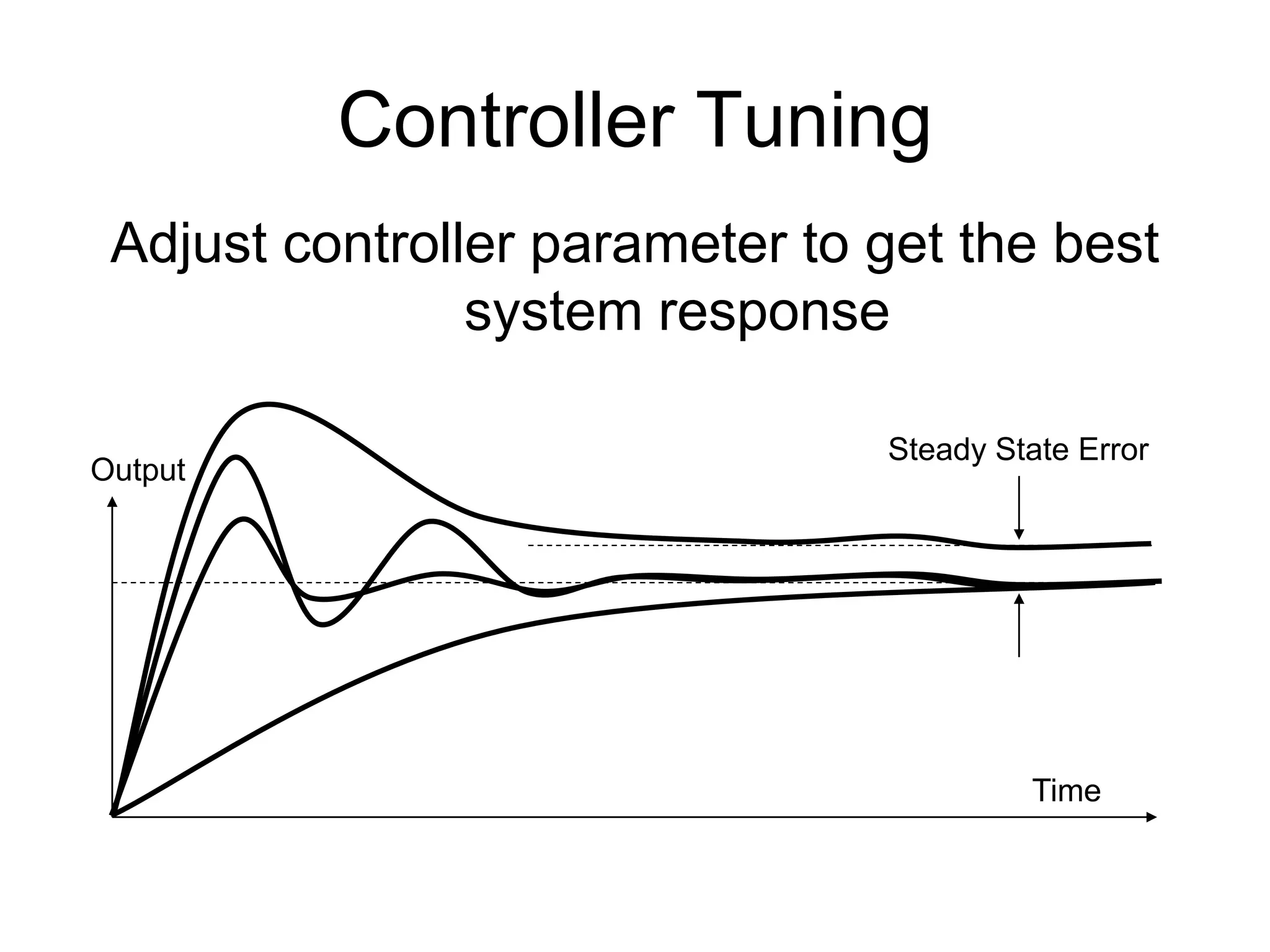
Controller Tuning
 Adjust controller parameter to get the best
                system response

                                Steady State Error
Output


                                         Time
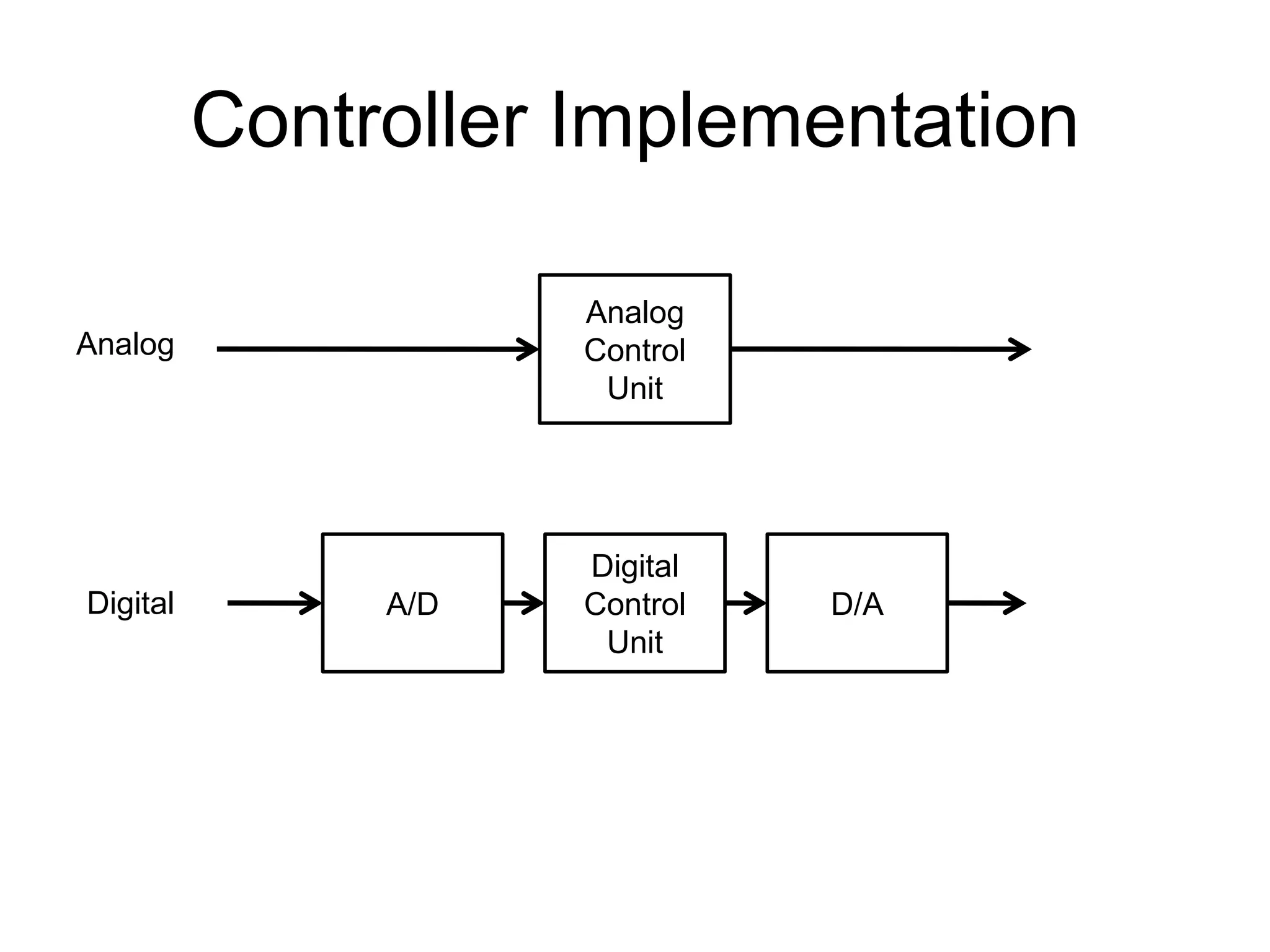
Controller Implementation

                     Analog
Analog               Control
                      Unit


                     Digital
Digital        A/D   Control   D/A
                      Unit
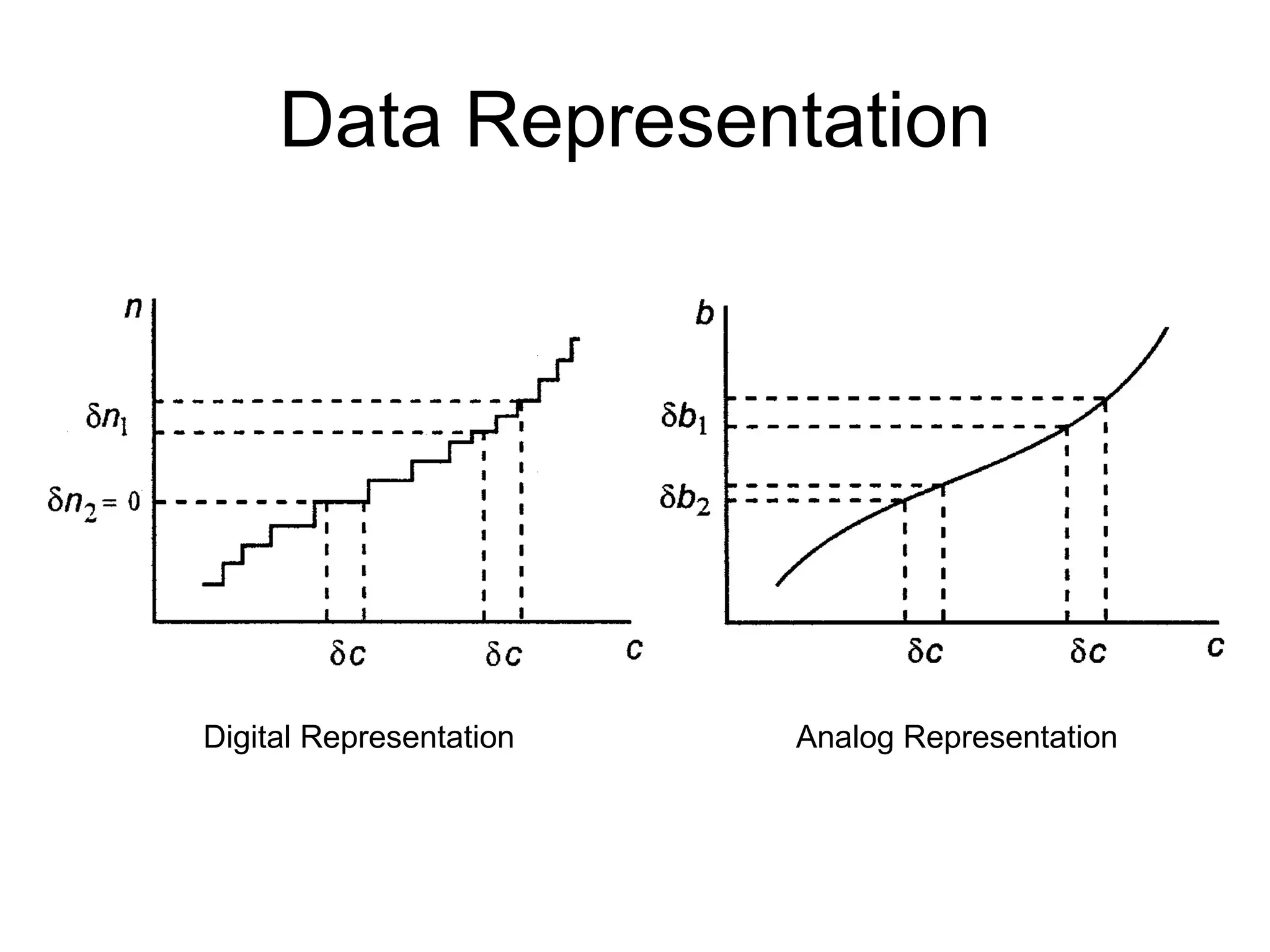
Data Representation


Digital Representation   Analog Representation
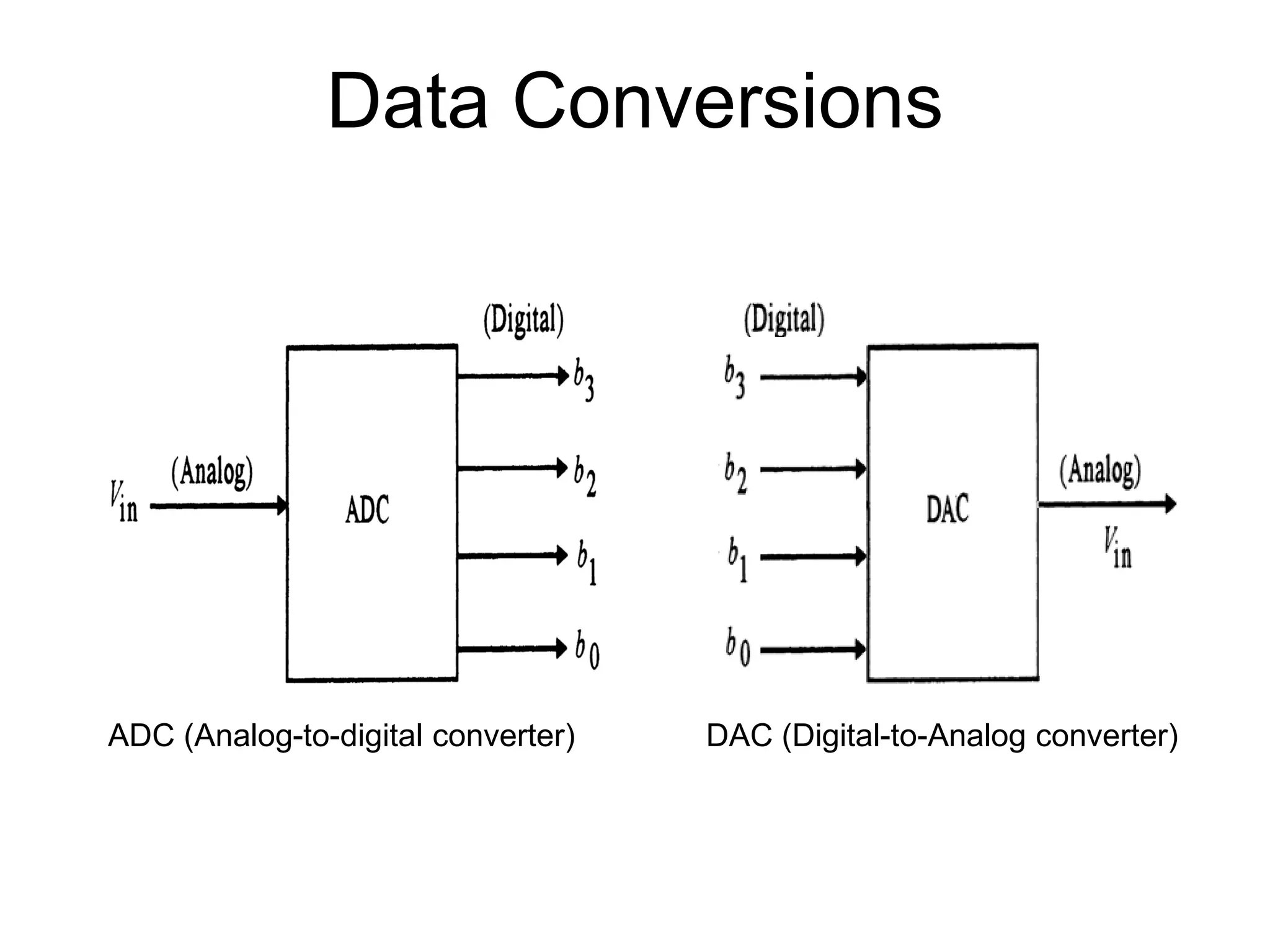
Data Conversions


ADC (Analog-to-digital converter)   DAC (Digital-to-Analog converter)
Data Units
• It is essential to use a well-defined set of
  units of measurement
• Two system of units:
  – The metric system
  – The English system
• In process control, a particular set of
  metric units is used called the International
  System (SI)
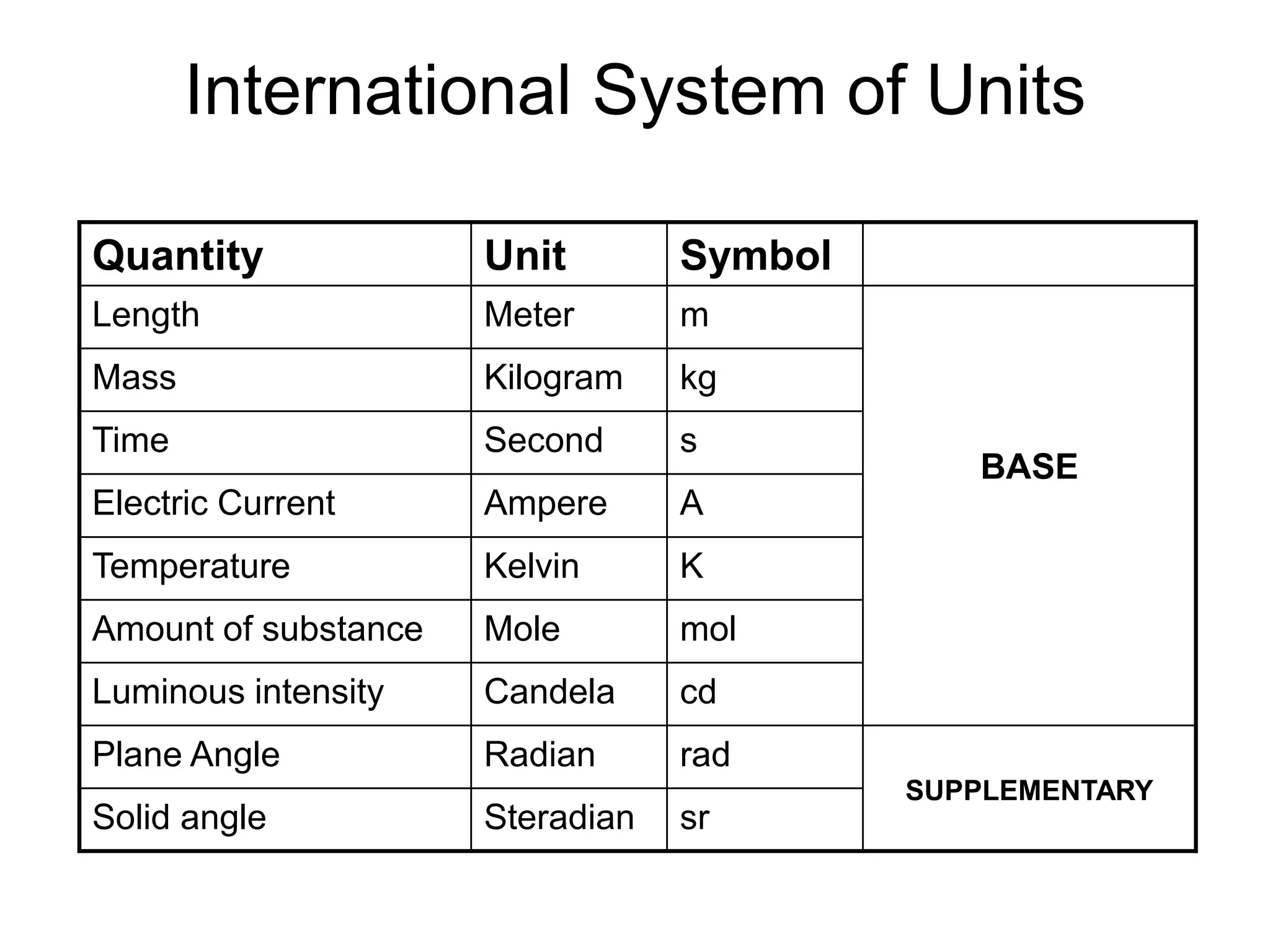
International System of Units

Quantity              Unit        Symbol
Length                Meter       m
Mass                  Kilogram    kg
Time                  Second      s
                                              BASE
Electric Current      Ampere      A
Temperature           Kelvin      K
Amount of substance   Mole        mol
Luminous intensity    Candela     cd
Plane Angle           Radian      rad
                                           SUPPLEMENTARY
Solid angle           Steradian   sr
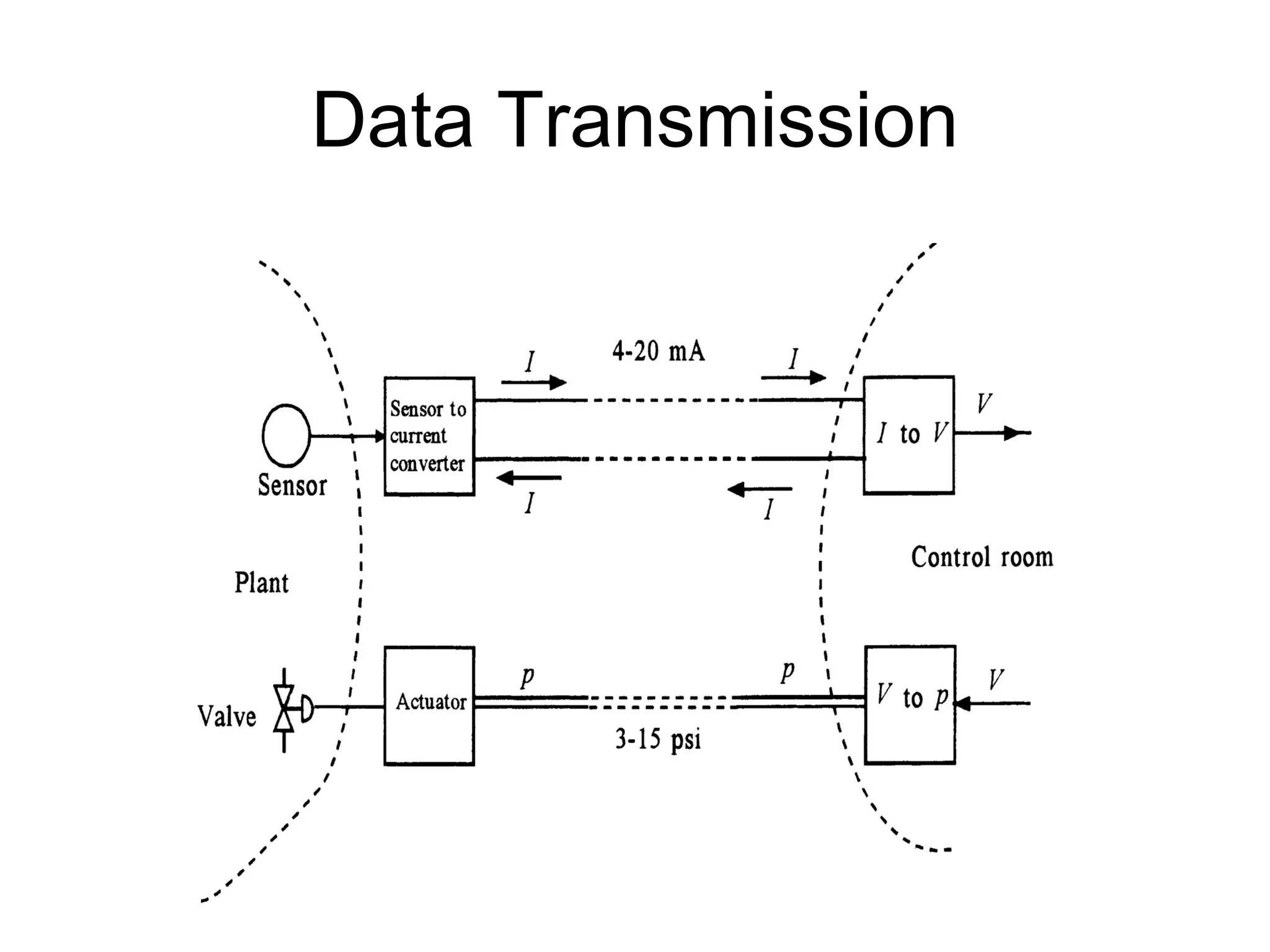
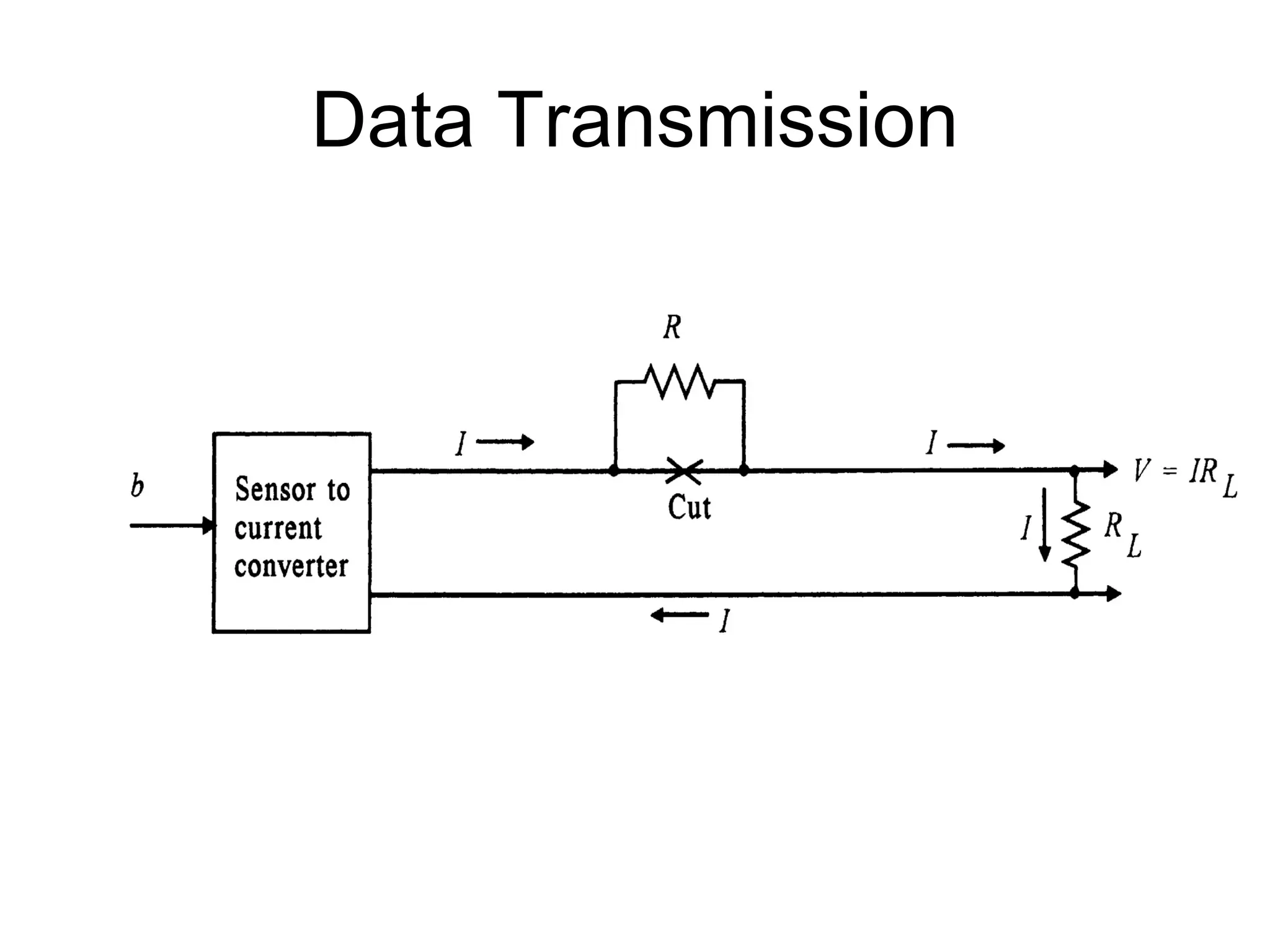
Data Transmission
Data Transmission
Process Control Definitions
• Control: Force parameters in the environment to
  have specific values.
• Sensor: Convert process output signal to
  measurable control signal.
• Actuator: Convert control signal to process
  input signal.
• Controller: Responsible on evaluating the error,
  taking the control decision and producing the
  control signal.
Process Control Definitions
• Error:
• Difference between the measured value of
  the variable and the desired one.
• Transfer Function
• Relationship between the input and output
  for the block
Process Control Definitions
• Transfer Function
• Relationship between the input and output
  for the block, consists of two parts: static
  and dynamic
  – Static: Output depends only on input values
  – Dynamic: Output depends on input and on
    previous system status
Process Control Definitions
               Accuracy
• Maximum overall error to be expected from a device
• Accuracy is usually expressed as:
   – Measured value
       • EX (± 0.3 ma)
   – Percentage of the instrument full-scale (FS) reading
       • EX (Full Scale 20 ma and accuracy ± 1%  ± 0.01*20 ma)
   – Percentage of instrument span
       • EX (Span 4 to 20 ma and accuracy ± 2%  ± 0.02*(20-4)ma)
   – Percentage of the actual reading
       • EX (Read value is 15 ma and accuracy ± 0.5%  ± 0.005*15 ma)
Process Control Definitions
             Sensitivity
• Measure of the change in output of an
  instrument for a change in input
• High sensitivity is desirable in an
  instrument: a large change in output for a
  small change in input
• Ex: A temperature transducer outputs 10
  mV per degree Celsius; sensitivity = 10
  mV/ºC
Process Control Definitions
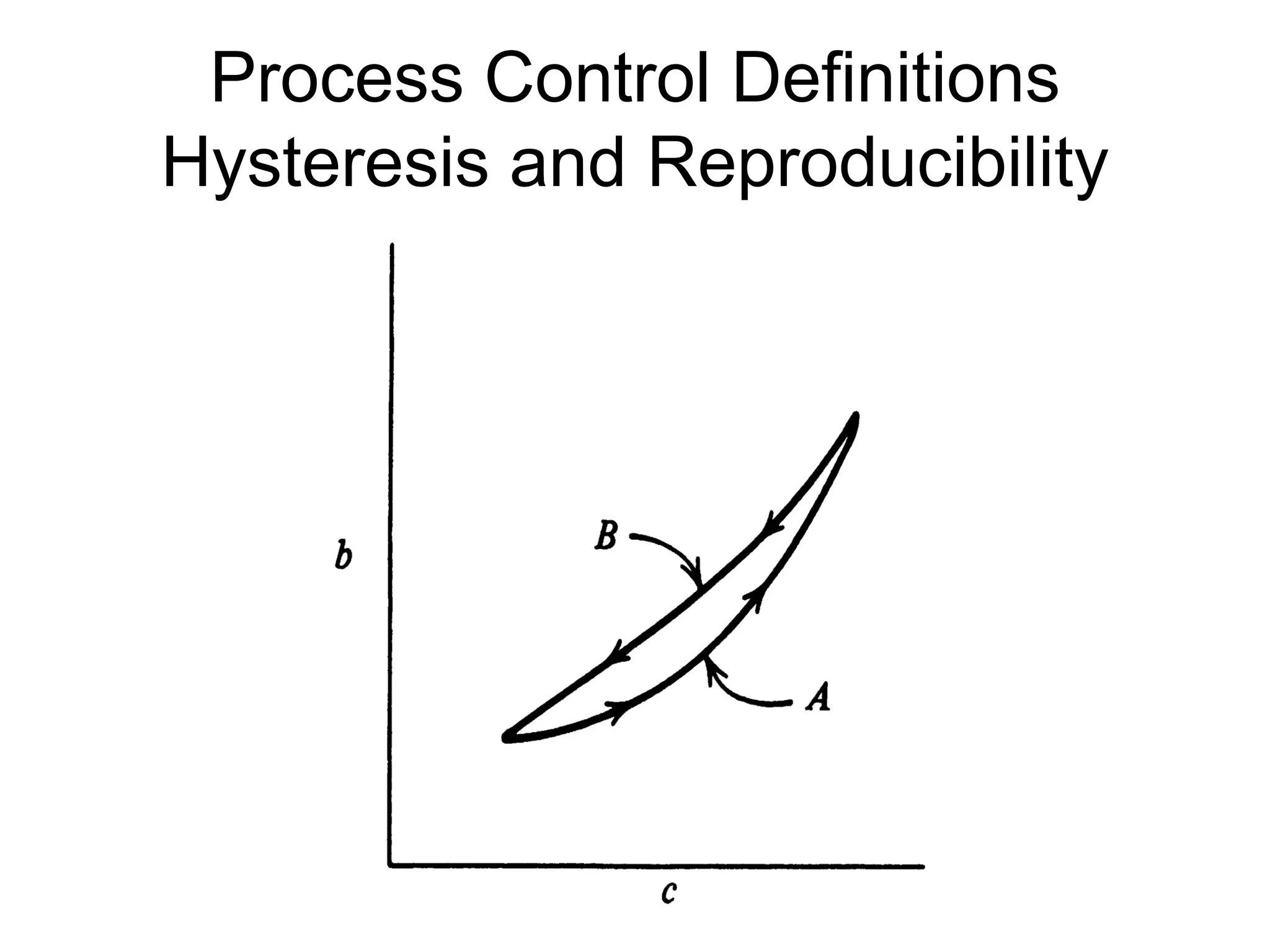
   Hysteresis and Reproducibility
• An instrument will not have the same output
  value for a given input in many trials
• This is reproducibility of the device
• This variation is random and unpredictable
• Hysteresis: Different readings results for a
  specific input, depending on whether the
  input value is approached from higher or
  lower values.
Process Control Definitions
Hysteresis and Reproducibility
Process Control Definitions
            Resolution
• Minimum measurable value of the input
  variable.
• Can be changed only by redesign.
• Analog systems: smallest measurable
  change in the analog output signal of the
  measurement device.
• Digital systems: change in dynamic
  variable represented by a 1-bit change in
  the binary word output.
Process Control Definitions
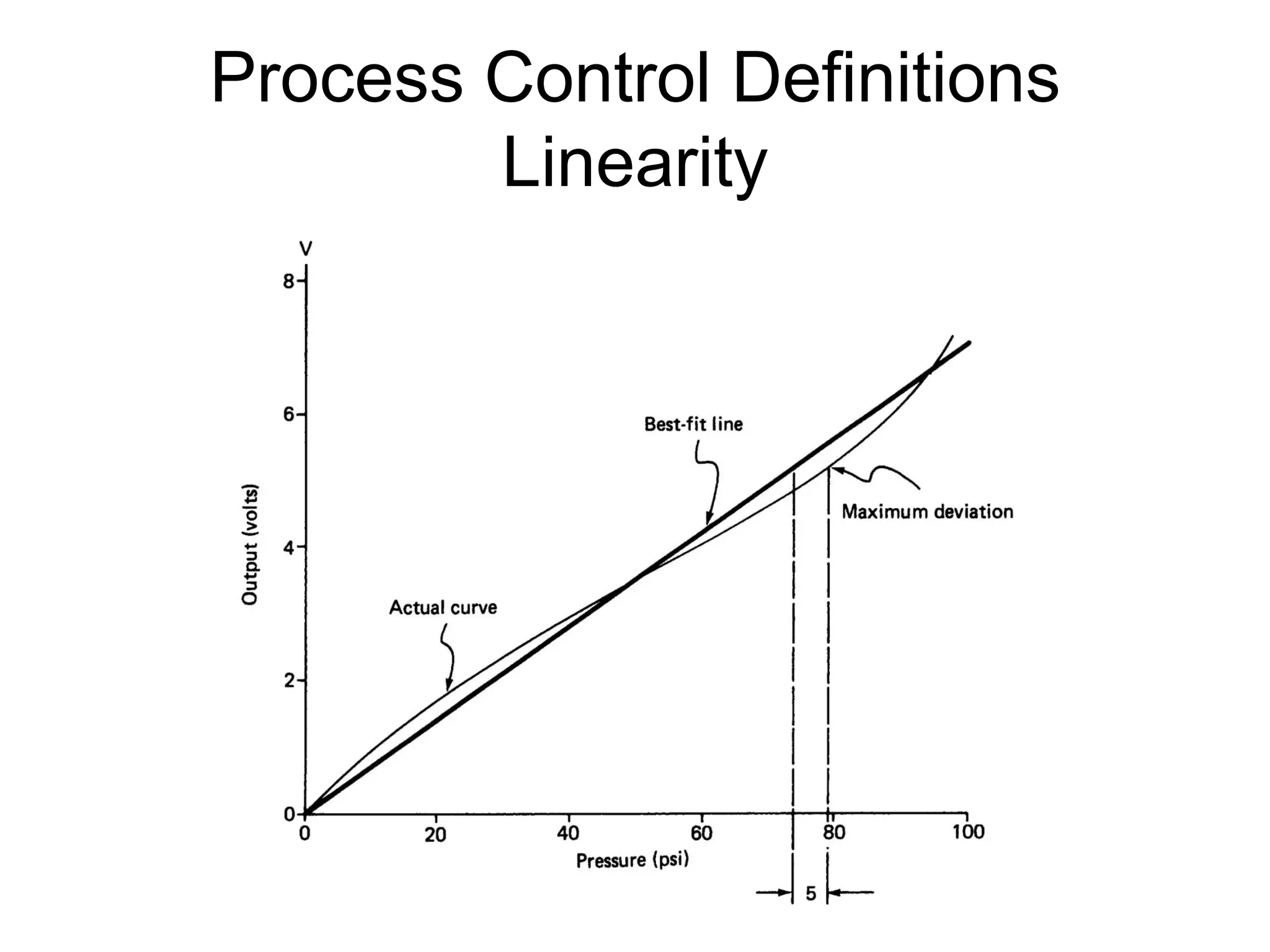
             Linearity
• In sensor and signal conditioning, output is
  represented in some functional
  relationship to the input
• This relationship must be unique: for each
  value of the input variable there exists one
  unique value of the output variable.
• A linear relationship between input and
  output is highly desirable.
Process Control Definitions
        Linearity
Process Control Definitions
      Sensor Time Response
• A process-control loop element specifies
  how the output is related to the input if the
  input is constant
• An element also has a time dependence
  that specifies how the output changes in
  time when the input is changing in time
• This dynamic transfer function is called the
  time response.
Process Control Definitions
        Sensor Time Response

b(t) = bi+(bf – bi)[1 – e-t/]


                                 First Order
                                 Response
Process Control Definitions
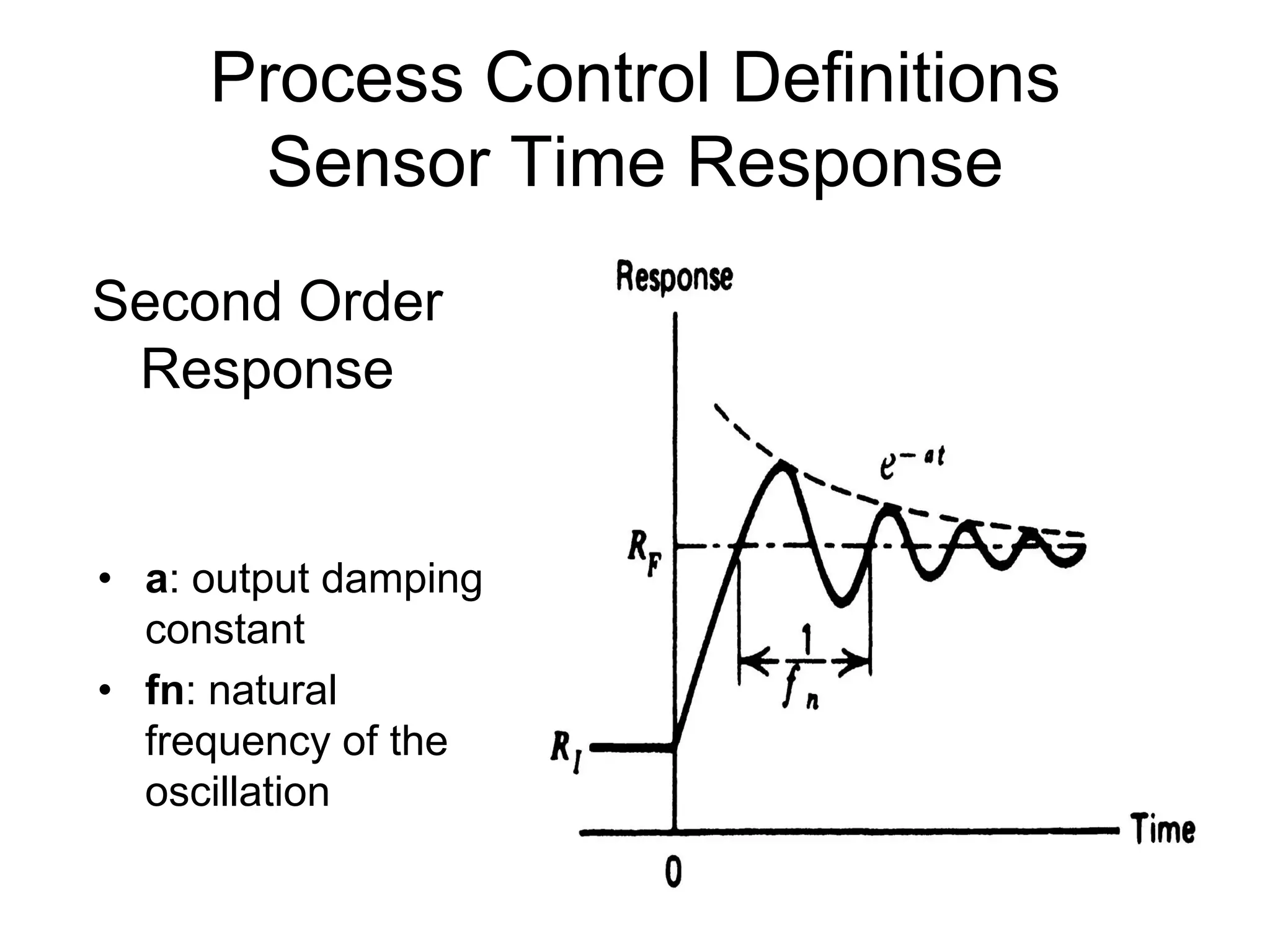
      Sensor Time Response
Second Order
 Response


• a: output damping
  constant
• fn: natural
  frequency of the
  oscillation
Process Control Definitions
     Significance and Statistics
• Significant figures:
  – Do not attach more significance to a variable
    value than the instrument can support.
• Statistics:
  – Arithmetic mean and
  – Standard deviation

Chapter 1

  • 1.
    Introduction to Process Control Control Components Dr. Mohamed Sobh Reference: Chapter 1, Process Control Instrumentation Technology, 8th, Johnson
  • 2.
    Contents • Automatic Control •Data Representation • Control Definitions 2
  • 3.
  • 4.
    The Process Qout >Qin  h Decrease Qout < Qin  h Increase
  • 5.
    Manual Control Measurement Error Evaluation Control Action Control Decision
  • 6.
    Automatic Control Measurement Sensor Error Evaluation Difference Amp. Control Decision Analog Circuit, Computer, … Control Action Actuator
  • 7.
  • 8.
    Reasons of UsingAutomatic Control Maintain Set Point Reasons Tracking Regulation ?
  • 9.
    Process Control BlockDiagram Manipulated signal Set point Control Error signal Signal Controlled Variable Measured signal
  • 10.
  • 11.
    Analog Control • Allvariables in the system are analog representations of another variable. • VT is an analog of T 11
  • 12.
    Control System Objectives 1.System stability 2. Steady-state regulation 3. Transient regulation.
  • 13.
    Control System Objectives Unstable (un-damped) Response Output Under-damped-response Critical-damped-response Over-damped-response Time Transient Stability
  • 14.
    Control System Objectives Unstable Response Disturbance Output Steady State Error +/- 5% Time Stable Response Steady State Stability
  • 15.
    Evaluation Criteria 1. Systemmust be stable 2. Best Response Parameters 1. Fast response 2. Minimum overshot 3. Minimum steady state error 3. Minimum Integral Absolute Error 4. Maximum quarter amplitude damping
  • 16.
    Response Parameters First Overshot Second Overshot Desired Value Output 0.9 Steady State Error +/- 5% Period of Oscillation 0.1 Time Rise Time
  • 17.
    Integral Absolute Error Error Time IAE   E  dt
  • 18.
    Quarter Amplitude Damping A1 = First Overshot A2 = Second Overshot Output Damping Ratio = A2/A1 < (1/4) Time
  • 19.
    Controller Tuning Adjustcontroller parameter to get the best system response Steady State Error Output Time
  • 20.
    Controller Implementation Analog Analog Control Unit Digital Digital A/D Control D/A Unit
  • 21.
  • 22.
    Data Conversions ADC (Analog-to-digitalconverter) DAC (Digital-to-Analog converter)
  • 23.
    Data Units • Itis essential to use a well-defined set of units of measurement • Two system of units: – The metric system – The English system • In process control, a particular set of metric units is used called the International System (SI)
  • 24.
    International System ofUnits Quantity Unit Symbol Length Meter m Mass Kilogram kg Time Second s BASE Electric Current Ampere A Temperature Kelvin K Amount of substance Mole mol Luminous intensity Candela cd Plane Angle Radian rad SUPPLEMENTARY Solid angle Steradian sr
  • 25.
  • 26.
  • 27.
    Process Control Definitions •Control: Force parameters in the environment to have specific values. • Sensor: Convert process output signal to measurable control signal. • Actuator: Convert control signal to process input signal. • Controller: Responsible on evaluating the error, taking the control decision and producing the control signal.
  • 28.
    Process Control Definitions •Error: • Difference between the measured value of the variable and the desired one. • Transfer Function • Relationship between the input and output for the block
  • 29.
    Process Control Definitions •Transfer Function • Relationship between the input and output for the block, consists of two parts: static and dynamic – Static: Output depends only on input values – Dynamic: Output depends on input and on previous system status
  • 30.
    Process Control Definitions Accuracy • Maximum overall error to be expected from a device • Accuracy is usually expressed as: – Measured value • EX (± 0.3 ma) – Percentage of the instrument full-scale (FS) reading • EX (Full Scale 20 ma and accuracy ± 1%  ± 0.01*20 ma) – Percentage of instrument span • EX (Span 4 to 20 ma and accuracy ± 2%  ± 0.02*(20-4)ma) – Percentage of the actual reading • EX (Read value is 15 ma and accuracy ± 0.5%  ± 0.005*15 ma)
  • 31.
    Process Control Definitions Sensitivity • Measure of the change in output of an instrument for a change in input • High sensitivity is desirable in an instrument: a large change in output for a small change in input • Ex: A temperature transducer outputs 10 mV per degree Celsius; sensitivity = 10 mV/ºC
  • 32.
    Process Control Definitions Hysteresis and Reproducibility • An instrument will not have the same output value for a given input in many trials • This is reproducibility of the device • This variation is random and unpredictable • Hysteresis: Different readings results for a specific input, depending on whether the input value is approached from higher or lower values.
  • 33.
  • 34.
    Process Control Definitions Resolution • Minimum measurable value of the input variable. • Can be changed only by redesign. • Analog systems: smallest measurable change in the analog output signal of the measurement device. • Digital systems: change in dynamic variable represented by a 1-bit change in the binary word output.
  • 35.
    Process Control Definitions Linearity • In sensor and signal conditioning, output is represented in some functional relationship to the input • This relationship must be unique: for each value of the input variable there exists one unique value of the output variable. • A linear relationship between input and output is highly desirable.
  • 36.
  • 37.
    Process Control Definitions Sensor Time Response • A process-control loop element specifies how the output is related to the input if the input is constant • An element also has a time dependence that specifies how the output changes in time when the input is changing in time • This dynamic transfer function is called the time response.
  • 38.
    Process Control Definitions Sensor Time Response b(t) = bi+(bf – bi)[1 – e-t/] First Order Response
  • 39.
    Process Control Definitions Sensor Time Response Second Order Response • a: output damping constant • fn: natural frequency of the oscillation
  • 40.
    Process Control Definitions Significance and Statistics • Significant figures: – Do not attach more significance to a variable value than the instrument can support. • Statistics: – Arithmetic mean and – Standard deviation