DIGESTIVE SYSTEM
   Medical terms
   By Loredana T. Lungu
1. Liver Biopsy


A liver biopsy is a procedure to remove a small
piece of the liver so it can be examined with a
microscope for signs of damage or disease. The
three main types of liver biopsy are percutaneous,
transvenous, and laparoscopic.
What is the liver?

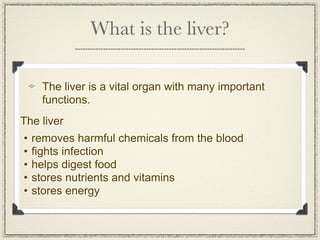
      The liver is a vital organ with many important
      functions.
The liver
•   removes harmful chemicals from the blood
•   fights infection
•   helps digest food
•   stores nutrients and vitamins
•   stores energy
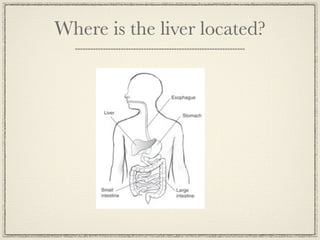
Where is the liver located?
When is a liver biopsy performed?


  A liver biopsy is performed when a liver problem is
  difficult to diagnose with blood tests or imaging
  techniques, such as ultrasound and x ray.
  More often, a liver biopsy is performed to estimate
  the degree of liver damage—a process called
  staging. Staging helps guide treatment.
Restricted medication

    nonsteroidal anti-inflammatory drugs, such as aspirin,
    ibuprofen, and naproxen
•   blood thinners
•   high blood pressure medication
•   diabetes medications
•   antidepressants
•   antibiotics
•   asthma medications
•   dietary supplements
How to prepare for the procedure?

  Prior to liver biopsy, blood will be drawn to determine its ability to clot. People
  with severe liver disease often have blood clotting problems that can increase
  the risk of bleeding after the procedure. A medicine given just before a liver
  biopsy, called clotting factor concentrates, reduces the risk of bleeding in
  patients with blood clotting abnormalities.

  Patients who will be sedated should not eat or drink for 8 hours before the
  liver biopsy and should arrange a ride home, as driving is prohibited for 12
  hours after the procedure. Mild sedation is sometimes used during liver
  biopsy to help patients stay relaxed. Unlike general anesthesia where
  patients are unconscious, patients can communicate while sedated but then
  often have no memory of the procedure. Sedatives are often given through
  an intravenous (IV) tube placed in a vein. The IV can also be used to give
  pain medication, if necessary, after the procedure.
How is the procedure performed?


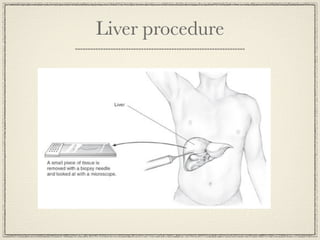
 All three main types of liver biopsy remove liver
 tissue with a needle; however, each takes a
 different approach to needle insertion. A liver biopsy
 may be performed at a hospital or outpatient
 center.
Liver procedure
Results of the liver biopsy

Results from a liver biopsy take a few days to come
back. The liver sample goes to a pathology
laboratory where the tissue is stained. Staining
highlights important details within the liver tissue
and helps the pathologist—a doctor who
specializes in diagnosing disease—identify signs of
liver disease. The pathologist looks at the tissue
with a microscope and sends a report to the
patient’s doctor.
Recovery time after the biopsy


Most patients fully recover from a liver biopsy in 1
to 2 days. Patients should avoid intense activity,
exercise, or heavy lifting during this time. Soreness
around the incision site may persist for about a
week. Acetaminophen (Tylenol) or other pain
medications that do not interfere with blood clotting
may help. Patients should check with their doctor
before taking any pain medications.
What are the risks?

Pain at the biopsy site is the most frequent risk of percutaneous liver biopsy,
occurring in about 20 percent of patients

The risk of excessive bleeding, called hemorrhage

Risk of death is about 1 in 10,000

Other risks include puncture of other internal organs, infection, and spread of
cancer cells, called cancer seeding

Transvenous liver biopsy carries an additional risk of adverse reaction to the
contrast material.
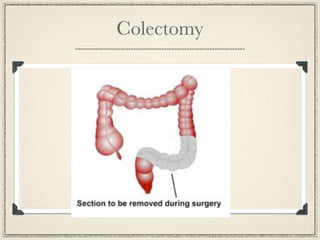
2. Colectomy

Colectomy is a surgical procedure to remove all or
part of your colon. Your colon, also called your
large intestine, is a long tube-like organ at the end
of your digestive system. Colectomy may be
necessary to treat or prevent diseases and
conditions that affect your colon.
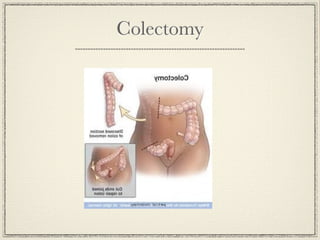
Colectomy
Types of colectomy operations

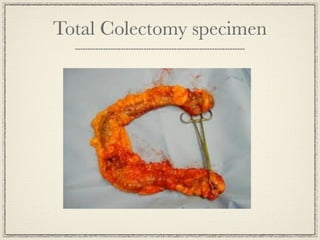
Colectomy that involves removing the entire colon is called total colectomy

Colectomy to remove part of the colon may be called subtotal colectomy or
partial colectomy

Removing the right or left portion of the colon is called hemicolectomy.

Surgery to remove both the colon and rectum is called proctocolectomy.

Colectomy surgery usually requires other procedures to reattach the
remaining portions of your digestive system and permit waste to leave your
body.
Why is the colectomy done?

   Bowel obstruction. A blocked colon is an emergency that may require total or partial colectomy,
   depending on the situation.
1 Bleeding that can't be controlled. Severe bleeding from the colon may require surgery to remove the
  affected portion of the colon. For instance, in rare cases, pockets in the colon (diverticula) can cause
  bleeding that may require surgery.
2 Bowel perforation. A torn colon is also an emergency that may require colectomy.

3 Colon cancer. Early-stage cancers may require only a small section of the colon to be removed during
  colectomy. Cancers at a later stage may require more of the colon to be removed.
4 Crohn's disease. If medications aren't helping you, removing the affected part of your colon may offer
  temporary relief from signs and symptoms.
5 Ulcerative colitis. Your doctor may recommend total colectomy if medications aren't helping to control your
  signs and symptoms.
6 Preventive surgery. If you have a very high risk of colon cancer due to the formation of multiple
  precancerous colon polyps, you may choose to undergo total colectomy to prevent cancer in the future.
  Colectomy may be an option for people with inherited genetic conditions that increase colon cancer risk,
Risks of Colectomy

 Bleeding
1 Blood clots in the legs (deep vein thrombosis) and the
  lungs (pulmonary embolism)
2 Infection
3 Injury to organs near your colon, such as the bladder
  and small intestines
4 Tears in the sutures that reconnect the remaining
  parts of your digestive system
How to Prepare for colectomy

Stop taking certain medications
Fast before your surgery

Drink a solution that clears your bowels. Your
doctor may prescribe a laxative solution that you
mix with water at home.
Take antibiotics; if prescribed by your Doctor

Take a shower. Shower before going to the
What to expect during colectomy?

  You'll be given a general anesthesia medication to put you in a sleep-like
  state so that you won't be aware during your operation.

  Colon surgery may be performed in two ways:

  1. Open colectomy. Open surgery involves making a large incision in your
  abdomen to access your colon.

  2. Laparoscopic colectomy. Laparoscopic colectomy, also called minimally
  invasive colectomy, involves several small incisions in your abdomen. Your
  surgeon passes a tiny video camera through one incision and special surgical
  tools through the other incisions.

  Once the colon has been repaired or removed, your surgeon will reconnect
What to expect after colectomy?


      After surgery you'll be taken to a recovery room to be monitored as the
      anesthesia wears off. Then your health care team will take you to your
      hospital room to continue your recovery.

        You'll stay in the hospital until you regain bowel function. This may take a
couple of days to a week. You may not be able to eat solid foods at first. You might
receive liquid nutrition through a vein in your arm and then transition to drinking
clear liquids. As your intestines recover, you can eventually add solid foods.
Colectomy
Total Colectomy specimen
3. Fecal occult blood test


Fecal occult blood test is used to test the presence of
microscopic or invisible blood in the stool, or feces. Fecal
occult blood can be a sign of a problem in your digestive
system, such as a growth, or polyp, or cancer in the colon
or rectum. If microscopic blood is detected, it is
important for your doctor to determine the source of
bleeding to properly diagnose and treat the problem.
Causes for blood in the stool

   Benign (non-cancerous) or malignant (cancerous) growths or polyps of the colon
1. Hemorrhoids (swollen blood vessels near the anus and lower rectum that can rupture
   causing bleeding)
2. Anal fissures (splits or cracks in the lining of the anal opening)
3. Intestinal infections that cause inflammation
4. Ulcers
5. Ulcerative colitis
6. Crohn's disease
7. Diverticular disease, caused by outpouchings of the colon wall
8. Abnormalities of the blood vessels in the large intestine
How to take the test?

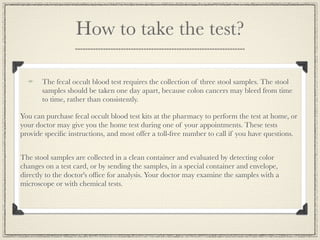
       The fecal occult blood test requires the collection of three stool samples. The stool
       samples should be taken one day apart, because colon cancers may bleed from time
       to time, rather than consistently.

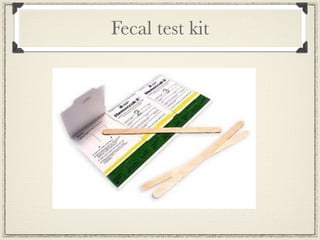
You can purchase fecal occult blood test kits at the pharmacy to perform the test at home, or
your doctor may give you the home test during one of your appointments. These tests
provide specific instructions, and most offer a toll-free number to call if you have questions.


The stool samples are collected in a clean container and evaluated by detecting color
changes on a test card, or by sending the samples, in a special container and envelope,
directly to the doctor's office for analysis. Your doctor may examine the samples with a
microscope or with chemical tests.
Fecal test kit
How to prepare for the test?

   Don’t perform the test is you have:
1.Diarrhea
2.Colitis
3.Constipation
4.Diverticulitis
5.Ulcers
6.Hemorrhoid flare-ups
7.Your period
How to prepare for the test?

       Do not eat:
•   Beets
•   Broccoli
•   Cantaloupe
•   Carrots
•   Cauliflower
•   Cucumbers
•   Grapefruit
•   Horseradish
•   Mushrooms
•   Radishes
•   Red meat (especially meat that is cooked rare)
•   Turnips
•   Vitamin C-enriched foods or beverages
Results of the test

Because small amounts of blood normally appear in the
stool, tests for occult blood are designed to detect larger
quantities of blood.
A positive fecal occult blood test means that blood has
been found in the stool
A negative test result means that no blood was found in
the stool sample during the testing period. You should
continue to follow your doctor's recommendations for
regular cancer screening.
Positive results
4. Barium swallow


A barium swallow, or upper GI series, is an x-ray test used to examine the
upper digestive tract (the esophagus, stomach, and small intestine). Because
these organs are normally not visible on x-rays, you need to swallow barium,
a liquid that does show up on x-rays. The barium temporarily coats the lining
of the esophagus, stomach, and intestine, making the outline of these organs
visible on the xray pictures. This test is useful for diagnosing cancers, ulcers,
problems that cause narrowing of the esophagus, some causes of
inflammation in the intestine, and some swallowing problems.
How to prepare for the test?


Tell your doctor and the x-ray technicians if there is any chance you could be
pregnant. If you have diabetes and take insulin, discuss this with your doctor
before the test.

Stop eating and drinking the night before your test. This is important because
food in your stomach or intestine could prevent the doctors from seeing a
clear outline of these structures on the x-rays. Usually it isn't a problem for
you to take your regular pills, but you should check with your doctor.
How is the test performed?


At the start of the test, you drink barium, a liquid that looks like a milkshake
but does not taste nearly as good (most patients say it tastes like chalk). You
might also be asked to swallow some tablets that "fizz," causing air-bubbles
to be released in your stomach. This might make you feel like burping, but try
not to. You will get better pictures if you can keep yourself from burping.At
the start of the test, you drink barium, a liquid that looks like a milkshake but
does not taste nearly as good (most patients say it tastes like chalk). You
might also be asked to swallow some tablets that "fizz," causing air-bubbles
to be released in your stomach. This might make you feel like burping, but try
not to. You will get better pictures if you can keep yourself from burping
What happens during the test?


The x-ray technician may ask you to stand or lie in different positions over the
next few minutes, to help spread around the liquid you have swallowed. Most
often, the x-ray pictures are taken while you lie on your back on a table. The
x-ray machine or the table is moved a few times so it can take pictures of all
of the internal structures. You are asked to hold your breath for each picture
so that your breathing movement does not blur the image.
Risks


There are no significant risks.

You are exposed to a small amount of radiation during the test, but the
amount of radiation is too small to be likely to cause any health problems.

After the test, you can eat normally and do your normal activities. You should
drink more water than usual to help clear out the barium and to prevent
constipation, which might be a side effect of the test. Your stool may appear
light in color for a couple of days.
Results


It takes the x-ray department 30 minutes to an hour to develop the pictures
from your barium swallow, and it will take additional time for a doctor to
examine the x-rays and to decide how they look. Typically you can get the
results within a day or two.

Digestive system medical terminology

  • 1.
    DIGESTIVE SYSTEM Medical terms By Loredana T. Lungu
  • 2.
    1. Liver Biopsy Aliver biopsy is a procedure to remove a small piece of the liver so it can be examined with a microscope for signs of damage or disease. The three main types of liver biopsy are percutaneous, transvenous, and laparoscopic.
  • 3.
    What is theliver? The liver is a vital organ with many important functions. The liver • removes harmful chemicals from the blood • fights infection • helps digest food • stores nutrients and vitamins • stores energy
  • 4.
    Where is theliver located?
  • 5.
    When is aliver biopsy performed? A liver biopsy is performed when a liver problem is difficult to diagnose with blood tests or imaging techniques, such as ultrasound and x ray. More often, a liver biopsy is performed to estimate the degree of liver damage—a process called staging. Staging helps guide treatment.
  • 6.
    Restricted medication nonsteroidal anti-inflammatory drugs, such as aspirin, ibuprofen, and naproxen • blood thinners • high blood pressure medication • diabetes medications • antidepressants • antibiotics • asthma medications • dietary supplements
  • 7.
    How to preparefor the procedure? Prior to liver biopsy, blood will be drawn to determine its ability to clot. People with severe liver disease often have blood clotting problems that can increase the risk of bleeding after the procedure. A medicine given just before a liver biopsy, called clotting factor concentrates, reduces the risk of bleeding in patients with blood clotting abnormalities. Patients who will be sedated should not eat or drink for 8 hours before the liver biopsy and should arrange a ride home, as driving is prohibited for 12 hours after the procedure. Mild sedation is sometimes used during liver biopsy to help patients stay relaxed. Unlike general anesthesia where patients are unconscious, patients can communicate while sedated but then often have no memory of the procedure. Sedatives are often given through an intravenous (IV) tube placed in a vein. The IV can also be used to give pain medication, if necessary, after the procedure.
  • 8.
    How is theprocedure performed? All three main types of liver biopsy remove liver tissue with a needle; however, each takes a different approach to needle insertion. A liver biopsy may be performed at a hospital or outpatient center.
  • 9.
  • 10.
    Results of theliver biopsy Results from a liver biopsy take a few days to come back. The liver sample goes to a pathology laboratory where the tissue is stained. Staining highlights important details within the liver tissue and helps the pathologist—a doctor who specializes in diagnosing disease—identify signs of liver disease. The pathologist looks at the tissue with a microscope and sends a report to the patient’s doctor.
  • 11.
    Recovery time afterthe biopsy Most patients fully recover from a liver biopsy in 1 to 2 days. Patients should avoid intense activity, exercise, or heavy lifting during this time. Soreness around the incision site may persist for about a week. Acetaminophen (Tylenol) or other pain medications that do not interfere with blood clotting may help. Patients should check with their doctor before taking any pain medications.
  • 12.
    What are therisks? Pain at the biopsy site is the most frequent risk of percutaneous liver biopsy, occurring in about 20 percent of patients The risk of excessive bleeding, called hemorrhage Risk of death is about 1 in 10,000 Other risks include puncture of other internal organs, infection, and spread of cancer cells, called cancer seeding Transvenous liver biopsy carries an additional risk of adverse reaction to the contrast material.
  • 13.
    2. Colectomy Colectomy isa surgical procedure to remove all or part of your colon. Your colon, also called your large intestine, is a long tube-like organ at the end of your digestive system. Colectomy may be necessary to treat or prevent diseases and conditions that affect your colon.
  • 14.
  • 15.
    Types of colectomyoperations Colectomy that involves removing the entire colon is called total colectomy Colectomy to remove part of the colon may be called subtotal colectomy or partial colectomy Removing the right or left portion of the colon is called hemicolectomy. Surgery to remove both the colon and rectum is called proctocolectomy. Colectomy surgery usually requires other procedures to reattach the remaining portions of your digestive system and permit waste to leave your body.
  • 16.
    Why is thecolectomy done? Bowel obstruction. A blocked colon is an emergency that may require total or partial colectomy, depending on the situation. 1 Bleeding that can't be controlled. Severe bleeding from the colon may require surgery to remove the affected portion of the colon. For instance, in rare cases, pockets in the colon (diverticula) can cause bleeding that may require surgery. 2 Bowel perforation. A torn colon is also an emergency that may require colectomy. 3 Colon cancer. Early-stage cancers may require only a small section of the colon to be removed during colectomy. Cancers at a later stage may require more of the colon to be removed. 4 Crohn's disease. If medications aren't helping you, removing the affected part of your colon may offer temporary relief from signs and symptoms. 5 Ulcerative colitis. Your doctor may recommend total colectomy if medications aren't helping to control your signs and symptoms. 6 Preventive surgery. If you have a very high risk of colon cancer due to the formation of multiple precancerous colon polyps, you may choose to undergo total colectomy to prevent cancer in the future. Colectomy may be an option for people with inherited genetic conditions that increase colon cancer risk,
  • 17.
    Risks of Colectomy Bleeding 1 Blood clots in the legs (deep vein thrombosis) and the lungs (pulmonary embolism) 2 Infection 3 Injury to organs near your colon, such as the bladder and small intestines 4 Tears in the sutures that reconnect the remaining parts of your digestive system
  • 18.
    How to Preparefor colectomy Stop taking certain medications Fast before your surgery Drink a solution that clears your bowels. Your doctor may prescribe a laxative solution that you mix with water at home. Take antibiotics; if prescribed by your Doctor Take a shower. Shower before going to the
  • 19.
    What to expectduring colectomy? You'll be given a general anesthesia medication to put you in a sleep-like state so that you won't be aware during your operation. Colon surgery may be performed in two ways: 1. Open colectomy. Open surgery involves making a large incision in your abdomen to access your colon. 2. Laparoscopic colectomy. Laparoscopic colectomy, also called minimally invasive colectomy, involves several small incisions in your abdomen. Your surgeon passes a tiny video camera through one incision and special surgical tools through the other incisions. Once the colon has been repaired or removed, your surgeon will reconnect
  • 20.
    What to expectafter colectomy? After surgery you'll be taken to a recovery room to be monitored as the anesthesia wears off. Then your health care team will take you to your hospital room to continue your recovery. You'll stay in the hospital until you regain bowel function. This may take a couple of days to a week. You may not be able to eat solid foods at first. You might receive liquid nutrition through a vein in your arm and then transition to drinking clear liquids. As your intestines recover, you can eventually add solid foods.
  • 21.
  • 22.
  • 23.
    3. Fecal occultblood test Fecal occult blood test is used to test the presence of microscopic or invisible blood in the stool, or feces. Fecal occult blood can be a sign of a problem in your digestive system, such as a growth, or polyp, or cancer in the colon or rectum. If microscopic blood is detected, it is important for your doctor to determine the source of bleeding to properly diagnose and treat the problem.
  • 24.
    Causes for bloodin the stool Benign (non-cancerous) or malignant (cancerous) growths or polyps of the colon 1. Hemorrhoids (swollen blood vessels near the anus and lower rectum that can rupture causing bleeding) 2. Anal fissures (splits or cracks in the lining of the anal opening) 3. Intestinal infections that cause inflammation 4. Ulcers 5. Ulcerative colitis 6. Crohn's disease 7. Diverticular disease, caused by outpouchings of the colon wall 8. Abnormalities of the blood vessels in the large intestine
  • 25.
    How to takethe test? The fecal occult blood test requires the collection of three stool samples. The stool samples should be taken one day apart, because colon cancers may bleed from time to time, rather than consistently. You can purchase fecal occult blood test kits at the pharmacy to perform the test at home, or your doctor may give you the home test during one of your appointments. These tests provide specific instructions, and most offer a toll-free number to call if you have questions. The stool samples are collected in a clean container and evaluated by detecting color changes on a test card, or by sending the samples, in a special container and envelope, directly to the doctor's office for analysis. Your doctor may examine the samples with a microscope or with chemical tests.
  • 26.
  • 27.
    How to preparefor the test? Don’t perform the test is you have: 1.Diarrhea 2.Colitis 3.Constipation 4.Diverticulitis 5.Ulcers 6.Hemorrhoid flare-ups 7.Your period
  • 28.
    How to preparefor the test? Do not eat: • Beets • Broccoli • Cantaloupe • Carrots • Cauliflower • Cucumbers • Grapefruit • Horseradish • Mushrooms • Radishes • Red meat (especially meat that is cooked rare) • Turnips • Vitamin C-enriched foods or beverages
  • 29.
    Results of thetest Because small amounts of blood normally appear in the stool, tests for occult blood are designed to detect larger quantities of blood. A positive fecal occult blood test means that blood has been found in the stool A negative test result means that no blood was found in the stool sample during the testing period. You should continue to follow your doctor's recommendations for regular cancer screening.
  • 30.
  • 31.
    4. Barium swallow Abarium swallow, or upper GI series, is an x-ray test used to examine the upper digestive tract (the esophagus, stomach, and small intestine). Because these organs are normally not visible on x-rays, you need to swallow barium, a liquid that does show up on x-rays. The barium temporarily coats the lining of the esophagus, stomach, and intestine, making the outline of these organs visible on the xray pictures. This test is useful for diagnosing cancers, ulcers, problems that cause narrowing of the esophagus, some causes of inflammation in the intestine, and some swallowing problems.
  • 32.
    How to preparefor the test? Tell your doctor and the x-ray technicians if there is any chance you could be pregnant. If you have diabetes and take insulin, discuss this with your doctor before the test. Stop eating and drinking the night before your test. This is important because food in your stomach or intestine could prevent the doctors from seeing a clear outline of these structures on the x-rays. Usually it isn't a problem for you to take your regular pills, but you should check with your doctor.
  • 33.
    How is thetest performed? At the start of the test, you drink barium, a liquid that looks like a milkshake but does not taste nearly as good (most patients say it tastes like chalk). You might also be asked to swallow some tablets that "fizz," causing air-bubbles to be released in your stomach. This might make you feel like burping, but try not to. You will get better pictures if you can keep yourself from burping.At the start of the test, you drink barium, a liquid that looks like a milkshake but does not taste nearly as good (most patients say it tastes like chalk). You might also be asked to swallow some tablets that "fizz," causing air-bubbles to be released in your stomach. This might make you feel like burping, but try not to. You will get better pictures if you can keep yourself from burping
  • 34.
    What happens duringthe test? The x-ray technician may ask you to stand or lie in different positions over the next few minutes, to help spread around the liquid you have swallowed. Most often, the x-ray pictures are taken while you lie on your back on a table. The x-ray machine or the table is moved a few times so it can take pictures of all of the internal structures. You are asked to hold your breath for each picture so that your breathing movement does not blur the image.
  • 35.
    Risks There are nosignificant risks. You are exposed to a small amount of radiation during the test, but the amount of radiation is too small to be likely to cause any health problems. After the test, you can eat normally and do your normal activities. You should drink more water than usual to help clear out the barium and to prevent constipation, which might be a side effect of the test. Your stool may appear light in color for a couple of days.
  • 36.
    Results It takes thex-ray department 30 minutes to an hour to develop the pictures from your barium swallow, and it will take additional time for a doctor to examine the x-rays and to decide how they look. Typically you can get the results within a day or two.