Something old,
something new…
something new…
Lisa Stevens
February 2014

#ILILC4

bit.ly/oldlisibo
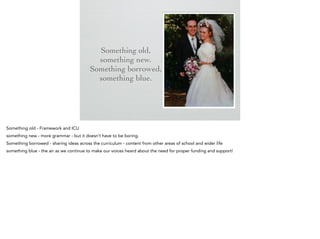
“Something old,
Something new.
Something borrowed,
Something blue.”
–Anonymous
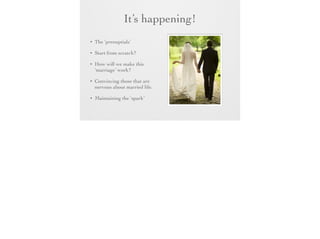
It’s happening!
•

The ‘prenuptials’

•

Start from scratch?

•

How will we make this
‘marriage’ work?

•

Convincing those that are
nervous about married life.

•

Maintaining the ‘spark’
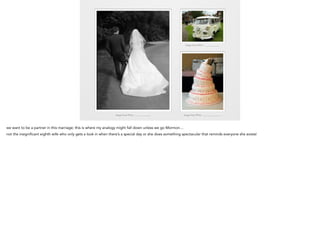
Image from Flickr Bill Thompson

Image from Flickr The Falcondale

Image from Flickr Shelley Panzarella
Download

Online
Purpose of
study
Learning a foreign language is a liberation from insularity and
provides an opening to other cultures. A high-quality languages
education should foster pupils’ curiosity and deepen their
understanding of the world. The teaching should enable pupils to
express their ideas and thoughts in another language and to
understand and respond to its speakers, both in speech and in
writing. It should also provide opportunities for them to
communicate for practical purposes, learn new ways of thinking
and read great literature in the original language. Language
teaching should provide the foundation for learning further
languages, equipping pupils to study and work in other countries.
National Curriculum for England Languages Programme of Study
DFE, 10/09/13
Purpose of
study
Learning a foreign language is a liberation from insularity and
provides an opening to other cultures. A high-quality languages
education should foster pupils’ curiosity and deepen their
understanding of the world. The teaching should enable pupils to
express their ideas and thoughts in another language and to
understand and respond to its speakers, both in speech and in
writing. It should also provide opportunities for them to
communicate for practical purposes, learn new ways of thinking
and read great literature in the original language. Language
teaching should provide the foundation for learning further
languages, equipping pupils to study and work in other countries.
National Curriculum for England Languages Programme of Study
DFE, 10/09/13
Purpose of
study
Learning a foreign language is a liberation from insularity and
provides an opening to other cultures. A high-quality languages
education should foster pupils’ curiosity and deepen their
understanding of the world. The teaching should enable pupils to
express their ideas and thoughts in another language and to
understand and respond to its speakers, both in speech and in
writing. It should also provide opportunities for them to
communicate for practical purposes, learn new ways of thinking
and read great literature in the original language. Language
teaching should provide the foundation for learning further
languages, equipping pupils to study and work in other countries.
National Curriculum for England Languages Programme of Study
DFE, 10/09/13
Purpose of
study
Learning a foreign language is a liberation from insularity and
provides an opening to other cultures. A high-quality languages
education should foster pupils’ curiosity and deepen their
understanding of the world. The teaching should enable pupils to
express their ideas and thoughts in another language and to
understand and respond to its speakers, both in speech and in
writing. It should also provide opportunities for them to
communicate for practical purposes, learn new ways of thinking
and read great literature in the original language. Language
teaching should provide the foundation for learning further
languages, equipping pupils to study and work in other countries.
National Curriculum for England Languages Programme of Study
DFE, 10/09/13
Aim
s

The national curriculum for languages aims to ensure that all
pupils:
• understand and respond to spoken and written language
from a variety of authentic sources
• speak with increasing confidence, fluency and
spontaneity, finding ways of communicating what they want to
say, including through discussion and asking questions, and
continually improving the accuracy of their pronunciation and
intonation
• can write at varying length, for different purposes and
audiences, using the variety of grammatical structures that they
have learnt
• discover and develop an appreciation of a range of writing
in the language studied
National Curriculum for England Languages Programme of Study
DFE, 10/09/13
Aim
s

The national curriculum for languages aims to ensure that all
pupils:
• understand and respond to spoken and written language
from a variety of authentic sources
• speak with increasing confidence, fluency and
spontaneity, finding ways of communicating what they want to
say, including through discussion and asking questions, and
continually improving the accuracy of their pronunciation and
intonation
• can write at varying length, for different purposes and
audiences, using the variety of grammatical structures that they
have learnt
• discover and develop an appreciation of a range of writing
in the language studied
National Curriculum for England Languages Programme of Study
DFE, 10/09/13
Attainment
targets
By the end of each key stage, pupils are expected
to know, apply and understand the matters, skills
and processes specified in the relevant programme
of study.

National Curriculum for England Languages Programme of Study
DFE, 10/09/13
Subject content
Key Stage 2: Foreign Language
Key Stage 2:any modern or ancient foreign
Foreign Language
Teaching may be of

language and should focus on enabling pupils to
make substantial progress in one language. The
teaching should provide an appropriate balance of
spoken and written language and should lay the
foundations for further foreign language teaching at
key stage 3. It should enable pupils to understand
and communicate ideas, facts and feelings in speech
and writing, focused on familiar and routine matters,
using their knowledge of phonology, grammatical
structures and vocabulary.
National Curriculum for England Languages Programme of Study
DFE, 10/09/13
Subject content
Key Stage 2: Foreign Language
Key Stage 2:any modern or ancient foreign
Foreign Language
Teaching may be of

language and should focus on enabling pupils to
make substantial progress in one language. The
teaching should provide an appropriate balance of
spoken and written language and should lay the
foundations for further foreign language teaching at
key stage 3. It should enable pupils to understand
and communicate ideas, facts and feelings in speech
and writing, focused on familiar and routine matters,
using their knowledge of phonology, grammatical
structures and vocabulary.
National Curriculum for England Languages Programme of Study
DFE, 10/09/13
Subject content
Key Stage 2: Foreign Language
Key Stage 2:any modern or ancient foreign
Foreign Language
Teaching may be of

language and should focus on enabling pupils to
make substantial progress in one language. The
teaching should provide an appropriate balance of
spoken and written language and should lay the
foundations for further foreign language teaching at
key stage 3. It should enable pupils to understand
and communicate ideas, facts and feelings in speech
and writing, focused on familiar and routine matters,
using their knowledge of phonology, grammatical
structures and vocabulary.
National Curriculum for England Languages Programme of Study
DFE, 10/09/13
Subject content
Key Stage 2: Foreign Language
Key Stage 2:any modern or ancient foreign
Foreign Language
Teaching may be of

language and should focus on enabling pupils to
make substantial progress in one language. The
teaching should provide an appropriate balance of
spoken and written language and should lay the
foundations for further foreign language teaching at
key stage 3. It should enable pupils to understand
and communicate ideas, facts and feelings in speech
and writing, focused on familiar and routine matters,
using their knowledge of phonology, grammatical
structures and vocabulary.
National Curriculum for England Languages Programme of Study
DFE, 10/09/13
The focus of study in modern languages will be
on practical communication. If an ancient
language is chosen, the focus will be to provide
a linguistic foundation for reading
comprehension and an appreciation of classical
civilisation. Pupils studying ancient languages
may take part in simple oral exchanges, while
discussion of what they read will be conducted
in English. A linguistic foundation in ancient
languages may support the study of modern
languages at key stage 3.
National Curriculum for England Languages Programme of Study
DFE, 10/09/13
So, what exactly
does the
‘agreement’
state?
And how will be carry it
out?
Pupils should be taught to:

• listen attentively to spoken language and
show understanding by joining in and
responding
• explore the patterns and sounds of
language through songs and rhymes and link
the spelling, sound and meaning of words

National Curriculum for England Languages Programme of Study
DFE, 10/09/13
Image credit
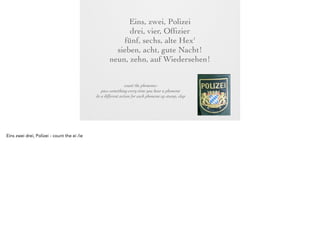
Eins, zwei, Polizei
drei, vier, Offizier
fünf, sechs, alte Hex'
sieben, acht, gute Nacht!
neun, zehn, auf Wiedersehen!
count the phonemes
pass something every time you hear a phoneme
do a different action for each phoneme eg stamp, clap
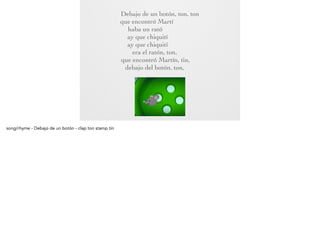
Debajo de un botón, ton, ton
que encontró Martín, tin, tin,
haba un ratón, ton, ton,
ay que chiquitín, tin, tin
era el ratón, ton, ton
que encontró Martín, tin, tin
debajo del botón, ton, ton
Pupils should be taught to:
• engage in conversations; ask and answer
questions; express opinions and respond to those of
others; seek clarification and help*
• speak in sentences, using familiar vocabulary,
phrases and basic language structures
• develop accurate pronunciation and intonation
so that others understand when they are reading
aloud or using familiar words and phrases*
• present ideas and information orally to a range
of audiences*
National Curriculum for England Languages Programme of Study
DFE, 10/09/13
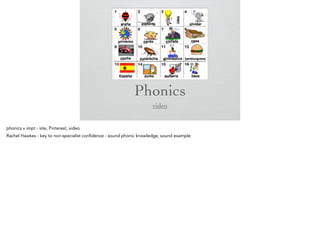
Phonics
video
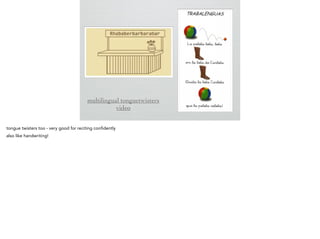
multilingual tonguetwisters
video
Pupils should be taught to:
• read carefully and show understanding of
words, phrases and simple writing
• appreciate stories, songs, poems and
rhymes in the language
• broaden their vocabulary and develop their
ability to understand new words that are
introduced into familiar written material,
including through using a dictionary
National Curriculum for England Languages Programme of Study
DFE, 10/09/13
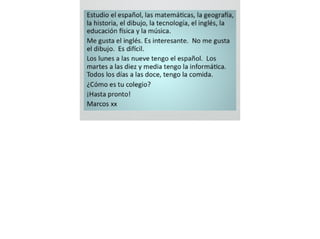
insert a text
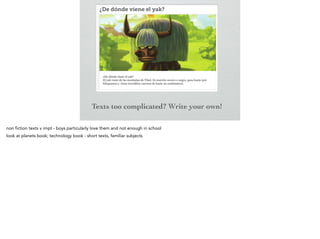
Texts too complicated? Write your
own!
Pupils should be taught to:

• write phrases from memory, and adapt
these to create new sentences, to express ideas
clearly
• describe people, places, things and actions
orally* and in writing

National Curriculum for England Languages Programme of Study
DFE, 10/09/13
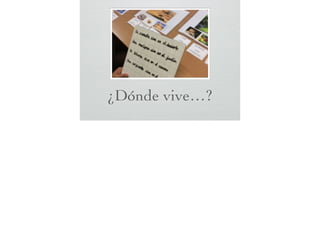
¿Dónde vive…?
Pupils should be taught to:
• understand basic grammar appropriate to the
language being studied, including (where
relevant): feminine, masculine and neuter
forms and the conjugation of high-frequency
verbs; key features and patterns of the
language; how to apply these, for instance, to
build sentences; and how these differ from or
are similar to English

National Curriculum for England Languages Programme of Study
DFE, 10/09/13
Something old,
something new.
Something
borrowed,
something blue.
Something
borrowed,
something blue.
Lisa
Stevens
lisibo@me.com
http://lisibo.com
Twitter - @lisibo
bit.ly/oldlisibo
Ltd

APD consultant

Something old, something new.

  • 1.
    Something old, something new… somethingnew… Lisa Stevens February 2014 #ILILC4 bit.ly/oldlisibo
  • 2.
    “Something old, Something new. Somethingborrowed, Something blue.” –Anonymous
  • 3.
    It’s happening! • The ‘prenuptials’ • Startfrom scratch? • How will we make this ‘marriage’ work? • Convincing those that are nervous about married life. • Maintaining the ‘spark’
  • 4.
    Image from FlickrBill Thompson Image from Flickr The Falcondale Image from Flickr Shelley Panzarella
  • 5.
  • 6.
    Purpose of study Learning aforeign language is a liberation from insularity and provides an opening to other cultures. A high-quality languages education should foster pupils’ curiosity and deepen their understanding of the world. The teaching should enable pupils to express their ideas and thoughts in another language and to understand and respond to its speakers, both in speech and in writing. It should also provide opportunities for them to communicate for practical purposes, learn new ways of thinking and read great literature in the original language. Language teaching should provide the foundation for learning further languages, equipping pupils to study and work in other countries. National Curriculum for England Languages Programme of Study DFE, 10/09/13
  • 7.
    Purpose of study Learning aforeign language is a liberation from insularity and provides an opening to other cultures. A high-quality languages education should foster pupils’ curiosity and deepen their understanding of the world. The teaching should enable pupils to express their ideas and thoughts in another language and to understand and respond to its speakers, both in speech and in writing. It should also provide opportunities for them to communicate for practical purposes, learn new ways of thinking and read great literature in the original language. Language teaching should provide the foundation for learning further languages, equipping pupils to study and work in other countries. National Curriculum for England Languages Programme of Study DFE, 10/09/13
  • 8.
    Purpose of study Learning aforeign language is a liberation from insularity and provides an opening to other cultures. A high-quality languages education should foster pupils’ curiosity and deepen their understanding of the world. The teaching should enable pupils to express their ideas and thoughts in another language and to understand and respond to its speakers, both in speech and in writing. It should also provide opportunities for them to communicate for practical purposes, learn new ways of thinking and read great literature in the original language. Language teaching should provide the foundation for learning further languages, equipping pupils to study and work in other countries. National Curriculum for England Languages Programme of Study DFE, 10/09/13
  • 9.
    Purpose of study Learning aforeign language is a liberation from insularity and provides an opening to other cultures. A high-quality languages education should foster pupils’ curiosity and deepen their understanding of the world. The teaching should enable pupils to express their ideas and thoughts in another language and to understand and respond to its speakers, both in speech and in writing. It should also provide opportunities for them to communicate for practical purposes, learn new ways of thinking and read great literature in the original language. Language teaching should provide the foundation for learning further languages, equipping pupils to study and work in other countries. National Curriculum for England Languages Programme of Study DFE, 10/09/13
  • 10.
    Aim s The national curriculumfor languages aims to ensure that all pupils: • understand and respond to spoken and written language from a variety of authentic sources • speak with increasing confidence, fluency and spontaneity, finding ways of communicating what they want to say, including through discussion and asking questions, and continually improving the accuracy of their pronunciation and intonation • can write at varying length, for different purposes and audiences, using the variety of grammatical structures that they have learnt • discover and develop an appreciation of a range of writing in the language studied National Curriculum for England Languages Programme of Study DFE, 10/09/13
  • 11.
    Aim s The national curriculumfor languages aims to ensure that all pupils: • understand and respond to spoken and written language from a variety of authentic sources • speak with increasing confidence, fluency and spontaneity, finding ways of communicating what they want to say, including through discussion and asking questions, and continually improving the accuracy of their pronunciation and intonation • can write at varying length, for different purposes and audiences, using the variety of grammatical structures that they have learnt • discover and develop an appreciation of a range of writing in the language studied National Curriculum for England Languages Programme of Study DFE, 10/09/13
  • 12.
    Attainment targets By the endof each key stage, pupils are expected to know, apply and understand the matters, skills and processes specified in the relevant programme of study. National Curriculum for England Languages Programme of Study DFE, 10/09/13
  • 13.
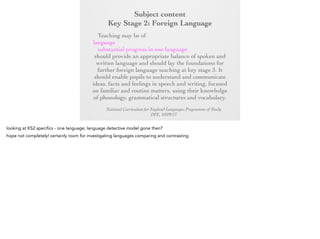
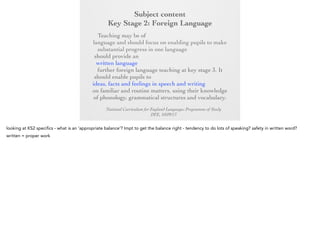
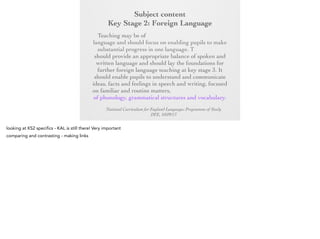
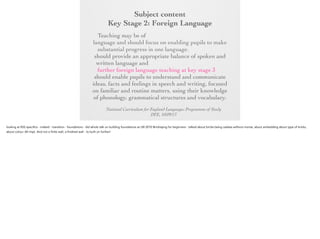
    Subject content Key Stage2: Foreign Language Key Stage 2:any modern or ancient foreign Foreign Language Teaching may be of language and should focus on enabling pupils to make substantial progress in one language. The teaching should provide an appropriate balance of spoken and written language and should lay the foundations for further foreign language teaching at key stage 3. It should enable pupils to understand and communicate ideas, facts and feelings in speech and writing, focused on familiar and routine matters, using their knowledge of phonology, grammatical structures and vocabulary. National Curriculum for England Languages Programme of Study DFE, 10/09/13
  • 14.
    Subject content Key Stage2: Foreign Language Key Stage 2:any modern or ancient foreign Foreign Language Teaching may be of language and should focus on enabling pupils to make substantial progress in one language. The teaching should provide an appropriate balance of spoken and written language and should lay the foundations for further foreign language teaching at key stage 3. It should enable pupils to understand and communicate ideas, facts and feelings in speech and writing, focused on familiar and routine matters, using their knowledge of phonology, grammatical structures and vocabulary. National Curriculum for England Languages Programme of Study DFE, 10/09/13
  • 15.
    Subject content Key Stage2: Foreign Language Key Stage 2:any modern or ancient foreign Foreign Language Teaching may be of language and should focus on enabling pupils to make substantial progress in one language. The teaching should provide an appropriate balance of spoken and written language and should lay the foundations for further foreign language teaching at key stage 3. It should enable pupils to understand and communicate ideas, facts and feelings in speech and writing, focused on familiar and routine matters, using their knowledge of phonology, grammatical structures and vocabulary. National Curriculum for England Languages Programme of Study DFE, 10/09/13
  • 16.
    Subject content Key Stage2: Foreign Language Key Stage 2:any modern or ancient foreign Foreign Language Teaching may be of language and should focus on enabling pupils to make substantial progress in one language. The teaching should provide an appropriate balance of spoken and written language and should lay the foundations for further foreign language teaching at key stage 3. It should enable pupils to understand and communicate ideas, facts and feelings in speech and writing, focused on familiar and routine matters, using their knowledge of phonology, grammatical structures and vocabulary. National Curriculum for England Languages Programme of Study DFE, 10/09/13
  • 17.
    The focus ofstudy in modern languages will be on practical communication. If an ancient language is chosen, the focus will be to provide a linguistic foundation for reading comprehension and an appreciation of classical civilisation. Pupils studying ancient languages may take part in simple oral exchanges, while discussion of what they read will be conducted in English. A linguistic foundation in ancient languages may support the study of modern languages at key stage 3. National Curriculum for England Languages Programme of Study DFE, 10/09/13
  • 18.
    So, what exactly doesthe ‘agreement’ state? And how will be carry it out?
  • 19.
    Pupils should betaught to: • listen attentively to spoken language and show understanding by joining in and responding • explore the patterns and sounds of language through songs and rhymes and link the spelling, sound and meaning of words National Curriculum for England Languages Programme of Study DFE, 10/09/13
  • 20.
  • 21.
    Eins, zwei, Polizei drei,vier, Offizier fünf, sechs, alte Hex' sieben, acht, gute Nacht! neun, zehn, auf Wiedersehen! count the phonemes pass something every time you hear a phoneme do a different action for each phoneme eg stamp, clap
  • 22.
    Debajo de unbotón, ton, ton que encontró Martín, tin, tin, haba un ratón, ton, ton, ay que chiquitín, tin, tin ay que chiquitín, tin, tin era el ratón, ton, ton que encontró Martín, tin, tin debajo del botón, ton, ton
  • 23.
    Pupils should betaught to: • engage in conversations; ask and answer questions; express opinions and respond to those of others; seek clarification and help* • speak in sentences, using familiar vocabulary, phrases and basic language structures • develop accurate pronunciation and intonation so that others understand when they are reading aloud or using familiar words and phrases* • present ideas and information orally to a range of audiences* National Curriculum for England Languages Programme of Study DFE, 10/09/13
  • 26.
  • 27.
  • 28.
    Pupils should betaught to: • read carefully and show understanding of words, phrases and simple writing • appreciate stories, songs, poems and rhymes in the language • broaden their vocabulary and develop their ability to understand new words that are introduced into familiar written material, including through using a dictionary National Curriculum for England Languages Programme of Study DFE, 10/09/13
  • 30.
  • 32.
    Texts too complicated?Write your own!
  • 33.
    Pupils should betaught to: • write phrases from memory, and adapt these to create new sentences, to express ideas clearly • describe people, places, things and actions orally* and in writing National Curriculum for England Languages Programme of Study DFE, 10/09/13
  • 35.
  • 37.
    Pupils should betaught to: • understand basic grammar appropriate to the language being studied, including (where relevant): feminine, masculine and neuter forms and the conjugation of high-frequency verbs; key features and patterns of the language; how to apply these, for instance, to build sentences; and how these differ from or are similar to English National Curriculum for England Languages Programme of Study DFE, 10/09/13
  • 41.
    Something old, something new. Something borrowed, somethingblue. Something borrowed, something blue.
  • 42.

Editor's Notes

  • #5 we want to be a partner in this marriage; this is where my analogy might fall down unless we go Mormon… not the insignificant eighth wife who only gets a look in when there’s a special day or she does something spectacular that reminds everyone she exists!
  • #6 spelling
  • #8 very impt - ICU isn’t specifically mentioned but that’s where it comes in. Swiss experience WCPS experience - real people
  • #9 and there’s a frustration often that they can’t say as much as they’d like - aware that we need to give them the bricks to so just that - and keep reminding them Welford - right from start pointing out and making those links constantly
  • #10 alarm? this is over KS2 and 3. Not necessarily be reading Don Quijote de la Mancha or A la recherche du temps perdu or Mein Kampf in year3! Indeed in the aims…
  • #11 it’s about a range of sources - a breadth of experience - not just fiction or simple stories. news items menus road signs letters
  • #12 and it’s about progression
  • #13 and that’s it for the AT! How will we measure? KS2 Fwk? I can statements? Common European Framework? fine by me
  • #14 looking at KS2 specifics - one language; language detective model gone then? hope not completely! certainly room for investigating languages comparing and contrasting
  • #15 looking at KS2 specifics - what is an ‘appropriate balance’? Impt to get the balance right - tendency to do lots of speaking? safety in written word? written = proper work
  • #16 looking at KS2 specifics - KAL is still there! Very important comparing and contrasting - making links
  • #17 looking at KS2 specifics - indeed - transition - foundations - did whole talk on building foundations at LW 2010 Bricklaying for beginners - talked about bricks being useless without mortar, about embedding about type of bricks, about colour. All impt. And not a finite wall, a finished wall - to built on further!
  • #18 what do we think about Ancient languages? Success with Latin - I wish I’d had an opportunity to learn it - would’ve helped at Uni in Mallorca
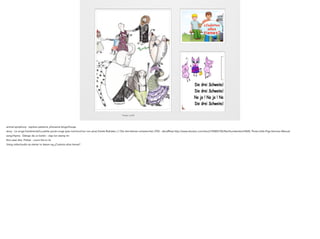
  • #21 animal symphony - explore patterns, phoneme bingo/hoops story - La oruga hambrienta/La petite poule rouge (pas moi/moi/moi non plus) thanks Rubiales ;) / Die drei kleinen schweinchen (TES - decafftea) http://www.docstoc.com/docs/105802196/Northumberland-NGfL-Three-Little-Pigs-German-Manual song/rhyme - Debajo de un botón - clap ton stamp tin Eins zwei drei, Polizei - count the ei /ie Using video/audio as starter to lesson eg ¿Cuántos años tienes?
  • #22 Eins zwei drei, Polizei - count the ei /ie
  • #23 song/rhyme - Debajo de un botón - clap ton stamp tin
  • #24 QQT trapdoor reciting
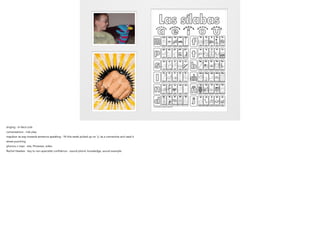
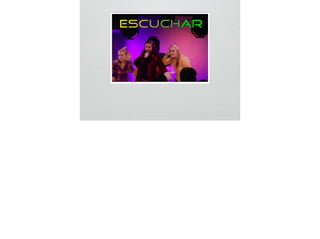
  • #25 singing - la Vaca Lola conversations - role play trapdoor as way towards sentence speaking - Y6 this week picked up on ‘y’ as a connective and used it stress punching phonics v impt - site, Pinterest, video Rachel Hawkes - key to non-specialist confidence - sound phonic knowledge, sound example
  • #27 phonics v impt - site, Pinterest, video Rachel Hawkes - key to non-specialist confidence - sound phonic knowledge, sound example
  • #28 tongue twisters too - very good for reciting confidently also like handwriting!
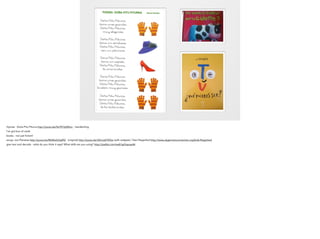
  • #30 rhymes - Doña Pitu Piturra http://youtu.be/9e7KTdj3Nmc - handwriting I’ve got box of cards books - not just fiction! songs -Los Planetas http://youtu.be/RQlAoG3q4fQ (original) http://youtu.be/3ZmvaSTIIOw (with widgets) / Das Fliegerlied http://www.ukgermanconnection.org/kids-fliegerlied give text and decode - what do you think it says? What skills are you using? http://padlet.com/wall/qy5rypop46
  • #33 non fiction texts v impt - boys particularly love them and not enough in school look at planets book; technology book - short texts, familiar subjects
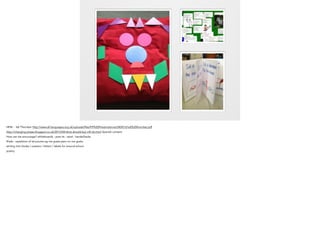
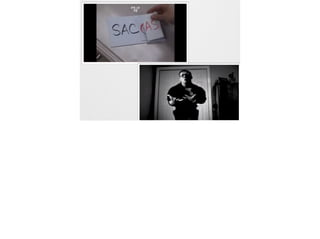
  • #35 HFW - Val Thornber http://www.all-languages.org.uk/uploads/files/PP%20Presentations/LW2012/val%20thornber.pdf http://changing-phase.blogspot.co.uk/2013/04/what-should-ks2-mfl-do.html Spanish content How can we encourage? whiteboards - post its - sand - hands/backs iPads - repetition of structures eg me gusta pero no me gusta writing mini books / posters / letters / labels for around school poetry
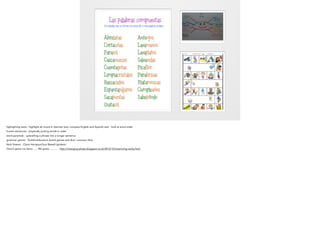
  • #38 highlighting texts - highlight all nouns in German text; compare English and Spanish text - look at word order human sentences - physically putting words in order word pyramids - uplevelling a phrase into a longer sentence grammar games - Toolsforeducators board games and dice / pronoun dice
  • #39 highlighting texts - highlight all nouns in German text; compare English and Spanish text - look at word order human sentences - physically putting words in order word pyramids - uplevelling a phrase into a longer sentence grammar games - Toolsforeducators board games and dice / pronoun dice Verb flowers - Claire Hampson/Suzi Bewell (spiders) Clare’s game me llamo ….. Me gusta ……… - http://changing-phase.blogspot.co.uk/2012/10/imprinting-verbs.html
  • #42 Something old - Framework and ICU something new - more grammar - but it doesn’t have to be boring. Something borrowed - sharing ideas across the curriculum - content from other areas of school and wider life something blue - the air as we continue to make our voices heard about the need for proper funding and support!