Muscle Relaxants
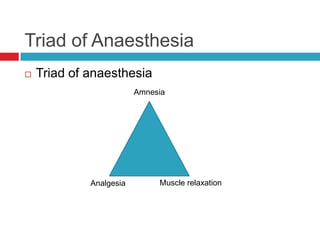
Triad of AnaesthesiaTriad of anaesthesiaAmnesiaMuscle relaxationAnalgesia
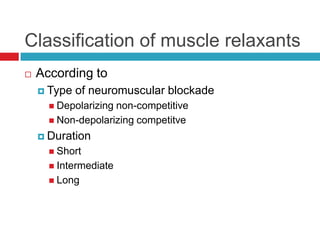
Classification of muscle relaxantsAccording toType of neuromuscular blockadeDepolarizing non-competitiveNon-depolarizing competitveDurationShortIntermediateLong
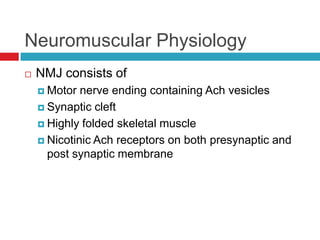
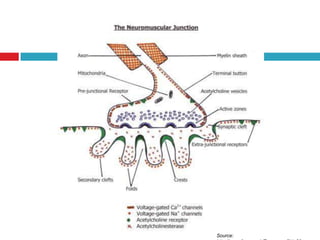
Neuromuscular PhysiologyNMJ consists ofMotor nerve ending containing Ach vesiclesSynaptic cleftHighly folded skeletal muscleNicotinic Ach receptors on both presynaptic and post synaptic membrane
Source: http://www.frca.co.uk/Page.aspx?id=60
Choice of muscle relaxantDepends onDuration of actionCostSystemic effect Route of excretionCVS effectsHistamine releaseAbility to reverse NMBContraindications to any specific relaxants
Depolarizing muscle relaxantsSuccinylcholine(Suxamethonium)Physically resembles Ach moleculesDepolarize endplate cholinergic receptorsInitial depolarization occurs as fasciculations in skeletal musclesHydrolyzed by plasma pseudocholinesteraseOnset  : 60 secDuration : 5-10 min
PharmacodynamicsCNS↑ ICP↑ IOPRespiratory systemParalysisCVS∆ both nicotinic & muscarinic Ach receptorsBradycardia, dysrrhythmia and sinus arrestPronounced in children & after repeated doses      by atropineGI ↑ intragastric pressureMusculoskeletalMyalgiaMalignant Hyperthermia
HyperkalemiaUsually ↑ plasma [K+] 0.5 mEq/LAbnormal high flux of K+ occurs in Extensive third degree burnsNerve damage or neuromuscular diseases
DosageIntubation dose – 1 - 1.5 mg/kg IVIndicationSkeletal muscle relaxation during endotracheal intubation (difficult intubation, RSI)Abdominal operation of short durationPrior ECT to prevent seizure induced injuryEmergency treatment for laryngospasm
ContraindicationAbsoluteInability to maintain airwayLack of resuscitative equipmentKnown hypersensitivityMalignant hyperthermiaMyotonia↑ risk of hyperkalemic response
ContraindicationRelativeKnown history of pseudocholinesterase deficiencyMyasthenia GravisMyasthenic SyndromeFamilial Periodic ParalysisOpened eye injury
Non-depolarizing Muscular relaxants(NDMR)Compete with Ach for nicotinic Ach receptorsAnticholinesterase such as neostigmine or edrophonium reverse the effects of NDMR
NDMRPancuroniumDuration long (60 – 75 min)CVS - ↑ HR,↑BP, ↑COExcretion – 40% renalNo histamine releaseCost
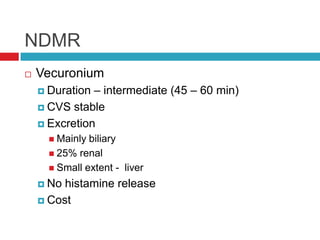
NDMRVecuroniumDuration – intermediate (45 – 60 min)CVS stableExcretion Mainly biliary25% renalSmall extent -  liverNo histamine releaseCost
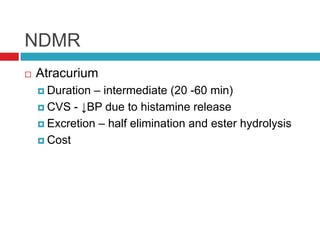
NDMRAtracuriumDuration – intermediate (20 -60 min)CVS - ↓BP due to histamine releaseExcretion – half elimination and ester hydrolysisCost
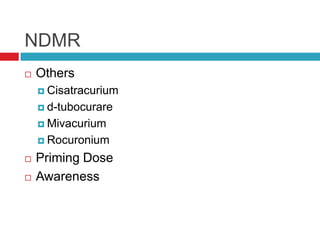
NDMROthersCisatracuriumd-tubocurareMivacuriumRocuroniumPriming DoseAwareness

Muscle relaxants