Karen Cangialosi
Keene State College
@karencang
Open Pedagogy, Radical
Optimism, and the
Ideas We Haven’t Yet Heard
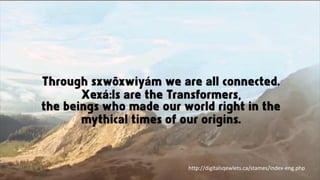
http://digitalsqewlets.ca/stames/index-eng.php
My Open Ed Origin Story
KSC’s Food Pantry – The Hungry Owl
Modified from Ebook vs. textbook by India Edu (CC BY-SA 2.0)
Got Textbooks?
CC 0
OER is unique in the way that
it makes college more
affordable while also
improving students’ chances
of succeeding.
• Increase in course throughput rates
• Improve end-of-course grades and
decrease DFW rates for all students
• Reduction in DFW rates for minority and
Pell eligible students
• Lower course withdrawal rates
• Higher % of students completing course
with a C or better
Compilation of results from many studies from
colleges/universities in the United States and Canada
Students in Courses using
OER compared to non-OER
Popsicles by Colored Pencil Magazine [CC BY 2.0]
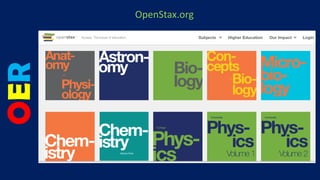
OpenStax.org
OER
OER
OER
Open Notebook, Methods and Protocols
https://www.protocols.io/
Open Data
as OER
Free But Not Open
Creative Commons
licenses explained
©Foter (adapted by
Jisc) via Foter blog
CC BY-SA
The Open
License
Not just “free”,
but Open.
• Reuse
• Revise
• Remix
• Redistribute
• Retain
FREE as in Freedom (the 5 R’s)
Open Educational Resources by Ron Mader [CC BY 2.0]
• Digital
• Multimedia
• Downloadable
• Adaptable
• Current
• Public
• Openly Licensed
• Free
OER
“Using OER the same way we used commercial
textbooks misses the point. It’s like driving an airplane
down the road.” – David Wiley
• “Traditional” OER as textbook (e.g.
pressbooks)
• Ancillary materials: test banks,
study guides, lesson plans, etc
• Curated links on websites
• Open Google Docs
• Open Access published articles
• Open Datasets
• Open Lab notebooks and Methods
repositories
• Open Videos
• Open Lab Simulations
• Open Source software/tools
• and more…
Popsicles by Colored Pencil Magazine [CC BY 2.0]
OER
Open Pedagogy
• Community and collaboration, sharing
resources, ideas and power
• Connection to the wider public
• Learners contribute to, not just
consume knowledge
• Student Agency, Learner-driven
• Critical approach to the use of tools
and technology
‘Floor at domains17’ by Karen Cangialosi [CC BY 4.0]
Modified from content by Robin DeRosa
OPEN is about
Access
Learning
Structure
Design
Knowledge
Knowledge
Creation
Knowledge
Sharing
Community
Participation
“When my students gain access to knowledge, I want it to be part of a larger
invitation: we trust that you have important lessons to teach the world, and we trust
that the knowledge you access today will be changed by your perspective, that you
will open doors to new ideas that we, your current teachers, never could have
taught you.” – Robin DeRosa, University of the Margins
Open
Pedagogy
Lollipops by Andrew Malone [CC BY 2.0]
Open Pedagogy
Open Pedagogy
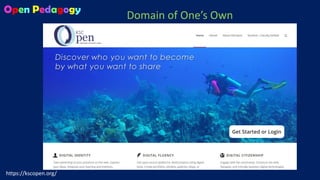
Domain of One’s Own
https://kscopen.org/
Open Pedagogy
• Interactive
• Collaborative
• Contributory
• Dynamic
• Empowering
• Participatory
Open Pedagogy
“Contribute to, not just consume from, the knowledge commons” -Robin DeRosa
Open Pedagogy
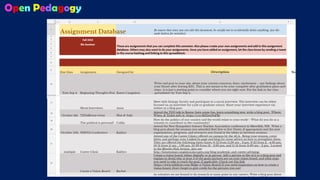
• Students create, remix
and openly license work
that is shared with
others.
• Student work lives on
past the end of the
semester
(if they want it to)
Non-Disposable Assignments
Open Pedagogy
Audience Beyond the Professor, Connecting to the Public
Open Pedagogy
“It was a drastic and honestly scary change going from a
traditional learning course where I only have my instructor’s
opinion to worry about.” - Invertebrate Zoology student
Web Annotation for Community & Collaboration
Open Pedagogy
Wiki Education Foundation (wikiedu.org)
[CC BY SA]
Creating/Editing Wikipedia Articles
Open Pedagogy
http://mediashift.org/2016/05/why-you-and-your-students-should-work-to-improve-wikipedia/
Open Pedagogy
Citizen Science and
Open Pedagogy
Shift Learning from transaction to mutual dialogue
with Peers, Professionals, Academics, Future
Employers, the Public
Twitter
Research Gate
Linked-InOpen Pedagogy
Students write about local contamination sites and potential
consequences to humans and wildlife as public service
#SciCommOpen Pedagogy
Students Using
Open Data to
test novel
Hypotheses
Open Pedagogy
Open Pedagogy
Classroom
Open Science
Research Lab
Open Access
Communication
Open Data
Energy Flow and Nutrient Cycling in the Open Ecosystem
“Anxiety" by ASweeneyPhoto CC (BY-NC)
More than 60% of college students in the U.S. (in a study
of 88,000) said they had experienced “overwhelming
anxiety” in the past year, according to a 2018 report from
the American College Health Association.
Over 40% said they felt so depressed they had difficulty
functioning.
Source: https://www.nytimes.com/2019/02/21/education/learning/mental-
health-counseling-on-campus.html
A National College Health Assessment in spring 2016 found that 44 % of the 43,780
Canadian higher-education students surveyed felt so depressed over the previous year
that it was difficult to function, up from 38 % in 2013, while 65 % experienced
overwhelming anxiety, up from 57% in 2013.
Source: Growing mental-health needs of students require
creative solutions. Globe and Mail, Canadian University Report
An atmosphere that places greater value on
“achievement” than on learning
Standardized tests and assessments that suck the
life out of learning
Surveillance systems that track, monitor, punish,
and insist on compliance
“a stay of execution”
“students just know how to work the system”
“students will cheat if they can get away with it”
“they are grade-grubbers”
“they don’t know anything we taught them at the 100 level”
Stop Blaming Students
Students can work with faculty to:
• Create Content
• Write the syllabus
• Determine what goes on during class
• Write the attendance policy
• Determine how they will be graded
• Create learning outcomes
• Design assignments
• Decide what they want to make public
• Decide whether or not to openly license their
work
Trust, Power, and Agency
“The teacher is not just the source of the
knowledge, nor are they the facilitator of
knowledge, they are the embodiment of
knowledge, and who the teacher is, is much more
valuable than how or what they teach.”
- Taskeen Adam referencing Iman Masmoudi’s ‘Epistemological foundations of
Pre-Modern Islamic Pedagogy’
Student Anxiety,
Financial stress,
Powerlessness
Open Pedagogy:
Student Trust, Agency,
and Empowerment
Open Pedagogy:
Students Create and
Share knowledge
Other Systemic
Problems:
-Economic
-Environmental
-Social and
Cultural
Systemic issues in
Education:
-Standardization
-Grades-Focus
-Surveillance
-High Cost
OER:
Cost Savings
“As an education major, I was a
little upset by this fact… every
student should have equal
access to this content.”
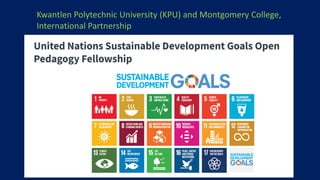
Kwantlen Polytechnic University (KPU) and Montgomery College,
International Partnership
“Education is vital to the creation of individuals capable of
becoming critical social agents willing to struggle against
injustices and develop the institutions that are crucial to the
functioning of a substantive democracy.”
-Henry Giroux
“Open is a Process, Not a Panacea”
-Robin DeRosa
“On the one hand, open
promises to improve access to
education and the well-being of
livelihoods through practices
that enable the sharing of
educational content through
(largely) digital means (a
decidedly modernist narrative
in its universalism and
approach to progress). On the
other hand, it can unwittingly
reproduce many of the existing
inequities of the systems it
seeks to change.”
Can we decolonize OER/Open?
Taskeen Adam, Maha Bali, Cheryl
Hodgkinson-Williams, Tannis Morgan
Don’t start with
the tools
CC 0
• What are ways to make education more accessible and equitable
for ALL students? Open for Whom?
• How do we keep the real life circumstances of our students in
mind when we design learning experiences?
• How can we provide transformational (not just transactional)
experiences for our students?
• How might we inspire students to become agents of social
change?
• How do we design the “University of the Margins” (as per Robin
DeRosa)?
“Optimism is a Discipline, Not an Emotion”
-Kate Bowles
Except where otherwise noted, this work by Karen Cangialosi is licensed under a
Creative Commons Attribution 4.0 International License
Follow me on twitter @karencang
“The next world will be built by the
ideas we haven’t yet heard…”
- Robin DeRosa

Cascadia Open Ed Summit

  • 1.
    Karen Cangialosi Keene StateCollege @karencang Open Pedagogy, Radical Optimism, and the Ideas We Haven’t Yet Heard
  • 2.
  • 3.
    My Open EdOrigin Story
  • 6.
    KSC’s Food Pantry– The Hungry Owl
  • 7.
    Modified from Ebookvs. textbook by India Edu (CC BY-SA 2.0) Got Textbooks?
  • 8.
    CC 0 OER isunique in the way that it makes college more affordable while also improving students’ chances of succeeding.
  • 9.
    • Increase incourse throughput rates • Improve end-of-course grades and decrease DFW rates for all students • Reduction in DFW rates for minority and Pell eligible students • Lower course withdrawal rates • Higher % of students completing course with a C or better Compilation of results from many studies from colleges/universities in the United States and Canada Students in Courses using OER compared to non-OER
  • 10.
    Popsicles by ColoredPencil Magazine [CC BY 2.0]
  • 11.
  • 13.
  • 14.
  • 15.
    Open Notebook, Methodsand Protocols https://www.protocols.io/
  • 16.
  • 17.
  • 18.
    Creative Commons licenses explained ©Foter(adapted by Jisc) via Foter blog CC BY-SA The Open License Not just “free”, but Open.
  • 19.
    • Reuse • Revise •Remix • Redistribute • Retain FREE as in Freedom (the 5 R’s)
  • 20.
    Open Educational Resourcesby Ron Mader [CC BY 2.0] • Digital • Multimedia • Downloadable • Adaptable • Current • Public • Openly Licensed • Free OER
  • 21.
    “Using OER thesame way we used commercial textbooks misses the point. It’s like driving an airplane down the road.” – David Wiley
  • 23.
    • “Traditional” OERas textbook (e.g. pressbooks) • Ancillary materials: test banks, study guides, lesson plans, etc • Curated links on websites • Open Google Docs • Open Access published articles • Open Datasets • Open Lab notebooks and Methods repositories • Open Videos • Open Lab Simulations • Open Source software/tools • and more… Popsicles by Colored Pencil Magazine [CC BY 2.0] OER
  • 24.
    Open Pedagogy • Communityand collaboration, sharing resources, ideas and power • Connection to the wider public • Learners contribute to, not just consume knowledge • Student Agency, Learner-driven • Critical approach to the use of tools and technology ‘Floor at domains17’ by Karen Cangialosi [CC BY 4.0] Modified from content by Robin DeRosa
  • 25.
  • 26.
    “When my studentsgain access to knowledge, I want it to be part of a larger invitation: we trust that you have important lessons to teach the world, and we trust that the knowledge you access today will be changed by your perspective, that you will open doors to new ideas that we, your current teachers, never could have taught you.” – Robin DeRosa, University of the Margins
  • 27.
  • 28.
  • 29.
  • 30.
    Domain of One’sOwn https://kscopen.org/ Open Pedagogy
  • 31.
    • Interactive • Collaborative •Contributory • Dynamic • Empowering • Participatory Open Pedagogy
  • 32.
    “Contribute to, notjust consume from, the knowledge commons” -Robin DeRosa Open Pedagogy
  • 33.
    • Students create,remix and openly license work that is shared with others. • Student work lives on past the end of the semester (if they want it to) Non-Disposable Assignments Open Pedagogy
  • 34.
    Audience Beyond theProfessor, Connecting to the Public Open Pedagogy
  • 35.
    “It was adrastic and honestly scary change going from a traditional learning course where I only have my instructor’s opinion to worry about.” - Invertebrate Zoology student
  • 36.
    Web Annotation forCommunity & Collaboration Open Pedagogy
  • 37.
    Wiki Education Foundation(wikiedu.org) [CC BY SA] Creating/Editing Wikipedia Articles Open Pedagogy
  • 38.
  • 39.
  • 40.
    Shift Learning fromtransaction to mutual dialogue with Peers, Professionals, Academics, Future Employers, the Public Twitter Research Gate Linked-InOpen Pedagogy
  • 41.
    Students write aboutlocal contamination sites and potential consequences to humans and wildlife as public service #SciCommOpen Pedagogy
  • 42.
    Students Using Open Datato test novel Hypotheses Open Pedagogy
  • 43.
    Open Pedagogy Classroom Open Science ResearchLab Open Access Communication Open Data Energy Flow and Nutrient Cycling in the Open Ecosystem
  • 44.
    “Anxiety" by ASweeneyPhotoCC (BY-NC) More than 60% of college students in the U.S. (in a study of 88,000) said they had experienced “overwhelming anxiety” in the past year, according to a 2018 report from the American College Health Association. Over 40% said they felt so depressed they had difficulty functioning. Source: https://www.nytimes.com/2019/02/21/education/learning/mental- health-counseling-on-campus.html A National College Health Assessment in spring 2016 found that 44 % of the 43,780 Canadian higher-education students surveyed felt so depressed over the previous year that it was difficult to function, up from 38 % in 2013, while 65 % experienced overwhelming anxiety, up from 57% in 2013. Source: Growing mental-health needs of students require creative solutions. Globe and Mail, Canadian University Report
  • 45.
    An atmosphere thatplaces greater value on “achievement” than on learning Standardized tests and assessments that suck the life out of learning Surveillance systems that track, monitor, punish, and insist on compliance
  • 46.
    “a stay ofexecution” “students just know how to work the system” “students will cheat if they can get away with it” “they are grade-grubbers” “they don’t know anything we taught them at the 100 level” Stop Blaming Students
  • 47.
    Students can workwith faculty to: • Create Content • Write the syllabus • Determine what goes on during class • Write the attendance policy • Determine how they will be graded • Create learning outcomes • Design assignments • Decide what they want to make public • Decide whether or not to openly license their work Trust, Power, and Agency
  • 48.
    “The teacher isnot just the source of the knowledge, nor are they the facilitator of knowledge, they are the embodiment of knowledge, and who the teacher is, is much more valuable than how or what they teach.” - Taskeen Adam referencing Iman Masmoudi’s ‘Epistemological foundations of Pre-Modern Islamic Pedagogy’
  • 49.
    Student Anxiety, Financial stress, Powerlessness OpenPedagogy: Student Trust, Agency, and Empowerment Open Pedagogy: Students Create and Share knowledge Other Systemic Problems: -Economic -Environmental -Social and Cultural Systemic issues in Education: -Standardization -Grades-Focus -Surveillance -High Cost OER: Cost Savings
  • 50.
    “As an educationmajor, I was a little upset by this fact… every student should have equal access to this content.”
  • 51.
    Kwantlen Polytechnic University(KPU) and Montgomery College, International Partnership
  • 52.
    “Education is vitalto the creation of individuals capable of becoming critical social agents willing to struggle against injustices and develop the institutions that are crucial to the functioning of a substantive democracy.” -Henry Giroux
  • 54.
    “Open is aProcess, Not a Panacea” -Robin DeRosa
  • 55.
    “On the onehand, open promises to improve access to education and the well-being of livelihoods through practices that enable the sharing of educational content through (largely) digital means (a decidedly modernist narrative in its universalism and approach to progress). On the other hand, it can unwittingly reproduce many of the existing inequities of the systems it seeks to change.” Can we decolonize OER/Open? Taskeen Adam, Maha Bali, Cheryl Hodgkinson-Williams, Tannis Morgan
  • 56.
  • 57.
    • What areways to make education more accessible and equitable for ALL students? Open for Whom? • How do we keep the real life circumstances of our students in mind when we design learning experiences? • How can we provide transformational (not just transactional) experiences for our students? • How might we inspire students to become agents of social change? • How do we design the “University of the Margins” (as per Robin DeRosa)?
  • 58.
    “Optimism is aDiscipline, Not an Emotion” -Kate Bowles
  • 59.
    Except where otherwisenoted, this work by Karen Cangialosi is licensed under a Creative Commons Attribution 4.0 International License Follow me on twitter @karencang “The next world will be built by the ideas we haven’t yet heard…” - Robin DeRosa