1.) DECEMBER 8,
1941
- Attack on the Pearl
Harbor
2.) JANUARY 2, 1942-
General Masaharu
Homma announces
the end of the
American Occupation
3.) APRIL 9, 1942-
Bataan Death March
4.) OCTOBER 14, 1943-
The Japanese Sponsored
Philippine Republic was
inaugurated.
5.) AUGUST 1, 1944-
Quezon dies of
tuberculosis. Sergio
Osmeña assumes
presidency
6.) OCTOBER 20, 1944
- “I shall return”
7.) AUGUST 17, 1945
- Pres. Laurel formally
dissolves the Second
Republic
8.) SEPTEMBER 2, 1945
- General Yamashita
formally signed the official
document of surrender of
all Japanese Forces
•Japanese planters came and planted
them to cotton
•best furniture of the city were carted to rural areas
• horses, cars and trucks were confiscated
•many haciendas remained idle for a time
• farmers who had a lost tooth could
afford to have a gold tooth
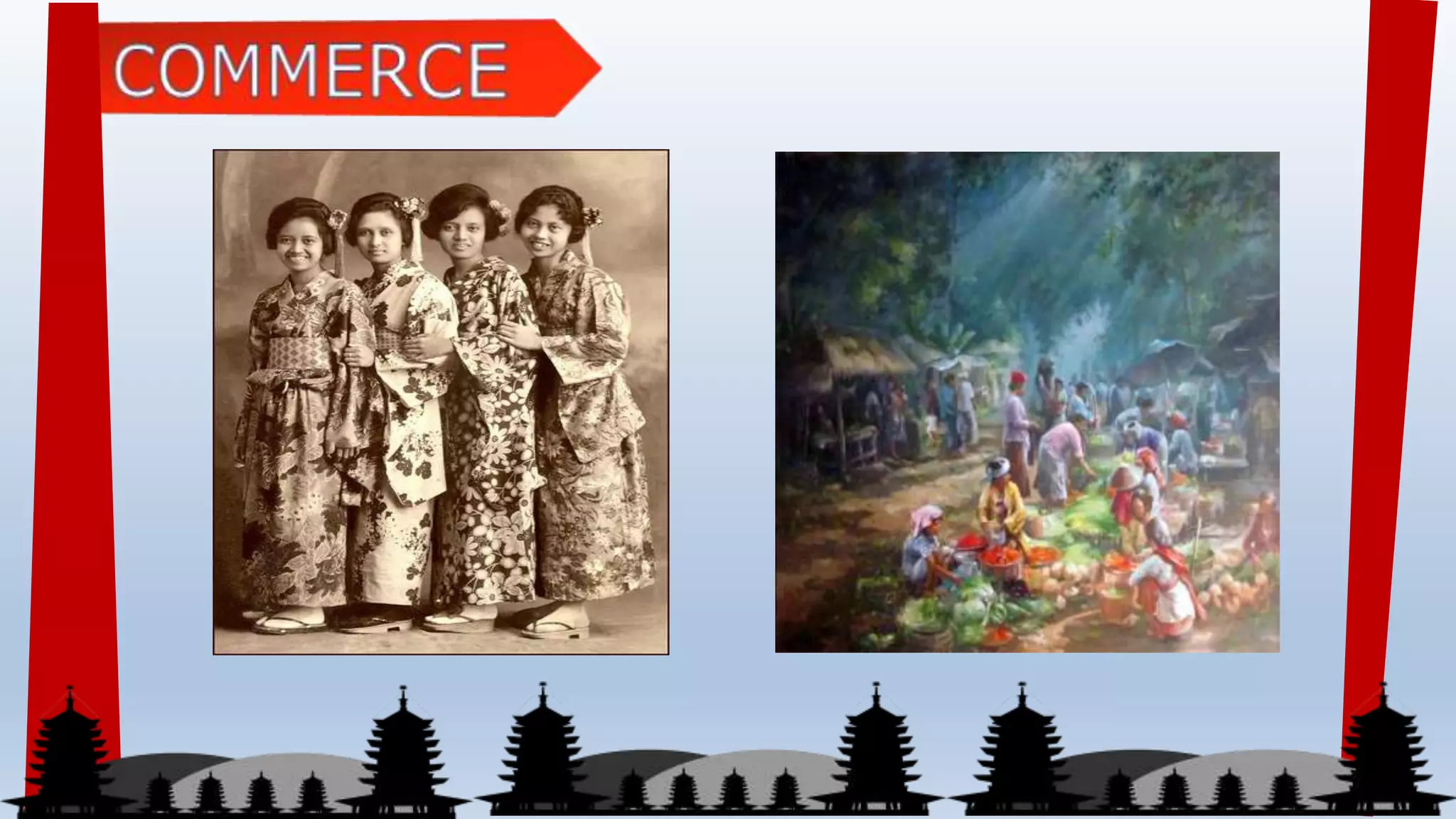
• most of the people were engaged in buy- and-
sell business
•in some cases, dresses, polo shirts and trousers
were stolen from interred dead of la Loma and
north cemeteries
• cigarettes became rare
2 kinds of cigarettes
a. doctored
b. American- Malabon, Rizal was
the manufacturing center
• " mickey mouse" money
National Food Production Campaign Office
BIBA ( Bigasang Bayan)
• During The Time Of Jose P. Laurel
people plant every inch of ground kangkong
NADISCO ( National Distribution Corporation)
2. propagation of Filipino culture
3. endeavor to elevate the morals of people , giving up
over emphasis materialism
1. realization of new order
Military order no 2 (February 17, 1942)
Japanese educational policies
“6 basic principles”
5. diffusion of elementary and vocational education
6. promotion of love of labor
4. the teaching and propagation of Niponggo
Military order no 2 (February 17, 1942)
Japanese educational policies
“6 basic principles”
Class sized increased to 60
No summer vacation
School calendar became longer
Next was the re-opening of vocational and normal
schools: Agriculture, Medicine, Fisheries, Engineering
Priority was the opening of elementary schools
Niponggo as means of introducing and cultivating love for
Japanese culture
Banned the singing of American songs
Deleted American symbols, poems, and pictures
• Laurel believed that Filipinos could stave off spiritual
debacle only by resorting to nationalism as way of
life
• Encouraged propagation of Tagalog as national
language
• Required teachers to obtain licenses
• During The Time Of Jose P.
Laurel
• Teaching of Tagalog, Philippine history and character
ed. Was reserved for Filipinos
• Required that majority of the governing board of any
school be Filipino citizen
• During The Time Of Jose P.
Laurel
•Philippines For Filipinos,
• Asia For Asians
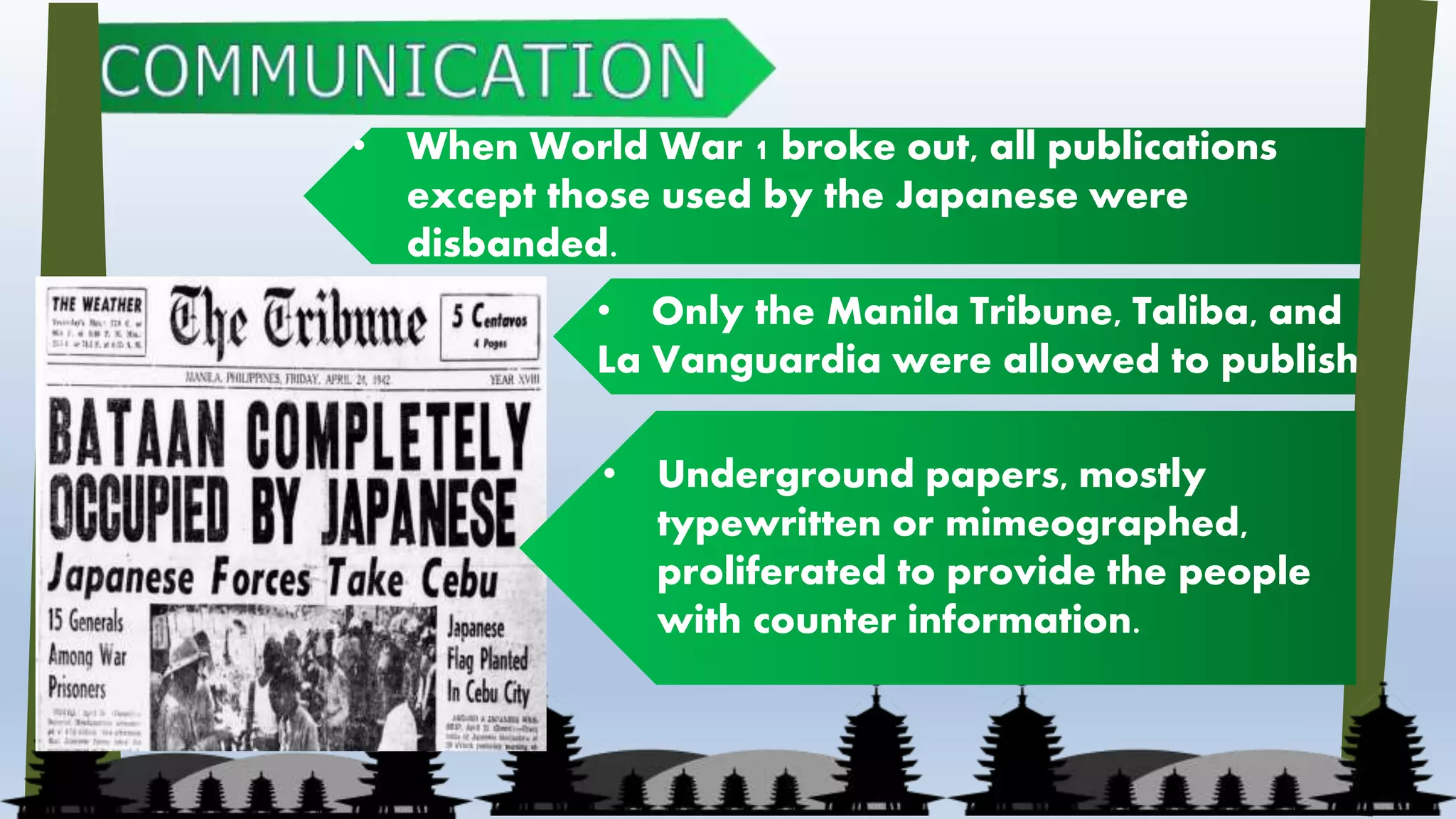
• Only the Manila Tribune, Taliba, and
La Vanguardia were allowed to publish
• When World War 1 broke out, all publications
except those used by the Japanese were
disbanded.
• Underground papers, mostly
typewritten or mimeographed,
proliferated to provide the people
with counter information.
• Transport was a big problem for the local people
throughout the Occupation.
(1) The Japanese were in control of the world’s rubber
and many oil fields.
(2) They forced many motor vehicles to run on coal gases
or inferior petrol made from vegetable sources
• bicycles being widely used as mode of
transport during the Japanese reign
• Generally, there was transportation through land air and
water and machines were available.
• The Philippines' automobile industry started
during the American Colonial Period from 1898
to 1946.
• Public vehicles dwindled and cars ceased to be
available for almost all other than the Japanese.
• Thousands among courageous Bataan
defenders died not only because of
malnutrition and the outbreak of disease but
because some of the Filipino army Physicians
consciencelessly denied the suffering soldiers
the medicine necessary to relieve them of
their pain.
• engage in the sale of food
and medicine, particularly the
SULFATHIAZOLE,
SULFANILAMIDE and
QUININE for aiding the
soldiers
• Owing to economic dislocation and the scarcity of
food, thousands died of malaria, malnutrition,
tuberculosis and other diseases. Medicine too was a
scarce. Sulfathiazole. The wonder drugs at that time
was sold in a vary high price.
• In the street could be seen men, women,
and children suffering from either
extreme hunger or tropical ulcer with
hundred of flies feasting on the large
fresh wounds. Many died on the
sidewalk, their identity were unknown.
Hundreds were executed by the
Japanese for stealing foods or anything
that could be sold in the buy-and-sell
mart.
• The people of Manila, not having an inch of
land suffered the most.
• Rice production sank to a new low and limited quantities
produced.
• During Japanese occupation, most of the haciendas
remained idle for a time. So the Japanese planters
came to plant them to cotton.
• Erzatz, or substitute coffee or tea was common. Mango
leaves also became one.
• As to coffee and tea, the Filipinos had them too.
• most of the people engaged in the buy-and-sell.
• During Commonwealth, National Power
Corporation (NAPOCOR) was established.
• Several government corporations were reorganized
and new ones were created to perform such varied
functions as the exploitation and development of natural
resources.
• In 1940, there were 22,970 kilometres (14,270 mi) of road
in the entire country, half of which was in central and
southern Luzon.
DOMO
ARIGATOU
GOZAIMASU! 

Science and Technology in the Philippines During Japanese Regime

  • 2.
    1.) DECEMBER 8, 1941 -Attack on the Pearl Harbor 2.) JANUARY 2, 1942- General Masaharu Homma announces the end of the American Occupation 3.) APRIL 9, 1942- Bataan Death March 4.) OCTOBER 14, 1943- The Japanese Sponsored Philippine Republic was inaugurated. 5.) AUGUST 1, 1944- Quezon dies of tuberculosis. Sergio Osmeña assumes presidency 6.) OCTOBER 20, 1944 - “I shall return” 7.) AUGUST 17, 1945 - Pres. Laurel formally dissolves the Second Republic 8.) SEPTEMBER 2, 1945 - General Yamashita formally signed the official document of surrender of all Japanese Forces
  • 4.
    •Japanese planters cameand planted them to cotton •best furniture of the city were carted to rural areas • horses, cars and trucks were confiscated •many haciendas remained idle for a time
  • 5.
    • farmers whohad a lost tooth could afford to have a gold tooth • most of the people were engaged in buy- and- sell business •in some cases, dresses, polo shirts and trousers were stolen from interred dead of la Loma and north cemeteries
  • 7.
    • cigarettes becamerare 2 kinds of cigarettes a. doctored b. American- Malabon, Rizal was the manufacturing center • " mickey mouse" money
  • 9.
    National Food ProductionCampaign Office BIBA ( Bigasang Bayan) • During The Time Of Jose P. Laurel people plant every inch of ground kangkong NADISCO ( National Distribution Corporation)
  • 10.
    2. propagation ofFilipino culture 3. endeavor to elevate the morals of people , giving up over emphasis materialism 1. realization of new order Military order no 2 (February 17, 1942) Japanese educational policies “6 basic principles”
  • 11.
    5. diffusion ofelementary and vocational education 6. promotion of love of labor 4. the teaching and propagation of Niponggo Military order no 2 (February 17, 1942) Japanese educational policies “6 basic principles”
  • 13.
    Class sized increasedto 60 No summer vacation School calendar became longer Next was the re-opening of vocational and normal schools: Agriculture, Medicine, Fisheries, Engineering Priority was the opening of elementary schools
  • 15.
    Niponggo as meansof introducing and cultivating love for Japanese culture Banned the singing of American songs Deleted American symbols, poems, and pictures
  • 16.
    • Laurel believedthat Filipinos could stave off spiritual debacle only by resorting to nationalism as way of life • Encouraged propagation of Tagalog as national language • Required teachers to obtain licenses • During The Time Of Jose P. Laurel
  • 17.
    • Teaching ofTagalog, Philippine history and character ed. Was reserved for Filipinos • Required that majority of the governing board of any school be Filipino citizen • During The Time Of Jose P. Laurel
  • 18.
  • 19.
    • Only theManila Tribune, Taliba, and La Vanguardia were allowed to publish • When World War 1 broke out, all publications except those used by the Japanese were disbanded. • Underground papers, mostly typewritten or mimeographed, proliferated to provide the people with counter information.
  • 20.
    • Transport wasa big problem for the local people throughout the Occupation. (1) The Japanese were in control of the world’s rubber and many oil fields. (2) They forced many motor vehicles to run on coal gases or inferior petrol made from vegetable sources • bicycles being widely used as mode of transport during the Japanese reign
  • 21.
    • Generally, therewas transportation through land air and water and machines were available. • The Philippines' automobile industry started during the American Colonial Period from 1898 to 1946. • Public vehicles dwindled and cars ceased to be available for almost all other than the Japanese.
  • 25.
    • Thousands amongcourageous Bataan defenders died not only because of malnutrition and the outbreak of disease but because some of the Filipino army Physicians consciencelessly denied the suffering soldiers the medicine necessary to relieve them of their pain.
  • 26.
    • engage inthe sale of food and medicine, particularly the SULFATHIAZOLE, SULFANILAMIDE and QUININE for aiding the soldiers
  • 27.
    • Owing toeconomic dislocation and the scarcity of food, thousands died of malaria, malnutrition, tuberculosis and other diseases. Medicine too was a scarce. Sulfathiazole. The wonder drugs at that time was sold in a vary high price.
  • 28.
    • In thestreet could be seen men, women, and children suffering from either extreme hunger or tropical ulcer with hundred of flies feasting on the large fresh wounds. Many died on the sidewalk, their identity were unknown. Hundreds were executed by the Japanese for stealing foods or anything that could be sold in the buy-and-sell mart.
  • 29.
    • The peopleof Manila, not having an inch of land suffered the most. • Rice production sank to a new low and limited quantities produced. • During Japanese occupation, most of the haciendas remained idle for a time. So the Japanese planters came to plant them to cotton.
  • 30.
    • Erzatz, orsubstitute coffee or tea was common. Mango leaves also became one. • As to coffee and tea, the Filipinos had them too. • most of the people engaged in the buy-and-sell.
  • 32.
    • During Commonwealth,National Power Corporation (NAPOCOR) was established. • Several government corporations were reorganized and new ones were created to perform such varied functions as the exploitation and development of natural resources.
  • 33.
    • In 1940,there were 22,970 kilometres (14,270 mi) of road in the entire country, half of which was in central and southern Luzon.
  • 34.

Editor's Notes

  • #20 1. However, Filipinos during the period were not left without an"alternative" media. 2. Japanese lessons were published in the newspapers and broadcast over the radio.
  • #22 , with the introduction of American-made and Japanese-made cars, which have been sold in the Philippines ever since. 
  • #23 , with the introduction of American-made and Japanese-made cars, which have been sold in the Philippines ever since. 
  • #24 , with the introduction of American-made and Japanese-made cars, which have been sold in the Philippines ever since. 
  • #25 , with the introduction of American-made and Japanese-made cars, which have been sold in the Philippines ever since. 
  • #26 1. However, Filipinos during the period were not left without an"alternative" media. 2. Japanese lessons were published in the newspapers and broadcast over the radio.
  • #27 1. However, Filipinos during the period were not left without an"alternative" media. 2. Japanese lessons were published in the newspapers and broadcast over the radio.
  • #28 1. However, Filipinos during the period were not left without an"alternative" media. 2. Japanese lessons were published in the newspapers and broadcast over the radio.
  • #29 1. However, Filipinos during the period were not left without an"alternative" media. 2. Japanese lessons were published in the newspapers and broadcast over the radio.
  • #30 , with the introduction of American-made and Japanese-made cars, which have been sold in the Philippines ever since. 
  • #31 , with the introduction of American-made and Japanese-made cars, which have been sold in the Philippines ever since. 
  • #32 , with the introduction of American-made and Japanese-made cars, which have been sold in the Philippines ever since. 
  • #34 Explain Greater East-Asia Co-Prosperity Sphere BUT they were insuccessful… WHY?
  • #35 Explain Greater East-Asia Co-Prosperity Sphere BUT they were insuccessful… WHY?