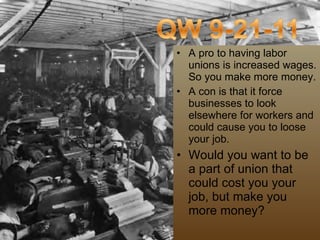
A pro to having labor unions is increased wages. So you make more money.  A con is that it force businesses to look elsewhere for workers and could cause you to loose your job. Would you want to be a part of union that could cost you your job, but make you more money?
You will be creating a world cloud about the Industrial Revolution You start with your worksheet Come up with 10 POSITIVE terms about the Industrial Revolution Must be EXPLAINED Do the same for 10 NEGATIVE terms Use one of the sites to create your word cloud Must print it out! Your world cloud is your list of terms, the worksheet contains your explanations!
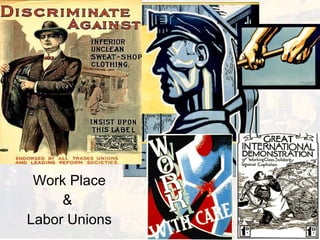
Work Place &  Labor Unions
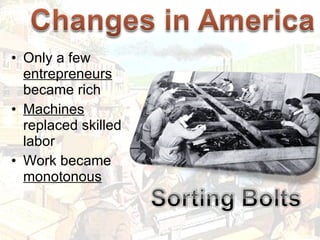
Only a few  entrepreneurs  became rich Machines  replaced skilled labor Work became  monotonous
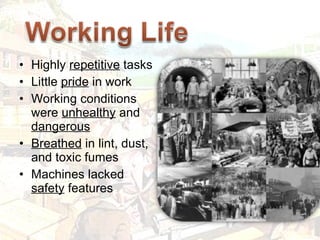
Highly  repetitive  tasks Little  pride  in work Working conditions were  unhealthy  and  dangerous Breathed  in lint, dust, and toxic fumes Machines lacked  safety  features
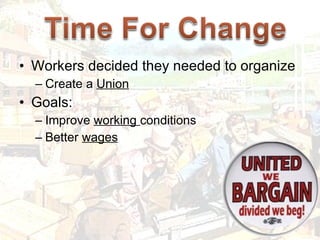
Workers decided they needed to organize Create a  Union Goals: Improve  working  conditions Better  wages
 
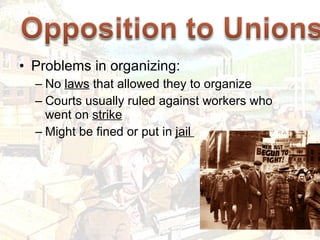
Problems in organizing: No  laws  that allowed they to organize Courts usually ruled against workers who went on  strike Might be fined or put in  jail
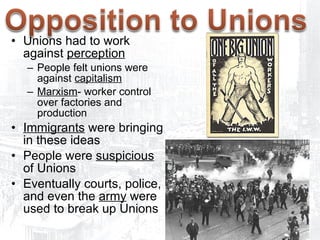
Unions had to work against  perception People felt unions were against  capitalism   Marxism - worker control over factories and production Immigrants  were bringing in these ideas People were  suspicious  of Unions Eventually courts, police, and even the  army  were used to break up Unions
 
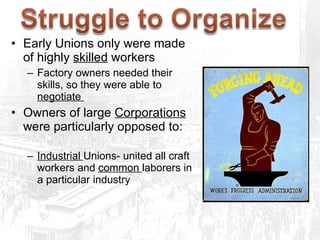
Early Unions only were made of highly  skilled  workers Factory owners needed their skills, so they were able to  negotiate  Owners of large  Corporations  were particularly opposed to: Industrial  Unions- united all craft workers and  common  laborers in a particular industry
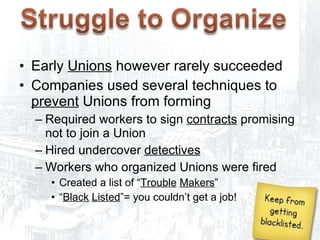
Opposition to Unions Early  Unions  however rarely succeeded  Companies used several techniques to  prevent  Unions from forming Required workers to sign  contracts  promising not to join a Union Hired undercover  detectives   Workers who organized Unions were fired Created a list of “ Trouble   Makers ” “ Black   Listed ”= you couldn’t get a job!
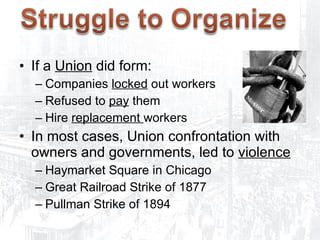
Opposition to Unions If a  Union  did form: Companies  locked  out workers Refused to  pay  them Hire  replacement  workers In most cases, Union confrontation with owners and governments, led to  violence Haymarket Square in Chicago Great Railroad Strike of 1877 Pullman Strike of 1894
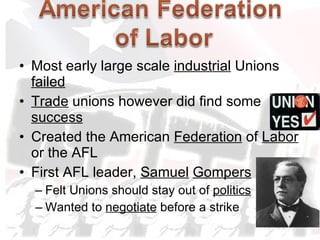
Most early large scale  industrial  Unions  failed Trade  unions however did find some  success Created the American  Federation  of  Labor  or the AFL First AFL leader,  Samuel   Gompers Felt Unions should stay out of  politics Wanted to  negotiate  before a strike
The AFL had 3 goals: 1. Convince companies to recognize Unions and agree to collective  bargaining   2. Create  Closed   Shops , only hire union workers 3. Promote an  8  hour work day
By 1900 AFL was the largest Union 500,000  members Only represented  15 % of the workforce Only  18 % of working population belonged to a Union As the 1900’s began most workers were  unrepresented  and unions were relatively weak UNION
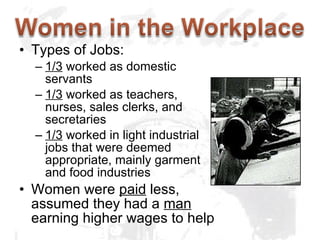
Types of Jobs: 1/3  worked as domestic servants 1/3  worked as teachers, nurses, sales clerks, and secretaries  1/3  worked in light industrial jobs that were deemed appropriate, mainly garment and food industries Women were  paid  less, assumed they had a  man  earning higher wages to help
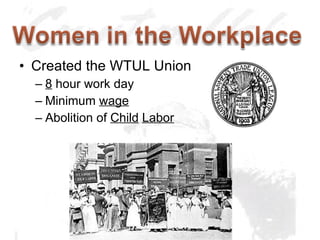
Created the WTUL Union 8  hour work day Minimum  wage Abolition of  Child   Labor

Labor unions

  • 1.
    A pro tohaving labor unions is increased wages. So you make more money. A con is that it force businesses to look elsewhere for workers and could cause you to loose your job. Would you want to be a part of union that could cost you your job, but make you more money?
  • 2.
    You will becreating a world cloud about the Industrial Revolution You start with your worksheet Come up with 10 POSITIVE terms about the Industrial Revolution Must be EXPLAINED Do the same for 10 NEGATIVE terms Use one of the sites to create your word cloud Must print it out! Your world cloud is your list of terms, the worksheet contains your explanations!
  • 3.
    Work Place & Labor Unions
  • 4.
    Only a few entrepreneurs became rich Machines replaced skilled labor Work became monotonous
  • 5.
    Highly repetitive tasks Little pride in work Working conditions were unhealthy and dangerous Breathed in lint, dust, and toxic fumes Machines lacked safety features
  • 6.
    Workers decided theyneeded to organize Create a Union Goals: Improve working conditions Better wages
  • 7.
  • 8.
    Problems in organizing:No laws that allowed they to organize Courts usually ruled against workers who went on strike Might be fined or put in jail
  • 9.
    Unions had towork against perception People felt unions were against capitalism Marxism - worker control over factories and production Immigrants were bringing in these ideas People were suspicious of Unions Eventually courts, police, and even the army were used to break up Unions
  • 10.
  • 11.
    Early Unions onlywere made of highly skilled workers Factory owners needed their skills, so they were able to negotiate Owners of large Corporations were particularly opposed to: Industrial Unions- united all craft workers and common laborers in a particular industry
  • 12.
    Opposition to UnionsEarly Unions however rarely succeeded Companies used several techniques to prevent Unions from forming Required workers to sign contracts promising not to join a Union Hired undercover detectives Workers who organized Unions were fired Created a list of “ Trouble Makers ” “ Black Listed ”= you couldn’t get a job!
  • 13.
    Opposition to UnionsIf a Union did form: Companies locked out workers Refused to pay them Hire replacement workers In most cases, Union confrontation with owners and governments, led to violence Haymarket Square in Chicago Great Railroad Strike of 1877 Pullman Strike of 1894
  • 14.
    Most early largescale industrial Unions failed Trade unions however did find some success Created the American Federation of Labor or the AFL First AFL leader, Samuel Gompers Felt Unions should stay out of politics Wanted to negotiate before a strike
  • 15.
    The AFL had3 goals: 1. Convince companies to recognize Unions and agree to collective bargaining 2. Create Closed Shops , only hire union workers 3. Promote an 8 hour work day
  • 16.
    By 1900 AFLwas the largest Union 500,000 members Only represented 15 % of the workforce Only 18 % of working population belonged to a Union As the 1900’s began most workers were unrepresented and unions were relatively weak UNION
  • 17.
    Types of Jobs:1/3 worked as domestic servants 1/3 worked as teachers, nurses, sales clerks, and secretaries 1/3 worked in light industrial jobs that were deemed appropriate, mainly garment and food industries Women were paid less, assumed they had a man earning higher wages to help
  • 18.
    Created the WTULUnion 8 hour work day Minimum wage Abolition of Child Labor