Earthworm Dissection
Lumbricus terrestris
Kingdom: Animalia
Phylum: Annelida
Students should Identify the
following
• Segments
• Septum
• Setae
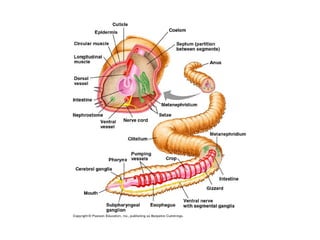
• Pharynx
• Esophagus
• Crop
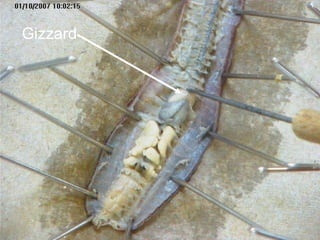
• Gizzard
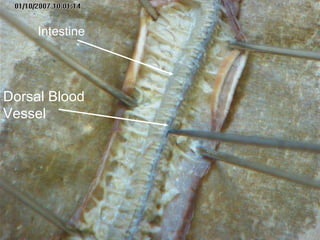
• Intestine
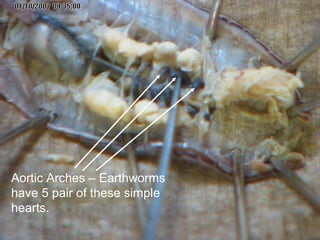
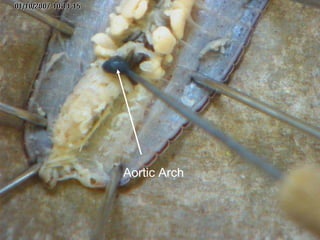
• Aortic Arches
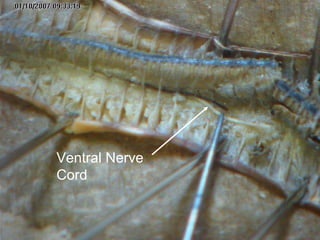
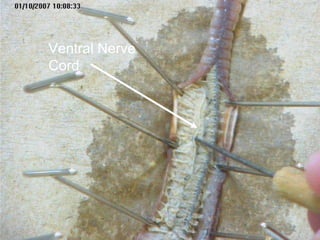
• Ventral Nerve Cord
• Dorsal Blood Vessel
• Clittelum
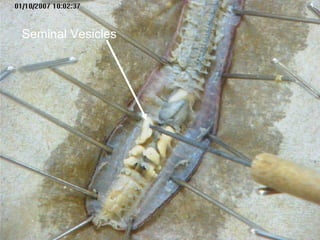
• Seminal Vesicles
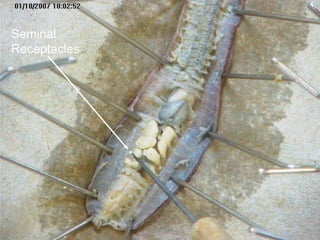
• Seminal Receptacles
Students should know the following
terminology
• Invertebrate
• Castings
• Hermaphroditic
• Hydrostatic Skeleton
• Closed Circulatory System
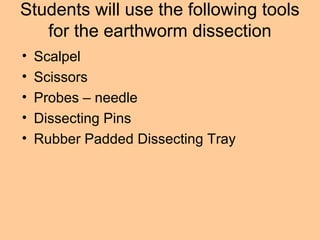
Students will use the following tools
for the earthworm dissection
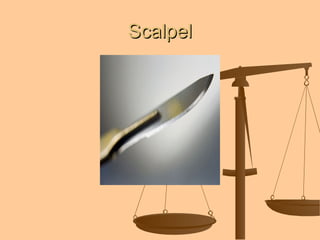
• Scalpel
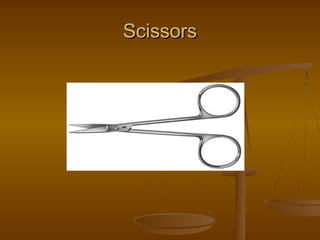
• Scissors
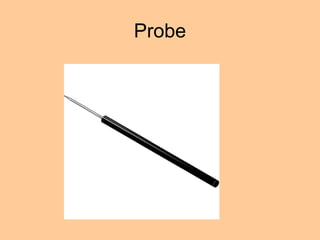
• Probes – needle
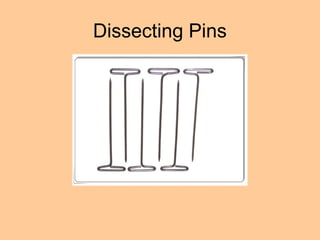
• Dissecting Pins
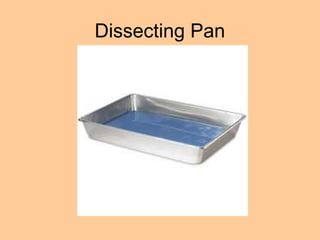
• Rubber Padded Dissecting Tray
ScalpelScalpel
ScissorsScissors
Probe
Dissecting Pins
Dissecting Pan
Dissecting Language
• Anterior – FRONT
• Posterior – BACK
• Dorsal – UPPER
• Ventral – LOWER
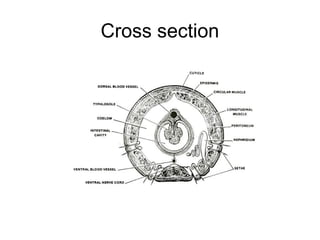
• Cross Section – cut through an organism
Cross section
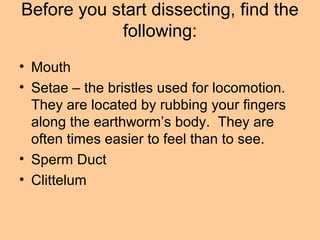
Before you start dissecting, find the
following:
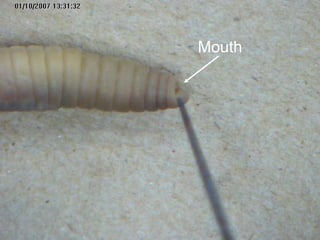
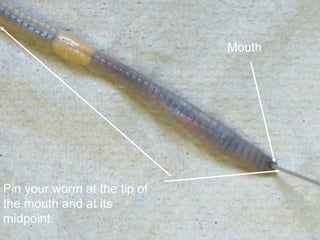
• Mouth
• Setae – the bristles used for locomotion.
They are located by rubbing your fingers
along the earthworm’s body. They are
often times easier to feel than to see.
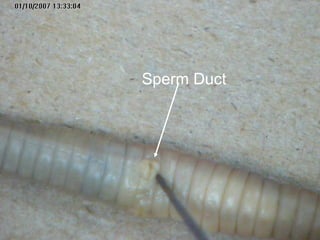
• Sperm Duct
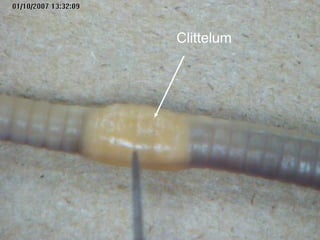
• Clittelum
Mouth
Sperm Duct
Clittelum
Mouth
Pin your worm at the tip of
the mouth and at its
midpoint.
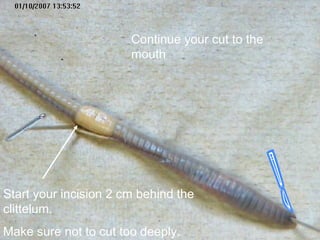
Start your incision 2 cm behind the
clittelum.
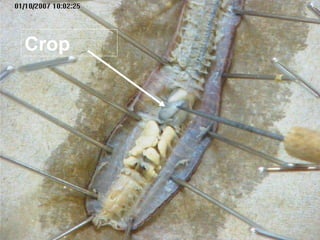
Make sure not to cut too deeply.
Continue your cut to the
mouth
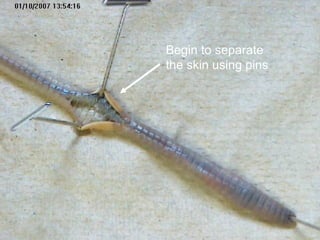
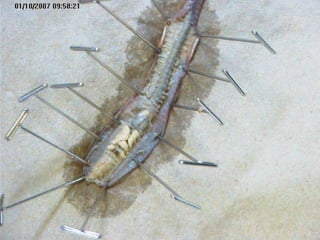
Begin to separate
the skin using pins
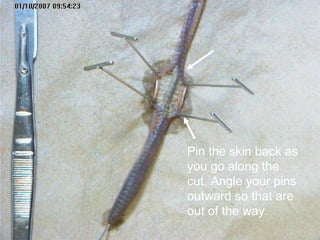
Pin the skin back as
you go along the
cut. Angle your pins
outward so that are
out of the way.
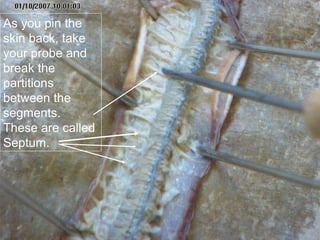
As you pin the
skin back, take
your probe and
break the
partitions
between the
segments.
These are called
Septum.
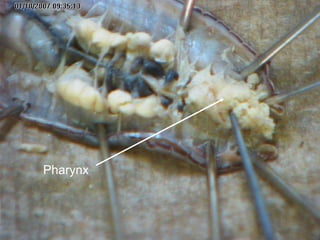
Pharynx
Aortic Arches – Earthworms
have 5 pair of these simple
hearts.
Aortic Arch
Seminal Vesicles
Seminal
Receptacles
Crop
Gizzard
Dorsal Blood
Vessel
Intestine
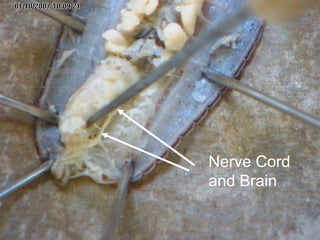
Ventral Nerve
Cord
Ventral Nerve
Cord
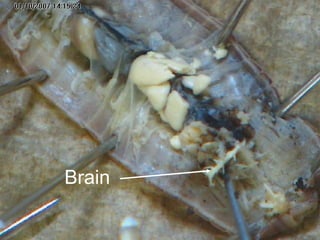
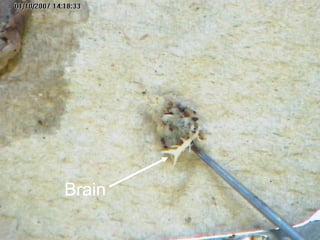
Brain
Nerve Cord
and Brain
Brain

Earthworm dissection 001