Barbara Allan
Making an
impact beyond
the library and
information
service
IMPACT
1. Why is it important for all library and information
professionals to make an impact beyond the library?
2. What strategies can we use to influence our
institution’s leaders?
3. How can we facilitate information literacy policies
and practices across our institution?
4. How can we influence the managers and leaders of
the future?
4 Questions
Workplace librarian
Serials librarian
My journey
Lecturer -
librarianship
Part time lecturer
Centre for Learning
manager
Self employed
Academic library –
resources manager
Part time lecturer
Project manager
Interim Dean,
Deputy Dean,
Director of L&T,
Lecturer
Dean and PVC
Self employed
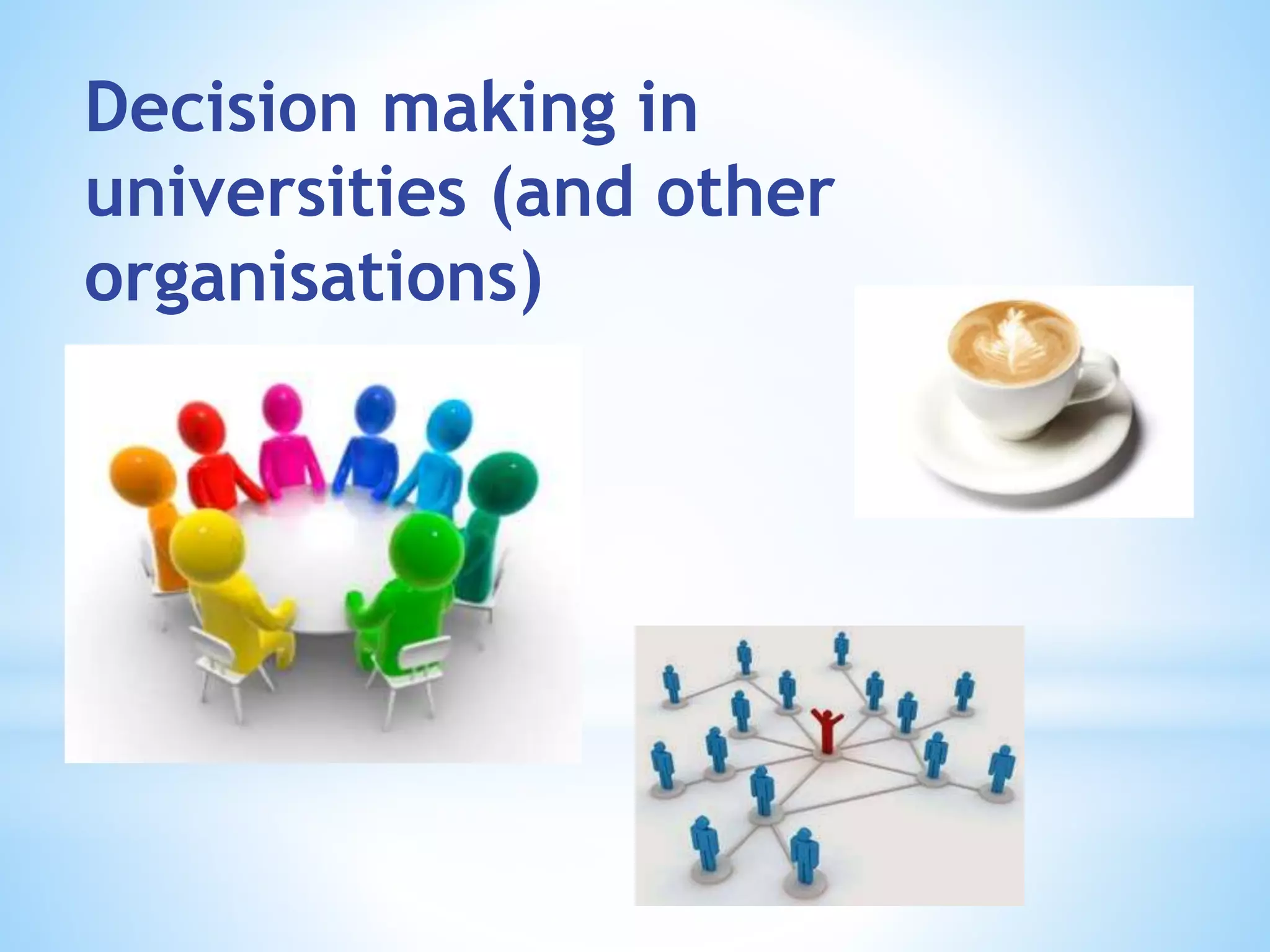
Decision making in
universities (and other
organisations)
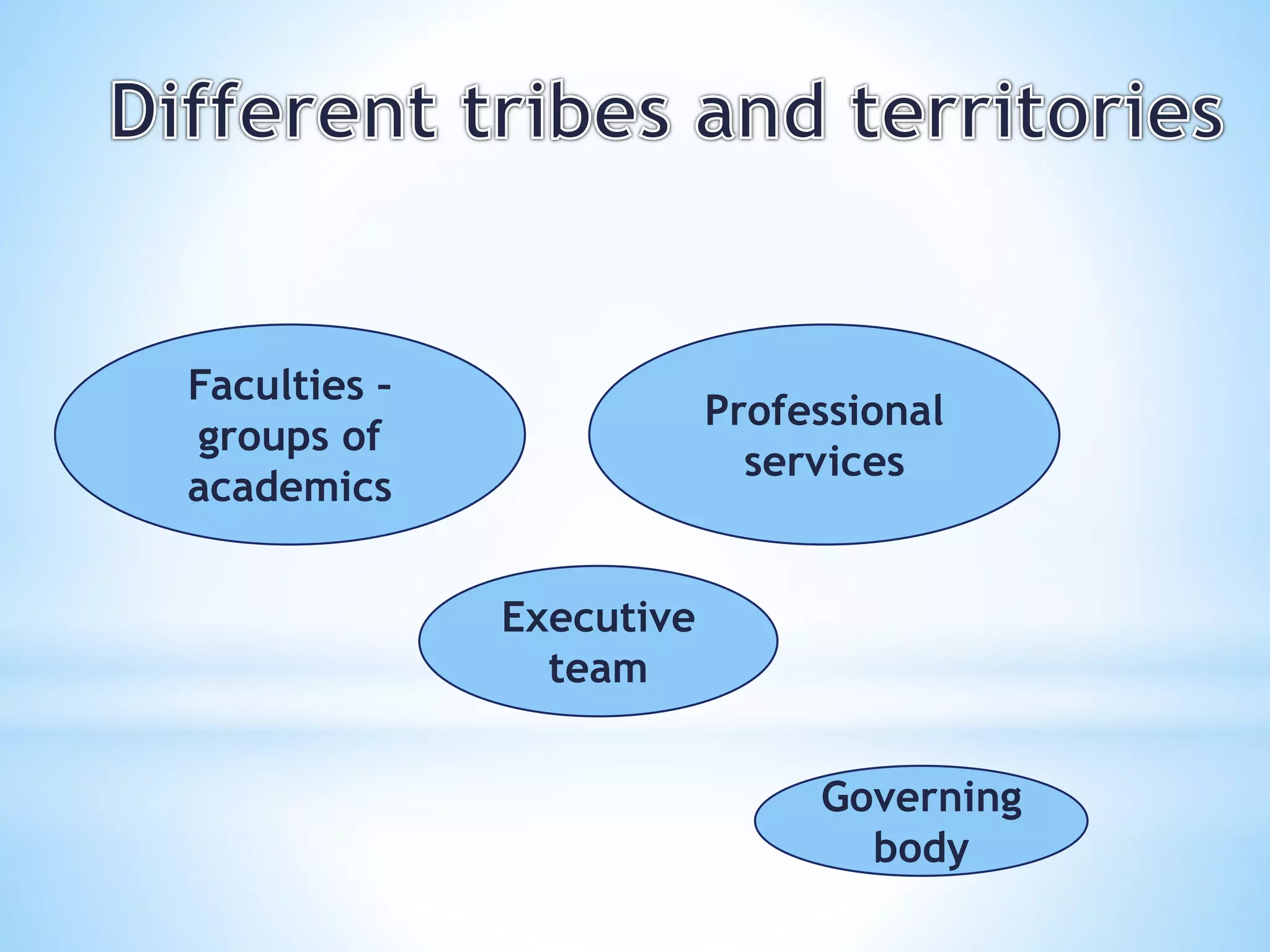
Faculties –
groups of
academics
Professional
services
Executive
team
Governing
body
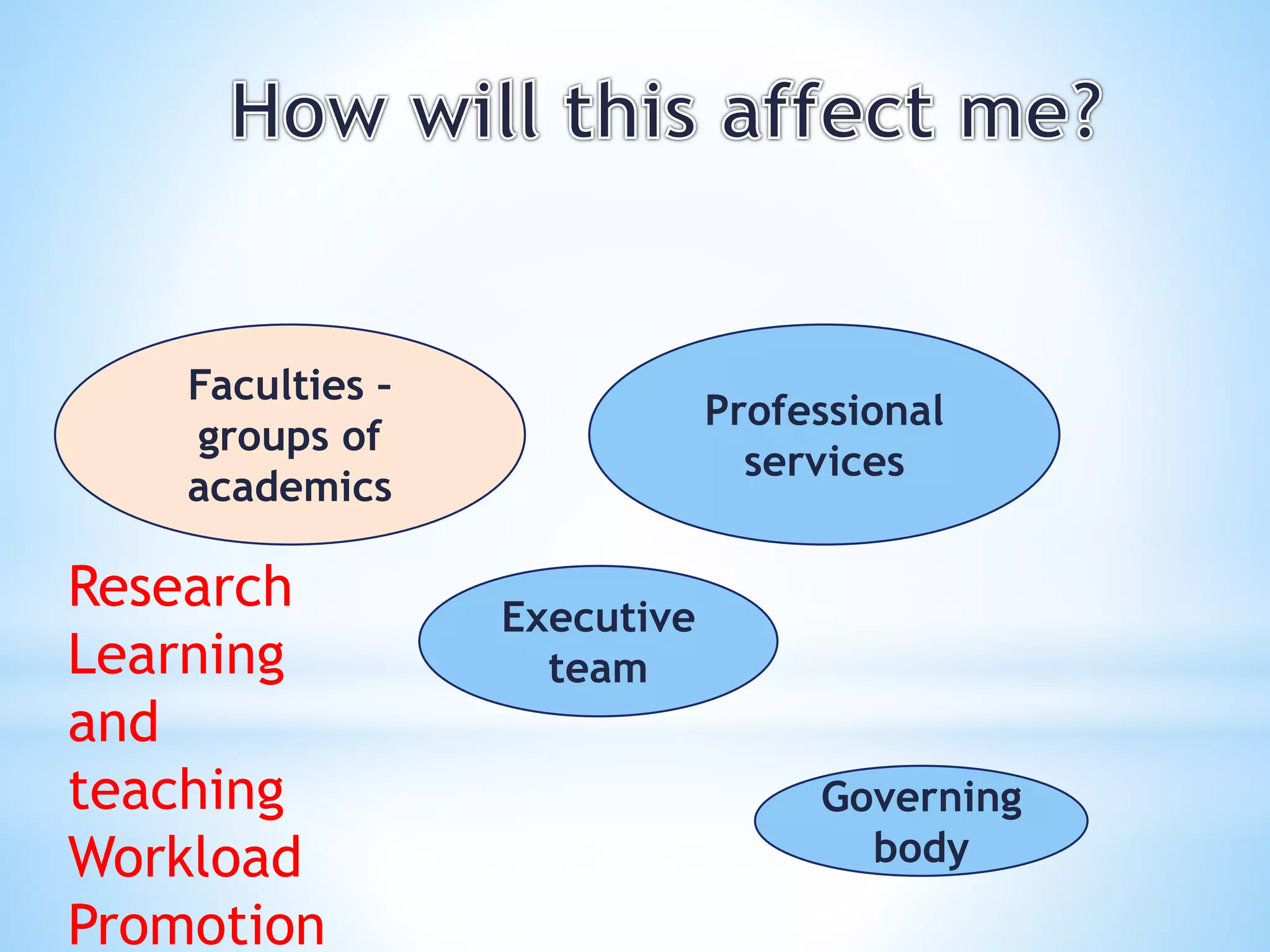
Faculties –
groups of
academics
Professional
services
Executive
team
Governing
body
Research
Learning
and
teaching
Workload
Promotion
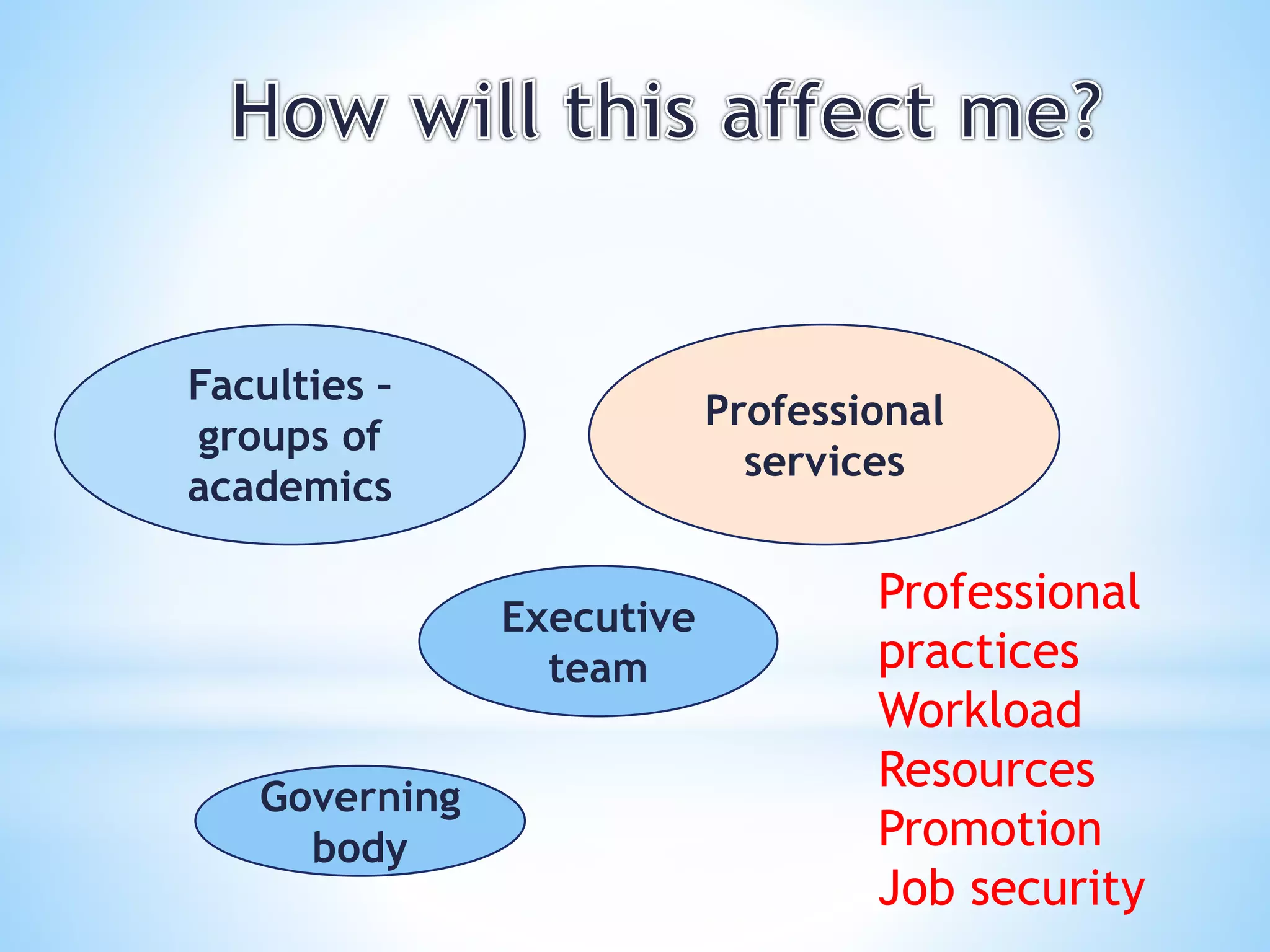
Faculties –
groups of
academics
Professional
services
Executive
team
Governing
body
Professional
practices
Workload
Resources
Promotion
Job security
Faculties –
groups of
academics
Professional
services
Executive
team
Governing
body
Strategy
Targets
Finance
Reputation
Quality
Personal ambitions
Faculties –
groups of
academics
Professional
services
Executive
team
Governing
body
Governance – legal,
finance, reputation,
quality
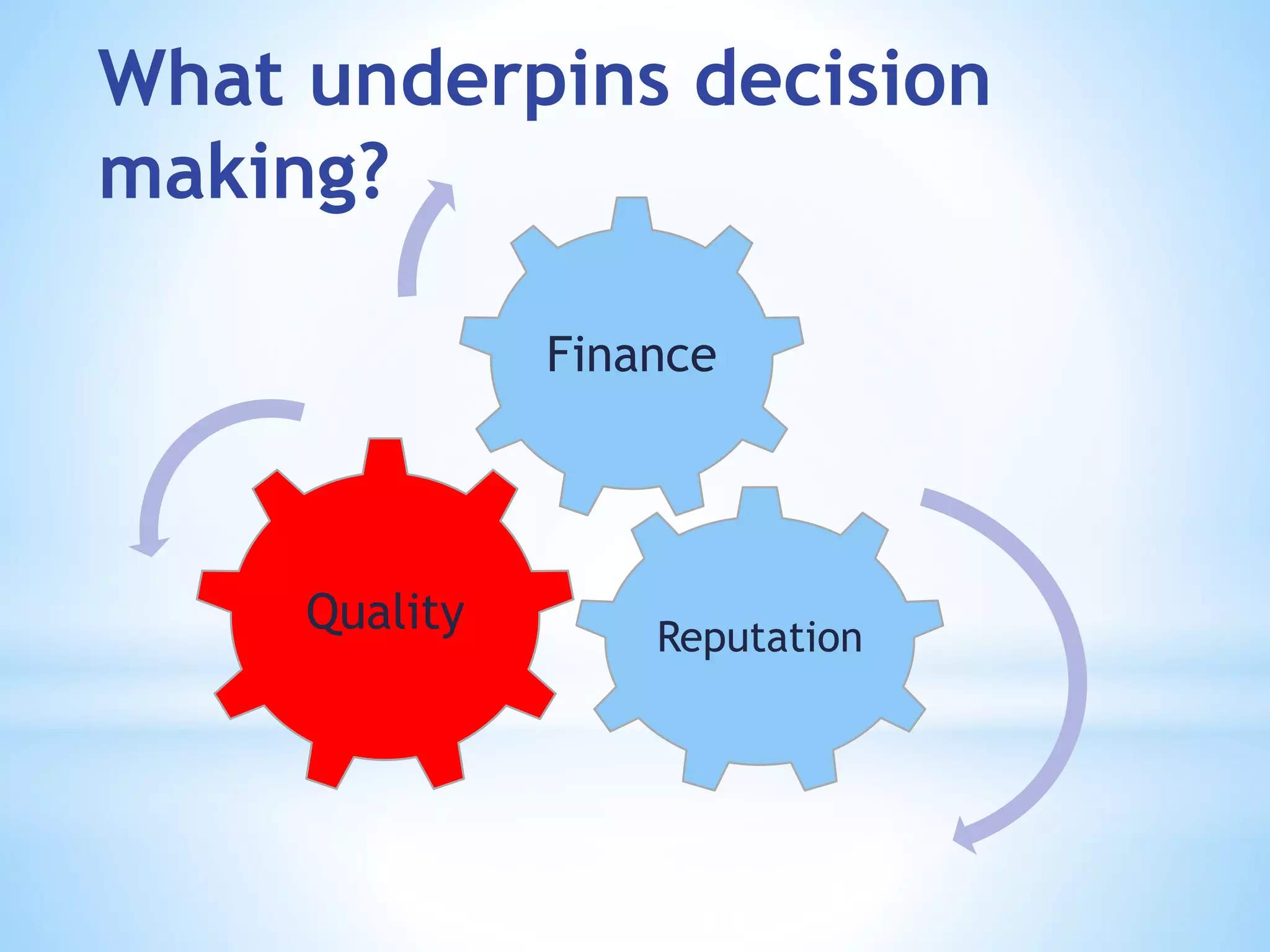
What underpins decision
making?
Finance
Quality
Reputation
What underpins decision
making?
Finance
Quality
Reputation
What underpins decision
making?
Finance
Quality Reputation
What underpins decision
making?
Finance
Quality
Reputation
What underpins decision
making?
Finance
Quality
Reputation
What does this mean?
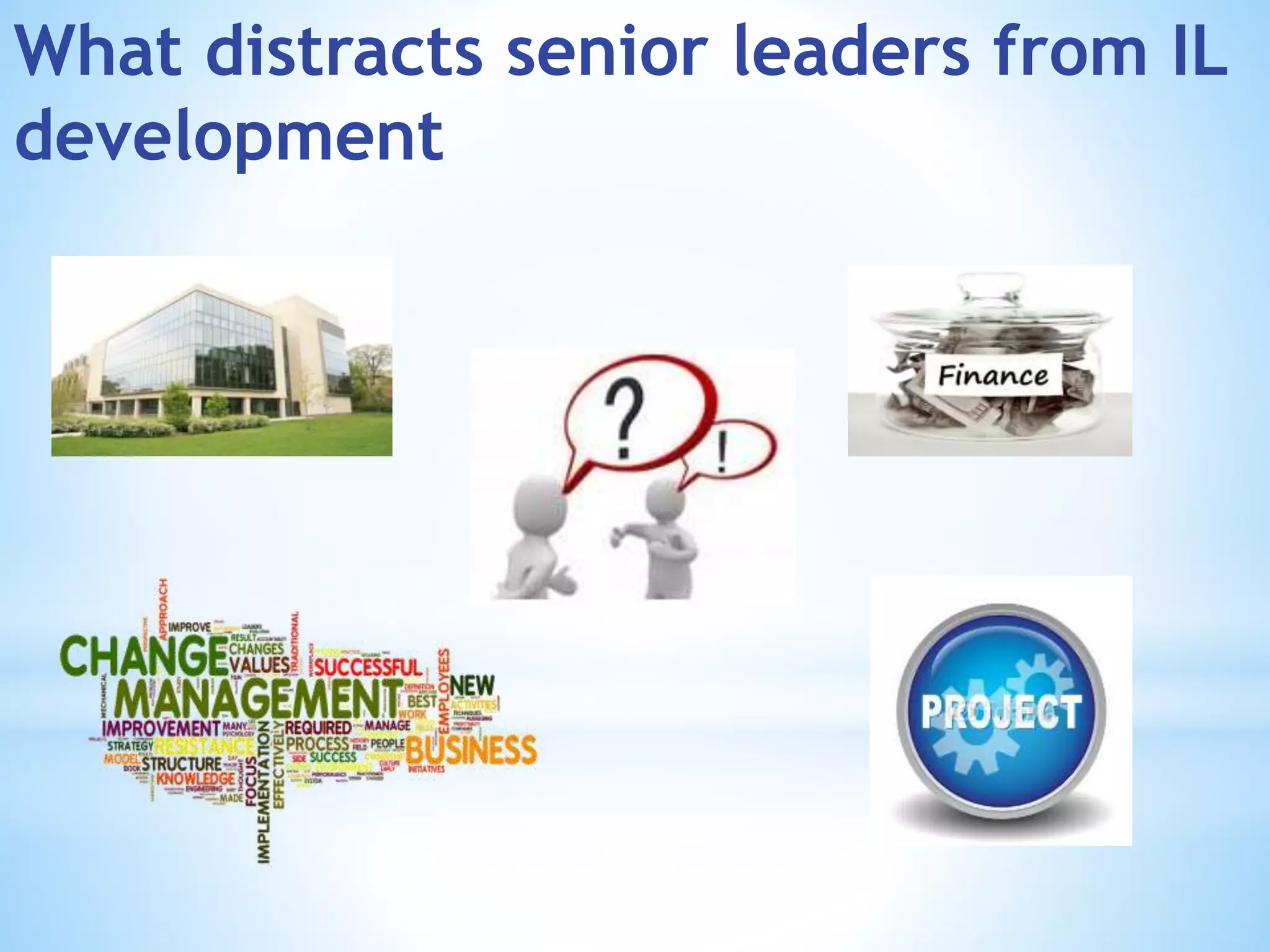
What distracts senior leaders from IL
development
What are the opportunities for IL
development?
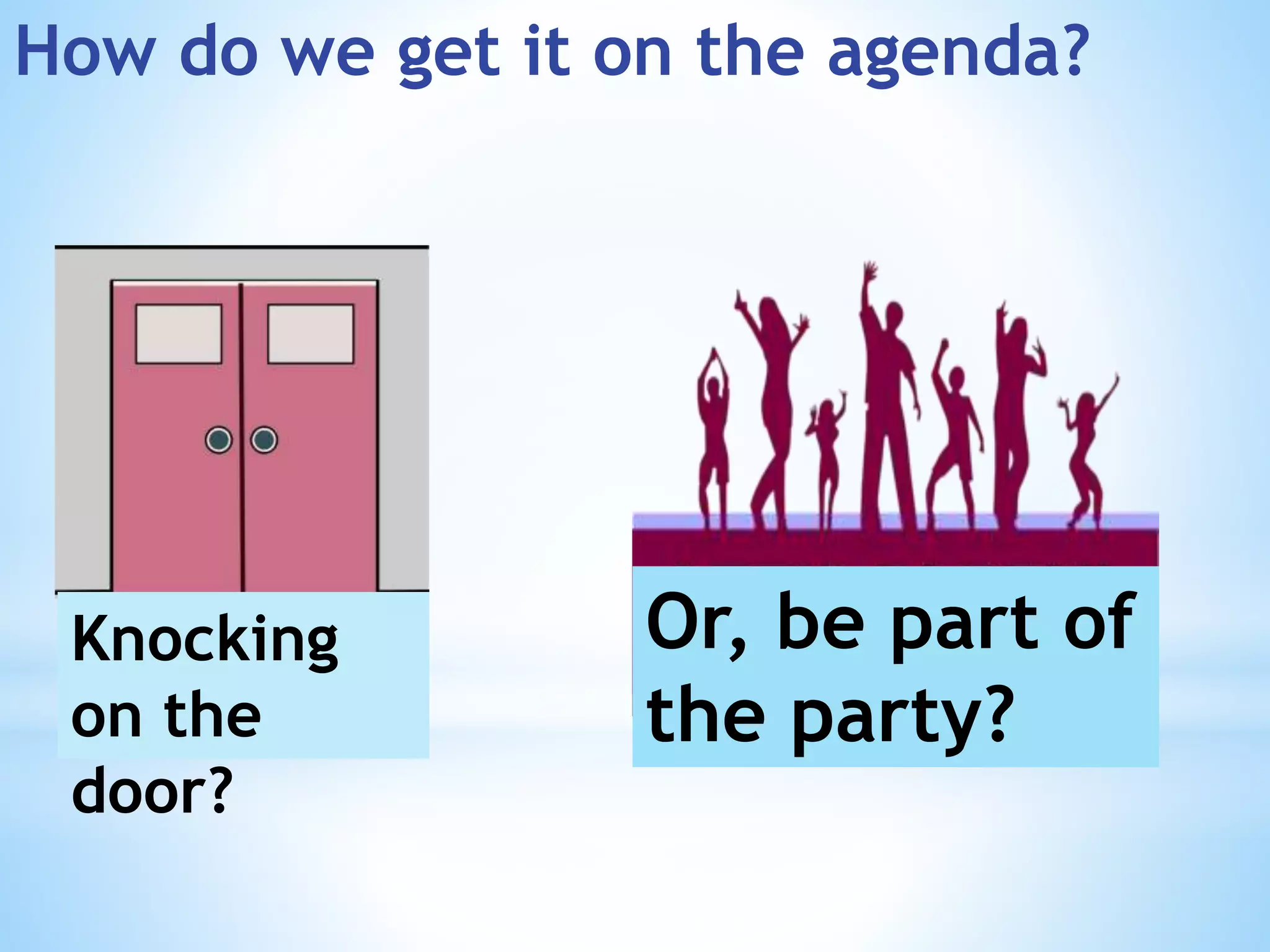
Knocking
on the
door?
Or, be part of
the party?
How do we get it on the agenda?
How do we get it on the
agenda?
*
PRINCE2®
Project management tools and techniques
Large scale projects
Large scale projects - analysis
1.Who makes the decisions?
2.What underpins the decision making –
quality, reputation, finance?
3.Who are the gatekeepers?
4.Who are working in the back offices?
5.How do I make a difference?
What is Learning Futures?
Improving the
student experience
The Learning Futures
programme is improving
our undergraduate
courses, and how we teach
and assess.
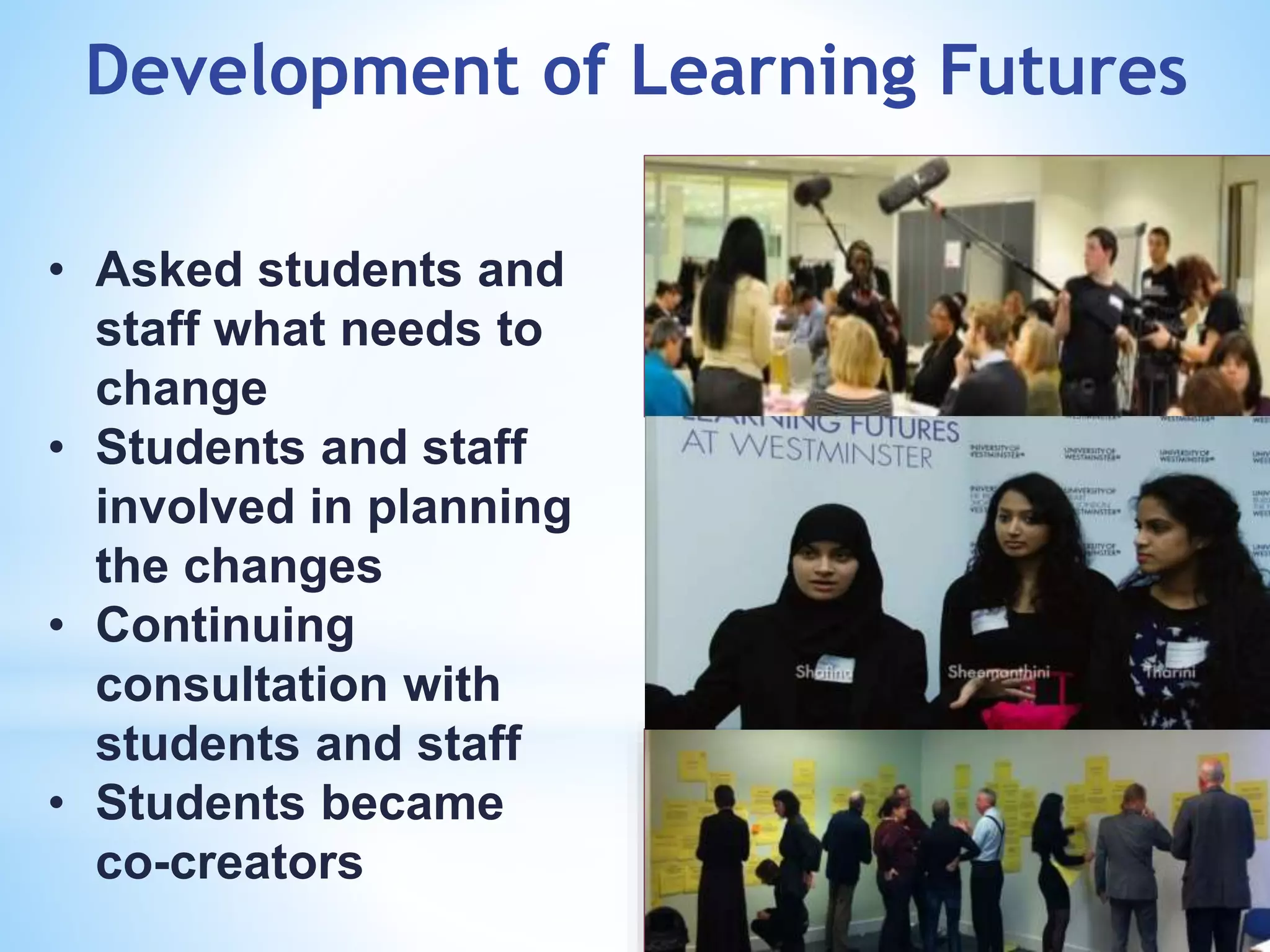
Development of Learning Futures
• Asked students and
staff what needs to
change
• Students and staff
involved in planning
the changes
• Continuing
consultation with
students and staff
• Students became
co-creators
Learning Futures projects
Curriculum and
assessment
Academic
Support
Westminster
Distinctiveness
Transforming
Learning and
Teaching
1.It was on top of my day job!
2.Focus on big picture and milestones
3.Very aware of accountability
4.Lots of stakeholders ‘to keep happy’
5.Listened to people who engaged with it and spoke
up
6.No time for the detail (unless things were going
wrong)
My experience as project
board chair
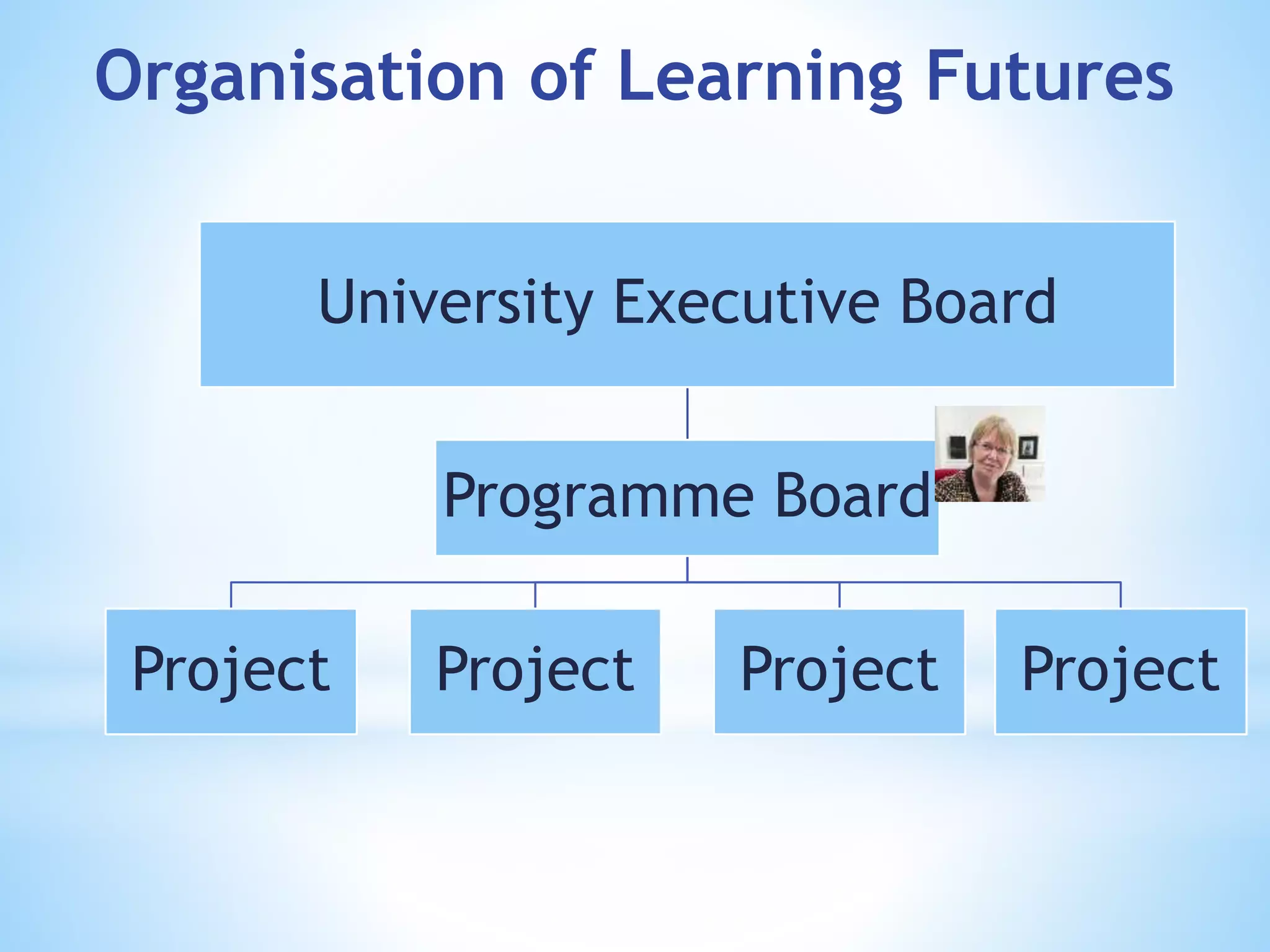
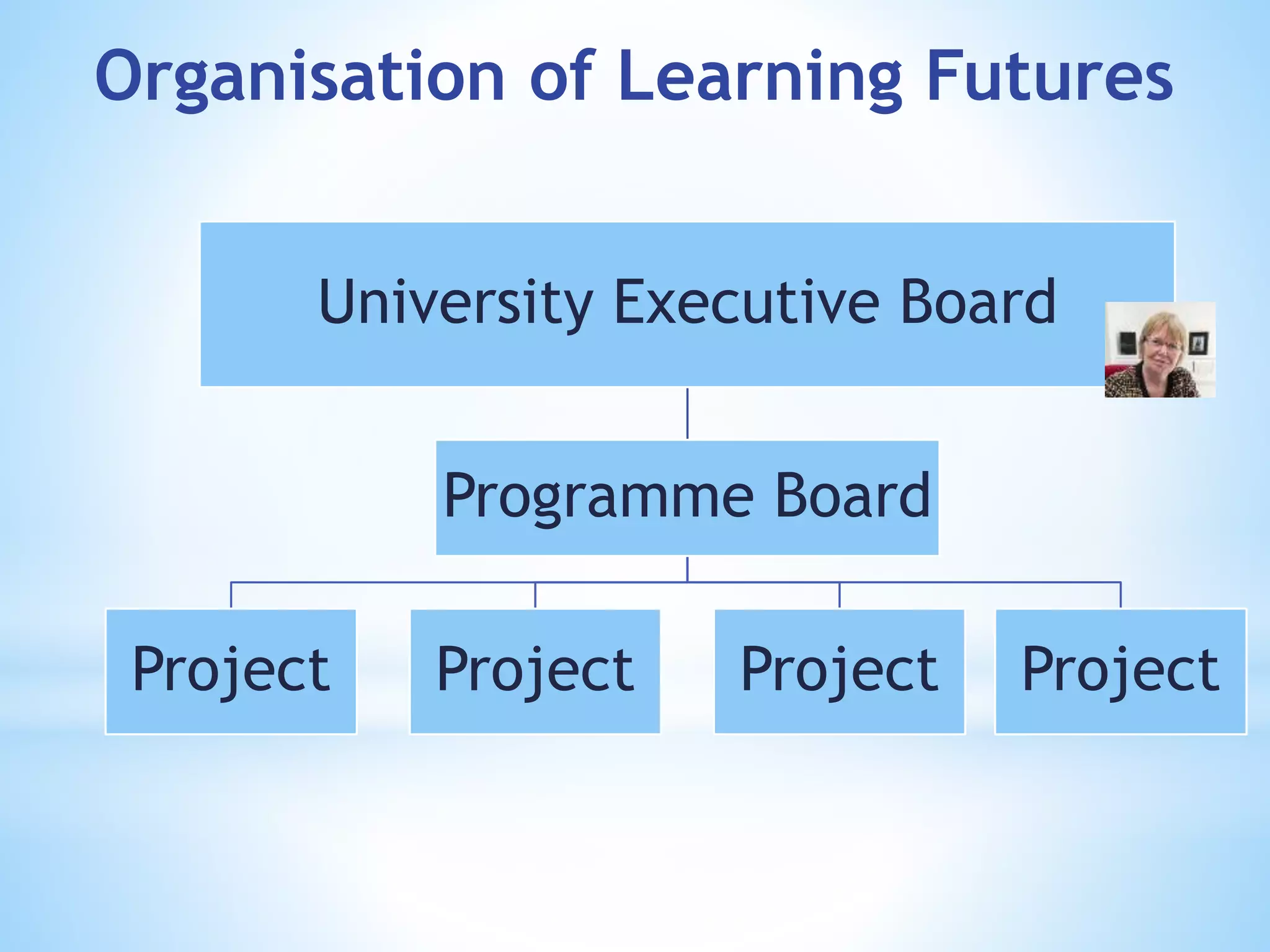
University Executive Board
Programme Board
Project Project Project Project
Organisation of Learning Futures
1.It was on top of my day job!
2.Focus on big picture and milestones
3.Very aware of accountability
4.Lots of stakeholders ‘to keep happy’
5.Listened to people who engaged with it and spoke
up
6.No time for the detail (unless things were going
wrong)
My experience as
programme sponsor
University Executive Board
Programme Board
Project Project Project Project
Organisation of Learning Futures
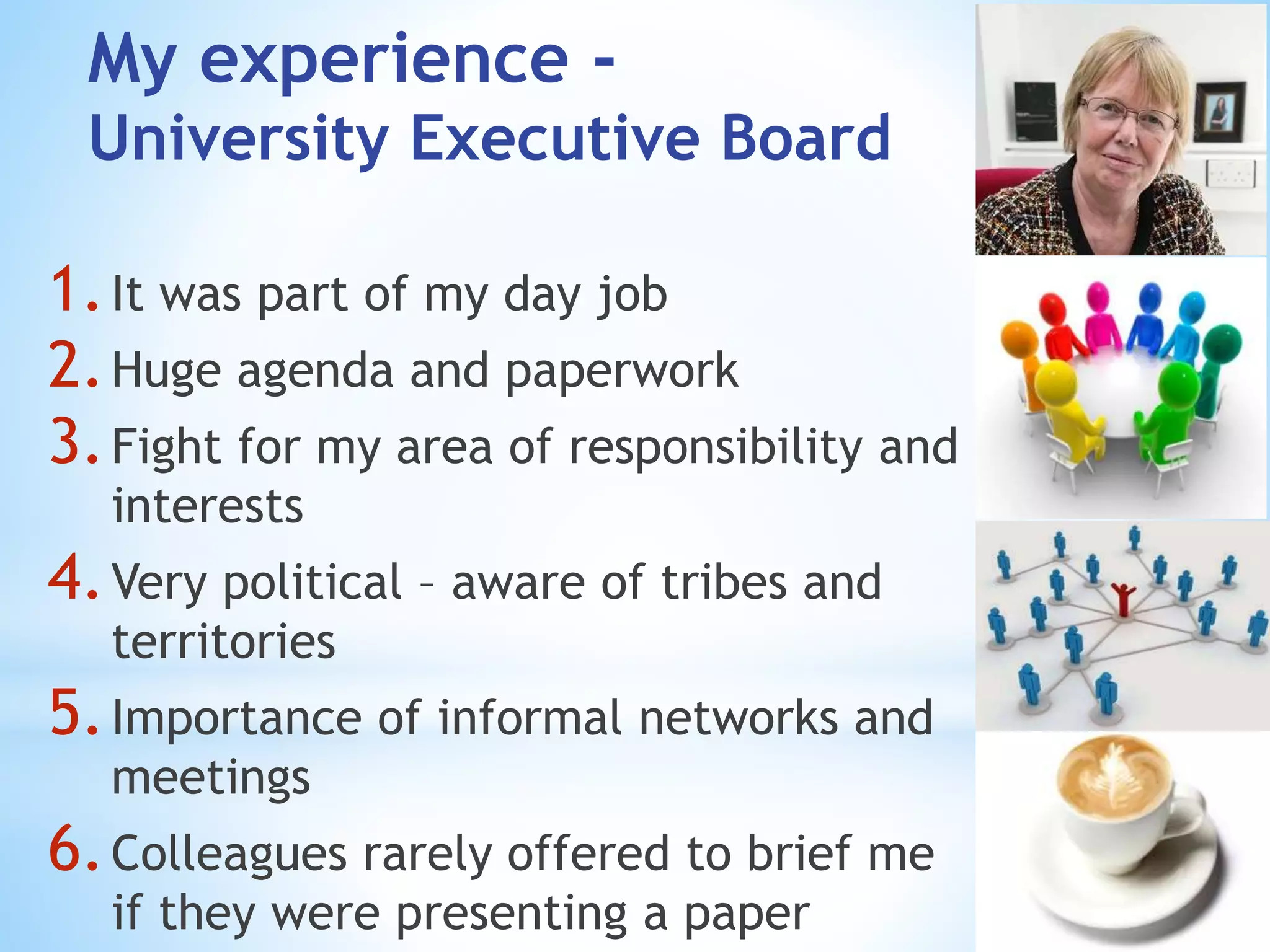
1.It was part of my day job
2.Huge agenda and paperwork
3.Fight for my area of responsibility and
interests
4.Very political – aware of tribes and
territories
5.Importance of informal networks and
meetings
6.Colleagues rarely offered to brief me
if they were presenting a paper
My experience -
University Executive Board
Opportunities for IL development
Making an impact on large scale projects
1.Join the boards
2.Volunteer to be chair or other vital
role
3.Ask to join quality and standards
committees (or equivalent)
4.Make sure your voice is heard
5.Keep on repeating yourself
6.Deliver the goods
Small scale projects
Making an impact on small scale projects
1.Link them to the strategy
2.Work with a range of stakeholders
3.Publicise them internally and externally
4.Go for external funding
5.Go for national awards
6.Use them as pilots …..
How do you convince
someone to agree to your
agenda?
Model of convincers
Convincer channel
* Looks right
* Sounds right
* Feels right
* Makes sense
Convincer mode
* Always
* Number of examples
* Period of time
* Never
Charvet, R. S. (1997)
Words that change
minds, Kendall Hunt.
Finally ….
1.Make our voices heard
2.Network
3.Link our work to strategy, etc
4.Target our efforts, e.g.
quality and standards,
teacher training
5.Enhance our skills and
techniques
Implications
Thank you
Due
September
2017

Making an impact beyond the library and information service - Barbara Allan (LILAC Keynote Speaker)

Editor's Notes

  • #2 Photos from Clip Art
  • #4 Why is it important for all library and information professionals to make an impact beyond the library? What strategies can we use to influence our institution’s leaders so that we have a meaningful voice in institutional change and transformation? How can we facilitate the development and implementation of information literacy policies and practices across the institution? How can we influence the managers and leaders of the future?
  • #5 Photo by B Allan, Painting by ©Hockney, 1997.
  • #6 Photo by B Allan, Painting by ©Hockney, 1997.
  • #7 Photo by B Allan, Painting by ©Hockney, 1997. Overall worked FT in 6 universities and PT in various capacities in another 6 universities
  • #9 Universities are made up of different tribes and territories, and sometimes library and information workers reach of influence does not go far enough. How can we extend our reach so that we can make a bigger impact on students and staff in our institution?   Understanding the decision making habits of university leaders and the criteria they use when deciding priorities will help us to influence them. A framework for understanding these behaviours will be briefly explored.
  • #20 Ego Discrimination Power battles
  • #21 New buildings Finance Management of change HR issues Projects and initiatives
  • #22 New buildings Finance Management of change QUALITY AND STANDARDS Projects and initiatives
  • #25 Many universities have invested in large scale projects, e.g. transformation of the curriculum, in order to enhance the student experience and their future employability. Large scale projects often involve the use of project management tools and techniques, such as PRINCE2 and Agile, and there are benefits in understanding these methodologies as this enables us to influence the project and its outcomes. Image from Clip Art
  • #29 Curriculum and assessment Improved courses for deeper learning Reduced over-assessment Simpler regulations WD Graduate attributes Employability Global engagement Sustainability Social responsibility TLT Excellent, innovative learning and teaching Flexible, dynamic learning environment Students as co-creators Learning communities AS Academic support Improved personal tutoring Study skills
  • #35 Graduate attributes Digital and IL Student experience Employability QUALITY AND STANDARDS
  • #37 In terms of small scale projects, there are many excellent information literacy projects that showcase innovative and effective practices in universities and colleges across the world. However, the influence or reach of these projects is sometimes small, e.g. within a department or a group of enthusiastic librarians and academics. How can we make a step change so that these projects have an even bigger impact either across the sector or institution? Images from Clip Art. Dog photo by B Allan
  • #38 How do you use small scale projects to make an impact and grow into larger projects?
  • #42 Finally, what are the implications of these ideas for the ways in which we organise ourselves and also the professional development of library and information workers?   Work towards becoming indispensable Make our voices heard, e.g. committees, staff development processes (HEA accreditations) Network – faculties, professional services e.g. quality and standards Link our work to strategy, league tables, audits, accreditations etc Target our efforts e.g. quality and standards, teacher training Enhance our skills and techniques, e.g. PRINCE2, Agile