This document discusses linear sequences. It defines key terms like sequence, term, rate of change, linear sequence, and formula. Examples are provided to demonstrate how to identify the next term, rate of change, and formula for linear sequences. The document also shows how to determine if a sequence is linear and how to write a sequence given a verbal description.
Vocab
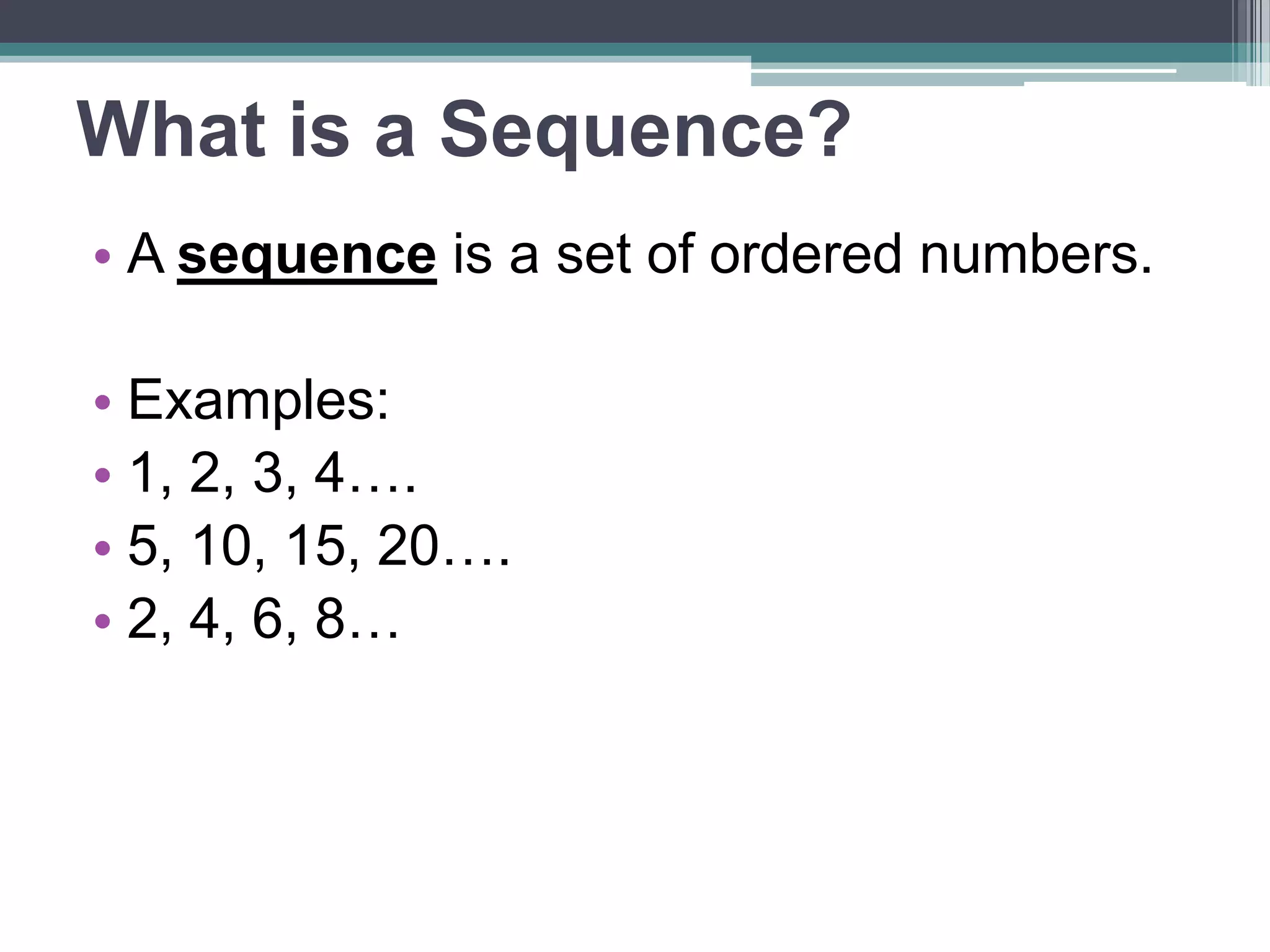
• Sequence–
• a set of ordered numbers.
• Examples:
• 1, 2, 3, 4….
• 5, 10, 15, 20….
• 2, 4, 6, 8…
3.
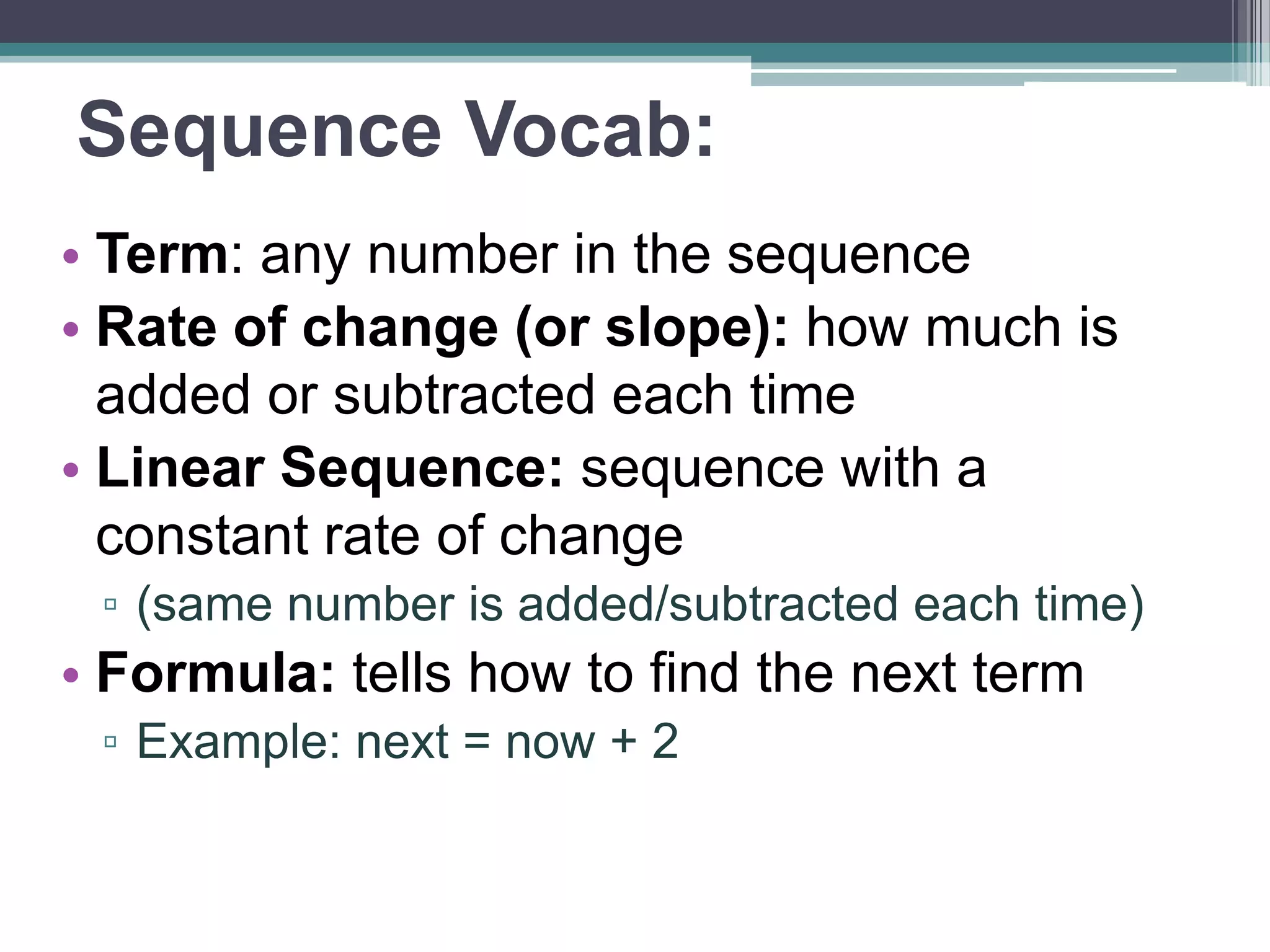
Sequence Vocab:
•Term: any number in the sequence
• Rate of change (or slope): how much is
added or subtracted each time
• Linear Sequence: sequence with a
constant rate of change
▫ (same number is added/subtracted each
time)
• Formula: tells how to find the next term
▫ Example: next = now + 2
4.
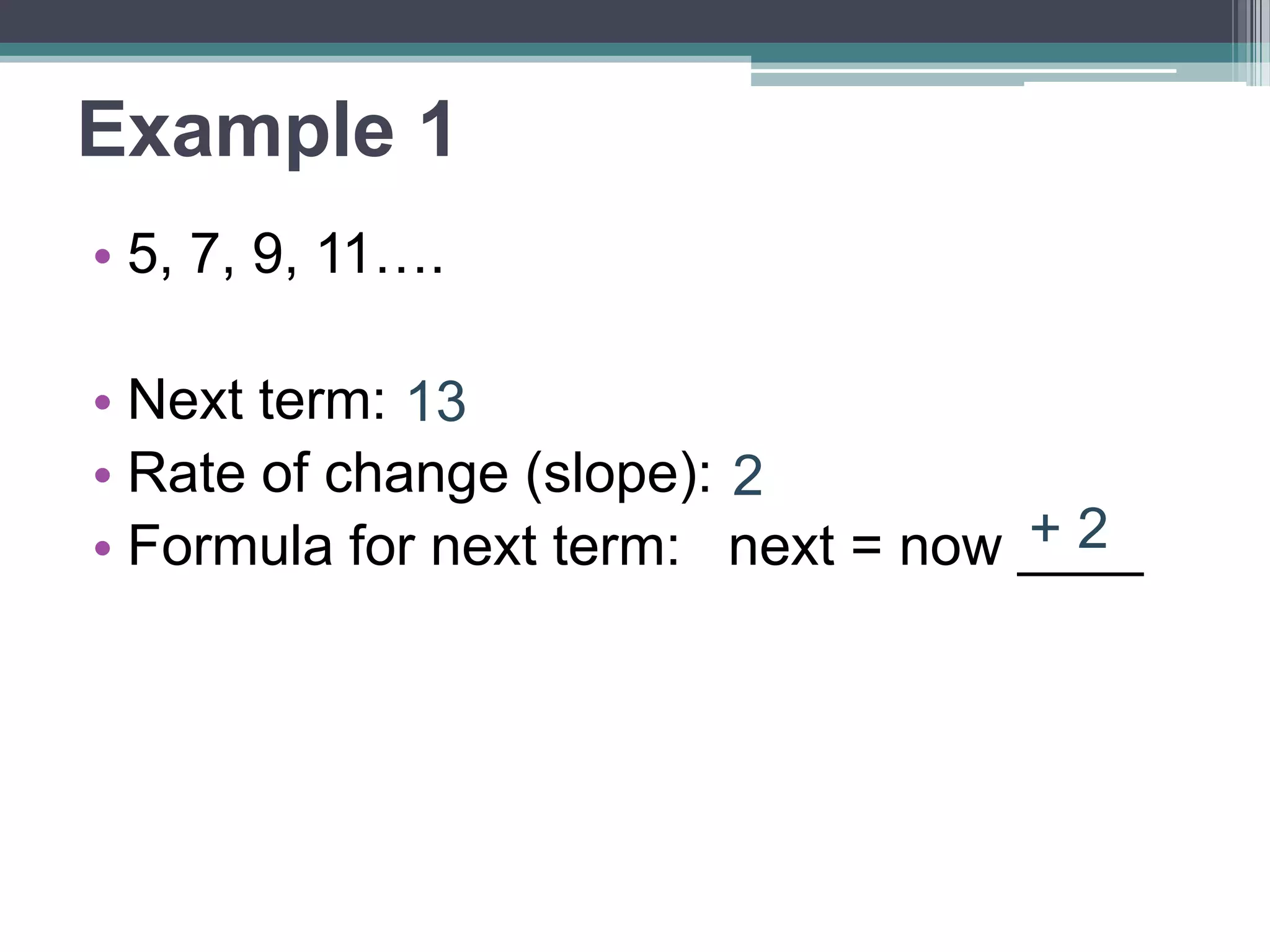
Example 1
•5, 7, 9, 11….
• Next term:
13
• Rate of change (slope):
2
+ 2
• Formula: next = now ____
5.
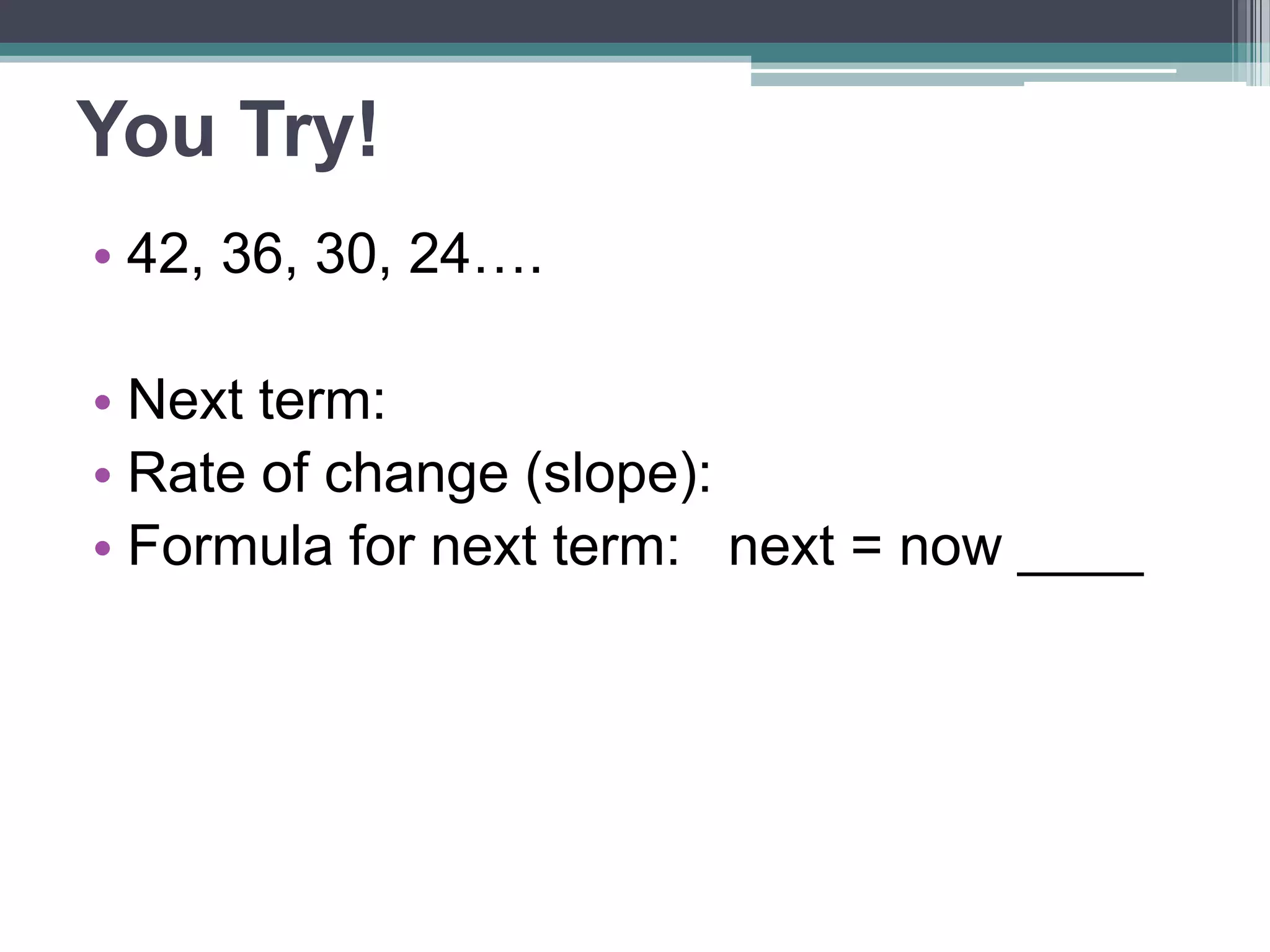
You Try!
•42, 36, 30, 24….
• Next term:
• Rate of change (slope):
• Formula: next = now ____
6.
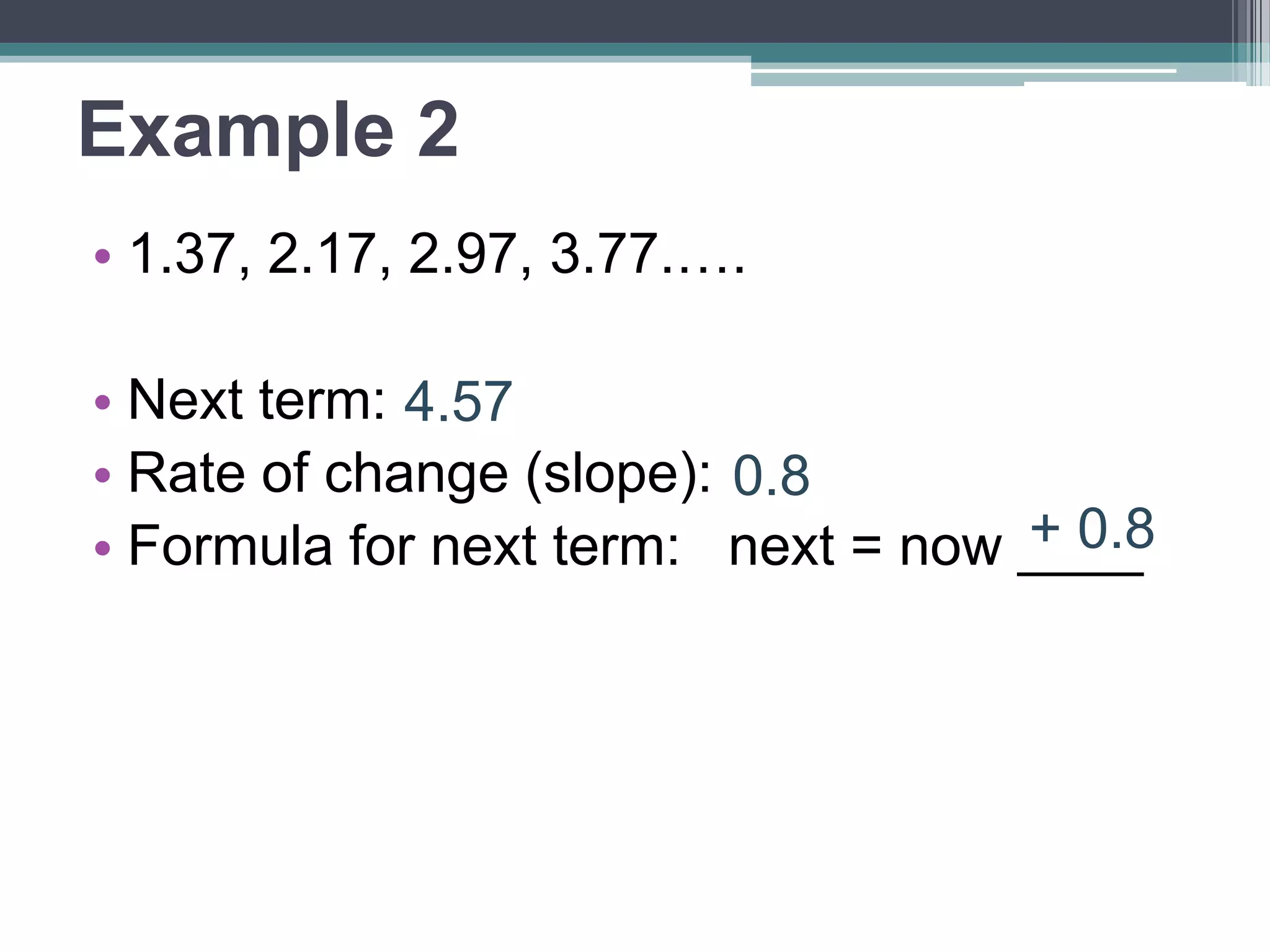
Example 2
•1.37, 2.17, 2.97, 3.77.….
• Next term:
4.57
• Rate of change (slope):
0.8
+ 0.8
• Formula: next = now ____
7.
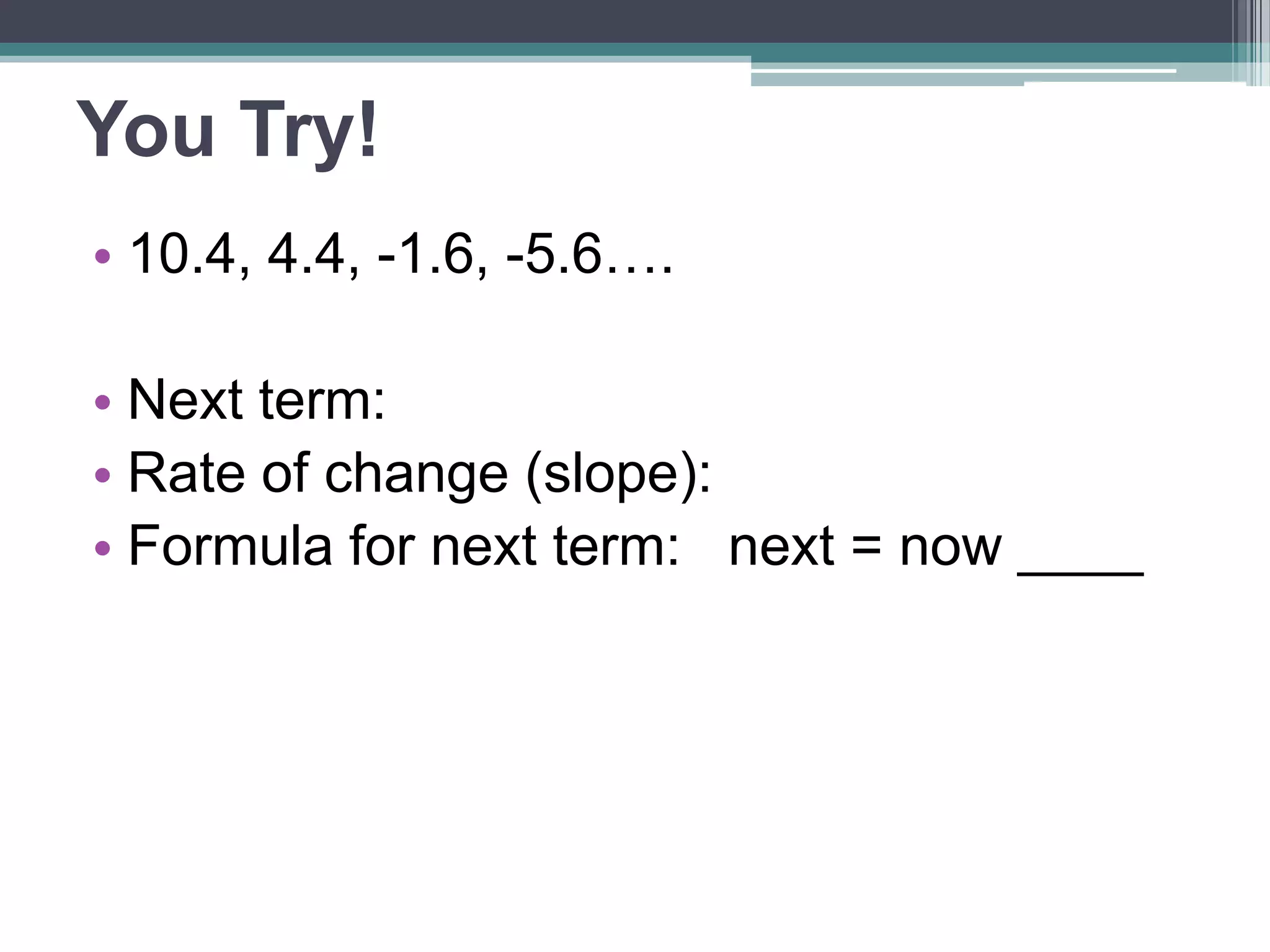
You Try!
•10.4, 4.4, -1.6, -7.6….
• Next term:
• Rate of change (slope):
• Formula: next = now ____
8.
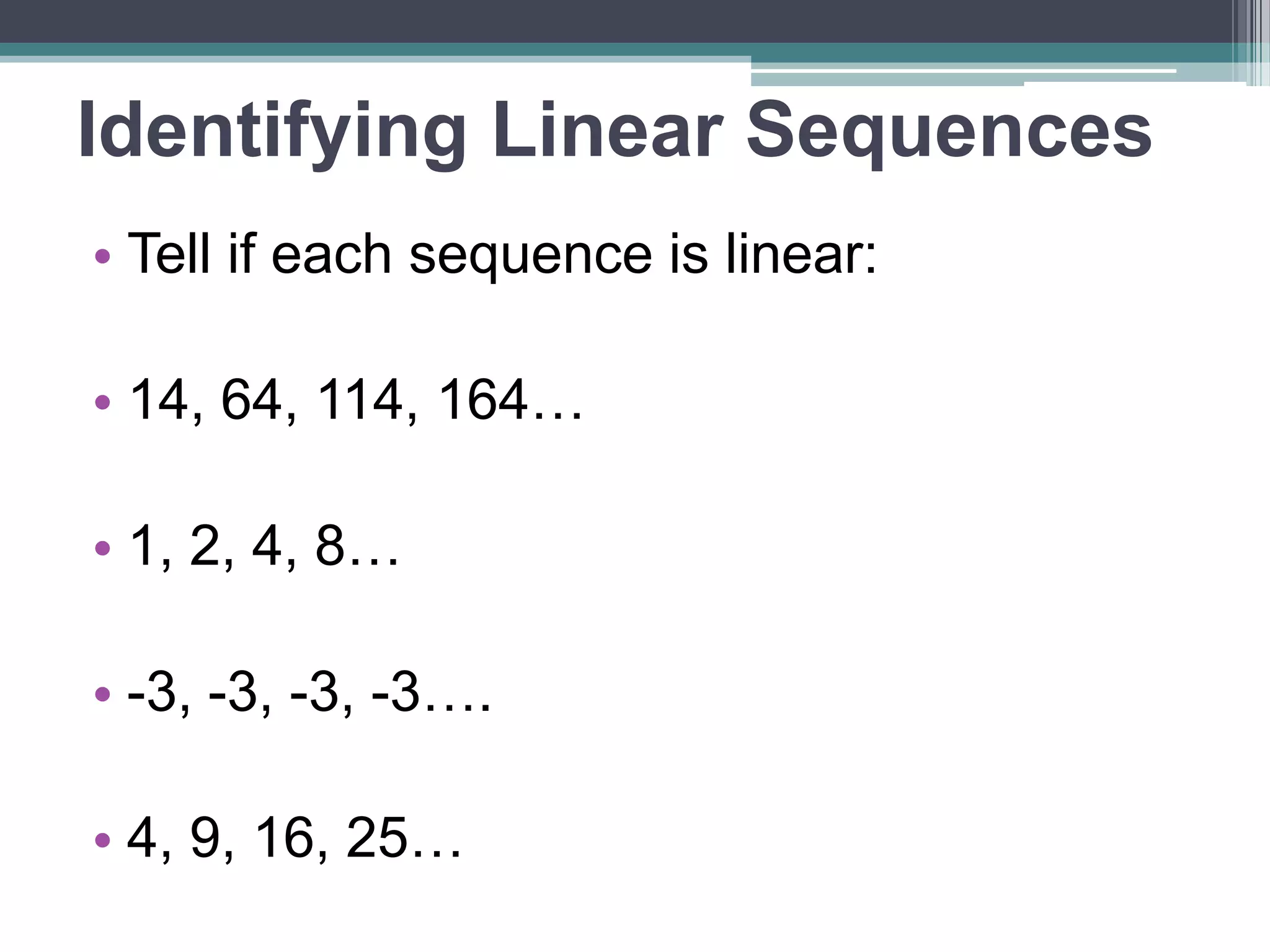
Identifying Linear
Sequences
• Tell if each sequence is linear:
• 14, 64, 114, 164…
• 1, 2, 4, 8…
• -3, -3, -3, -3….
• 4, 9, 16, 25…
9.
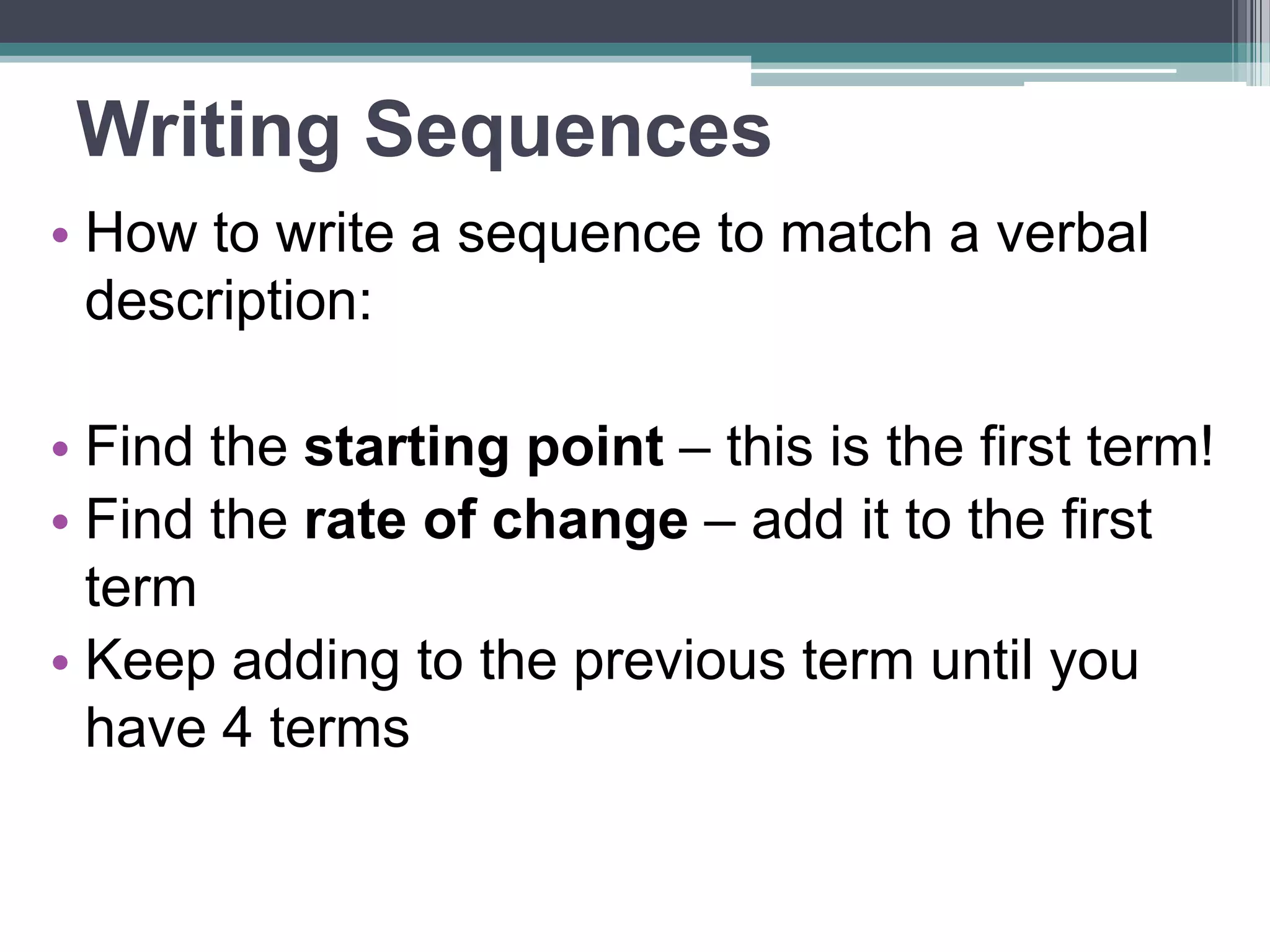
Writing Sequences
•To write a sequence to match a verbal
description:
• Find the starting point – this is the first
term!
• Find the rate of change – add it to the
first term
• Keep adding until you have 4 terms
10.
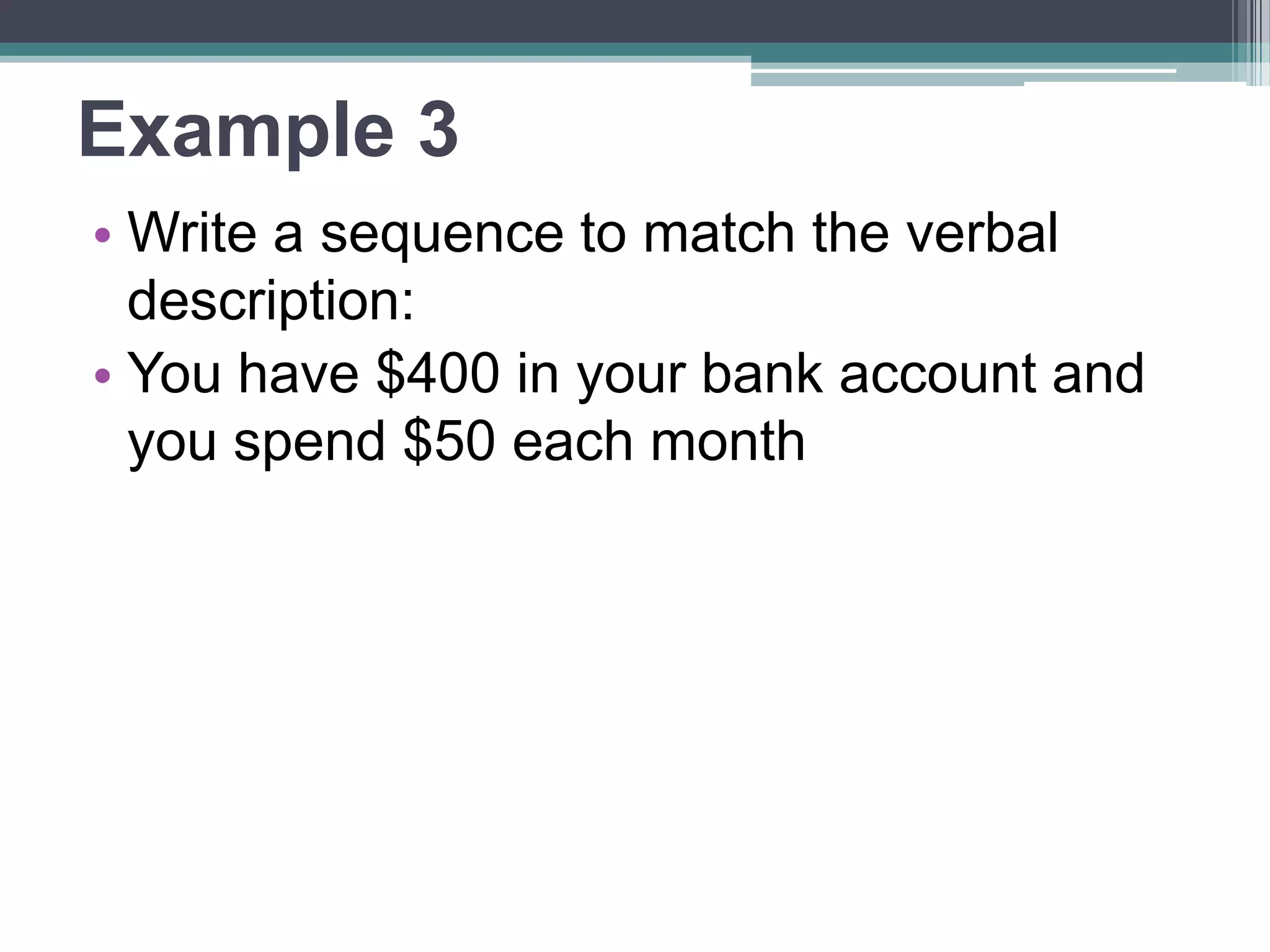
Example 3
•Writea sequence to match the verbal
description:
• You have $400 in your bank account and
you spend $50 each month
11.
You Try!
•Youcurrently have 12 credits and earn 2.5
credits per semester.


![Doubling Halving[1]](https://cdn.slidesharecdn.com/ss_thumbnails/doublinghalving1-100131132448-phpapp02-thumbnail.jpg?width=640&height=640&fit=bounds)


