Sequences Thursday, January 29, 2015
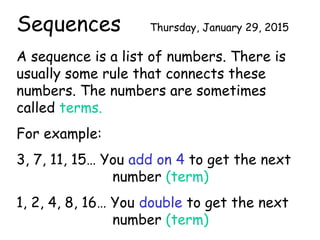
A sequence is a list of numbers. There is
usually some rule that connects these
numbers. The numbers are sometimes
called terms.
For example:
3, 7, 11, 15… You add on 4 to get the next
number (term)
1, 2, 4, 8, 16… You double to get the next
number (term)
Try to write down the next three terms for
each of these sequences and describe the
rule.
2, 4, 6, 8… 1, 3, 5, 7…
4, 9, 14, 19… 6, 10, 14, 20 …
17, 15, 13, 11… 8, 15, 22, 29…
1, 2, 4, 7, 11… 1, 4, 9, 16…
2, 6, 10, 14… 2, 12, 22, 32…
1, 2, 3, 5, 8… 16, 8, 4, 2…
7, 10, 13, 16… 5, 11, 17, 23…
2, 4, 6, 8, 10, 12, 14 (+2) 1, 3, 5, 7, 9. 11, 13 (+2)
9, 14, 19, 24, 29, 34 (+5) 14, 18, 22, 26, 30 (+4)
13, 11, 9, 7, 5 (- 2) 22, 29, 36, 43, 50 (+7)
7, 11, 16, 22, 29 (+ 0ne
more than the previous)
16, 25, 36,49 (The
square numbers)
10, 14, 18, 22, 26 (+4) 22, 32, 42, 52, 62 (+10)
13, 21, 34 ( Add the
previous two terms)
4, 2, 1, ½ , ¼ (Halve)
13, 16, 19, 22, 25 (+3) 17, 23, 29, 35, 41 (+6)
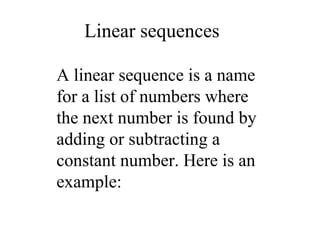
Linear sequences
A linear sequence is a name
for a list of numbers where
the next number is found by
adding or subtracting a
constant number. Here is an
example:
5, 8,
+3
5, 8, 11,
+3 +3
5, 8, 11, 14
+3 +3 +3
5, 8, 11, 14, 17…
+3 +3 +3 +3 etc
Finding the a rule for the nth term
Position (n)
1 2 3 4 5
Value
5 8 11 14 17
This is a rule that connects a term’s
position (n) with its value.
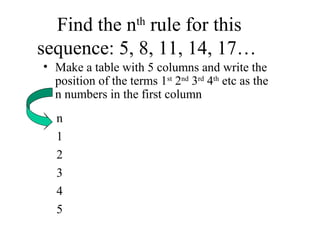
Find the nth
rule for this
sequence: 5, 8, 11, 14, 17…
• Make a table with 5 columns and write the
position of the terms 1st
2nd
3rd
4th
etc as the
n numbers in the first column
n
1
2
3
4
5
Put the terms into the second
column, 5, 8, 11, 14, 17…
n Term
1 5
2 8
3 11
4 14
5 17
6
Find the difference between the
terms 8 – 5 = 3 and write it in the
third column
n Term Difference
1 5 3
2 8 3
3 11 3
4 14 3
5 17 3
+3
Write the difference number
multiplied by the n number in
the fourth column
n Term Difference 3n
1 5 3 3
2 8 3 6
3 11 3 9
4 14 3 12
5 17 3 15
+3
Write the difference between the
value of 3n and the term in the
fifth column
n Term Difference 3n Term – 3n
1 5 3 3 2
2 8 3 6 2
3 11 3 9 2
4 14 3 12 2
5 17 3 15 2
The nth
term rule = 3n + 2
+3

sequences-101129131413-phpapp01 (1).pdf

  • 1.
    Sequences Thursday, January29, 2015 A sequence is a list of numbers. There is usually some rule that connects these numbers. The numbers are sometimes called terms. For example: 3, 7, 11, 15… You add on 4 to get the next number (term) 1, 2, 4, 8, 16… You double to get the next number (term)
  • 2.
    Try to writedown the next three terms for each of these sequences and describe the rule. 2, 4, 6, 8… 1, 3, 5, 7… 4, 9, 14, 19… 6, 10, 14, 20 … 17, 15, 13, 11… 8, 15, 22, 29… 1, 2, 4, 7, 11… 1, 4, 9, 16… 2, 6, 10, 14… 2, 12, 22, 32… 1, 2, 3, 5, 8… 16, 8, 4, 2… 7, 10, 13, 16… 5, 11, 17, 23…
  • 3.
    2, 4, 6,8, 10, 12, 14 (+2) 1, 3, 5, 7, 9. 11, 13 (+2) 9, 14, 19, 24, 29, 34 (+5) 14, 18, 22, 26, 30 (+4) 13, 11, 9, 7, 5 (- 2) 22, 29, 36, 43, 50 (+7) 7, 11, 16, 22, 29 (+ 0ne more than the previous) 16, 25, 36,49 (The square numbers) 10, 14, 18, 22, 26 (+4) 22, 32, 42, 52, 62 (+10) 13, 21, 34 ( Add the previous two terms) 4, 2, 1, ½ , ¼ (Halve) 13, 16, 19, 22, 25 (+3) 17, 23, 29, 35, 41 (+6)
  • 4.
    Linear sequences A linearsequence is a name for a list of numbers where the next number is found by adding or subtracting a constant number. Here is an example:
  • 5.
  • 6.
  • 7.
    5, 8, 11,14 +3 +3 +3
  • 8.
    5, 8, 11,14, 17… +3 +3 +3 +3 etc
  • 9.
    Finding the arule for the nth term Position (n) 1 2 3 4 5 Value 5 8 11 14 17 This is a rule that connects a term’s position (n) with its value.
  • 10.
    Find the nth rulefor this sequence: 5, 8, 11, 14, 17… • Make a table with 5 columns and write the position of the terms 1st 2nd 3rd 4th etc as the n numbers in the first column n 1 2 3 4 5
  • 11.
    Put the termsinto the second column, 5, 8, 11, 14, 17… n Term 1 5 2 8 3 11 4 14 5 17 6
  • 12.
    Find the differencebetween the terms 8 – 5 = 3 and write it in the third column n Term Difference 1 5 3 2 8 3 3 11 3 4 14 3 5 17 3 +3
  • 13.
    Write the differencenumber multiplied by the n number in the fourth column n Term Difference 3n 1 5 3 3 2 8 3 6 3 11 3 9 4 14 3 12 5 17 3 15 +3
  • 14.
    Write the differencebetween the value of 3n and the term in the fifth column n Term Difference 3n Term – 3n 1 5 3 3 2 2 8 3 6 2 3 11 3 9 2 4 14 3 12 2 5 17 3 15 2 The nth term rule = 3n + 2 +3