WELCOME
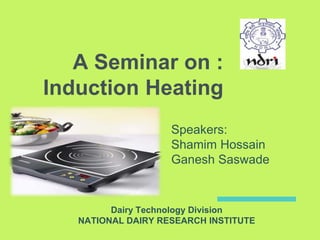
A Seminar on :
Induction Heating
Speakers:
Shamim Hossain
Ganesh Saswade
Dairy Technology Division
NATIONAL DAIRY RESEARCH INSTITUTE
CONTENTS :
INTRODUCTION
PRINCIPLE
COMPONENTS
EFFECT OF ELECTROMAGNETIC PHENOMENA
HEATING MODES
APPLICATIONS
ADVANTAGES
DISADVANTAGES
INTRODUCTION:
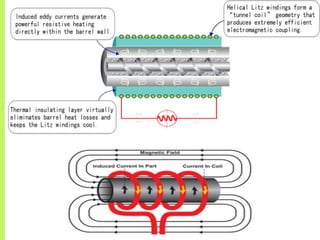
Process of heating an electrically conducting
object by electromagnetic induction through heat
generated in the object by eddy current.
Complex combination of electromagnetic, heat
transfer, and metallurgical phenomena
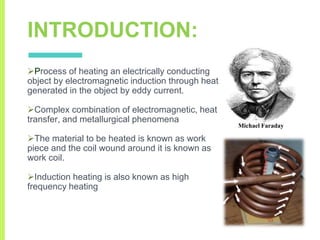
The material to be heated is known as work
piece and the coil wound around it is known as
work coil.
Induction heating is also known as high
frequency heating
Michael Faraday
Principle :
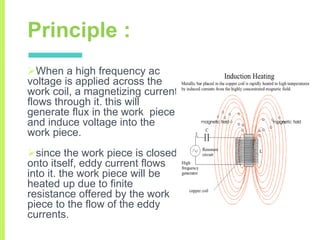
When a high frequency ac
voltage is applied across the
work coil, a magnetizing current
flows through it. this will
generate flux in the work piece
and induce voltage into the
work piece.
since the work piece is closed
onto itself, eddy current flows
into it. the work piece will be
heated up due to finite
resistance offered by the work
piece to the flow of the eddy
currents.
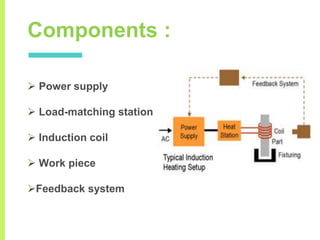
Components :
 Power supply
 Load-matching station
 Induction coil
 Work piece
Feedback system
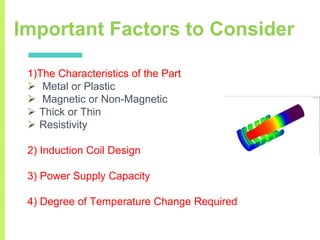
Important Factors to Consider
1)The Characteristics of the Part
 Metal or Plastic
 Magnetic or Non-Magnetic
 Thick or Thin
 Resistivity
2) Induction Coil Design
3) Power Supply Capacity
4) Degree of Temperature Change Required
Effect of Electromagnetic
Phenomena :
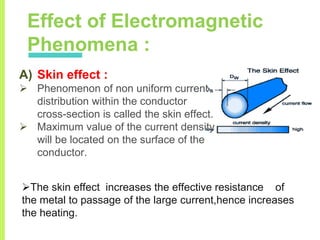
A) Skin effect :
 Phenomenon of non uniform current
distribution within the conductor
cross-section is called the skin effect.
 Maximum value of the current density
will be located on the surface of the
conductor.
The skin effect increases the effective resistance of
the metal to passage of the large current,hence increases
the heating.
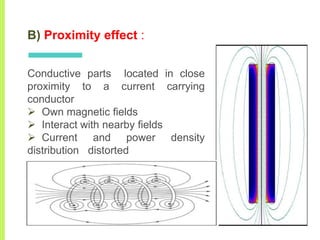
B) Proximity effect :
Conductive parts located in close
proximity to a current carrying
conductor
 Own magnetic fields
 Interact with nearby fields
 Current and power density
distribution distorted
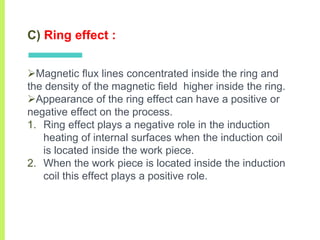
C) Ring effect :
Magnetic flux lines concentrated inside the ring and
the density of the magnetic field higher inside the ring.
Appearance of the ring effect can have a positive or
negative effect on the process.
1. Ring effect plays a negative role in the induction
heating of internal surfaces when the induction coil
is located inside the work piece.
2. When the work piece is located inside the induction
coil this effect plays a positive role.
Heating Modes :
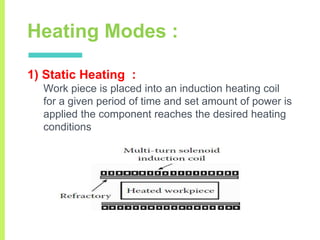
1) Static Heating :
Work piece is placed into an induction heating coil
for a given period of time and set amount of power is
applied the component reaches the desired heating
conditions
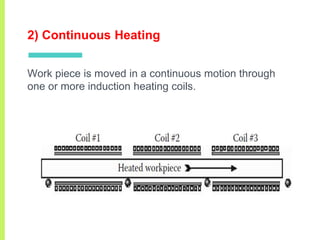
2) Continuous Heating
Work piece is moved in a continuous motion through
one or more induction heating coils.
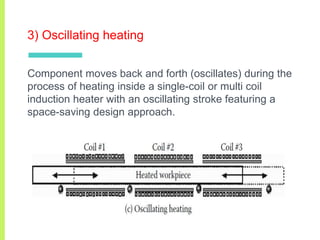
3) Oscillating heating
Component moves back and forth (oscillates) during the
process of heating inside a single-coil or multi coil
induction heater with an oscillating stroke featuring a
space-saving design approach.
Applications of Induction
Heating
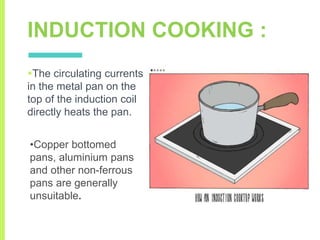
INDUCTION COOKING :
The circulating currents
in the metal pan on the
top of the induction coil
directly heats the pan.
•Copper bottomed
pans, aluminium pans
and other non-ferrous
pans are generally
unsuitable.
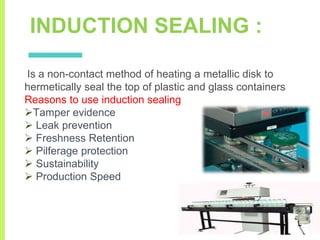
INDUCTION SEALING :
Is a non-contact method of heating a metallic disk to
hermetically seal the top of plastic and glass containers
Reasons to use induction sealing
Tamper evidence
 Leak prevention
 Freshness Retention
 Pilferage protection
 Sustainability
 Production Speed
Milk Pasteurization:
Rise milk temperature faster than traditional method.
Destruction of total bacterial load was 99.5%.
Coliform and Escherichia counts have been one tenth
to traditional method .
Fouling was not produced due to the fast heat
transfer.
(Hagh Nazar et al., 2015)
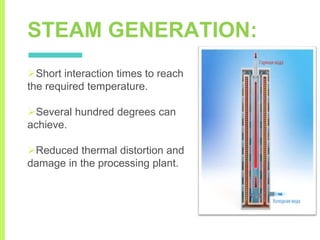
STEAM GENERATION:
Short interaction times to reach
the required temperature.
Several hundred degrees can
achieve.
Reduced thermal distortion and
damage in the processing plant.
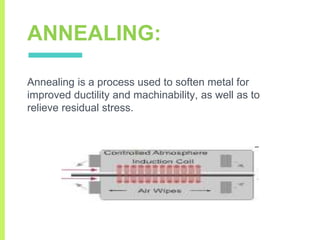
ANNEALING:
Annealing is a process used to soften metal for
improved ductility and machinability, as well as to
relieve residual stress.
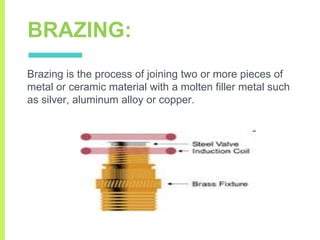
BRAZING:
Brazing is the process of joining two or more pieces of
metal or ceramic material with a molten filler metal such
as silver, aluminum alloy or copper.
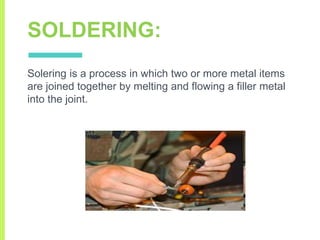
SOLDERING:
Solering is a process in which two or more metal items
are joined together by melting and flowing a filler metal
into the joint.
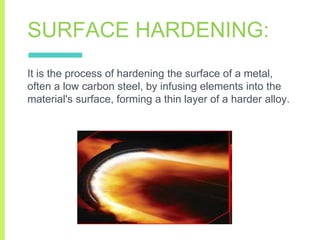
SURFACE HARDENING:
It is the process of hardening the surface of a metal,
often a low carbon steel, by infusing elements into the
material's surface, forming a thin layer of a harder alloy.
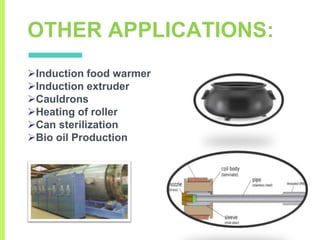
OTHER APPLICATIONS:
Induction food warmer
Induction extruder
Cauldrons
Heating of roller
Can sterilization
Bio oil Production
ADVANTAGES :
Heating speed linked to the possibility of obtaining
very high power density.
Exact location of the heating effect thanks to the
inductor design and an operating frequency perfectly
adapted to the part to be heated.
The possibility to heat at very high temperatures with
an efficiency practically independent of the temperature.
A process perfectly adapted to industrial medium-
sized and mass production requirements.
Continue……
Easy automation of equipment.
Absence of thermal inertia (rapid start-up).
Repeatability of operations carried out.
 Often extremely high heating efficiency.
Absence of pollution from the source of heating (cold
source).
Good working conditions.
LIMITATIONS :
 Big investment cost
 High Frequency electrical power
 Induction heating is preferably used for heating
relatively simple shapes
 Non-ferrous cookware cannot be used on an
induction cook-top
Thanks!Any questions?

Induction Heaing

  • 1.
  • 2.
    A Seminar on: Induction Heating Speakers: Shamim Hossain Ganesh Saswade Dairy Technology Division NATIONAL DAIRY RESEARCH INSTITUTE
  • 3.
    CONTENTS : INTRODUCTION PRINCIPLE COMPONENTS EFFECT OFELECTROMAGNETIC PHENOMENA HEATING MODES APPLICATIONS ADVANTAGES DISADVANTAGES
  • 4.
    INTRODUCTION: Process of heatingan electrically conducting object by electromagnetic induction through heat generated in the object by eddy current. Complex combination of electromagnetic, heat transfer, and metallurgical phenomena The material to be heated is known as work piece and the coil wound around it is known as work coil. Induction heating is also known as high frequency heating Michael Faraday
  • 5.
    Principle : When ahigh frequency ac voltage is applied across the work coil, a magnetizing current flows through it. this will generate flux in the work piece and induce voltage into the work piece. since the work piece is closed onto itself, eddy current flows into it. the work piece will be heated up due to finite resistance offered by the work piece to the flow of the eddy currents.
  • 7.
    Components :  Powersupply  Load-matching station  Induction coil  Work piece Feedback system
  • 8.
    Important Factors toConsider 1)The Characteristics of the Part  Metal or Plastic  Magnetic or Non-Magnetic  Thick or Thin  Resistivity 2) Induction Coil Design 3) Power Supply Capacity 4) Degree of Temperature Change Required
  • 9.
    Effect of Electromagnetic Phenomena: A) Skin effect :  Phenomenon of non uniform current distribution within the conductor cross-section is called the skin effect.  Maximum value of the current density will be located on the surface of the conductor. The skin effect increases the effective resistance of the metal to passage of the large current,hence increases the heating.
  • 10.
    B) Proximity effect: Conductive parts located in close proximity to a current carrying conductor  Own magnetic fields  Interact with nearby fields  Current and power density distribution distorted
  • 11.
    C) Ring effect: Magnetic flux lines concentrated inside the ring and the density of the magnetic field higher inside the ring. Appearance of the ring effect can have a positive or negative effect on the process. 1. Ring effect plays a negative role in the induction heating of internal surfaces when the induction coil is located inside the work piece. 2. When the work piece is located inside the induction coil this effect plays a positive role.
  • 12.
    Heating Modes : 1)Static Heating : Work piece is placed into an induction heating coil for a given period of time and set amount of power is applied the component reaches the desired heating conditions
  • 13.
    2) Continuous Heating Workpiece is moved in a continuous motion through one or more induction heating coils.
  • 14.
    3) Oscillating heating Componentmoves back and forth (oscillates) during the process of heating inside a single-coil or multi coil induction heater with an oscillating stroke featuring a space-saving design approach.
  • 15.
  • 16.
    INDUCTION COOKING : Thecirculating currents in the metal pan on the top of the induction coil directly heats the pan. •Copper bottomed pans, aluminium pans and other non-ferrous pans are generally unsuitable.
  • 17.
    INDUCTION SEALING : Isa non-contact method of heating a metallic disk to hermetically seal the top of plastic and glass containers Reasons to use induction sealing Tamper evidence  Leak prevention  Freshness Retention  Pilferage protection  Sustainability  Production Speed
  • 18.
    Milk Pasteurization: Rise milktemperature faster than traditional method. Destruction of total bacterial load was 99.5%. Coliform and Escherichia counts have been one tenth to traditional method . Fouling was not produced due to the fast heat transfer. (Hagh Nazar et al., 2015)
  • 19.
    STEAM GENERATION: Short interactiontimes to reach the required temperature. Several hundred degrees can achieve. Reduced thermal distortion and damage in the processing plant.
  • 20.
    ANNEALING: Annealing is aprocess used to soften metal for improved ductility and machinability, as well as to relieve residual stress.
  • 21.
    BRAZING: Brazing is theprocess of joining two or more pieces of metal or ceramic material with a molten filler metal such as silver, aluminum alloy or copper.
  • 22.
    SOLDERING: Solering is aprocess in which two or more metal items are joined together by melting and flowing a filler metal into the joint.
  • 23.
    SURFACE HARDENING: It isthe process of hardening the surface of a metal, often a low carbon steel, by infusing elements into the material's surface, forming a thin layer of a harder alloy.
  • 24.
    OTHER APPLICATIONS: Induction foodwarmer Induction extruder Cauldrons Heating of roller Can sterilization Bio oil Production
  • 25.
    ADVANTAGES : Heating speedlinked to the possibility of obtaining very high power density. Exact location of the heating effect thanks to the inductor design and an operating frequency perfectly adapted to the part to be heated. The possibility to heat at very high temperatures with an efficiency practically independent of the temperature. A process perfectly adapted to industrial medium- sized and mass production requirements.
  • 26.
    Continue…… Easy automation ofequipment. Absence of thermal inertia (rapid start-up). Repeatability of operations carried out.  Often extremely high heating efficiency. Absence of pollution from the source of heating (cold source). Good working conditions.
  • 27.
    LIMITATIONS :  Biginvestment cost  High Frequency electrical power  Induction heating is preferably used for heating relatively simple shapes  Non-ferrous cookware cannot be used on an induction cook-top
  • 28.