Guide : G Mahesh
PRESENTED BY:
VAMSHI KRISHNA.N
UDAY KUMAR.A
ADITHYA.B
 INTRODUCTION
WORKING PRINCIPLE
REQUIREMENTS OF INDUCTION HEATING
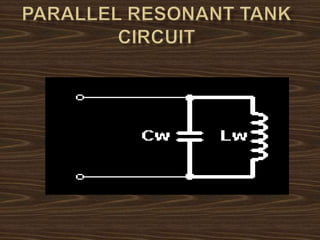
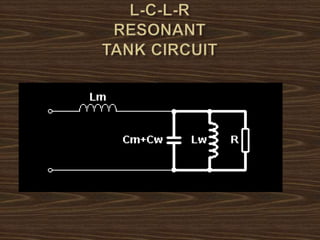
 RESONATING CIRCUIT
POWER CONTROL METHODS
ADVANTAGES AND DISADVANTAGES
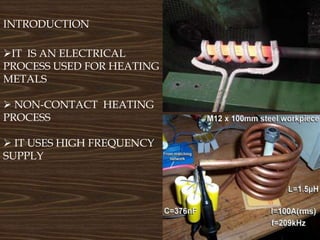
INTRODUCTION
IT IS AN ELECTRICAL
PROCESS USED FOR HEATING
METALS
 NON-CONTACT HEATING
PROCESS
 IT USES HIGH FREQUENCY
SUPPLY
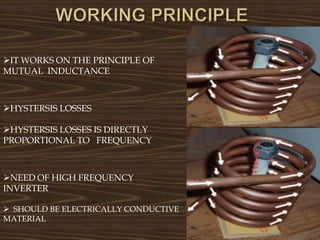
IT WORKS ON THE PRINCIPLE OF
MUTUAL INDUCTANCE
NEED OF HIGH FREQUENCY
INVERTER
HYSTERSIS LOSSES
HYSTERSIS LOSSES IS DIRECTLY
PROPORTIONAL TO FREQUENCY
 SHOULD BE ELECTRICALLY CONDUCTIVE
MATERIAL
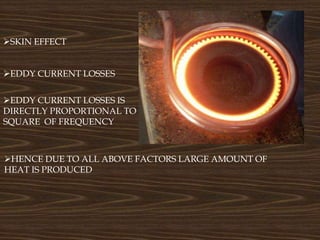
SKIN EFFECT
EDDY CURRENT LOSSES IS
DIRECTLY PROPORTIONAL TO
SQUARE OF FREQUENCY
EDDY CURRENT LOSSES
HENCE DUE TO ALL ABOVE FACTORS LARGE AMOUNT OF
HEAT IS PRODUCED
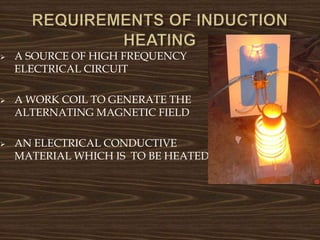
 A SOURCE OF HIGH FREQUENCY
ELECTRICAL CIRCUIT
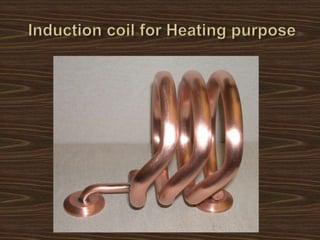
 A WORK COIL TO GENERATE THE
ALTERNATING MAGNETIC FIELD
 AN ELECTRICAL CONDUCTIVE
MATERIAL WHICH IS TO BE HEATED
 The alternating magnetic field induces a current
flow in the conductive work piece.
The arrangement of the work coil and the work piece
can be thought of as an electrical transformer.
The work coil is like the primary where electrical
energy is fed in, and the work piece is like a single turn
secondary that is short-circuited.
 This causes tremendous currents to flow through
the work piece. These are known as eddy currents.
 In addition to this, the high frequency used in
induction heating applications gives rise to a
phenomenon called skin effect.
 This skin effect forces the alternating current to
flow in a thin layer towards the surface of the
workpiece.
 The skin effect increases the effective resistance of
the metal to the passage of the large current.
 Therefore it greatly increases the heating effect
caused by the current induced in the workpiece.
 BY VARYING DC LINK VOLTAGE
 BY VARYING DUTY RATIO OF DEVICES
IN THE INVERTER
 BY VARYING THE OPERATING
FREQUENCY OF INVERTER
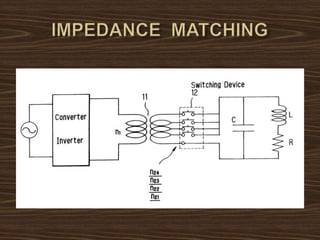
 BY USING IMPEDANCE MATCHING
TRANSFORMER
 The power processed by the inverter can be
decreased by reducing the supply voltage to
the inverter.
 This can be done by running the inverter from
a variable voltage DC supply such as a
controlled rectifier using thyristors to vary the
DC supply voltage derived from the mains
supply.
 Varying the DC link voltage allows full control
of the power from 0% to 100%.
 The power processed by the inverter can be decreased
by reducing the on-time of the switches in the inverter.
 Power is only sourced to the work coil in the time that
the devices are switched on.
 The load current is then left to freewheel through the
devices body diodes during the deadtime when both
devices are turned off.
 Varying the duty ratio of the switches also allows full
control of the power from 0% to 100%.
 However, a significant drawback of this method is the
commutation of heavy currents between active devices
and their free-wheel diodes.
 For this reason duty ratio control is not usually used in
high power induction heating inverters.
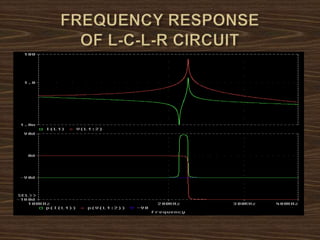
 The power supplied by the inverter to the work
coil can be reduced by detuning the inverter from
the natural resonant frequency of the tank circuit
incorporating the work coil.
 As the operating frequency of the inverter is
moved away from the resonant frquency of the
tank circuit, there is less resonant rise in the tank
circuit, and the current in the work coil diminishes.
 Therefore less circulating current is induced into
the workpiece and the heating effect is reduced.
ADVANTAGES :-
 IT DOES NOT CONTAMINATE THE
MATERIAL BEING HEATED
IT IS AN EFFECTIVE METHOD OF HEATING
HEAT CONTROL IS EASY
WE CAN CONTROL HEAT FROM 0% TO 100%
DISADVANTAGES:
NON –CONDUCTIVE MATERIALS CANNOT BE
HEATED
COMPLEX CIRCUITARY
INITIAL COST IS MORE
ADAPTABILITY TO POOR
DIFFICULT TO GUARANTEE THE QUALITY OF SOME
OF THE COMPLEX SHAPES OF WORK PIECE
INTERCHANGEABILITY OF INDUCTION COIL IS POOR
But obviously , the advantages outweighed
the disadvantages.
Therefore, the induction heating is a better
choice of metalworking for replacing coal
heating, oil heating, gas heating, electric
cooker, electric oven heating and other heating
methods.
INDUCTION FURNACE
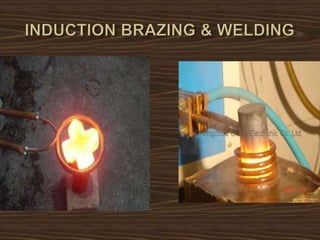
INDUCTION WELDING
INDUCTION SEALING
INDUCTION COOKING
INDUCTION BRAZING
PLASTIC PROCESSING
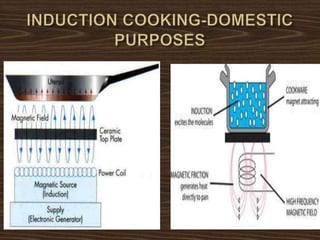
In induction cooking an induction coil in the
cook-top heats the iron base of cookware.
Copper-bottomed pans, aluminium pans and
other non-ferrous pans are generally unsuitable.
The heat induced in the base is transferred to
the food via (metal surface) conduction
Benefits of induction cookers include
efficiency, safety (the induction cook-top is not
heated itself) and speed.
Both permanently installed and portable
induction cookers are available.
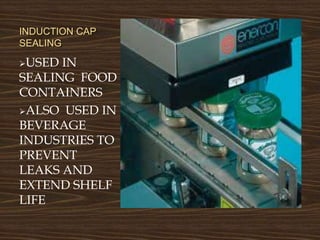
INDUCTION SEALING:
Induction heating is used in cap sealing of containers in the food
and pharmaceutical industries.
A layer of aluminum foil is placed over the bottle or jar
opening and heating by induction to fuse it to the container.
This provides a tamper-resistant seal, since altering the
contents requires breaking the foil
INDUCTION CAP
SEALING
USED IN
SEALING FOOD
CONTAINERS
ALSO USED IN
BEVERAGE
INDUSTRIES TO
PREVENT
LEAKS AND
EXTEND SHELF
LIFE
PLASTIC PROCESSING:
Induction heating is used in plastic injection molding
machines. Induction heating improves energy efficiency for
injection and extrusion processes.
Heat is directly generated in the barrel of the machine,
reducing warm-up time and energy consumption.
The induction coil can be placed outside thermal
insulation, so it operates at low temperature and has a long
life.
The frequency used ranges from 30 kHz down to 5 kHz,
decreasing for thicker barrels.
 The reduction in cost of inverter equipment has made
induction heating increasingly popular.
Induction heating can also be applied to molds, offering
more even mold temperature and improved product
quality.
QUERIES….
???

INDUCTION HEATING BY HIGH FREQUENCY RESONANT INVERTER

  • 1.
    Guide : GMahesh PRESENTED BY: VAMSHI KRISHNA.N UDAY KUMAR.A ADITHYA.B
  • 2.
     INTRODUCTION WORKING PRINCIPLE REQUIREMENTSOF INDUCTION HEATING  RESONATING CIRCUIT POWER CONTROL METHODS ADVANTAGES AND DISADVANTAGES
  • 3.
    INTRODUCTION IT IS ANELECTRICAL PROCESS USED FOR HEATING METALS  NON-CONTACT HEATING PROCESS  IT USES HIGH FREQUENCY SUPPLY
  • 5.
    IT WORKS ONTHE PRINCIPLE OF MUTUAL INDUCTANCE NEED OF HIGH FREQUENCY INVERTER HYSTERSIS LOSSES HYSTERSIS LOSSES IS DIRECTLY PROPORTIONAL TO FREQUENCY  SHOULD BE ELECTRICALLY CONDUCTIVE MATERIAL
  • 6.
    SKIN EFFECT EDDY CURRENTLOSSES IS DIRECTLY PROPORTIONAL TO SQUARE OF FREQUENCY EDDY CURRENT LOSSES HENCE DUE TO ALL ABOVE FACTORS LARGE AMOUNT OF HEAT IS PRODUCED
  • 7.
     A SOURCEOF HIGH FREQUENCY ELECTRICAL CIRCUIT  A WORK COIL TO GENERATE THE ALTERNATING MAGNETIC FIELD  AN ELECTRICAL CONDUCTIVE MATERIAL WHICH IS TO BE HEATED
  • 8.
     The alternatingmagnetic field induces a current flow in the conductive work piece. The arrangement of the work coil and the work piece can be thought of as an electrical transformer. The work coil is like the primary where electrical energy is fed in, and the work piece is like a single turn secondary that is short-circuited.  This causes tremendous currents to flow through the work piece. These are known as eddy currents.
  • 10.
     In additionto this, the high frequency used in induction heating applications gives rise to a phenomenon called skin effect.  This skin effect forces the alternating current to flow in a thin layer towards the surface of the workpiece.  The skin effect increases the effective resistance of the metal to the passage of the large current.  Therefore it greatly increases the heating effect caused by the current induced in the workpiece.
  • 13.
     BY VARYINGDC LINK VOLTAGE  BY VARYING DUTY RATIO OF DEVICES IN THE INVERTER  BY VARYING THE OPERATING FREQUENCY OF INVERTER  BY USING IMPEDANCE MATCHING TRANSFORMER
  • 14.
     The powerprocessed by the inverter can be decreased by reducing the supply voltage to the inverter.  This can be done by running the inverter from a variable voltage DC supply such as a controlled rectifier using thyristors to vary the DC supply voltage derived from the mains supply.  Varying the DC link voltage allows full control of the power from 0% to 100%.
  • 15.
     The powerprocessed by the inverter can be decreased by reducing the on-time of the switches in the inverter.  Power is only sourced to the work coil in the time that the devices are switched on.  The load current is then left to freewheel through the devices body diodes during the deadtime when both devices are turned off.  Varying the duty ratio of the switches also allows full control of the power from 0% to 100%.  However, a significant drawback of this method is the commutation of heavy currents between active devices and their free-wheel diodes.  For this reason duty ratio control is not usually used in high power induction heating inverters.
  • 16.
     The powersupplied by the inverter to the work coil can be reduced by detuning the inverter from the natural resonant frequency of the tank circuit incorporating the work coil.  As the operating frequency of the inverter is moved away from the resonant frquency of the tank circuit, there is less resonant rise in the tank circuit, and the current in the work coil diminishes.  Therefore less circulating current is induced into the workpiece and the heating effect is reduced.
  • 20.
    ADVANTAGES :-  ITDOES NOT CONTAMINATE THE MATERIAL BEING HEATED IT IS AN EFFECTIVE METHOD OF HEATING HEAT CONTROL IS EASY WE CAN CONTROL HEAT FROM 0% TO 100%
  • 21.
    DISADVANTAGES: NON –CONDUCTIVE MATERIALSCANNOT BE HEATED COMPLEX CIRCUITARY INITIAL COST IS MORE ADAPTABILITY TO POOR DIFFICULT TO GUARANTEE THE QUALITY OF SOME OF THE COMPLEX SHAPES OF WORK PIECE INTERCHANGEABILITY OF INDUCTION COIL IS POOR
  • 22.
    But obviously ,the advantages outweighed the disadvantages. Therefore, the induction heating is a better choice of metalworking for replacing coal heating, oil heating, gas heating, electric cooker, electric oven heating and other heating methods.
  • 23.
    INDUCTION FURNACE INDUCTION WELDING INDUCTIONSEALING INDUCTION COOKING INDUCTION BRAZING PLASTIC PROCESSING
  • 25.
    In induction cookingan induction coil in the cook-top heats the iron base of cookware. Copper-bottomed pans, aluminium pans and other non-ferrous pans are generally unsuitable. The heat induced in the base is transferred to the food via (metal surface) conduction Benefits of induction cookers include efficiency, safety (the induction cook-top is not heated itself) and speed. Both permanently installed and portable induction cookers are available.
  • 27.
    INDUCTION SEALING: Induction heatingis used in cap sealing of containers in the food and pharmaceutical industries. A layer of aluminum foil is placed over the bottle or jar opening and heating by induction to fuse it to the container. This provides a tamper-resistant seal, since altering the contents requires breaking the foil
  • 28.
    INDUCTION CAP SEALING USED IN SEALINGFOOD CONTAINERS ALSO USED IN BEVERAGE INDUSTRIES TO PREVENT LEAKS AND EXTEND SHELF LIFE
  • 29.
    PLASTIC PROCESSING: Induction heatingis used in plastic injection molding machines. Induction heating improves energy efficiency for injection and extrusion processes. Heat is directly generated in the barrel of the machine, reducing warm-up time and energy consumption. The induction coil can be placed outside thermal insulation, so it operates at low temperature and has a long life. The frequency used ranges from 30 kHz down to 5 kHz, decreasing for thicker barrels.  The reduction in cost of inverter equipment has made induction heating increasingly popular. Induction heating can also be applied to molds, offering more even mold temperature and improved product quality.
  • 31.