
MIS
UNIT III
Structure of MIS is a difficult concept to understand because there is no
standard or universally accepted is no standard or universally accepted
framework for describing management information framework for
describing management information system.
For example , A car may be perceived in a system. For example , A car may
be perceived in a number of different way; by describe the physical
number of different way; by describe the physical characteristics, i.e. its
shapes, colour, seating capacity, characteristics, i.e. its shapes, colour,
seating capacity, door etc. MIS structure be described by following a door
etc.
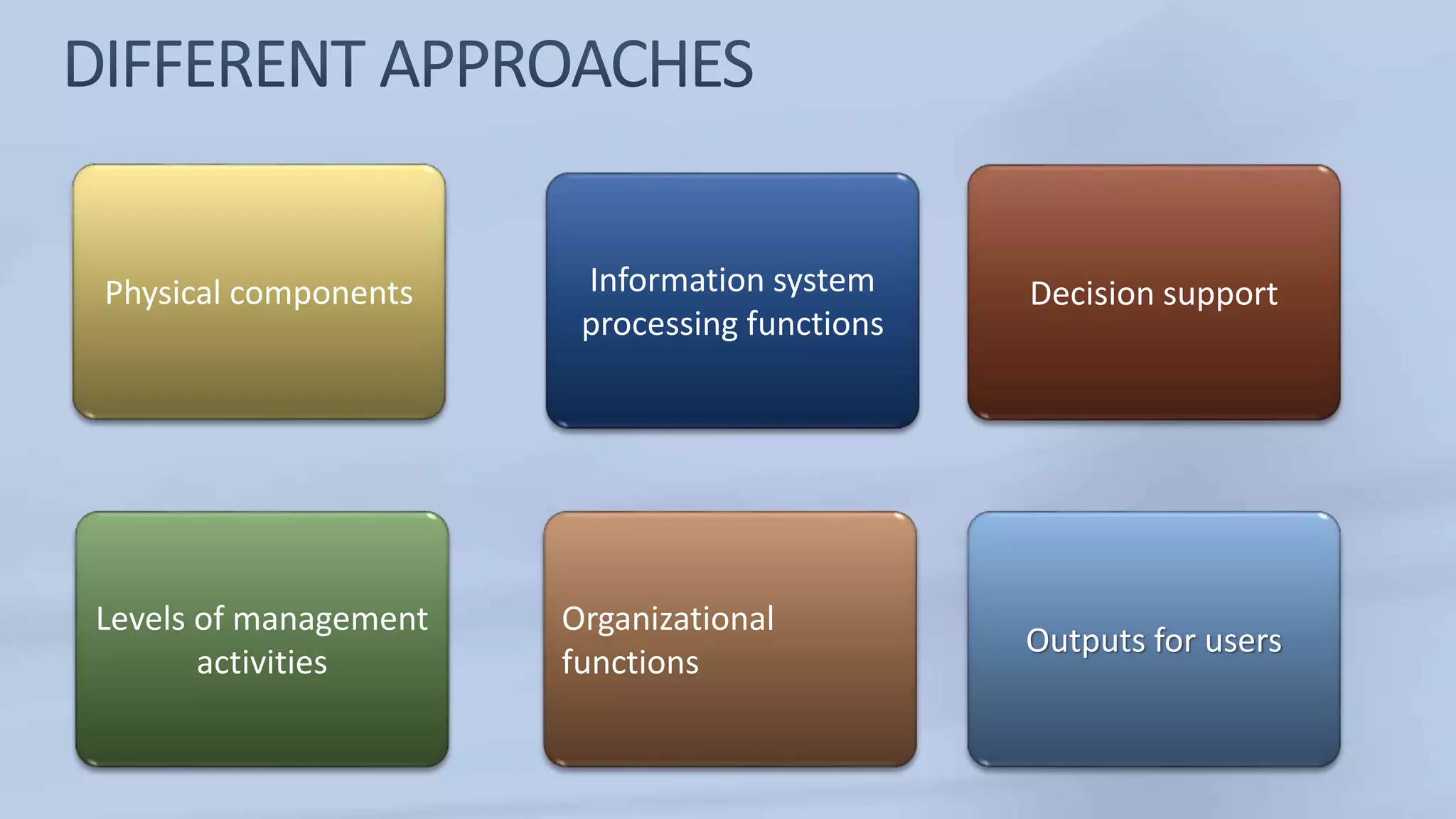
MIS structure be described by a variety of different approaches.
Decision supportInformation system
processing functions
Physical components
Outputs for users
Organizational
functions
Levels of management
activities
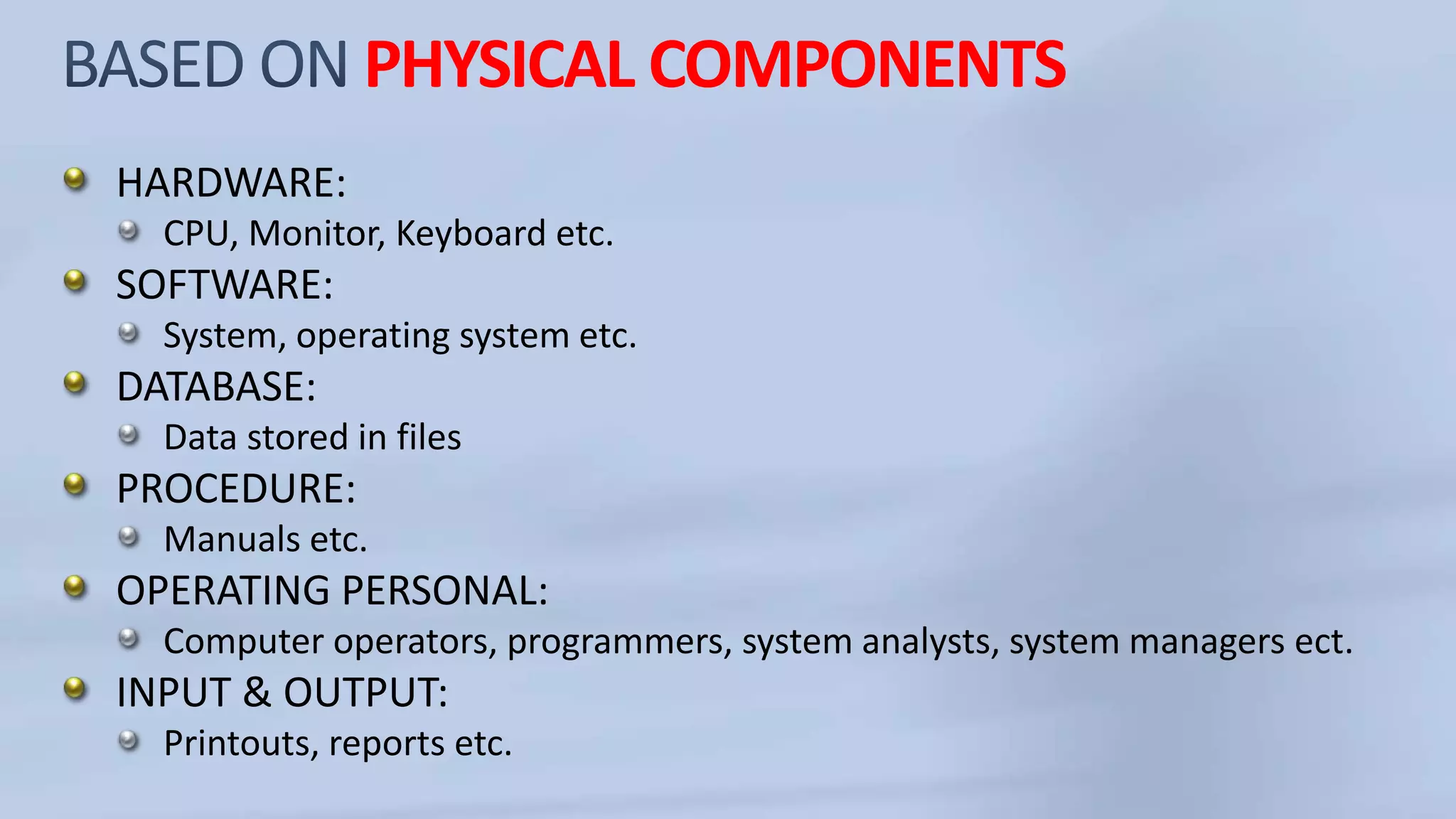
PHYSICAL COMPONENTS
HARDWARE:
CPU, Monitor, Keyboard etc.
SOFTWARE:
System, operating system etc.
DATABASE:
Data stored in files
PROCEDURE:
Manuals etc.
OPERATING PERSONAL:
Computer operators, programmers, system analysts, system managers ect.
INPUT & OUTPUT:
Printouts, reports etc.
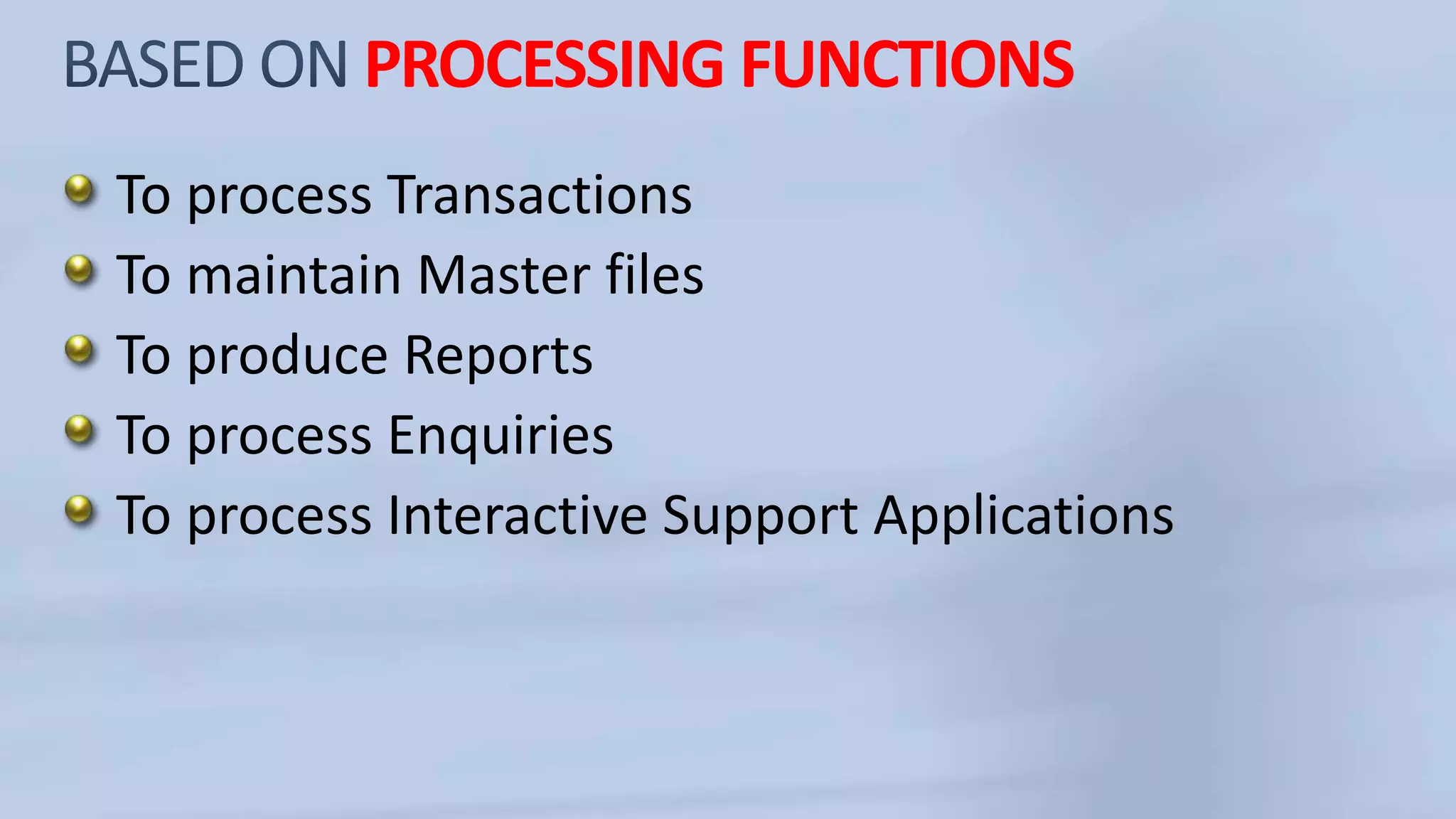
PROCESSING FUNCTIONS
To process Transactions
To maintain Master files
To produce Reports
To process Enquiries
To process Interactive Support Applications
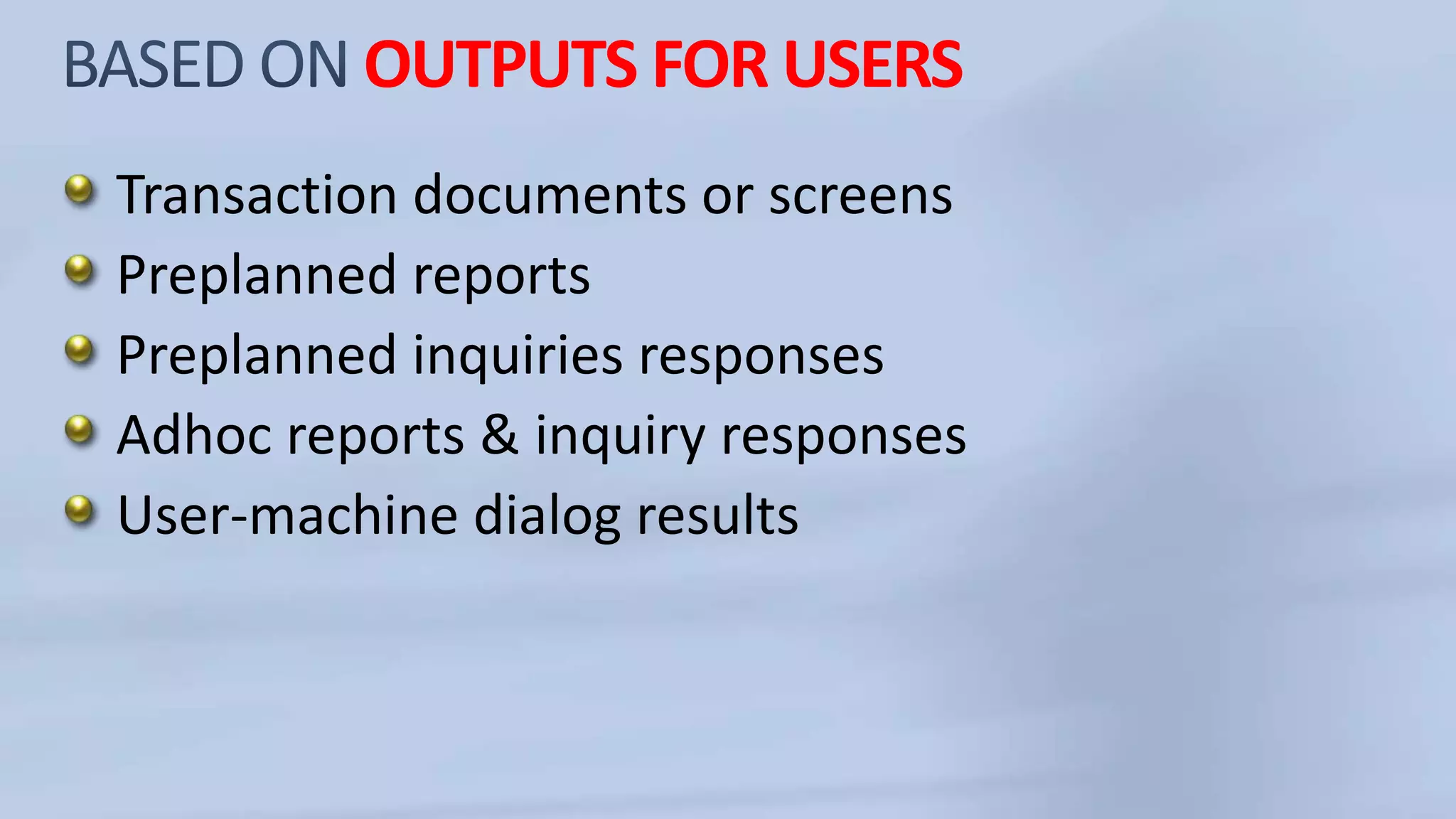
OUTPUTS FOR USERS
Transaction documents or screens
Preplanned reports
Preplanned inquiries responses
Adhoc reports & inquiry responses
User-machine dialog results
DECISION MACKING
Structured/programmed Decisions
Unstructured/Non-programmable Decisions
Semi-structured Decisions
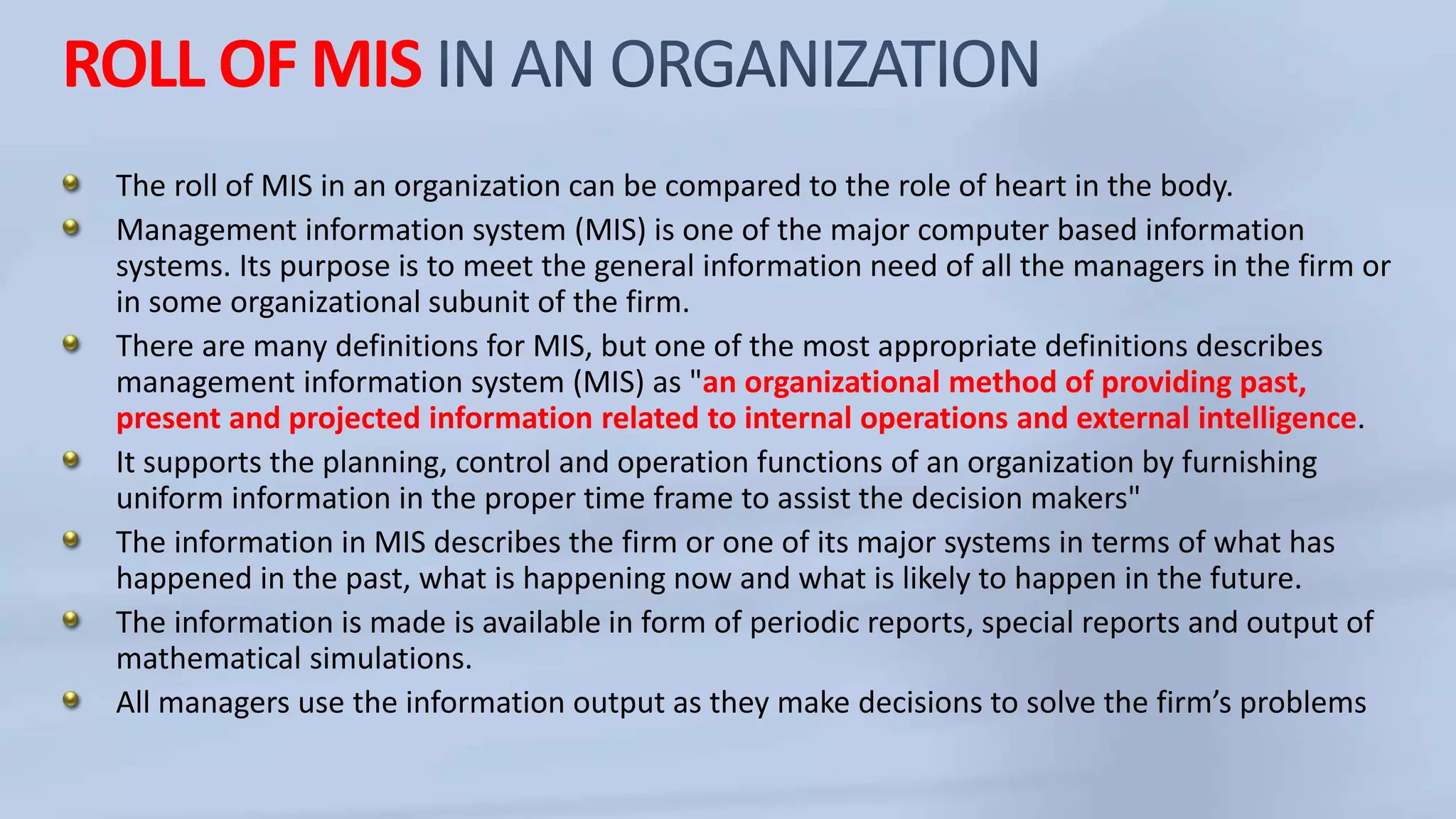
ROLL OF MIS
The roll of MIS in an organization can be compared to the role of heart in the body.
Management information system (MIS) is one of the major computer based information
systems. Its purpose is to meet the general information need of all the managers in the firm or
in some organizational subunit of the firm.
There are many definitions for MIS, but one of the most appropriate definitions describes
management information system (MIS) as "an organizational method of providing past,
present and projected information related to internal operations and external intelligence.
It supports the planning, control and operation functions of an organization by furnishing
uniform information in the proper time frame to assist the decision makers"
The information in MIS describes the firm or one of its major systems in terms of what has
happened in the past, what is happening now and what is likely to happen in the future.
The information is made is available in form of periodic reports, special reports and output of
mathematical simulations.
All managers use the information output as they make decisions to solve the firm’s problems
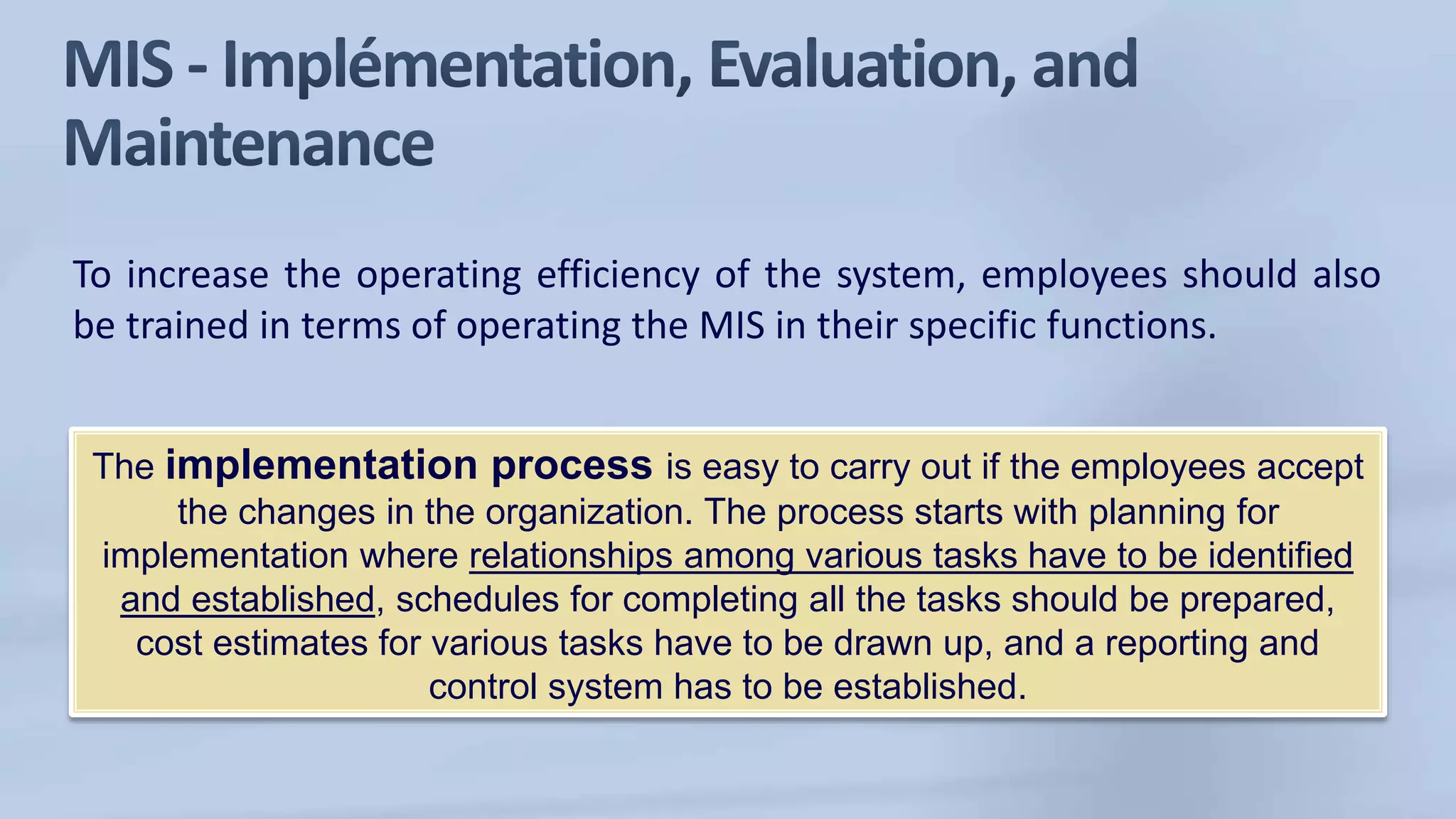
To increase the operating efficiency of the system, employees should also
be trained in terms of operating the MIS in their specific functions.
The implementation process is easy to carry out if the employees accept
the changes in the organization. The process starts with planning for
implementation where relationships among various tasks have to be identified
and established, schedules for completing all the tasks should be prepared,
cost estimates for various tasks have to be drawn up, and a reporting and
control system has to be established.
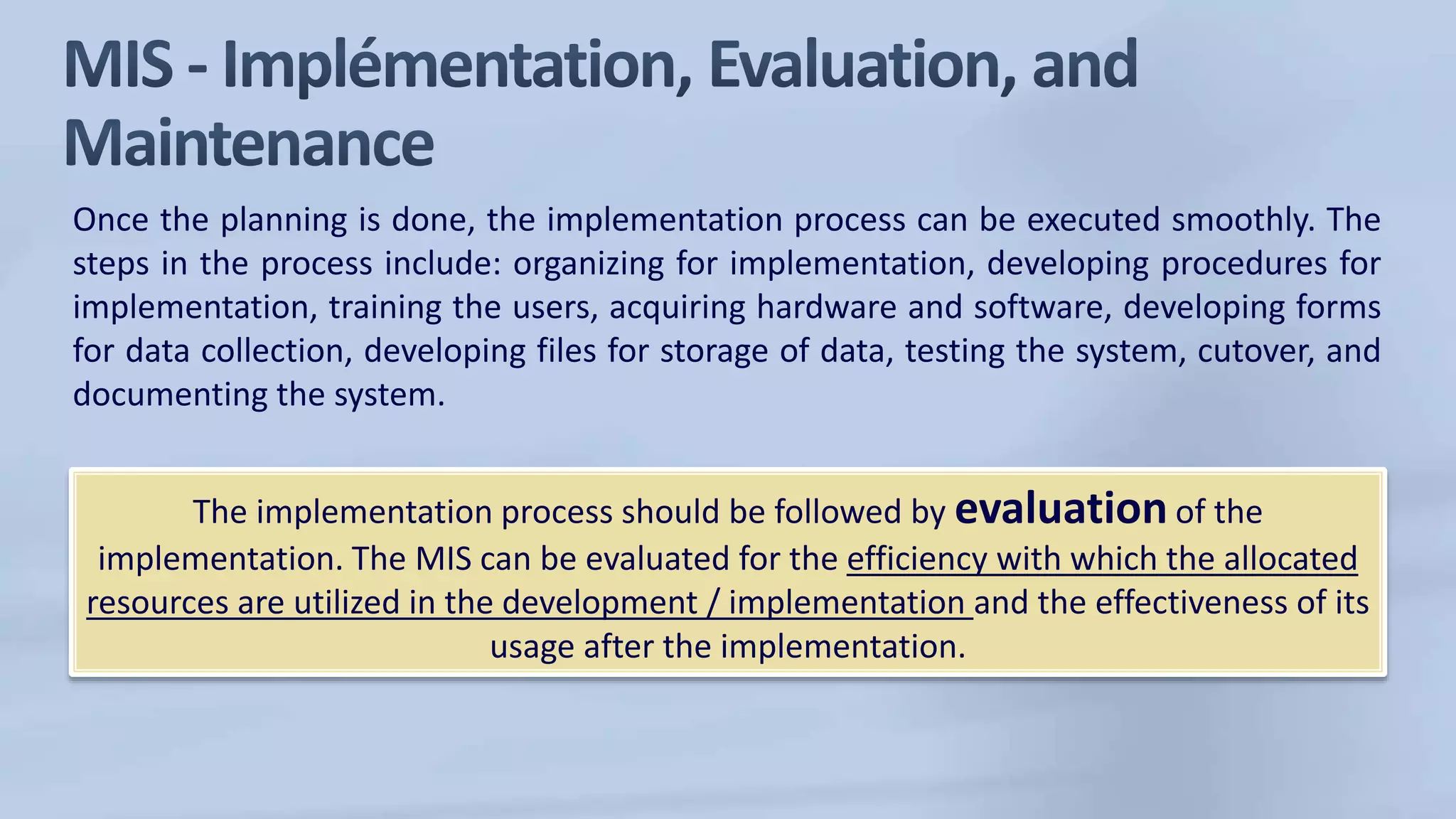
Once the planning is done, the implementation process can be executed smoothly. The
steps in the process include: organizing for implementation, developing procedures for
implementation, training the users, acquiring hardware and software, developing forms
for data collection, developing files for storage of data, testing the system, cutover, and
documenting the system.
The implementation process should be followed by evaluation of the
implementation. The MIS can be evaluated for the efficiency with which the allocated
resources are utilized in the development / implementation and the effectiveness of its
usage after the implementation.
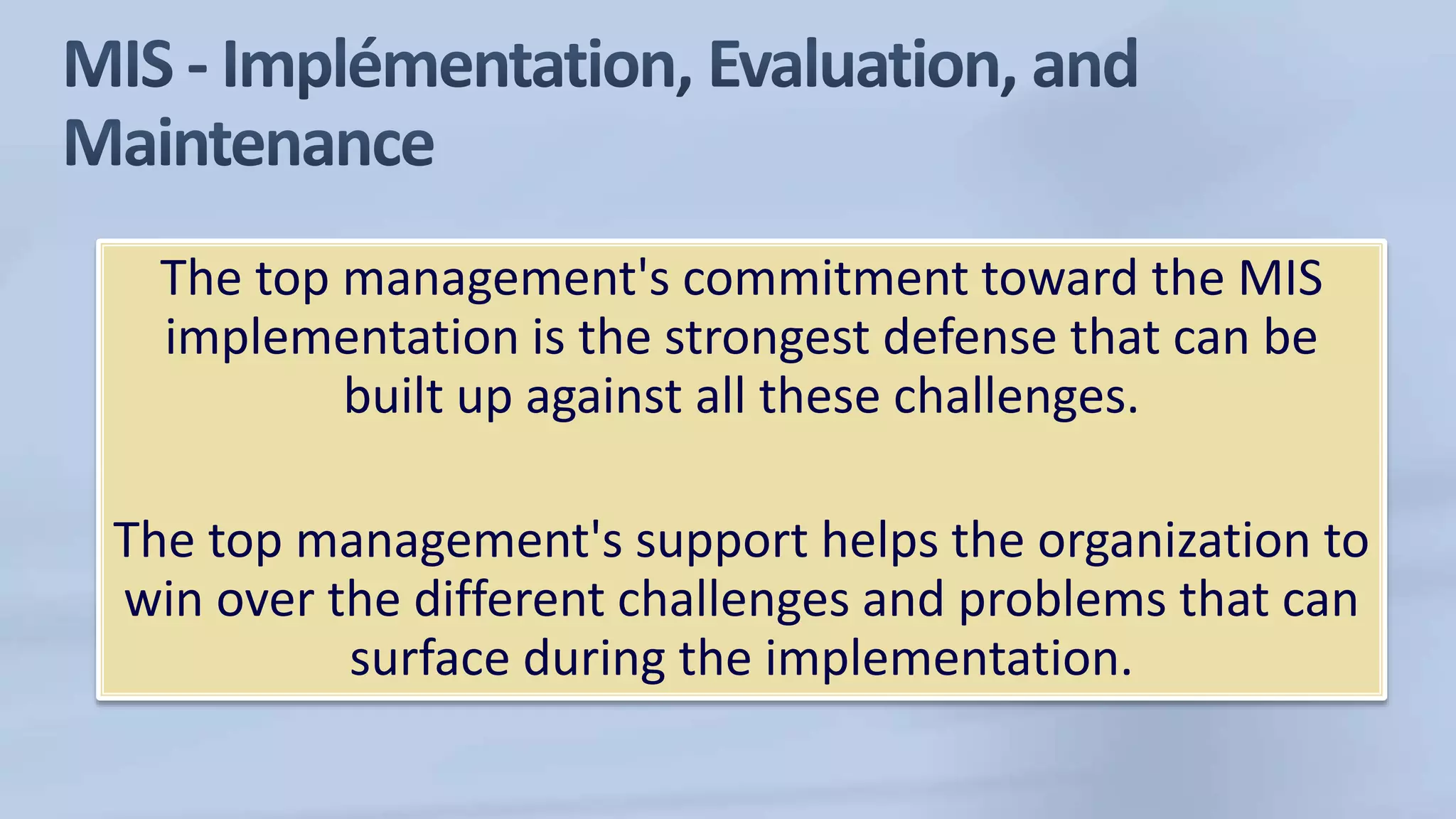
The top management's commitment toward the MIS
implementation is the strongest defense that can be
built up against all these challenges.
The top management's support helps the organization to
win over the different challenges and problems that can
surface during the implementation.
 Plan the implementation.
 Assign Implementation tasks
 Planning the implementations tasks.
 Establish Relationship among tasks.
 Establish a schedule.
 Cost schedule to task and time.
 Acquiring & Layering out Facilities and Offices.
 Organizing the Personnel for Implementation.
 Developing procedure for installation and testing.
 Developing the training program for operating personnel.
 Completing the system’s software.
 Acquiring required hardware.
 Generating files.
 Designing forms.
 Testing the entire system.
 Completing cutover to the new system.
 Documenting the system.
 Evaluating the system.
 Providing system maintenance.
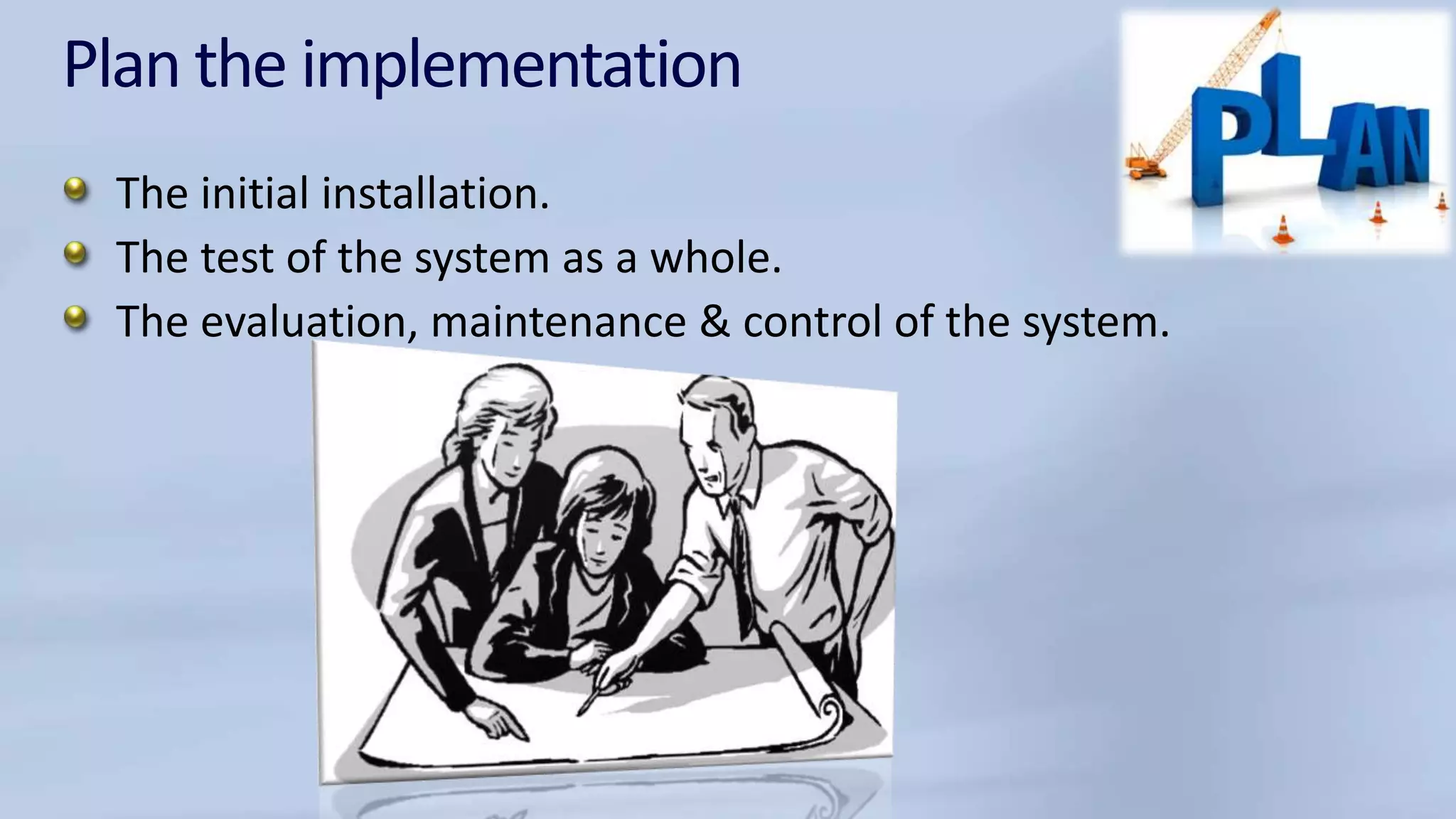
Plan the implementation
The initial installation.
The test of the system as a whole.
The evaluation, maintenance & control of the system.
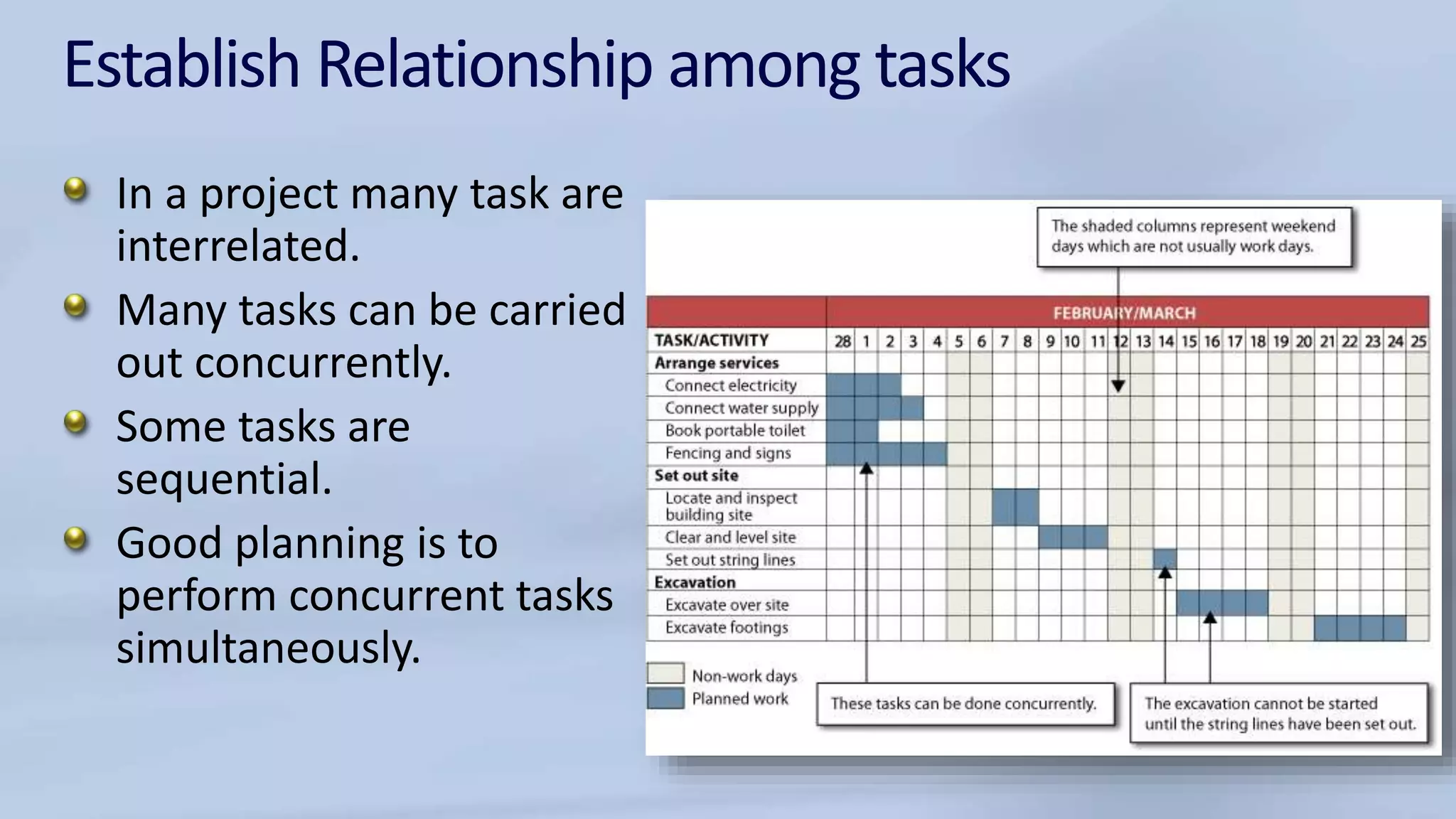
Establish Relationship among tasks
In a project many task are
interrelated.
Many tasks can be carried
out concurrently.
Some tasks are
sequential.
Good planning is to
perform concurrent tasks
simultaneously.
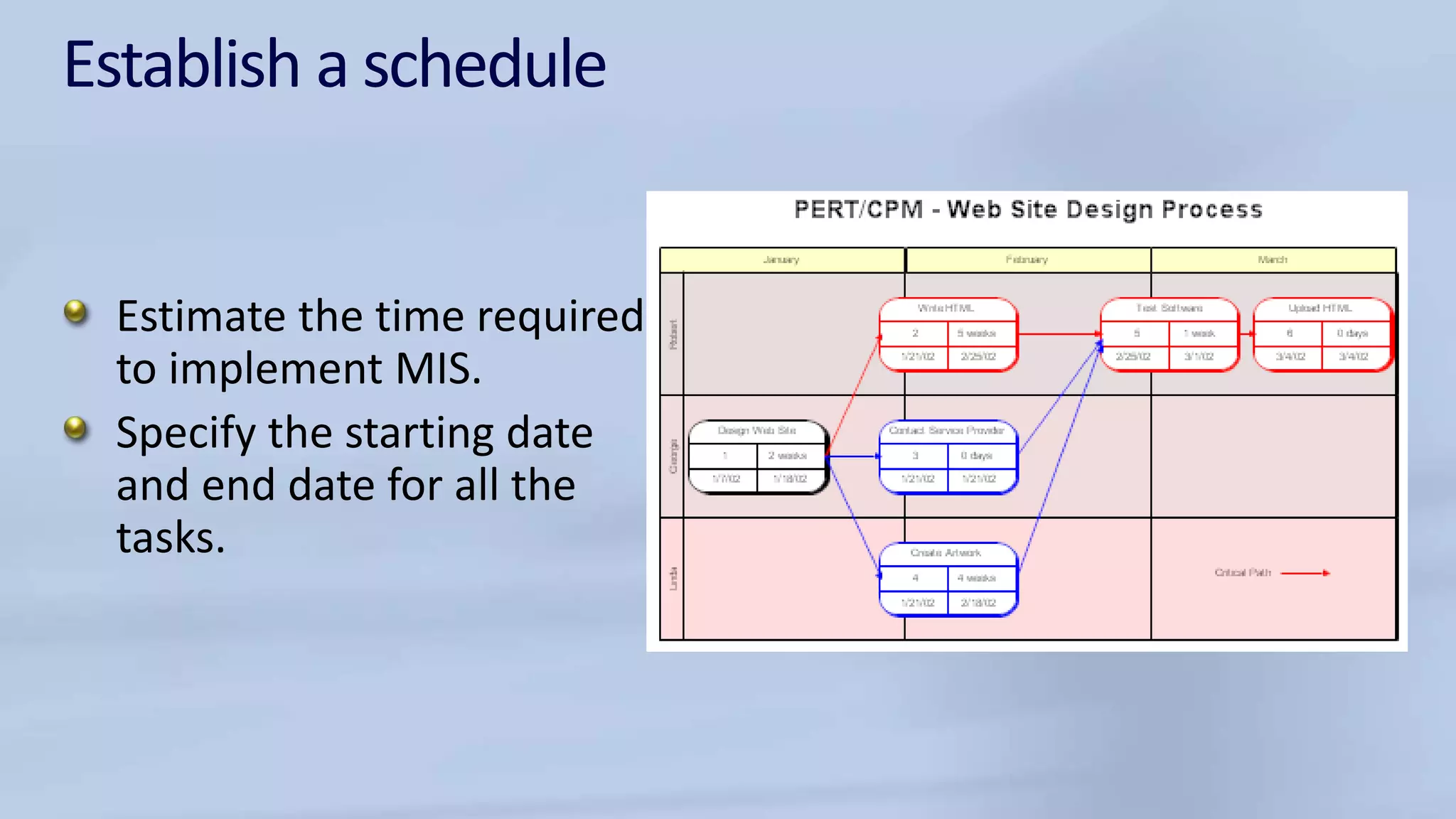
Establish a schedule
Estimate the time required
to implement MIS.
Specify the starting date
and end date for all the
tasks.
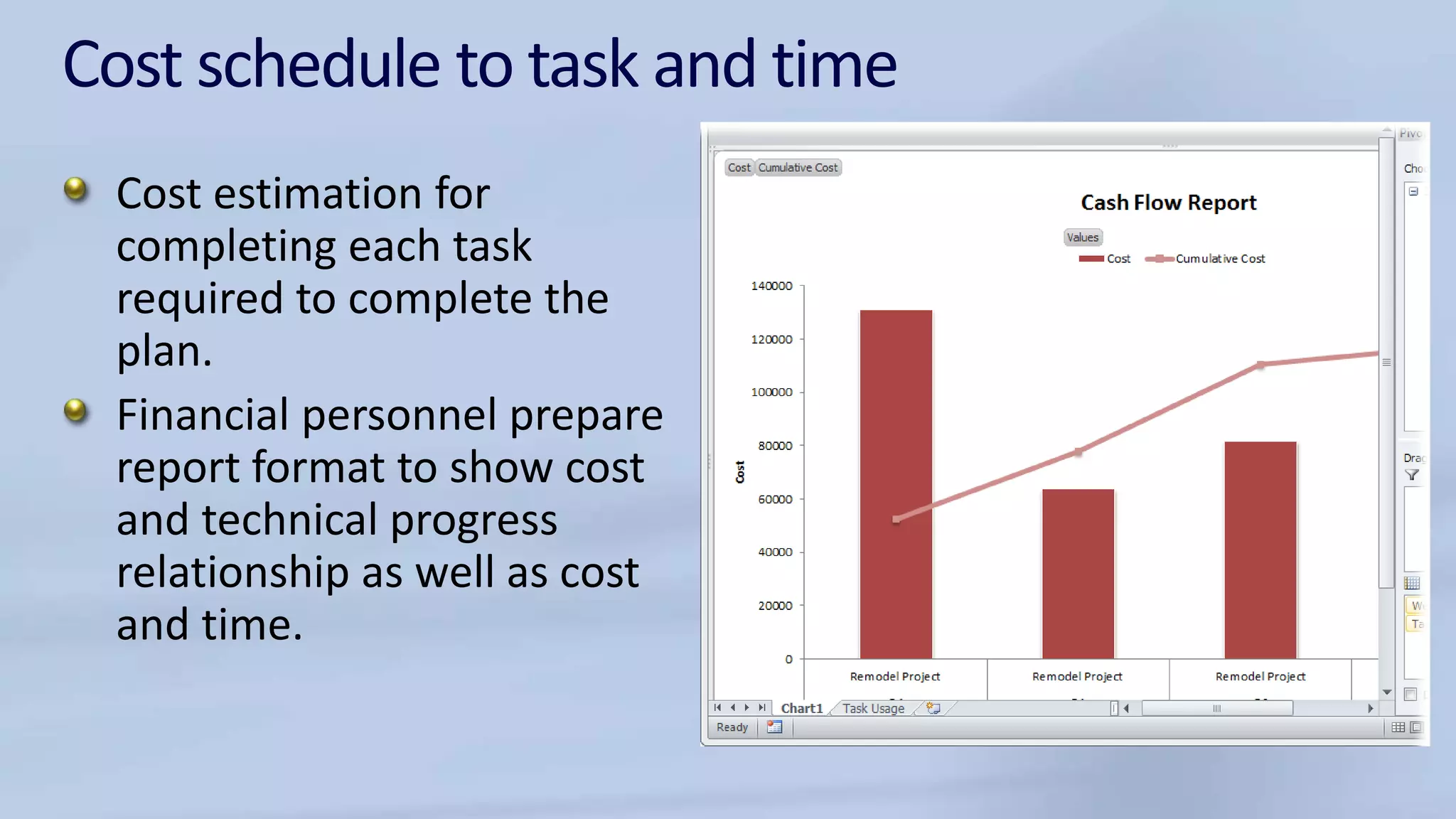
Cost schedule to task and time
Cost estimation for
completing each task
required to complete the
plan.
Financial personnel prepare
report format to show cost
and technical progress
relationship as well as cost
and time.
Structure of mis

Structure of mis

  • 1.
  • 2.
    Structure of MISis a difficult concept to understand because there is no standard or universally accepted is no standard or universally accepted framework for describing management information framework for describing management information system. For example , A car may be perceived in a system. For example , A car may be perceived in a number of different way; by describe the physical number of different way; by describe the physical characteristics, i.e. its shapes, colour, seating capacity, characteristics, i.e. its shapes, colour, seating capacity, door etc. MIS structure be described by following a door etc. MIS structure be described by a variety of different approaches.
  • 3.
    Decision supportInformation system processingfunctions Physical components Outputs for users Organizational functions Levels of management activities
  • 5.
    PHYSICAL COMPONENTS HARDWARE: CPU, Monitor,Keyboard etc. SOFTWARE: System, operating system etc. DATABASE: Data stored in files PROCEDURE: Manuals etc. OPERATING PERSONAL: Computer operators, programmers, system analysts, system managers ect. INPUT & OUTPUT: Printouts, reports etc.
  • 6.
    PROCESSING FUNCTIONS To processTransactions To maintain Master files To produce Reports To process Enquiries To process Interactive Support Applications
  • 7.
    OUTPUTS FOR USERS Transactiondocuments or screens Preplanned reports Preplanned inquiries responses Adhoc reports & inquiry responses User-machine dialog results
  • 8.
  • 9.
    ROLL OF MIS Theroll of MIS in an organization can be compared to the role of heart in the body. Management information system (MIS) is one of the major computer based information systems. Its purpose is to meet the general information need of all the managers in the firm or in some organizational subunit of the firm. There are many definitions for MIS, but one of the most appropriate definitions describes management information system (MIS) as "an organizational method of providing past, present and projected information related to internal operations and external intelligence. It supports the planning, control and operation functions of an organization by furnishing uniform information in the proper time frame to assist the decision makers" The information in MIS describes the firm or one of its major systems in terms of what has happened in the past, what is happening now and what is likely to happen in the future. The information is made is available in form of periodic reports, special reports and output of mathematical simulations. All managers use the information output as they make decisions to solve the firm’s problems
  • 10.
    To increase theoperating efficiency of the system, employees should also be trained in terms of operating the MIS in their specific functions. The implementation process is easy to carry out if the employees accept the changes in the organization. The process starts with planning for implementation where relationships among various tasks have to be identified and established, schedules for completing all the tasks should be prepared, cost estimates for various tasks have to be drawn up, and a reporting and control system has to be established.
  • 11.
    Once the planningis done, the implementation process can be executed smoothly. The steps in the process include: organizing for implementation, developing procedures for implementation, training the users, acquiring hardware and software, developing forms for data collection, developing files for storage of data, testing the system, cutover, and documenting the system. The implementation process should be followed by evaluation of the implementation. The MIS can be evaluated for the efficiency with which the allocated resources are utilized in the development / implementation and the effectiveness of its usage after the implementation.
  • 12.
    The top management'scommitment toward the MIS implementation is the strongest defense that can be built up against all these challenges. The top management's support helps the organization to win over the different challenges and problems that can surface during the implementation.
  • 13.
     Plan theimplementation.  Assign Implementation tasks  Planning the implementations tasks.  Establish Relationship among tasks.  Establish a schedule.  Cost schedule to task and time.  Acquiring & Layering out Facilities and Offices.  Organizing the Personnel for Implementation.  Developing procedure for installation and testing.  Developing the training program for operating personnel.
  • 14.
     Completing thesystem’s software.  Acquiring required hardware.  Generating files.  Designing forms.  Testing the entire system.  Completing cutover to the new system.  Documenting the system.  Evaluating the system.  Providing system maintenance.
  • 15.
    Plan the implementation Theinitial installation. The test of the system as a whole. The evaluation, maintenance & control of the system.
  • 16.
    Establish Relationship amongtasks In a project many task are interrelated. Many tasks can be carried out concurrently. Some tasks are sequential. Good planning is to perform concurrent tasks simultaneously.
  • 17.
    Establish a schedule Estimatethe time required to implement MIS. Specify the starting date and end date for all the tasks.
  • 18.
    Cost schedule totask and time Cost estimation for completing each task required to complete the plan. Financial personnel prepare report format to show cost and technical progress relationship as well as cost and time.