TPR – TOTAL PHYSICAL RESPONSE

          James Asher
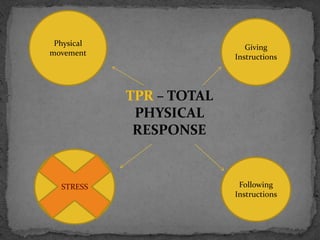
Physical                    Giving
movement                  Instructions


            TPR – TOTAL
             PHYSICAL
             RESPONSE


  STRESS                   Following
                          Instructions
Is a language teaching method built around the coordination
of speech and action. This method was developed principally
    to reduce the stress associated with language learning.
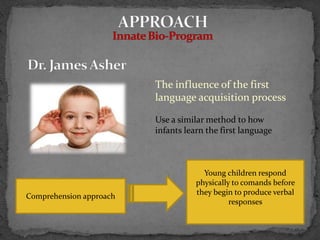
The influence of the first
                         language acquisition process

                         Use a similar method to how
                         infants learn the first language


                                      Young children respond
                                    physically to comands before
Comprehension approach              they begin to produce verbal
                                              responses
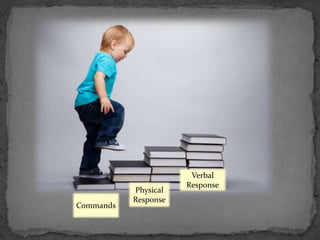
Verbal
                      Response
           Physical
           Response
Commands
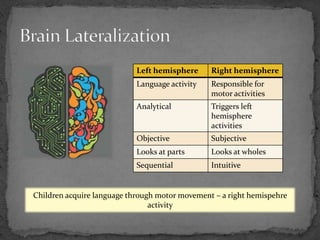
Left hemisphere     Right hemisphere
                            Language activity   Responsible for
                                                motor activities
                            Analytical          Triggers left
                                                hemisphere
                                                activities
                            Objective           Subjective
                            Looks at parts      Looks at wholes
                            Sequential          Intuitive


Children acquire language through motor movement – a right hemispehre
                                activity
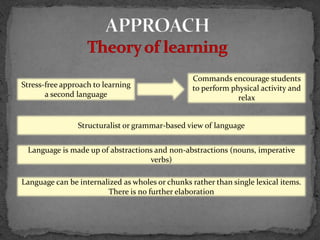
Commands encourage students
Stress-free approach to learning                  to perform physical activity and
       a second language                                       relax


                Structuralist or grammar-based view of language


 Language is made up of abstractions and non-abstractions (nouns, imperative
                                   verbs)

Language can be internalized as wholes or chunks rather than single lexical items.
                        There is no further elaboration
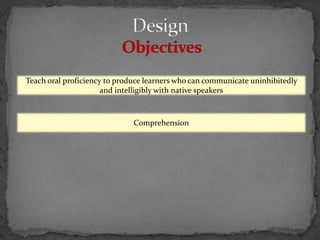
Teach oral proficiency to produce learners who can communicate uninhibitedly
                      and intelligibly with native speakers


                              Comprehension
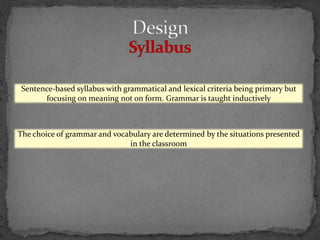
Sentence-based syllabus with grammatical and lexical criteria being primary but
       focusing on meaning not on form. Grammar is taught inductively


The choice of grammar and vocabulary are determined by the situations presented
                              in the classroom
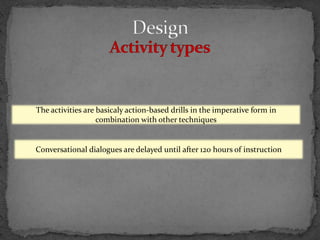
The activities are basicaly action-based drills in the imperative form in
                   combination with other techniques


Conversational dialogues are delayed until after 120 hours of instruction
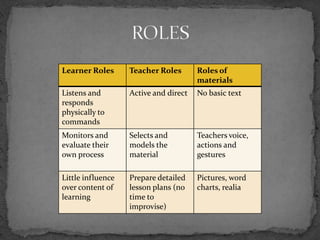
Learner Roles      Teacher Roles       Roles of
                                       materials
Listens and        Active and direct   No basic text
responds
physically to
commands
Monitors and       Selects and         Teachers voice,
evaluate their     models the          actions and
own process        material            gestures

Little influence   Prepare detailed    Pictures, word
over content of    lesson plans (no    charts, realia
learning           time to
                   improvise)
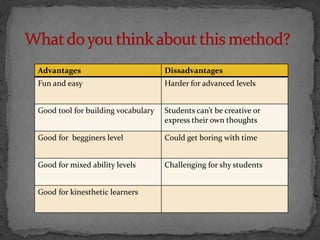
Advantages                          Dissadvantages
Fun and easy                        Harder for advanced levels


Good tool for building vocabulary   Students can’t be creative or
                                    express their own thoughts

Good for begginers level            Could get boring with time


Good for mixed ability levels       Challenging for shy students


Good for kinesthetic learners
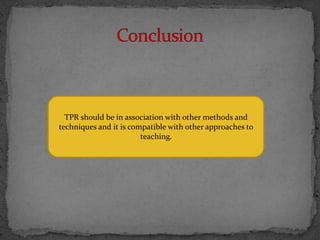
TPR should be in association with other methods and
techniques and it is compatible with other approaches to
                        teaching.
Tpr presentation

Tpr presentation

  • 1.
    TPR – TOTALPHYSICAL RESPONSE James Asher
  • 3.
    Physical Giving movement Instructions TPR – TOTAL PHYSICAL RESPONSE STRESS Following Instructions
  • 4.
    Is a languageteaching method built around the coordination of speech and action. This method was developed principally to reduce the stress associated with language learning.
  • 5.
    The influence ofthe first language acquisition process Use a similar method to how infants learn the first language Young children respond physically to comands before Comprehension approach they begin to produce verbal responses
  • 6.
    Verbal Response Physical Response Commands
  • 7.
    Left hemisphere Right hemisphere Language activity Responsible for motor activities Analytical Triggers left hemisphere activities Objective Subjective Looks at parts Looks at wholes Sequential Intuitive Children acquire language through motor movement – a right hemispehre activity
  • 8.
    Commands encourage students Stress-freeapproach to learning to perform physical activity and a second language relax Structuralist or grammar-based view of language Language is made up of abstractions and non-abstractions (nouns, imperative verbs) Language can be internalized as wholes or chunks rather than single lexical items. There is no further elaboration
  • 9.
    Teach oral proficiencyto produce learners who can communicate uninhibitedly and intelligibly with native speakers Comprehension
  • 10.
    Sentence-based syllabus withgrammatical and lexical criteria being primary but focusing on meaning not on form. Grammar is taught inductively The choice of grammar and vocabulary are determined by the situations presented in the classroom
  • 11.
    The activities arebasicaly action-based drills in the imperative form in combination with other techniques Conversational dialogues are delayed until after 120 hours of instruction
  • 12.
    Learner Roles Teacher Roles Roles of materials Listens and Active and direct No basic text responds physically to commands Monitors and Selects and Teachers voice, evaluate their models the actions and own process material gestures Little influence Prepare detailed Pictures, word over content of lesson plans (no charts, realia learning time to improvise)
  • 13.
    Advantages Dissadvantages Fun and easy Harder for advanced levels Good tool for building vocabulary Students can’t be creative or express their own thoughts Good for begginers level Could get boring with time Good for mixed ability levels Challenging for shy students Good for kinesthetic learners
  • 14.
    TPR should bein association with other methods and techniques and it is compatible with other approaches to teaching.