Digipak analysis
Elliot Stahlmann
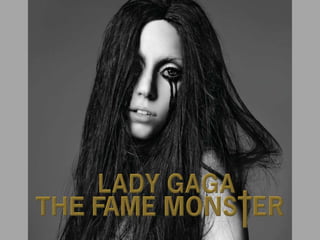
Black blood in eyes – dark themes and
relates to themes of songs and genre of
music. Dark imagery comes hand in
hand with the imagery used in music
videos and is consistent with the artist’s
brand
Gold lettering – relating to the title of
Fame (wealth, riches, and so on). In
relation to the gold cross, could perhaps
be a message against religion. Like the
capitalist system of wealth and “fame”,
religion too is a system that primarily
benefits the needs of the few –
consumerist
Sexualization of the artist/of women. Artist is
shown in a vulnerable position, teary-eyed
and messed up hair – to attract consumers.
On the other hand, it makes a critical
comment of youth culture (of it’s consumers)
and portrays the darker side of sexualizing
women in the media – perhaps hinting at
abuse and so on.
Dark imagery – black and white –
against the gold lettering draws
attention to the words. Perhaps this
suggests that there is a deep dark side
to “fame” that is often ignores. This
therefore aims to present this rather
than ignore it.
Black and white text and
images – portrays dark
tone of the songs and
“anti-Christianity”
messages/theme.
Artist is central to the cover wearing
“iconic” clothing that comes hand in
hand with the brand label of the artist.
Image from music video on the cover of insert and cover.
This familiarizes the consumer with the music of the artist
and promotes the music video to them. By promoting the
music video in this way, it establishes “free advertising”
such as word-of-mouth, that is essential free promotion
within the media. Additionally, when the album is “on the
wrack” passing consumers will see the images and will be
more likely to search for the music video.
Intertextual references - use of the Holy
Cross establishes the brand to the consumer
– controversial music. Additional to the
simplistic design, conveys the simplicity of the
artist’s music and it’s messages concerning
religion. Combining the dark images with the
white cross suggests that the message is
against the Catholic religion and it’s primary
ideals. This appeals and is aimed at the
target audience of the LGBT community.
“The Fame Monster” –
title cleverly address
the consumer,
commonly known as
“monsters” amongst
popular youth culture.
Consistency of the branded
label/image appeals to the already
established audience of the artist.
Plain white title and artist’s
name (repeated three times)
against the black background
draw attention to the text and
put the consumer’s focus on
the album.
References to current
youth/pop culture
addresses the
consumer/target
audience. Portrays
genre of indie pop and
so informs the target
consumer – maximise
profit. Also as people
who enjoy that genre of
music/ target consumer
will purchase the
album, reviews of the
music will be especially
good. This creates
positive press and
word-of-mouth for the
album to draw attention
to it and raise
awareness –
maximising profit.

Digipak analysis

  • 1.
  • 3.
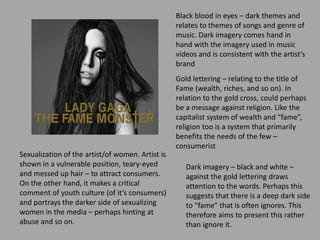
    Black blood ineyes – dark themes and relates to themes of songs and genre of music. Dark imagery comes hand in hand with the imagery used in music videos and is consistent with the artist’s brand Gold lettering – relating to the title of Fame (wealth, riches, and so on). In relation to the gold cross, could perhaps be a message against religion. Like the capitalist system of wealth and “fame”, religion too is a system that primarily benefits the needs of the few – consumerist Sexualization of the artist/of women. Artist is shown in a vulnerable position, teary-eyed and messed up hair – to attract consumers. On the other hand, it makes a critical comment of youth culture (of it’s consumers) and portrays the darker side of sexualizing women in the media – perhaps hinting at abuse and so on. Dark imagery – black and white – against the gold lettering draws attention to the words. Perhaps this suggests that there is a deep dark side to “fame” that is often ignores. This therefore aims to present this rather than ignore it.
  • 4.
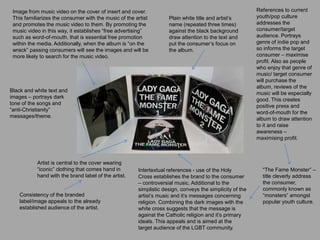
    Black and whitetext and images – portrays dark tone of the songs and “anti-Christianity” messages/theme. Artist is central to the cover wearing “iconic” clothing that comes hand in hand with the brand label of the artist. Image from music video on the cover of insert and cover. This familiarizes the consumer with the music of the artist and promotes the music video to them. By promoting the music video in this way, it establishes “free advertising” such as word-of-mouth, that is essential free promotion within the media. Additionally, when the album is “on the wrack” passing consumers will see the images and will be more likely to search for the music video. Intertextual references - use of the Holy Cross establishes the brand to the consumer – controversial music. Additional to the simplistic design, conveys the simplicity of the artist’s music and it’s messages concerning religion. Combining the dark images with the white cross suggests that the message is against the Catholic religion and it’s primary ideals. This appeals and is aimed at the target audience of the LGBT community. “The Fame Monster” – title cleverly address the consumer, commonly known as “monsters” amongst popular youth culture. Consistency of the branded label/image appeals to the already established audience of the artist. Plain white title and artist’s name (repeated three times) against the black background draw attention to the text and put the consumer’s focus on the album. References to current youth/pop culture addresses the consumer/target audience. Portrays genre of indie pop and so informs the target consumer – maximise profit. Also as people who enjoy that genre of music/ target consumer will purchase the album, reviews of the music will be especially good. This creates positive press and word-of-mouth for the album to draw attention to it and raise awareness – maximising profit.