CONSUMER
BEHAVIOR
David Holdford, RPh, MS, PhD
Professor, School of Pharmacy
Virginia Commonwealth University
Why do people do what they do?
Slides to Accompany Chapter 11 of “Marketing for
Pharmacists”
2
Learning Objectives
Describe the steps associated with
consumer decision-making
Delineate how each step influences the
choices consumers make
Discuss how risk, involvement, control, and
engagement affect consumers’ decision-
making
Identify general models of health behavior
3
The aim of marketing is to know and
understand the customer so well the product
or service fits him and sells itself
Peter F. Drucker
4
Knowledge about consumer behavior is
essential in discovering unmet needs,
designing services, setting prices,
merchandising, advertising, and other
marketing activities.
5
FRAMEWORKS FOR
UNDERSTANDING CONSUMER
BEHAVIOR
FROM ECONOMICS, SOCIOLOGY, AND
PSYCHOLOGY
6
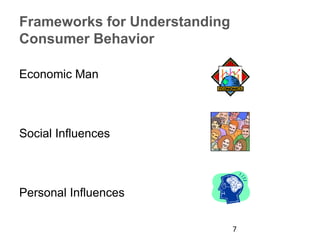
Frameworks for Understanding
Consumer Behavior
Economic Man
Social Influences
Personal Influences
7
Frameworks for Understanding Consumer
Behavior
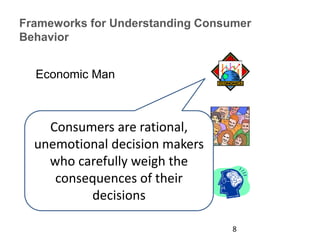
Economic Man
Social Influences
Personal Influences
Consumers are rational,
unemotional decision makers
who carefully weigh the
consequences of their
decisions
8
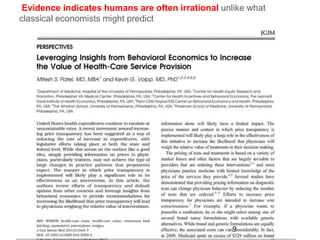
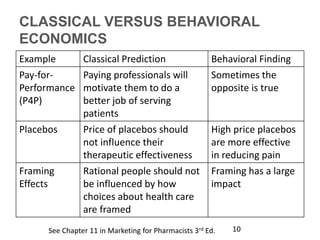
Evidence indicates humans are often irrational unlike what
classical economists might predict
9
CLASSICAL VERSUS BEHAVIORAL
ECONOMICS
Example Classical Prediction Behavioral Finding
Pay-for-
Performance
(P4P)
Paying professionals will
motivate them to do a
better job of serving
patients
Sometimes the
opposite is true
Placebos Price of placebos should
not influence their
therapeutic effectiveness
High price placebos
are more effective
in reducing pain
Framing
Effects
Rational people should not
be influenced by how
choices about health care
are framed
Framing has a large
impact
10See Chapter 11 in Marketing for Pharmacists 3rd Ed.
Frameworks for Understanding
Consumer Behavior
Economic Man
Social Influences
Personal Influences
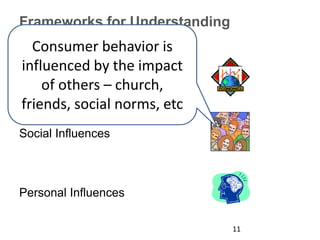
Consumer behavior is
influenced by the impact
of others – church,
friends, social norms, etc
11
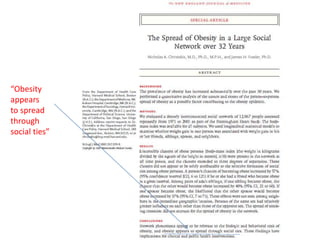
“Obesity
appears
to spread
through
social ties”
Frameworks for Understanding Consumer
Behavior
Economic Man
Social Influences
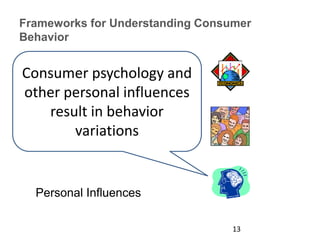
Personal Influences
Consumer psychology and
other personal influences
result in behavior
variations
13
CONSUMER PURCHASE
SITUATIONS
14
SITUATIONS INFLUENCE
CONSUMER DECISIONS
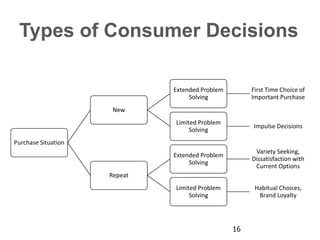
Types of Consumer Decisions
Purchase Situation
New
Extended Problem
Solving
First Time Choice of
Important Purchase
Limited Problem
Solving
Impulse Decisions
Repeat
Extended Problem
Solving
Variety Seeking,
Dissatisfaction with
Current Options
Limited Problem
Solving
Habitual Choices,
Brand Loyalty
16
EXTENDED PROBLEM
SOLVING OCCURS WITH
NEW, HIGH RISK, &
COMPLEX DECISIONS
Major health care decisions, such as a
decision to undergo surgery
17
LIMITED PROBLEM
SOLVING OCCURS WITH
ROUTINE, LOW RISK, &
SIMPLE DECISIONS
Problems that can be handled without
much mental effort
18
THE LEVEL OF PROBLEM
SOLVING DETERMINES OUR
ATTENTION & RECEPTIVITY
TO INFORMATION
EXTENDED PROBLEM SOLVING ALL
19
WHAT LEVEL IS NEEDED
FOR MEDICATION
THERAPY MANAGEMENT?
20
THE CONSUMER DECISION
PROCESS
21
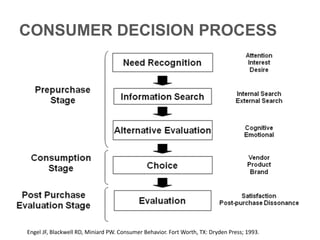
CONSUMER DECISION PROCESS
Engel JF, Blackwell RD, Miniard PW. Consumer Behavior. Fort Worth, TX: Dryden Press; 1993.
PREPURCHASE STAGE
23
Prepurchase Stage
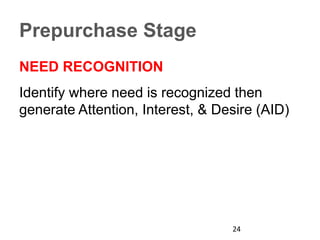
NEED RECOGNITION
Identify where need is recognized then
generate Attention, Interest, & Desire (AID)
24
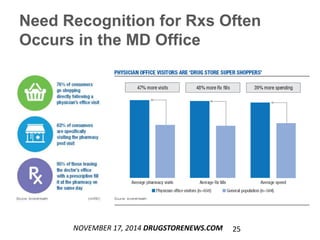
Need Recognition for Rxs Often
Occurs in the MD Office
NOVEMBER 17, 2014 DRUGSTORENEWS.COM 25
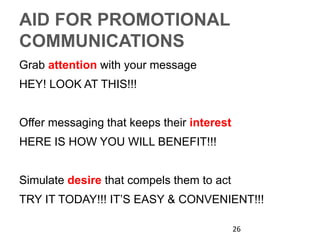
AID FOR PROMOTIONAL
COMMUNICATIONS
Grab attention with your message
HEY! LOOK AT THIS!!!
Offer messaging that keeps their interest
HERE IS HOW YOU WILL BENEFIT!!!
Simulate desire that compels them to act
TRY IT TODAY!!! IT’S EASY & CONVENIENT!!!
26
Prepurchase Stage
INFORMATION SEARCH
Internal
External
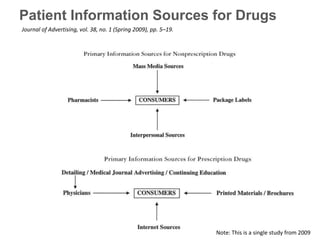
Patient Information Sources for Drugs
Journal of Advertising, vol. 38, no. 1 (Spring 2009), pp. 5–19.
Note: This is a single study from 2009
Variables Affecting Information
Search
New or repeat decision
Whether products and services are
perceived to be different
Individual situations and characteristics
29
Prepurchase Stage
ALTERNATIVE EVALUATION
When sufficient information is available to
choose, alternatives must be evaluated
Cognitive evaluation (thoughtful)
Noncognitive evaluation (emotional)
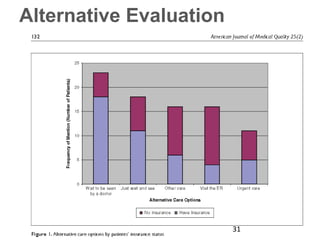
Alternative Evaluation
31
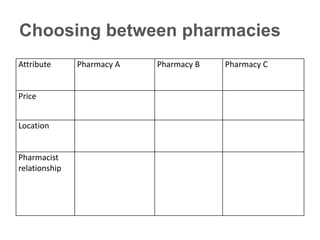
Choosing between pharmacies
Attribute Pharmacy A Pharmacy B Pharmacy C
Price
Location
Pharmacist
relationship
Attributes
Salient: important, but necessarily
determinant
Determinant: deciding factor in choice
33
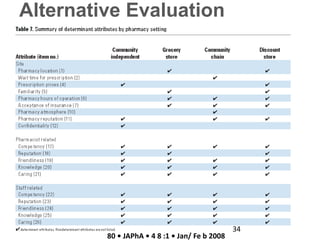
Alternative Evaluation
80 • JAPhA • 4 8 :1 • Jan/ Fe b 2008
34
CONSUMPTION STAGE
35
Consumption Stage
CHOICE
choice may consist of several choices:
vendor, channel of distribution, brand, and
more.
In addition to selection and purchase,
choice includes use and disposal.
36
Consumption Stage
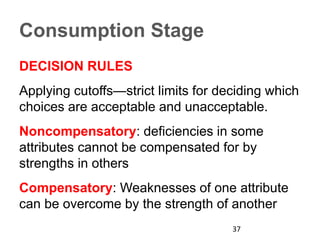
DECISION RULES
Applying cutoffs—strict limits for deciding which
choices are acceptable and unacceptable.
Noncompensatory: deficiencies in some
attributes cannot be compensated for by
strengths in others
Compensatory: Weaknesses of one attribute
can be overcome by the strength of another
37
POST PURCHASE
EVALUATION STAGE
38
Post Purchase Stage
Evaluation of the degree to which needs and
wants have been met
• Satisfaction
• Loyalty
Cognitive dissonance: worry that the right
decision was made
39
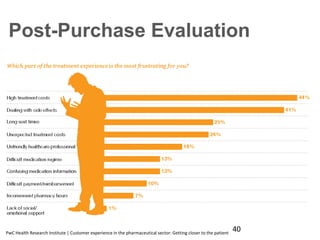
Post-Purchase Evaluation
PwC Health Research Institute | Customer experience in the pharmaceutical sector: Getting closer to the patient
40
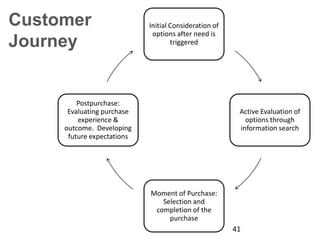
Customer
Journey
Initial Consideration of
options after need is
triggered
Active Evaluation of
options through
information search
Moment of Purchase:
Selection and
completion of the
purchase
Postpurchase:
Evaluating purchase
experience &
outcome. Developing
future expectations
41
VARIABLES AFFECTING
CONSUMER DECISIONS
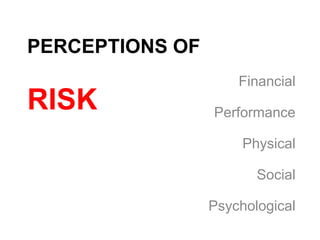
PERCEPTIONS OF
RISK
Financial
Performance
Physical
Social
Psychological
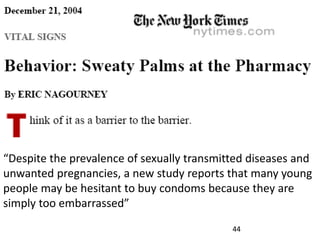
“Despite the prevalence of sexually transmitted diseases and
unwanted pregnancies, a new study reports that many young
people may be hesitant to buy condoms because they are
simply too embarrassed”
44
INVOLVEMENT
i.e., Perceived Importance)
Involvement
Affects info search, info processing, and ability
to be persuaded
Necessary for extended problem solving
Influenced by:
Personal relevance
Object considered
Situation
46
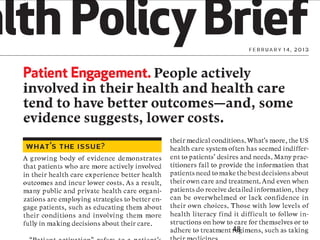
ENGAGEMENT
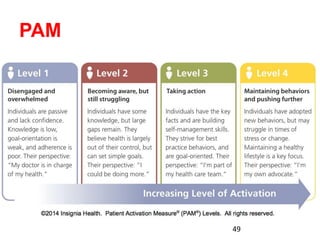
48
PAM
49
PERCEPTIONS OF
CONTROL
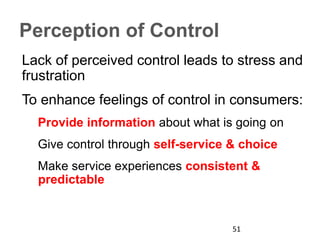
Perception of Control
Lack of perceived control leads to stress and
frustration
To enhance feelings of control in consumers:
Provide information about what is going on
Give control through self-service & choice
Make service experiences consistent &
predictable
51
HEALTH BEHAVIOR MODELS
Health Belief Model
Theory of Reasoned Action/
Planned Behavior
Transtheoretical Model
52
Summary
Understanding patient behavior is essential to
influencing them
Models of consumer behavior can help
pharmacists increase medication adherence,
change smoking behavior, communicate health
messages, design services, & influence MD
prescribing
53
Consumer behavior in Pharmacies

Consumer behavior in Pharmacies