Name: Click here to enter text.

                                                                                    Date: 6 Febuary 2013


                                                Analysis


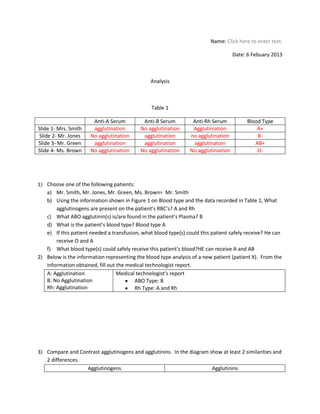
                                                Table 1

                       Anti-A Serum         Anti-B Serum         Anti-Rh Serum           Blood Type
Slide 1- Mrs. Smith    agglutination       No agglutination      Agglutiniation              A+
 Slide 2- Mr. Jones   No agglutination      agglutination       no agglutination             B-
Slide 3- Mr. Green     agglutination        agglutination        agglutinatoin              AB+
Slide 4- Ms. Brown    No agglutination     No agglutination     No agglutiniation            O-


1) Choose one of the following patients:
   a) Mr. Smith, Mr. Jones, Mr. Green, Ms. Brown= Mr. Smith
   b) Using the information shown in Figure 1 on Blood type and the data recorded in Table 1, What
       agglutinogens are present on the patient’s RBC’s? A and Rh
   c) What ABO agglutinin(s) is/are found in the patient’s Plasma? B
   d) What is the patient’s blood type? Blood type A
   e) If this patient needed a transfusion, what blood type(s) could this patient safely receive? He can
       receive O and A
   f) What blood type(s) could safely receive this patient’s blood?HE can receive A and AB
2) Below is the information representing the blood type analysis of a new patient (patient X). From the
   information obtained, fill out the medical technologist report.
   A: Agglutination               Medical technologist’s report
   B: No Agglutination                   ABO Type: B
   Rh: Agglutination                     Rh Type: A and Rh


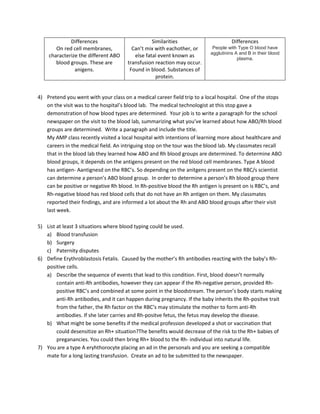
3) Compare and Contrast agglutinogens and agglutinins. In the diagram show at least 2 similarities and
   2 differences.
                  Agglutinogens                                        Agglutinins
Differences                         Similarities                       Differences
       On red cell membranes,           Can’t mix with eachother, or       People with Type O blood have
                                                                          agglutinins A and B in their blood
    characterize the different ABO       else fatal event known as                     plasma.
       blood groups. These are        transfusion reaction may occur.
               anigens.                Found in blood. Substances of
                                                   protein.


4) Pretend you went with your class on a medical career field trip to a local hospital. One of the stops
   on the visit was to the hospital’s blood lab. The medical technologist at this stop gave a
   demonstration of how blood types are determined. Your job is to write a paragraph for the school
   newspaper on the visit to the blood lab, summarizing what you’ve learned about how ABO/Rh blood
   groups are determined. Write a paragraph and include the title.
   My AMP class recently visited a local hospital with intentions of learning more about healthcare and
   careers in the medical field. An intriguing stop on the tour was the blood lab. My classmates recall
   that in the blood lab they learned how ABO and Rh blood groups are determined. To determine ABO
   blood groups, it depends on the antigens present on the red blood cell membranes. Type A blood
   has antigen- Aantignesd on the RBC’s. So depending on the anitgens present on the RBC/s scientist
   can determine a person’s ABO blood group. In order to determine a person’s Rh blood group there
   can be positive or negative Rh blood. In Rh-positive blood the Rh antigen is present on is RBC’s, and
   Rh-negative blood has red blood cells that do not have an Rh antigen on them. My classmates
   reported their findings, and are informed a lot about the Rh and ABO blood groups after their visit
   last week.

5) List at least 3 situations where blood typing could be used.
   a) Blood transfusion
   b) Surgery
   c) Paternity disputes
6) Define Erythroblastosis Fetalis. Caused by the mother’s Rh antibodies reacting with the baby’s Rh-
   positive cells.
   a) Describe the sequence of events that lead to this condition. First, blood doesn’t normally
        contain anti-Rh antibodies, however they can appear if the Rh-negative person, provided Rh-
        positive RBC’s and combined at some point in the bloodstream. The person’s body starts making
        anti-Rh antibodies, and it can happen during pregnancy. If the baby inherits the Rh-positve trait
        from the father, the Rh factor on the RBC’s may stimulate the mother to form anti-Rh
        antibodies. If she later carries and Rh-positve fetus, the fetus may develop the disease.
   b) What might be some benefits if the medical profession developed a shot or vaccination that
        could desensitize an Rh+ situation?The benefits would decrease of the risk to the Rh+ babies of
        preganancies. You could then bring Rh+ blood to the Rh- individual into natural life.
7) You are a type A eryhthorocyte placing an ad in the personals and you are seeking a compatible
   mate for a long lasting transfusion. Create an ad to be submitted to the newspaper.
I am a type Aerythrorocyte and I am seeking a compatible mate for a long lasting transfusion. Mate
    must be looking to satisfy diffusion of oxygen and carbon dioxide. I am a red blooded type A
    personally but consider myself very flexible when flowing through capillaries. Lacking a cell nucleus
    is totally okay.

8) Another important diagnostic tool used by medical technologist is determining a patient’s blood cell
    count, for both red blood cells and white blood cells. When this procedure is performed, one
    technique used is to take multiple samples and calculate the average. This method of multiple
    sampling is a standard procedure in scientific and medical investigations. Discuss why this method is
    important in blood typing. The multiple sampling strategy, gives a more accurate sampling. This is
    very important in blood typing because it provides more accurate blood type limiting contamination
    and human error so that way blood types are determined accurately without error or
    humancontaminations.
9) Each year thousands of people contract blood borne diseases. What could be done in a clinical
    blood lab to minimize the risk of obtaining or spreading a blood borne disease?Making sure that
    sharps containers are disposed of properly and educating nurses and patients about the dangers of
    being stuck by a needle.
10) In a short paragraph, identify what you think may be the next important breakthrough, milestone or
    discovery in the study of blood and blood diseases and explain why. I think finding a way to cure
    HIV/AIDS and end the epidemic would be a huge breakthrough and discovery in the study of blood
    diseases. So many people fall prey to it every year and it it because of the miscommunications we
    as humans have and the lack of education received.

Blood typing analysis lab

  • 1.
    Name: Click hereto enter text. Date: 6 Febuary 2013 Analysis Table 1 Anti-A Serum Anti-B Serum Anti-Rh Serum Blood Type Slide 1- Mrs. Smith agglutination No agglutination Agglutiniation A+ Slide 2- Mr. Jones No agglutination agglutination no agglutination B- Slide 3- Mr. Green agglutination agglutination agglutinatoin AB+ Slide 4- Ms. Brown No agglutination No agglutination No agglutiniation O- 1) Choose one of the following patients: a) Mr. Smith, Mr. Jones, Mr. Green, Ms. Brown= Mr. Smith b) Using the information shown in Figure 1 on Blood type and the data recorded in Table 1, What agglutinogens are present on the patient’s RBC’s? A and Rh c) What ABO agglutinin(s) is/are found in the patient’s Plasma? B d) What is the patient’s blood type? Blood type A e) If this patient needed a transfusion, what blood type(s) could this patient safely receive? He can receive O and A f) What blood type(s) could safely receive this patient’s blood?HE can receive A and AB 2) Below is the information representing the blood type analysis of a new patient (patient X). From the information obtained, fill out the medical technologist report. A: Agglutination Medical technologist’s report B: No Agglutination ABO Type: B Rh: Agglutination Rh Type: A and Rh 3) Compare and Contrast agglutinogens and agglutinins. In the diagram show at least 2 similarities and 2 differences. Agglutinogens Agglutinins
  • 2.
    Differences Similarities Differences On red cell membranes, Can’t mix with eachother, or People with Type O blood have agglutinins A and B in their blood characterize the different ABO else fatal event known as plasma. blood groups. These are transfusion reaction may occur. anigens. Found in blood. Substances of protein. 4) Pretend you went with your class on a medical career field trip to a local hospital. One of the stops on the visit was to the hospital’s blood lab. The medical technologist at this stop gave a demonstration of how blood types are determined. Your job is to write a paragraph for the school newspaper on the visit to the blood lab, summarizing what you’ve learned about how ABO/Rh blood groups are determined. Write a paragraph and include the title. My AMP class recently visited a local hospital with intentions of learning more about healthcare and careers in the medical field. An intriguing stop on the tour was the blood lab. My classmates recall that in the blood lab they learned how ABO and Rh blood groups are determined. To determine ABO blood groups, it depends on the antigens present on the red blood cell membranes. Type A blood has antigen- Aantignesd on the RBC’s. So depending on the anitgens present on the RBC/s scientist can determine a person’s ABO blood group. In order to determine a person’s Rh blood group there can be positive or negative Rh blood. In Rh-positive blood the Rh antigen is present on is RBC’s, and Rh-negative blood has red blood cells that do not have an Rh antigen on them. My classmates reported their findings, and are informed a lot about the Rh and ABO blood groups after their visit last week. 5) List at least 3 situations where blood typing could be used. a) Blood transfusion b) Surgery c) Paternity disputes 6) Define Erythroblastosis Fetalis. Caused by the mother’s Rh antibodies reacting with the baby’s Rh- positive cells. a) Describe the sequence of events that lead to this condition. First, blood doesn’t normally contain anti-Rh antibodies, however they can appear if the Rh-negative person, provided Rh- positive RBC’s and combined at some point in the bloodstream. The person’s body starts making anti-Rh antibodies, and it can happen during pregnancy. If the baby inherits the Rh-positve trait from the father, the Rh factor on the RBC’s may stimulate the mother to form anti-Rh antibodies. If she later carries and Rh-positve fetus, the fetus may develop the disease. b) What might be some benefits if the medical profession developed a shot or vaccination that could desensitize an Rh+ situation?The benefits would decrease of the risk to the Rh+ babies of preganancies. You could then bring Rh+ blood to the Rh- individual into natural life. 7) You are a type A eryhthorocyte placing an ad in the personals and you are seeking a compatible mate for a long lasting transfusion. Create an ad to be submitted to the newspaper.
  • 3.
    I am atype Aerythrorocyte and I am seeking a compatible mate for a long lasting transfusion. Mate must be looking to satisfy diffusion of oxygen and carbon dioxide. I am a red blooded type A personally but consider myself very flexible when flowing through capillaries. Lacking a cell nucleus is totally okay. 8) Another important diagnostic tool used by medical technologist is determining a patient’s blood cell count, for both red blood cells and white blood cells. When this procedure is performed, one technique used is to take multiple samples and calculate the average. This method of multiple sampling is a standard procedure in scientific and medical investigations. Discuss why this method is important in blood typing. The multiple sampling strategy, gives a more accurate sampling. This is very important in blood typing because it provides more accurate blood type limiting contamination and human error so that way blood types are determined accurately without error or humancontaminations. 9) Each year thousands of people contract blood borne diseases. What could be done in a clinical blood lab to minimize the risk of obtaining or spreading a blood borne disease?Making sure that sharps containers are disposed of properly and educating nurses and patients about the dangers of being stuck by a needle. 10) In a short paragraph, identify what you think may be the next important breakthrough, milestone or discovery in the study of blood and blood diseases and explain why. I think finding a way to cure HIV/AIDS and end the epidemic would be a huge breakthrough and discovery in the study of blood diseases. So many people fall prey to it every year and it it because of the miscommunications we as humans have and the lack of education received.