Web 2.0 and You Too (…woo hoo?) Dave Pattern, Library Systems Manager University of Huddersfield [email_address]
Preamble Presentation available at: www.slideshare.net/daveyp/ Please remix and reuse this presentation creativecommons.org/licenses/by-nc-sa/3.0 Have you remembered to switch your phone on? please feel free take photos, record audio, blog, tweet (@daveyp), etc
Contents Question time! Web 2.0 Faster, smaller, cheaper… cheaper… free? Library 2.0 Some examples of “2.0” in Libraries
Disclaimer I A N A L
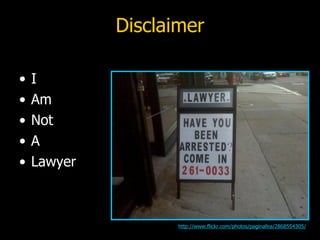
Disclaimer I Am Not A Lawyer http://www.flickr.com/photos/paginafea/2868554305/
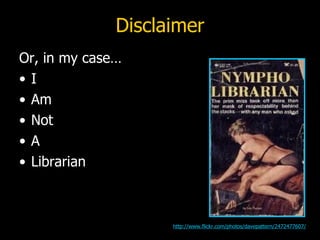
Disclaimer Or, in my case… I Am Not A Librarian http://www.flickr.com/photos/davepattern/2472477607/
Question time! Do you regularly use a mobile phone? http://www.flickr.com/photos/ari/362924278/
Question time! do U snd txt msgz? http://www.flickr.com/photos/jessicamills/231072148/
Question time! Do you have your own MP3 player? http://www.flickr.com/photos/nez/268673268/
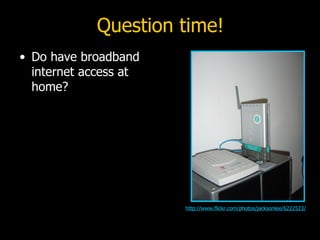
Question time! Do have broadband internet access at home? http://www.flickr.com/photos/jacksonlee/6222523/
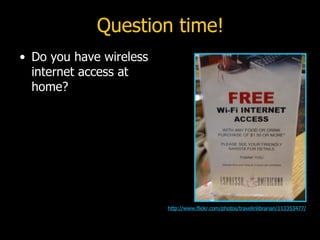
Question time! Do you have wireless internet access at home? http://www.flickr.com/photos/travelinlibrarian/113353477/
Question time! Do you regularly use your home PC or laptop for more than an hour each evening? http://www.flickr.com/photos/richardholden/340601444/
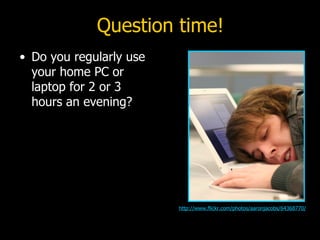
Question time! Do you regularly use your home PC or laptop for 2 or 3 hours an evening? http://www.flickr.com/photos/aaronjacobs/64368770/
Question time! Do have your own weblog / blog? http:// www.blogger.com
Question time! Do you regularly read other peoples weblogs and/or contribute to other weblogs? http://orweblog.oclc.org/archives/001325.html
Question time! Do you regularly use Wikipedia?
Question time! Have you ever edited a page on Wikipedia?
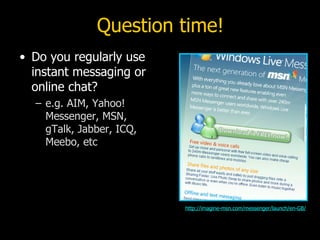
Question time! Do you regularly use instant messaging or online chat? e.g. AIM, Yahoo! Messenger, MSN, gTalk, Jabber, ICQ, Meebo, etc http://imagine-msn.com/messenger/launch/en-GB/
Question time! Do you have a games console at home? http://www.flickr.com/photos/jstar/336785888/
Question time! Do you play games online and/or visit virtual worlds? e.g. World of Warcraft, Second Life, etc? http://www.flickr.com/photos/christajoy42/354580876/
One last question… How many books would you expect to fit onto 30 feet of shelving?
http://www.flickr.com/photos/getdown/2107792115/
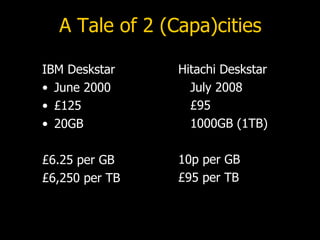
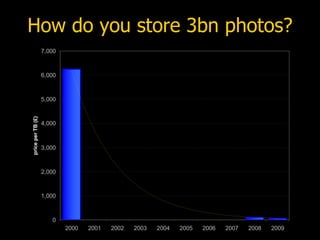
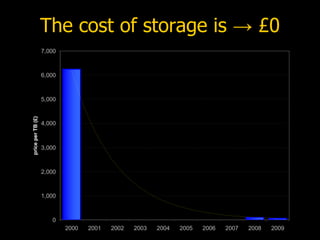
A Tale of 2 (Capa)cities IBM Deskstar June 2000 £125 20GB £6.25 per GB £6,250 per TB Hitachi Deskstar July 2008 £95 1000GB (1TB) 10p per GB £95 per TB
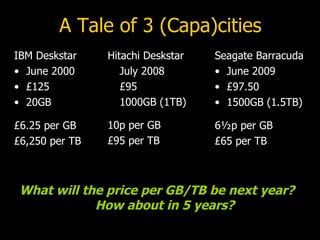
A Tale of 3 (Capa)cities IBM Deskstar June 2000 £125 20GB £6.25 per GB £6,250 per TB Seagate Barracuda  June 2009 £97.50 1500GB (1.5TB) 6 ½p  per GB £65 per TB Hitachi Deskstar July 2008 £95 1000GB (1TB) 10p per GB £95 per TB What will the price per GB/TB be next year?  How about in 5 years?
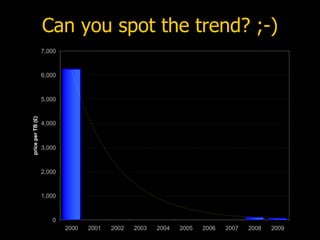
Can you spot the trend? ;-)
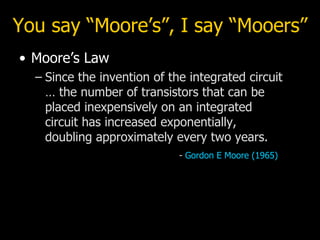
You say “Moore’s”, I say “Mooers” Moore’s Law Since the invention of the integrated circuit  … the number of transistors that can be placed inexpensively on an integrated circuit has increased exponentially, doubling approximately every two years. -  Gordon E Moore (1965)
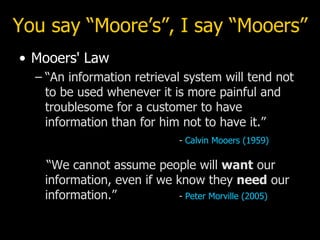
You say “Moore’s”, I say “Mooers” Mooers' Law “ An information retrieval system will tend not to be used whenever it is more painful and troublesome for a customer to have information than for him not to have it.” -  Calvin  Mooers  (1959)   “We cannot assume people will  want  our information, even if we know they  need  our information.” -  Peter  Morville  (2005)
http://www.flickr.com/photos/alper/3257406961/
 
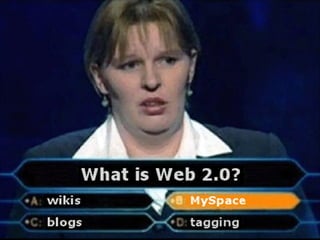
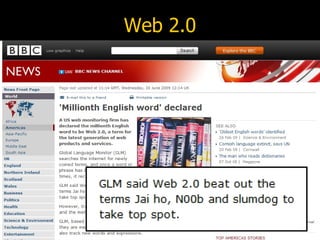
Web 2.0
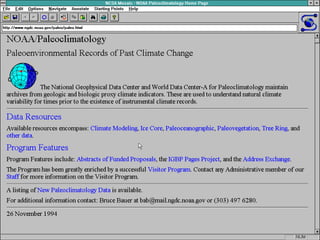
Web 1.0
Web 1.0 Slow access speeds (e.g. dial-up modem) Limited availability Static web pages Little interactivity Mostly text …lots and lots of text …on a grey background! Web sites that would only work with one type of web browser The “Read Only Web”
Web 2.0 Fast access speeds (e.g. broadband) Wide availability (e.g. wireless) Dynamic web pages High interactivity Lots of multimedia Web sites that work on many devices  (e.g. PCs, mobile phones, etc) The “Read/Write Web”
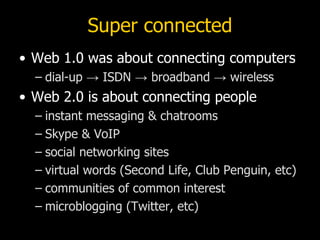
Super connected Web 1.0 was about connecting computers dial-up -> ISDN -> broadband -> wireless Web 2.0 is about connecting people instant messaging & chatrooms Skype & VoIP social networking sites virtual words (Second Life, Club Penguin, etc) communities of common interest microblogging (Twitter, etc)
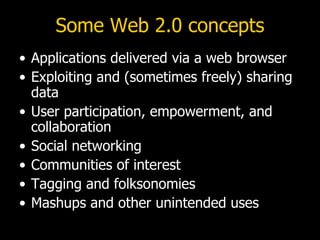
Some Web 2.0 concepts Applications delivered via a web browser Exploiting and (sometimes freely) sharing data User participation, empowerment, and collaboration Social networking Communities of interest Tagging and folksonomies Mashups and other unintended uses
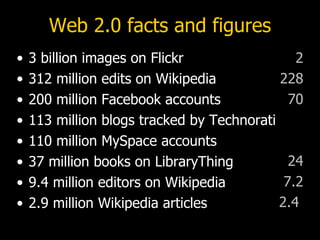
Web 2.0 facts and figures 3 billion images on Flickr 312 million edits on Wikipedia 200 million Facebook accounts 113 million blogs tracked by Technorati 110 million MySpace accounts 37 million books on LibraryThing 9.4 million editors on Wikipedia 2.9 million Wikipedia articles 2 228 70 24 7.2 2.4
How do you store 3bn photos?
Just how much information is there out there?
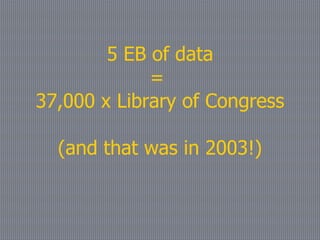
5 EB of data =  37,000 x Library of Congress (and that was in 2003!)
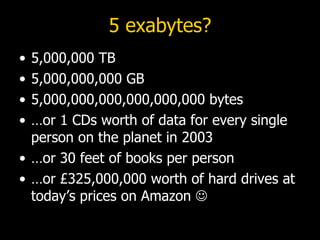
5 exabytes? 5,000,000 TB 5,000,000,000 GB 5,000,000,000,000,000,000 bytes …or 1 CDs worth of data for every single person on the planet in 2003 …or 30 feet of books per person …or £325,000,000 worth of hard drives at today’s prices on Amazon  
The cost of storage is -> £0
Freeconomics “Never in history has so much innovation been offered to so many for so little [cost]. The world’s most exciting businesses – technology, transport, media, medicine and finance – are increasingly defined by the word ‘free’ … … It is a difficult proposition to beat.” Michael Schrage, “Why giveaways are changing the rules  of business” (Financial Times, 2006)
Freeconomics His new ambition, [Ryanair's founder Michael O'Leary] told the Financial Times in 2004, was to give customers free tickets, perhaps even to pay them to fly. He predicted: “In a decade or so, airlines will pay travellers to distribute people around Europe.”  “The big giveaway”  (Guardian, May 2008)
Free: The Future of a Radical Price “ In the future, [Anderson] argues, when we talk of the ‘money economy’ we will talk of the ‘reputation economy’ and the ‘time economy’ in the same breath.”
“ What happens when things get free?” - Professor Carver Mead, Professor Emeritus at the California Institute of Technology
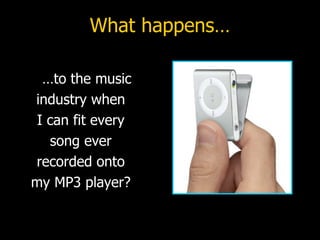
What happens… …to the music industry when I can fit every song ever recorded onto my MP3 player?
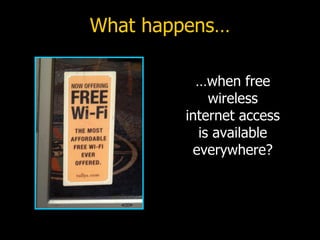
What happens… …when free wireless internet access is available everywhere?
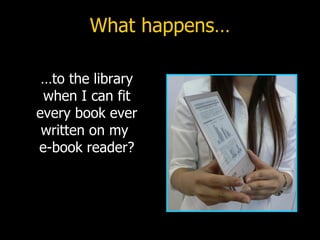
What happens… …to the library when I can fit every book ever written on my  e-book reader?
Researcher of the Future (2008) The information environment in 2017: electronic books, driven by consumer demand, will finally become established as the primary format for educational textbooks and scholarly books and monographs, as well as reference formats. the most significant impact for research will not be how things get published, but how  they get accessed. http:// www.bl.uk/news/pdf/googlegen.pdf
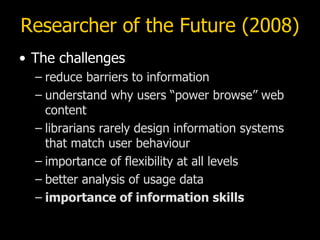
Researcher of the Future (2008) The challenges reduce barriers to information understand why users “power browse” web content librarians rarely design information systems that match user behaviour importance of flexibility at all levels better analysis of usage data importance of information skills
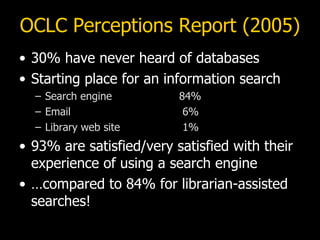
OCLC Perceptions Report (2005) 30% have never heard of databases Starting place for an information search Search engine 84% Email  6% Library web site  1% 93% are satisfied/very satisfied with their experience of using a search engine …compared to 84% for librarian-assisted searches!
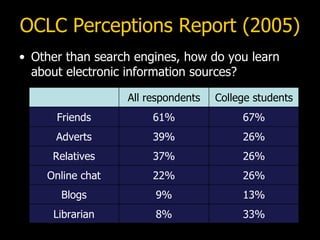
OCLC Perceptions Report (2005) Other than search engines, how do you learn about electronic information sources? 26% 37% Relatives College students All respondents 26% 39% Adverts 33% 8% Librarian 13% 9% Blogs 26% 22% Online chat 67% 61% Friends
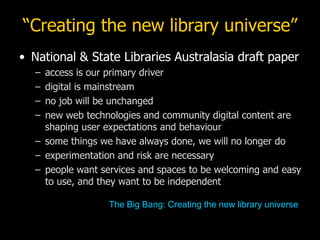
“ Creating the new library universe” National & State Libraries Australasia draft paper access is our primary driver digital is mainstream no job will be unchanged new web technologies and community digital content are shaping user expectations and behaviour some things we have always done, we will no longer do experimentation and risk are necessary people want services and spaces to be welcoming and easy to use, and they want to be independent The Big Bang: Creating the new library universe
 
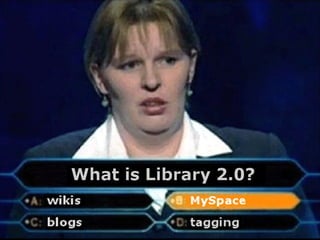
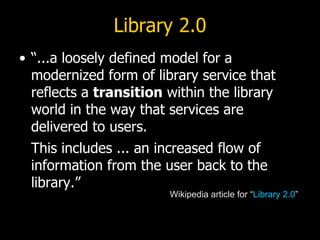
Library 2.0 “...a loosely defined model for a modernized form of library service that reflects a  transition  within the library world in the way that services are delivered to users.   This includes ... an increased flow of information from the user back to the library.” Wikipedia article for “ Library 2.0 ”
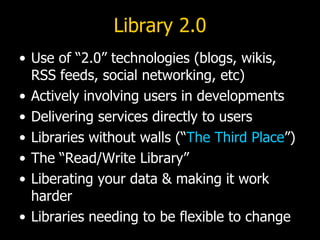
Library 2.0 Use of “2.0” technologies (blogs, wikis, RSS feeds, social networking, etc) Actively involving users in developments Delivering services directly to users Libraries without walls (“ The Third Place ”) The “Read/Write Library” Liberating your data & making it work harder Libraries needing to be flexible to change
Library 2.0 is a state of mind
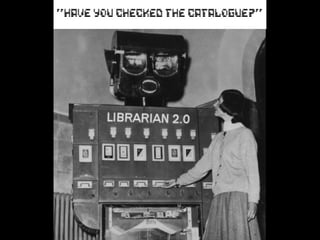
Librarian 2.0?
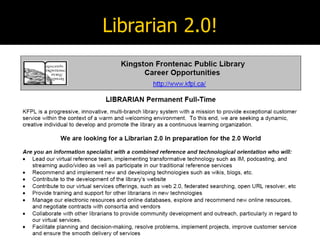
Librarian 2.0!
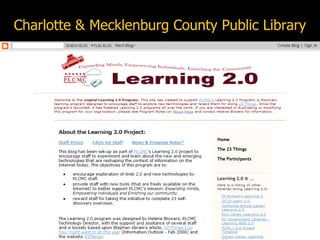
Charlotte & Mecklenburg County Public Library
 
Play and  experimentation
It’s okay to play! “We don’t stop playing because we grow old; we grow old because we stop playing.” attrib: George Bernard Shaw  2007 Library & Information Show Workshop on Library 2.0  Q: I don’t get paid to play, I get paid to work A: So, don’t call it “play”, call it “professional development”
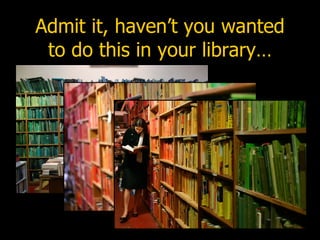
Admit it, haven’t you wanted to do this in your library…
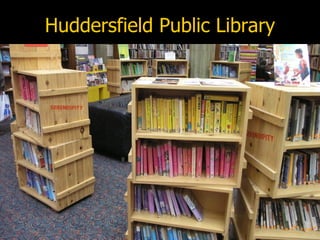
Huddersfield Public Library
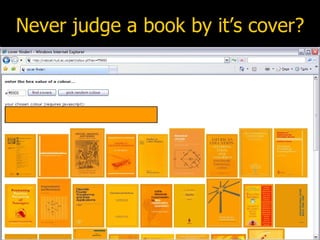
Never judge a book by it’s cover? “ I borrowed a book 3 years ago that had an orange cover… can I borrow it again?”
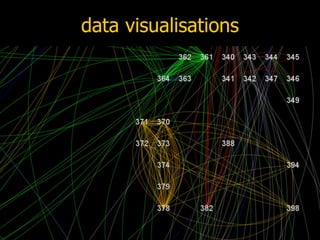
data visualisations
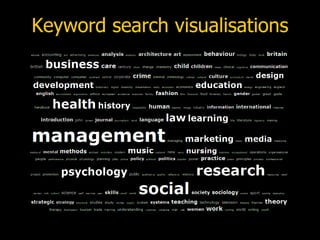
Keyword search visualisations
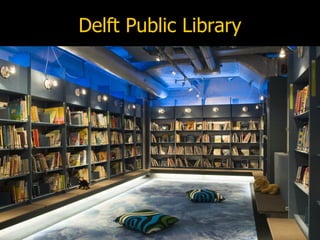
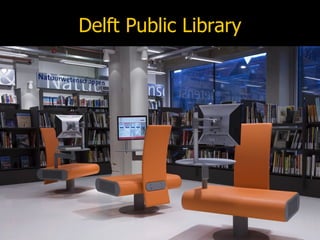
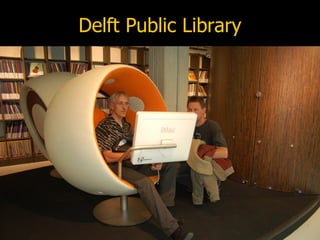
Delft Public Library
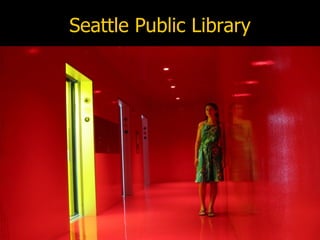
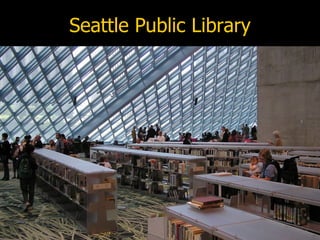
Seattle Public Library
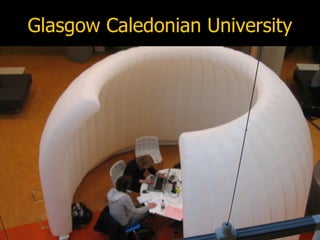
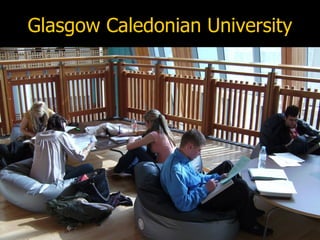
Glasgow Caledonian University
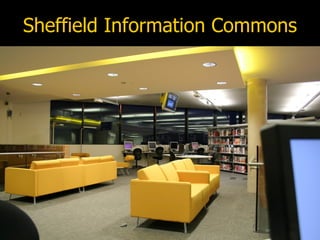
Sheffield Information Commons
Library 2.0 in action (n.b. some are more “2.0” than others)
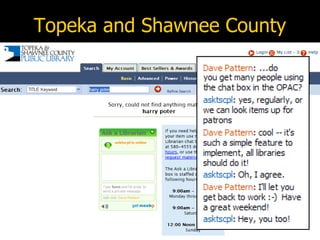
Topeka and Shawnee County
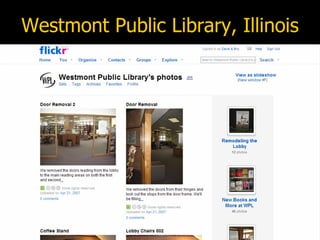
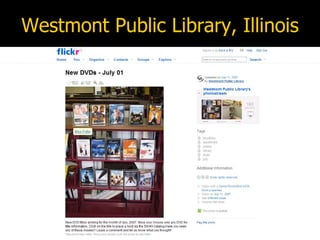
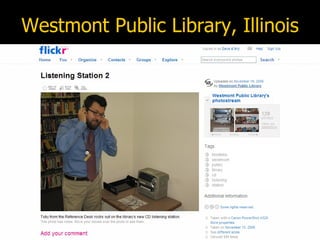
Westmont Public Library, Illinois
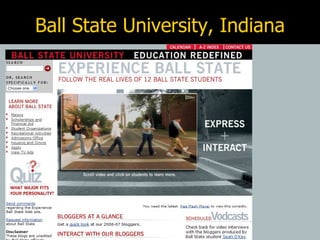
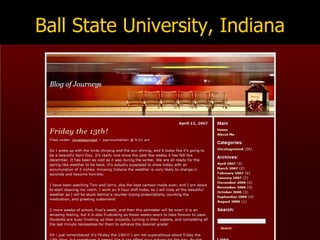
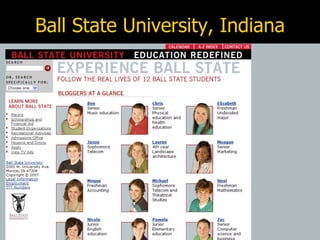
Ball State University, Indiana
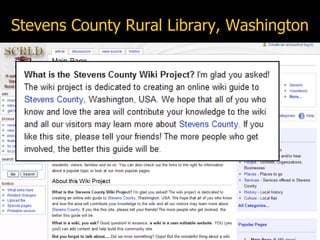
Stevens County Rural Library, Washington
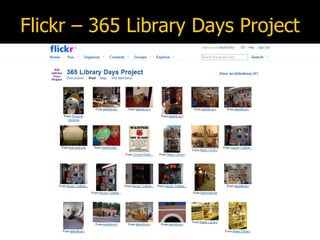
Flickr – 365 Library Days Project
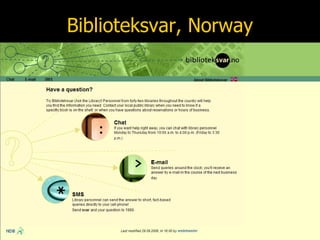
Biblioteksvar, Norway
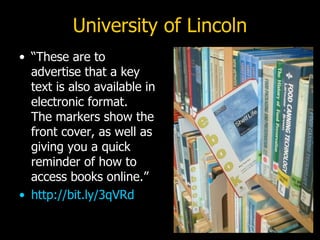
University of Lincoln “ These are to advertise that a key text is also available in electronic format.  The markers show the front cover, as well as giving you a quick reminder of how to access books online.” http://bit.ly/3qVRd
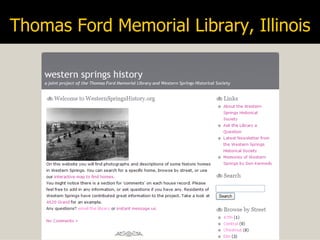
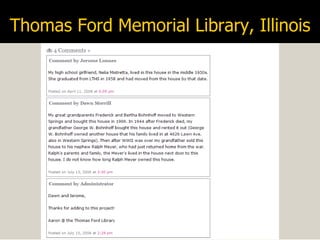
Thomas Ford Memorial Library, Illinois
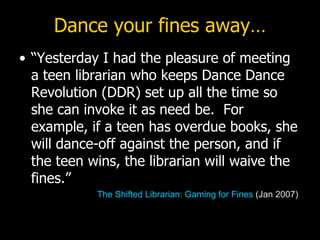
Dance your fines away… “Yesterday I had the pleasure of meeting a teen librarian who keeps Dance Dance Revolution (DDR) set up all the time so she can invoke it as need be.  For example, if a teen has overdue books, she will dance-off against the person, and if the teen wins, the librarian will waive the fines.” The Shifted Librarian: Gaming for Fines  (Jan 2007)
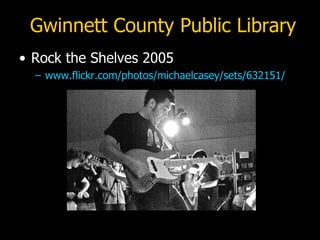
Gwinnett County Public Library Rock the Shelves 2005 www.flickr.com/photos/michaelcasey/sets/632151/
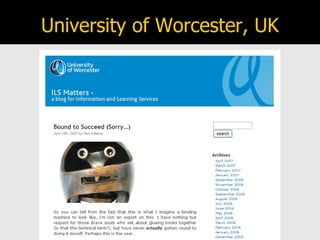
University of Worcester, UK
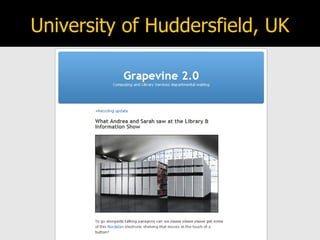
University of Huddersfield, UK
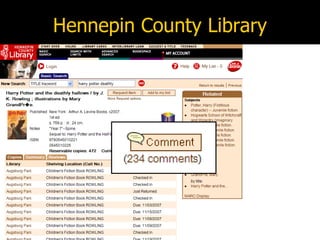
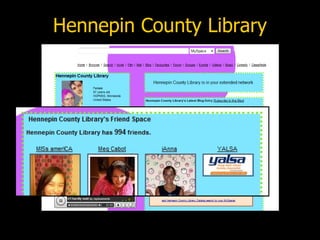
Hennepin County Library
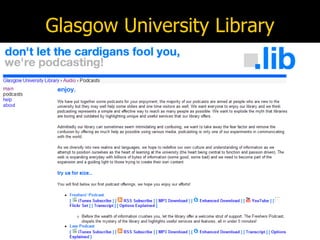
Glasgow University Library
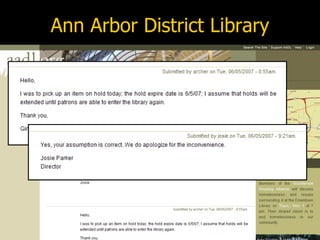
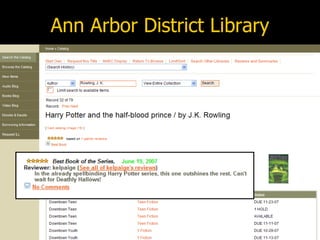
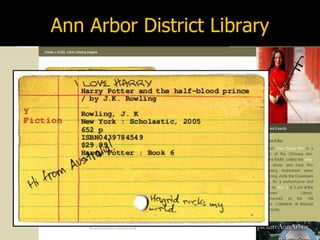
Ann Arbor District Library
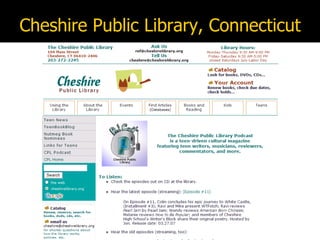
Cheshire Public Library, Connecticut
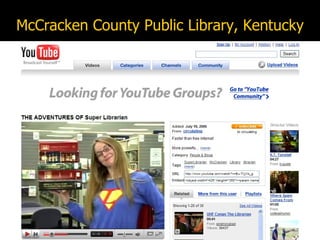
McCracken County Public Library, Kentucky
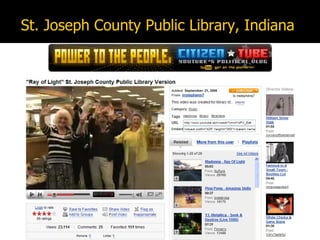
St. Joseph County Public Library, Indiana
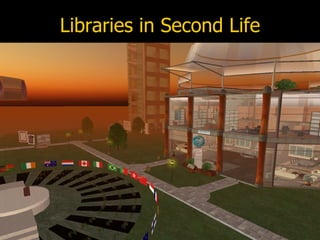
Libraries in Second Life
Thank you! http://slideshare.net/daveyp

Web 2.0 and You Too

  • 1.
    Web 2.0 andYou Too (…woo hoo?) Dave Pattern, Library Systems Manager University of Huddersfield [email_address]
  • 2.
    Preamble Presentation availableat: www.slideshare.net/daveyp/ Please remix and reuse this presentation creativecommons.org/licenses/by-nc-sa/3.0 Have you remembered to switch your phone on? please feel free take photos, record audio, blog, tweet (@daveyp), etc
  • 3.
    Contents Question time!Web 2.0 Faster, smaller, cheaper… cheaper… free? Library 2.0 Some examples of “2.0” in Libraries
  • 4.
  • 5.
    Disclaimer I AmNot A Lawyer http://www.flickr.com/photos/paginafea/2868554305/
  • 6.
    Disclaimer Or, inmy case… I Am Not A Librarian http://www.flickr.com/photos/davepattern/2472477607/
  • 7.
    Question time! Doyou regularly use a mobile phone? http://www.flickr.com/photos/ari/362924278/
  • 8.
    Question time! doU snd txt msgz? http://www.flickr.com/photos/jessicamills/231072148/
  • 9.
    Question time! Doyou have your own MP3 player? http://www.flickr.com/photos/nez/268673268/
  • 10.
    Question time! Dohave broadband internet access at home? http://www.flickr.com/photos/jacksonlee/6222523/
  • 11.
    Question time! Doyou have wireless internet access at home? http://www.flickr.com/photos/travelinlibrarian/113353477/
  • 12.
    Question time! Doyou regularly use your home PC or laptop for more than an hour each evening? http://www.flickr.com/photos/richardholden/340601444/
  • 13.
    Question time! Doyou regularly use your home PC or laptop for 2 or 3 hours an evening? http://www.flickr.com/photos/aaronjacobs/64368770/
  • 14.
    Question time! Dohave your own weblog / blog? http:// www.blogger.com
  • 15.
    Question time! Doyou regularly read other peoples weblogs and/or contribute to other weblogs? http://orweblog.oclc.org/archives/001325.html
  • 16.
    Question time! Doyou regularly use Wikipedia?
  • 17.
    Question time! Haveyou ever edited a page on Wikipedia?
  • 18.
    Question time! Doyou regularly use instant messaging or online chat? e.g. AIM, Yahoo! Messenger, MSN, gTalk, Jabber, ICQ, Meebo, etc http://imagine-msn.com/messenger/launch/en-GB/
  • 19.
    Question time! Doyou have a games console at home? http://www.flickr.com/photos/jstar/336785888/
  • 20.
    Question time! Doyou play games online and/or visit virtual worlds? e.g. World of Warcraft, Second Life, etc? http://www.flickr.com/photos/christajoy42/354580876/
  • 21.
    One last question…How many books would you expect to fit onto 30 feet of shelving?
  • 22.
  • 23.
    A Tale of2 (Capa)cities IBM Deskstar June 2000 £125 20GB £6.25 per GB £6,250 per TB Hitachi Deskstar July 2008 £95 1000GB (1TB) 10p per GB £95 per TB
  • 24.
    A Tale of3 (Capa)cities IBM Deskstar June 2000 £125 20GB £6.25 per GB £6,250 per TB Seagate Barracuda June 2009 £97.50 1500GB (1.5TB) 6 ½p per GB £65 per TB Hitachi Deskstar July 2008 £95 1000GB (1TB) 10p per GB £95 per TB What will the price per GB/TB be next year? How about in 5 years?
  • 25.
    Can you spotthe trend? ;-)
  • 26.
    You say “Moore’s”,I say “Mooers” Moore’s Law Since the invention of the integrated circuit … the number of transistors that can be placed inexpensively on an integrated circuit has increased exponentially, doubling approximately every two years. - Gordon E Moore (1965)
  • 27.
    You say “Moore’s”,I say “Mooers” Mooers' Law “ An information retrieval system will tend not to be used whenever it is more painful and troublesome for a customer to have information than for him not to have it.” - Calvin Mooers (1959) “We cannot assume people will want our information, even if we know they need our information.” - Peter Morville (2005)
  • 28.
  • 29.
  • 30.
  • 31.
  • 32.
    Web 1.0 Slowaccess speeds (e.g. dial-up modem) Limited availability Static web pages Little interactivity Mostly text …lots and lots of text …on a grey background! Web sites that would only work with one type of web browser The “Read Only Web”
  • 33.
    Web 2.0 Fastaccess speeds (e.g. broadband) Wide availability (e.g. wireless) Dynamic web pages High interactivity Lots of multimedia Web sites that work on many devices (e.g. PCs, mobile phones, etc) The “Read/Write Web”
  • 34.
    Super connected Web1.0 was about connecting computers dial-up -> ISDN -> broadband -> wireless Web 2.0 is about connecting people instant messaging & chatrooms Skype & VoIP social networking sites virtual words (Second Life, Club Penguin, etc) communities of common interest microblogging (Twitter, etc)
  • 35.
    Some Web 2.0concepts Applications delivered via a web browser Exploiting and (sometimes freely) sharing data User participation, empowerment, and collaboration Social networking Communities of interest Tagging and folksonomies Mashups and other unintended uses
  • 36.
    Web 2.0 factsand figures 3 billion images on Flickr 312 million edits on Wikipedia 200 million Facebook accounts 113 million blogs tracked by Technorati 110 million MySpace accounts 37 million books on LibraryThing 9.4 million editors on Wikipedia 2.9 million Wikipedia articles 2 228 70 24 7.2 2.4
  • 37.
    How do youstore 3bn photos?
  • 38.
    Just how muchinformation is there out there?
  • 39.
    5 EB ofdata = 37,000 x Library of Congress (and that was in 2003!)
  • 40.
    5 exabytes? 5,000,000TB 5,000,000,000 GB 5,000,000,000,000,000,000 bytes …or 1 CDs worth of data for every single person on the planet in 2003 …or 30 feet of books per person …or £325,000,000 worth of hard drives at today’s prices on Amazon 
  • 41.
    The cost ofstorage is -> £0
  • 42.
    Freeconomics “Never inhistory has so much innovation been offered to so many for so little [cost]. The world’s most exciting businesses – technology, transport, media, medicine and finance – are increasingly defined by the word ‘free’ … … It is a difficult proposition to beat.” Michael Schrage, “Why giveaways are changing the rules of business” (Financial Times, 2006)
  • 43.
    Freeconomics His newambition, [Ryanair's founder Michael O'Leary] told the Financial Times in 2004, was to give customers free tickets, perhaps even to pay them to fly. He predicted: “In a decade or so, airlines will pay travellers to distribute people around Europe.” “The big giveaway” (Guardian, May 2008)
  • 44.
    Free: The Futureof a Radical Price “ In the future, [Anderson] argues, when we talk of the ‘money economy’ we will talk of the ‘reputation economy’ and the ‘time economy’ in the same breath.”
  • 45.
    “ What happenswhen things get free?” - Professor Carver Mead, Professor Emeritus at the California Institute of Technology
  • 46.
    What happens… …tothe music industry when I can fit every song ever recorded onto my MP3 player?
  • 47.
    What happens… …whenfree wireless internet access is available everywhere?
  • 48.
    What happens… …tothe library when I can fit every book ever written on my e-book reader?
  • 49.
    Researcher of theFuture (2008) The information environment in 2017: electronic books, driven by consumer demand, will finally become established as the primary format for educational textbooks and scholarly books and monographs, as well as reference formats. the most significant impact for research will not be how things get published, but how they get accessed. http:// www.bl.uk/news/pdf/googlegen.pdf
  • 50.
    Researcher of theFuture (2008) The challenges reduce barriers to information understand why users “power browse” web content librarians rarely design information systems that match user behaviour importance of flexibility at all levels better analysis of usage data importance of information skills
  • 51.
    OCLC Perceptions Report(2005) 30% have never heard of databases Starting place for an information search Search engine 84% Email 6% Library web site 1% 93% are satisfied/very satisfied with their experience of using a search engine …compared to 84% for librarian-assisted searches!
  • 52.
    OCLC Perceptions Report(2005) Other than search engines, how do you learn about electronic information sources? 26% 37% Relatives College students All respondents 26% 39% Adverts 33% 8% Librarian 13% 9% Blogs 26% 22% Online chat 67% 61% Friends
  • 53.
    “ Creating thenew library universe” National & State Libraries Australasia draft paper access is our primary driver digital is mainstream no job will be unchanged new web technologies and community digital content are shaping user expectations and behaviour some things we have always done, we will no longer do experimentation and risk are necessary people want services and spaces to be welcoming and easy to use, and they want to be independent The Big Bang: Creating the new library universe
  • 54.
  • 55.
    Library 2.0 “...aloosely defined model for a modernized form of library service that reflects a transition within the library world in the way that services are delivered to users. This includes ... an increased flow of information from the user back to the library.” Wikipedia article for “ Library 2.0 ”
  • 56.
    Library 2.0 Useof “2.0” technologies (blogs, wikis, RSS feeds, social networking, etc) Actively involving users in developments Delivering services directly to users Libraries without walls (“ The Third Place ”) The “Read/Write Library” Liberating your data & making it work harder Libraries needing to be flexible to change
  • 57.
    Library 2.0 isa state of mind
  • 58.
  • 59.
  • 60.
    Charlotte & MecklenburgCounty Public Library
  • 61.
  • 62.
    Play and experimentation
  • 63.
    It’s okay toplay! “We don’t stop playing because we grow old; we grow old because we stop playing.” attrib: George Bernard Shaw 2007 Library & Information Show Workshop on Library 2.0 Q: I don’t get paid to play, I get paid to work A: So, don’t call it “play”, call it “professional development”
  • 64.
    Admit it, haven’tyou wanted to do this in your library…
  • 65.
  • 66.
    Never judge abook by it’s cover? “ I borrowed a book 3 years ago that had an orange cover… can I borrow it again?”
  • 67.
  • 68.
  • 69.
  • 70.
  • 71.
  • 72.
  • 73.
  • 74.
  • 75.
  • 76.
  • 77.
    Library 2.0 inaction (n.b. some are more “2.0” than others)
  • 78.
  • 79.
  • 80.
  • 81.
  • 82.
  • 83.
  • 84.
  • 85.
    Stevens County RuralLibrary, Washington
  • 86.
    Flickr – 365Library Days Project
  • 87.
  • 88.
    University of Lincoln“ These are to advertise that a key text is also available in electronic format. The markers show the front cover, as well as giving you a quick reminder of how to access books online.” http://bit.ly/3qVRd
  • 89.
    Thomas Ford MemorialLibrary, Illinois
  • 90.
    Thomas Ford MemorialLibrary, Illinois
  • 91.
    Dance your finesaway… “Yesterday I had the pleasure of meeting a teen librarian who keeps Dance Dance Revolution (DDR) set up all the time so she can invoke it as need be. For example, if a teen has overdue books, she will dance-off against the person, and if the teen wins, the librarian will waive the fines.” The Shifted Librarian: Gaming for Fines (Jan 2007)
  • 92.
    Gwinnett County PublicLibrary Rock the Shelves 2005 www.flickr.com/photos/michaelcasey/sets/632151/
  • 93.
  • 94.
  • 95.
  • 96.
  • 97.
  • 98.
  • 99.
  • 100.
  • 101.
  • 102.
    McCracken County PublicLibrary, Kentucky
  • 103.
    St. Joseph CountyPublic Library, Indiana
  • 104.
  • 105.