Reflection
REFLECTION
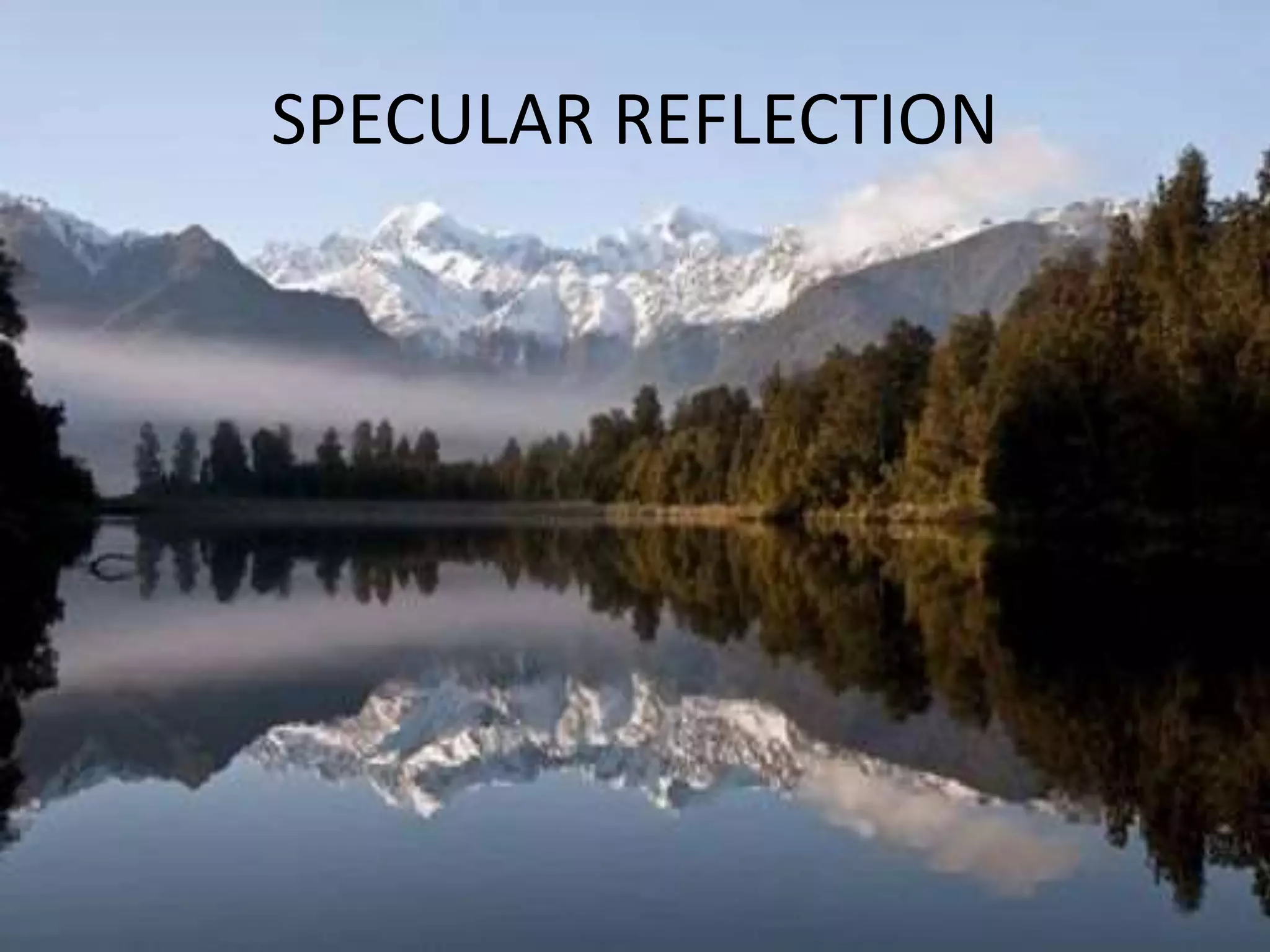
• The change in direction of a wavefront at an
interface
• ie. Light waves reflecting on the waters surface.
• The reflection of light allows us to see objects
that do not emit light themselves.
• Basic principles of reflection can be covered
include:
If Light not reflected it must be absorbed
Lights reflects differently on different surfaces
Reflective angle of light
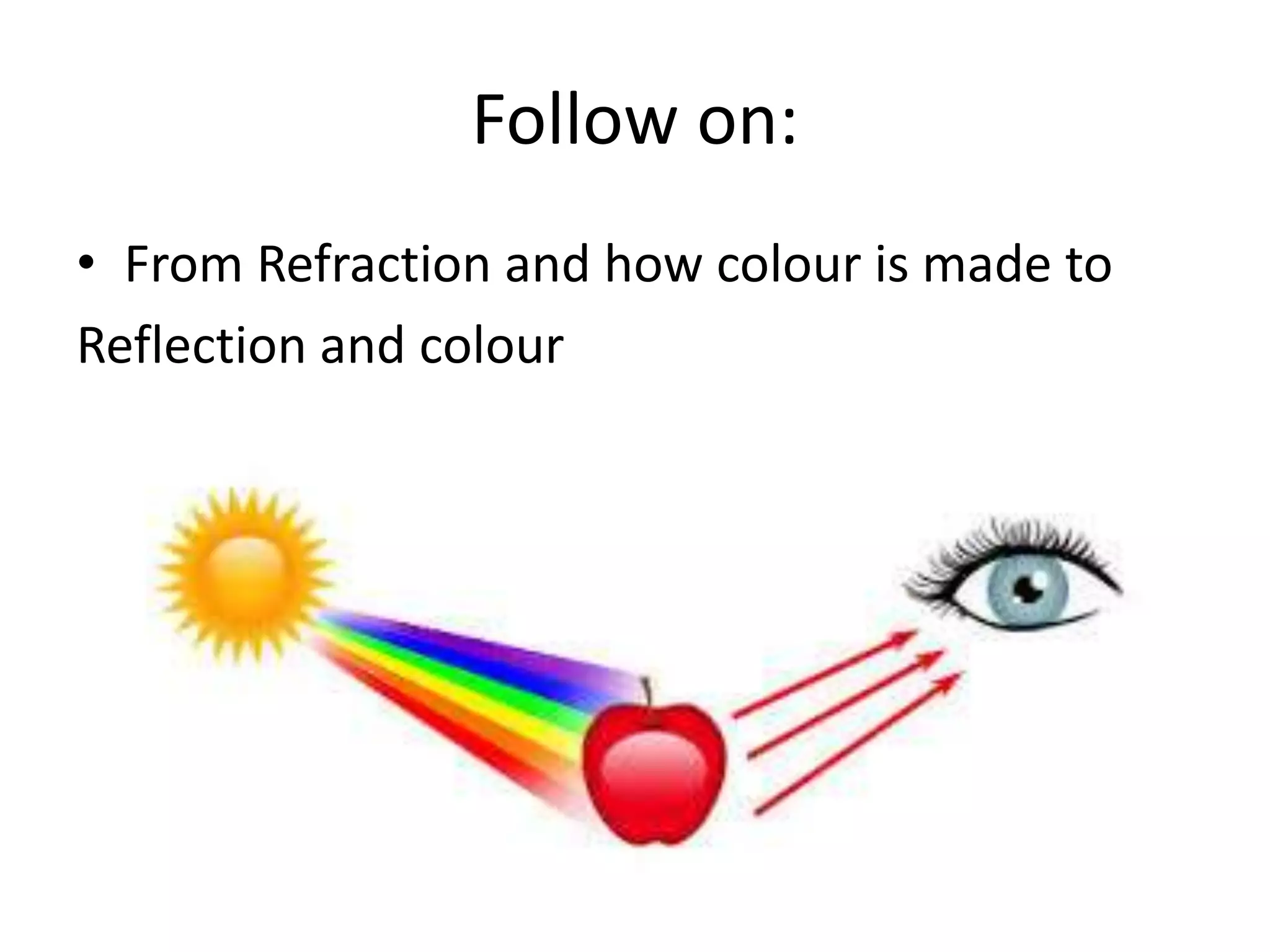
Follow on:
• From Refraction and how colour is made to
Reflection and colour
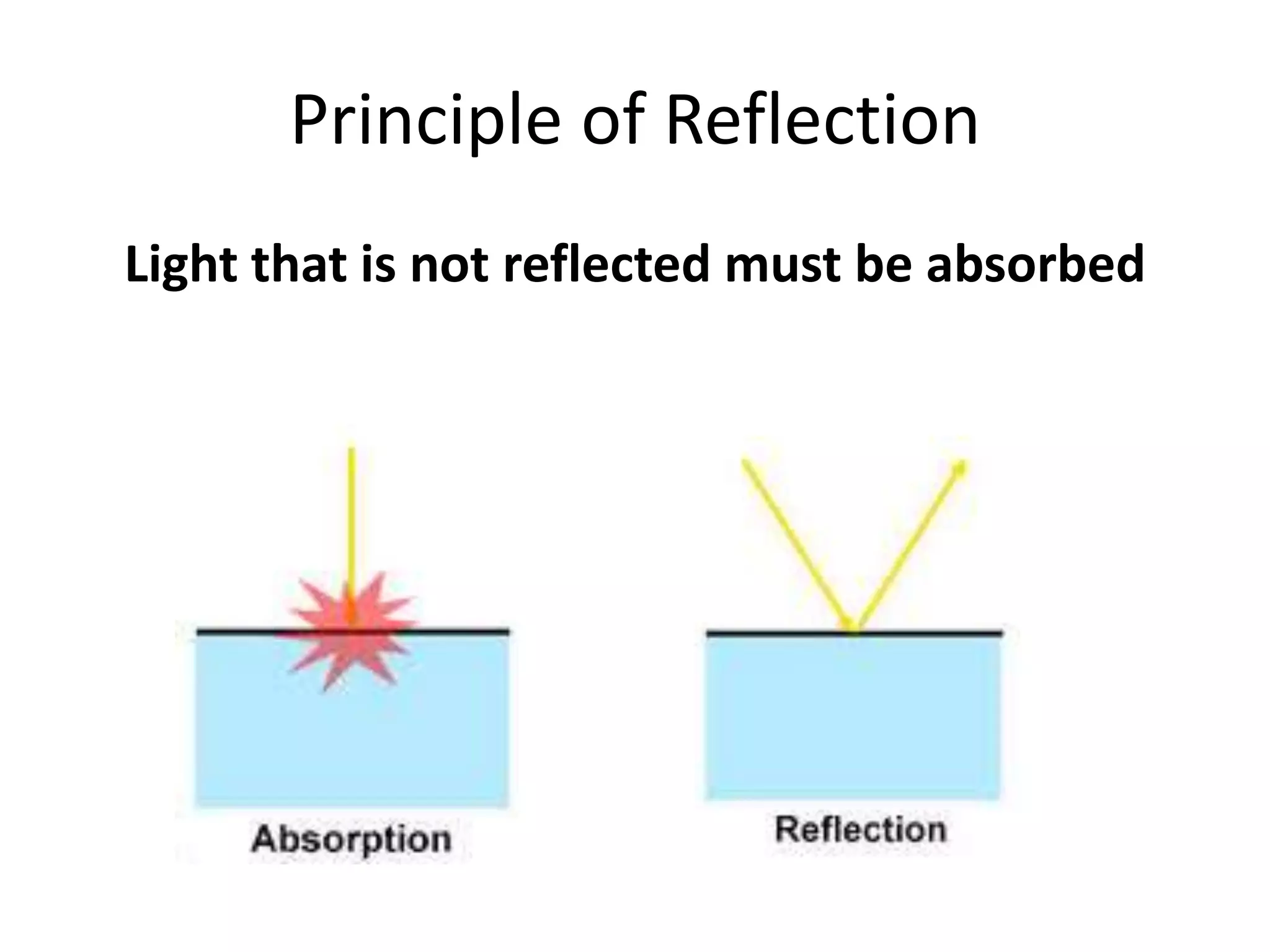
Principle of Reflection
Light that is not reflected must be absorbed
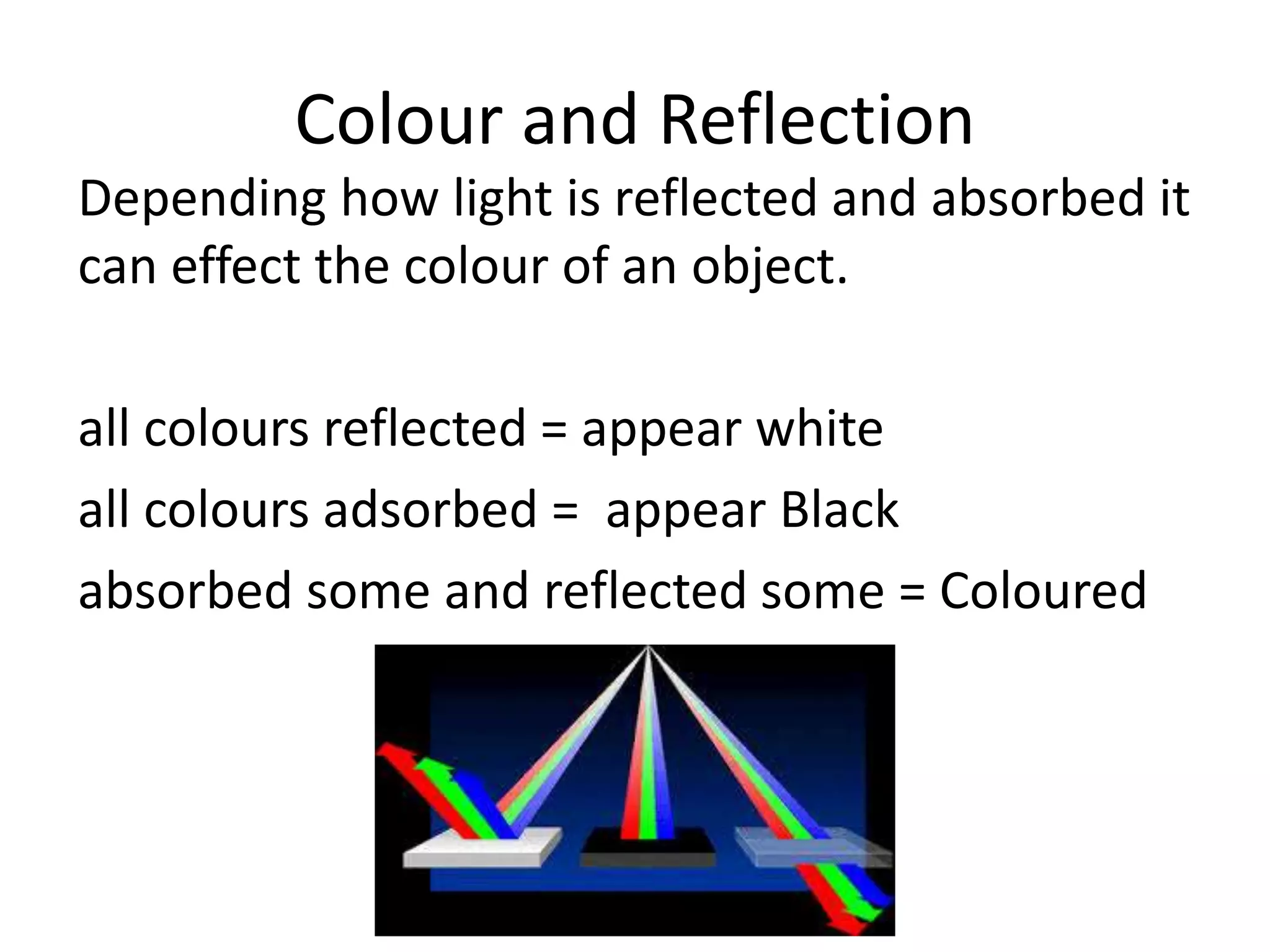
Colour and Reflection
Depending how light is reflected and absorbed it
can effect the colour of an object.
all colours reflected = appear white
all colours adsorbed = appear Black
absorbed some and reflected some = Coloured
Gummy Bear experiment
• Line of Green
Gummy Bears
• Line of Red Gummy
Bears
• Gummy Worm
• 1 Red laser Pointer
• 2 Green Laser Point
• White Light
Gummy bear experiment
• First
– Red laser on Red
Gummy Bears
– Green Laser on Green
Gummy Bears
• Next
– Red Laser on Green
Gummy Bears
– Green laser on Red
Gummy Bears
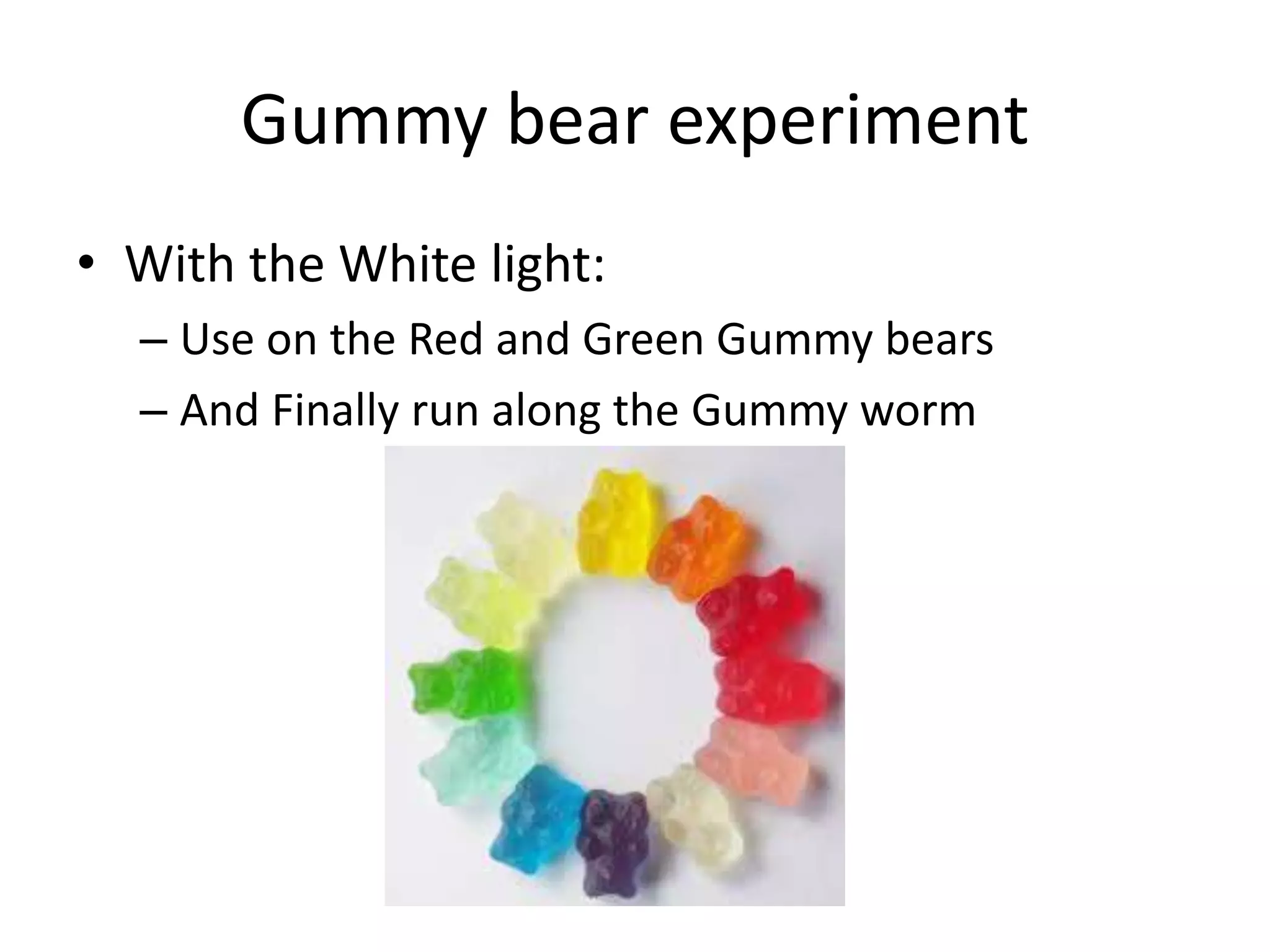
Gummy bear experiment
• With the White light:
– Use on the Red and Green Gummy bears
– And Finally run along the Gummy worm
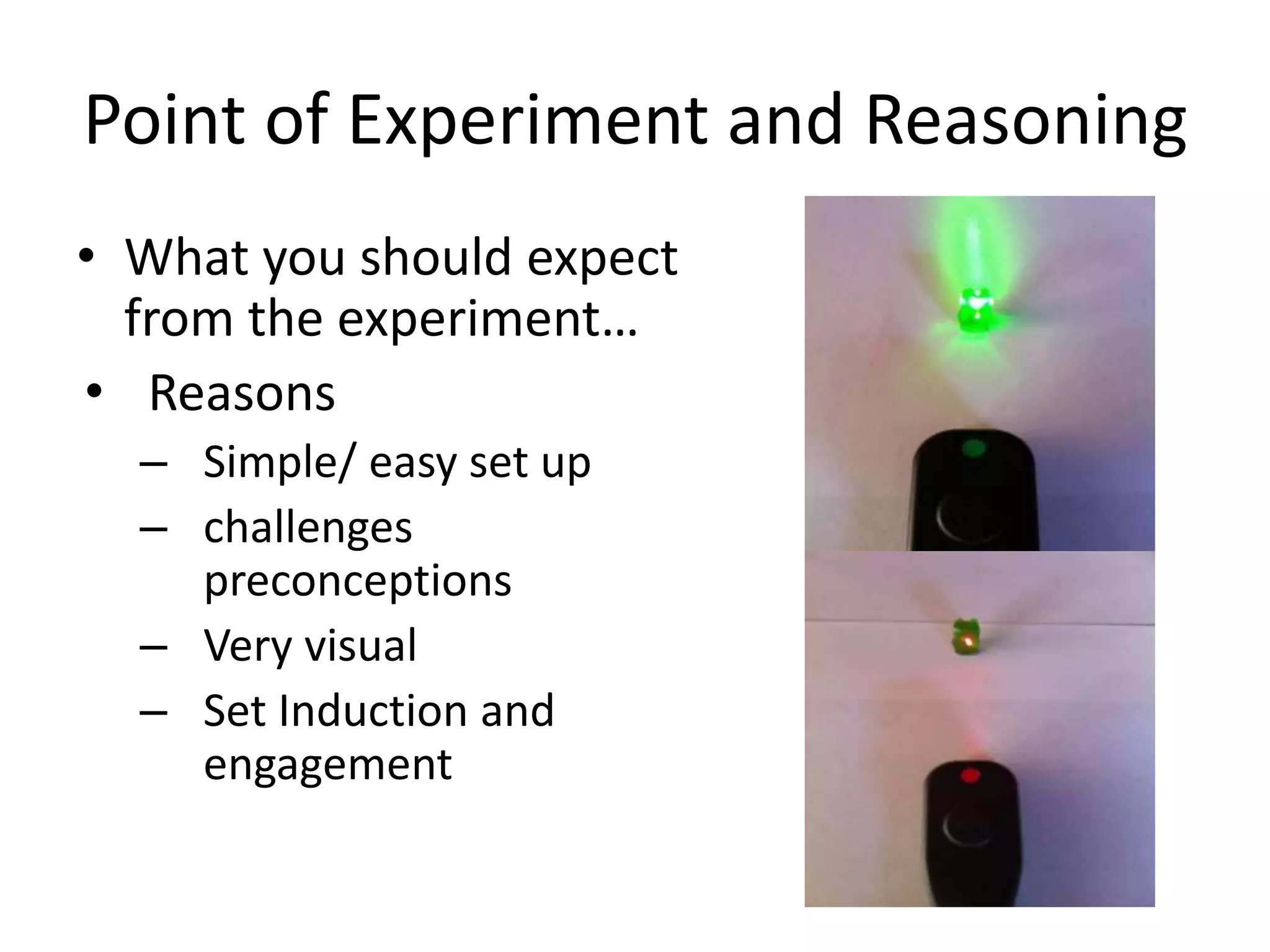
Point of Experiment and Reasoning
• What you should expect
from the experiment…
• Reasons
– Simple/ easy set up
– challenges
preconceptions
– Very visual
– Set Induction and
engagement
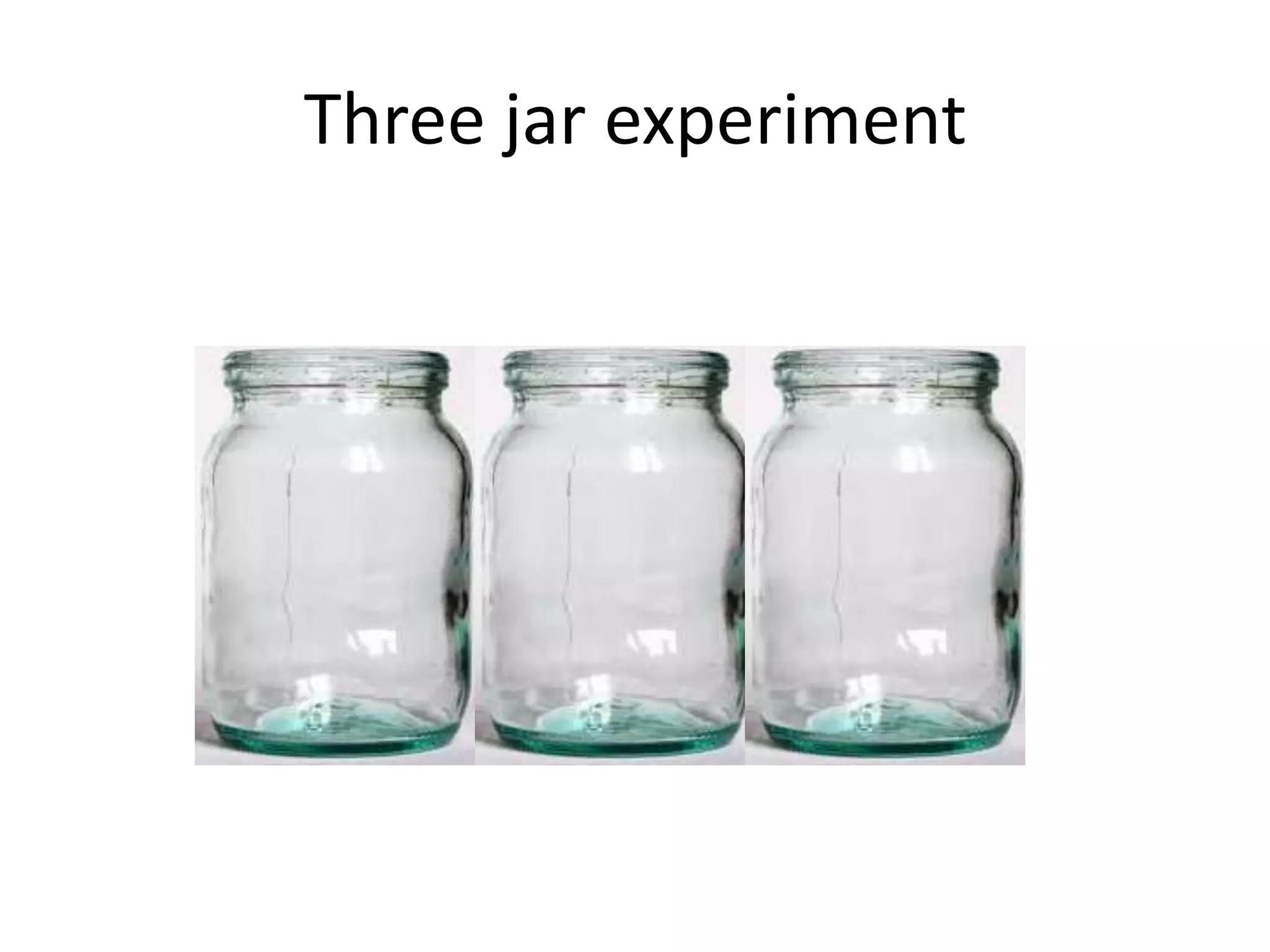
Three jar experiment
You will need:
• Three jars •Vegetable oil
• 3x Thermometers • Sun
• Paper (1x black, 1x white, 1x coloured)
• Check the temperature of the oil in each jar.
Record the temperatures every 5-10 minutes
for one hour.
Three jar experiment
• Facilitate a prediction from the students
• How the colours affect the temperature and
students understanding
– black = absorption of light
– white = reflection of light
– Colour = Some reflection and some absorption
Point of Experiment and Reasoning
• If light is not reflected
by a material, it must be
absorbed
• Connection and transfer
or
learning/understanding
to other topics
• Relate back to real life
(clothes, cars)
Video- Light and Colour Bill Nye
• http://www.youtube.com/watch?v=gtgBHsSzC
PE
SPECULAR REFLECTION
The Maze Experiment
• 4-5 mirrors
• A target
• A Torch or
laser pointer
• Use the mirrors
to redirect the
light to the target.
But what’s the point?
• Visually informative
• Easy to set up and pack up
• Engaging
• Promotes collaboration and cooperation
• You can use it to create
challenges/competitions
• Guided discovery
• Great lead-in to discussion and other activities

Science: reflection

  • 1.
  • 2.
    REFLECTION • The changein direction of a wavefront at an interface • ie. Light waves reflecting on the waters surface. • The reflection of light allows us to see objects that do not emit light themselves. • Basic principles of reflection can be covered include: If Light not reflected it must be absorbed Lights reflects differently on different surfaces Reflective angle of light
  • 3.
    Follow on: • FromRefraction and how colour is made to Reflection and colour
  • 4.
    Principle of Reflection Lightthat is not reflected must be absorbed
  • 5.
    Colour and Reflection Dependinghow light is reflected and absorbed it can effect the colour of an object. all colours reflected = appear white all colours adsorbed = appear Black absorbed some and reflected some = Coloured
  • 6.
    Gummy Bear experiment •Line of Green Gummy Bears • Line of Red Gummy Bears • Gummy Worm • 1 Red laser Pointer • 2 Green Laser Point • White Light
  • 7.
    Gummy bear experiment •First – Red laser on Red Gummy Bears – Green Laser on Green Gummy Bears • Next – Red Laser on Green Gummy Bears – Green laser on Red Gummy Bears
  • 8.
    Gummy bear experiment •With the White light: – Use on the Red and Green Gummy bears – And Finally run along the Gummy worm
  • 9.
    Point of Experimentand Reasoning • What you should expect from the experiment… • Reasons – Simple/ easy set up – challenges preconceptions – Very visual – Set Induction and engagement
  • 10.
  • 11.
    You will need: •Three jars •Vegetable oil • 3x Thermometers • Sun • Paper (1x black, 1x white, 1x coloured) • Check the temperature of the oil in each jar. Record the temperatures every 5-10 minutes for one hour.
  • 12.
    Three jar experiment •Facilitate a prediction from the students • How the colours affect the temperature and students understanding – black = absorption of light – white = reflection of light – Colour = Some reflection and some absorption
  • 13.
    Point of Experimentand Reasoning • If light is not reflected by a material, it must be absorbed • Connection and transfer or learning/understanding to other topics • Relate back to real life (clothes, cars)
  • 14.
    Video- Light andColour Bill Nye • http://www.youtube.com/watch?v=gtgBHsSzC PE
  • 16.
  • 18.
    The Maze Experiment •4-5 mirrors • A target • A Torch or laser pointer • Use the mirrors to redirect the light to the target.
  • 19.
    But what’s thepoint? • Visually informative • Easy to set up and pack up • Engaging • Promotes collaboration and cooperation • You can use it to create challenges/competitions • Guided discovery • Great lead-in to discussion and other activities

Editor's Notes

  • #16 http://maggiesscienceconnection.weebly.com/uploads/5/1/0/5/5105330/166575316.jpg
  • #17 http://www.sciencelearn.org.nz/Contexts/Light-and-Sight/Sci-Media/Images/Lake-reflection
  • #18 http://www.urantiansojourn.com/wp-content/uploads/2012/09/Bruce-Lee-mirrors1.jpg
  • #19 http://www.scienceoffcenter.org/science/532-light-maze