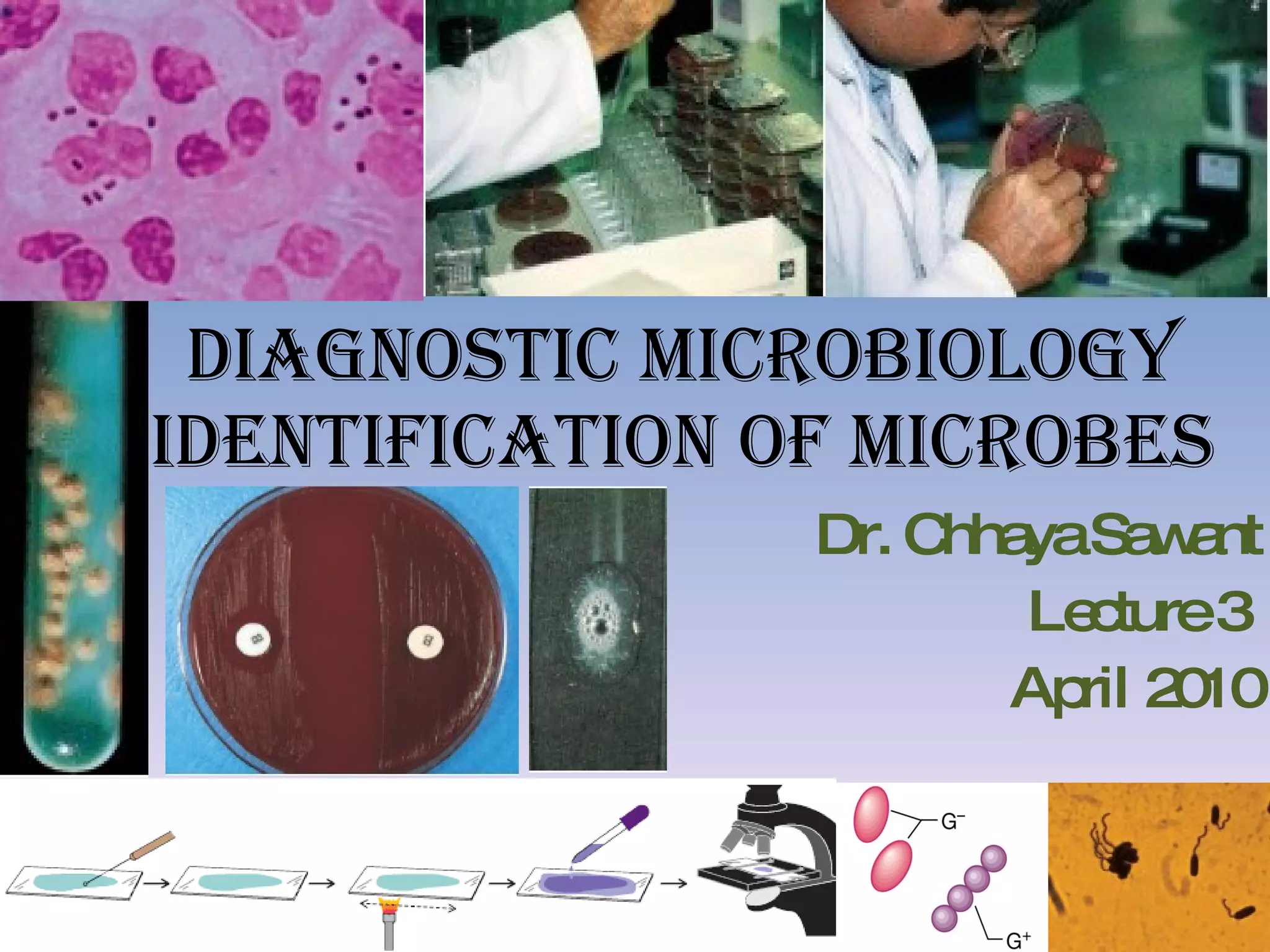
Diagnostic Microbiology Identification of Microbes Dr. Chhaya Sawant Lecture 3  April 2010
Scope of the present lecture The importance of studying microorganisms An overview of microbe identification methods
The importance of studying microorganisms Useful Role  Maintain balance of environment (microbial ecology) Basis of food chain Nitrogen fixation Photosynthesis Digestion, synthesis of vitamins Manufacture of food and drink Bioremediation Harmful Role Diseases causing microbes
Identification of Microorganisms How to identify unknown specimens ?????? Labs can grow, isolate and identify most routinely encountered bacteria within  48 hrs  of sampling. The methods microbiologist use fall into  three categories : Phenotypic - morphology (micro and macroscopic) Immunological - serological analysis Genotypic - genetic techniques
Phenotypic Methods ‘ Old fashioned’ methods via biochemical, serological and morphological are still used to identify many microorganisms. Phenotypic Methods Microscopic Morphology include a combination of cell shape, size, Gram stain, acid fast reaction, special structures e.g. Endospores, granule and capsule can be used to give an  initial presumptive identification .
Phenotypic Methods Macroscopic morphology  are traits that can be accessed with the naked eye e.g. appearance of colony including texture, shape, pigment, speed of growth and growth pattern in broth. Physiology/Biochemical  characteristic are traditional mainstay of bacterial identification.  These include enzymes (Catalase, Oxidase, Decarboxylase), fermentation of sugars, capacity to digest or metabolize complex polymers and sensitivity to drugs can be used in identification.
Immunological Methods Immunological methods involve the interaction of a microbial  antigen with an antibody  (produced by the host immune system). Testing for microbial antigen or the production of antibodies is  often easier  than test for the microbe itself. Lab kits  based on this technique is available for the identification of many microorganisms.
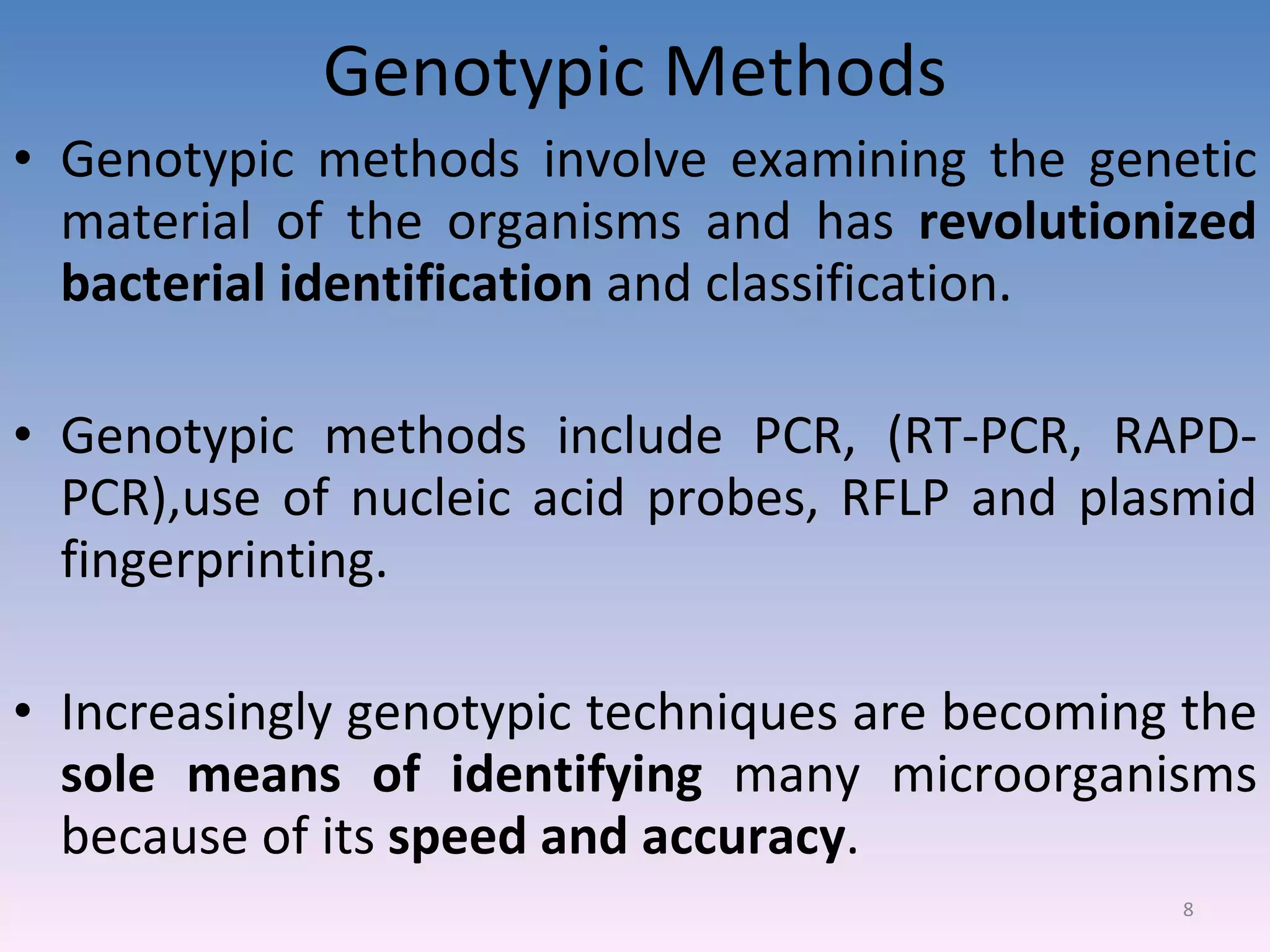
Genotypic Methods Genotypic methods involve examining the genetic material of the organisms and has  revolutionized bacterial identification  and classification. Genotypic methods include PCR, (RT-PCR, RAPD-PCR),use of nucleic acid probes, RFLP and plasmid fingerprinting. Increasingly genotypic techniques are becoming the  sole means of identifying  many microorganisms because of its  speed and accuracy .
Microbe Identification Scheme
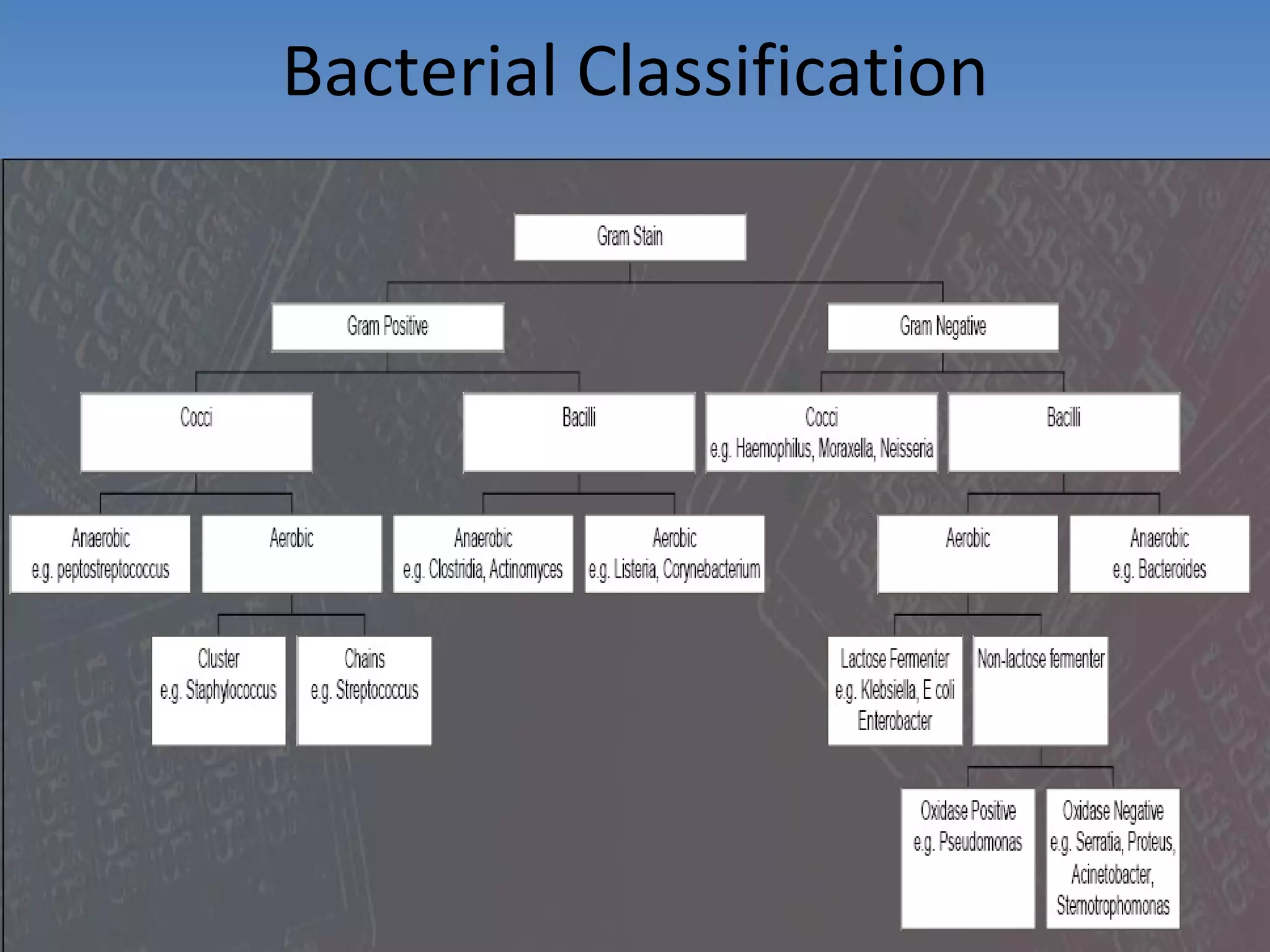
Bacterial Classification
Process Specimen collection Specimen receipt Specimen processing Testing Interpretation Reporting
Microbe Identification The  successful identification  of microbe depends on: Using the proper  aseptic techniques . Correctly  obtaining the specimen. Correctly  handling the specimen Quickly transporting  the specimen to the lab. Once the specimen reaches the lab it is  cultured and identified Use care and tact to  avoid patient harm The specimen is the beginning. All diagnostic information from the  laboratory depends upon the knowledge by which specimens are chosen and the care with which they are collected and transported.   — Cynthia A. Needham
Standard Precautions Fundamental to safe handling of specimens New concept in 1995 - combined ‘universal’ and ‘body substance isolation’ precautions Applies to all patients irrespective of known or presumed disease status Applies to blood, body fluid and body tissue (Garner  1996)
Standard Precautions (cont.) Hand washing or hand hygiene Antibacterial soap for invasive procedures Waterless alcohol gels or rubs Personal Protective Equipment Disposable gloves Disposable aprons / impervious  gowns Facial protection – masks, eye goggles Safe handling of sharps (The National Committee for Clinical Laboratory Standards 2004)
Specimen Collection
A drawing of a sterile swab with a specific transport  medium.  ( b) Sterile Vacutainer tubes for the collection of blood.  (c)  Nasotracheal intubation.  (d) A drawing  of a Foley catheter.  ( e) This specially designed sputum cup allows the patient to expectorate a clinical specimen directly into the  cup.
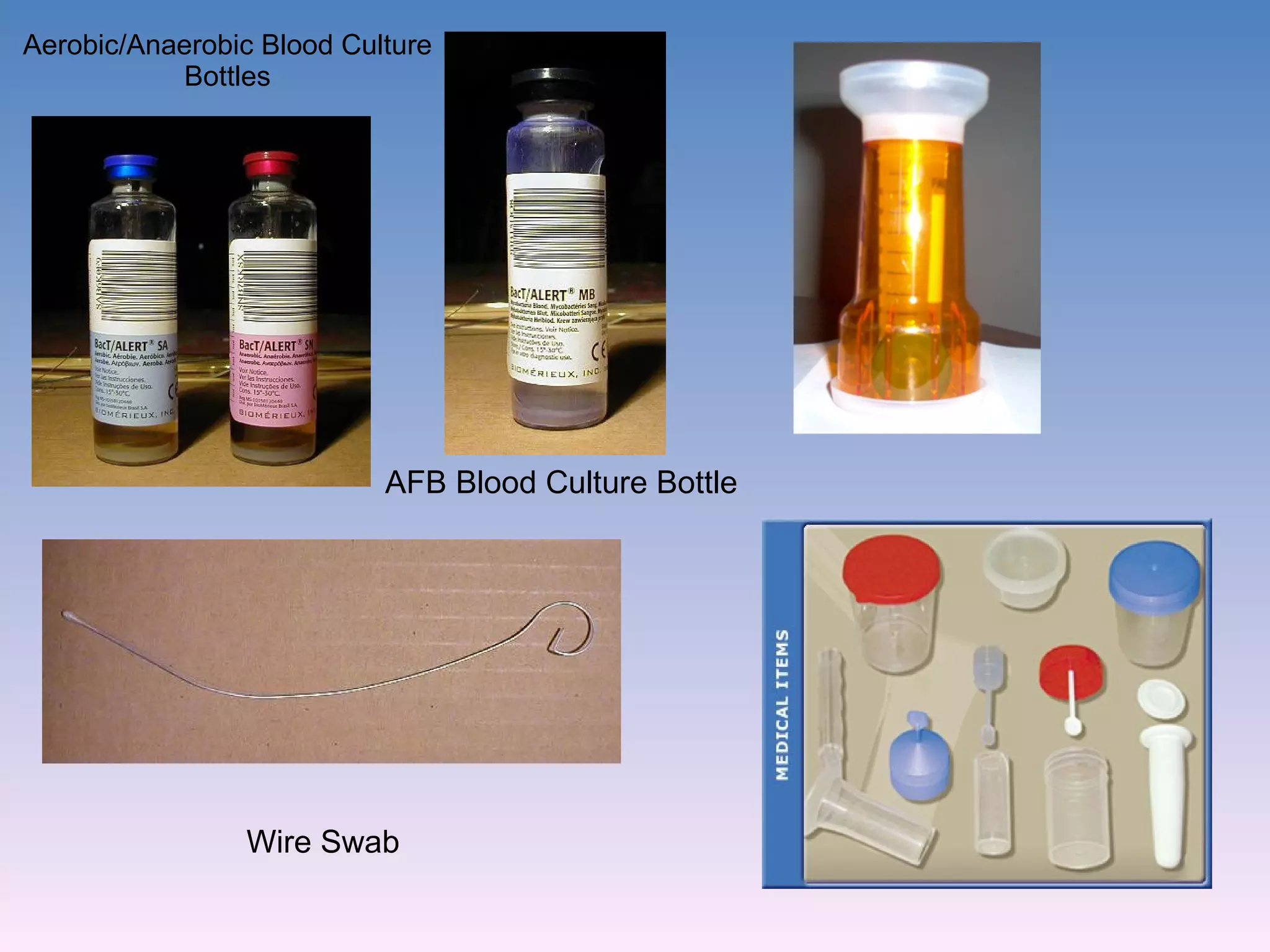
Aerobic/Anaerobic Blood Culture Bottles AFB Blood Culture Bottle Wire Swab
Suprapubic Aspiration
Transportation Specimen transported promptly Within 2 hours Strict storage conditions  for delayed laboratory processing Sterile containers Faecal specimens an exception Use of transport media Provide written guidelines
Microbe Identification Identification  measures include: Microscopy (staining) growth on enrichment, selective, differential or characteristic media specimen biochemical test (rapid test methods) immunological techniques molecular (genotypic) methods . After the microbe is identified for clinical samples it is used in  susceptibility tests  to find  which method of control is most effective.
Different Identification methods  1) Staining Reactions 2) Cultural Characteristics 3) Resistance 4) Metabolism 5) Biochemical properties
Staining Reactions The presence of certain structures and staining reactions aids in their identification and classification To render microscopic and semitransparent objects visible  To reveal their shape and size  To produce specific physical or chemical reactions To produce specific physical or chemical reactions.
Staining Reactions Simple staining bring out the morphology the best Differential and special stains are necessary to bring out characteristics like flagella, capsules, spores and metachromatic granules.  Gram stain divides bacteria into Gram positive and Gram negative Ziehl-Neelsen stain divides them into acid fast and non acid fast Fluorescent dyes bring out special characteristics and fluorescent antibody technique enables to identify them.
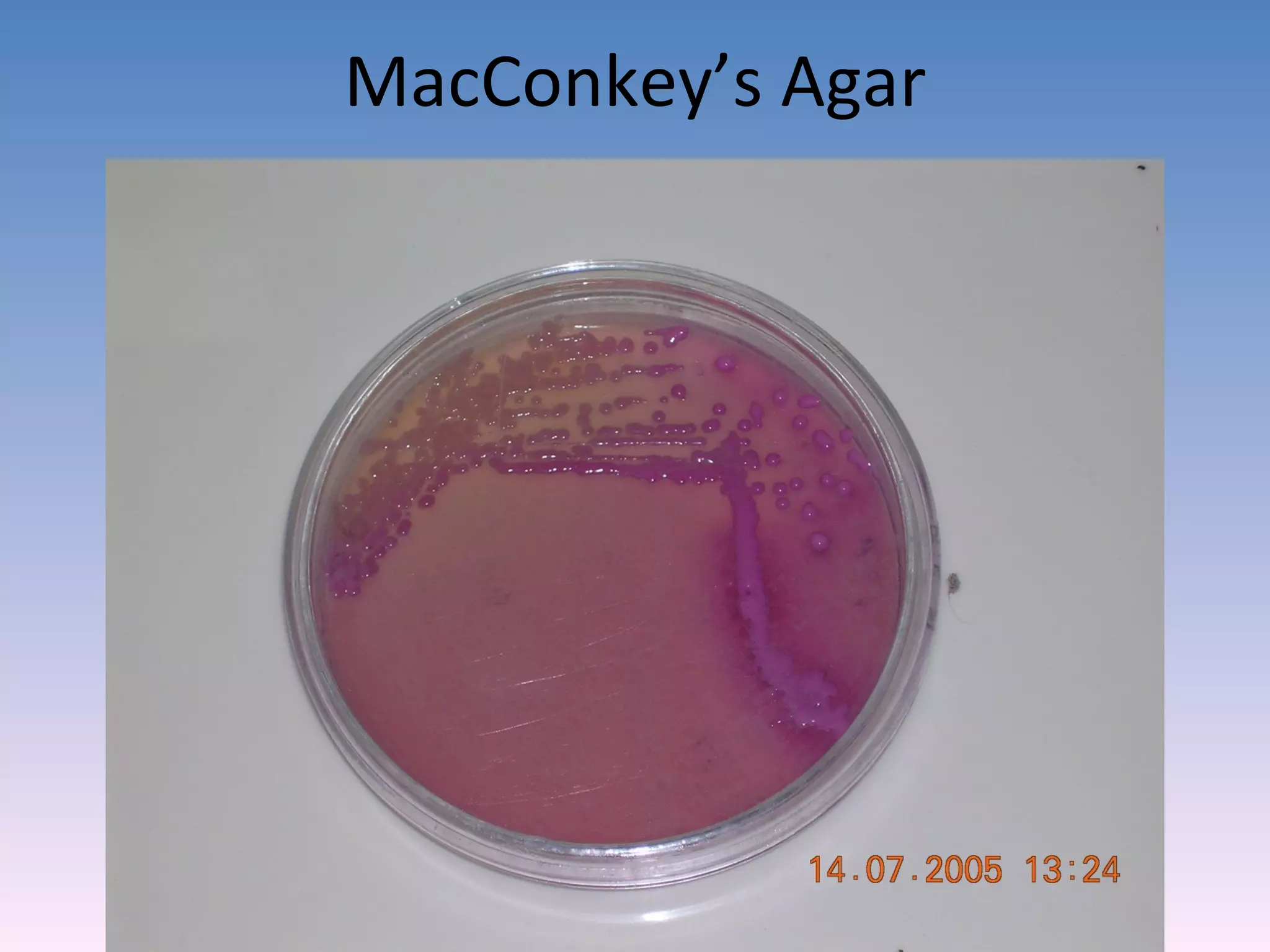
Cultural Characteristics Provides additional information for the identification of the bacterium. The characters revealed in different types of media are noted.  While studying colonies on solid media following characteristics are observed : Size, Shape, Margins, Surface, Their elevations, Edge, colour, structure, consistency. In fluid medium following characteristics are observed : Degree of growth – Absence, scanty, moderate, abundant etc. presence of turbidity and its nature presence of deposit and its character Nature of surface growth Ease of disintegration and odour
MacConkey’s Agar
Plates showing differentiating characteristics
Resistance The resistance of the organism is tested against number of parameters which helps differentiation and identification of the organisms - Heat - Low concentration of disinfectants - Antibiotics - Chemotherapeutic agents - Bacteriocins etc.
Metabolism  To classify and differentiate species following aspects are studied - Requirements of oxygen - The need for CO 2  - Capacity to form pigments - power of haemolysis
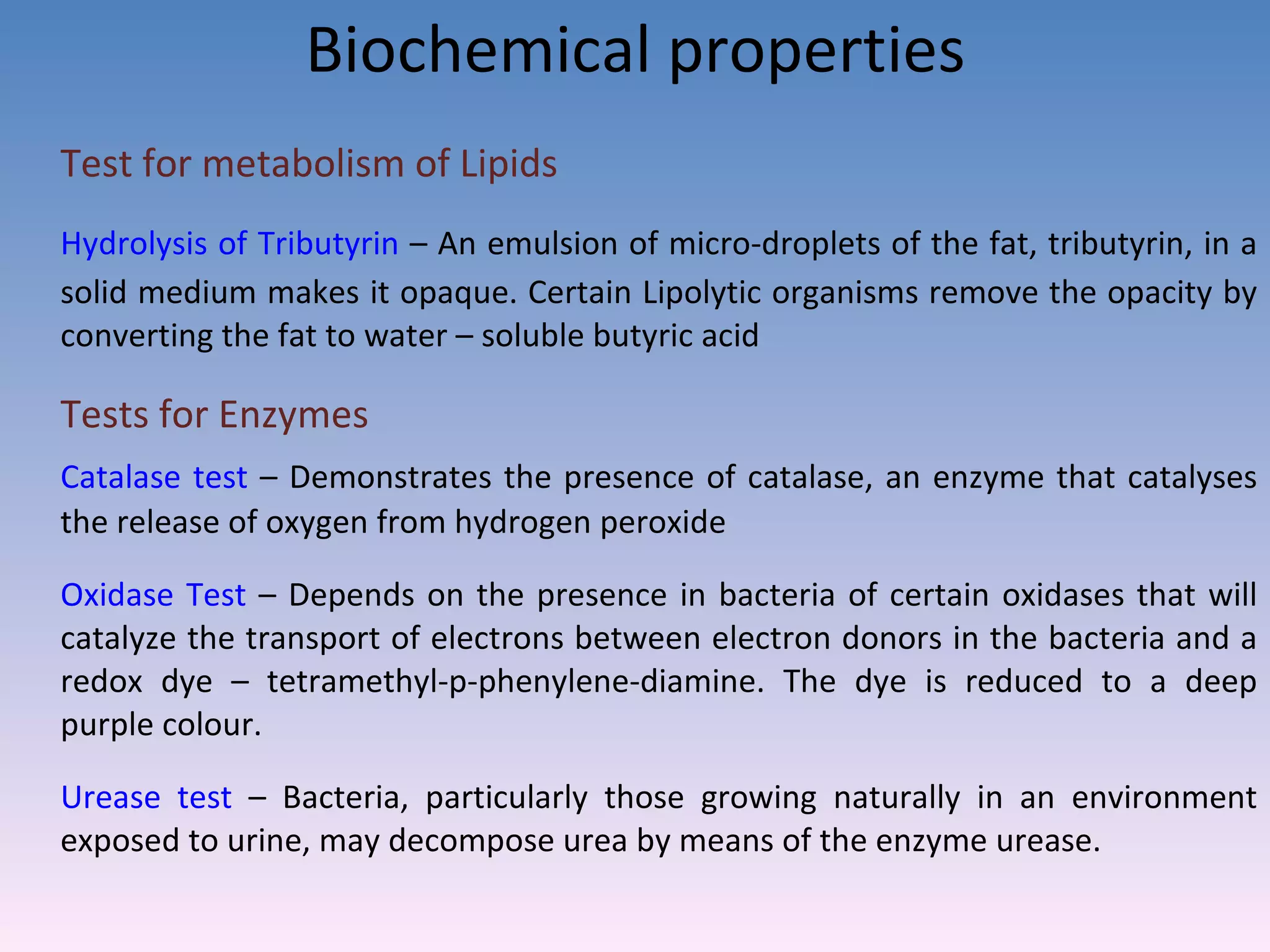
Biochemical properties Tests for Metabolism of Carbohydrates and related compounds Tests for Metabolism of Proteins and Amino acids Test for metabolism of Lipids Tests for Enzymes  Combined Tests
Biochemical properties Tests for Metabolism of Carbohydrates and related compounds Tests to distinguish b/w aerobic and anaerobic breakdown of carbohydrates - O/F test depends upon the use of a semi-solid tubed medium containing the carbohydrate (usually glucose) along with the pH indicator Tests to show the range of carbohydrates and related compounds that can be attacked - A large variety of carbohydrate compounds are used and they are often regarded as ‘sugars’ Sugar fermentation – Acid production Litmus milk – Acid or alkali production, clot formation, peptonisation or saponification. Disruption of clot due to gas production. Stormy Fermentation of Litmus Milk.  The tube on the left shows fermentation; the tube on the right is negative for stormy fermentation.  Used for the identification of  Clostridium  species.
Sugar fermentation  Acid and gas production
Biochemical properties Tests for Metabolism of Carbohydrates and related compounds Tests for specific breakdown products -  Methyl red test – To detect Acid production during Glucose    fermentation.  - Voges-Proskauer test – Depends on the production of acetyle methylcarbional from pyruvic acid, as an intermediate stage in its conversion to 2:3 butylene glycol.   Tests to show ability to utilize particular substrate Citrate utilization – Ability to use citrate as a sole source of carbon and Ammonia as a sole source of Nitrogen.
MR and VP test This is a qualitative test of the acidity produced by bacteria grown in MR-VP broth. Citrate utilization
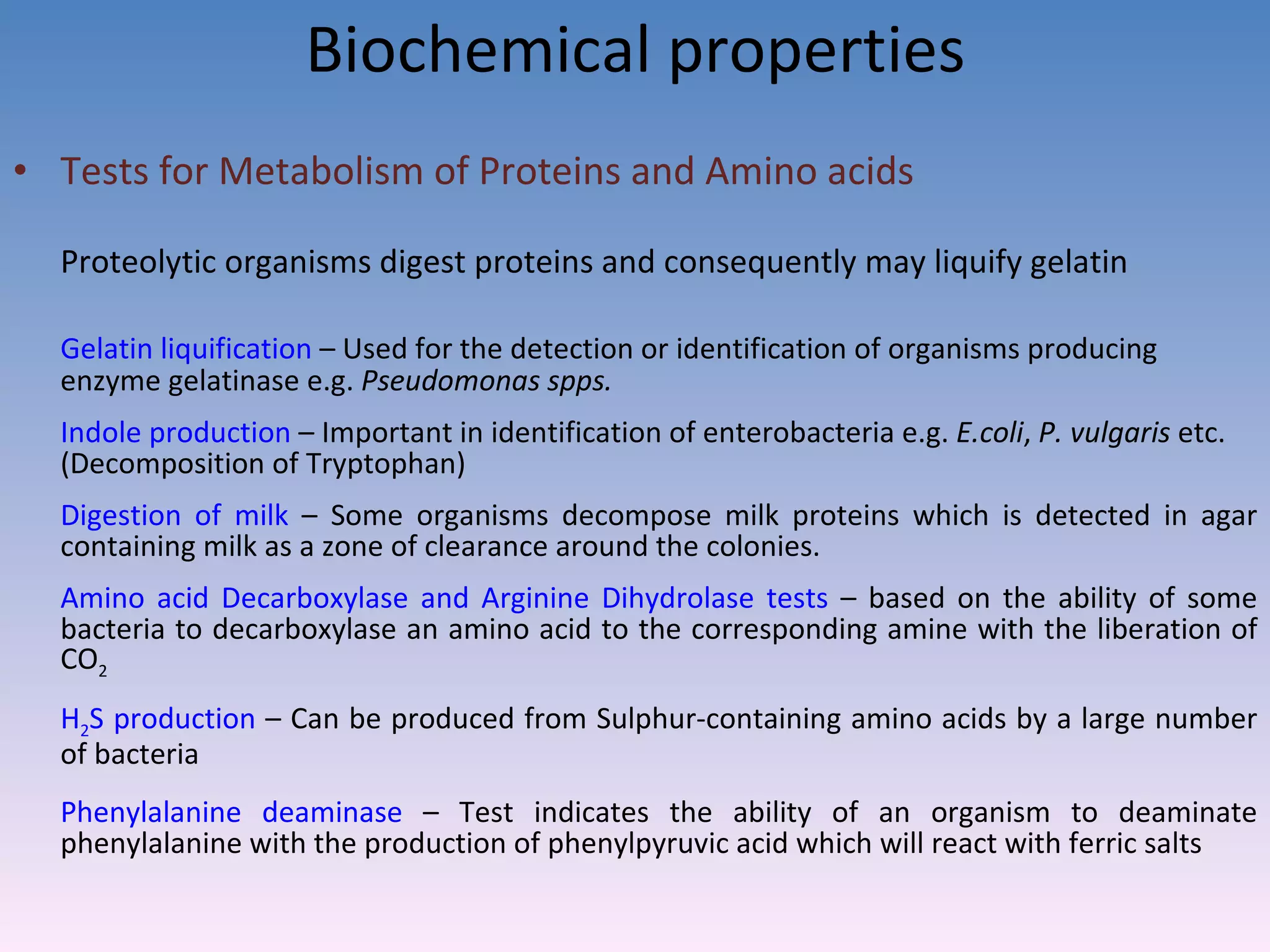
Biochemical properties Tests for Metabolism of Proteins and Amino acids Proteolytic organisms digest proteins and consequently may liquify gelatin Gelatin liquification  – Used for the detection or identification of organisms producing enzyme gelatinase e.g.  Pseudomonas spps. Indole production  – Important in identification of enterobacteria e.g.  E.coli ,  P. vulgaris  etc. (Decomposition of Tryptophan) Digestion of milk  – Some organisms decompose milk proteins which is detected in agar containing milk as a zone of clearance around the colonies. Amino acid Decarboxylase and Arginine Dihydrolase tests  – based on the ability of some bacteria to decarboxylase an amino acid to the corresponding amine with the liberation of CO 2 H 2 S production  – Can be produced from Sulphur-containing amino acids by a large number of bacteria  Phenylalanine deaminase  – Test indicates the ability of an organism to deaminate phenylalanine with the production of phenylpyruvic acid which will react with ferric salts
Indole test Phenylalanine Deamination Test. Gelatin Hydrolysis or Liquefaction . Test for Amino Acid Decarboxylase.  The tube on the left is an uninoculated control; the second tube from the left is lysine decarboxylase negative; the third tube is lysine decarboxylase positive; and the tube on the right is lysine deaminase positive
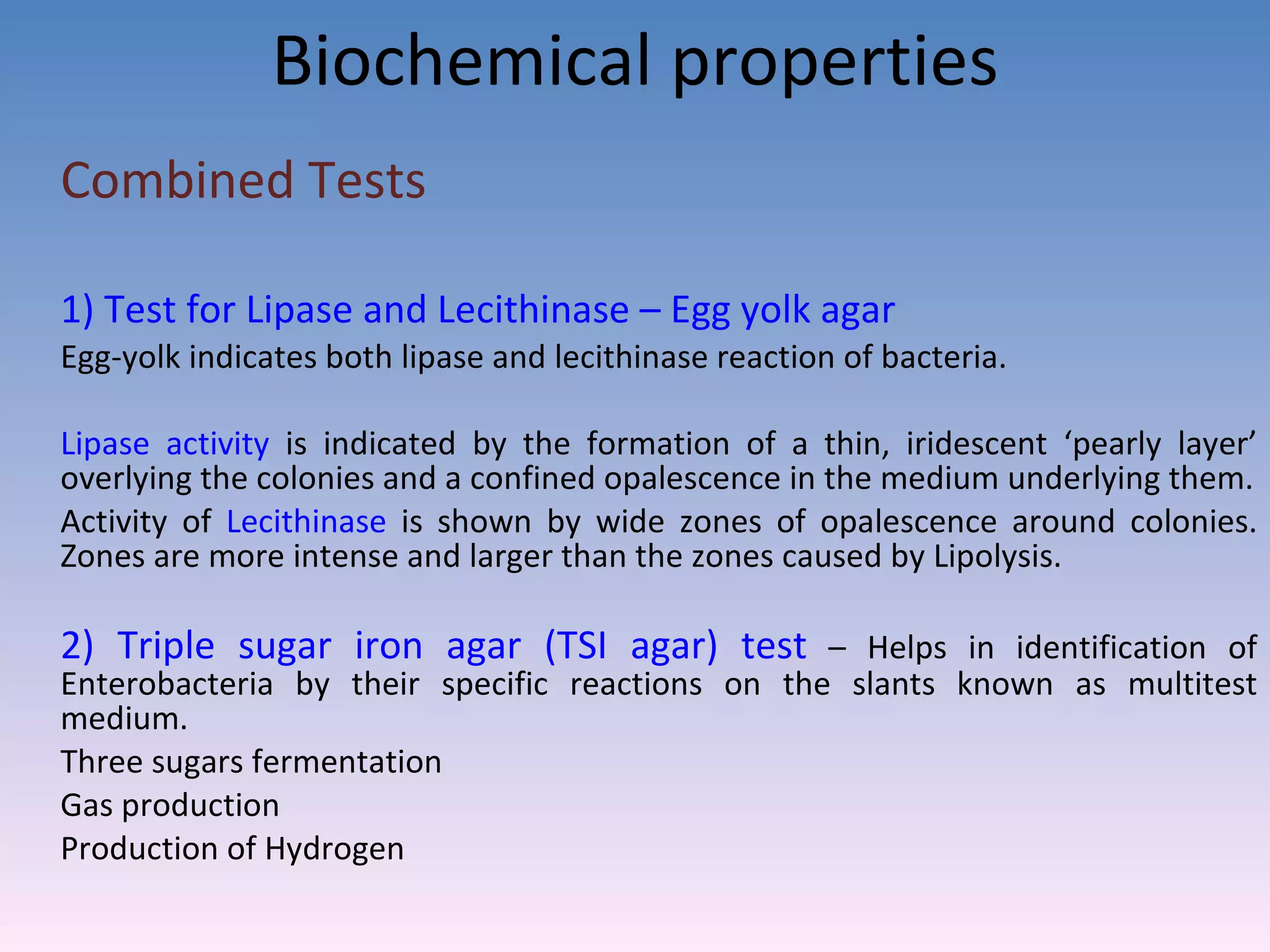
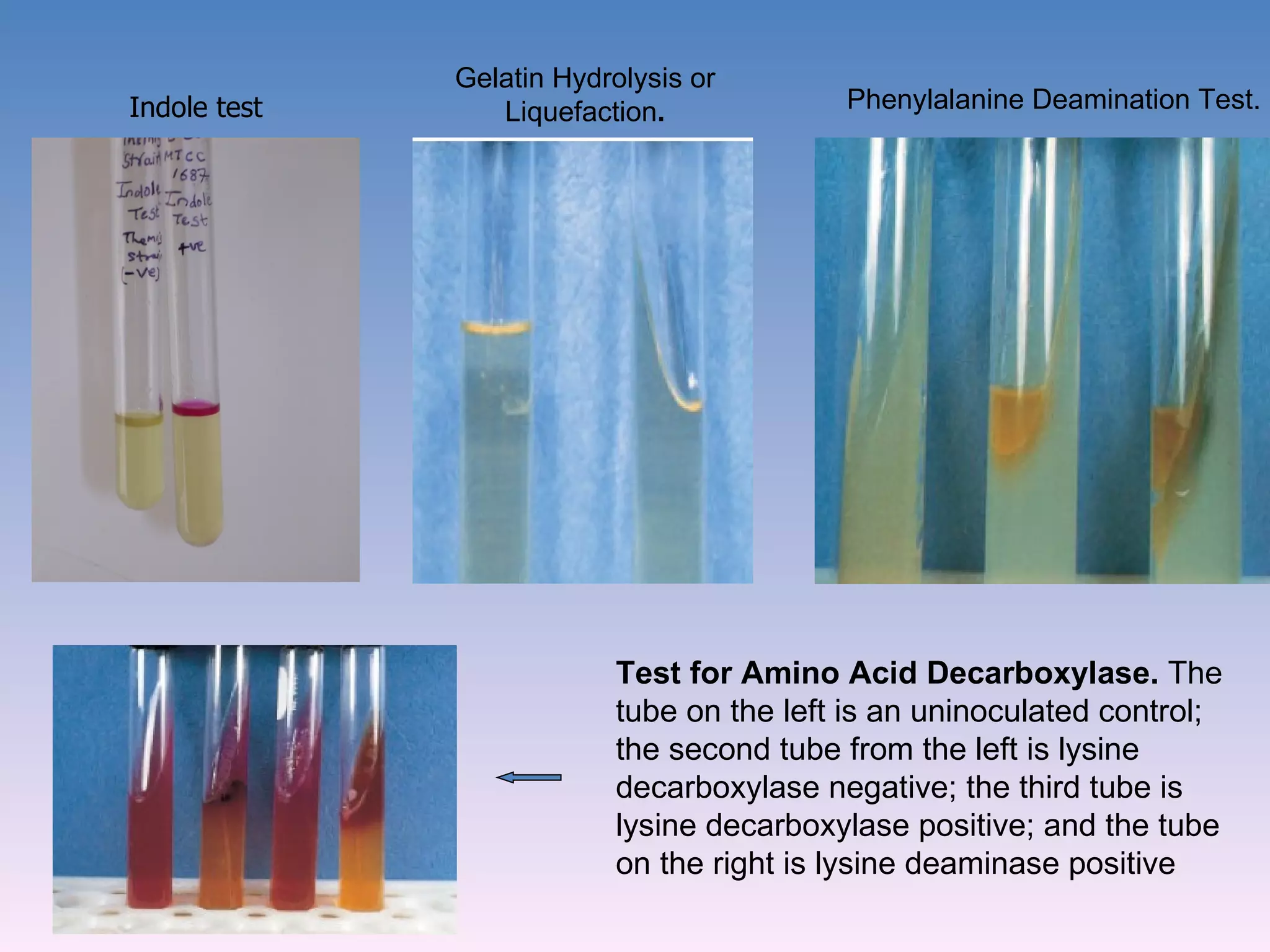
Biochemical properties Test for metabolism of Lipids Hydrolysis of Tributyrin  – An emulsion of micro-droplets of the fat, tributyrin, in a solid medium makes it opaque. Certain Lipolytic organisms remove the opacity by converting the fat to water – soluble butyric acid Tests for Enzymes  Catalase test  – Demonstrates the presence of catalase, an enzyme that catalyses the release of oxygen from hydrogen peroxide Oxidase Test  – Depends on the presence in bacteria of certain oxidases that will catalyze the transport of electrons between electron donors in the bacteria and a redox dye – tetramethyl-p-phenylene-diamine. The dye is reduced to a deep purple colour.  Urease test  – Bacteria, particularly those growing naturally in an environment exposed to urine, may decompose urea by means of the enzyme urease.
cogulase test Urease Tube and slide Catalase Test.
Oxidase test
Biochemical properties Tests for Enzymes  Nitrate reduction  – Helps to detect bacteria of enterobacteriacae group to detect presence of enzyme Nitrate reductase which reduces nitrate ti nitrite   Lecithinase test  – Produced by certain organisms that split lipoprotein complexes in human serum and hen egg-yolk and produce opalescence or turbidity when grown in media containing these substances.
Nitrate reductase test
Biochemical properties Combined Tests 1) Test for Lipase and Lecithinase – Egg yolk agar   Egg-yolk indicates both lipase and lecithinase reaction of bacteria.  Lipase activity  is indicated by the formation of a thin, iridescent ‘pearly layer’ overlying the colonies and a confined opalescence in the medium underlying them. Activity of  Lecithinase  is shown by wide zones of opalescence around colonies. Zones are more intense and larger than the zones caused by Lipolysis.  2) Triple sugar iron agar (TSI agar) test  – Helps in identification of Enterobacteria by their specific reactions on the slants known as multitest medium. Three sugars fermentation  Gas production Production of Hydrogen
Triple sugar iron agar
Differentiation of two organisms
Biochemical properties Miscellaneous tests Antibiotic tolerance (resistance) test, dye tolerance and other chemical inhibition tests KCN test  – Ability to grow in a medium containing KCN. (Should be handled carefully) Detection of motility   - Slide test (Hanging drop technique) - Tube test ( Semisolid Agar)
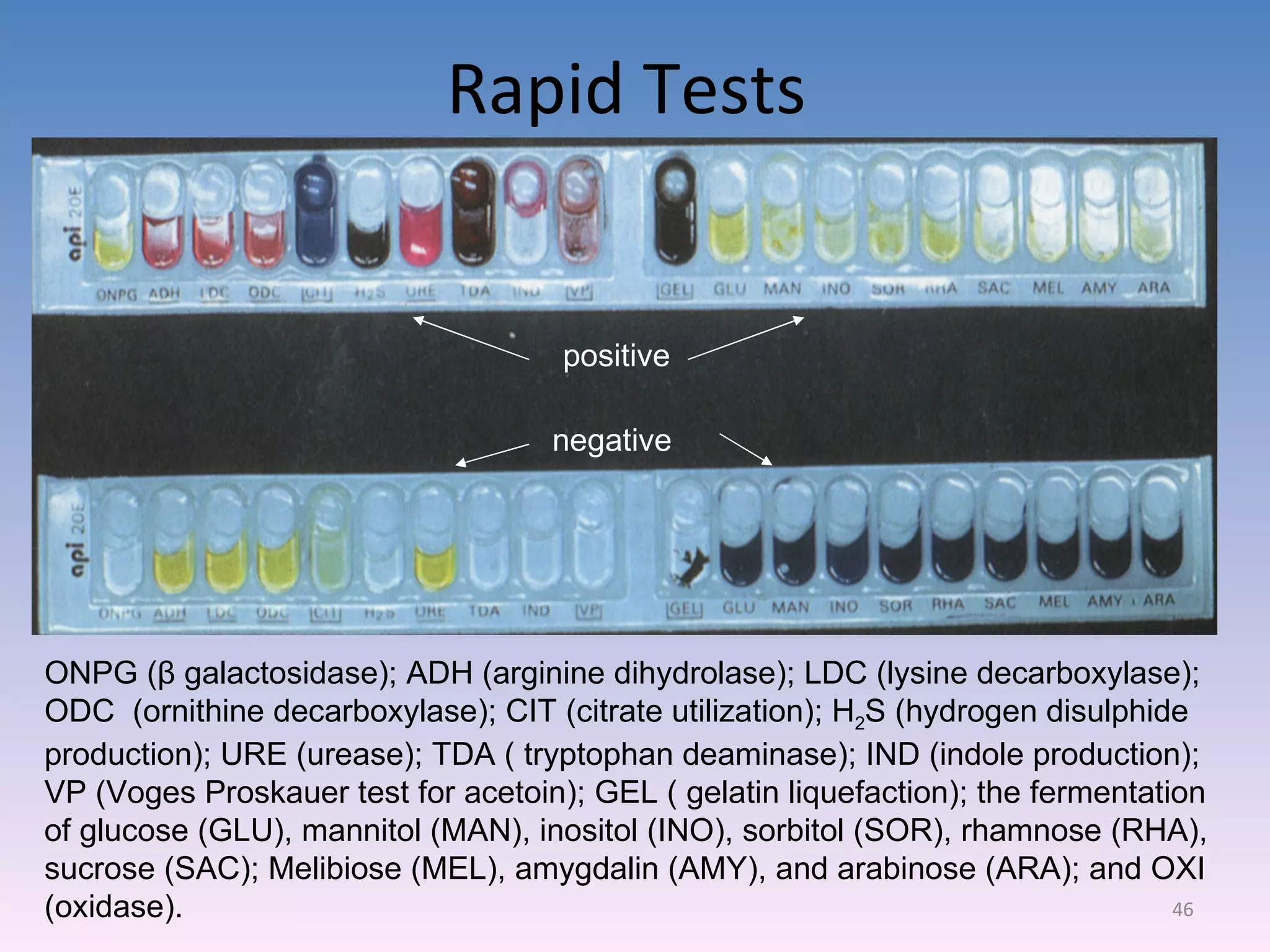
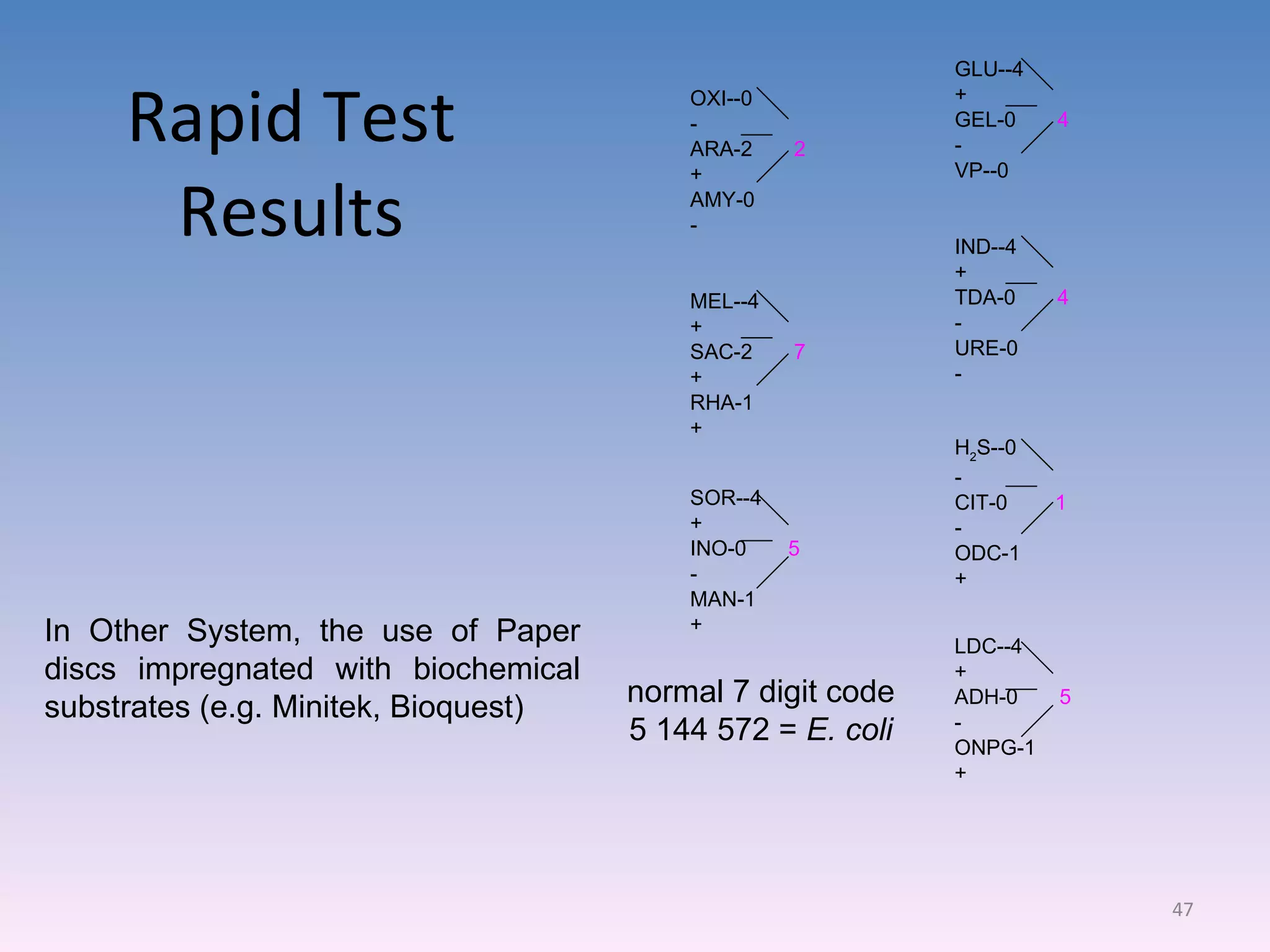
API Strips - Rapid Tests  Commercial miniaturized biochemical test panels - Cover a significant number of clinically-important groups of bacteria, as well as food- and water-associated microorganisms.  The earliest, is the Analytical Profile Index (API) panel.  Different test panels are prepared in  dehydrated forms  which are reconstituted upon use by addition of bacterial suspensions. After incubation, positive test results are scored as a seven-digit number (profile). Identity of the bacterium is then easily derived from the database with the relevant cumulative profile code book or software. Identification of Enterobacteriaceae using API 20E, a standardized microplate method. Positive and negative reactions are shown by color reactions.
Rapid Tests  ONPG ( β  galactosidase); ADH (arginine dihydrolase); LDC (lysine decarboxylase); ODC  (ornithine decarboxylase); CIT (citrate utilization); H 2 S (hydrogen disulphide production); URE (urease); TDA ( tryptophan deaminase); IND (indole production); VP (Voges Proskauer test for acetoin); GEL ( gelatin liquefaction); the fermentation of glucose (GLU), mannitol (MAN), inositol (INO), sorbitol (SOR), rhamnose (RHA), sucrose (SAC); Melibiose (MEL), amygdalin (AMY), and arabinose (ARA); and OXI (oxidase). positive negative
Rapid Test Results In Other System, the use of Paper discs impregnated with biochemical substrates (e.g. Minitek, Bioquest)  OXI--0 - ARA-2  2 + AMY-0 - MEL--4 + SAC-2  7 + RHA-1 + SOR--4 + INO-0  5 - MAN-1 + GLU--4 + GEL-0  4 - VP--0 IND--4 + TDA-0  4 - URE-0 - H 2 S--0 - CIT-0  1 - ODC-1 + LDC--4 + ADH-0  5 - ONPG-1 + normal 7 digit code 5 144 572 =  E. coli
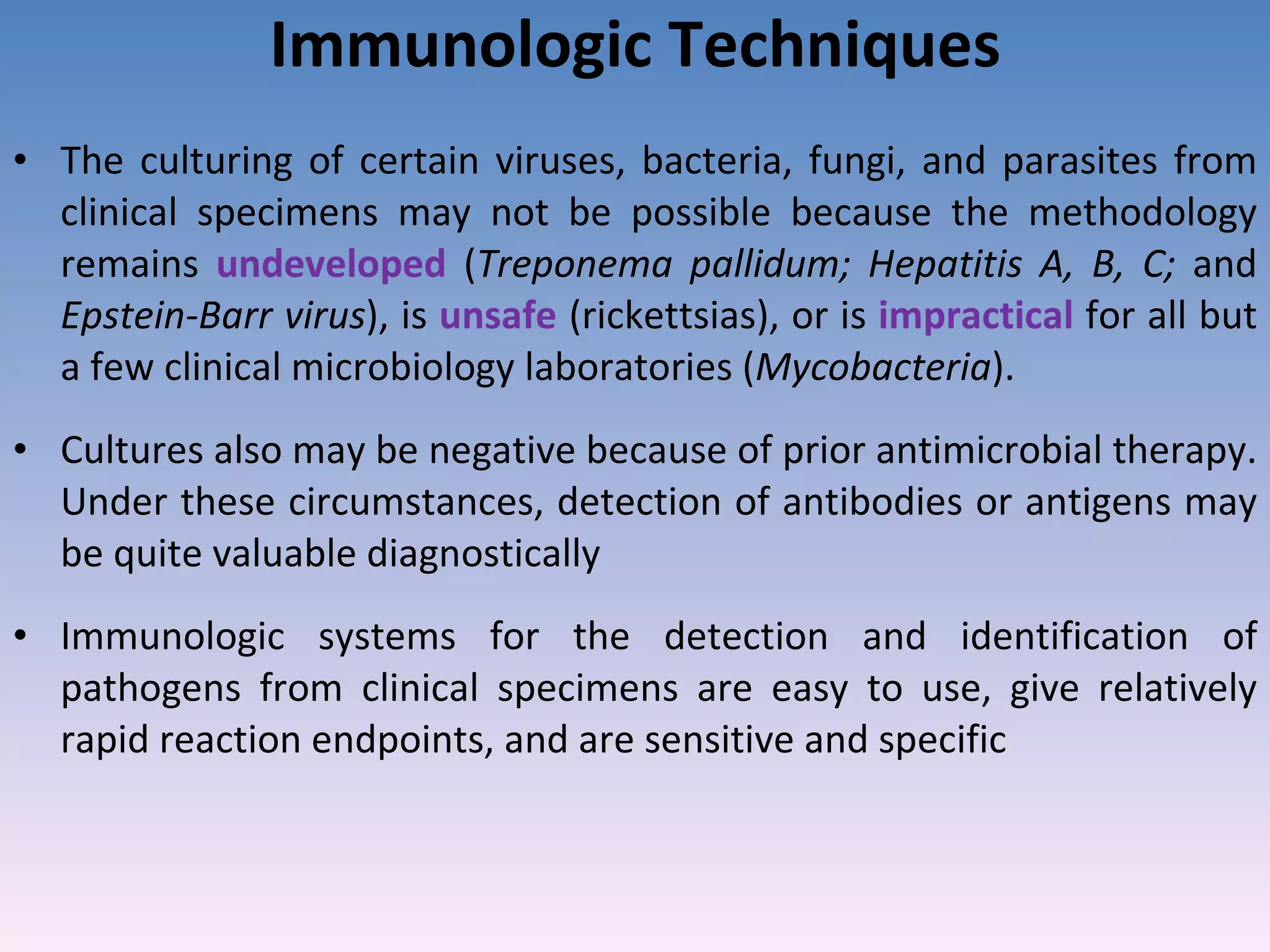
Immunologic Techniques The culturing of certain viruses, bacteria, fungi, and parasites from clinical specimens may not be possible because the methodology remains  undeveloped  ( Treponema pallidum; Hepatitis A, B, C;  and  Epstein-Barr virus ), is  unsafe  (rickettsias), or is  impractical  for all but a few clinical microbiology laboratories ( Mycobacteria ). Cultures also may be negative because of prior antimicrobial therapy. Under these circumstances, detection of antibodies or antigens may be quite valuable diagnostically Immunologic systems for the detection and identification of pathogens from clinical specimens are easy to use, give relatively rapid reaction endpoints, and are sensitive and specific
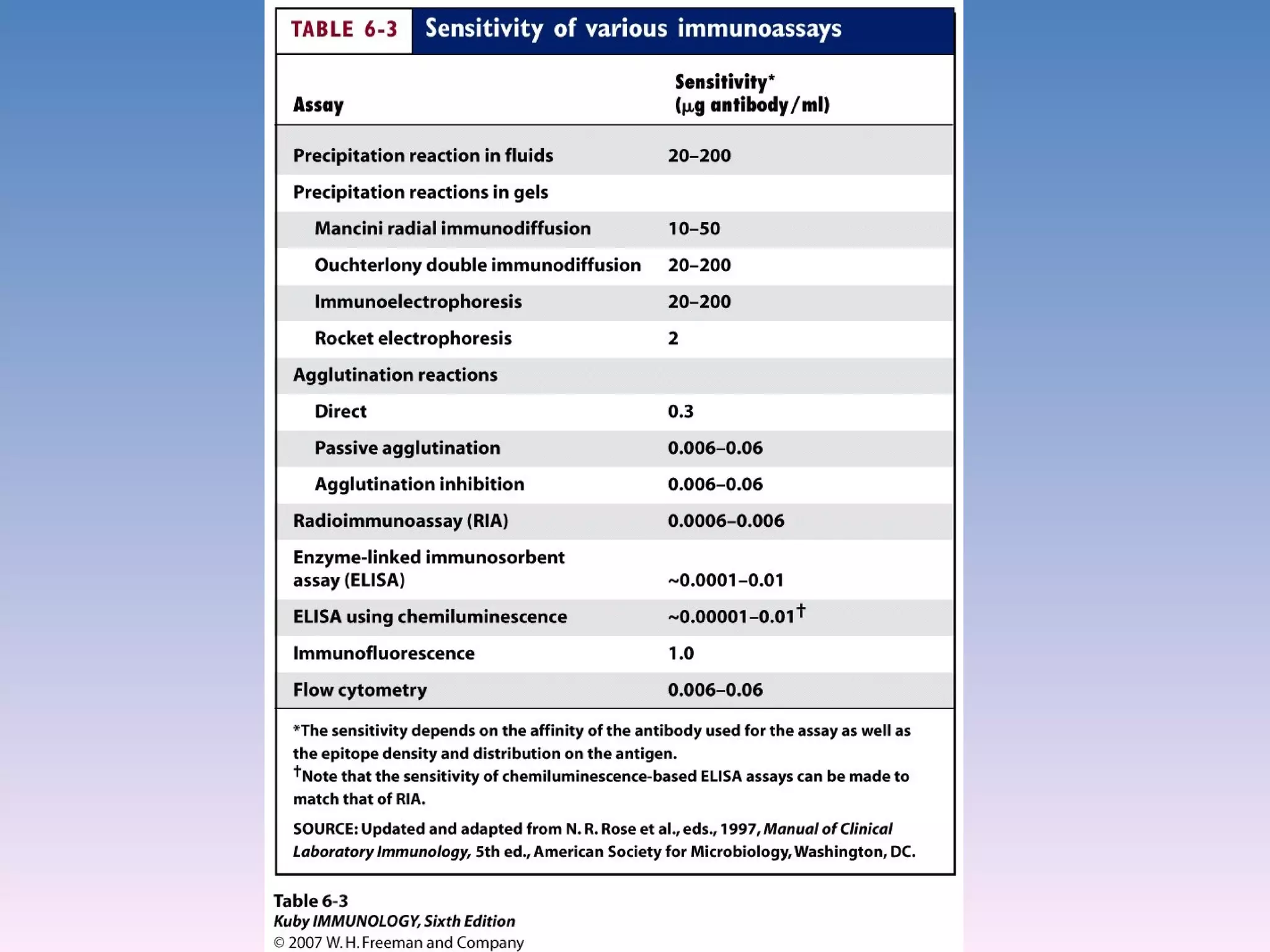
serology The branch of medical immunology concerned with antigen-antibody reactions in vitro is  serology  [serum and -ology]. The usefulness of serological test is dependent on its  sensitivity and specificity . False Negatives/Positives High sensitivity prevents false negatives. False negatives  occurs when there is no reaction when the Ag or Ab is present. High specificity prevents false positives. False positives  occurs when there is cross reaction with another molecule.
Precipitation Reactions Precipitation is the interaction of a soluble Ag with an soluble Ab to form an  insoluble complex . The complex formed is an aggregate of Ag and Ab. Precipitation reactions occur maximally only when the  optimal proportions  of Ag and Ab are present. Precipitation can also be done in agar referred to as  immunodiffusion .
Agglutination Reactions Agglutination  is the  visible clumping  of an Ag when mixed with a specific Ab. Widely used because they are simple to perform, highly specific, inexpensive and rapid. Standardized tests are available for the determination of  blood groups  and  identification of pathogens and their products . Direct agglutination  occurs when a soluble Ab results in clumping  by interaction with an Ag which  is part of a surface of a cell.  E.g. Blood typing and detection of  mycoplasma pneumonia. Indirect (passive) agglutination . Ab/Ag is  adsorbed or chemically coupled  to the cell, latex beads or charcoal particles which serves as an inert carrier. The latex beads can be used to detect  for surface Ag.
Direct/Indirect Agglutination Commercial suspension of latex beads are available for the detection of  Staphylococcus aureus, Streptococcus pyogenes, Haemophilus influenza  and  Camplyobacter  spps .  A similar technology is used for  urine pregnancy tests . Hemagglutination   usually results from antibodies cross linking red blood cells through attachment to surface antigens and is routinely used in blood typing.  The hemagglutination inhibition test is widely used to diagnose influenza, measles, mumps,  mononucleosis, and other viral infections
Viral Hemagglutination.  Certain viruses can bind to red blood cells causing hemagglutination.  If serum containing specific antibodies to the virus is mixed with the red blood cells, the antibodies will neutralize the virus and inhibit hemagglutination (a positive test).
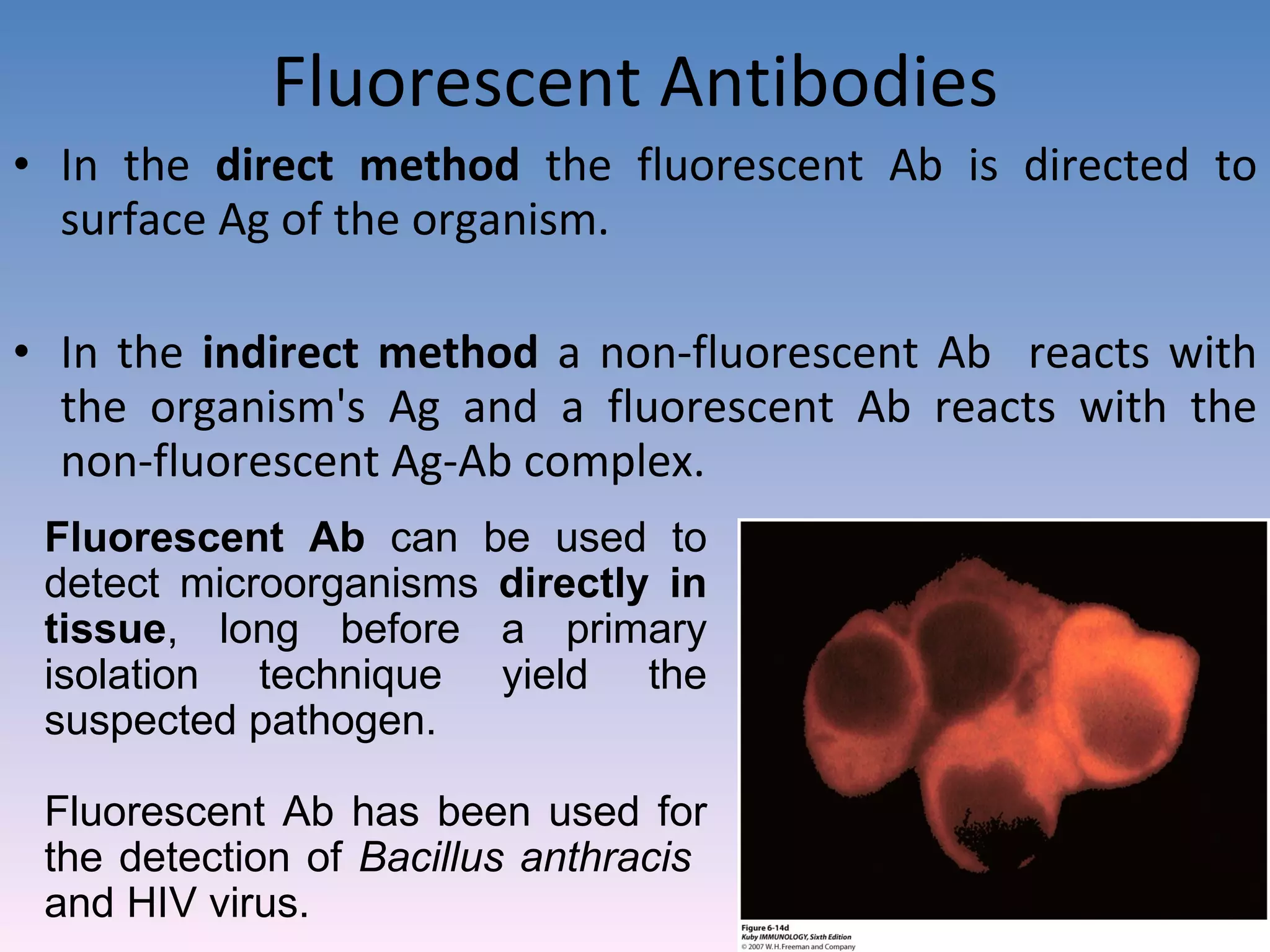
Using Fluorescent Antibodies Abs can be chemically modified with  Fluorescent dyes  such as Rhodamine B, Fluorescent Red, Fluorescien Isothiocynate and Fluoresces Yellow Or Green. Cells with bound fluorescent Ab emit a  bright red, orange, yellow or green light  depending on the dye used. There are two distinct fluorescent Ab procedure:  direct and indirect . Direct method   Indirect method
Fluorescent Antibodies In the  direct method  the fluorescent Ab is directed to surface Ag of the organism. In the  indirect method  a non-fluorescent Ab  reacts with the organism's Ag and a fluorescent Ab reacts with the non-fluorescent Ag-Ab complex. Fluorescent Ab  can be used to detect microorganisms  directly in tissue , long before a primary isolation technique yield the suspected pathogen.  Fluorescent Ab has been used for the detection of  Bacillus anthracis  and HIV virus.
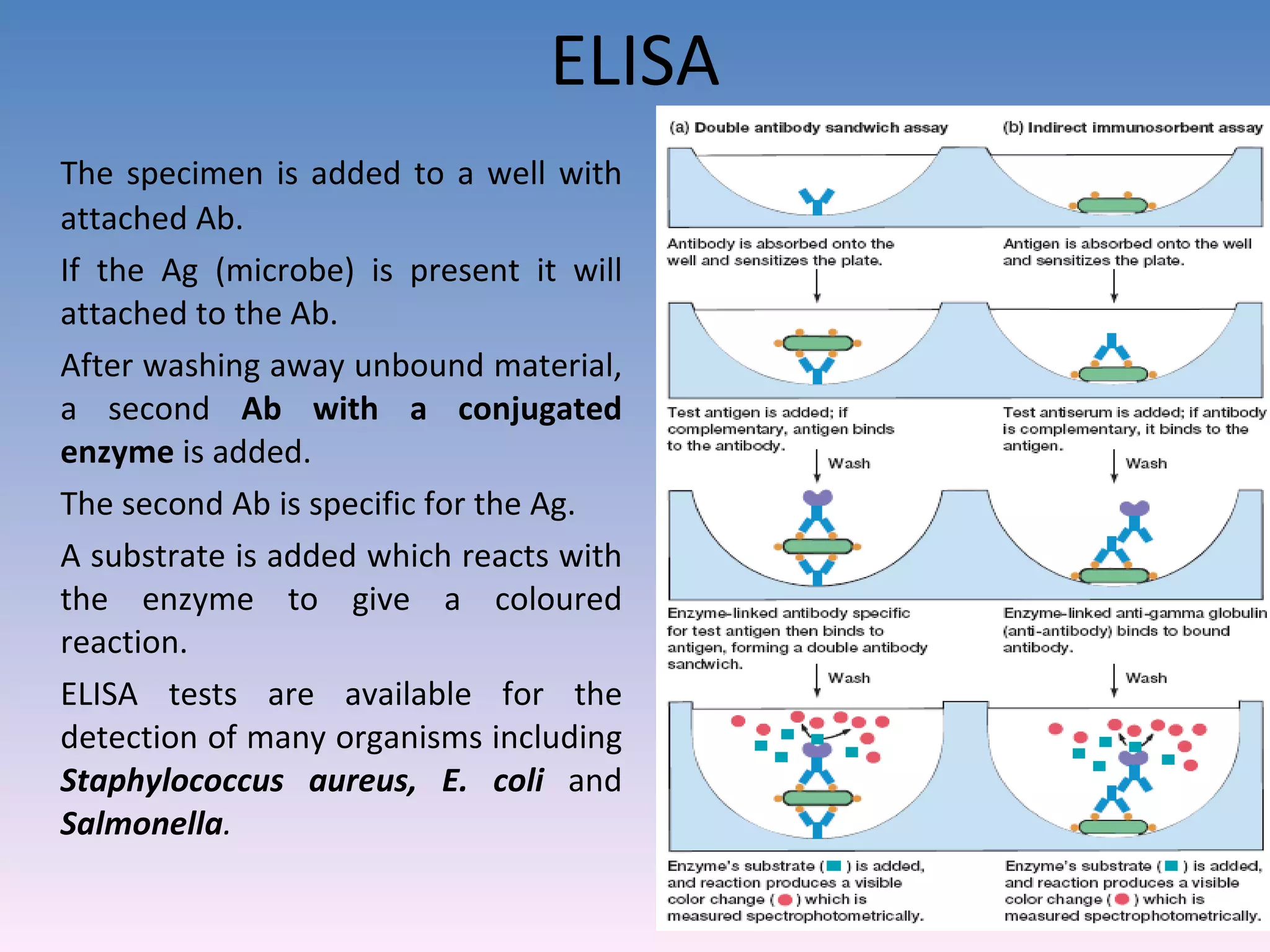
ELISA - Enzyme-linked immunosorbent assay The  enzyme-linked immunosorbent assay (ELISA)  has become one of the most widely used serological tests for antibody or antigen detection. This test involves the linking of various “label” enzymes to either antigens or antibodies.  Enzymes used in ELISA include  Alkaline Phosphate, Peroxidase  and  ß Galactosidase . During  indirect ELISA  the Ag is trapped between two Ab molecules (sandwich ELISA).
ELISA The specimen is added to a well with attached Ab. If the Ag (microbe) is present it will attached to the Ab. After washing away unbound material, a second  Ab with a conjugated enzyme  is added. The second Ab is specific for the Ag. A substrate is added which reacts with the enzyme to give a coloured reaction. ELISA tests are available for the detection of many organisms including  Staphylococcus aureus, E. coli  and  Salmonella .
Immunoblot/Western Blot Immunoblot  detects for a  specific protein  associated with specific organism. The procedure involves: Separation   of the proteins  on polyacrylamide gel. Transfer (blotting) of proteins  from the gel to a membrane (nitrocellulose or nylon) and identification of the protein with a  specific Ab . The method is sensitive for detecting proteins in  complex mixtures . Immunoblot is laborious, time consuming and less sensitive than ELISA. Immunoblot
Immuno/Western Blot Immunoblot is used as a  confirmatory test for HIV. The ELISA test for HIV often yields  false positive  and the immunoblot test is used to confirm a positive ELISA results. To perform the HIV immunoblot  purified HIV  is treated with SDS to solubilize the proteins and inactivate the virus. The proteins (at least 7)  are resolved  by polyacrylamide gel electrophoresis and the  proteins are blotted unto a membrane  and incubated with the  test serum .
HIV Immunoblot Test The test is considered positive if bands occur at, 2 locations e.g. gp160 and gp 120 or p24 and gp 41-45.
HIV Immunoblot Test Test was done at 6 different times (after the suspected exposure). Test is positive if bands occur at  two locations  e.g. gp160 or gp 120 and p31 or p24. Test is negative if  no bands  are present for any HIV antigen. SRC is positive control
A technique used to measure the concentration of hormones, Drugs, enzymes, viruses, bacterial antigens and other organic substances of biological interest found in Blood, Tissues and other biological fluids  Radio immuno assay  Gamma Counter Principle: Uses an immune reaction  [Antigen – Antibody reaction] to  estimate a ligand  Ag + Ag* + Ab    AgAb + Ag*Ab + Ag + Ab* Unbound Ag* and Ag washed out  Radioactivity of bound residue measured Ligand conc is inversely related to radioactivity  [Ag : ligand to be measured ; Ag* radiolabelled ligand]
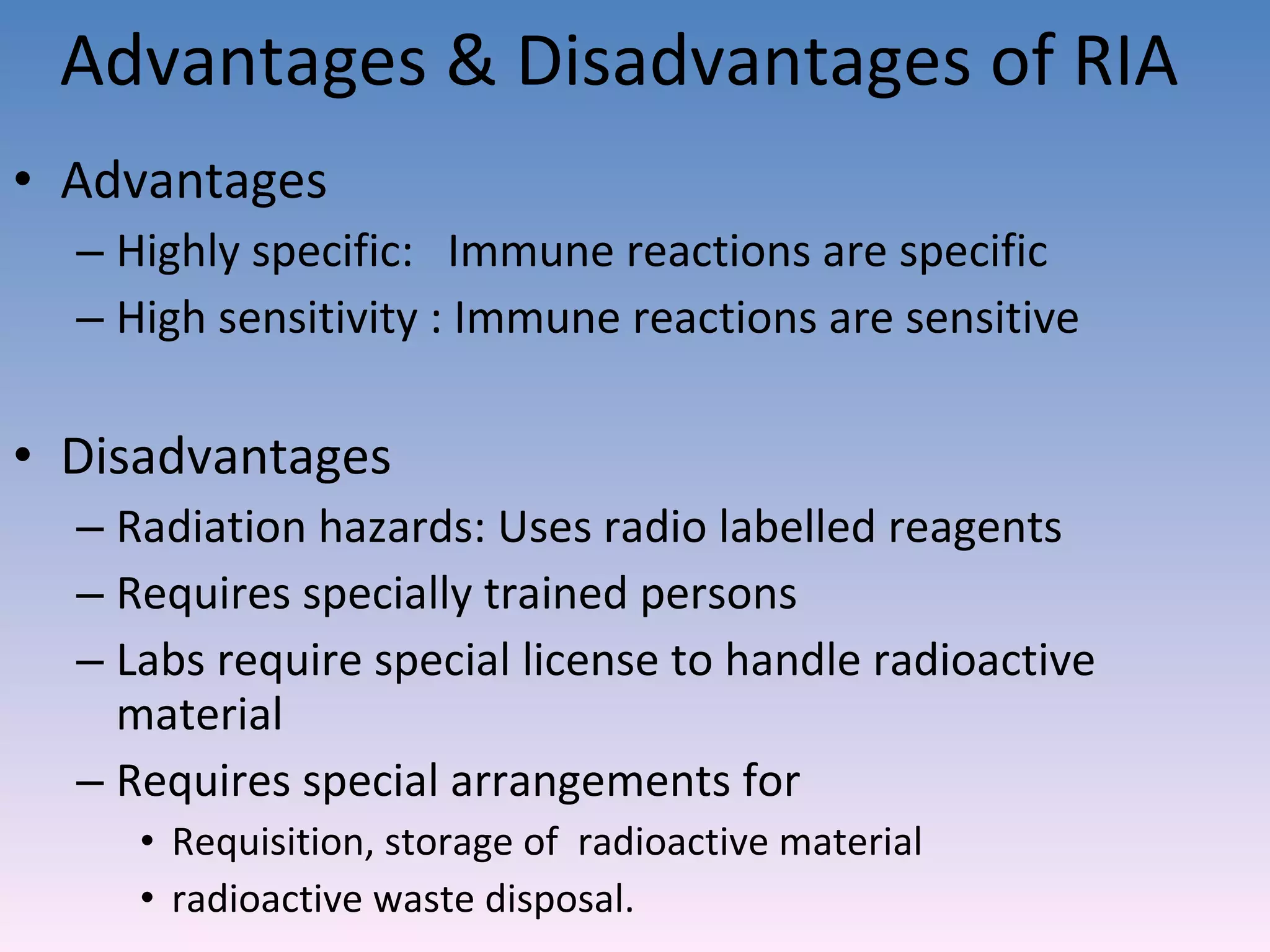
Advantages & Disadvantages of RIA Advantages Highly specific:  Immune reactions are specific High sensitivity : Immune reactions are sensitive Disadvantages  Radiation hazards: Uses radio labelled reagents Requires specially trained persons Labs require special license to handle radioactive material Requires special arrangements for  Requisition, storage of  radioactive material  radioactive waste disposal.
Immuno-electron microscopy Electron Microscopy or EM can be used to study the detailed microarchitecture of tissues or cells. Immuno-EM allows the detection of specific proteins in ultrathin tissue sections.  Antibodies labelled with heavy metal particles (e.g. gold) can be directly visualised using Transmission Electron Microscopy .  While powerful in detecting the sub-cellular localisation of a protein, immuno-EM can be technically challenging, expensive, and require rigorous optimisation of tissue fixation and processing methods.
 
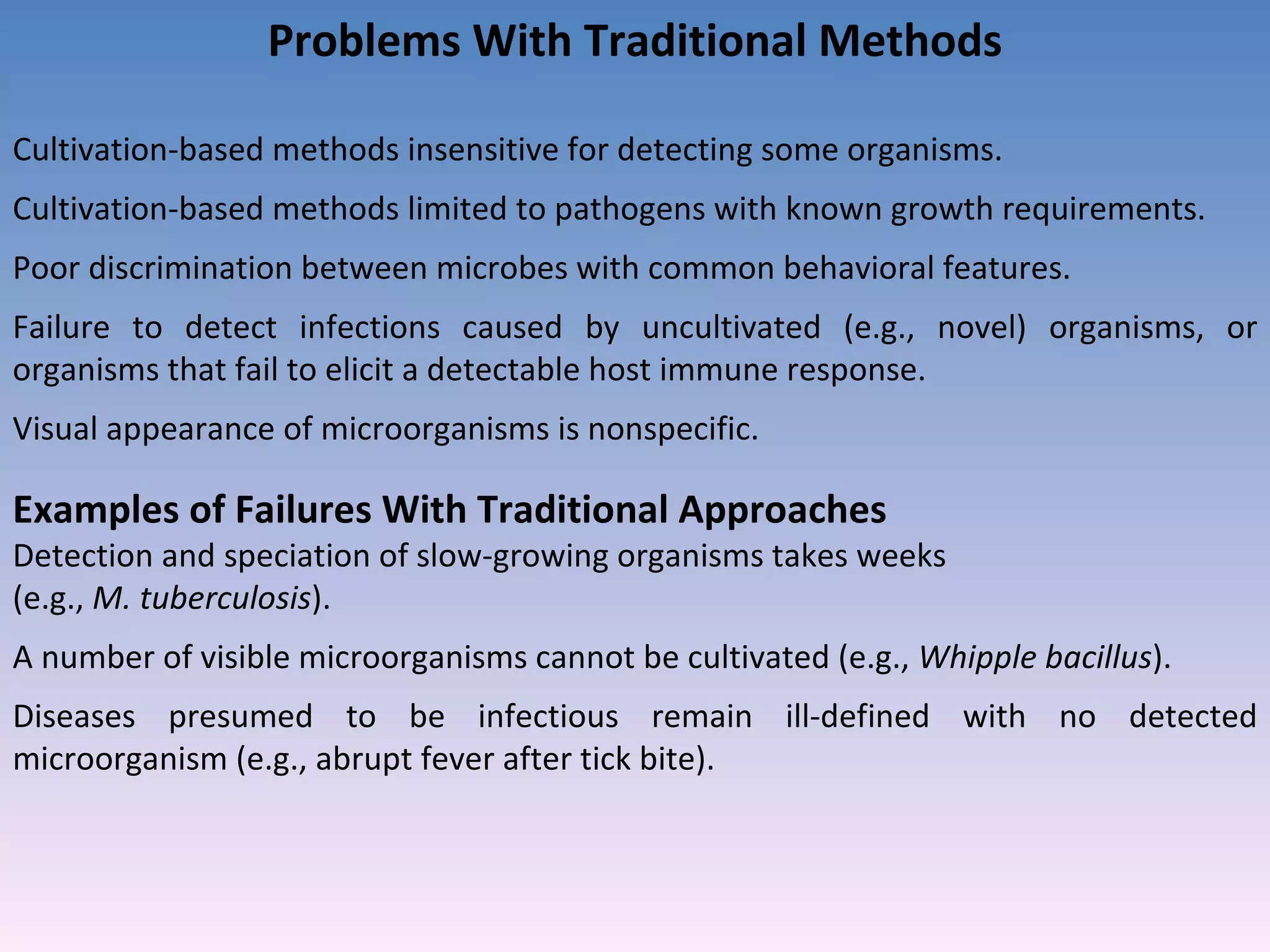
Problems With Traditional Methods Cultivation-based methods insensitive for detecting some organisms. Cultivation-based methods limited to pathogens with known growth requirements. Poor discrimination between microbes with common behavioral features. Failure to detect infections caused by uncultivated (e.g., novel) organisms, or organisms that fail to elicit a detectable host immune response. Visual appearance of microorganisms is nonspecific. Examples of Failures With Traditional Approaches Detection and speciation of slow-growing organisms takes weeks  (e.g.,  M. tuberculosis ). A number of visible microorganisms cannot be cultivated (e.g.,  Whipple bacillus ). Diseases presumed to be infectious remain ill-defined with no detected microorganism (e.g., abrupt fever after tick bite).
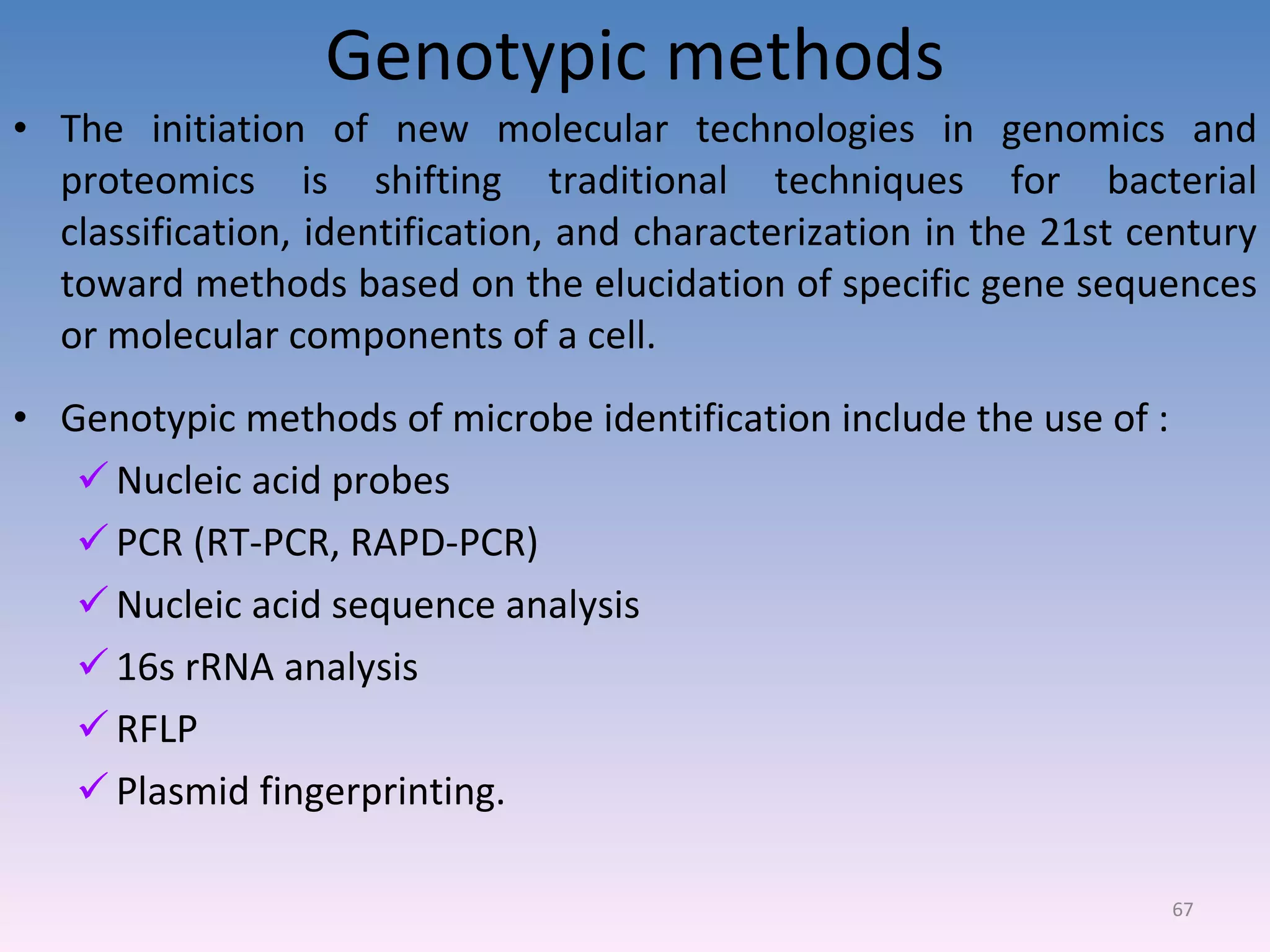
Genotypic methods The initiation of new molecular technologies in genomics and proteomics is shifting traditional techniques for bacterial classification, identification, and characterization in the 21st century toward methods based on the elucidation of specific gene sequences or molecular components of a cell. Genotypic methods of microbe identification include the use of : Nucleic acid probes PCR (RT-PCR, RAPD-PCR) Nucleic acid sequence analysis 16s rRNA analysis RFLP Plasmid fingerprinting.
Nucleic acid probes Nucleic acid hybridization  is one of the most powerful tools available for microbe identification. Hybridization detects for a  specific DNA sequence  associated with an organism. The process uses a  nucleic acid probe  which is specific for that particular organism. The target DNA (from the organism) is  attached to a solid matrix  such as a nylon or nitrocellulose membrane.
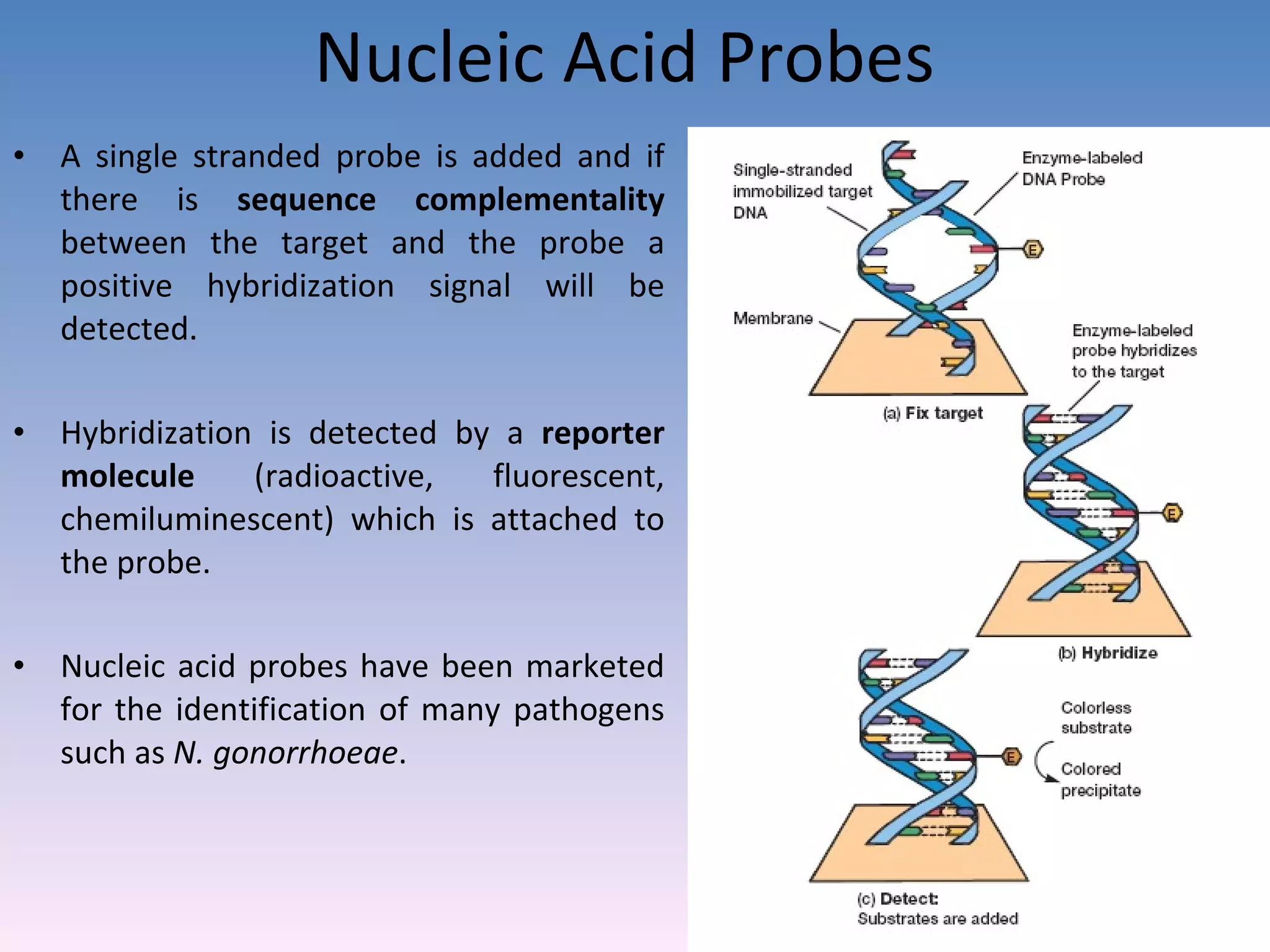
Nucleic Acid Probes A single stranded probe is added and if there is  sequence complementality  between the target and the probe a positive hybridization signal will be detected. Hybridization is detected by a  reporter molecule  (radioactive, fluorescent, chemiluminescent) which is attached to the probe. Nucleic acid probes have been marketed for the identification of many pathogens such as  N. gonorrhoeae .
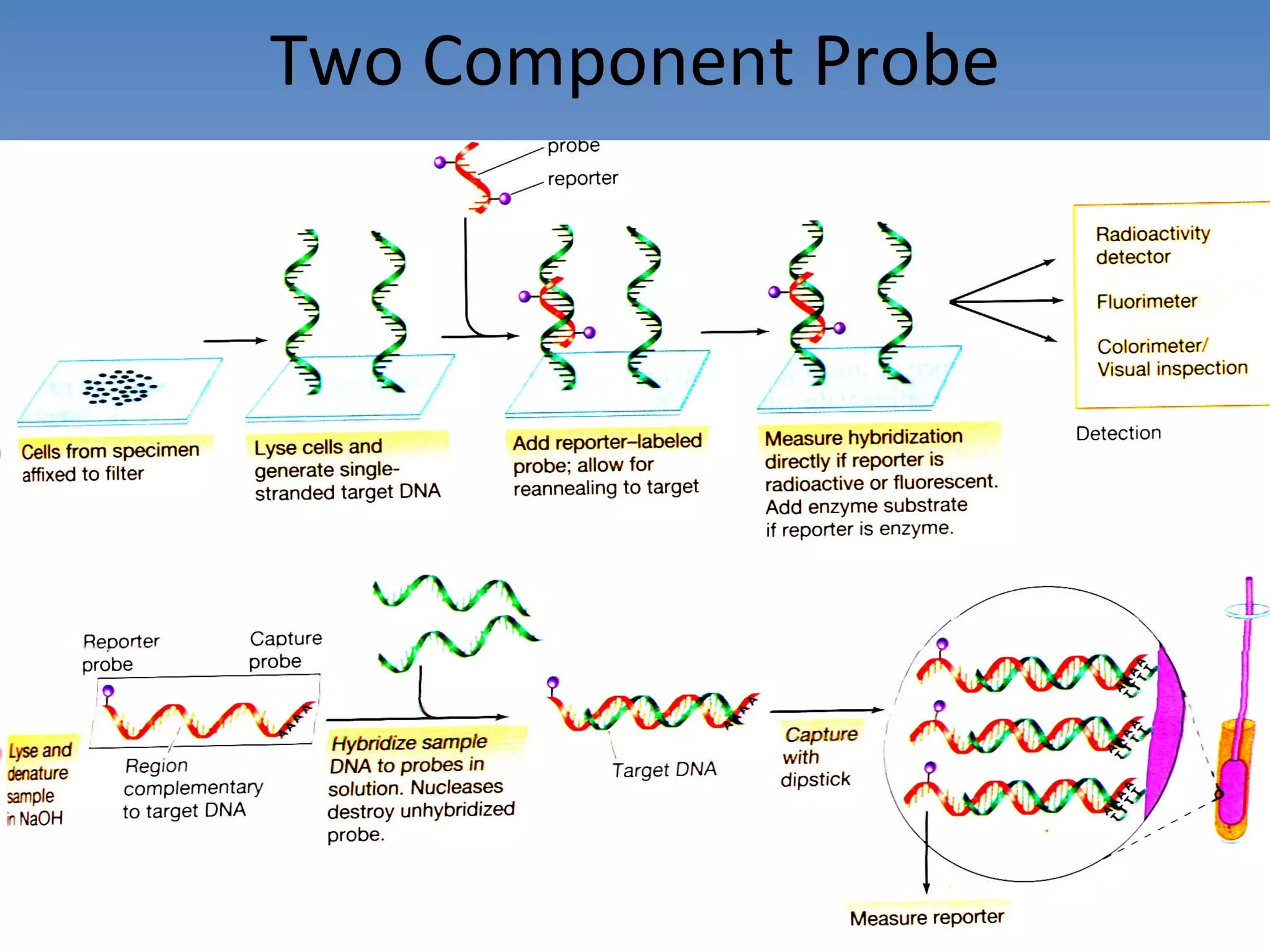
Two Component Probes Molecular probes are also finding wide spread use in the  food industry  and food regulatory agencies. The pathogen DNA is attached to a “dipstick” to hybridize to the pathogen DNA from the food. A two component probe is used ( reporter and a capture probe  which are attached to each other). Following hybridization the dipstick with the capture probe (usually poly dT to capture poly dA on the probe) is inserted into the hybridization solution. It traps the hybridized DNA for removal and measurement.
Two Component Probe
Advantages of Nucleic Acid Probes Nucleic acid probes has many advantages over immunological methods. Nucleic acid are  more stable  at high temperature, pH, and in the presence of organic solvents and other chemicals. This means that the  specimen can be treated very harshly  to destroy interfering materials. Nucleic acid probes can be used to identify microorganisms which are  no longer alive . Furthermore nucleic acid probes  are more specific  than antibodies.
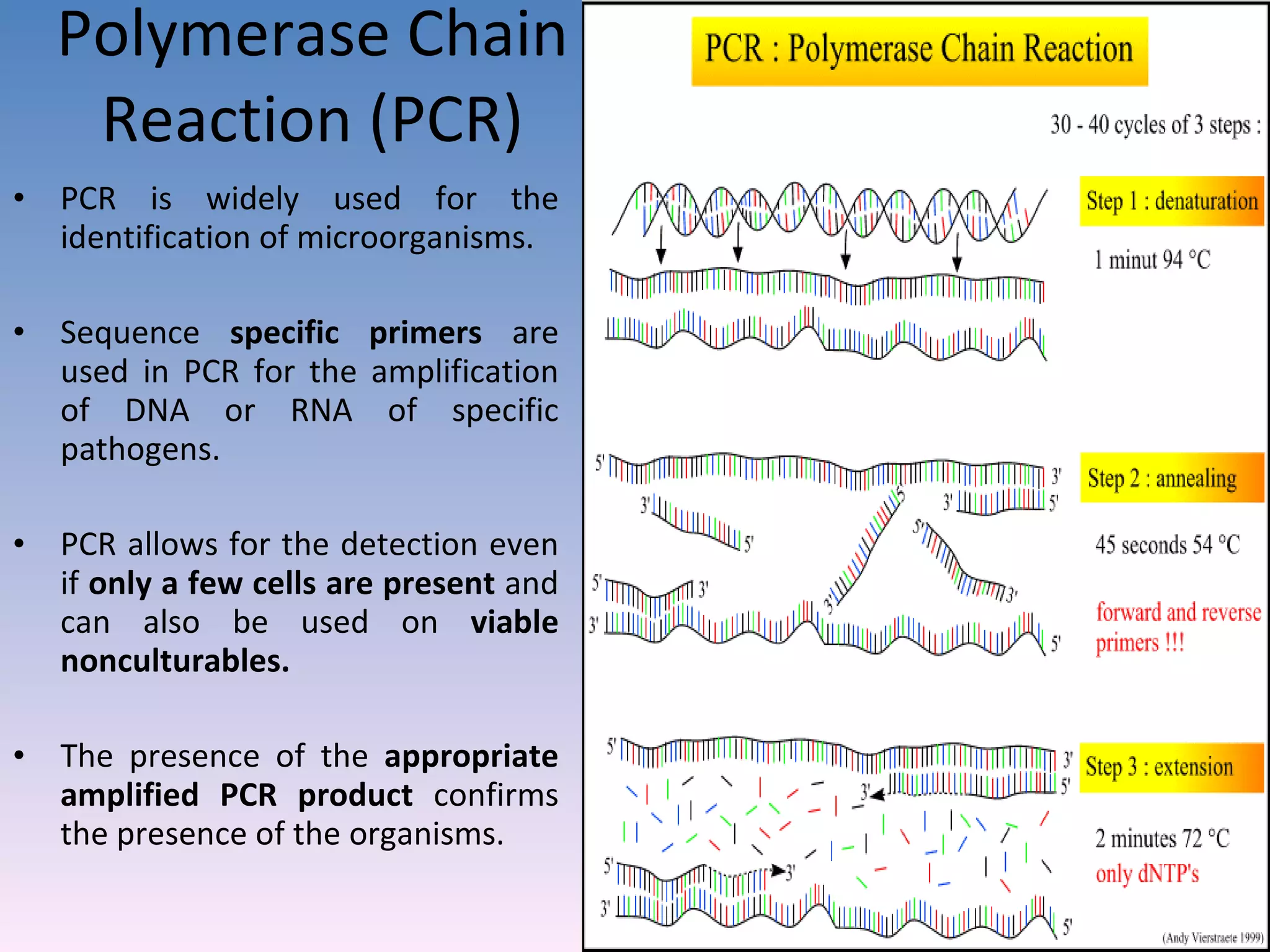
Polymerase Chain Reaction (PCR) PCR is widely used for the identification of microorganisms. Sequence  specific primers  are used in PCR for the amplification of DNA or RNA of specific pathogens. PCR allows for the detection even if  only a few cells are present  and can also be used on  viable nonculturables. The presence of the  appropriate amplified PCR product  confirms the presence of the organisms.
Limitations of End-Point PCR Agarose gel results are obtained from the end point of the reaction. Endpoint detection is very time consuming. Results may not be obtained for days. Results are based on size discrimination, which may not be very precise. The end point is variable from sample to sample. Gels may not be able to resolve these variability in yield, real-time PCR is sensitive enough to detect these changes. Agarose Gel resolution is very poor, about 10 fold. Real-Time PCR can detect as little as a two-fold change! Some of the problems with  End-Point Detection: Poor Precision Low sensitivity Short dynamic range < 2 logs Low resolution Non - Automated Size-based discrimination only Results are not expressed as numbers Ethidium bromide for staining is not very quantitative Post PCR processing
Real Time PCR Currently many PCR tests employ  real time PCR . This involves the use of  fluorescent primers . The PCR machine  monitors the incorporation of the primers  and display an  amplification plot  which can be viewed continuously thru the PCR cycle. Real time PCR  yields immediate results .
Real-time PCR Rapid detection and identification of several bacterial strains.  Promising tool for distinguishing specific sequences from a complex mixture of DNA and therefore is useful for determining the presence and quantity of pathogen-specific or other unique sequences within a sample.  Facilitates a rapid detection of low amounts of bacterial DNA accelerating therapeutic decisions and enabling an earlier adequate antibiotic treatment.
RT-PCR  (reverse trancriptase PCR RT-PCR (reverse transcription-polymerase chain reaction) is the most sensitive technique for mRNA detection and quantitation currently available. Compared to the two other commonly used techniques for quantifying mRNA levels, Northern blot analysis and RNase protection assay, RT-PCR can be used to quantify mRNA levels from much smaller samples. In fact, this technique is sensitive enough to enable quantitation of RNA from a single cell.
RT-PCR
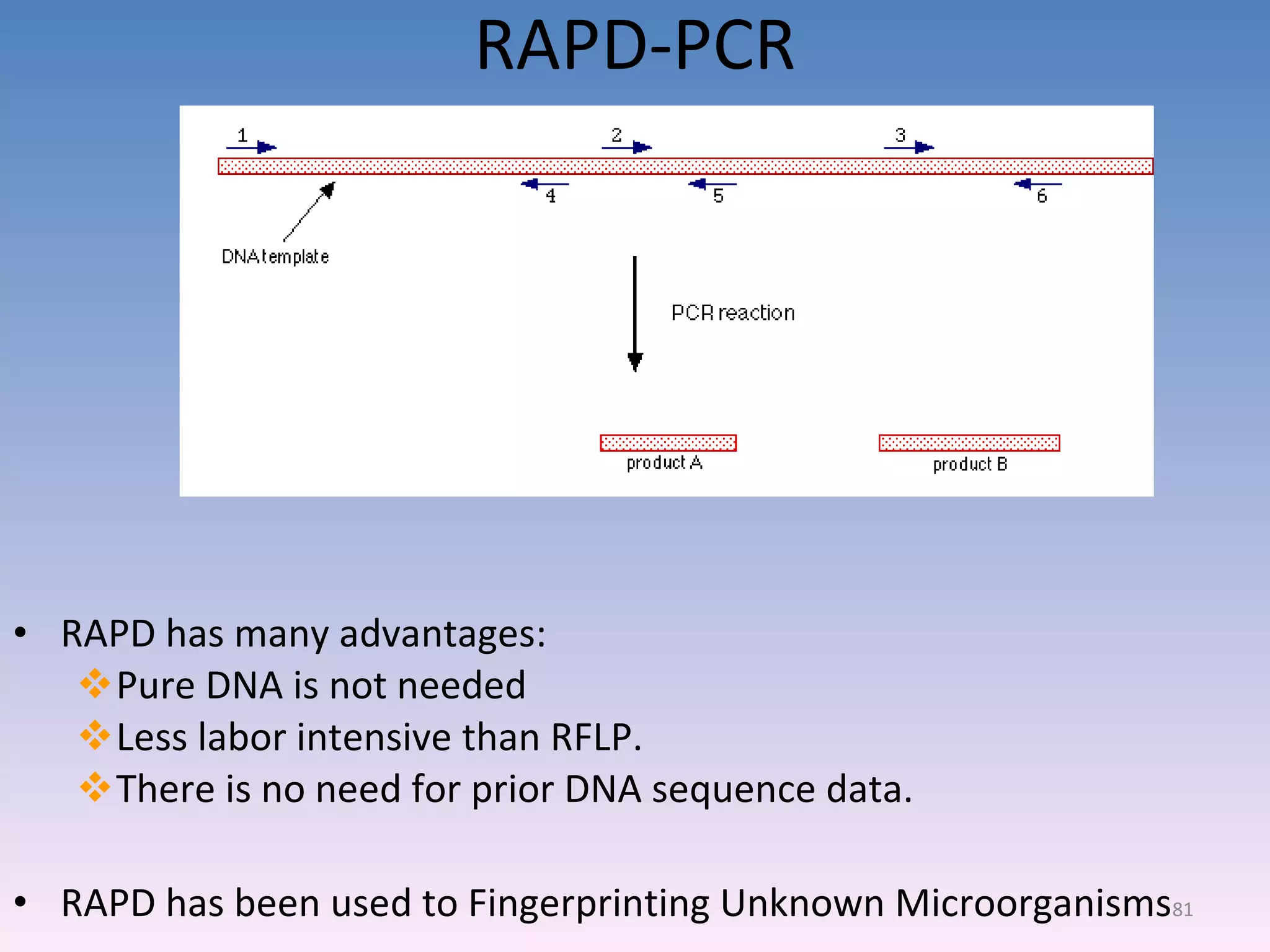
RAPD Profile RAPD stands for  R andom  A mplification of  Polymorphic D NA.  RAPD reactions are PCR reactions, but they amplify segments of DNA which are essentially unknown to the scientist (random).  Standard PCR is used to amplify a known sequence of DNA.  The scientists chooses the sequence he or she wants to amplify, then designs and makes primers which will anneal to sequences flanking the sequence of interest.  PCR leads to the amplification of a particular segment of DNA.
RAPD analysis In RAPD analysis, the target sequence(s) (to be amplified) is unknown. The scientist will design a primer with an  arbitrary  sequence.  In other words, the scientist simply makes up a 10 base pair sequence (or may have a computer randomly generate a 10 bp sequence), then synthesizes the primer.  The scientist then carries out a PCR reaction and runs an agarose gel to see if any DNA segments were amplified in the presence of the arbitrary primer.
RAPD-PCR RAPD has many advantages:  Pure DNA is not needed Less labor intensive than RFLP. There is no need for prior DNA sequence data. RAPD has been used to Fingerprinting Unknown Microorganisms
DNA sequencing ( 16s rDNA) The rRNA is the most conserved (least variable) gene in all cells. Portions of the rDNA sequence from distantly-related organisms are remarkably similiar. This means that sequences from distantly related organisms can be precisely aligned, making the true differences easy to measure.  For this reason, genes that encode the rRNA (rDNA) have been used extensively to determine  taxonomy, phylogeny  (evolutionary relationships), and to estimate  rates of species divergence among bacteria. Thus the  comparison of 16s rDNA sequence can show evolutionary relatedness among microorganisms.  This work was pioneered by Carl Woese, who proposed the  three Domain system of classification - Archaea, Bacteria,  and  Eucarya  - based on such sequence information.
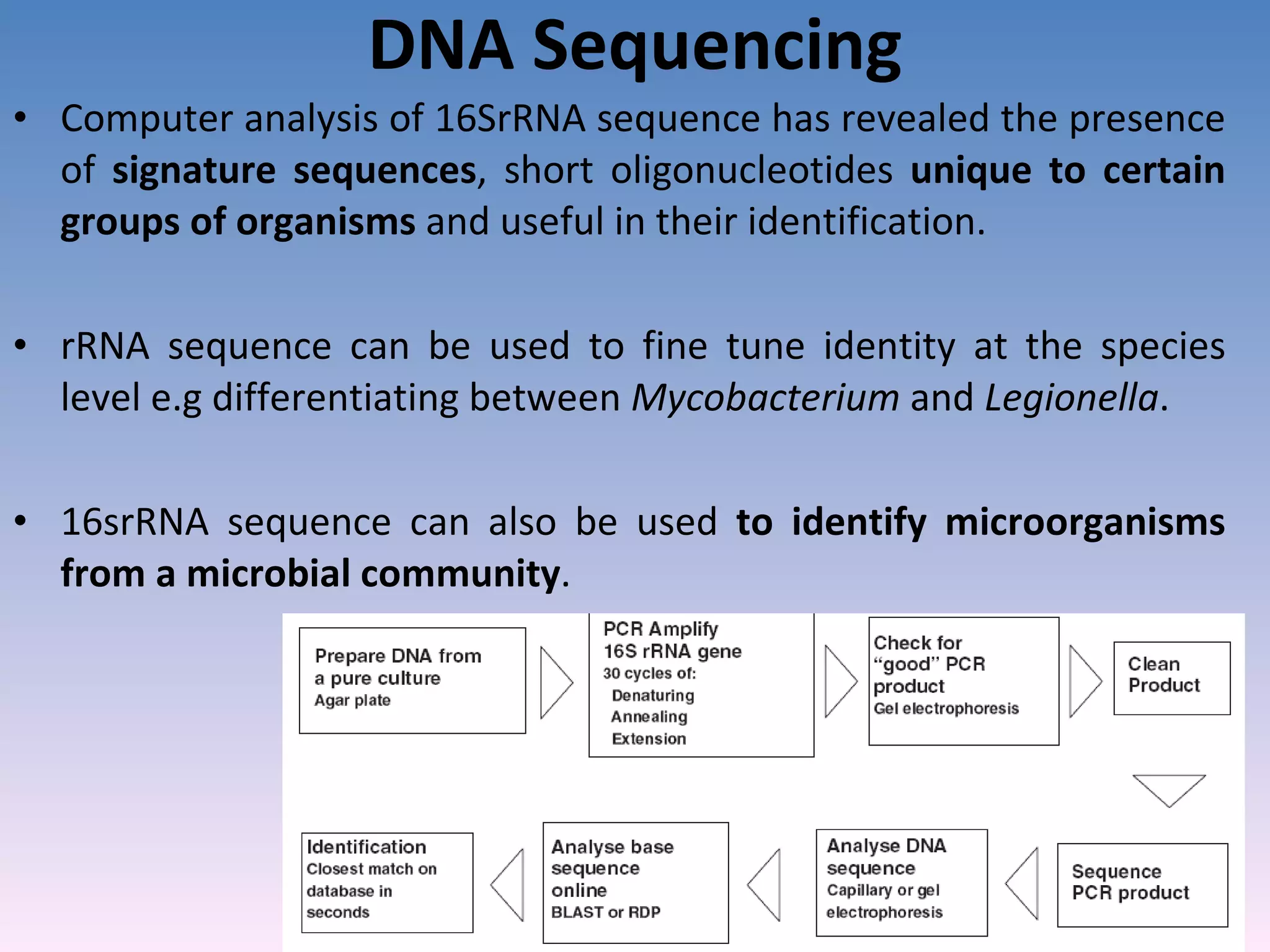
DNA Sequencing Computer analysis of 16SrRNA sequence has revealed the presence of  signature sequences , short oligonucleotides  unique to certain groups of organisms  and useful in their identification. rRNA sequence can be used to fine tune identity at the species level e.g differentiating between  Mycobacterium  and  Legionella . 16srRNA sequence can also be used  to identify microorganisms from a microbial community .
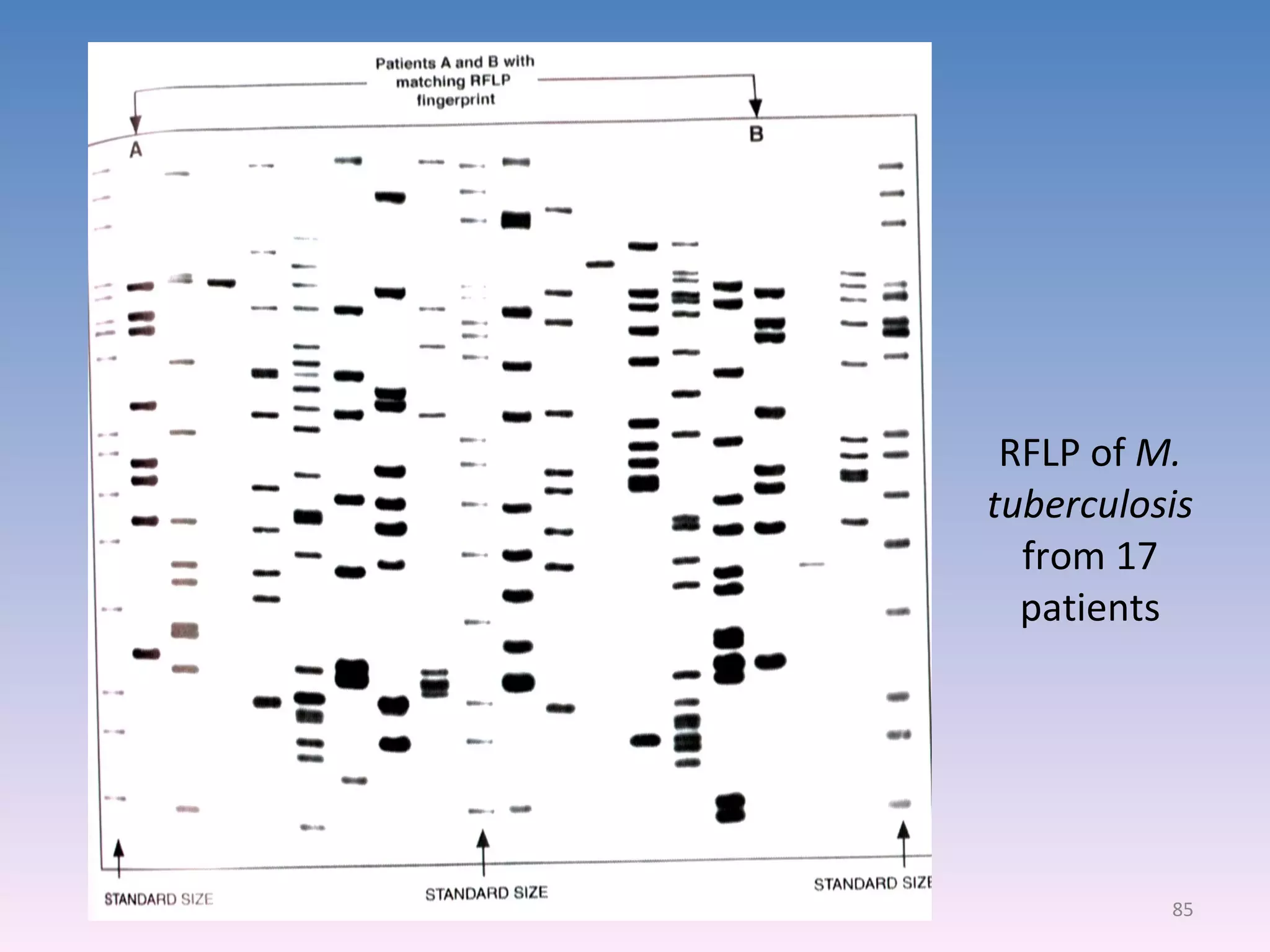
Restriction Fragment Length Polymorphism   RFLP involves  digestion  of the genomic DNA of the organism  with restriction enzymes.   The restricted fragments are  separated  by agarose gel electrophoresis. The DNA fragments  are transferred to a membrane  and  probed  with probes specific for the desired organisms. A DNA profile emerges which can be used for microbe identification.
RFLP of  M. tuberculosis  from 17 patients
Plasmid fingerprinting Plasmid fingerprinting identifies  microbial species or similar strains  as related strains often contain the same number of plasmids with the same molecular weight. Plasmid of many strains and species of  E. coli, Salmonella, Camylobacter  and  Psseudomonas  has demonstrated that this methods is  more accurate  than phenotypic methods such as biotyping, antibiotic resistance patterns , phage typing and serotyping.
Plasmid fingerprinting The procedure involves: The bacterial strains are  grown , the cells lysed and harvested. The plasmids are  separated  by agarose gel electrophoresis The gels are  stained with EtBr  and the plasmids located and compared.
Gas-liquid chromatography In (GLC), specific microbial metabolites, cellular fatty acids, and products from the pyrolysis (a chemical change caused by heat) of whole bacterial cells are analyzed and identified.  These  compounds are easily removed from growth media by extraction with an organic solvent such as ether. The ether extract is then injected into the GLC system. Both volatile and nonvolatile acids can be identified. Based on the pattern of fatty acid production, common bacteria isolated from clinical specimens can be identified. Volatile Fatty Acid Profiles from Different Bacteria.
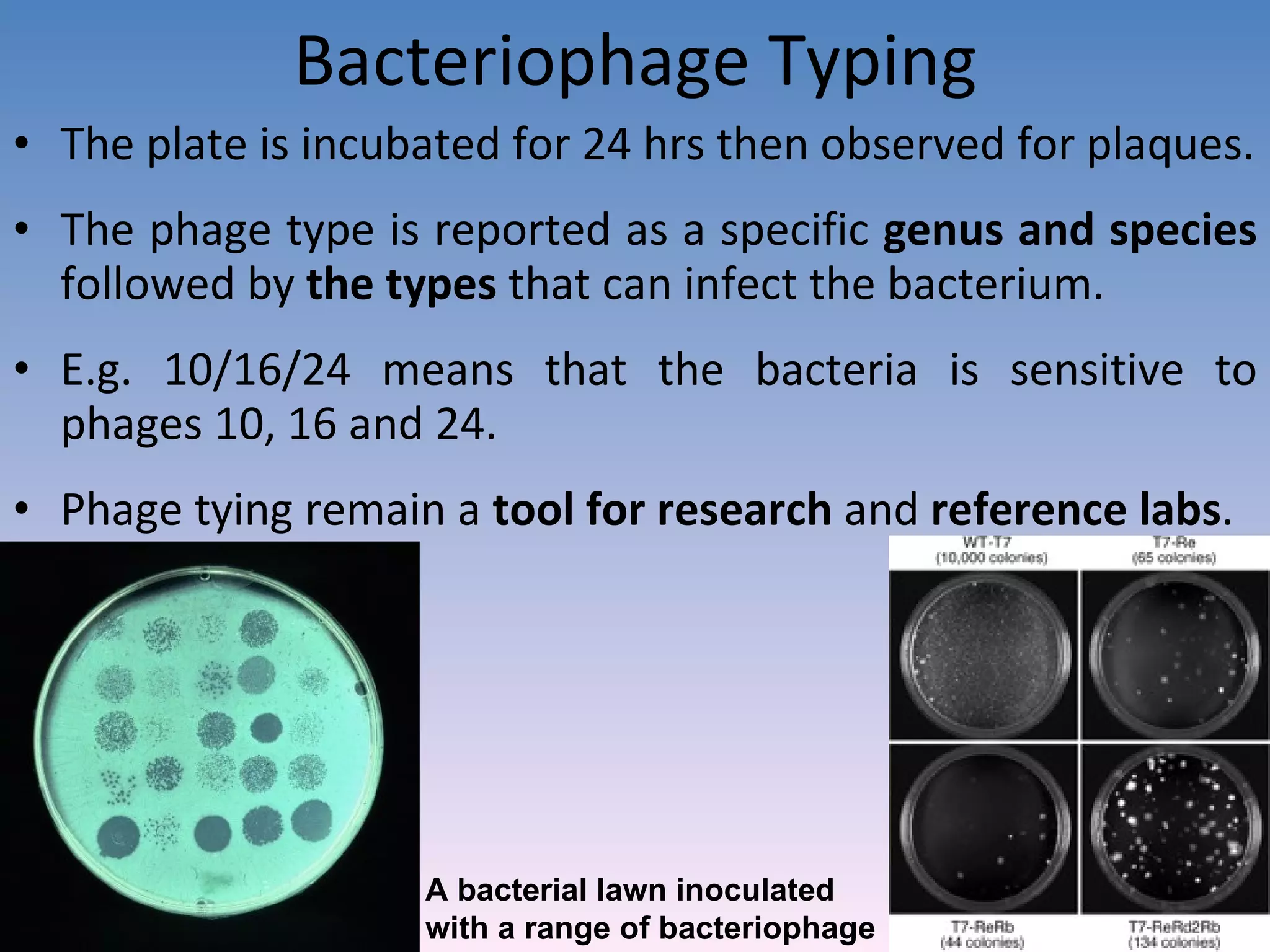
Bacteriophage Typing Bacteriophage typing is based on the  specificity of phage surface receptor  for the cell surface receptor. Only those phages that can  attach to the surface receptors  can cause lysis. The procedure involves: A plate is  heavily inoculated  so that there is no uninoculated areas. The plate is  marked off  in squares (15-20 mm) and each square  inoculated  with a drop of suspension for  different phages . Heavily Inoculated Plate
Bacteriophage Typing The plate is incubated for 24 hrs then observed for plaques. The phage type is reported as a specific  genus and species  followed by  the types  that can infect the bacterium.  E.g. 10/16/24 means that the bacteria is sensitive to phages 10, 16 and 24. Phage tying remain a  tool for research  and  reference labs . A bacterial lawn inoculated  with a range of bacteriophage
Unculturable Organisms Environmental researchers estimate that  < 1%  of microorganisms  are culturable  and therefore it is not possible to use phenotypic  methods of identification. These microorganisms are called viable nonculturable (VNC).
Flow Cytometry Classical techniques are not successful in identification of those microorganisms that cannot be cultured. Flow cytometry  allows single or multiple microorganisms detection an easy, reliable and fast way. In Flow cytometry microorganisms are identified on the basis of the  cytometry parameters  or by means of certain dyes called  fluorochromes  that can be used independently or bound to specific antibodies.
Flow Cytometry The cytometer forces a suspension of cells through a  laser beam  and measures the light they scatter or the fluorescence the cell emits as they pass through the beam. The cytometer also can measure the cell’s shape, size and the content of the DNA or RNA.
Computer and Bacteria Identification Computers improve the efficiency of the lab operations and increase the speed and clarity with which results can be reported. Computers are also important for the result entry, analysis and preparation.
Bacterial species Similar individuals:  A  bacterial species  is &quot;a population of cells with similar characteristics.” Bergey's manual  Bergey's manual  is a guide to distinguishing bacterial species based on phenotypic differences between isolates
A  strain  is a subset of a bacterial species differing from other bacteria of the same species by some minor but identifiable difference.  A  strain  is &quot;a population of organisms that descends from a single organism or pure culture isolate. Strains within a species may differ slightly from one another in many ways.&quot; (p. 392, Prescott et al., 1996)  Strains  are often created in the laboratory by mutagenizing existing  strains  or  wild-type  examples of bacterial species  The term  strain  is also applicable to eucaryotic microorganisms , as well as to viruses .
Serovar [serotype]  A  serovar  is a  strain  differentiated by  serological  means.  Individual strains of  Salmonella  spp. are often distinguished by serological means. Biovar [biotype]  Biovars  are  strains  that are differentiated by biochemical or other non- serological  means.  Type strain  &quot;One strain of a species is designated as the  type strain . It is usually one of the first strains studied and is often more fully characterized than other strains; however, it does not have to be the most representative member. Only those strains very similar to the  type strain  are included in a species.&quot; (p. 392, Prescott et al., 1996)
Morphovar [morphotype]  A  morphovar  is a strain which is differentiated on the basis of morphological distinctions.  Isolate ('i-so-lit)  An  isolate  is a pure culture derived from a heterogeneous, wild population of microorganisms .  The term  isolate  is also applicable to eucaryotic microorganisms as well as to viruses .  Classification  Placement of an organism within a scheme relating different types of organisms, such as that presented in Woese's universal tree , is know as classification.  Organisms are classified for scientific purposes.
Identification  Identification  is the determination of whether an organism (or isolate in the case of microorganisms ) should be placed within a group of organisms known to fit within some classification scheme.  Organisms are identified for practical purposes, such as diagnosis of disease .
Synthetic Peptides in Diagnosis of Viral Infections Although sensitive PCR diagnostic methods have been developed for detection of infectious diseases, most clinical laboratory tests are based on the detection of specific antigens or antibodies in diseased people.  Many of these tests involve the use of infectious viral particles to test for viral antibodies in the blood. Recently, researchers have begun using synthetic peptides as diagnostic reagents in immunoassays, thus limiting the exposure and handling of infectious materials. 
How to Choose? There are a variety of identification technologies available Bear in mind the strengths, and weaknesses, of the various methodologies.  E.g., the recently released aseptic processing guidance document (FDA 2004) recommends the use of genotypically based methods. In PCR based methods or DNA sequencing - an associated cost in facilities, labor (highly skilled technicians) and maintenance that is not present with the more traditional methods. The most direct approach to decide - based on an understanding of what your requirements may be. Develop User Requirements Specification (URS) document to drive this process. This is a formal Quality document, similar in concept to a Design Qualification document. Different companies will have different formats for these documents, but the essential features of the document will be that it has the essential requirements and that it has upper management sign-off (for a variety of reasons it is a good idea to document upper management commitment).
A partial list of topics to be covered in any URS designed for an identification system should include: Assay Throughput  - How many samples a day? Assay Time-to-Completion  - How quickly? Cost of Consumables  - How much? Frequently the cost of consumables can soon dwarf the capital expense. Labor Requirements  - Including the technological sophistication of the operators—can your technicians actually operate the equipment reliably?  Size and Composition of Microorganism Identification Database  - A major consideration. If you purchase two systems to cover identifications of unknowns, it is imperative to ensure that the databases are large and complementary; that is they both don’t have the same organisms in them, but that they include many different ones as well. Facility Requirements  - Obvious stuff like electrical and plumbing, but also less obvious concerns about RNA/DNA contamination and clean room issues. Compatibility with Existing Systems  (LIMS, workflow, etc.) Need for Physiological Information  - Do you need to know if the organisms are capable of degrading your product components? You may want to use a system that will help determine this. Purpose  - Do you plan to use this for routine identifications or for investigations?  The use of the system may be different for different systems. A good system for routine work may not be the best for investigations, and vice versa. In short, there are a wide variety of choices available to help with the identification of unknown organisms. It is important to define your specific requirements and to purchase the appropriate system to meet those needs.

Diagnostic microbiology - Traditional and Modern Approach

  • 1.
    Diagnostic Microbiology Identificationof Microbes Dr. Chhaya Sawant Lecture 3 April 2010
  • 2.
    Scope of thepresent lecture The importance of studying microorganisms An overview of microbe identification methods
  • 3.
    The importance ofstudying microorganisms Useful Role Maintain balance of environment (microbial ecology) Basis of food chain Nitrogen fixation Photosynthesis Digestion, synthesis of vitamins Manufacture of food and drink Bioremediation Harmful Role Diseases causing microbes
  • 4.
    Identification of MicroorganismsHow to identify unknown specimens ?????? Labs can grow, isolate and identify most routinely encountered bacteria within 48 hrs of sampling. The methods microbiologist use fall into three categories : Phenotypic - morphology (micro and macroscopic) Immunological - serological analysis Genotypic - genetic techniques
  • 5.
    Phenotypic Methods ‘Old fashioned’ methods via biochemical, serological and morphological are still used to identify many microorganisms. Phenotypic Methods Microscopic Morphology include a combination of cell shape, size, Gram stain, acid fast reaction, special structures e.g. Endospores, granule and capsule can be used to give an initial presumptive identification .
  • 6.
    Phenotypic Methods Macroscopicmorphology are traits that can be accessed with the naked eye e.g. appearance of colony including texture, shape, pigment, speed of growth and growth pattern in broth. Physiology/Biochemical characteristic are traditional mainstay of bacterial identification. These include enzymes (Catalase, Oxidase, Decarboxylase), fermentation of sugars, capacity to digest or metabolize complex polymers and sensitivity to drugs can be used in identification.
  • 7.
    Immunological Methods Immunologicalmethods involve the interaction of a microbial antigen with an antibody (produced by the host immune system). Testing for microbial antigen or the production of antibodies is often easier than test for the microbe itself. Lab kits based on this technique is available for the identification of many microorganisms.
  • 8.
    Genotypic Methods Genotypicmethods involve examining the genetic material of the organisms and has revolutionized bacterial identification and classification. Genotypic methods include PCR, (RT-PCR, RAPD-PCR),use of nucleic acid probes, RFLP and plasmid fingerprinting. Increasingly genotypic techniques are becoming the sole means of identifying many microorganisms because of its speed and accuracy .
  • 9.
  • 10.
  • 11.
    Process Specimen collectionSpecimen receipt Specimen processing Testing Interpretation Reporting
  • 12.
    Microbe Identification The successful identification of microbe depends on: Using the proper aseptic techniques . Correctly obtaining the specimen. Correctly handling the specimen Quickly transporting the specimen to the lab. Once the specimen reaches the lab it is cultured and identified Use care and tact to avoid patient harm The specimen is the beginning. All diagnostic information from the laboratory depends upon the knowledge by which specimens are chosen and the care with which they are collected and transported. — Cynthia A. Needham
  • 13.
    Standard Precautions Fundamentalto safe handling of specimens New concept in 1995 - combined ‘universal’ and ‘body substance isolation’ precautions Applies to all patients irrespective of known or presumed disease status Applies to blood, body fluid and body tissue (Garner 1996)
  • 14.
    Standard Precautions (cont.)Hand washing or hand hygiene Antibacterial soap for invasive procedures Waterless alcohol gels or rubs Personal Protective Equipment Disposable gloves Disposable aprons / impervious gowns Facial protection – masks, eye goggles Safe handling of sharps (The National Committee for Clinical Laboratory Standards 2004)
  • 15.
  • 16.
    A drawing ofa sterile swab with a specific transport medium. ( b) Sterile Vacutainer tubes for the collection of blood. (c) Nasotracheal intubation. (d) A drawing of a Foley catheter. ( e) This specially designed sputum cup allows the patient to expectorate a clinical specimen directly into the cup.
  • 17.
    Aerobic/Anaerobic Blood CultureBottles AFB Blood Culture Bottle Wire Swab
  • 18.
  • 19.
    Transportation Specimen transportedpromptly Within 2 hours Strict storage conditions for delayed laboratory processing Sterile containers Faecal specimens an exception Use of transport media Provide written guidelines
  • 20.
    Microbe Identification Identification measures include: Microscopy (staining) growth on enrichment, selective, differential or characteristic media specimen biochemical test (rapid test methods) immunological techniques molecular (genotypic) methods . After the microbe is identified for clinical samples it is used in susceptibility tests to find which method of control is most effective.
  • 21.
    Different Identification methods 1) Staining Reactions 2) Cultural Characteristics 3) Resistance 4) Metabolism 5) Biochemical properties
  • 22.
    Staining Reactions Thepresence of certain structures and staining reactions aids in their identification and classification To render microscopic and semitransparent objects visible To reveal their shape and size To produce specific physical or chemical reactions To produce specific physical or chemical reactions.
  • 23.
    Staining Reactions Simplestaining bring out the morphology the best Differential and special stains are necessary to bring out characteristics like flagella, capsules, spores and metachromatic granules. Gram stain divides bacteria into Gram positive and Gram negative Ziehl-Neelsen stain divides them into acid fast and non acid fast Fluorescent dyes bring out special characteristics and fluorescent antibody technique enables to identify them.
  • 24.
    Cultural Characteristics Providesadditional information for the identification of the bacterium. The characters revealed in different types of media are noted. While studying colonies on solid media following characteristics are observed : Size, Shape, Margins, Surface, Their elevations, Edge, colour, structure, consistency. In fluid medium following characteristics are observed : Degree of growth – Absence, scanty, moderate, abundant etc. presence of turbidity and its nature presence of deposit and its character Nature of surface growth Ease of disintegration and odour
  • 25.
  • 26.
  • 27.
    Resistance The resistanceof the organism is tested against number of parameters which helps differentiation and identification of the organisms - Heat - Low concentration of disinfectants - Antibiotics - Chemotherapeutic agents - Bacteriocins etc.
  • 28.
    Metabolism Toclassify and differentiate species following aspects are studied - Requirements of oxygen - The need for CO 2 - Capacity to form pigments - power of haemolysis
  • 29.
    Biochemical properties Testsfor Metabolism of Carbohydrates and related compounds Tests for Metabolism of Proteins and Amino acids Test for metabolism of Lipids Tests for Enzymes Combined Tests
  • 30.
    Biochemical properties Testsfor Metabolism of Carbohydrates and related compounds Tests to distinguish b/w aerobic and anaerobic breakdown of carbohydrates - O/F test depends upon the use of a semi-solid tubed medium containing the carbohydrate (usually glucose) along with the pH indicator Tests to show the range of carbohydrates and related compounds that can be attacked - A large variety of carbohydrate compounds are used and they are often regarded as ‘sugars’ Sugar fermentation – Acid production Litmus milk – Acid or alkali production, clot formation, peptonisation or saponification. Disruption of clot due to gas production. Stormy Fermentation of Litmus Milk. The tube on the left shows fermentation; the tube on the right is negative for stormy fermentation. Used for the identification of Clostridium species.
  • 31.
    Sugar fermentation Acid and gas production
  • 32.
    Biochemical properties Testsfor Metabolism of Carbohydrates and related compounds Tests for specific breakdown products - Methyl red test – To detect Acid production during Glucose fermentation. - Voges-Proskauer test – Depends on the production of acetyle methylcarbional from pyruvic acid, as an intermediate stage in its conversion to 2:3 butylene glycol. Tests to show ability to utilize particular substrate Citrate utilization – Ability to use citrate as a sole source of carbon and Ammonia as a sole source of Nitrogen.
  • 33.
    MR and VPtest This is a qualitative test of the acidity produced by bacteria grown in MR-VP broth. Citrate utilization
  • 34.
    Biochemical properties Testsfor Metabolism of Proteins and Amino acids Proteolytic organisms digest proteins and consequently may liquify gelatin Gelatin liquification – Used for the detection or identification of organisms producing enzyme gelatinase e.g. Pseudomonas spps. Indole production – Important in identification of enterobacteria e.g. E.coli , P. vulgaris etc. (Decomposition of Tryptophan) Digestion of milk – Some organisms decompose milk proteins which is detected in agar containing milk as a zone of clearance around the colonies. Amino acid Decarboxylase and Arginine Dihydrolase tests – based on the ability of some bacteria to decarboxylase an amino acid to the corresponding amine with the liberation of CO 2 H 2 S production – Can be produced from Sulphur-containing amino acids by a large number of bacteria Phenylalanine deaminase – Test indicates the ability of an organism to deaminate phenylalanine with the production of phenylpyruvic acid which will react with ferric salts
  • 35.
    Indole test PhenylalanineDeamination Test. Gelatin Hydrolysis or Liquefaction . Test for Amino Acid Decarboxylase. The tube on the left is an uninoculated control; the second tube from the left is lysine decarboxylase negative; the third tube is lysine decarboxylase positive; and the tube on the right is lysine deaminase positive
  • 36.
    Biochemical properties Testfor metabolism of Lipids Hydrolysis of Tributyrin – An emulsion of micro-droplets of the fat, tributyrin, in a solid medium makes it opaque. Certain Lipolytic organisms remove the opacity by converting the fat to water – soluble butyric acid Tests for Enzymes Catalase test – Demonstrates the presence of catalase, an enzyme that catalyses the release of oxygen from hydrogen peroxide Oxidase Test – Depends on the presence in bacteria of certain oxidases that will catalyze the transport of electrons between electron donors in the bacteria and a redox dye – tetramethyl-p-phenylene-diamine. The dye is reduced to a deep purple colour. Urease test – Bacteria, particularly those growing naturally in an environment exposed to urine, may decompose urea by means of the enzyme urease.
  • 37.
    cogulase test UreaseTube and slide Catalase Test.
  • 38.
  • 39.
    Biochemical properties Testsfor Enzymes Nitrate reduction – Helps to detect bacteria of enterobacteriacae group to detect presence of enzyme Nitrate reductase which reduces nitrate ti nitrite Lecithinase test – Produced by certain organisms that split lipoprotein complexes in human serum and hen egg-yolk and produce opalescence or turbidity when grown in media containing these substances.
  • 40.
  • 41.
    Biochemical properties CombinedTests 1) Test for Lipase and Lecithinase – Egg yolk agar Egg-yolk indicates both lipase and lecithinase reaction of bacteria. Lipase activity is indicated by the formation of a thin, iridescent ‘pearly layer’ overlying the colonies and a confined opalescence in the medium underlying them. Activity of Lecithinase is shown by wide zones of opalescence around colonies. Zones are more intense and larger than the zones caused by Lipolysis. 2) Triple sugar iron agar (TSI agar) test – Helps in identification of Enterobacteria by their specific reactions on the slants known as multitest medium. Three sugars fermentation Gas production Production of Hydrogen
  • 42.
  • 43.
  • 44.
    Biochemical properties Miscellaneoustests Antibiotic tolerance (resistance) test, dye tolerance and other chemical inhibition tests KCN test – Ability to grow in a medium containing KCN. (Should be handled carefully) Detection of motility - Slide test (Hanging drop technique) - Tube test ( Semisolid Agar)
  • 45.
    API Strips -Rapid Tests Commercial miniaturized biochemical test panels - Cover a significant number of clinically-important groups of bacteria, as well as food- and water-associated microorganisms. The earliest, is the Analytical Profile Index (API) panel.  Different test panels are prepared in dehydrated forms which are reconstituted upon use by addition of bacterial suspensions. After incubation, positive test results are scored as a seven-digit number (profile). Identity of the bacterium is then easily derived from the database with the relevant cumulative profile code book or software. Identification of Enterobacteriaceae using API 20E, a standardized microplate method. Positive and negative reactions are shown by color reactions.
  • 46.
    Rapid Tests ONPG ( β galactosidase); ADH (arginine dihydrolase); LDC (lysine decarboxylase); ODC (ornithine decarboxylase); CIT (citrate utilization); H 2 S (hydrogen disulphide production); URE (urease); TDA ( tryptophan deaminase); IND (indole production); VP (Voges Proskauer test for acetoin); GEL ( gelatin liquefaction); the fermentation of glucose (GLU), mannitol (MAN), inositol (INO), sorbitol (SOR), rhamnose (RHA), sucrose (SAC); Melibiose (MEL), amygdalin (AMY), and arabinose (ARA); and OXI (oxidase). positive negative
  • 47.
    Rapid Test ResultsIn Other System, the use of Paper discs impregnated with biochemical substrates (e.g. Minitek, Bioquest) OXI--0 - ARA-2 2 + AMY-0 - MEL--4 + SAC-2 7 + RHA-1 + SOR--4 + INO-0 5 - MAN-1 + GLU--4 + GEL-0 4 - VP--0 IND--4 + TDA-0 4 - URE-0 - H 2 S--0 - CIT-0 1 - ODC-1 + LDC--4 + ADH-0 5 - ONPG-1 + normal 7 digit code 5 144 572 = E. coli
  • 48.
    Immunologic Techniques Theculturing of certain viruses, bacteria, fungi, and parasites from clinical specimens may not be possible because the methodology remains undeveloped ( Treponema pallidum; Hepatitis A, B, C; and Epstein-Barr virus ), is unsafe (rickettsias), or is impractical for all but a few clinical microbiology laboratories ( Mycobacteria ). Cultures also may be negative because of prior antimicrobial therapy. Under these circumstances, detection of antibodies or antigens may be quite valuable diagnostically Immunologic systems for the detection and identification of pathogens from clinical specimens are easy to use, give relatively rapid reaction endpoints, and are sensitive and specific
  • 49.
    serology The branchof medical immunology concerned with antigen-antibody reactions in vitro is serology [serum and -ology]. The usefulness of serological test is dependent on its sensitivity and specificity . False Negatives/Positives High sensitivity prevents false negatives. False negatives occurs when there is no reaction when the Ag or Ab is present. High specificity prevents false positives. False positives occurs when there is cross reaction with another molecule.
  • 50.
    Precipitation Reactions Precipitationis the interaction of a soluble Ag with an soluble Ab to form an insoluble complex . The complex formed is an aggregate of Ag and Ab. Precipitation reactions occur maximally only when the optimal proportions of Ag and Ab are present. Precipitation can also be done in agar referred to as immunodiffusion .
  • 51.
    Agglutination Reactions Agglutination is the visible clumping of an Ag when mixed with a specific Ab. Widely used because they are simple to perform, highly specific, inexpensive and rapid. Standardized tests are available for the determination of blood groups and identification of pathogens and their products . Direct agglutination occurs when a soluble Ab results in clumping by interaction with an Ag which is part of a surface of a cell. E.g. Blood typing and detection of mycoplasma pneumonia. Indirect (passive) agglutination . Ab/Ag is adsorbed or chemically coupled to the cell, latex beads or charcoal particles which serves as an inert carrier. The latex beads can be used to detect for surface Ag.
  • 52.
    Direct/Indirect Agglutination Commercialsuspension of latex beads are available for the detection of Staphylococcus aureus, Streptococcus pyogenes, Haemophilus influenza and Camplyobacter spps . A similar technology is used for urine pregnancy tests . Hemagglutination usually results from antibodies cross linking red blood cells through attachment to surface antigens and is routinely used in blood typing. The hemagglutination inhibition test is widely used to diagnose influenza, measles, mumps, mononucleosis, and other viral infections
  • 53.
    Viral Hemagglutination. Certain viruses can bind to red blood cells causing hemagglutination. If serum containing specific antibodies to the virus is mixed with the red blood cells, the antibodies will neutralize the virus and inhibit hemagglutination (a positive test).
  • 54.
    Using Fluorescent AntibodiesAbs can be chemically modified with Fluorescent dyes such as Rhodamine B, Fluorescent Red, Fluorescien Isothiocynate and Fluoresces Yellow Or Green. Cells with bound fluorescent Ab emit a bright red, orange, yellow or green light depending on the dye used. There are two distinct fluorescent Ab procedure: direct and indirect . Direct method Indirect method
  • 55.
    Fluorescent Antibodies Inthe direct method the fluorescent Ab is directed to surface Ag of the organism. In the indirect method a non-fluorescent Ab reacts with the organism's Ag and a fluorescent Ab reacts with the non-fluorescent Ag-Ab complex. Fluorescent Ab can be used to detect microorganisms directly in tissue , long before a primary isolation technique yield the suspected pathogen. Fluorescent Ab has been used for the detection of Bacillus anthracis and HIV virus.
  • 56.
    ELISA - Enzyme-linkedimmunosorbent assay The enzyme-linked immunosorbent assay (ELISA) has become one of the most widely used serological tests for antibody or antigen detection. This test involves the linking of various “label” enzymes to either antigens or antibodies. Enzymes used in ELISA include Alkaline Phosphate, Peroxidase and ß Galactosidase . During indirect ELISA the Ag is trapped between two Ab molecules (sandwich ELISA).
  • 57.
    ELISA The specimenis added to a well with attached Ab. If the Ag (microbe) is present it will attached to the Ab. After washing away unbound material, a second Ab with a conjugated enzyme is added. The second Ab is specific for the Ag. A substrate is added which reacts with the enzyme to give a coloured reaction. ELISA tests are available for the detection of many organisms including Staphylococcus aureus, E. coli and Salmonella .
  • 58.
    Immunoblot/Western Blot Immunoblot detects for a specific protein associated with specific organism. The procedure involves: Separation of the proteins on polyacrylamide gel. Transfer (blotting) of proteins from the gel to a membrane (nitrocellulose or nylon) and identification of the protein with a specific Ab . The method is sensitive for detecting proteins in complex mixtures . Immunoblot is laborious, time consuming and less sensitive than ELISA. Immunoblot
  • 59.
    Immuno/Western Blot Immunoblotis used as a confirmatory test for HIV. The ELISA test for HIV often yields false positive and the immunoblot test is used to confirm a positive ELISA results. To perform the HIV immunoblot purified HIV is treated with SDS to solubilize the proteins and inactivate the virus. The proteins (at least 7) are resolved by polyacrylamide gel electrophoresis and the proteins are blotted unto a membrane and incubated with the test serum .
  • 60.
    HIV Immunoblot TestThe test is considered positive if bands occur at, 2 locations e.g. gp160 and gp 120 or p24 and gp 41-45.
  • 61.
    HIV Immunoblot TestTest was done at 6 different times (after the suspected exposure). Test is positive if bands occur at two locations e.g. gp160 or gp 120 and p31 or p24. Test is negative if no bands are present for any HIV antigen. SRC is positive control
  • 62.
    A technique usedto measure the concentration of hormones, Drugs, enzymes, viruses, bacterial antigens and other organic substances of biological interest found in Blood, Tissues and other biological fluids Radio immuno assay Gamma Counter Principle: Uses an immune reaction [Antigen – Antibody reaction] to estimate a ligand Ag + Ag* + Ab  AgAb + Ag*Ab + Ag + Ab* Unbound Ag* and Ag washed out Radioactivity of bound residue measured Ligand conc is inversely related to radioactivity [Ag : ligand to be measured ; Ag* radiolabelled ligand]
  • 63.
    Advantages & Disadvantagesof RIA Advantages Highly specific: Immune reactions are specific High sensitivity : Immune reactions are sensitive Disadvantages Radiation hazards: Uses radio labelled reagents Requires specially trained persons Labs require special license to handle radioactive material Requires special arrangements for Requisition, storage of radioactive material radioactive waste disposal.
  • 64.
    Immuno-electron microscopy ElectronMicroscopy or EM can be used to study the detailed microarchitecture of tissues or cells. Immuno-EM allows the detection of specific proteins in ultrathin tissue sections. Antibodies labelled with heavy metal particles (e.g. gold) can be directly visualised using Transmission Electron Microscopy . While powerful in detecting the sub-cellular localisation of a protein, immuno-EM can be technically challenging, expensive, and require rigorous optimisation of tissue fixation and processing methods.
  • 65.
  • 66.
    Problems With TraditionalMethods Cultivation-based methods insensitive for detecting some organisms. Cultivation-based methods limited to pathogens with known growth requirements. Poor discrimination between microbes with common behavioral features. Failure to detect infections caused by uncultivated (e.g., novel) organisms, or organisms that fail to elicit a detectable host immune response. Visual appearance of microorganisms is nonspecific. Examples of Failures With Traditional Approaches Detection and speciation of slow-growing organisms takes weeks (e.g., M. tuberculosis ). A number of visible microorganisms cannot be cultivated (e.g., Whipple bacillus ). Diseases presumed to be infectious remain ill-defined with no detected microorganism (e.g., abrupt fever after tick bite).
  • 67.
    Genotypic methods Theinitiation of new molecular technologies in genomics and proteomics is shifting traditional techniques for bacterial classification, identification, and characterization in the 21st century toward methods based on the elucidation of specific gene sequences or molecular components of a cell. Genotypic methods of microbe identification include the use of : Nucleic acid probes PCR (RT-PCR, RAPD-PCR) Nucleic acid sequence analysis 16s rRNA analysis RFLP Plasmid fingerprinting.
  • 68.
    Nucleic acid probesNucleic acid hybridization is one of the most powerful tools available for microbe identification. Hybridization detects for a specific DNA sequence associated with an organism. The process uses a nucleic acid probe which is specific for that particular organism. The target DNA (from the organism) is attached to a solid matrix such as a nylon or nitrocellulose membrane.
  • 69.
    Nucleic Acid ProbesA single stranded probe is added and if there is sequence complementality between the target and the probe a positive hybridization signal will be detected. Hybridization is detected by a reporter molecule (radioactive, fluorescent, chemiluminescent) which is attached to the probe. Nucleic acid probes have been marketed for the identification of many pathogens such as N. gonorrhoeae .
  • 70.
    Two Component ProbesMolecular probes are also finding wide spread use in the food industry and food regulatory agencies. The pathogen DNA is attached to a “dipstick” to hybridize to the pathogen DNA from the food. A two component probe is used ( reporter and a capture probe which are attached to each other). Following hybridization the dipstick with the capture probe (usually poly dT to capture poly dA on the probe) is inserted into the hybridization solution. It traps the hybridized DNA for removal and measurement.
  • 71.
  • 72.
    Advantages of NucleicAcid Probes Nucleic acid probes has many advantages over immunological methods. Nucleic acid are more stable at high temperature, pH, and in the presence of organic solvents and other chemicals. This means that the specimen can be treated very harshly to destroy interfering materials. Nucleic acid probes can be used to identify microorganisms which are no longer alive . Furthermore nucleic acid probes are more specific than antibodies.
  • 73.
    Polymerase Chain Reaction(PCR) PCR is widely used for the identification of microorganisms. Sequence specific primers are used in PCR for the amplification of DNA or RNA of specific pathogens. PCR allows for the detection even if only a few cells are present and can also be used on viable nonculturables. The presence of the appropriate amplified PCR product confirms the presence of the organisms.
  • 74.
    Limitations of End-PointPCR Agarose gel results are obtained from the end point of the reaction. Endpoint detection is very time consuming. Results may not be obtained for days. Results are based on size discrimination, which may not be very precise. The end point is variable from sample to sample. Gels may not be able to resolve these variability in yield, real-time PCR is sensitive enough to detect these changes. Agarose Gel resolution is very poor, about 10 fold. Real-Time PCR can detect as little as a two-fold change! Some of the problems with End-Point Detection: Poor Precision Low sensitivity Short dynamic range < 2 logs Low resolution Non - Automated Size-based discrimination only Results are not expressed as numbers Ethidium bromide for staining is not very quantitative Post PCR processing
  • 75.
    Real Time PCRCurrently many PCR tests employ real time PCR . This involves the use of fluorescent primers . The PCR machine monitors the incorporation of the primers and display an amplification plot which can be viewed continuously thru the PCR cycle. Real time PCR yields immediate results .
  • 76.
    Real-time PCR Rapiddetection and identification of several bacterial strains. Promising tool for distinguishing specific sequences from a complex mixture of DNA and therefore is useful for determining the presence and quantity of pathogen-specific or other unique sequences within a sample. Facilitates a rapid detection of low amounts of bacterial DNA accelerating therapeutic decisions and enabling an earlier adequate antibiotic treatment.
  • 77.
    RT-PCR (reversetrancriptase PCR RT-PCR (reverse transcription-polymerase chain reaction) is the most sensitive technique for mRNA detection and quantitation currently available. Compared to the two other commonly used techniques for quantifying mRNA levels, Northern blot analysis and RNase protection assay, RT-PCR can be used to quantify mRNA levels from much smaller samples. In fact, this technique is sensitive enough to enable quantitation of RNA from a single cell.
  • 78.
  • 79.
    RAPD Profile RAPDstands for R andom A mplification of Polymorphic D NA. RAPD reactions are PCR reactions, but they amplify segments of DNA which are essentially unknown to the scientist (random). Standard PCR is used to amplify a known sequence of DNA. The scientists chooses the sequence he or she wants to amplify, then designs and makes primers which will anneal to sequences flanking the sequence of interest. PCR leads to the amplification of a particular segment of DNA.
  • 80.
    RAPD analysis InRAPD analysis, the target sequence(s) (to be amplified) is unknown. The scientist will design a primer with an arbitrary sequence. In other words, the scientist simply makes up a 10 base pair sequence (or may have a computer randomly generate a 10 bp sequence), then synthesizes the primer. The scientist then carries out a PCR reaction and runs an agarose gel to see if any DNA segments were amplified in the presence of the arbitrary primer.
  • 81.
    RAPD-PCR RAPD hasmany advantages: Pure DNA is not needed Less labor intensive than RFLP. There is no need for prior DNA sequence data. RAPD has been used to Fingerprinting Unknown Microorganisms
  • 82.
    DNA sequencing (16s rDNA) The rRNA is the most conserved (least variable) gene in all cells. Portions of the rDNA sequence from distantly-related organisms are remarkably similiar. This means that sequences from distantly related organisms can be precisely aligned, making the true differences easy to measure. For this reason, genes that encode the rRNA (rDNA) have been used extensively to determine taxonomy, phylogeny (evolutionary relationships), and to estimate rates of species divergence among bacteria. Thus the comparison of 16s rDNA sequence can show evolutionary relatedness among microorganisms. This work was pioneered by Carl Woese, who proposed the three Domain system of classification - Archaea, Bacteria, and Eucarya - based on such sequence information.
  • 83.
    DNA Sequencing Computeranalysis of 16SrRNA sequence has revealed the presence of signature sequences , short oligonucleotides unique to certain groups of organisms and useful in their identification. rRNA sequence can be used to fine tune identity at the species level e.g differentiating between Mycobacterium and Legionella . 16srRNA sequence can also be used to identify microorganisms from a microbial community .
  • 84.
    Restriction Fragment LengthPolymorphism RFLP involves digestion of the genomic DNA of the organism with restriction enzymes. The restricted fragments are separated by agarose gel electrophoresis. The DNA fragments are transferred to a membrane and probed with probes specific for the desired organisms. A DNA profile emerges which can be used for microbe identification.
  • 85.
    RFLP of M. tuberculosis from 17 patients
  • 86.
    Plasmid fingerprinting Plasmidfingerprinting identifies microbial species or similar strains as related strains often contain the same number of plasmids with the same molecular weight. Plasmid of many strains and species of E. coli, Salmonella, Camylobacter and Psseudomonas has demonstrated that this methods is more accurate than phenotypic methods such as biotyping, antibiotic resistance patterns , phage typing and serotyping.
  • 87.
    Plasmid fingerprinting Theprocedure involves: The bacterial strains are grown , the cells lysed and harvested. The plasmids are separated by agarose gel electrophoresis The gels are stained with EtBr and the plasmids located and compared.
  • 88.
    Gas-liquid chromatography In(GLC), specific microbial metabolites, cellular fatty acids, and products from the pyrolysis (a chemical change caused by heat) of whole bacterial cells are analyzed and identified. These compounds are easily removed from growth media by extraction with an organic solvent such as ether. The ether extract is then injected into the GLC system. Both volatile and nonvolatile acids can be identified. Based on the pattern of fatty acid production, common bacteria isolated from clinical specimens can be identified. Volatile Fatty Acid Profiles from Different Bacteria.
  • 89.
    Bacteriophage Typing Bacteriophagetyping is based on the specificity of phage surface receptor for the cell surface receptor. Only those phages that can attach to the surface receptors can cause lysis. The procedure involves: A plate is heavily inoculated so that there is no uninoculated areas. The plate is marked off in squares (15-20 mm) and each square inoculated with a drop of suspension for different phages . Heavily Inoculated Plate
  • 90.
    Bacteriophage Typing Theplate is incubated for 24 hrs then observed for plaques. The phage type is reported as a specific genus and species followed by the types that can infect the bacterium. E.g. 10/16/24 means that the bacteria is sensitive to phages 10, 16 and 24. Phage tying remain a tool for research and reference labs . A bacterial lawn inoculated with a range of bacteriophage
  • 91.
    Unculturable Organisms Environmentalresearchers estimate that < 1% of microorganisms are culturable and therefore it is not possible to use phenotypic methods of identification. These microorganisms are called viable nonculturable (VNC).
  • 92.
    Flow Cytometry Classicaltechniques are not successful in identification of those microorganisms that cannot be cultured. Flow cytometry allows single or multiple microorganisms detection an easy, reliable and fast way. In Flow cytometry microorganisms are identified on the basis of the cytometry parameters or by means of certain dyes called fluorochromes that can be used independently or bound to specific antibodies.
  • 93.
    Flow Cytometry Thecytometer forces a suspension of cells through a laser beam and measures the light they scatter or the fluorescence the cell emits as they pass through the beam. The cytometer also can measure the cell’s shape, size and the content of the DNA or RNA.
  • 94.
    Computer and BacteriaIdentification Computers improve the efficiency of the lab operations and increase the speed and clarity with which results can be reported. Computers are also important for the result entry, analysis and preparation.
  • 95.
    Bacterial species Similarindividuals: A bacterial species is &quot;a population of cells with similar characteristics.” Bergey's manual Bergey's manual is a guide to distinguishing bacterial species based on phenotypic differences between isolates
  • 96.
    A strain is a subset of a bacterial species differing from other bacteria of the same species by some minor but identifiable difference. A strain is &quot;a population of organisms that descends from a single organism or pure culture isolate. Strains within a species may differ slightly from one another in many ways.&quot; (p. 392, Prescott et al., 1996) Strains are often created in the laboratory by mutagenizing existing strains or wild-type examples of bacterial species The term strain is also applicable to eucaryotic microorganisms , as well as to viruses .
  • 97.
    Serovar [serotype] A serovar is a strain differentiated by serological means. Individual strains of Salmonella spp. are often distinguished by serological means. Biovar [biotype] Biovars are strains that are differentiated by biochemical or other non- serological means. Type strain &quot;One strain of a species is designated as the type strain . It is usually one of the first strains studied and is often more fully characterized than other strains; however, it does not have to be the most representative member. Only those strains very similar to the type strain are included in a species.&quot; (p. 392, Prescott et al., 1996)
  • 98.
    Morphovar [morphotype] A morphovar is a strain which is differentiated on the basis of morphological distinctions. Isolate ('i-so-lit) An isolate is a pure culture derived from a heterogeneous, wild population of microorganisms . The term isolate is also applicable to eucaryotic microorganisms as well as to viruses . Classification Placement of an organism within a scheme relating different types of organisms, such as that presented in Woese's universal tree , is know as classification. Organisms are classified for scientific purposes.
  • 99.
    Identification Identification is the determination of whether an organism (or isolate in the case of microorganisms ) should be placed within a group of organisms known to fit within some classification scheme. Organisms are identified for practical purposes, such as diagnosis of disease .
  • 100.
    Synthetic Peptides inDiagnosis of Viral Infections Although sensitive PCR diagnostic methods have been developed for detection of infectious diseases, most clinical laboratory tests are based on the detection of specific antigens or antibodies in diseased people. Many of these tests involve the use of infectious viral particles to test for viral antibodies in the blood. Recently, researchers have begun using synthetic peptides as diagnostic reagents in immunoassays, thus limiting the exposure and handling of infectious materials. 
  • 101.
    How to Choose?There are a variety of identification technologies available Bear in mind the strengths, and weaknesses, of the various methodologies. E.g., the recently released aseptic processing guidance document (FDA 2004) recommends the use of genotypically based methods. In PCR based methods or DNA sequencing - an associated cost in facilities, labor (highly skilled technicians) and maintenance that is not present with the more traditional methods. The most direct approach to decide - based on an understanding of what your requirements may be. Develop User Requirements Specification (URS) document to drive this process. This is a formal Quality document, similar in concept to a Design Qualification document. Different companies will have different formats for these documents, but the essential features of the document will be that it has the essential requirements and that it has upper management sign-off (for a variety of reasons it is a good idea to document upper management commitment).
  • 102.
    A partial listof topics to be covered in any URS designed for an identification system should include: Assay Throughput  - How many samples a day? Assay Time-to-Completion  - How quickly? Cost of Consumables  - How much? Frequently the cost of consumables can soon dwarf the capital expense. Labor Requirements  - Including the technological sophistication of the operators—can your technicians actually operate the equipment reliably?  Size and Composition of Microorganism Identification Database  - A major consideration. If you purchase two systems to cover identifications of unknowns, it is imperative to ensure that the databases are large and complementary; that is they both don’t have the same organisms in them, but that they include many different ones as well. Facility Requirements  - Obvious stuff like electrical and plumbing, but also less obvious concerns about RNA/DNA contamination and clean room issues. Compatibility with Existing Systems  (LIMS, workflow, etc.) Need for Physiological Information  - Do you need to know if the organisms are capable of degrading your product components? You may want to use a system that will help determine this. Purpose  - Do you plan to use this for routine identifications or for investigations?  The use of the system may be different for different systems. A good system for routine work may not be the best for investigations, and vice versa. In short, there are a wide variety of choices available to help with the identification of unknown organisms. It is important to define your specific requirements and to purchase the appropriate system to meet those needs.