The document discusses occupational optometry and vision services. It covers three main areas: primary care which includes occupational history, managing work-related conditions, and educating patients; eye safety consultation including writing safety policies, assessing workplaces, and overseeing vision screenings; and vision consultation to provide advice on visual efficiency. It also discusses common occupational diseases, causes of eye injuries in different occupations, and the importance of prevention through eye protection programs that identify hazards, provide protection, educate workers, and maintain safety measures.
Introduction Occupational optometryis the portion of optometric practice that is concerned with the efficient and safe visual functioning of an individual within the work environment. Prevention of occupational eye injuries Vision assessments of workers/patients, taking into account their specific vision requirements and the demands these requirements place upon them.
3.
Occupational Vision ServicesThree general areas or levels: Primary care Eye safety consultation Vision consultation
4.
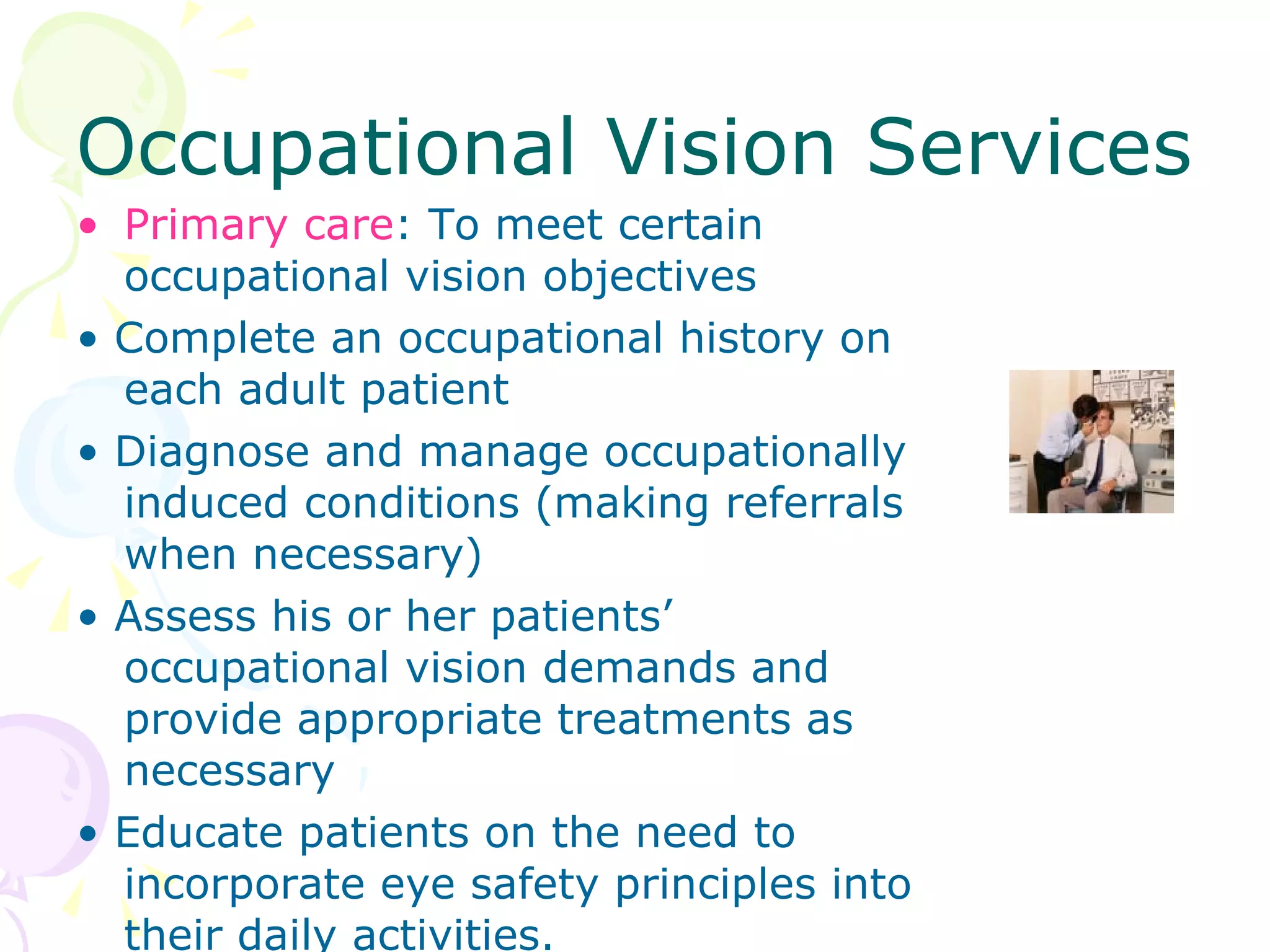
Occupational Vision ServicesPrimary care : To meet certain occupational vision objectives • Complete an occupational history on each adult patient • Diagnose and manage occupationally induced conditions (making referrals when necessary) • Assess his or her patients’ occupational vision demands and provide appropriate treatments as necessary • Educate patients on the need to incorporate eye safety principles into their daily activities.
5.
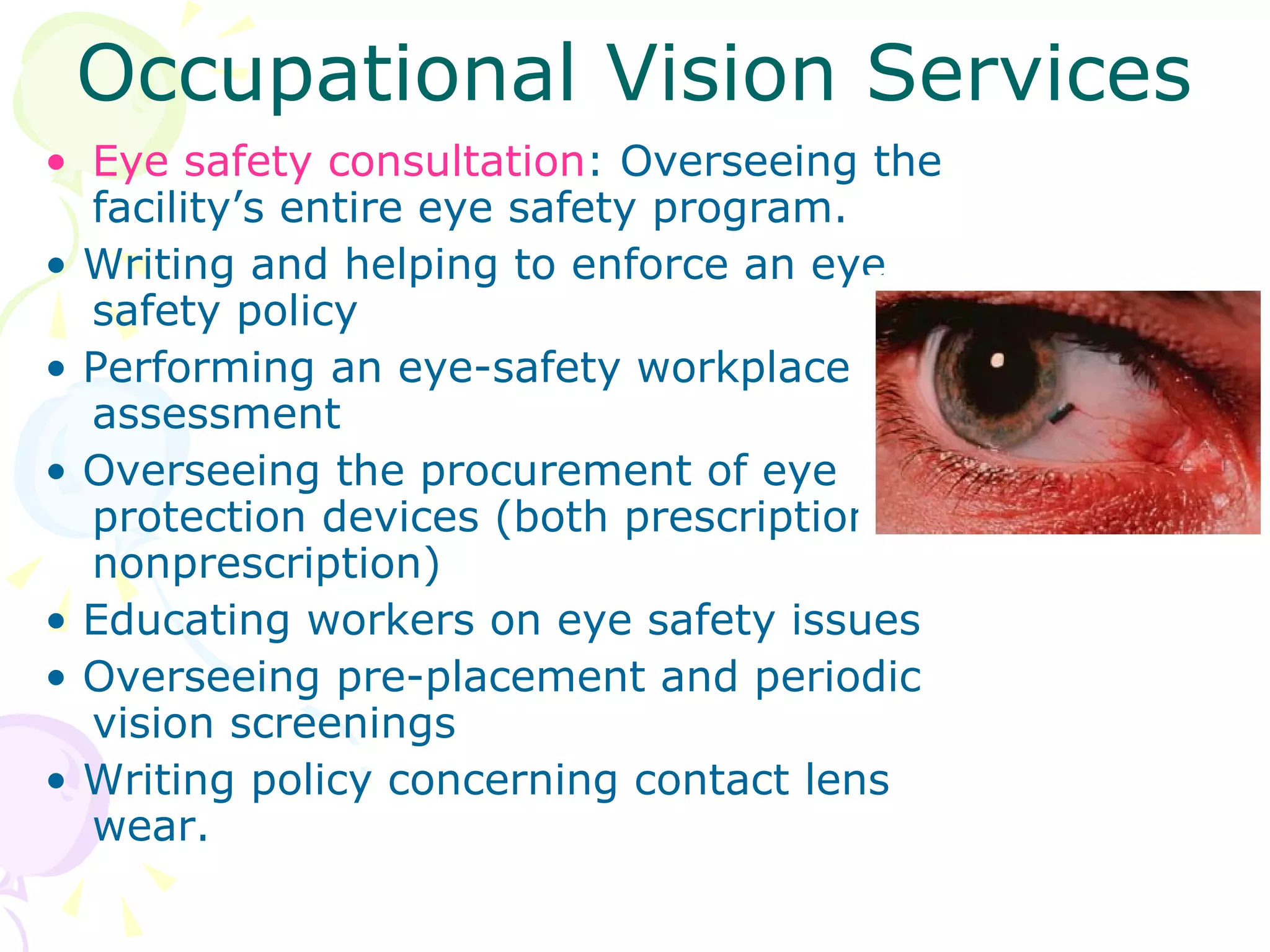
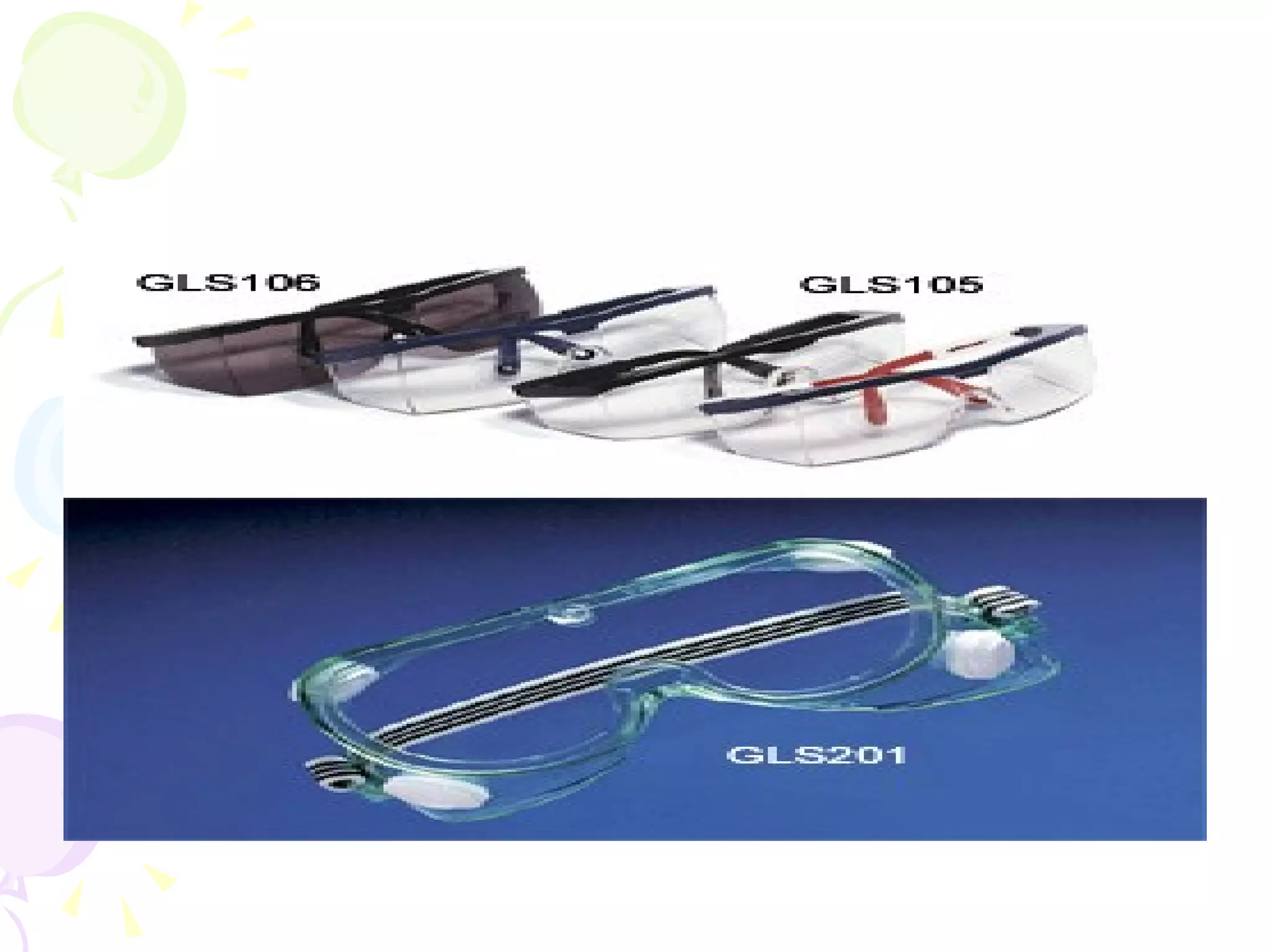
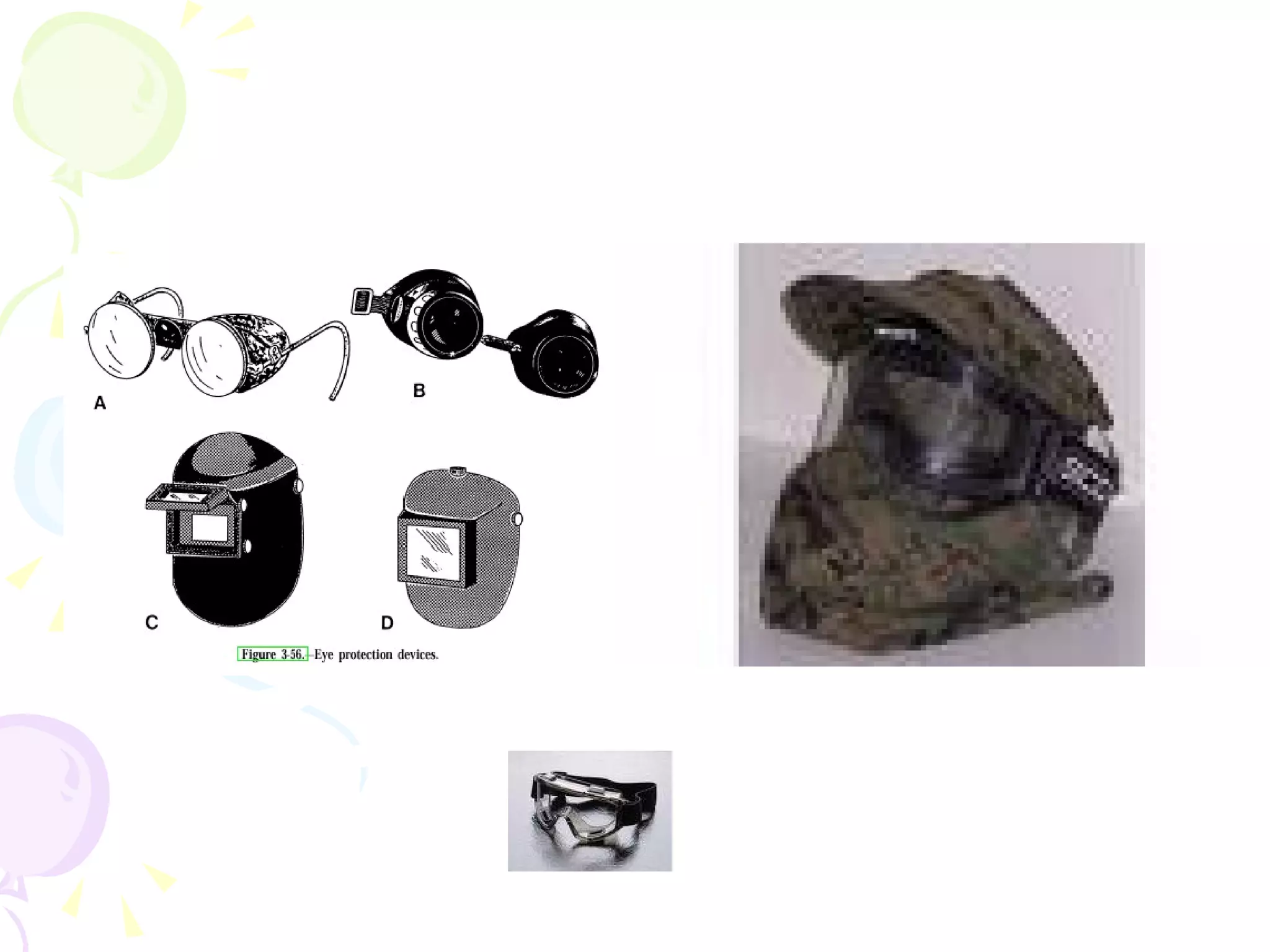
Occupational Vision ServicesEye safety consultation : Overseeing the facility’s entire eye safety program. • Writing and helping to enforce an eye safety policy • Performing an eye-safety workplace assessment • Overseeing the procurement of eye protection devices (both prescription and nonprescription) • Educating workers on eye safety issues • Overseeing pre-placement and periodic vision screenings • Writing policy concerning contact lens wear.
6.
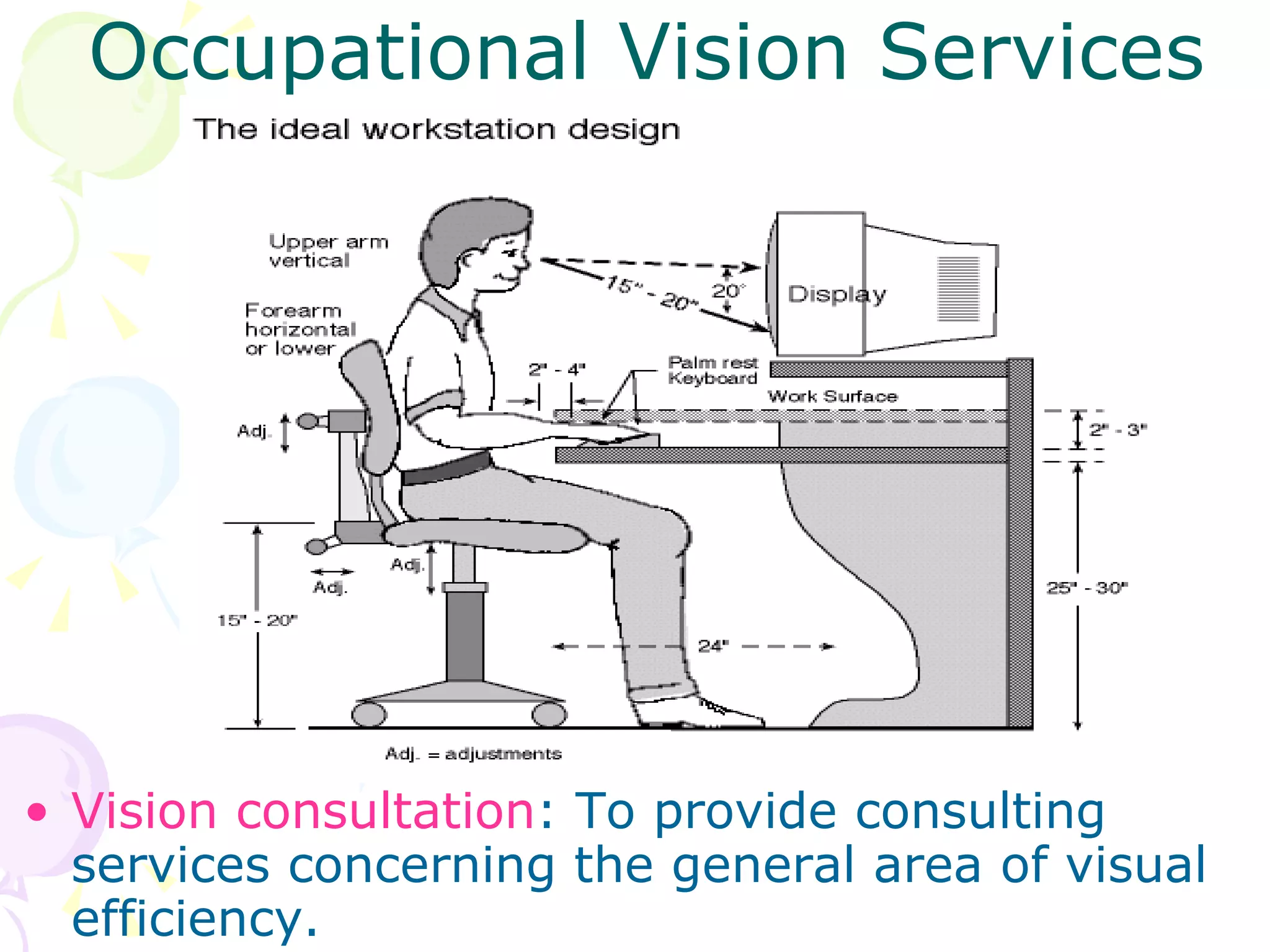
Occupational Vision ServicesVision consultation : To provide consulting services concerning the general area of visual efficiency.
7.
8.
9.
10.
11.
Occupational Diseases Chronicailment - Occupational activity Exposure - Workplace health hazard More prevalent - Given body of workers than in the general population Occupational hazards which are traumatic in nature are not considered
12.
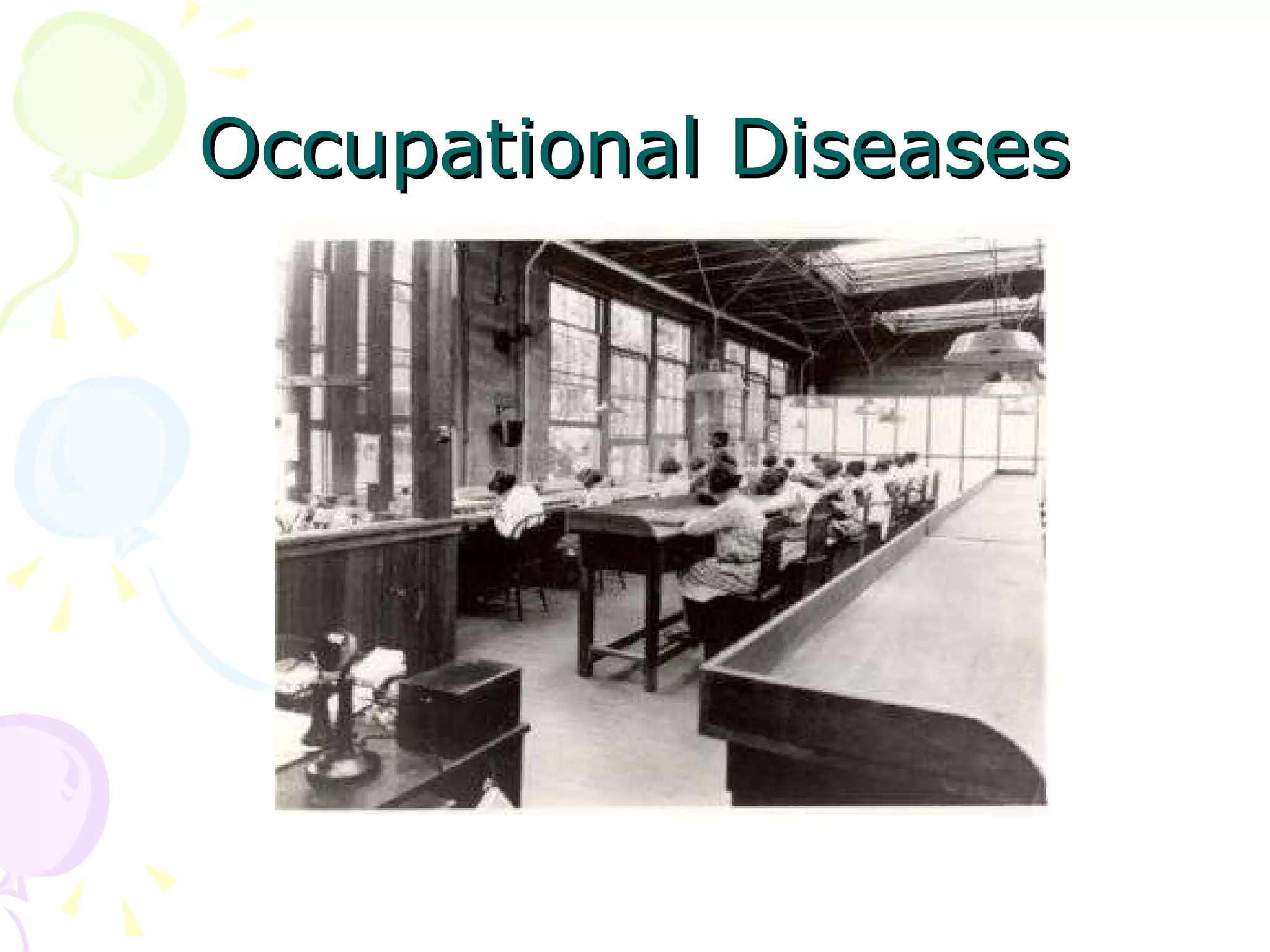
Occupational Diseases CommonOccupational diseases - Asbestosis - Asbestos miners/ Friable asbestos insulation Black Lung Disease - Coal miners Carpal Tunnel Syndrome – Poultry industry/Data entry personnel's Radiation sickness - Nuclear industry Byssinosis - Cotton textile industry Phossy jaw and Radium jaw- Match girls and Radium Dial Workers
INCIDENCE OF OCULARINJURIES AND ITS PREVENTION Incidence of eye injuries: Play and sport RTA Industrial accident Civil disturbances Home accidents Assault Farm accident
15.
Incidence Of EyeInjuries Occupations: Machine tool operators Motor vehicle or aircraft mechanic Metal worker Construction Electrician Welder Painter General laborer
16.
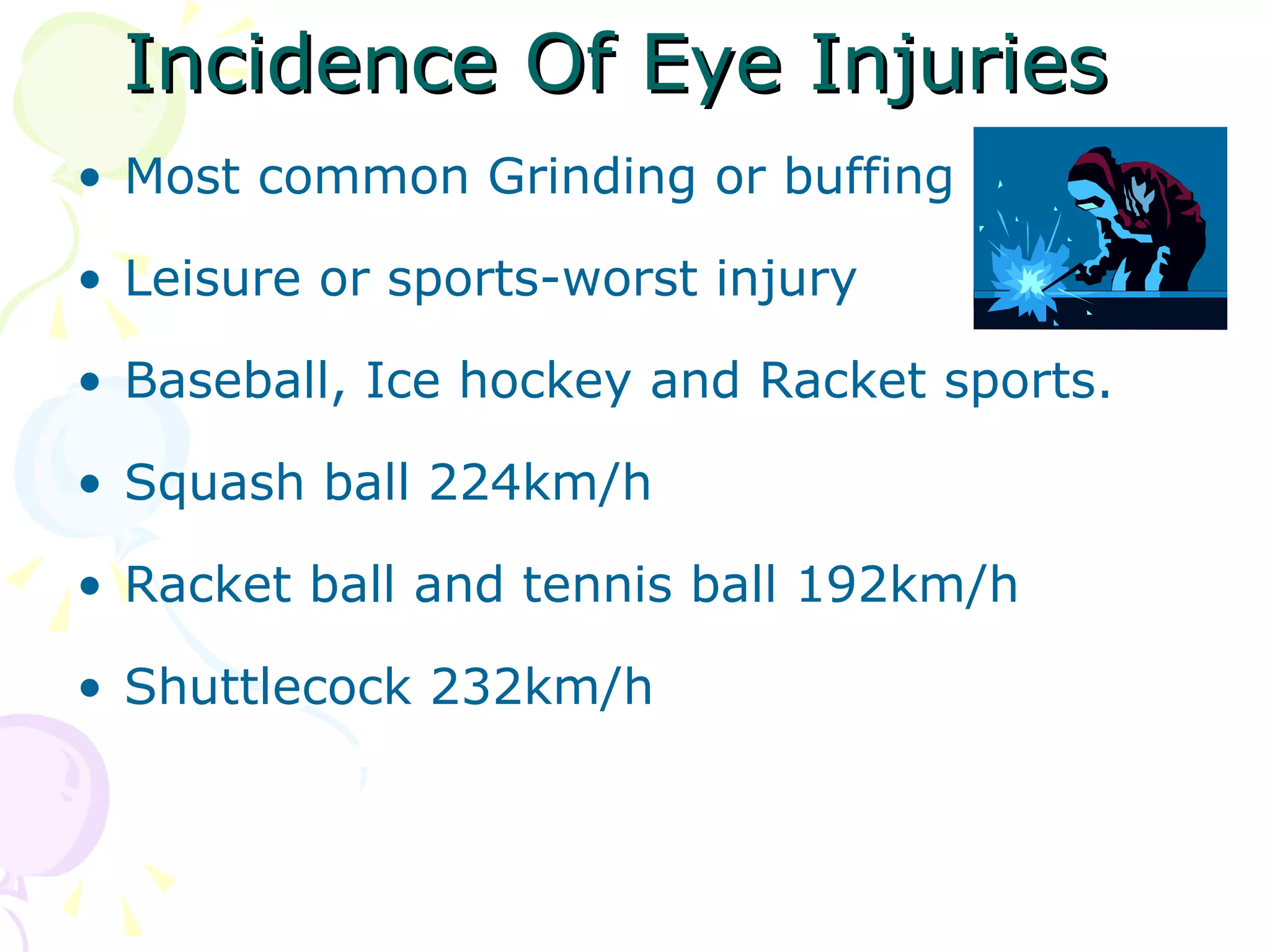
Incidence Of EyeInjuries Most common Grinding or buffing Leisure or sports-worst injury Baseball, Ice hockey and Racket sports. Squash ball 224km/h Racket ball and tennis ball 192km/h Shuttlecock 232km/h
17.
Incidence Of EyeInjuries Open eye guards are not recommended Spectacle frames with hinges that open beyond 90degrees Boxers-Thumbless glove Monocular player-Identified and advised
Prevention Of InjuriesOptometrist role: Visual requirement? Hobbies? Sports? Occupation? Identifying potential hazard and protection Eye protection programmes
20.
Prevention Of EyeInjuries Perception of risk Education for the younger employee Publicizing eye injuries carefully Counsel workers after an injury Determining reasons for not using protection Compulsory wear
21.
Prevention Of EyeInjuries Eye protection programme: Aim : Identify and Eliminate/Control Economic benefits Reduction in eye injuries=Reduction of insurance and medical expenses, Reduction in lost production, Work replacement and retraining costs Good employee-employer relationship
22.
Prevention Of EyeInjuries Eye protection programme Expenses: Consultant fee Cost of implementation Modification of the manufacturing process Cost of employee education Cost of providing and maintaining
23.
Eye Protection ProgrammeParts: Plant environment survey Vision screening Implementation of the programme Maintenance of the programme
24.
Plant Environment SurveyAssessment of potential plant hazards Dangerous tasks and area inspection Method of elimination/controlling Modify/ Use of non-hazardous materials Last option is eye guards
25.
Plant Survey Lightingconditions needs to be assessed Sites of emergency first aids needs to be noted Accident records have to be maintained
26.
Vision Screening Studieshave proved to have a strong relation between defective vision and accidents Injure not just themselves but their colleagues also run the risk of being injured
27.
Implementation Of ProgrammeElimination/control Provision of eye protectors Marking of the areas Provision for first aid facilities Provision of lens cleaning stations Formation of safety committee Educating employees
28.
Maintenance Of theProgramme Assessing new manufacturing processes Continuing education and training Regular vision screenings Active safety committee Stocking eye protectors Maintenance of lens cleaning and first aid facilities