Learning to speak in English pgs. 101-109 Young Learners Workshop Cecilia Maller A
Expectations  Pg. 101 Kids consider learning  L2 with learning to speak it- they expect it to be the same with L1. What do they want and need? *Immediate results- showing them to other kids and family members. To be given opportunities to speak English (as soon and as much as possible)
What do they get with early production of english? They feel that are making progress. They fullfill their expectations. Avoiding disappointment
The initial stages pg 105 To start we must: Teach vocabulary for basic concepts; like numbers, colours,etc. Teach simple greetings and introductions. Teach rhymes and songs. These activities give the impression that they are learning to speak English quickly.
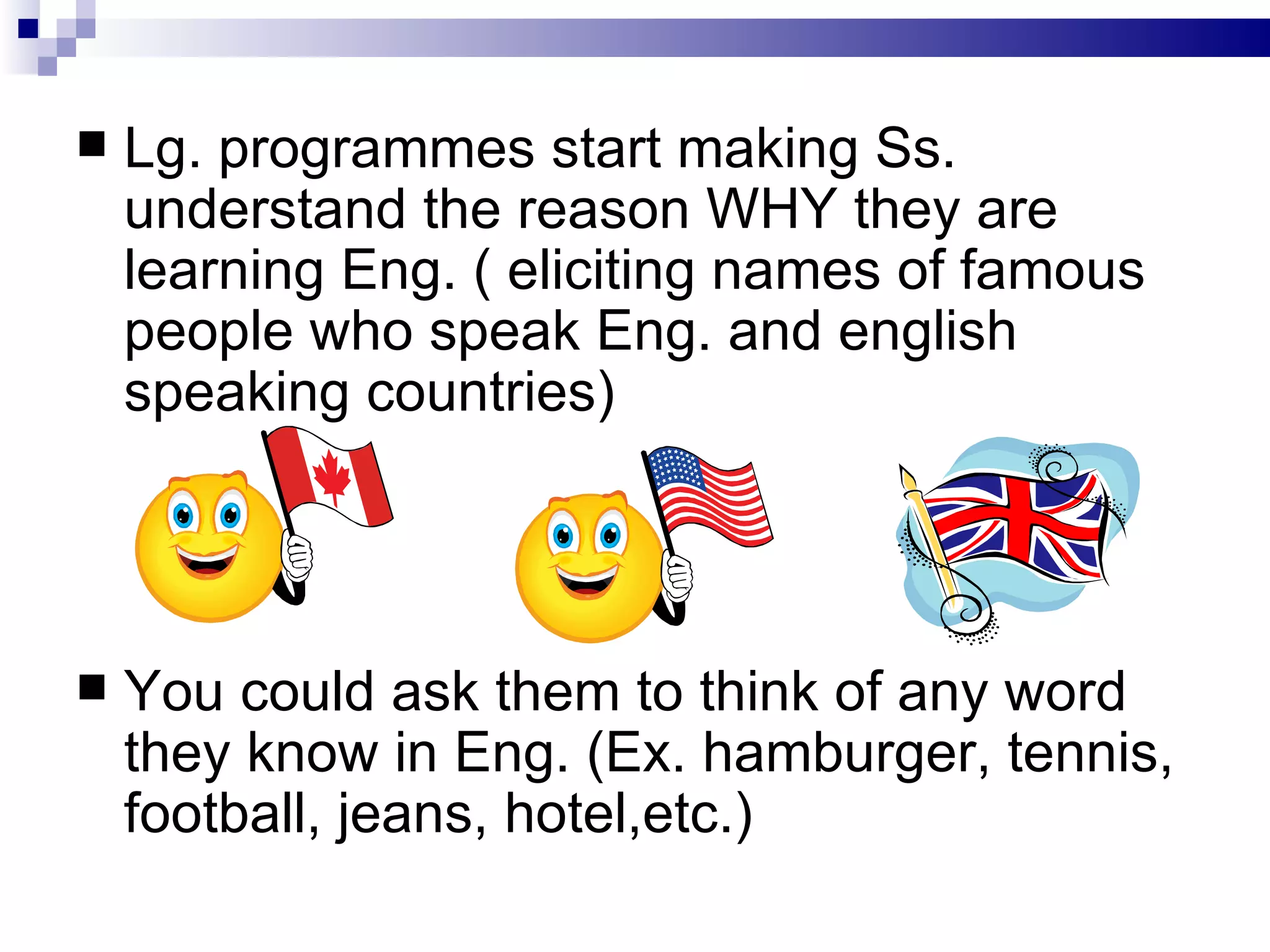
Lg. programmes start making Ss. understand the reason WHY they are learning Eng. ( eliciting names of famous people who speak Eng. and english speaking countries) You could ask them to think of any word they know in Eng. (Ex. hamburger, tennis, football, jeans, hotel,etc.)
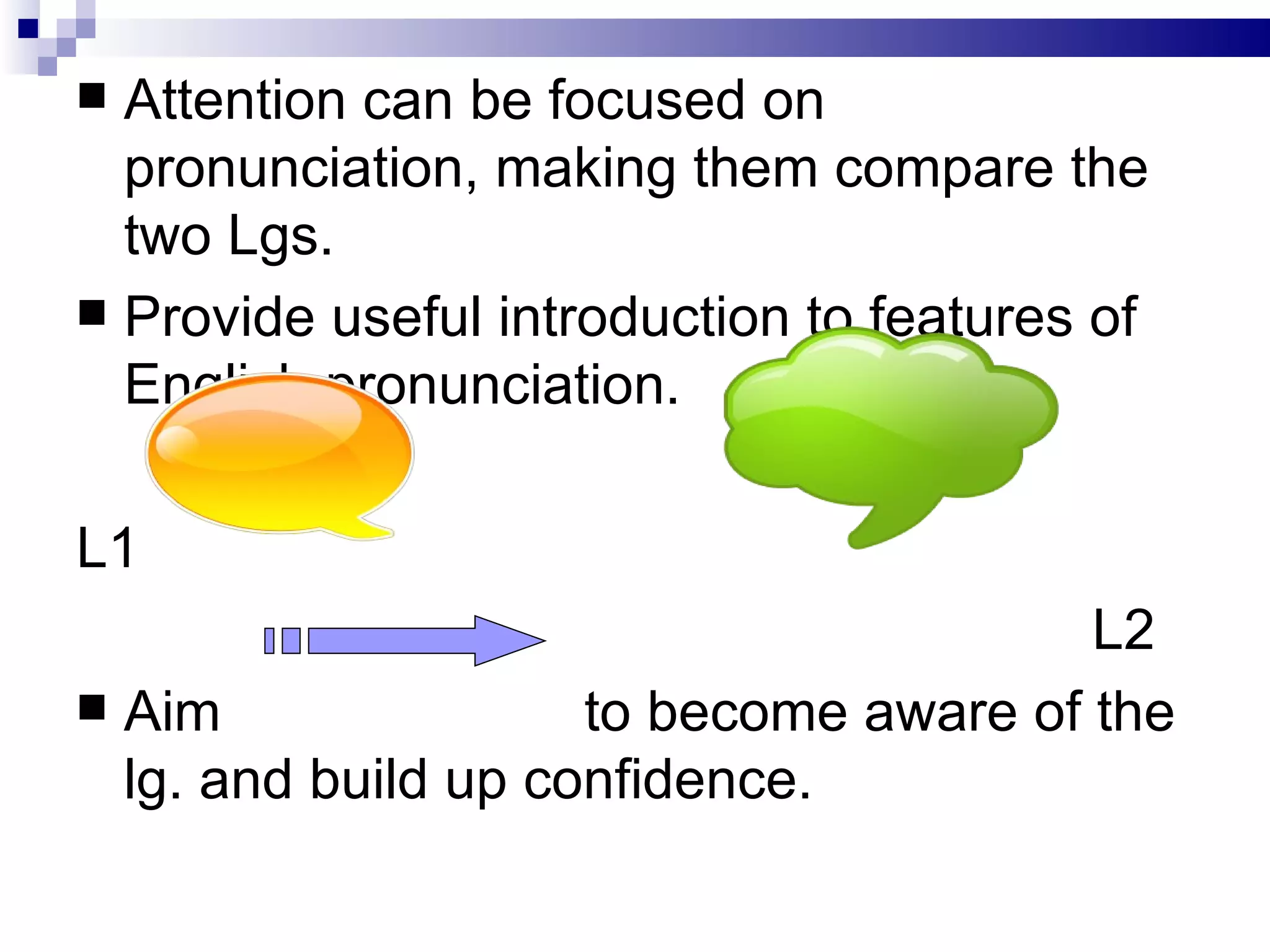
Attention can be focused on pronunciation, making them compare the two Lgs. Provide useful introduction to features of English pronunciation. L1 L2 Aim to become aware of the lg. and build up confidence.
Formulaic language In early stages there is not much spontaneous speech. Most of what they produce will be  formulaic Lg .  = Lg produced as whole chunks rather than being putting together word by word. It consists of routines, patterns  ( memorized) . It enables communication with minimum linguistic competence.
Ex. of  Formulaic Lg Simple greetings : Hi Social English : Have a nice day! Routines : What´s the date? Classroom Lg .: Listen, repeat Asking permission : Can I go to the toilet? Communication strategies : Can you say that again, please?
Typology of speaking activites Pg 106 Please photocopy pgs 107-108-109 From The Primary English Teacher´s guide, Penguin guides ( Library, 4th floor)
Organizing speaking activities pg 106-109 Some speaking activities require pair or group work or to move around. So the Q? how to arrange the classroom –if…? Good if Ss can record themselves and listen to it. Ex. Retelling a story. Ss think is difficult but motivating- more aware of structures, vocabulary, certain aspects of Eng. pronunciation
Ideally Students:  Need a wide variety of activities. Different patterns of interaction. Opportunities to maximize talk in the classroom___so as to sustain speaking
Teachers: Need to develop a repertoire of activities. Provide a balance between control and creativity, repetition and real use. Provide varied models of spoken English.

Learning to speak in english

  • 1.
    Learning to speakin English pgs. 101-109 Young Learners Workshop Cecilia Maller A
  • 2.
    Expectations Pg.101 Kids consider learning L2 with learning to speak it- they expect it to be the same with L1. What do they want and need? *Immediate results- showing them to other kids and family members. To be given opportunities to speak English (as soon and as much as possible)
  • 3.
    What do theyget with early production of english? They feel that are making progress. They fullfill their expectations. Avoiding disappointment
  • 4.
    The initial stagespg 105 To start we must: Teach vocabulary for basic concepts; like numbers, colours,etc. Teach simple greetings and introductions. Teach rhymes and songs. These activities give the impression that they are learning to speak English quickly.
  • 5.
    Lg. programmes startmaking Ss. understand the reason WHY they are learning Eng. ( eliciting names of famous people who speak Eng. and english speaking countries) You could ask them to think of any word they know in Eng. (Ex. hamburger, tennis, football, jeans, hotel,etc.)
  • 6.
    Attention can befocused on pronunciation, making them compare the two Lgs. Provide useful introduction to features of English pronunciation. L1 L2 Aim to become aware of the lg. and build up confidence.
  • 7.
    Formulaic language Inearly stages there is not much spontaneous speech. Most of what they produce will be formulaic Lg . = Lg produced as whole chunks rather than being putting together word by word. It consists of routines, patterns ( memorized) . It enables communication with minimum linguistic competence.
  • 8.
    Ex. of Formulaic Lg Simple greetings : Hi Social English : Have a nice day! Routines : What´s the date? Classroom Lg .: Listen, repeat Asking permission : Can I go to the toilet? Communication strategies : Can you say that again, please?
  • 9.
    Typology of speakingactivites Pg 106 Please photocopy pgs 107-108-109 From The Primary English Teacher´s guide, Penguin guides ( Library, 4th floor)
  • 10.
    Organizing speaking activitiespg 106-109 Some speaking activities require pair or group work or to move around. So the Q? how to arrange the classroom –if…? Good if Ss can record themselves and listen to it. Ex. Retelling a story. Ss think is difficult but motivating- more aware of structures, vocabulary, certain aspects of Eng. pronunciation
  • 11.
    Ideally Students: Need a wide variety of activities. Different patterns of interaction. Opportunities to maximize talk in the classroom___so as to sustain speaking
  • 12.
    Teachers: Need todevelop a repertoire of activities. Provide a balance between control and creativity, repetition and real use. Provide varied models of spoken English.