www.auroracs.lk


                    Realistic approach - Part 2


Learning English
Facts, Myths & Reality
 by Nalaka Gamage
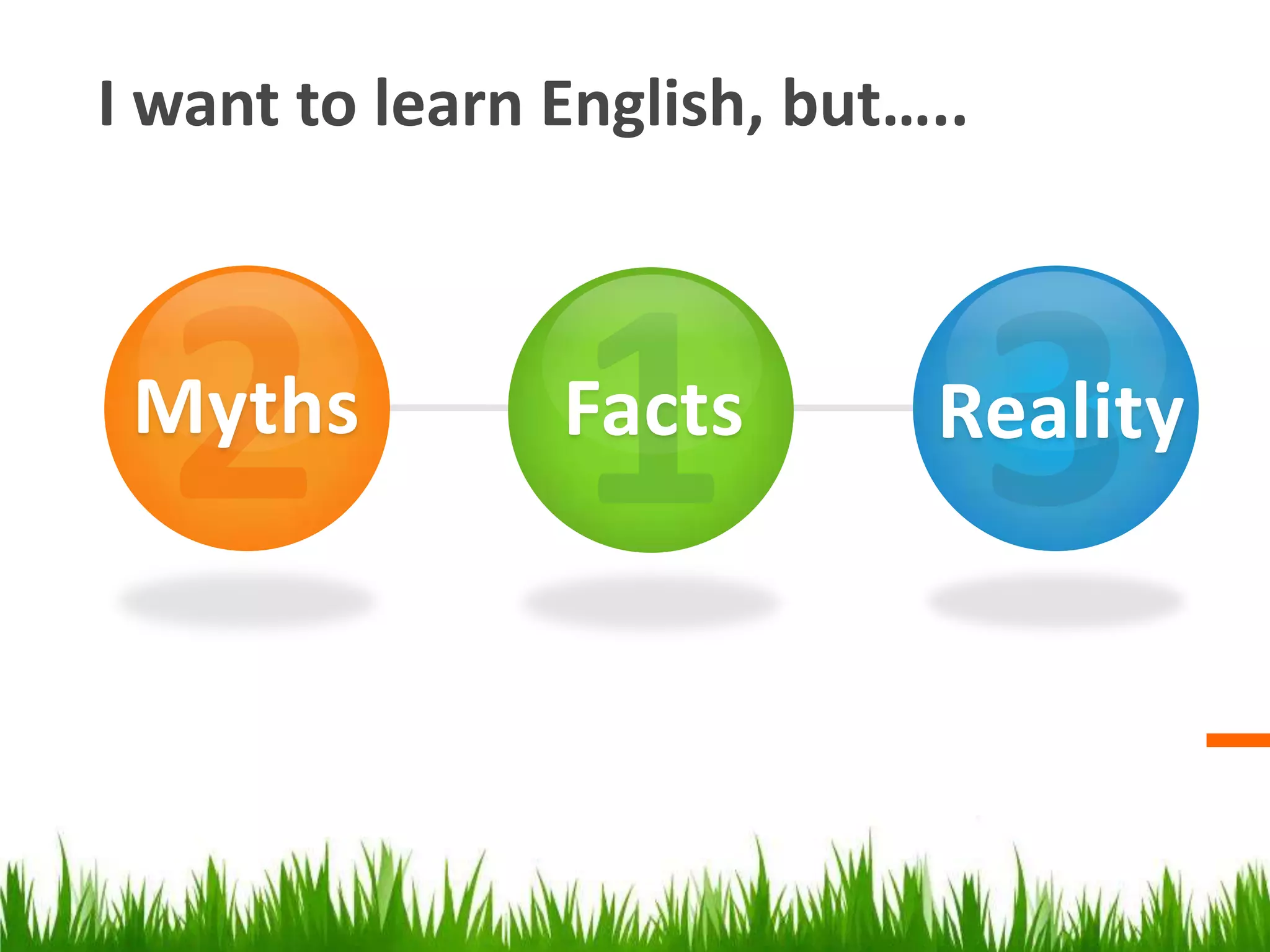
I want to learn English, but…..


 Myths          Facts        Reality
 There are lots of myths preventing
 people from learning and using
 English language effectively.
 Once you know the facts, you will
 identify those myths that prevent you
 from being a confident English user.
 The reality is much simpler and
 easier than what you think.
 “English is difficult” is the biggest
myth among students.
 This has been spread by those
who have acquired only English
speaking skill and feared of loosing
their undue social status if
talented others learn it.
 There is hardly any difference
between spoken & written English !
 In fact easier and natural
sequence is to begin quietly with
reading and writing and then start
speaking in English.
It is a myth spread by people
having colonial underdog mindset.
  They are slaves of English
  culture than using English as a
  communication tool.
  They use this myth to
  discourage others from
  learning English.
 English is no longer an ornament.
 It is just another important tool in
 your competency tool box.
 If one is just a fool who only knows
 of using English language, now he has
 wider audience to show off his idiocy.
   i.e. Using his mother tongue
   & English
 English alphabet is much simpler
than the alphabet of most of the
Eastern languages.
  Only 26 letters used in English.
 All letters are used only in simple
form only.
   No combined letters or variations
 English grammar is extremely
simple.
 Only few rules that you need
to learn.
 Rules are clear and
unambiguous than most of other
languages.
 There is hardly any difference
between spoken and written
English.
 Therefore, effort for learning
English is less than learning a
languages that has big variations
in spoken and written form.
 Majority use English as their second
 language.
  There are more English speaking people
   in China or India alone than in UK or USA.
 Understanding English books and
 other contents like web pages are
 much easier than you think.
   Content publishers are aware of
   the nature of target audience.
 English is now dominantly used as
 an international language.
 English speaking international
 community accept, acknowledge and
 even appreciate accents of different
 geographical and cultural
 communities.
 Yes, English language has thousands
 or words.
 But commonly used word are only a
 small portion of it.
 Do not get afraid by seeing big
 dictionaries.
 Dictionary (Just like a directory) is
 for references and not to learn all the
 words.

 English is easy to learn.
 When you speak or use English as
a second language, no one expect
you to be perfect.
  Unless you are talking to an idiot !
 There are plenty of resources
available to learn English.
 You speak English according to your
 natural accent,
   Unless one of your ancestor has
   crossed with an Englishman!!
   Or you are talking to an arrogant
   Englishman.
 Billions of English speaking people all
 over the world from German to India and
 Brazil to China happily speak with their
 own accent in self confident manner.
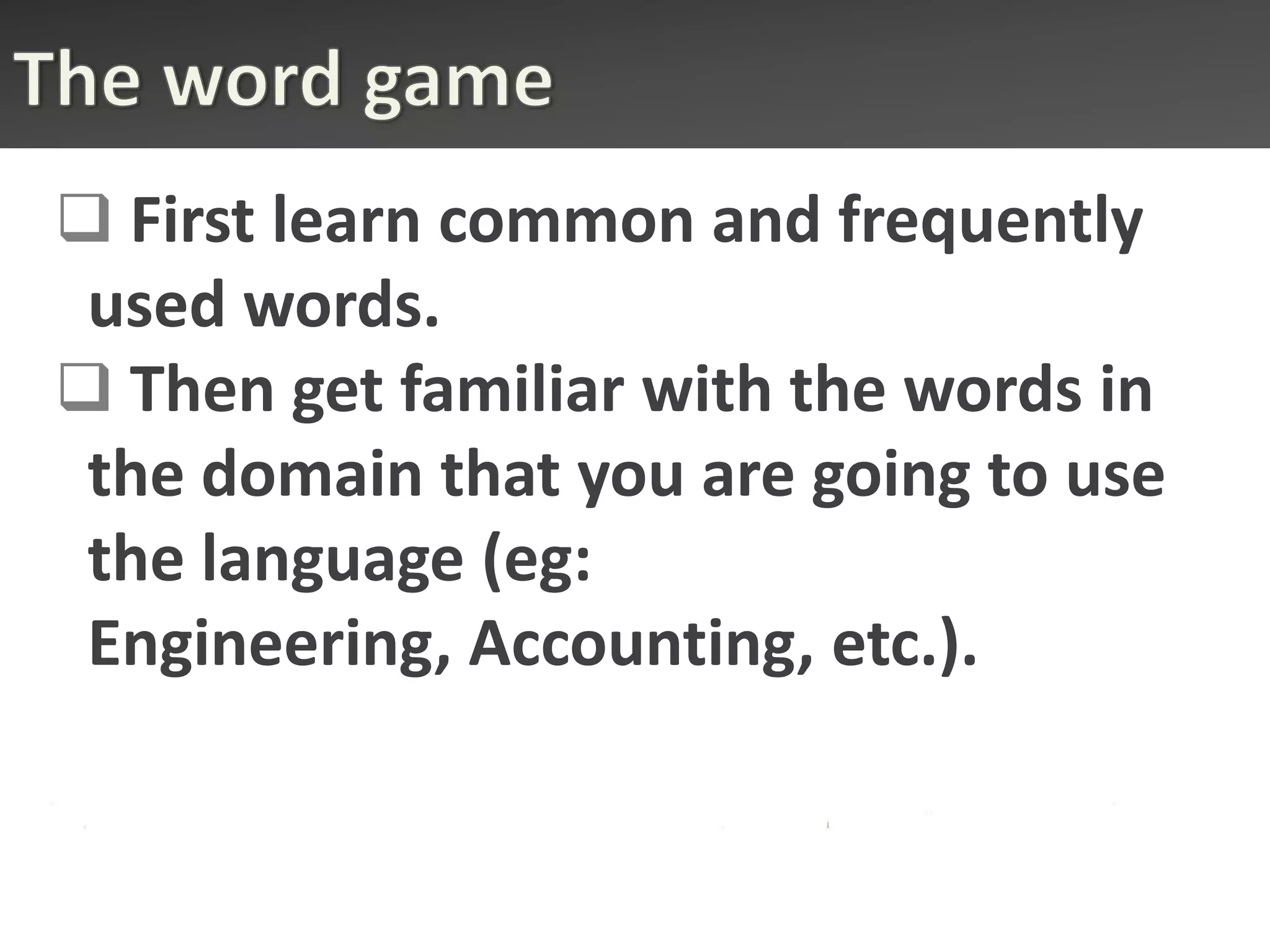
 First learn common and frequently
 used words.
 Then get familiar with the words in
 the domain that you are going to use
 the language (eg: Engineering,
 Accounting, etc.).
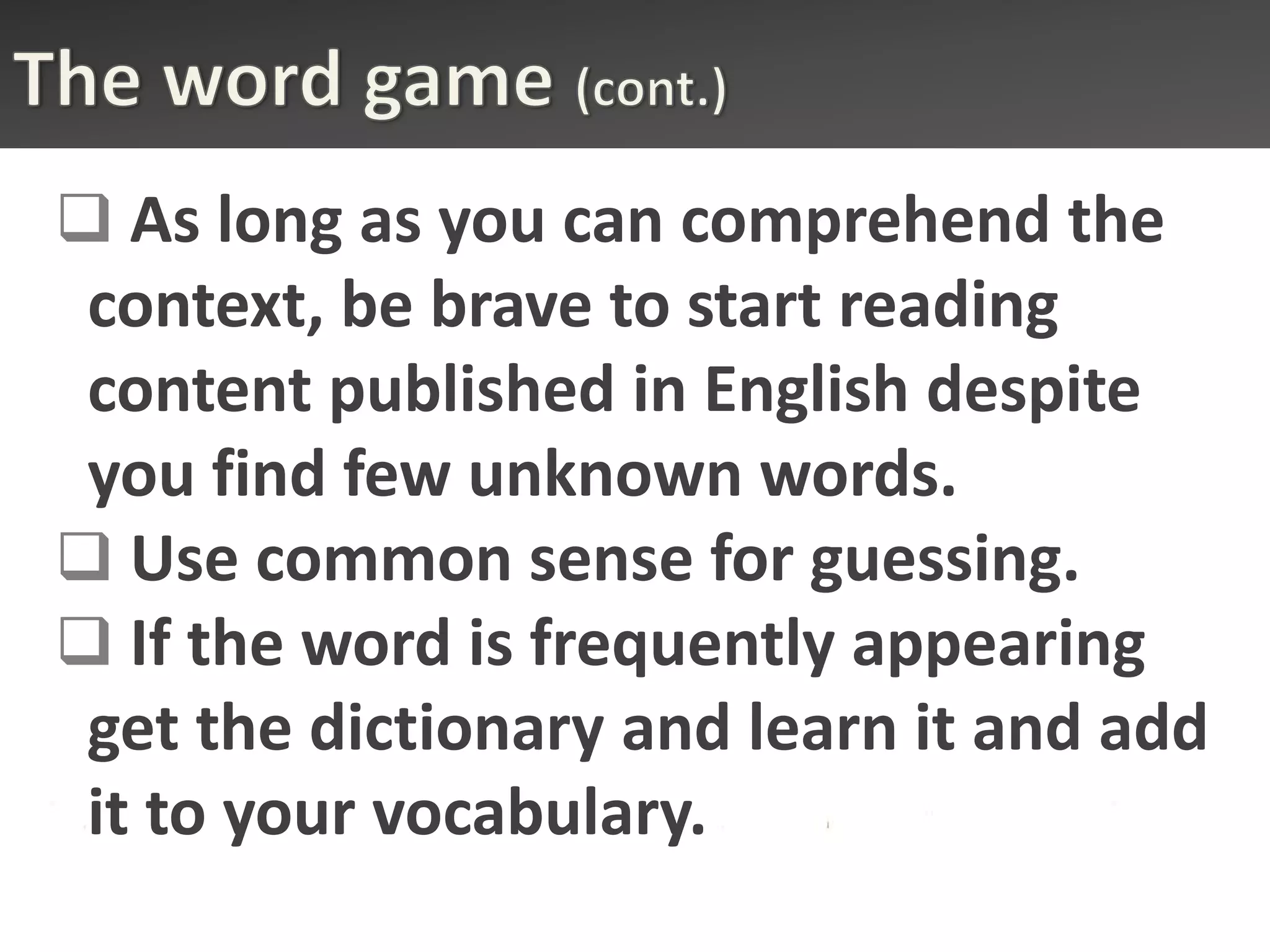
 As long as you can comprehend the
 context, be brave to start reading
 content published in English despite
 you find few unknown words.
 Use common sense for guessing.
 If the word is frequently appearing
 get the dictionary and learn it and add
 it to your vocabulary.
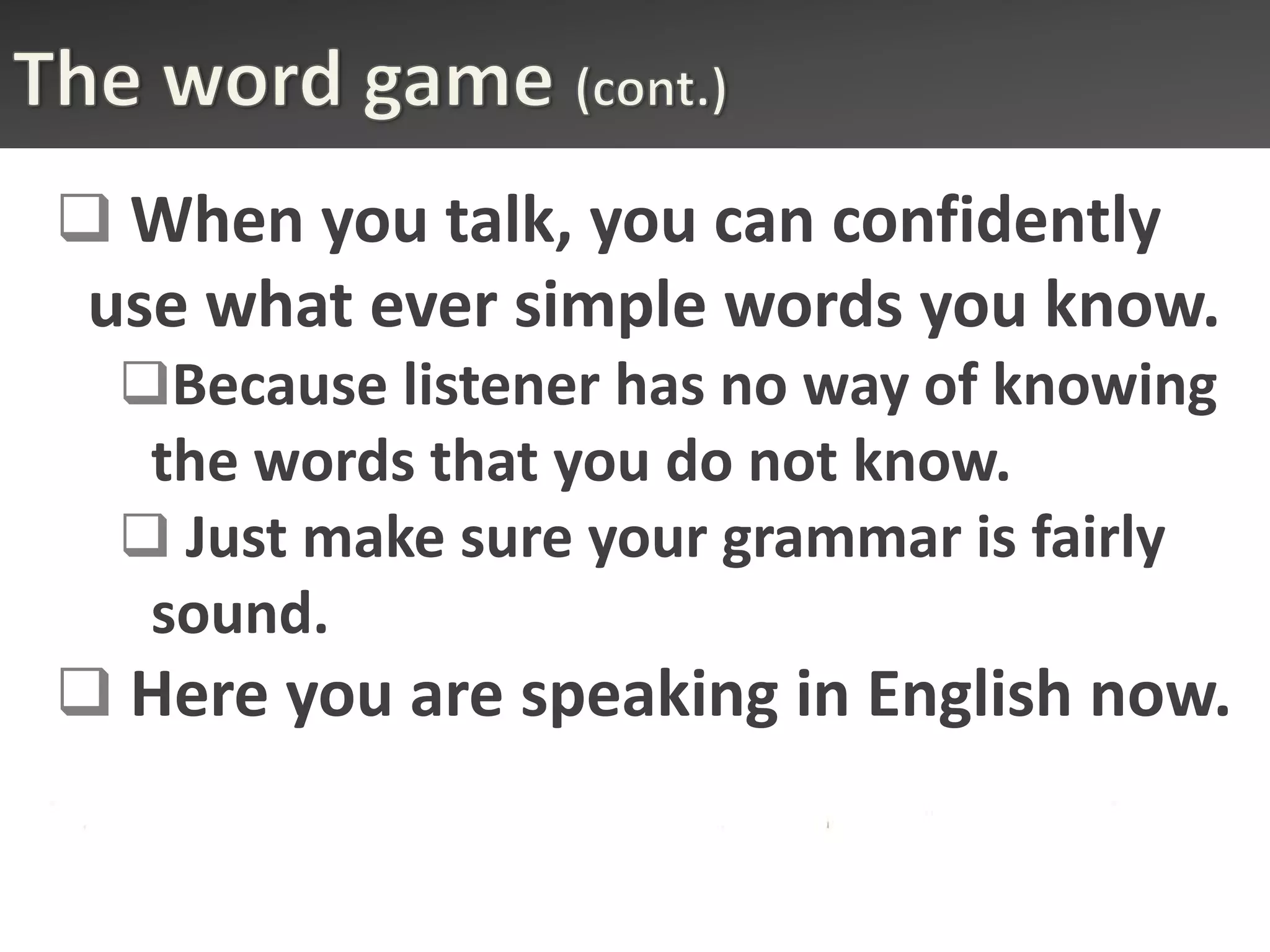
 When you talk, you can confidently
 use what ever simple words you know.
  Because listener has no way of knowing
   the words that you do not know.
   Just make sure your grammar is fairly
   sound.
 Here you are speaking in English now.
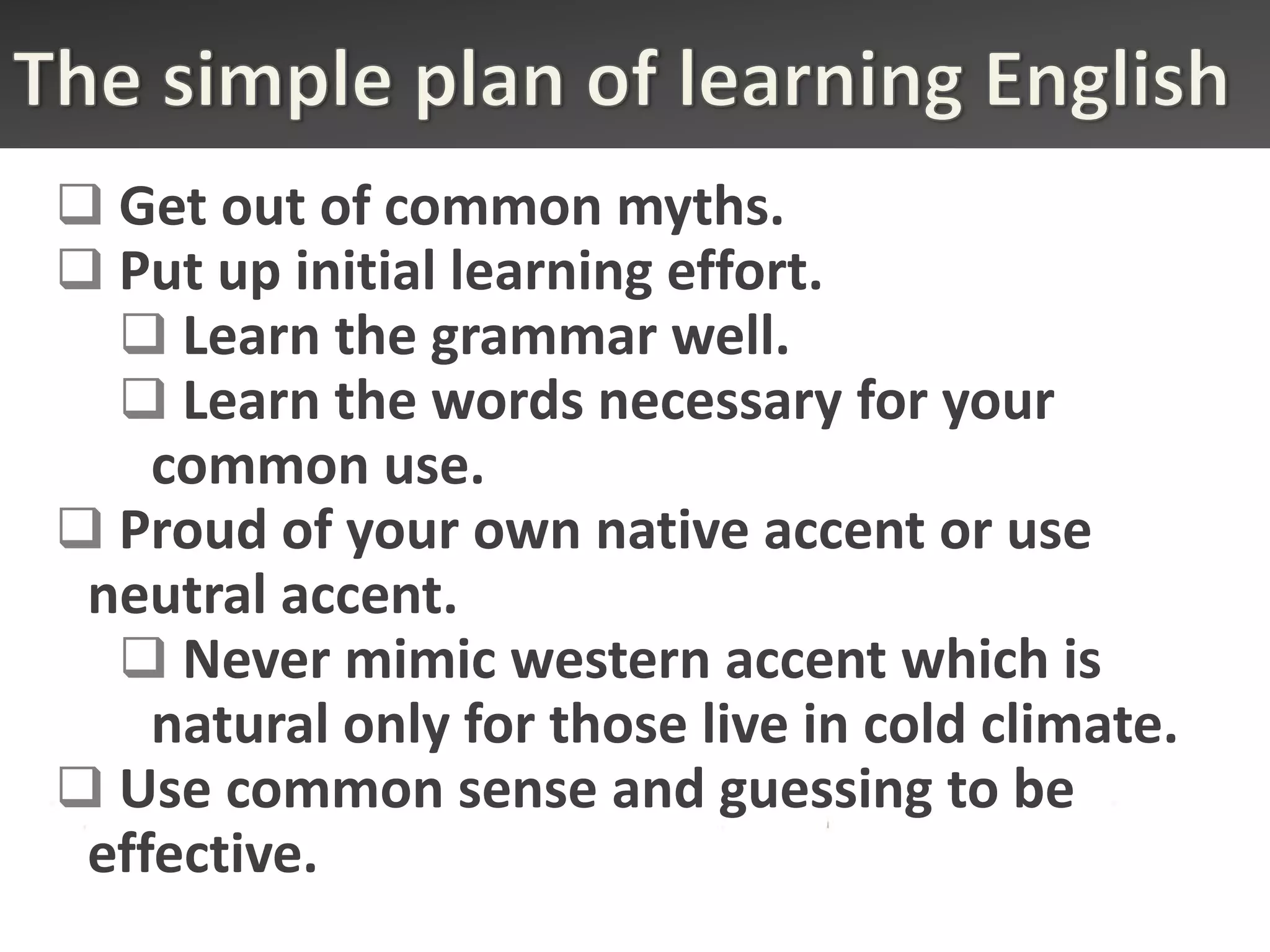
 Get out of common myths.
 Put up initial learning effort.
   Learn the grammar well.
   Learn the words necessary for your
    common use.
 Proud of your own native accent or use
 neutral accent.
   Never mimic western accent which is
    natural only for those live in cold climate.
 Use common sense and guessing to be
 effective.
“Use English as a useful tool
 and not as a petty weapon or
 ornament.”
Learning
Aurora Computer Studies
Summerset College,
                          English -
3rd Floor,                Facts, Myths
DFCC Building,            & Reality
135, Highlevel Road,
Maharagama,
Sri Lanka.                www.auroracs.lk

Myths about learning to speak english

  • 1.
    www.auroracs.lk Realistic approach - Part 2 Learning English Facts, Myths & Reality by Nalaka Gamage
  • 2.
    I want tolearn English, but….. Myths Facts Reality
  • 3.
     There arelots of myths preventing people from learning and using English language effectively.  Once you know the facts, you will identify those myths that prevent you from being a confident English user.  The reality is much simpler and easier than what you think.
  • 5.
     “English isdifficult” is the biggest myth among students.  This has been spread by those who have acquired only English speaking skill and feared of loosing their undue social status if talented others learn it.
  • 6.
     There ishardly any difference between spoken & written English !  In fact easier and natural sequence is to begin quietly with reading and writing and then start speaking in English.
  • 7.
    It is amyth spread by people having colonial underdog mindset.  They are slaves of English culture than using English as a communication tool.  They use this myth to discourage others from learning English.
  • 8.
     English isno longer an ornament.  It is just another important tool in your competency tool box.  If one is just a fool who only knows of using English language, now he has wider audience to show off his idiocy.  i.e. Using his mother tongue & English
  • 10.
     English alphabetis much simpler than the alphabet of most of the Eastern languages.  Only 26 letters used in English.  All letters are used only in simple form only.  No combined letters or variations
  • 11.
     English grammaris extremely simple.  Only few rules that you need to learn.  Rules are clear and unambiguous than most of other languages.
  • 12.
     There ishardly any difference between spoken and written English.  Therefore, effort for learning English is less than learning a languages that has big variations in spoken and written form.
  • 13.
     Majority useEnglish as their second language. There are more English speaking people in China or India alone than in UK or USA.  Understanding English books and other contents like web pages are much easier than you think.  Content publishers are aware of the nature of target audience.
  • 14.
     English isnow dominantly used as an international language.  English speaking international community accept, acknowledge and even appreciate accents of different geographical and cultural communities.
  • 15.
     Yes, Englishlanguage has thousands or words.  But commonly used word are only a small portion of it.  Do not get afraid by seeing big dictionaries.  Dictionary (Just like a directory) is for references and not to learn all the words.
  • 16.
  • 17.
     English iseasy to learn.  When you speak or use English as a second language, no one expect you to be perfect.  Unless you are talking to an idiot !  There are plenty of resources available to learn English.
  • 18.
     You speakEnglish according to your natural accent,  Unless one of your ancestor has crossed with an Englishman!!  Or you are talking to an arrogant Englishman.  Billions of English speaking people all over the world from German to India and Brazil to China happily speak with their own accent in self confident manner.
  • 19.
     First learncommon and frequently used words.  Then get familiar with the words in the domain that you are going to use the language (eg: Engineering, Accounting, etc.).
  • 20.
     As longas you can comprehend the context, be brave to start reading content published in English despite you find few unknown words.  Use common sense for guessing.  If the word is frequently appearing get the dictionary and learn it and add it to your vocabulary.
  • 21.
     When youtalk, you can confidently use what ever simple words you know. Because listener has no way of knowing the words that you do not know.  Just make sure your grammar is fairly sound.  Here you are speaking in English now.
  • 22.
     Get outof common myths.  Put up initial learning effort.  Learn the grammar well.  Learn the words necessary for your common use.  Proud of your own native accent or use neutral accent.  Never mimic western accent which is natural only for those live in cold climate.  Use common sense and guessing to be effective.
  • 23.
    “Use English asa useful tool and not as a petty weapon or ornament.”
  • 24.
    Learning Aurora Computer Studies SummersetCollege, English - 3rd Floor, Facts, Myths DFCC Building, & Reality 135, Highlevel Road, Maharagama, Sri Lanka. www.auroracs.lk

Editor's Notes

  • #2 This presentation demonstrates the new capabilities of PowerPoint and it is best viewed in Slide Show. These slides are designed to give you great ideas for the presentations you’ll create in PowerPoint 2010!For more sample templates, click the File tab, and then on the New tab, click Sample Templates.