The Columbian Exchange
Columbian Exchange Columbus traveled back and forth from Europe to the Americas On these expeditions he brought goods to and from the countries Columbus began a vast global exchange that would effect the world Because this global exchange began with Columbus we call it the Columbian Exchange
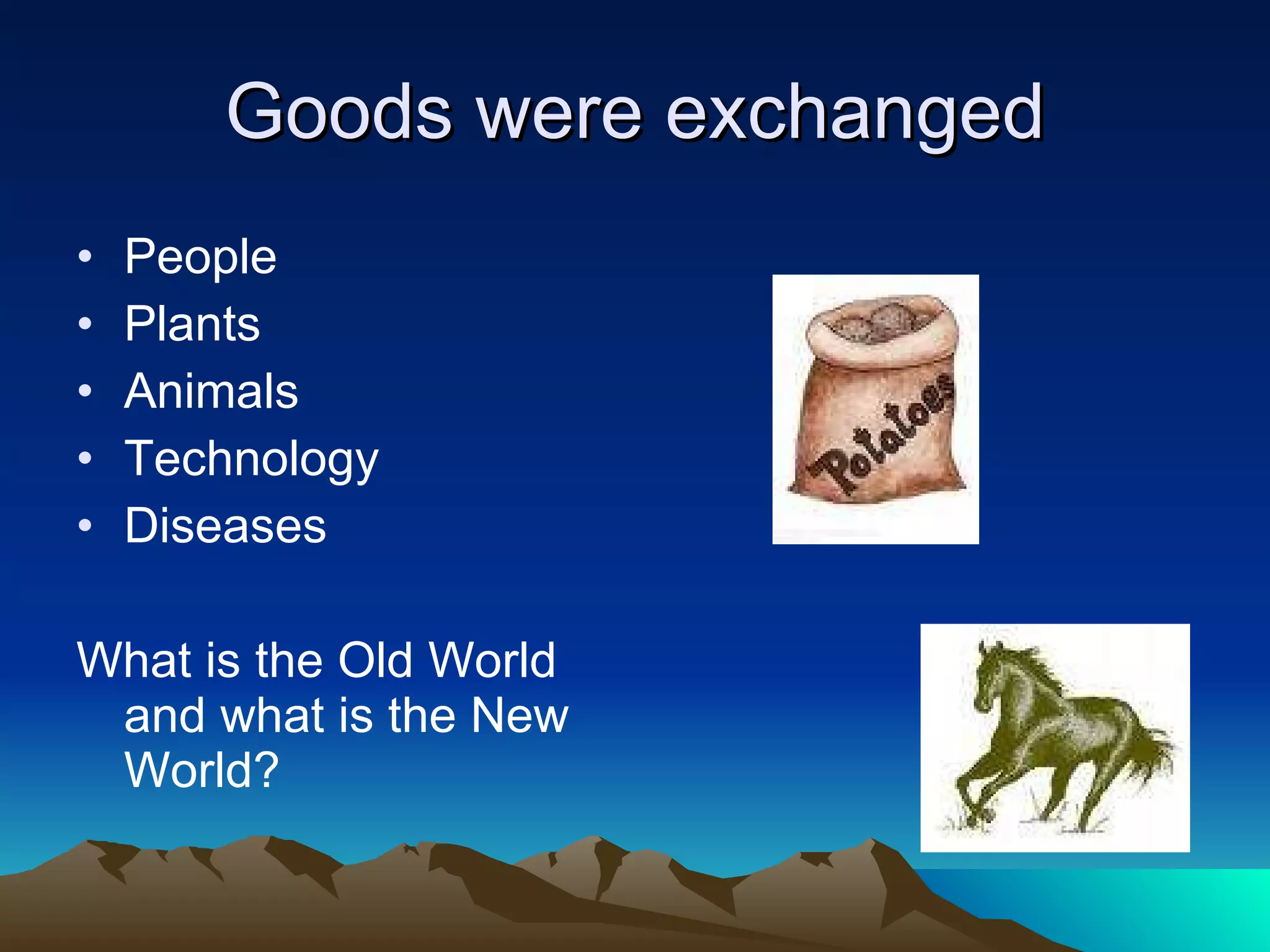
Goods were exchanged People Plants Animals Technology Diseases What is the Old World and what is the New World?
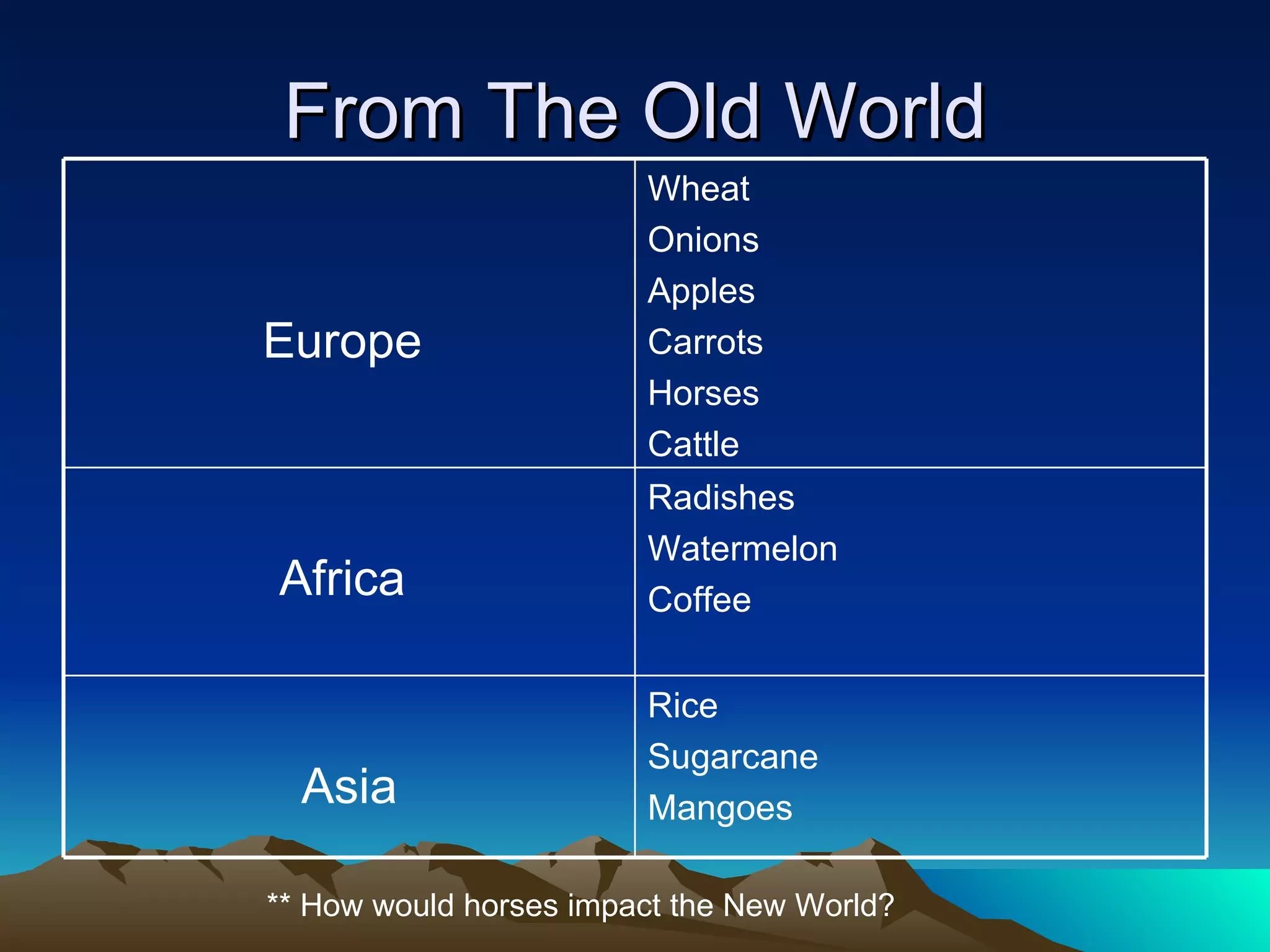
From The Old World ** How would horses impact the New World? Europe  Wheat Onions Apples Carrots Horses Cattle  Africa  Radishes Watermelon Coffee Asia Rice Sugarcane Mangoes
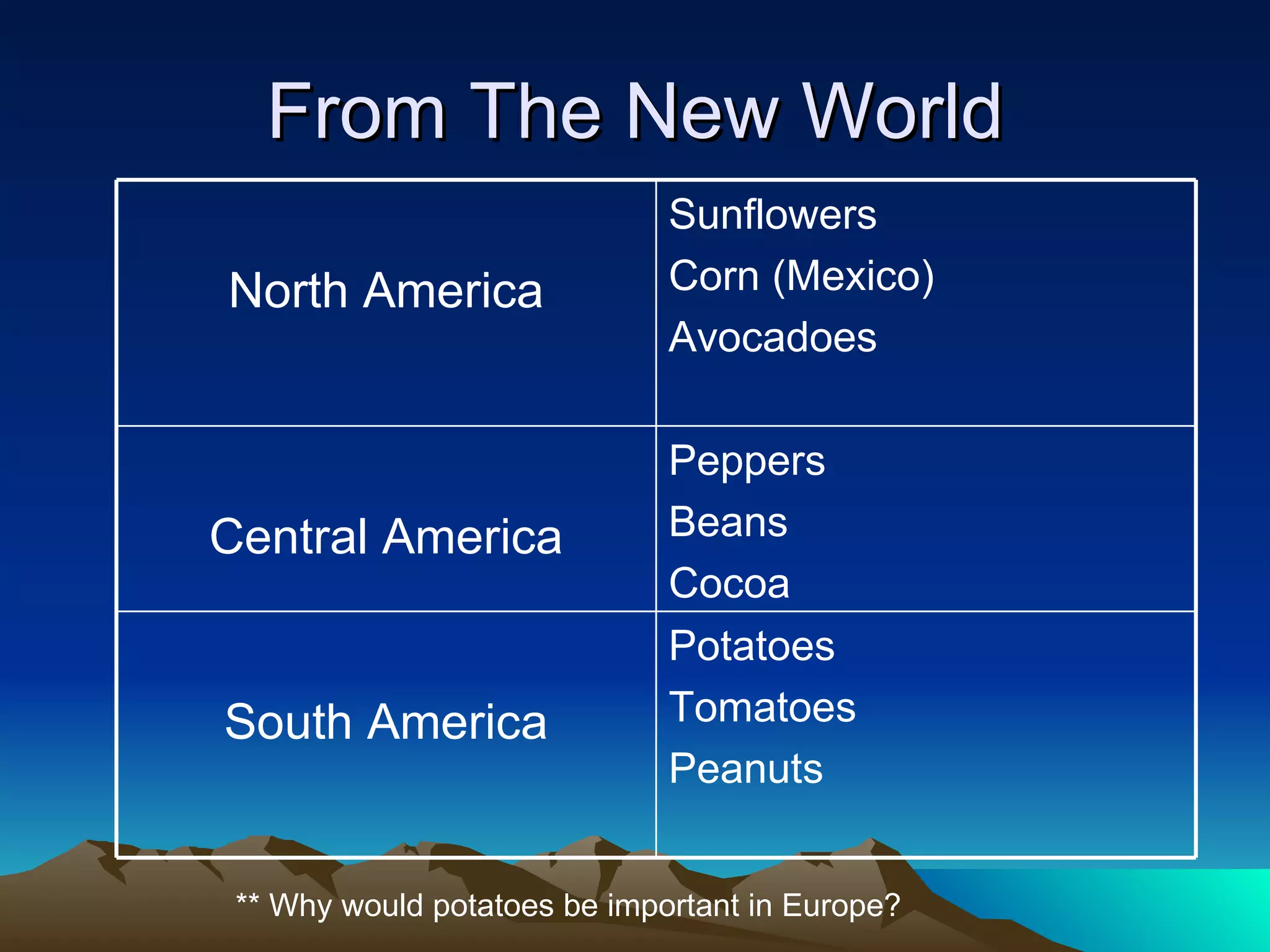
From The New World ** Why would potatoes be important in Europe? North America Sunflowers Corn (Mexico) Avocadoes  Central America Peppers Beans Cocoa South America Potatoes Tomatoes Peanuts
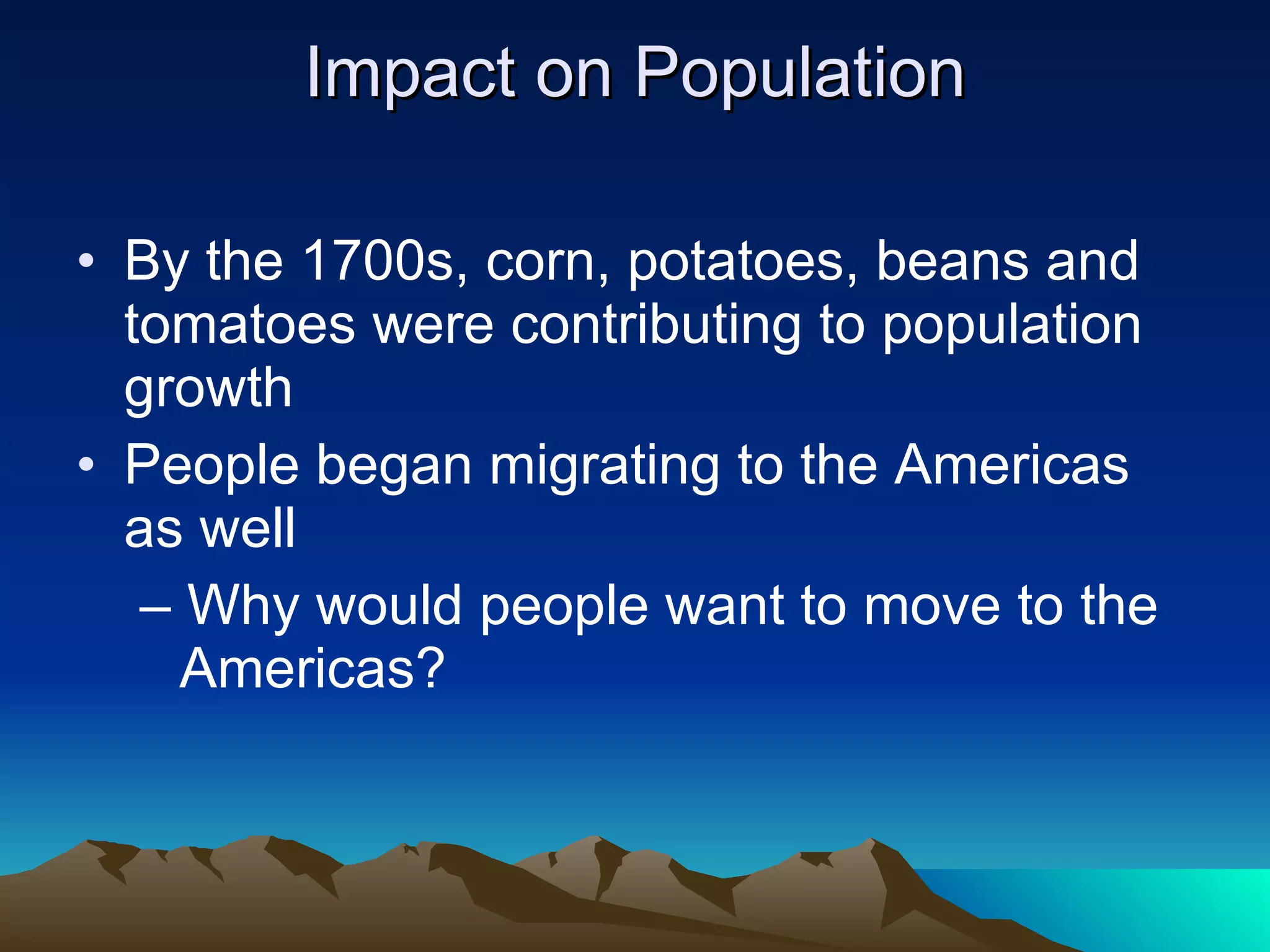
Impact on Population By the 1700s, corn, potatoes, beans and tomatoes were contributing to population growth People began migrating to the Americas as well  –  Why would people want to move to the Americas?
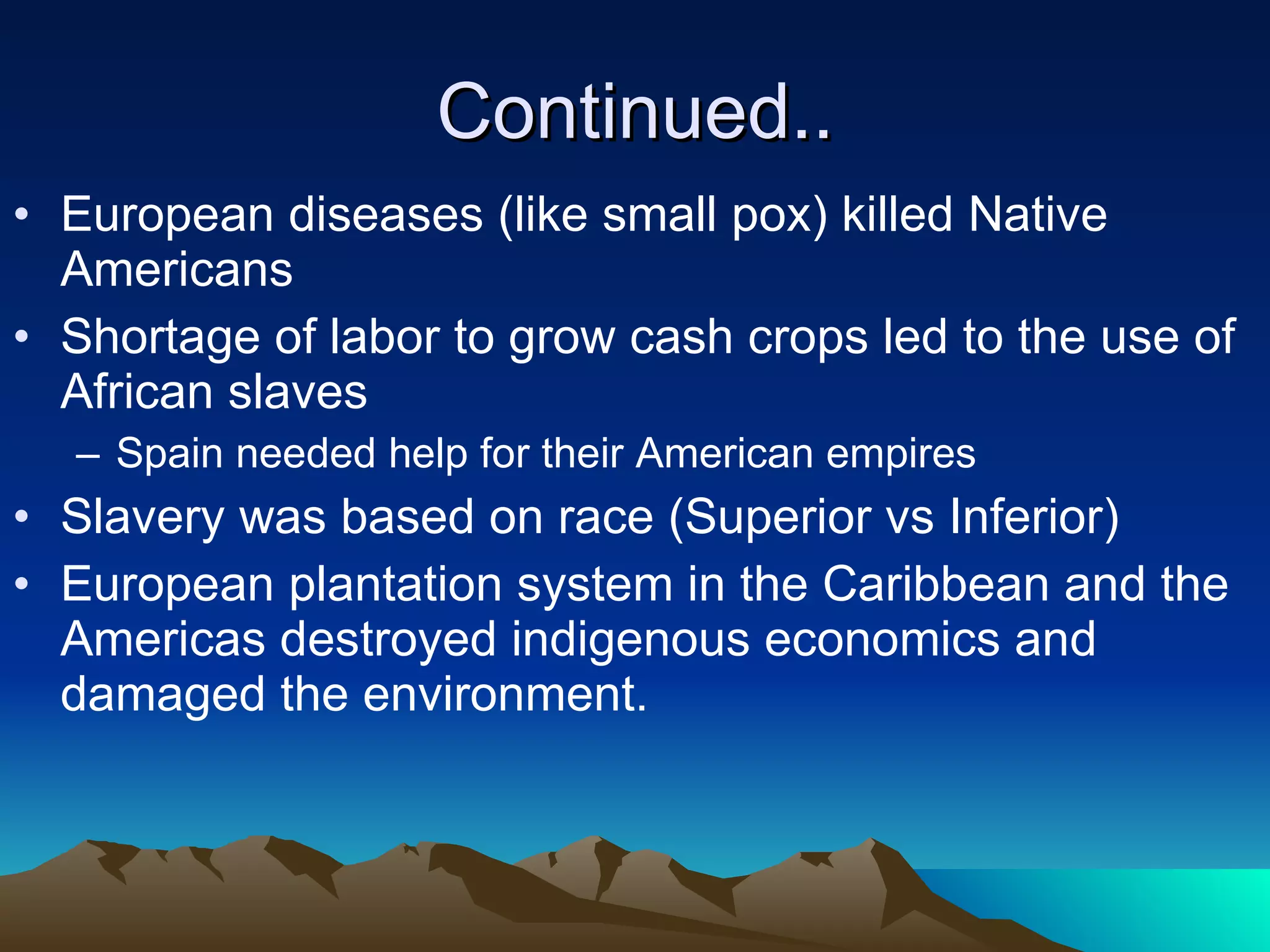
Continued.. European diseases (like small pox) killed Native Americans Shortage of labor to grow cash crops led to the use of African slaves  Spain needed help for their American empires Slavery was based on race (Superior vs Inferior) European plantation system in the Caribbean and the Americas destroyed indigenous economics and damaged the environment.
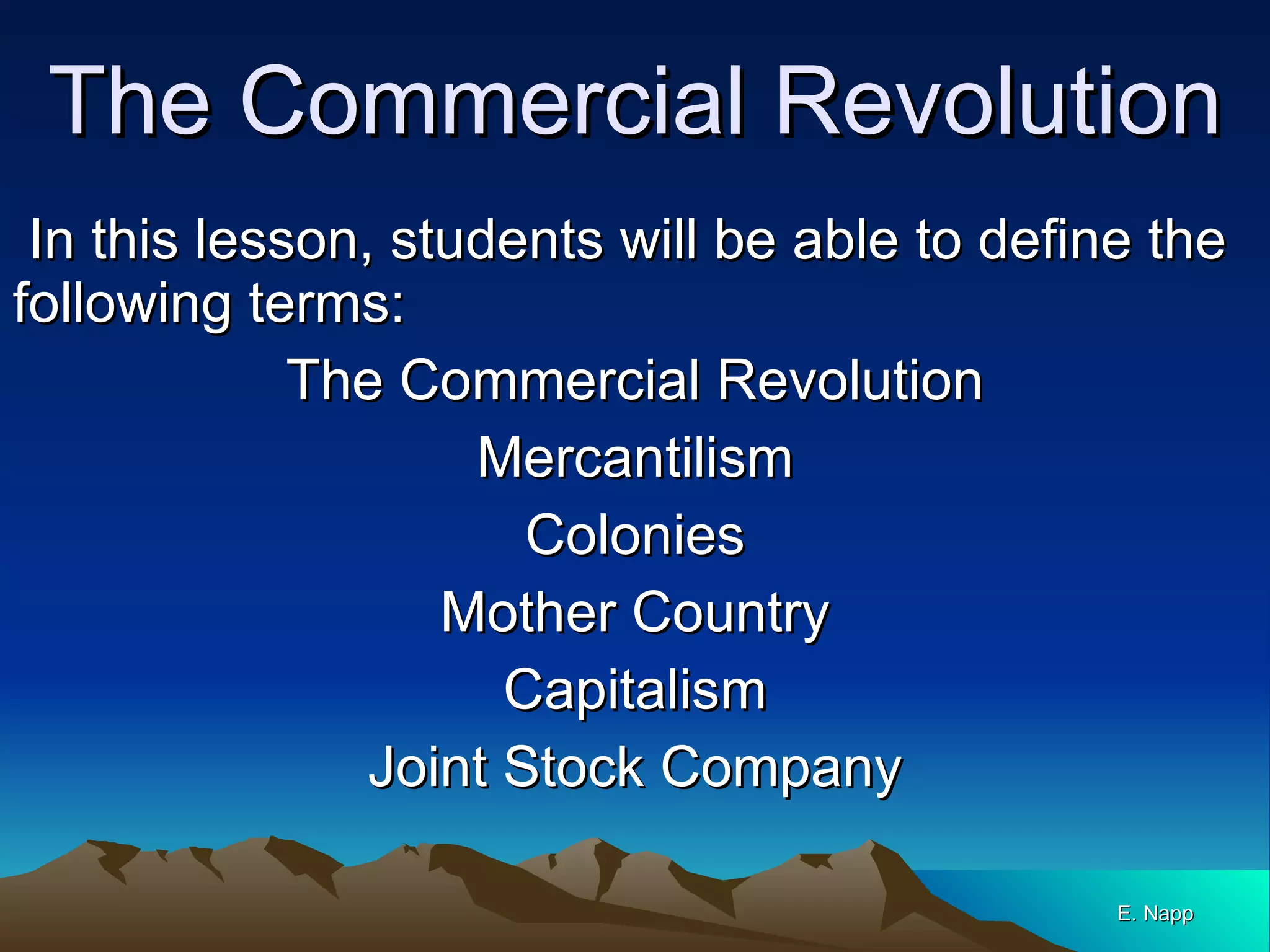
The Commercial Revolution In this lesson, students will be able to define the following terms: The Commercial Revolution Mercantilism Colonies Mother Country Capitalism Joint Stock Company E. Napp
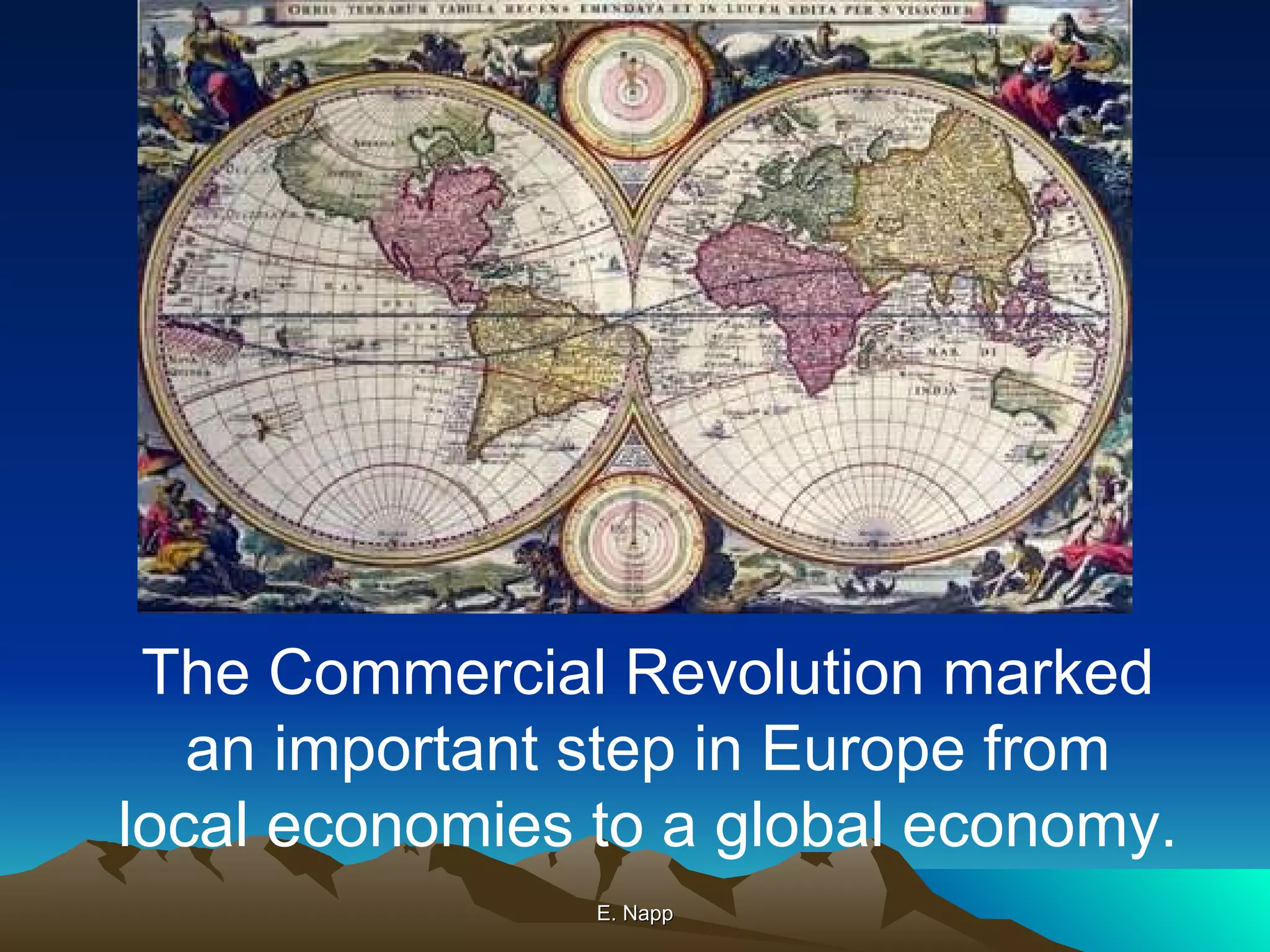
E. Napp The Commercial Revolution marked an important step in Europe from local economies to a global economy.
Mercantilism Mercantilism was the belief that a nation’s power depended on the ownership of gold and silver. In order to acquire gold and silver, European countries established overseas colonies. Colonies provided gold and silver. E. Napp
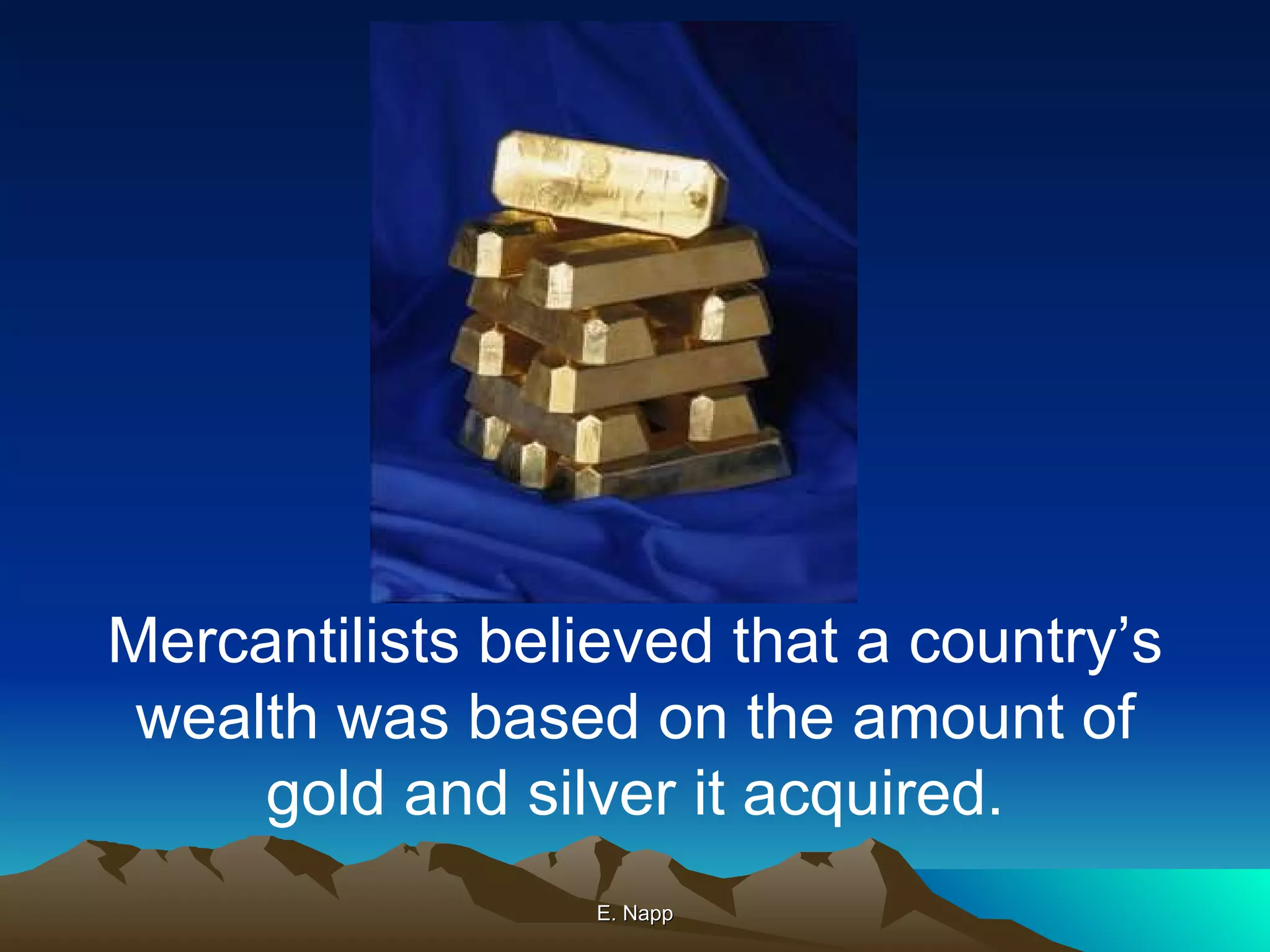
E. Napp Mercantilists believed that a country’s wealth was based on the amount of gold and silver it acquired.
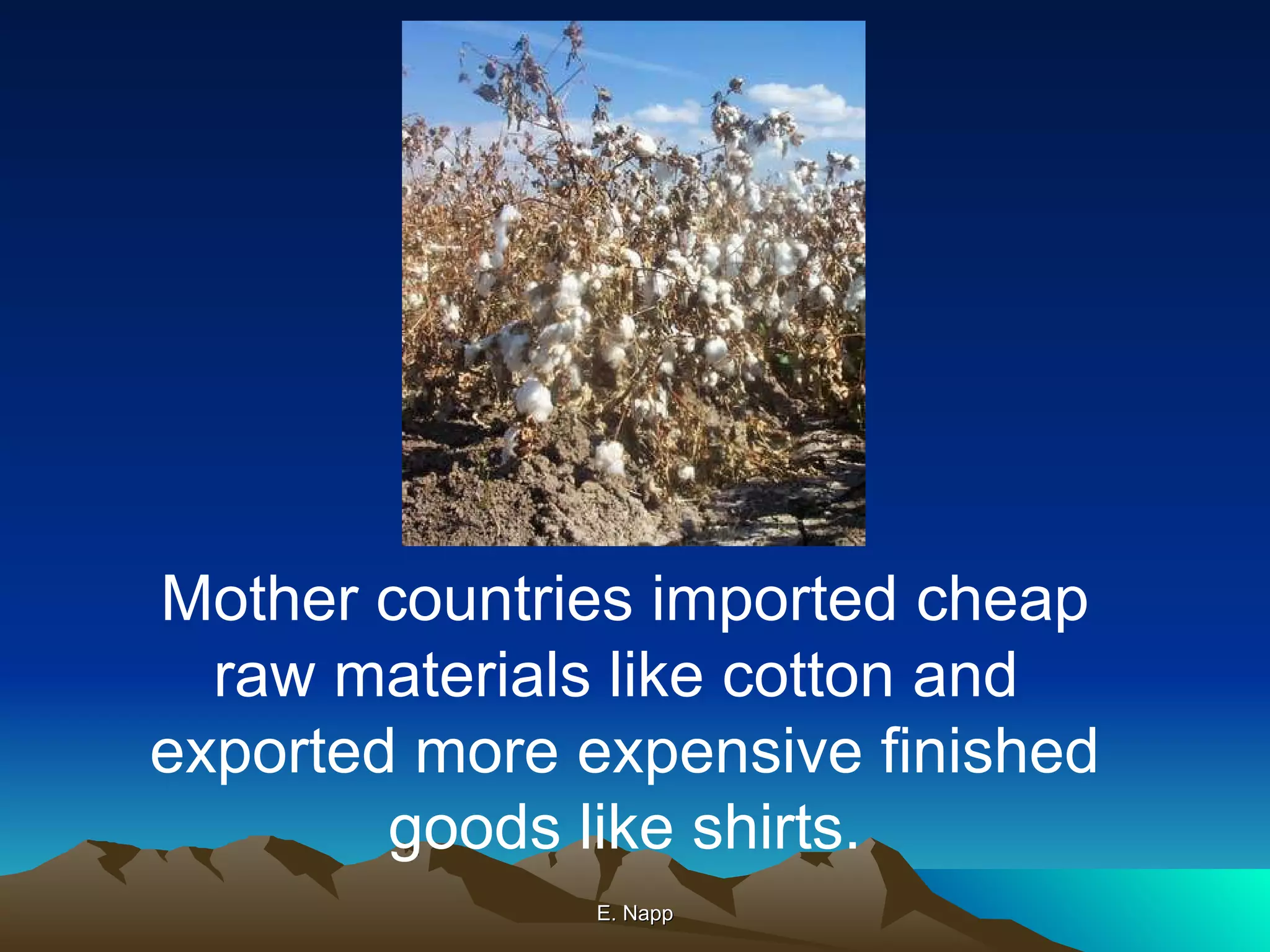
Mother Countries and Colonies Mother countries were conquerors. The conquered land was a colony. In addition to mining for gold and silver, Mother countries imported natural resources or raw materials from their colonies and exported finished goods. E. Napp
E. Napp Mother countries imported cheap raw materials like cotton and  exported more expensive finished goods like shirts.
Capitalism Merchants and bankers laid the foundations for capitalism. In a capitalist system, business owners risk their capital (money) to start new businesses hoping to make profits. Individuals formed joint-stock companies.  E. Napp
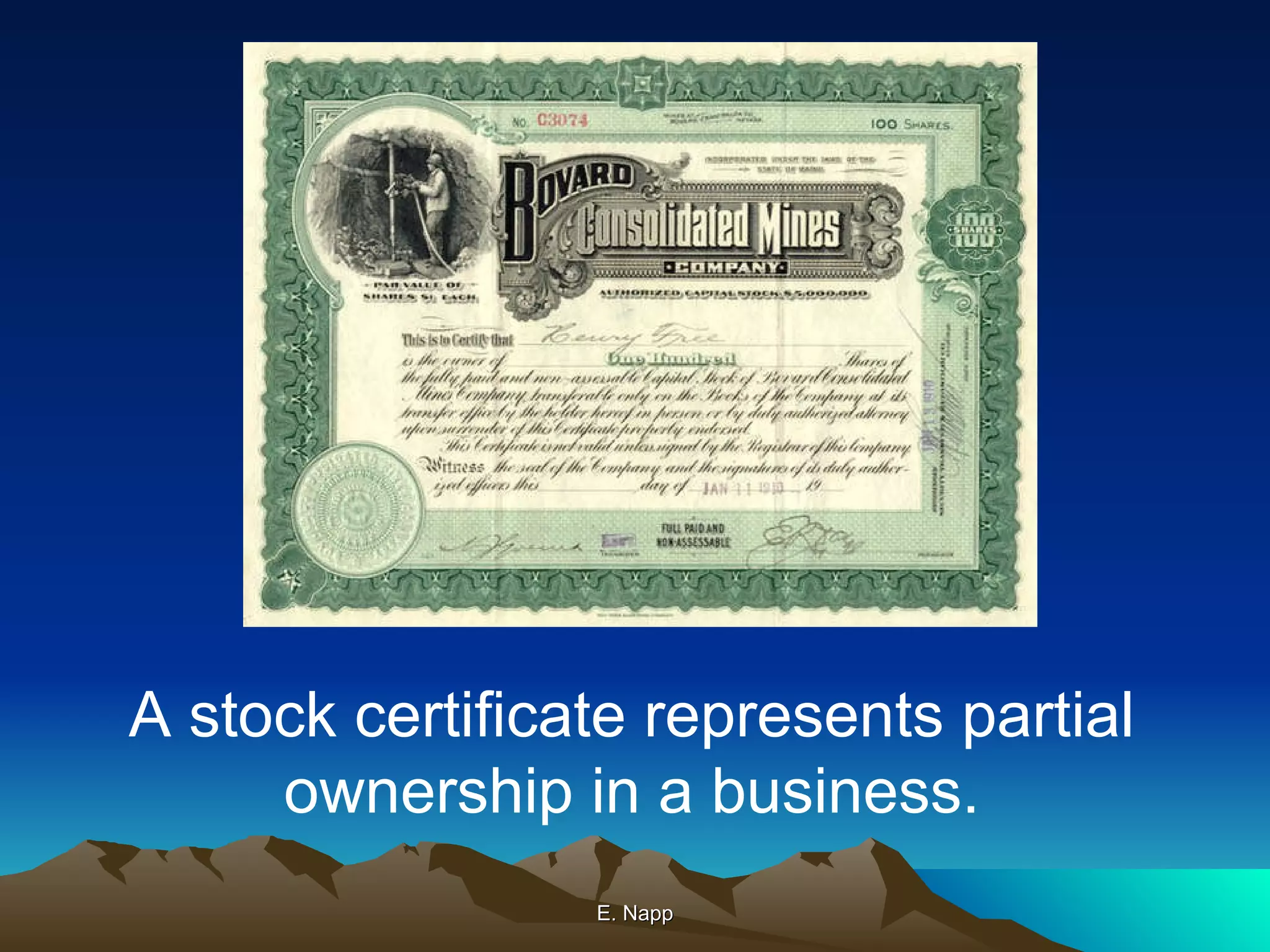
E. Napp A stock certificate represents partial ownership in a business.
Joint Stock Companies A Joint stock company is a privately owned company that sells stock or partial ownership in the company to investors. Investors risk their capital or money when they purchase stock. If the company is successful, the investor receives his share of the profits. E. Napp
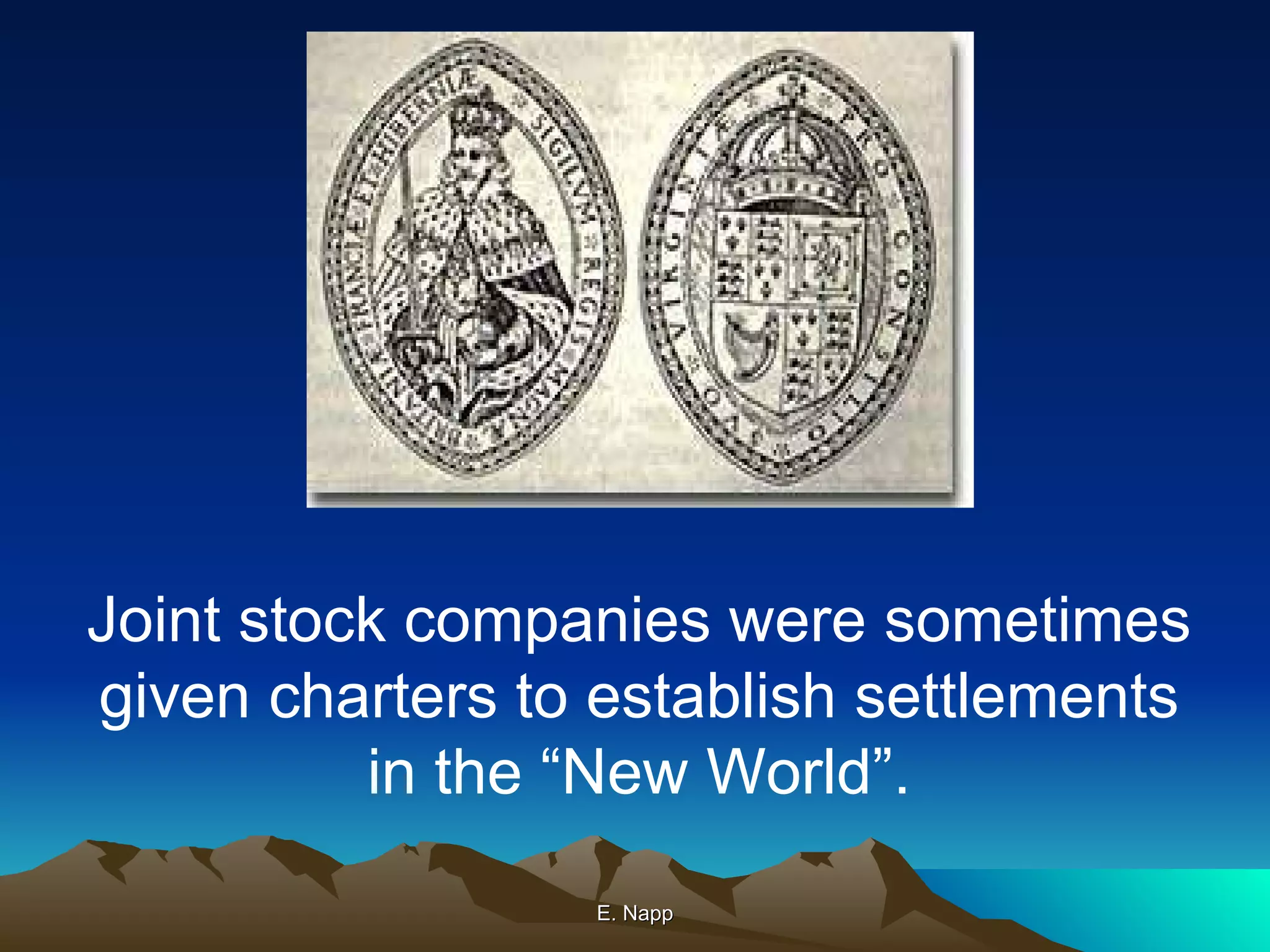
E. Napp Joint stock companies were sometimes given charters to establish settlements in the “New World”.
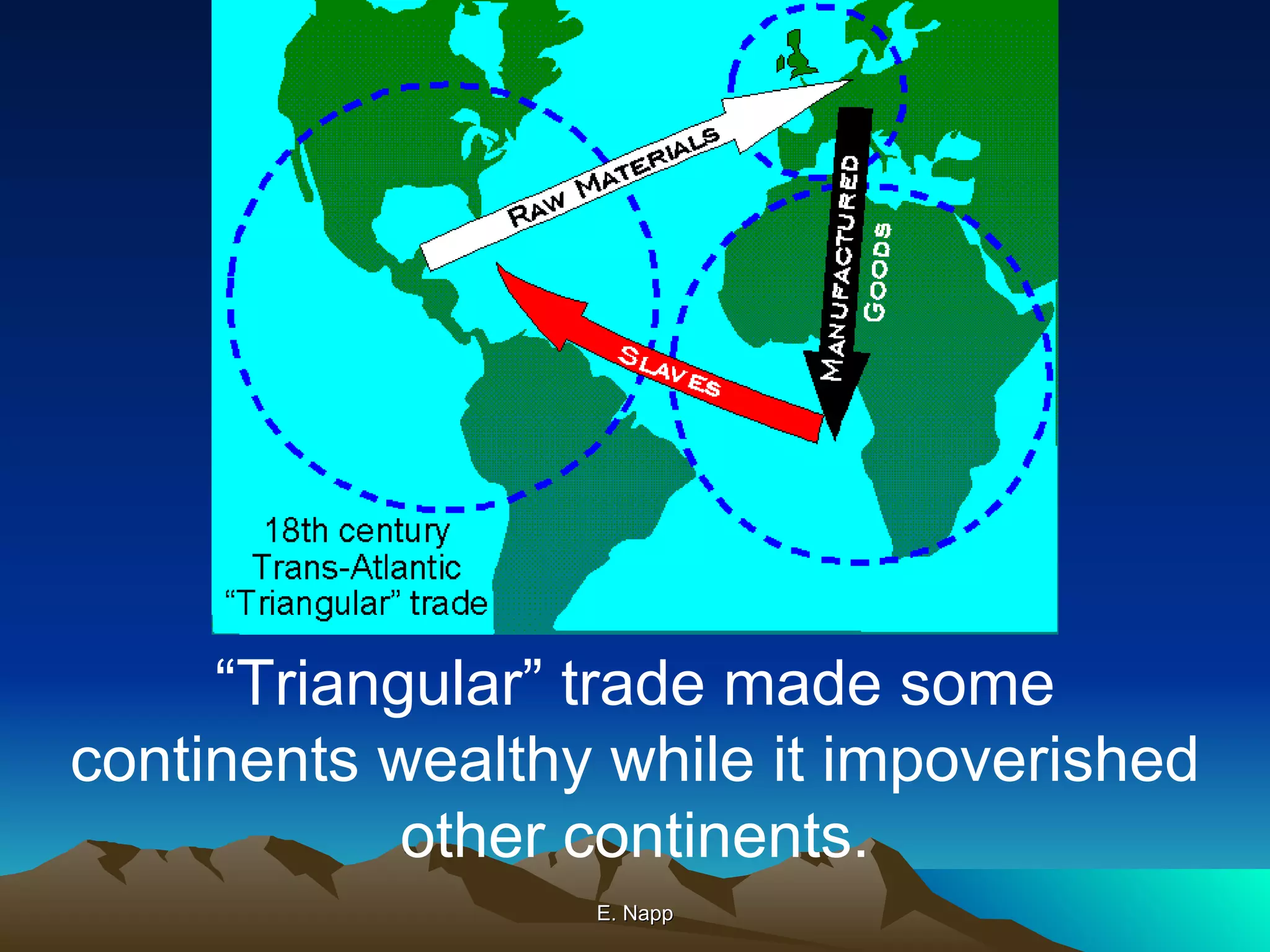
E. Napp “ Triangular” trade made some continents wealthy while it impoverished other continents.
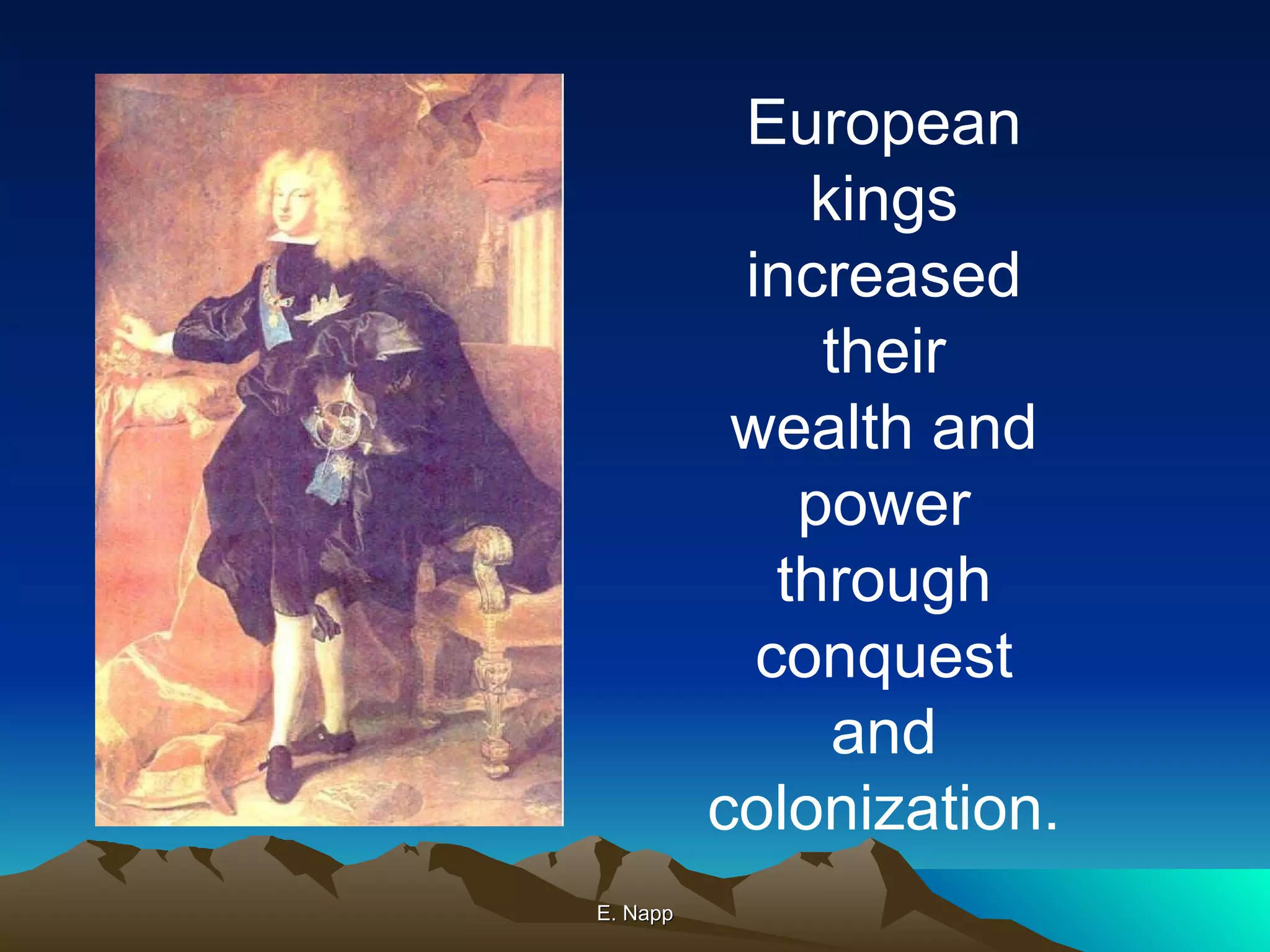
E. Napp European kings increased their wealth and power through conquest and colonization.
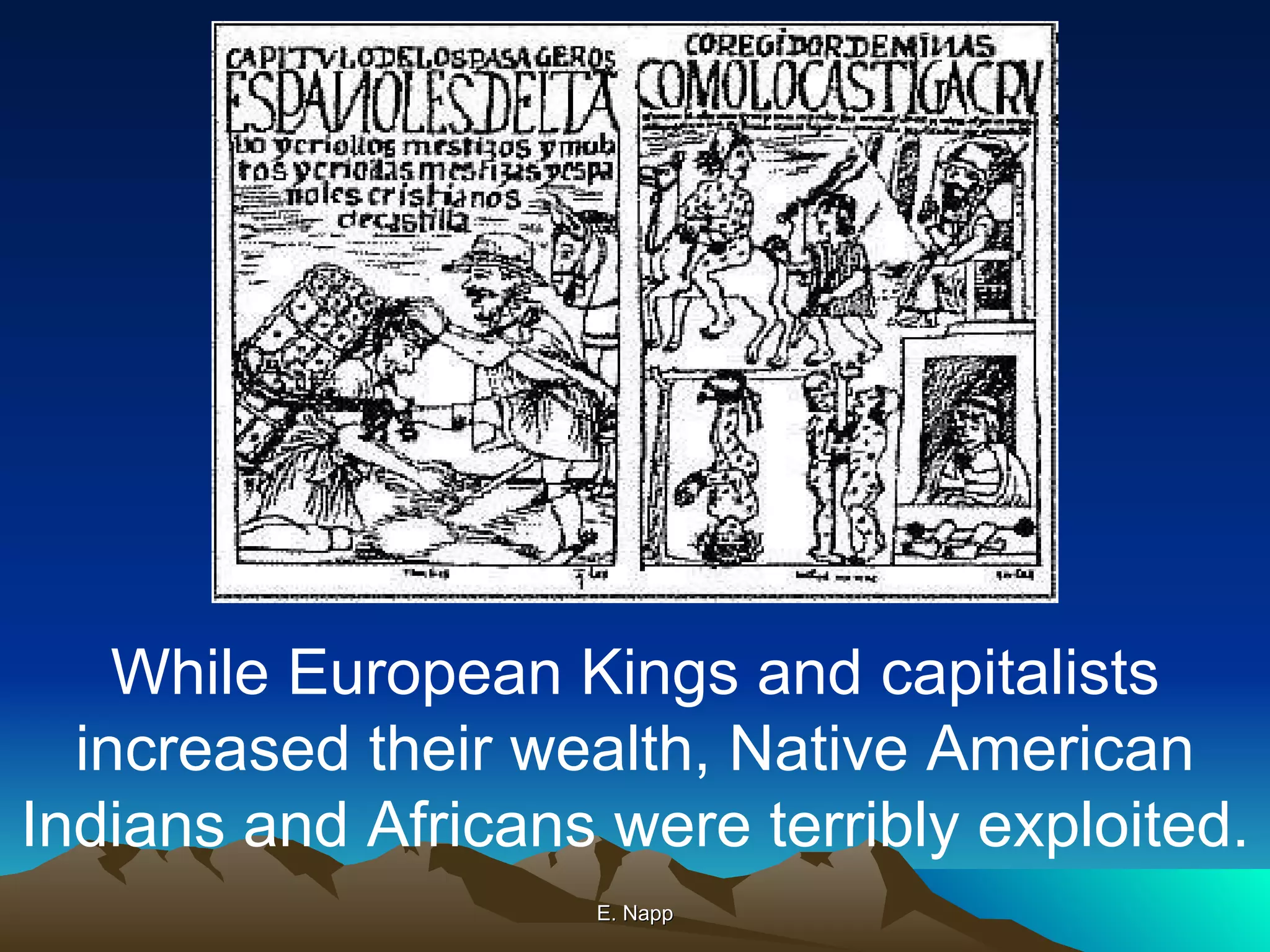
E. Napp While European Kings and capitalists increased their wealth, Native American Indians and Africans were terribly exploited.
Questions for Reflection: Define mercantilism. How did European nations increase their wealth and power? Define capitalism. Why did individuals invest in Joint stock companies? What was “Triangular” trade? What was the relationship between a mother country and a colony? E. Napp
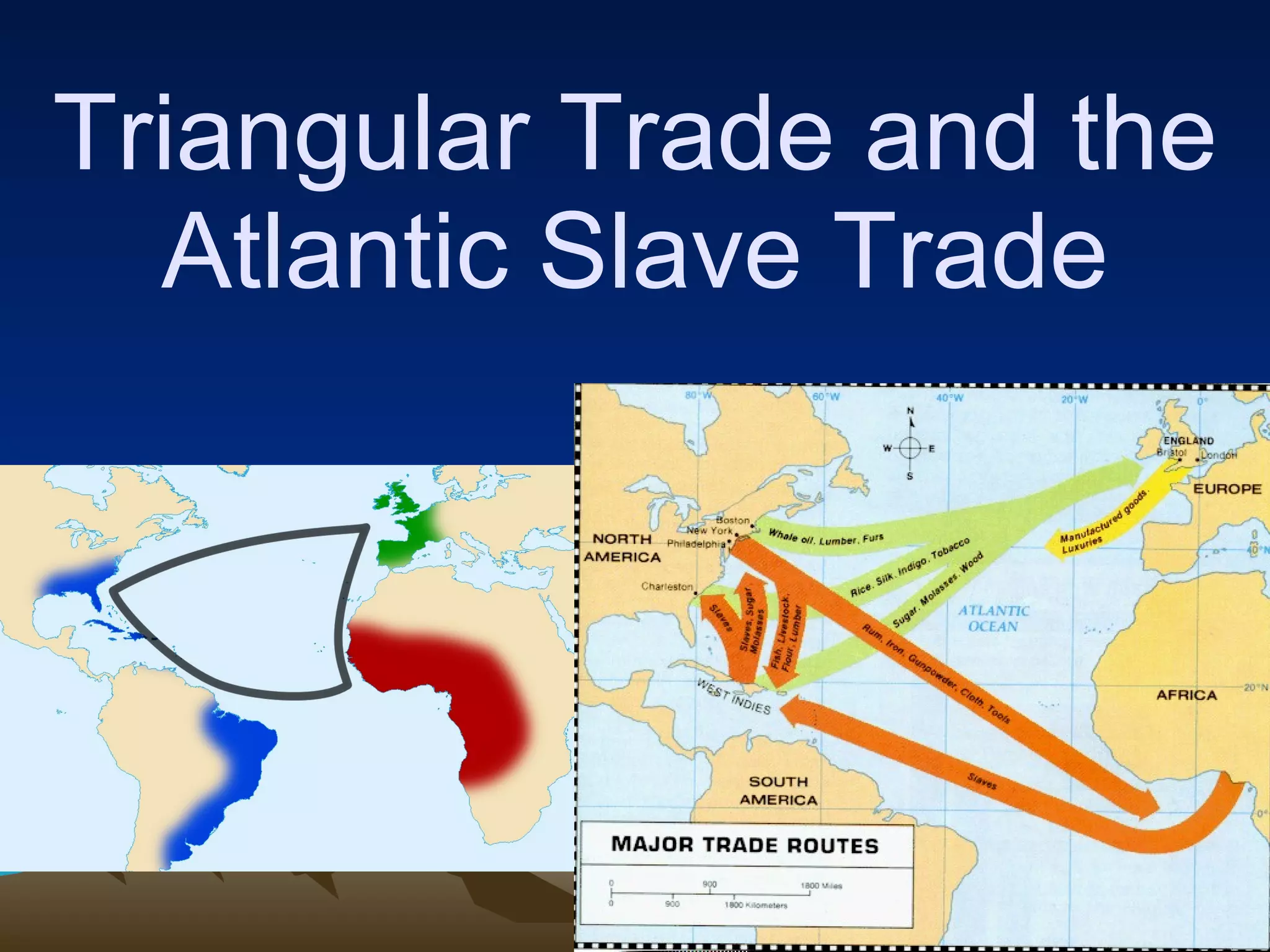
Triangular Trade and the Atlantic Slave Trade
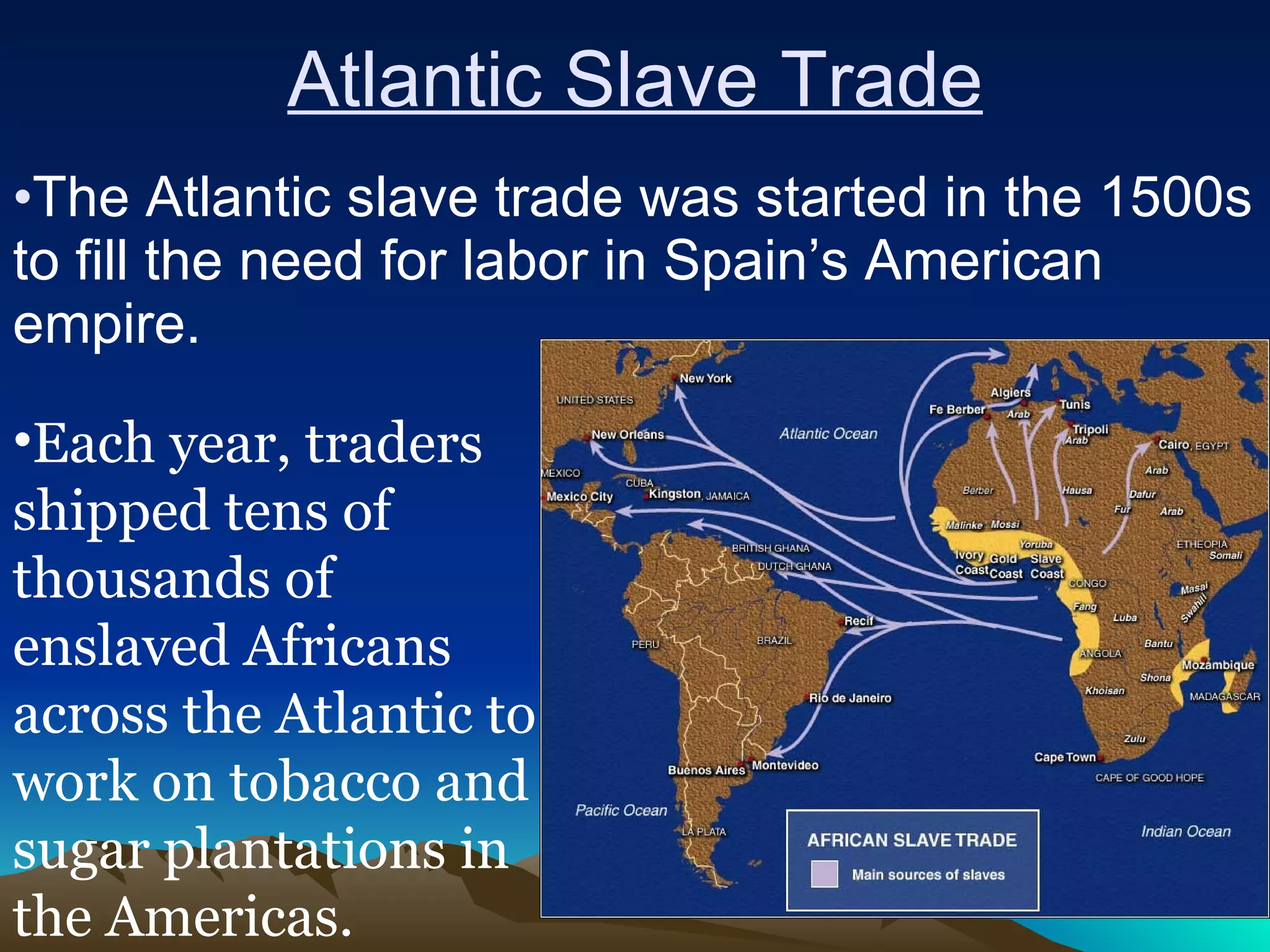
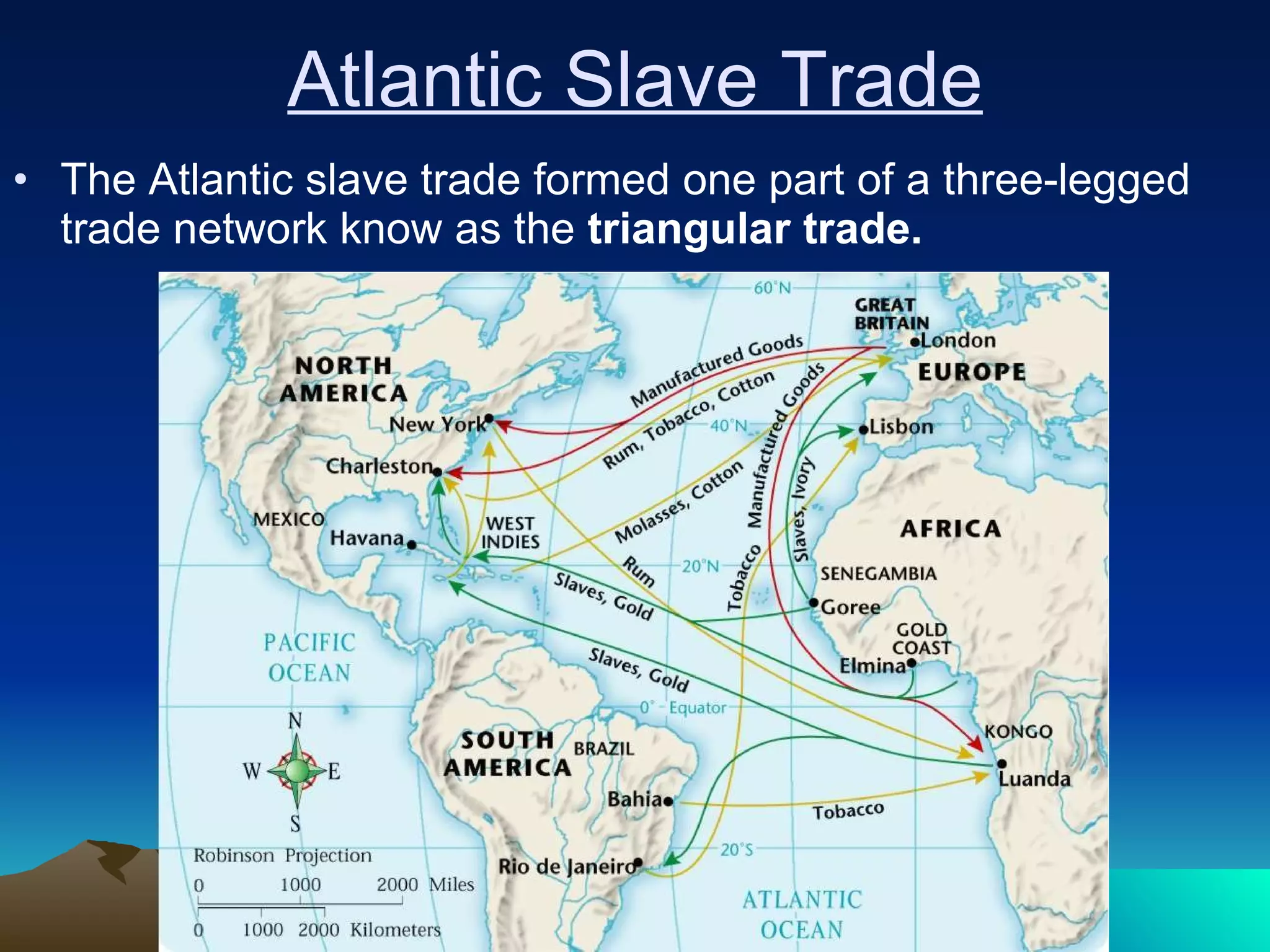
Atlantic Slave Trade The Atlantic slave trade was started in the 1500s to fill the need for labor in Spain’s American empire.  Each year, traders shipped tens of thousands of enslaved Africans across the Atlantic to work on tobacco and sugar plantations in the Americas.
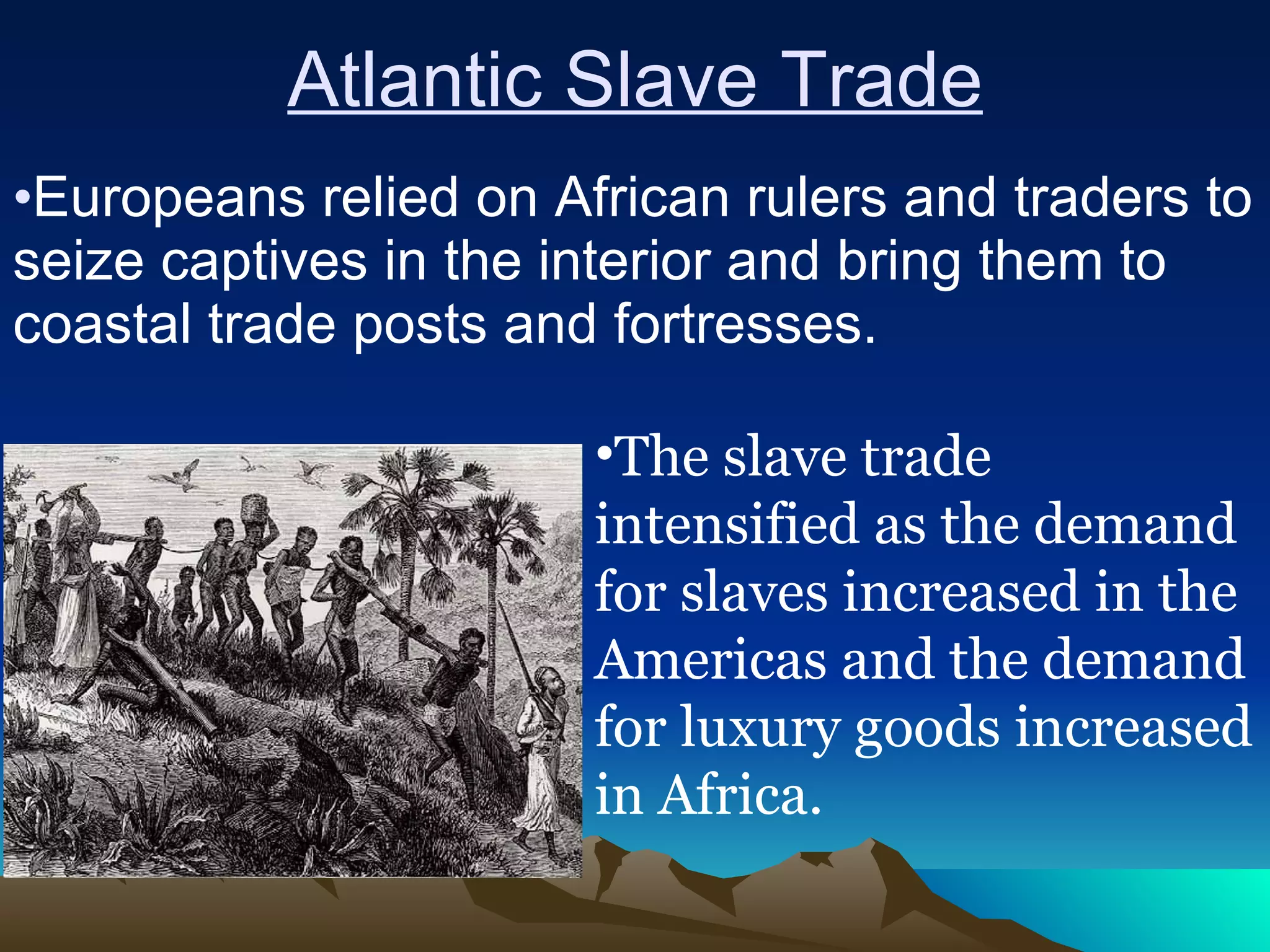
Atlantic Slave Trade Europeans relied on African rulers and traders to seize captives in the interior and bring them to coastal trade posts and fortresses.  The slave trade intensified as the demand for slaves increased in the Americas and the demand for luxury goods increased in Africa.
Atlantic Slave Trade The Atlantic slave trade formed one part of a three-legged trade network know as the  triangular trade.
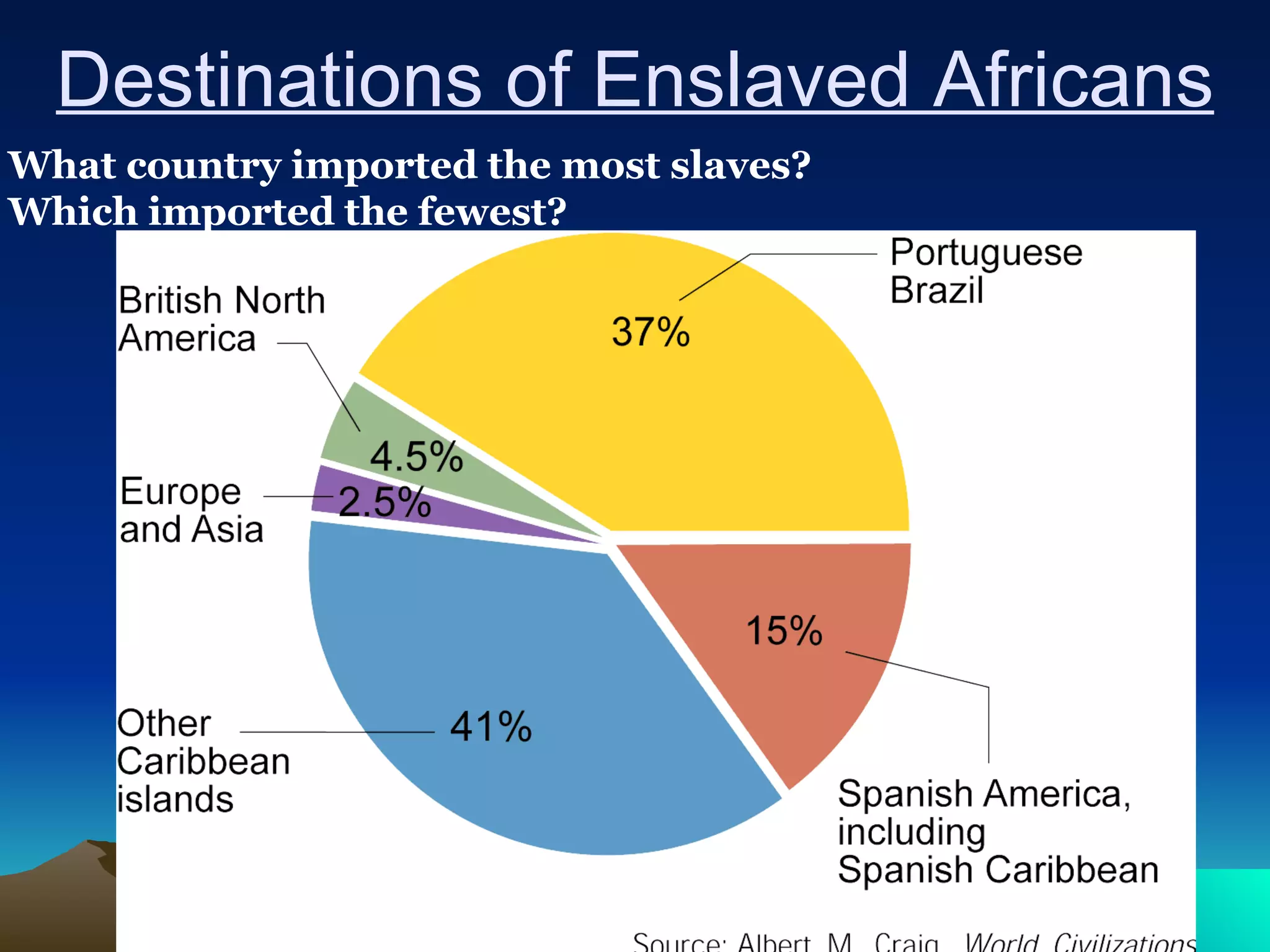
Destinations of Enslaved Africans What country imported the most slaves?  Which imported the fewest?
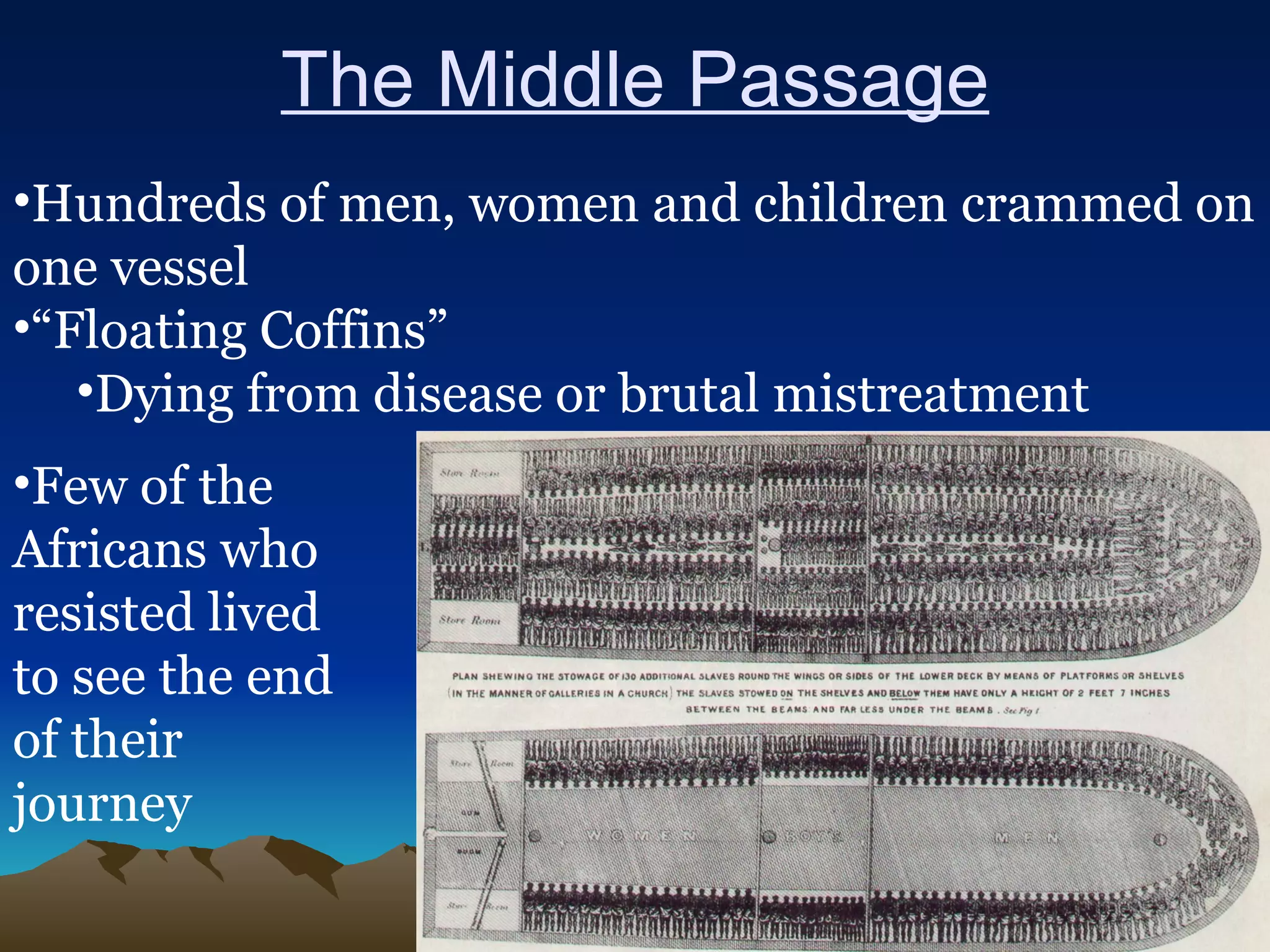
The Middle Passage Hundreds of men, women and children crammed on one vessel “ Floating Coffins” Dying from disease or brutal mistreatment Few of the Africans who resisted lived to see the end of their journey
Impact of the Slave Trade By the 1800s, an estimated 11 million enslaved Africans had reached the Americas. Another 2 million probably died during the Middle Passage. The slave trade caused the decline of some African states. The loss of countless numbers of young women and men resulted in some small states disappearing forever. New African states arose whose way of life depended on the slave trade.  The rulers of these new states waged war against other Africans in order to gain control of the slave trade in their region.
 
Commercial Revolution Opening trade with Asia, Africa and America changed (revolutionized) Europe’s economy: Inflation caused by growth in population = increase in demand for goods and services because goods were scarce, sellers could raise their prices by mid-1500s silver and gold were everywhere  and rulers were using it to make coins – thus an increased amount of money in circulation combine this with scarcity of goods and prices will rise
Growth of Capitalism Expanded trade and push for overseas empires spurred the growth of capitalism entrepreneurs and capitalists wanted more money they made up a new business class devoted to making profits this changed the local European economy into an international trading system
Mercantilism Basic Ideas behind mercantilism: Nation’s wealth based on its gold and silver treasure Must export more goods than imported Colonies existed for benefit of parent country  Provide raw materials and resources Provide a market for selling manufactured goods Colonies could ONLY buy from parent country
Summary of Commercial Revolution How did the Commercial Revolution change Europe’s economy? Prices rose (inflation) A new business class (entrepreneurs) was created ….capitalism The goal of European economies changes from agrarian base to CASH based (mercantilism)
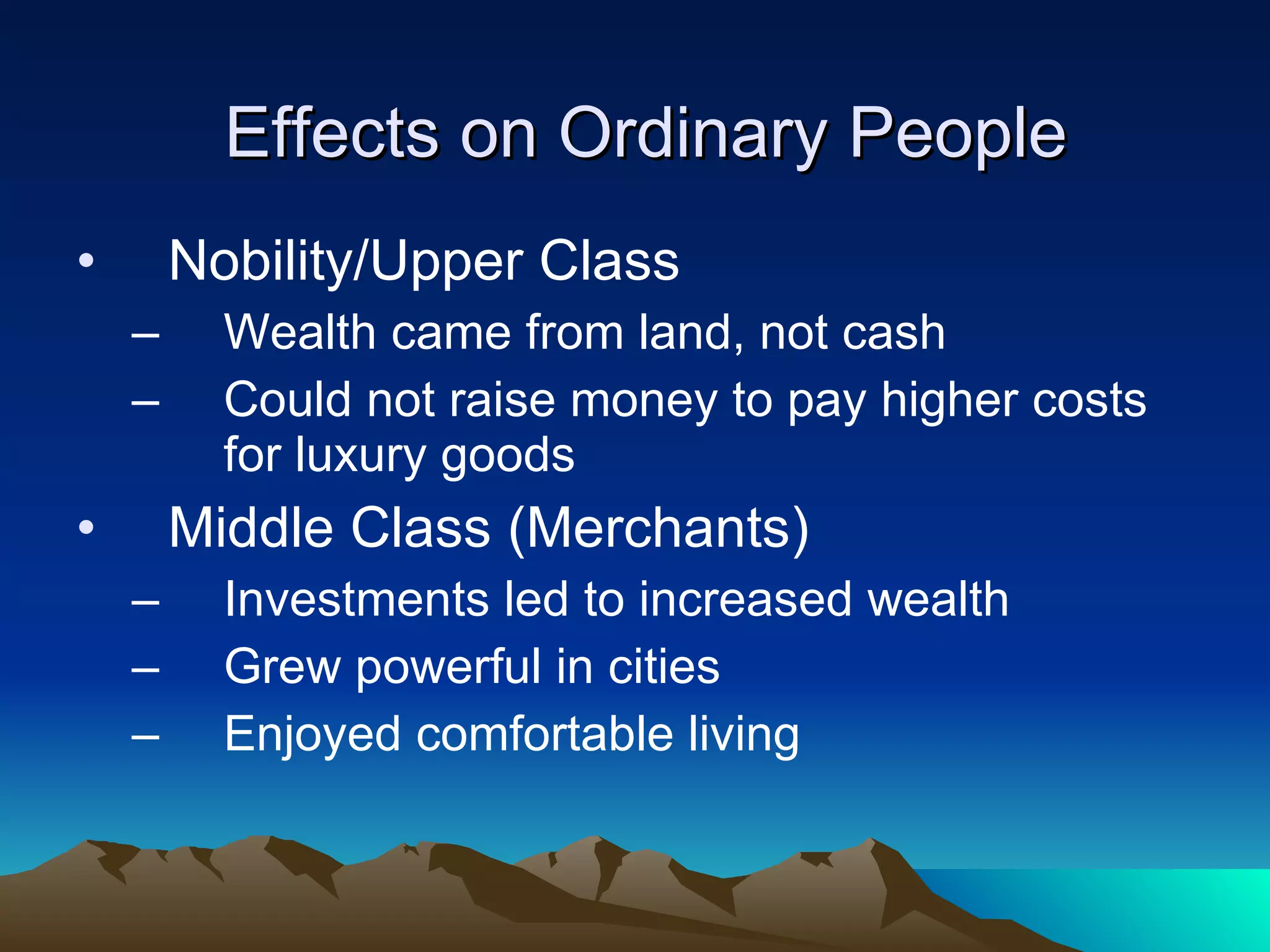
Effects on Ordinary People Nobility/Upper Class Wealth came from land, not cash Could not raise money to pay higher costs for luxury goods Middle Class (Merchants) Investments led to increased wealth Grew powerful in cities Enjoyed comfortable living
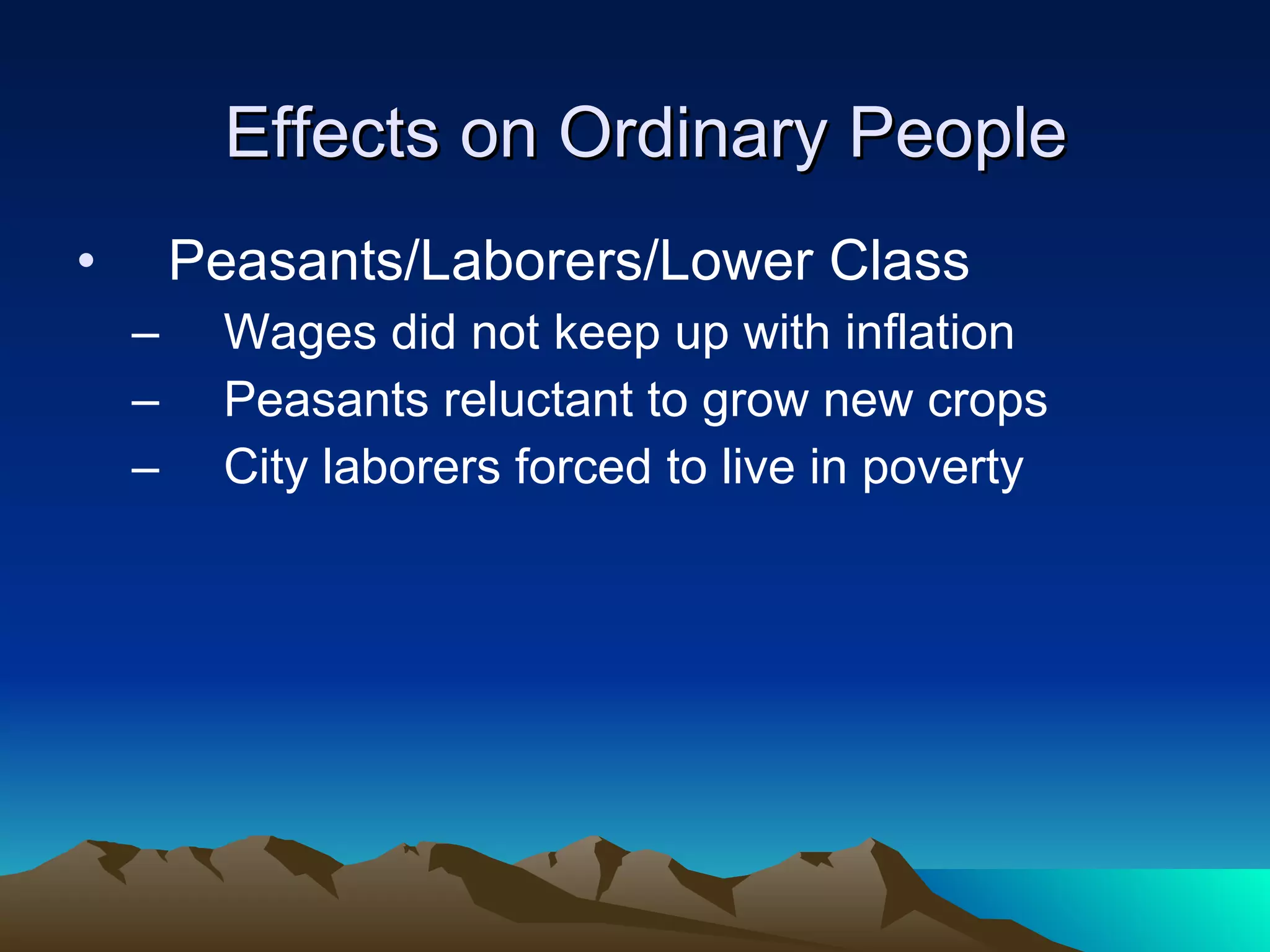
Effects on Ordinary People Peasants/Laborers/Lower Class Wages did not keep up with inflation Peasants reluctant to grow new crops City laborers forced to live in poverty
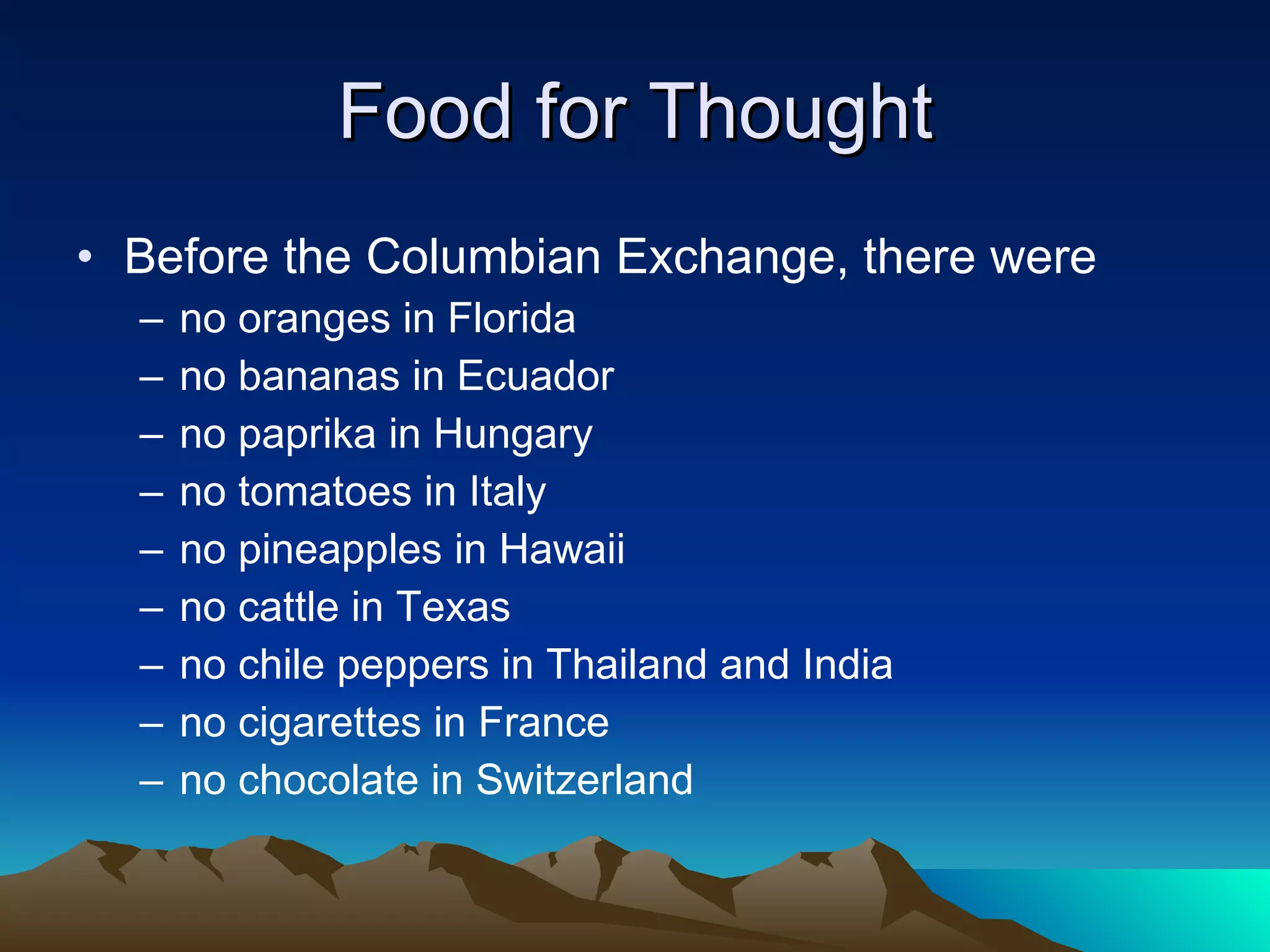
Food for Thought Before the Columbian Exchange, there were  no oranges in Florida no bananas in Ecuador no paprika in Hungary no tomatoes in Italy no pineapples in Hawaii no cattle in Texas no chile peppers in Thailand and India no cigarettes in France no chocolate in Switzerland

Columbian exchange and_triangular_trade

  • 1.
  • 2.
    Columbian Exchange Columbustraveled back and forth from Europe to the Americas On these expeditions he brought goods to and from the countries Columbus began a vast global exchange that would effect the world Because this global exchange began with Columbus we call it the Columbian Exchange
  • 3.
    Goods were exchangedPeople Plants Animals Technology Diseases What is the Old World and what is the New World?
  • 4.
    From The OldWorld ** How would horses impact the New World? Europe Wheat Onions Apples Carrots Horses Cattle Africa Radishes Watermelon Coffee Asia Rice Sugarcane Mangoes
  • 5.
    From The NewWorld ** Why would potatoes be important in Europe? North America Sunflowers Corn (Mexico) Avocadoes Central America Peppers Beans Cocoa South America Potatoes Tomatoes Peanuts
  • 6.
    Impact on PopulationBy the 1700s, corn, potatoes, beans and tomatoes were contributing to population growth People began migrating to the Americas as well – Why would people want to move to the Americas?
  • 7.
    Continued.. European diseases(like small pox) killed Native Americans Shortage of labor to grow cash crops led to the use of African slaves Spain needed help for their American empires Slavery was based on race (Superior vs Inferior) European plantation system in the Caribbean and the Americas destroyed indigenous economics and damaged the environment.
  • 8.
    The Commercial RevolutionIn this lesson, students will be able to define the following terms: The Commercial Revolution Mercantilism Colonies Mother Country Capitalism Joint Stock Company E. Napp
  • 9.
    E. Napp TheCommercial Revolution marked an important step in Europe from local economies to a global economy.
  • 10.
    Mercantilism Mercantilism wasthe belief that a nation’s power depended on the ownership of gold and silver. In order to acquire gold and silver, European countries established overseas colonies. Colonies provided gold and silver. E. Napp
  • 11.
    E. Napp Mercantilistsbelieved that a country’s wealth was based on the amount of gold and silver it acquired.
  • 12.
    Mother Countries andColonies Mother countries were conquerors. The conquered land was a colony. In addition to mining for gold and silver, Mother countries imported natural resources or raw materials from their colonies and exported finished goods. E. Napp
  • 13.
    E. Napp Mothercountries imported cheap raw materials like cotton and exported more expensive finished goods like shirts.
  • 14.
    Capitalism Merchants andbankers laid the foundations for capitalism. In a capitalist system, business owners risk their capital (money) to start new businesses hoping to make profits. Individuals formed joint-stock companies. E. Napp
  • 15.
    E. Napp Astock certificate represents partial ownership in a business.
  • 16.
    Joint Stock CompaniesA Joint stock company is a privately owned company that sells stock or partial ownership in the company to investors. Investors risk their capital or money when they purchase stock. If the company is successful, the investor receives his share of the profits. E. Napp
  • 17.
    E. Napp Jointstock companies were sometimes given charters to establish settlements in the “New World”.
  • 18.
    E. Napp “Triangular” trade made some continents wealthy while it impoverished other continents.
  • 19.
    E. Napp Europeankings increased their wealth and power through conquest and colonization.
  • 20.
    E. Napp WhileEuropean Kings and capitalists increased their wealth, Native American Indians and Africans were terribly exploited.
  • 21.
    Questions for Reflection:Define mercantilism. How did European nations increase their wealth and power? Define capitalism. Why did individuals invest in Joint stock companies? What was “Triangular” trade? What was the relationship between a mother country and a colony? E. Napp
  • 22.
    Triangular Trade andthe Atlantic Slave Trade
  • 23.
    Atlantic Slave TradeThe Atlantic slave trade was started in the 1500s to fill the need for labor in Spain’s American empire. Each year, traders shipped tens of thousands of enslaved Africans across the Atlantic to work on tobacco and sugar plantations in the Americas.
  • 24.
    Atlantic Slave TradeEuropeans relied on African rulers and traders to seize captives in the interior and bring them to coastal trade posts and fortresses. The slave trade intensified as the demand for slaves increased in the Americas and the demand for luxury goods increased in Africa.
  • 25.
    Atlantic Slave TradeThe Atlantic slave trade formed one part of a three-legged trade network know as the triangular trade.
  • 26.
    Destinations of EnslavedAfricans What country imported the most slaves? Which imported the fewest?
  • 27.
    The Middle PassageHundreds of men, women and children crammed on one vessel “ Floating Coffins” Dying from disease or brutal mistreatment Few of the Africans who resisted lived to see the end of their journey
  • 28.
    Impact of theSlave Trade By the 1800s, an estimated 11 million enslaved Africans had reached the Americas. Another 2 million probably died during the Middle Passage. The slave trade caused the decline of some African states. The loss of countless numbers of young women and men resulted in some small states disappearing forever. New African states arose whose way of life depended on the slave trade. The rulers of these new states waged war against other Africans in order to gain control of the slave trade in their region.
  • 29.
  • 30.
    Commercial Revolution Openingtrade with Asia, Africa and America changed (revolutionized) Europe’s economy: Inflation caused by growth in population = increase in demand for goods and services because goods were scarce, sellers could raise their prices by mid-1500s silver and gold were everywhere and rulers were using it to make coins – thus an increased amount of money in circulation combine this with scarcity of goods and prices will rise
  • 31.
    Growth of CapitalismExpanded trade and push for overseas empires spurred the growth of capitalism entrepreneurs and capitalists wanted more money they made up a new business class devoted to making profits this changed the local European economy into an international trading system
  • 32.
    Mercantilism Basic Ideasbehind mercantilism: Nation’s wealth based on its gold and silver treasure Must export more goods than imported Colonies existed for benefit of parent country Provide raw materials and resources Provide a market for selling manufactured goods Colonies could ONLY buy from parent country
  • 33.
    Summary of CommercialRevolution How did the Commercial Revolution change Europe’s economy? Prices rose (inflation) A new business class (entrepreneurs) was created ….capitalism The goal of European economies changes from agrarian base to CASH based (mercantilism)
  • 34.
    Effects on OrdinaryPeople Nobility/Upper Class Wealth came from land, not cash Could not raise money to pay higher costs for luxury goods Middle Class (Merchants) Investments led to increased wealth Grew powerful in cities Enjoyed comfortable living
  • 35.
    Effects on OrdinaryPeople Peasants/Laborers/Lower Class Wages did not keep up with inflation Peasants reluctant to grow new crops City laborers forced to live in poverty
  • 36.
    Food for ThoughtBefore the Columbian Exchange, there were no oranges in Florida no bananas in Ecuador no paprika in Hungary no tomatoes in Italy no pineapples in Hawaii no cattle in Texas no chile peppers in Thailand and India no cigarettes in France no chocolate in Switzerland