The Columbian Exchange
Europeans Explore the World When Christopher Columbus discovered the Americas, it set in motion a chain of events  which changed the world. Spain and Portugual colonized Latin America and the interaction of Europeans with Native Americans led to big cultural changes.
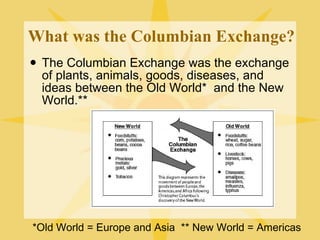
What was the Columbian Exchange? The Columbian Exchange was the exchange of plants, animals, goods, diseases, and ideas between the Old World*  and the New World.**  *Old World = Europe and Asia  ** New World = Americas
 
 
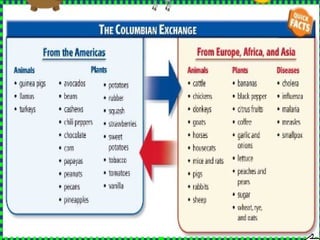
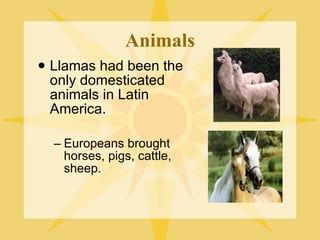
Animals Llamas had been the only domesticated animals in Latin America. Europeans brought horses, pigs, cattle, sheep.
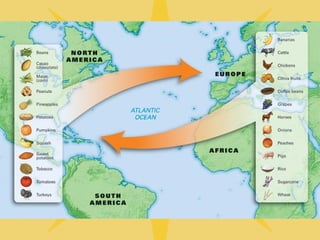
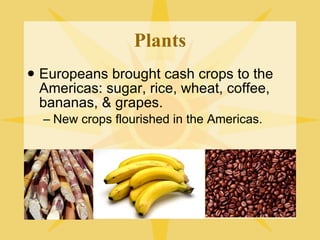
Plants Europeans brought cash crops to the Americas: sugar, rice, wheat, coffee, bananas, & grapes. New crops flourished in the Americas.
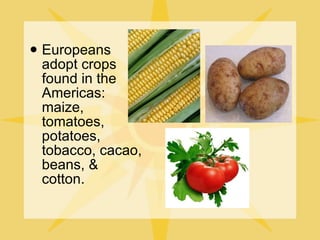
Europeans adopt crops found in the Americas: maize, tomatoes, potatoes, tobacco, cacao, beans, & cotton.
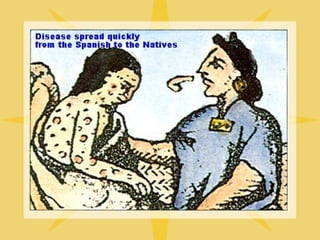
The Introduction of  New Diseases Nearly all of the European diseases were communicable by air & touch. Smallpox, measles, diphtheria, whooping cough, chicken pox, bubonic plague, scarlet fever and influenza were the most common diseases exchanged.
 
Devastating Impact of Diseases Native Americans had no natural resistance to European diseases . population continued to decline for centuries Inca empire  decreased from 13 million in 1492 to 2 million in 1600. North American  population fell from 2 million in 1492 to 500,000 in 1900.
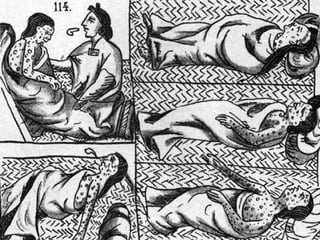
Smallpox Central Mexico  - 25 million in 1519 to less than one million in 1605 Hispa ñ ola  - One million in 1492 to 46,000 in 1512 North America  - 90% of Native Americans gone within 100 years of Plymouth landing
 
Effects of Diseases Native American population dramatically decreases Europeans need labor to cultivate new crops in the Americas, but there aren’t many natives left. Europeans look to Africa & begin to import African slaves to the Americas.
Impact of the Columbian Exchange Different Foods Exchange of foods & animals had a dramatic impact on later societies. Over time, crops native to the Americas became staples in the diets of Europeans. Foods provided nutrition, helped people live longer. Until contact with Americas, Europeans had never tried tomatoes--by 1600s, tomatoes were included in Italian cookbooks .
Impact of the Columbian Exchange . Economics Activities like cattle ranching and coffee growing were not possible without Columbian Exchange. Sugar Cane plantations became big business
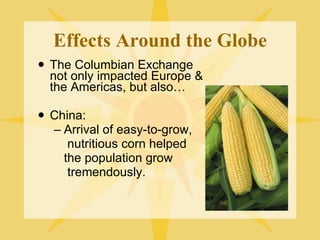
Effects Around the Globe The Columbian Exchange not only impacted Europe & the Americas, but also… China:  Arrival of easy-to-grow,   nutritious corn helped  the population grow   tremendously.
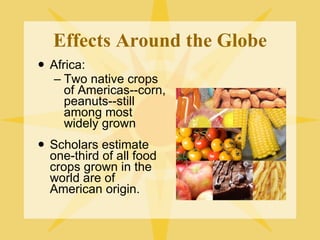
Effects Around the Globe Africa:  Two native crops of Americas--corn, peanuts--still among most widely grown Scholars estimate one-third of all food crops grown in the world are of American origin.

Columbian Exchange.new 2012

  • 1.
  • 2.
    Europeans Explore theWorld When Christopher Columbus discovered the Americas, it set in motion a chain of events which changed the world. Spain and Portugual colonized Latin America and the interaction of Europeans with Native Americans led to big cultural changes.
  • 3.
    What was theColumbian Exchange? The Columbian Exchange was the exchange of plants, animals, goods, diseases, and ideas between the Old World* and the New World.** *Old World = Europe and Asia ** New World = Americas
  • 4.
  • 5.
  • 6.
    Animals Llamas hadbeen the only domesticated animals in Latin America. Europeans brought horses, pigs, cattle, sheep.
  • 7.
    Plants Europeans broughtcash crops to the Americas: sugar, rice, wheat, coffee, bananas, & grapes. New crops flourished in the Americas.
  • 8.
    Europeans adopt cropsfound in the Americas: maize, tomatoes, potatoes, tobacco, cacao, beans, & cotton.
  • 9.
    The Introduction of New Diseases Nearly all of the European diseases were communicable by air & touch. Smallpox, measles, diphtheria, whooping cough, chicken pox, bubonic plague, scarlet fever and influenza were the most common diseases exchanged.
  • 10.
  • 11.
    Devastating Impact ofDiseases Native Americans had no natural resistance to European diseases . population continued to decline for centuries Inca empire decreased from 13 million in 1492 to 2 million in 1600. North American population fell from 2 million in 1492 to 500,000 in 1900.
  • 12.
    Smallpox Central Mexico - 25 million in 1519 to less than one million in 1605 Hispa ñ ola - One million in 1492 to 46,000 in 1512 North America - 90% of Native Americans gone within 100 years of Plymouth landing
  • 13.
  • 14.
    Effects of DiseasesNative American population dramatically decreases Europeans need labor to cultivate new crops in the Americas, but there aren’t many natives left. Europeans look to Africa & begin to import African slaves to the Americas.
  • 15.
    Impact of theColumbian Exchange Different Foods Exchange of foods & animals had a dramatic impact on later societies. Over time, crops native to the Americas became staples in the diets of Europeans. Foods provided nutrition, helped people live longer. Until contact with Americas, Europeans had never tried tomatoes--by 1600s, tomatoes were included in Italian cookbooks .
  • 16.
    Impact of theColumbian Exchange . Economics Activities like cattle ranching and coffee growing were not possible without Columbian Exchange. Sugar Cane plantations became big business
  • 17.
    Effects Around theGlobe The Columbian Exchange not only impacted Europe & the Americas, but also… China: Arrival of easy-to-grow, nutritious corn helped the population grow tremendously.
  • 18.
    Effects Around theGlobe Africa: Two native crops of Americas--corn, peanuts--still among most widely grown Scholars estimate one-third of all food crops grown in the world are of American origin.