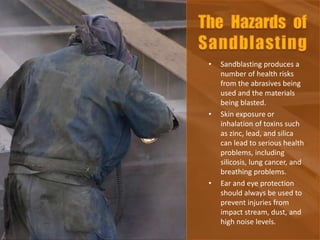
• Sandblasting produces a
number of health risks
from the abrasives being
used and the materials
being blasted.
• Skin exposure or
inhalation of toxins such
as zinc, lead, and silica
can lead to serious health
problems, including
silicosis, lung cancer, and
breathing problems.
• Ear and eye protection
should always be used to
prevent injuries from
impact stream, dust, and
high noise levels.
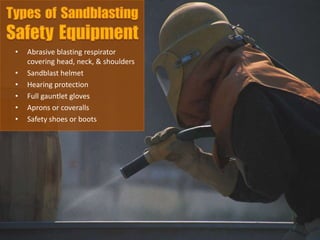
• Abrasive blasting respirator
covering head, neck, & shoulders
• Sandblast helmet
• Hearing protection
• Full gauntlet gloves
• Aprons or coveralls
• Safety shoes or boots
• Respirators filter out
contaminants from airborne
dust produced during
blasting operations.
• Different operations and
materials result in a variety
of dust concentration and
size of particles.
• “Gas Masks” filter out
smaller particles, gases, and
chemicals that can bypass
the lungs and enter the
respiratory system causing
more harm.
• Air-supplied respirators
must be used for any
operation where the
operator is not separated
from the abrasive material.
• Air-supplied, sealed helmets are some of the most essential pieces of safety
equipment and they should always be worn during sandblasting operations.
• Always use a helmet that is fed clean air to prevent inhaling microscopic dust
particles.
• Helmets should fit well – those that are too big will not provide an effective barrier
and will let dust particles inside.
• Always use a helmet that is in perfect condition and that has a high-quality filter to
prevent fine particles from getting inside.
• Only use gloves made from
leather, neoprene, or rubber
materials that are made
specifically for the sandblasting
operation you are performing to
prevent particles from passing
through to your skin.
• Gauntlet-style gloves in long
lengths create a continuous
barrier that prevents dust from
entering openings in clothing.
• Compatible cabinet-style abrasive
blasting gloves should be used
when using a sandblasting
cabinet, according to the
manufacturer recommendations
for that cabinet.
• Coveralls add great protection from
abrasives by covering a much larger
body area than an apron.
• Lightweight construction makes them
comfortable while providing a
continuous barrier over a large body
area.
• Coveralls should always be worn to
prevent toxic dust from contacting
skin as well as to protect from
mechanical impact.
• Coveralls should be comfortable and
well-fitted for maximum safety .
• Safety shoes should always be
worn to provide a barrier to dust
particles and impact from
equipment or other materials that
may be dropped.
• Specially designed safety shoes
give the operator a sturdy hold
during the sandblasting process
that reduces the potential for
accidents.
• Regular shoes should never be
worn during sandblasting to
prevent the possibility of particles
coming into contact with the
operator’s skin or having an
accident from slipping.
• Only garments and equipment
recommended specifically for
sandblasting should be used to provide
the appropriate level of protection
during every sandblasting application.
• Everyone in the area should wear all of
the necessary safety equipment, not
just the operator.
• Dust particles are still a hazard during
clean-up and all safety clothing should
continue to be worn.
Big A’s Place is your online resource for sandblast helmets, abrasive blasting gloves,
sandblasting equipment, accessories, and parts. Leading brands and a wide range of
sandblasting products create a one-stop shopping place for sandblasting.
Visit sandblaster-parts.com for more information and to view our inventory.
Sources
• https://www.osha.gov/Publications/OSHA369
7.pdf
• http://www.toolboxtopics.com/Gen%20Indust
ry/Safety%20Consideration%20for%20Sand%2
0Blasting.htm
Summary
Safety is an important concern when performing
any type of sandblasting job. Using the right
equipment for the job at all times is essential for
the safety and good health of the operator and
every other person in the work area.

Safety while sandblasting

  • 2.
    • Sandblasting producesa number of health risks from the abrasives being used and the materials being blasted. • Skin exposure or inhalation of toxins such as zinc, lead, and silica can lead to serious health problems, including silicosis, lung cancer, and breathing problems. • Ear and eye protection should always be used to prevent injuries from impact stream, dust, and high noise levels.
  • 3.
    • Abrasive blastingrespirator covering head, neck, & shoulders • Sandblast helmet • Hearing protection • Full gauntlet gloves • Aprons or coveralls • Safety shoes or boots
  • 4.
    • Respirators filterout contaminants from airborne dust produced during blasting operations. • Different operations and materials result in a variety of dust concentration and size of particles. • “Gas Masks” filter out smaller particles, gases, and chemicals that can bypass the lungs and enter the respiratory system causing more harm. • Air-supplied respirators must be used for any operation where the operator is not separated from the abrasive material.
  • 5.
    • Air-supplied, sealedhelmets are some of the most essential pieces of safety equipment and they should always be worn during sandblasting operations. • Always use a helmet that is fed clean air to prevent inhaling microscopic dust particles. • Helmets should fit well – those that are too big will not provide an effective barrier and will let dust particles inside. • Always use a helmet that is in perfect condition and that has a high-quality filter to prevent fine particles from getting inside.
  • 6.
    • Only usegloves made from leather, neoprene, or rubber materials that are made specifically for the sandblasting operation you are performing to prevent particles from passing through to your skin. • Gauntlet-style gloves in long lengths create a continuous barrier that prevents dust from entering openings in clothing. • Compatible cabinet-style abrasive blasting gloves should be used when using a sandblasting cabinet, according to the manufacturer recommendations for that cabinet.
  • 7.
    • Coveralls addgreat protection from abrasives by covering a much larger body area than an apron. • Lightweight construction makes them comfortable while providing a continuous barrier over a large body area. • Coveralls should always be worn to prevent toxic dust from contacting skin as well as to protect from mechanical impact. • Coveralls should be comfortable and well-fitted for maximum safety .
  • 8.
    • Safety shoesshould always be worn to provide a barrier to dust particles and impact from equipment or other materials that may be dropped. • Specially designed safety shoes give the operator a sturdy hold during the sandblasting process that reduces the potential for accidents. • Regular shoes should never be worn during sandblasting to prevent the possibility of particles coming into contact with the operator’s skin or having an accident from slipping.
  • 9.
    • Only garmentsand equipment recommended specifically for sandblasting should be used to provide the appropriate level of protection during every sandblasting application. • Everyone in the area should wear all of the necessary safety equipment, not just the operator. • Dust particles are still a hazard during clean-up and all safety clothing should continue to be worn.
  • 10.
    Big A’s Placeis your online resource for sandblast helmets, abrasive blasting gloves, sandblasting equipment, accessories, and parts. Leading brands and a wide range of sandblasting products create a one-stop shopping place for sandblasting. Visit sandblaster-parts.com for more information and to view our inventory.
  • 11.
  • 12.
    Summary Safety is animportant concern when performing any type of sandblasting job. Using the right equipment for the job at all times is essential for the safety and good health of the operator and every other person in the work area.