HAND SAFETY
Your hands are your most
important tool.
• Over 16 million people suffer
hand injuries per year.
• Over a quarter million of those are
serious & often disabling injuries
each year.
• 25% of all industrial injuries
involve the hand.
Facts
• The most common type of hand injury
is a crushing or compression injury.
• Men are 9 times more likely to receive
a hand injury than women.
• Most hand injuries involve a lack of
adequate personal protective
equipment.
Fact
• Each year, more than
15,000 workers end up in
the emergency room as a
result of hand-tool-related
injuries.
Fact
• Some 30,000 persons are injured
annually using hammers.
• 25,000 using standard blade
screwdrivers & spanners.
Common Causes
• Use of unprotected or faulty machinery or
equipment.
• Failure to use guards, kill-switches, or to
follow appropriate lock-out procedures are
among the leading hand hazards.
• Wearing jewelry, gloves, or loose-fitting
clothing around moving parts can also
lead to injury.
Causes

• Chemicals, corrosives, & other
irritating substances can cause burns
& skin inflammation unless
appropriate hand protection is used.
• Improper use or maintenance of the
hand tool.
• Lack of protective gloves or not using
the appropriate accessories for the
tool.
Typical Injuries
•
•
•
•
•
•

Puncture wounds
Severed fingers
Broken fingers
Contusions
Temperature extremes
Electrical hazards
Guideline’s for Hand Safety
• Be alert to potential hand hazards before
an accident can happen.
• Be alert to possible unguarded pinch
points.
• Always use guards, shields & other
protective devices when appropriate.
•

Do not remove guards.
Guidelines Continued
• Use brushes to wipe away debris.
• Inspect equipment & machinery
before & after tasks to make sure that
it is in good operating condition.
• Disconnect power & follow
established lock-out procedures
before repairing or cleaning
machinery.
Guidelines Continued
• Never wear gloves, jewelry, or loose
clothing when working with moving
machine parts.

• Use the appropriate

personal
protective equipment.

• When wearing gloves, be sure they fit
properly & are rated for the specific
task you are performing.
NOT ALL GLOVES ARE THE
SAME!!!!!!!

• Consult your Supervisor for
proper glove type.
SELECT PROPER TOOLS

• Use the right tool for the job
• Select tools that will keep
your wrists straight to avoid
repetitive motion/overuse
problems.
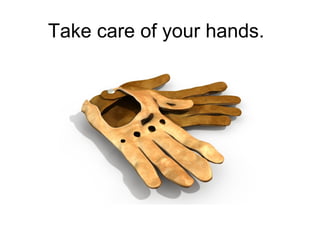
Take care of your hands.

Hand safety

  • 1.
  • 2.
    Your hands areyour most important tool. • Over 16 million people suffer hand injuries per year. • Over a quarter million of those are serious & often disabling injuries each year. • 25% of all industrial injuries involve the hand.
  • 3.
    Facts • The mostcommon type of hand injury is a crushing or compression injury. • Men are 9 times more likely to receive a hand injury than women. • Most hand injuries involve a lack of adequate personal protective equipment.
  • 4.
    Fact • Each year,more than 15,000 workers end up in the emergency room as a result of hand-tool-related injuries.
  • 5.
    Fact • Some 30,000persons are injured annually using hammers. • 25,000 using standard blade screwdrivers & spanners.
  • 6.
    Common Causes • Useof unprotected or faulty machinery or equipment. • Failure to use guards, kill-switches, or to follow appropriate lock-out procedures are among the leading hand hazards. • Wearing jewelry, gloves, or loose-fitting clothing around moving parts can also lead to injury.
  • 7.
    Causes • Chemicals, corrosives,& other irritating substances can cause burns & skin inflammation unless appropriate hand protection is used. • Improper use or maintenance of the hand tool. • Lack of protective gloves or not using the appropriate accessories for the tool.
  • 8.
    Typical Injuries • • • • • • Puncture wounds Severedfingers Broken fingers Contusions Temperature extremes Electrical hazards
  • 9.
    Guideline’s for HandSafety • Be alert to potential hand hazards before an accident can happen. • Be alert to possible unguarded pinch points. • Always use guards, shields & other protective devices when appropriate. • Do not remove guards.
  • 10.
    Guidelines Continued • Usebrushes to wipe away debris. • Inspect equipment & machinery before & after tasks to make sure that it is in good operating condition. • Disconnect power & follow established lock-out procedures before repairing or cleaning machinery.
  • 11.
    Guidelines Continued • Neverwear gloves, jewelry, or loose clothing when working with moving machine parts. • Use the appropriate personal protective equipment. • When wearing gloves, be sure they fit properly & are rated for the specific task you are performing.
  • 12.
    NOT ALL GLOVESARE THE SAME!!!!!!! • Consult your Supervisor for proper glove type.
  • 13.
    SELECT PROPER TOOLS •Use the right tool for the job • Select tools that will keep your wrists straight to avoid repetitive motion/overuse problems.
  • 14.
    Take care ofyour hands.