Diseases of Nervous System in
Animals
Dr. Bibek Sutradhar, PhD
Professor
Department of Medicine and Surgery
Chattogram Veterinary and Animal Sciences University
MRI
Introduction
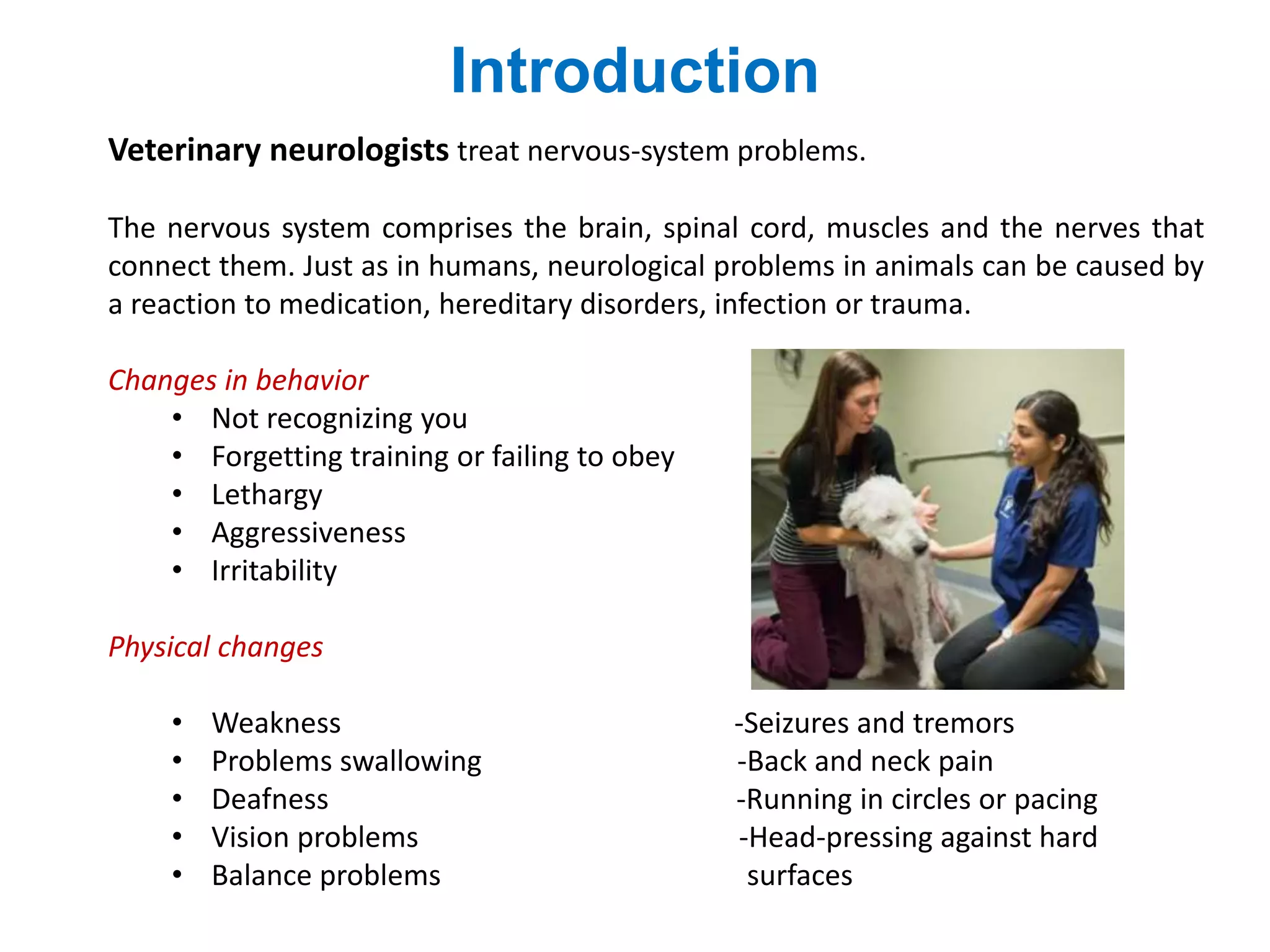
Veterinary neurologists treat nervous-system problems.
The nervous system comprises the brain, spinal cord, muscles and the nerves that
connect them. Just as in humans, neurological problems in animals can be caused by
a reaction to medication, hereditary disorders, infection or trauma.
Changes in behavior
• Not recognizing you
• Forgetting training or failing to obey
• Lethargy
• Aggressiveness
• Irritability
Physical changes
• Weakness -Seizures and tremors
• Problems swallowing -Back and neck pain
• Deafness -Running in circles or pacing
• Vision problems -Head-pressing against hard
• Balance problems surfaces
Introduction
Common neurologic conditions
• Seizure disorders (epilepsy)
• Brain and spinal tumors
• Meningitis and encephalitis
• Congenital disorders
• Disk herniation and disease
• Traumatic injuries
Neurological exam
The exam itself is gentle and non-invasive.
History
Palpation
Percussion
Image analysis (X-ray, CT scan, MRI etc)
Treatment options
Tumors, herniated disks and traumatic injuries are often treated with surgery, but
many neurological conditions also respond to medications – antibiotics,
immunosuppressive drugs, anti-seizure medication, and chemotherapy.
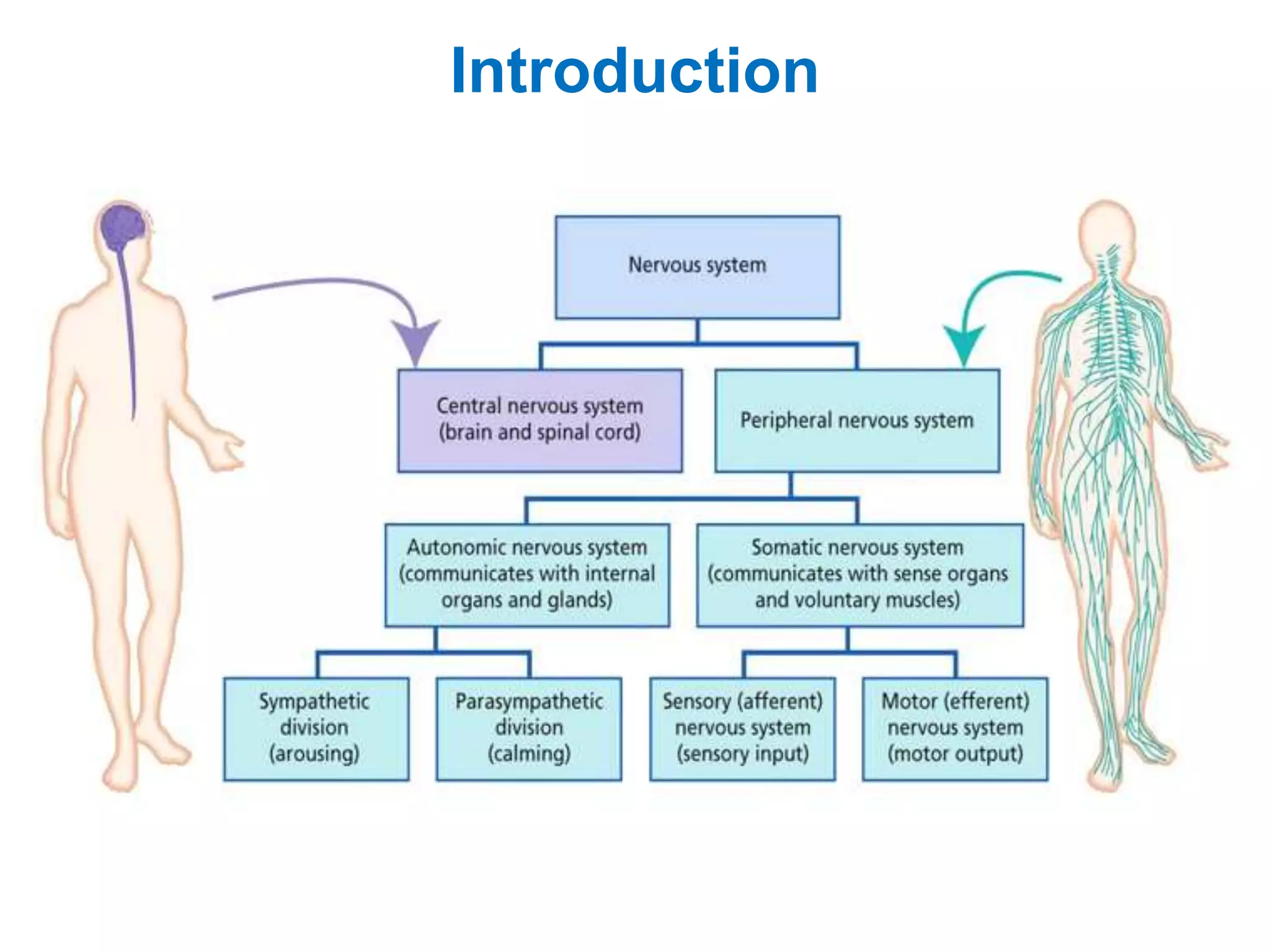
CNS - Spinal cord, Brain stem, Cerebellum, and Cerebrum (Higher centers)
PNS - Neurons of the cranial and spinal nerves (26 pair spinal and 12 pair cranial)
a) Sensory/afferent neurons – Nociception (pain), Proprioception (position),
equilibrium, touch, temperature, taste, hearing, vision, and olfaction
b) Motor/efferent neurons - Upper Motor Neurons (starts from brain)
UMN from cortex – voluntary movements
UMN from brain stem – flexion of limbs/inhibit extensors
Lower Motor Neuron-LMN (starts from spinal cord)
Spinal compression – extensor weakness/paresis/paralysis
Introduction
Introduction
What is paresis?
• Paresis refers to a condition in which muscle movement has
become weakened or impaired. (“mild paralysis” or “partial
paralysis”)
•Although paresis affects your muscles, it usually occurs due to
nerve damage.
• A vast network of nerves controls the movement of the muscles
in our bodies. If a part of this network is damaged, muscles in the
affected area may not work properly.
• There are several factors that can cause paresis, and there are
many different types of paresis. Paresis is often categorized by
the area of the body that’s impacted.
How is paresis different from paralysis?
Paresis is characterized by muscle weakness. A patient with
paresis can still move the affected muscle or muscles. However,
these movements are weaker than normal.
Paresis is different from paralysis. An individual who has
paralysis isn’t able to move a specific muscle or muscle group
at all.
You may also see paresis used as a suffix to distinguish what part
of the body is affected. For example, a person with monoparesis
has muscle weakness affecting one limb.
The corresponding suffix for paralysis is “-plegia.” Using the
same example, a patient with monoplegia has paralysis that
affects one limb.
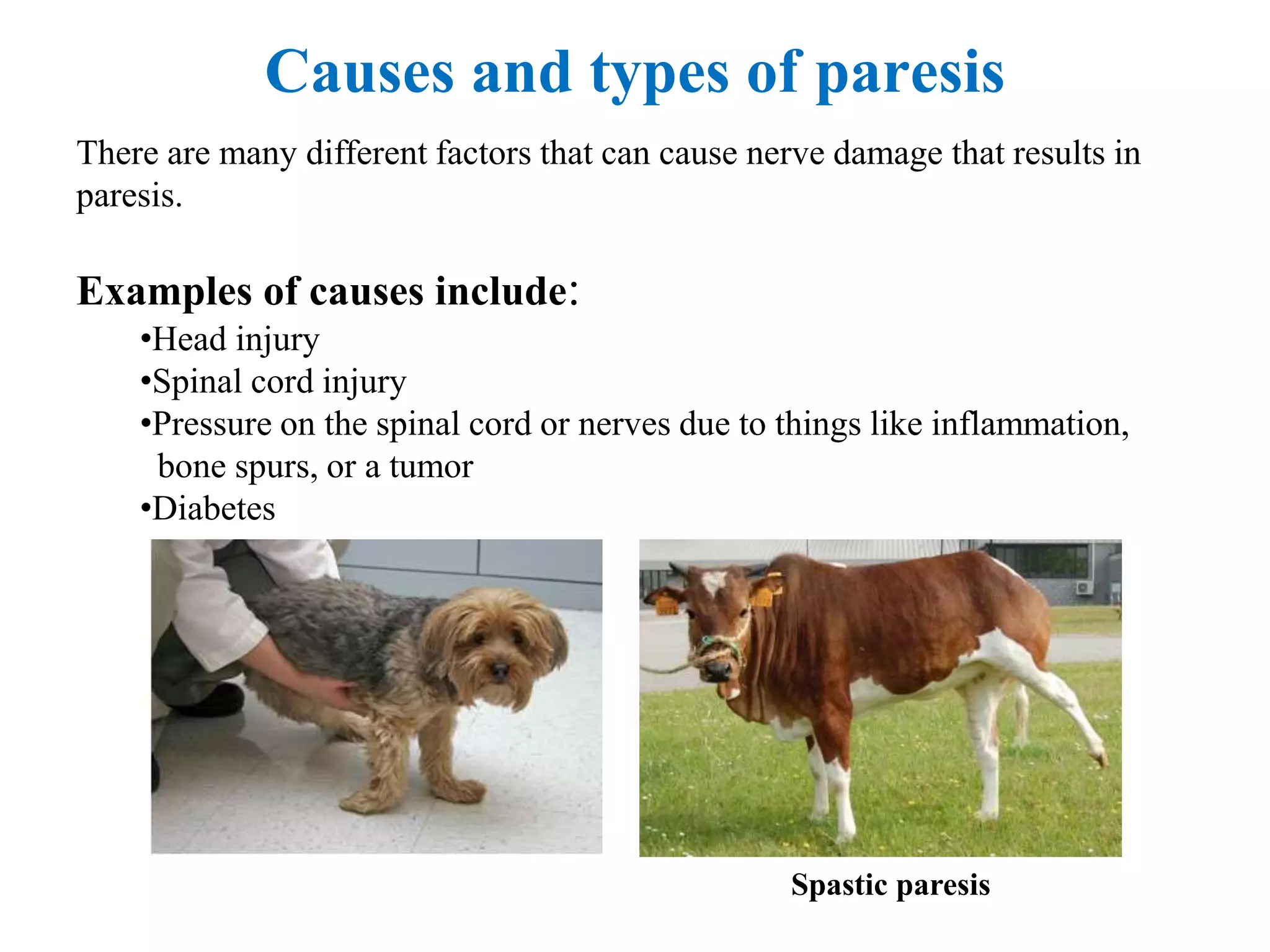
Causes and types of paresis
There are many different factors that can cause nerve damage that results in
paresis.
Examples of causes include:
•Head injury
•Spinal cord injury
•Pressure on the spinal cord or nerves due to things like inflammation,
bone spurs, or a tumor
•Diabetes
Spastic paresis
Examples of different types of paresis
Monoparesis. muscle weakness that affects one limb, such as a leg or an arm.
Paraparesis. Paraparesis is muscle weakness that affects both legs.
Hemiparesis. Hemiparesis is muscle weakness that affects one side of your body, such
as the left arm and left leg.
Quadriparesis. Quadriparesis is muscle weakness that affects all four limbs.
Bell’s palsy. Bell’s palsy is a condition that leads to temporary weakness in your facial
muscles, which can cause facial drooping and pain.
Vocal cord paresis. Vocal cord paresis affects the movement of your vocal cords.
Gastroparesis. Gastroparesis is a condition where the emptying of the stomach is
impaired due to muscle weakness. It’s associated with symptoms like nausea, vomiting,
bloating, and feeling full quickly.
Todd’s paresis. Todd’s paresis is a type of paresis that occurs following a seizure. It’s
often associated with paresis in one limb (monoparesis) or on one side of the body
(hemiparesis).
Neurosyphilis. Neurosyphilis occurs when a syphilis infection attacks the nervous
system. It can cause paresis as well as headaches, changes in behavior, and dementia.
Spastic paresis. Spastic paresis is a condition that causes muscle overactivity and
spasticity. It’s due to nerve damage that often results from conditions like stroke; can
lead to pain as well as difficulty with activities like walking or getting dressed.
Treatment options
Treatment for paresis depends on the cause. Possible treatment options
include:
Physical therapy. Physical therapy uses techniques such as exercise and massage to
aid in promoting mobility, improving flexibility and range of motion, and
stimulating the nerves and muscles.
Occupational therapy. Occupational therapy can teach the strategies for carrying
out the day-to-day activities more easily while patient experiencing paresis
(Human).
Assistive devices. Assistive devices are items that can help with the mobility and
daily activities. Examples include:
• walkers
• wheelchairs
• grab bars
• specialized handles and grips
• voice-activated technology
Medications. In some cases, medications may help treat a condition that’s causing
paresis. Examples include:
antimicrobial medications for infections
corticosteroids to reduce inflammation that’s putting pressure on a nerve
Autonomic Nervous System (ANS)
• Sympathetic
• Parasympathetic
• Functions:
Sensory motor system: Maintenance of normal posture
and gait
ANS: Activity of internal organs; Homoeostasis
Sense organs
Psychic system: Mental and behavioural state
• Dysfunction:
• Increased response to sensory stimuli
• Failure to respond to sensory stimuli
• Transmission of impulses enhanced or depressed
• Complete failure of transmission
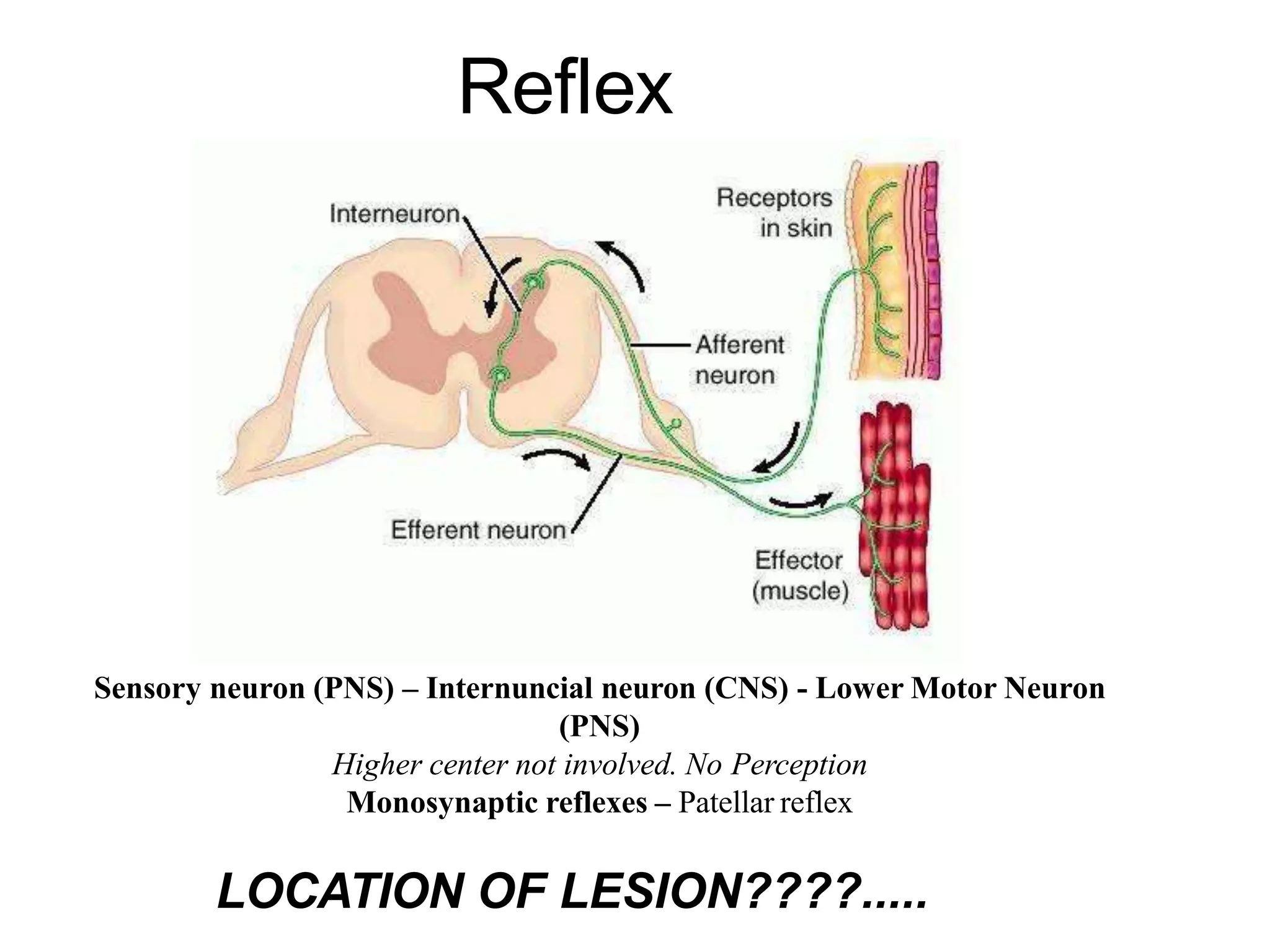
Reflex
Sensory neuron (PNS) – Internuncial neuron (CNS) - Lower Motor Neuron
(PNS)
Higher center not involved. No Perception
Monosynaptic reflexes – Patellar reflex
LOCATION OF LESION????.....
Paralysis -> Paresis Vs Plegia
• Paresis: Partial loss/weakness/Impaired voluntary
movement
• Plegia or Paralysis: Inability/complete loss of
voluntary movement
NERVOUS DYSFUNCTION
CAUSES: congenital or familial, infectious or
inflammatory, toxic, metabolic, nutritional, traumatic,
vascular, degenerative, neoplastic, or idiopathic
• Exaggerated activity:
Excitation (irritation) signs
Release of inhibitory
control
Neuropathic pain
• Depressed activity:
Paresis or paralysis due to tissue
damage
Nervous shock
Neurologic Evaluation/Description
1)The anatomic location(s) of disease
2)The problem may be defined as
- diffuse, multifocal, or focal
- symmetric or asymmetric
- painful or nonpainful
- progressive, regressive or static
- mild, moderate, or severe
3) Clinicopathology (serum/blood/urine/feces/CSF)
4) Plain and Contrast radiography, CT, and MRI
EXCITATION (IRRITATION) SIGNS
• Increased activity of reactor organ
• Increase in nerve impulses received
Excitation of neurons
Facilitation of passage of stimuli
• Motor system: Tetany, convulsions etc.
• Sensory system: Hyperaesthesia, Paresthesia
Clinical Manifestations of Diseases of the
Nervous System
ALTERED MENTATION - Excitation states
a) Mania - acts in a bizarre way and appears to be unaware of
its surroundings. Maniacal actions include licking, chewing of
foreign material and sometimes themselves, abnormal voice,
constant bellowing, apparent blindness, walking into strange
surroundings, drunken gait, and aggressiveness in normally
docile animals.
Eg: Rabies, Aujeszky’s disease, nervous ketosis, pregnancy
toxemia, acute lead poisoning, severe hepatic insufficiency etc
b)Frenzy - violent activity, movements are uncontrolled and
dangerous
eg: Hypomagnesemic tetany, Aujeszky’s disease,
Acute colic, ammonia poisoning
c)Aggressive Behavior: willingness to attack other
animals, humans, and inert objects
Eg: early rabies, postparturient hysteria in sows
Clinical Manifestations of Diseases of
the Nervous System
DEPRESSIVE STATES
a) Coma
b) Syncope
c) Narcolepsy (Catalepsy)
d) lassitude
e) Somnolence
COMPULSIVE WALKING OR HEAD PRESSING
Eg: PEM, Increased ICP
AIMLESS WANDERING
**protein energy malnutrition (PEM)
Clinical Manifestations of Diseases of the
Nervous System
INVOLUNTARY MOVEMENTS
A) Tremor: continuous, repetitive twitching of skeletal muscles
If local skin only  fasciculations
eg: early stages of hypocalcemia in the cow
B) Tics: spasmodic twitching movements made at much longer
intervals than in tremor.
C) Tetany: Sustained contraction of muscles without tremor.
eg: C. tetani infection
D) Myoclonus: brief, intermittent tetanic contraction of the skeletal
muscles that results in the entire body being rigid for several seconds,
followed by relaxation.
eg: canine distemper
E) Convulsions: Convulsions, seizures, fits, or ictus are violent muscular
contractions affecting part or all of the body and occurring for relatively
short periods. result of abnormal electrical discharges in forebrain neurons
Stage I - Prodromal phase or aura (lasts for minutes to hours, restless)
Stage II – Ictal phase (Proper convulsions)
Stage III – Post Ictal phase (Fatigue, rest, loss of conciousness)
E) Involuntary Spastic Paresis:
eg: Stringhalt in Horses – hind leg flexion
Clonic Convulsions (Paddling in Meningitis) Vs
Tonic Convulsions (Strychnine/Tetanus)
Clinical Manifestations of Diseases of the
Nervous System
ABNORMAL POSTURE AND GAIT
A) Posture Abnormality: Vestibular disease
B) Gait Abnormality: Weakness (Paresis) andAtaxia(Swaying)
- Hypermetria (increased range of movement/Overreaching)
- Dysmetria (goose stepping –pantothenate def.)
- Cerebellar ataxia (BVD) and Sway back (Cu def.)
•Stimulant drugs and mild degrees of those influences that in
severe form causing depression of excitability (hypoxia,
inflammation, poisons, edema, increased ICP)
•Fluctuation in Intensity of signs due to discharge and re-
accumulation of energy
•Sign and extension of symptoms varies with the focus of lesion
RELEASE OF INHIBITORY CONTROL
•Release of inhibitory effects of higher centres over lower
nervous centers
• Decerebrate rigidity due to transection of brain stem
• Cerebellar ataxia: combined limb movements exaggerated
PARESIS OR PARALYSIS DUE TO TISSUE DAMAGE
•Destruction of nervous tissue Infection
depressed metabolic activity
•Failure of oxygen and nutrient supply General
absence
Failure of local circulation
• Motor system: Muscular paralysis
• Sensory system: Anaesthesia, hypoaesthesia
Suprascapular Neuropathy in Horses (Sweeney)
Schiff-Sherrington Phenomenon
•Due to acute, severe lesions of the spinal cord between T2 and
L3, the pelvic limb paralysis is accompanied by an extensor
rigidity of the thoracic limbs
NERVOUS SHOCK
An acute lesion of the nervous system, which
causes damage to nerve cells in the immediate vicinity
of the lesions, but there may be, a temporary cessation
of function in parts that are not directly affected.
eg: Stunning
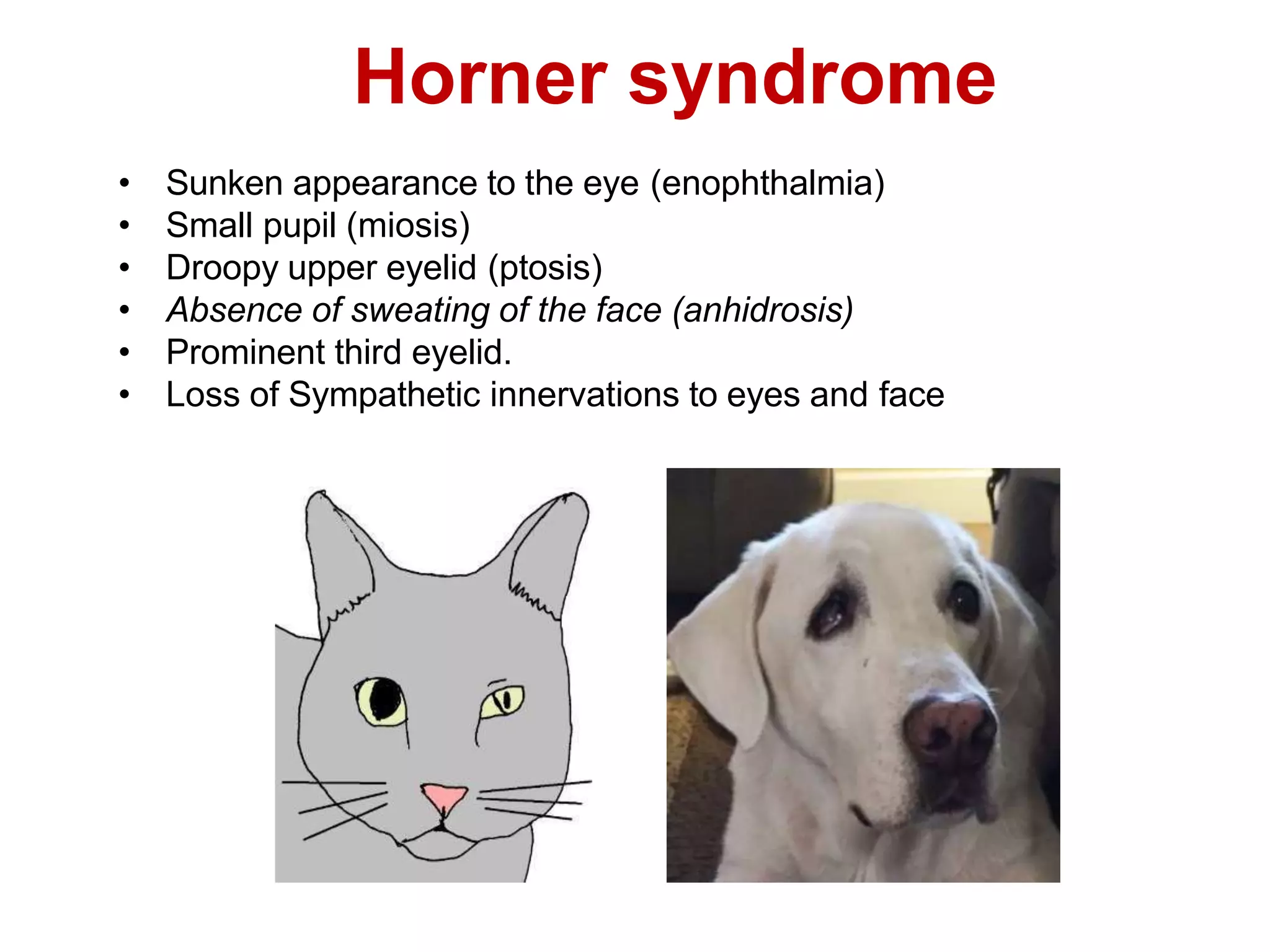
Horner syndrome
• Sunken appearance to the eye (enophthalmia)
• Small pupil (miosis)
• Droopy upper eyelid (ptosis)
• Absence of sweating of the face (anhidrosis)
• Prominent third eyelid.
• Loss of Sympathetic innervations to eyes and face
CONCLUSIONS
•Determining type of lesions is difficult: Limited range of
mode of reaction
• Destruction of tissue or reduced nutrient supply
•Proper Anamnesis and Special examination is essential for
proper assessment
• Sign-time relationship:
Rapidly developing lesions: maximum disturbances
Slow developing lesions: Compensation
References:
•A Text book of diseases of the cattle, sheep, goats, pigs
& horses 10th edition by Otto M Radostits, Clive C Gay,
K W Hinchcliff, P D Constable.
•Duke’s Physiology of Domestic animals 12 th edition
edited by William O Reece
Nerves-Paralysis and Paresis.pptx

Nerves-Paralysis and Paresis.pptx

  • 1.
    Diseases of NervousSystem in Animals Dr. Bibek Sutradhar, PhD Professor Department of Medicine and Surgery Chattogram Veterinary and Animal Sciences University MRI
  • 2.
    Introduction Veterinary neurologists treatnervous-system problems. The nervous system comprises the brain, spinal cord, muscles and the nerves that connect them. Just as in humans, neurological problems in animals can be caused by a reaction to medication, hereditary disorders, infection or trauma. Changes in behavior • Not recognizing you • Forgetting training or failing to obey • Lethargy • Aggressiveness • Irritability Physical changes • Weakness -Seizures and tremors • Problems swallowing -Back and neck pain • Deafness -Running in circles or pacing • Vision problems -Head-pressing against hard • Balance problems surfaces
  • 3.
    Introduction Common neurologic conditions •Seizure disorders (epilepsy) • Brain and spinal tumors • Meningitis and encephalitis • Congenital disorders • Disk herniation and disease • Traumatic injuries Neurological exam The exam itself is gentle and non-invasive. History Palpation Percussion Image analysis (X-ray, CT scan, MRI etc) Treatment options Tumors, herniated disks and traumatic injuries are often treated with surgery, but many neurological conditions also respond to medications – antibiotics, immunosuppressive drugs, anti-seizure medication, and chemotherapy.
  • 4.
    CNS - Spinalcord, Brain stem, Cerebellum, and Cerebrum (Higher centers) PNS - Neurons of the cranial and spinal nerves (26 pair spinal and 12 pair cranial) a) Sensory/afferent neurons – Nociception (pain), Proprioception (position), equilibrium, touch, temperature, taste, hearing, vision, and olfaction b) Motor/efferent neurons - Upper Motor Neurons (starts from brain) UMN from cortex – voluntary movements UMN from brain stem – flexion of limbs/inhibit extensors Lower Motor Neuron-LMN (starts from spinal cord) Spinal compression – extensor weakness/paresis/paralysis Introduction
  • 5.
  • 6.
    What is paresis? •Paresis refers to a condition in which muscle movement has become weakened or impaired. (“mild paralysis” or “partial paralysis”) •Although paresis affects your muscles, it usually occurs due to nerve damage. • A vast network of nerves controls the movement of the muscles in our bodies. If a part of this network is damaged, muscles in the affected area may not work properly. • There are several factors that can cause paresis, and there are many different types of paresis. Paresis is often categorized by the area of the body that’s impacted.
  • 7.
    How is paresisdifferent from paralysis? Paresis is characterized by muscle weakness. A patient with paresis can still move the affected muscle or muscles. However, these movements are weaker than normal. Paresis is different from paralysis. An individual who has paralysis isn’t able to move a specific muscle or muscle group at all. You may also see paresis used as a suffix to distinguish what part of the body is affected. For example, a person with monoparesis has muscle weakness affecting one limb. The corresponding suffix for paralysis is “-plegia.” Using the same example, a patient with monoplegia has paralysis that affects one limb.
  • 8.
    Causes and typesof paresis There are many different factors that can cause nerve damage that results in paresis. Examples of causes include: •Head injury •Spinal cord injury •Pressure on the spinal cord or nerves due to things like inflammation, bone spurs, or a tumor •Diabetes Spastic paresis
  • 9.
    Examples of differenttypes of paresis Monoparesis. muscle weakness that affects one limb, such as a leg or an arm. Paraparesis. Paraparesis is muscle weakness that affects both legs. Hemiparesis. Hemiparesis is muscle weakness that affects one side of your body, such as the left arm and left leg. Quadriparesis. Quadriparesis is muscle weakness that affects all four limbs. Bell’s palsy. Bell’s palsy is a condition that leads to temporary weakness in your facial muscles, which can cause facial drooping and pain. Vocal cord paresis. Vocal cord paresis affects the movement of your vocal cords. Gastroparesis. Gastroparesis is a condition where the emptying of the stomach is impaired due to muscle weakness. It’s associated with symptoms like nausea, vomiting, bloating, and feeling full quickly. Todd’s paresis. Todd’s paresis is a type of paresis that occurs following a seizure. It’s often associated with paresis in one limb (monoparesis) or on one side of the body (hemiparesis). Neurosyphilis. Neurosyphilis occurs when a syphilis infection attacks the nervous system. It can cause paresis as well as headaches, changes in behavior, and dementia. Spastic paresis. Spastic paresis is a condition that causes muscle overactivity and spasticity. It’s due to nerve damage that often results from conditions like stroke; can lead to pain as well as difficulty with activities like walking or getting dressed.
  • 10.
    Treatment options Treatment forparesis depends on the cause. Possible treatment options include: Physical therapy. Physical therapy uses techniques such as exercise and massage to aid in promoting mobility, improving flexibility and range of motion, and stimulating the nerves and muscles. Occupational therapy. Occupational therapy can teach the strategies for carrying out the day-to-day activities more easily while patient experiencing paresis (Human). Assistive devices. Assistive devices are items that can help with the mobility and daily activities. Examples include: • walkers • wheelchairs • grab bars • specialized handles and grips • voice-activated technology Medications. In some cases, medications may help treat a condition that’s causing paresis. Examples include: antimicrobial medications for infections corticosteroids to reduce inflammation that’s putting pressure on a nerve
  • 11.
    Autonomic Nervous System(ANS) • Sympathetic • Parasympathetic
  • 12.
    • Functions: Sensory motorsystem: Maintenance of normal posture and gait ANS: Activity of internal organs; Homoeostasis Sense organs Psychic system: Mental and behavioural state • Dysfunction: • Increased response to sensory stimuli • Failure to respond to sensory stimuli • Transmission of impulses enhanced or depressed • Complete failure of transmission
  • 13.
    Reflex Sensory neuron (PNS)– Internuncial neuron (CNS) - Lower Motor Neuron (PNS) Higher center not involved. No Perception Monosynaptic reflexes – Patellar reflex LOCATION OF LESION????.....
  • 14.
    Paralysis -> ParesisVs Plegia • Paresis: Partial loss/weakness/Impaired voluntary movement • Plegia or Paralysis: Inability/complete loss of voluntary movement
  • 15.
    NERVOUS DYSFUNCTION CAUSES: congenitalor familial, infectious or inflammatory, toxic, metabolic, nutritional, traumatic, vascular, degenerative, neoplastic, or idiopathic • Exaggerated activity: Excitation (irritation) signs Release of inhibitory control Neuropathic pain • Depressed activity: Paresis or paralysis due to tissue damage Nervous shock
  • 16.
    Neurologic Evaluation/Description 1)The anatomiclocation(s) of disease 2)The problem may be defined as - diffuse, multifocal, or focal - symmetric or asymmetric - painful or nonpainful - progressive, regressive or static - mild, moderate, or severe 3) Clinicopathology (serum/blood/urine/feces/CSF) 4) Plain and Contrast radiography, CT, and MRI
  • 17.
    EXCITATION (IRRITATION) SIGNS •Increased activity of reactor organ • Increase in nerve impulses received Excitation of neurons Facilitation of passage of stimuli • Motor system: Tetany, convulsions etc. • Sensory system: Hyperaesthesia, Paresthesia
  • 18.
    Clinical Manifestations ofDiseases of the Nervous System ALTERED MENTATION - Excitation states a) Mania - acts in a bizarre way and appears to be unaware of its surroundings. Maniacal actions include licking, chewing of foreign material and sometimes themselves, abnormal voice, constant bellowing, apparent blindness, walking into strange surroundings, drunken gait, and aggressiveness in normally docile animals. Eg: Rabies, Aujeszky’s disease, nervous ketosis, pregnancy toxemia, acute lead poisoning, severe hepatic insufficiency etc
  • 19.
    b)Frenzy - violentactivity, movements are uncontrolled and dangerous eg: Hypomagnesemic tetany, Aujeszky’s disease, Acute colic, ammonia poisoning c)Aggressive Behavior: willingness to attack other animals, humans, and inert objects Eg: early rabies, postparturient hysteria in sows
  • 20.
    Clinical Manifestations ofDiseases of the Nervous System DEPRESSIVE STATES a) Coma b) Syncope c) Narcolepsy (Catalepsy) d) lassitude e) Somnolence COMPULSIVE WALKING OR HEAD PRESSING Eg: PEM, Increased ICP AIMLESS WANDERING **protein energy malnutrition (PEM)
  • 21.
    Clinical Manifestations ofDiseases of the Nervous System INVOLUNTARY MOVEMENTS A) Tremor: continuous, repetitive twitching of skeletal muscles If local skin only  fasciculations eg: early stages of hypocalcemia in the cow B) Tics: spasmodic twitching movements made at much longer intervals than in tremor. C) Tetany: Sustained contraction of muscles without tremor. eg: C. tetani infection D) Myoclonus: brief, intermittent tetanic contraction of the skeletal muscles that results in the entire body being rigid for several seconds, followed by relaxation. eg: canine distemper
  • 22.
    E) Convulsions: Convulsions,seizures, fits, or ictus are violent muscular contractions affecting part or all of the body and occurring for relatively short periods. result of abnormal electrical discharges in forebrain neurons Stage I - Prodromal phase or aura (lasts for minutes to hours, restless) Stage II – Ictal phase (Proper convulsions) Stage III – Post Ictal phase (Fatigue, rest, loss of conciousness) E) Involuntary Spastic Paresis: eg: Stringhalt in Horses – hind leg flexion Clonic Convulsions (Paddling in Meningitis) Vs Tonic Convulsions (Strychnine/Tetanus)
  • 23.
    Clinical Manifestations ofDiseases of the Nervous System ABNORMAL POSTURE AND GAIT A) Posture Abnormality: Vestibular disease B) Gait Abnormality: Weakness (Paresis) andAtaxia(Swaying) - Hypermetria (increased range of movement/Overreaching) - Dysmetria (goose stepping –pantothenate def.) - Cerebellar ataxia (BVD) and Sway back (Cu def.)
  • 24.
    •Stimulant drugs andmild degrees of those influences that in severe form causing depression of excitability (hypoxia, inflammation, poisons, edema, increased ICP) •Fluctuation in Intensity of signs due to discharge and re- accumulation of energy •Sign and extension of symptoms varies with the focus of lesion
  • 25.
    RELEASE OF INHIBITORYCONTROL •Release of inhibitory effects of higher centres over lower nervous centers • Decerebrate rigidity due to transection of brain stem • Cerebellar ataxia: combined limb movements exaggerated
  • 26.
    PARESIS OR PARALYSISDUE TO TISSUE DAMAGE •Destruction of nervous tissue Infection depressed metabolic activity •Failure of oxygen and nutrient supply General absence Failure of local circulation • Motor system: Muscular paralysis • Sensory system: Anaesthesia, hypoaesthesia
  • 27.
  • 28.
    Schiff-Sherrington Phenomenon •Due toacute, severe lesions of the spinal cord between T2 and L3, the pelvic limb paralysis is accompanied by an extensor rigidity of the thoracic limbs
  • 29.
    NERVOUS SHOCK An acutelesion of the nervous system, which causes damage to nerve cells in the immediate vicinity of the lesions, but there may be, a temporary cessation of function in parts that are not directly affected. eg: Stunning
  • 30.
    Horner syndrome • Sunkenappearance to the eye (enophthalmia) • Small pupil (miosis) • Droopy upper eyelid (ptosis) • Absence of sweating of the face (anhidrosis) • Prominent third eyelid. • Loss of Sympathetic innervations to eyes and face
  • 31.
    CONCLUSIONS •Determining type oflesions is difficult: Limited range of mode of reaction • Destruction of tissue or reduced nutrient supply •Proper Anamnesis and Special examination is essential for proper assessment • Sign-time relationship: Rapidly developing lesions: maximum disturbances Slow developing lesions: Compensation
  • 32.
    References: •A Text bookof diseases of the cattle, sheep, goats, pigs & horses 10th edition by Otto M Radostits, Clive C Gay, K W Hinchcliff, P D Constable. •Duke’s Physiology of Domestic animals 12 th edition edited by William O Reece