



Creating a
Crisis Communication Plan
By definition…

 A crisis is an unexpected and detrimental
 situation or event.

 Primary objectives:
 respond quickly, efficiently, effectively, and
 in a premeditated way
Tell it ALL

    Tell it FAST

       Tell the TRUTH!
Effective Strategies
 • Maintain connectivity

 • Be readily accessible to the news media

 • Show empathy for the people involved

 • Streamline communication processes
Effective Strategies

 • Maintain information security

 • Ensure uninterrupted audit trails

 • Support multi-channel communications

 • Remove dependencies on paper-based
 processes
How They Work…
Two-fold: Preparation, Response
  • To prepare: detailed Crisis Communication Plan
     More likely to respond quickly
     Take immediate steps to control message
     Successfully regain public’s trust

  • Insurance policy for the long-term health of
    your organization
Chief Components of a Good Plan
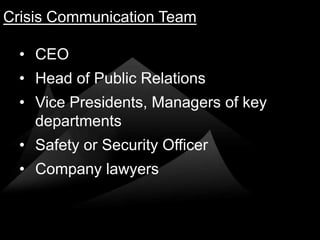
Crisis Communication Team

  • CEO
  • Head of Public Relations
  • Vice Presidents, Managers of key
    departments
  • Safety or Security Officer
  • Company lawyers
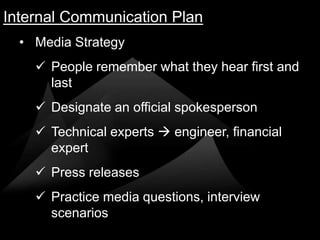
Internal Communication Plan
  • Media Strategy
     People remember what they hear first and
      last
     Designate an official spokesperson
     Technical experts  engineer, financial
      expert
     Press releases
     Practice media questions, interview
      scenarios
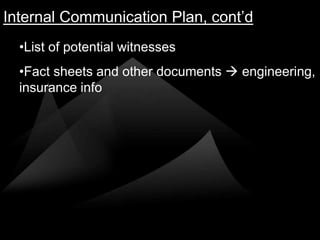
Internal Communication Plan, cont’d
  •List of potential witnesses
  •Fact sheets and other documents  engineering,
  insurance info
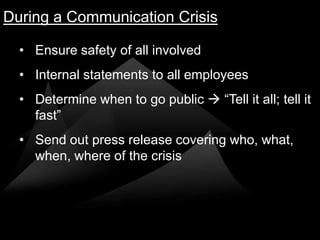
During a Communication Crisis

  • Ensure safety of all involved
  • Internal statements to all employees
  • Determine when to go public  “Tell it all; tell it
    fast”
  • Send out press release covering who, what,
    when, where of the crisis
Press Conference
  • Media’s job to report latest info available
  • Hand out fact sheets and previous press
    releases
  • From the victim’s perspective…respond in a
    way that is sensitive to their needs
  • Never comment or speculate when facts aren’t
    yet clear
Blogging

  • Several advantages over traditional media:
     Immediate
     Near real-time coverage
     Humanize your organization
     Public can make comments & ask questions
After a Communication Crisis

  • Compensate victims. Act quickly to provide
    restitution.
  • Make a bold commitment to ensure errors will
    never happen again.
  • Go public with self-assessment.
   Step back and think about your customers.
                Consider how the crisis may be affecting
                them and what kind of resolution they’ll
                expect .

               Own It. Admit your mistakes right away.
                Proactivity is essential. Answer questions
                before they are asked. Admit to the problem.

               Apologize, apologize, apologize…and listen.
                Give an honest, simple, sincere apology. Be
                prepared to listen and listen well.

               Do the right thing. Fix it – fast! Make sure
                customers know you’re fixing it, how you’re
                fixing it, and when you’ll show them
Retaining       tangible evidence.

  Brand        Move On. Once resolved, let it go and move
                on. It’s crucial to thank and reward loyal
 Loyalty        customers.

               Rebuild your brand’s image. Look for
                opportunities – locally, regionally, nationally
Thank You!
Beth Wilson
Mahaffey Fabric Structures
www.fabricstructures.com

Crisis Communication Plan

  • 1.
  • 2.
    By definition… Acrisis is an unexpected and detrimental situation or event. Primary objectives: respond quickly, efficiently, effectively, and in a premeditated way
  • 3.
    Tell it ALL Tell it FAST Tell the TRUTH!
  • 4.
    Effective Strategies •Maintain connectivity • Be readily accessible to the news media • Show empathy for the people involved • Streamline communication processes
  • 5.
    Effective Strategies •Maintain information security • Ensure uninterrupted audit trails • Support multi-channel communications • Remove dependencies on paper-based processes
  • 6.
    How They Work… Two-fold:Preparation, Response • To prepare: detailed Crisis Communication Plan  More likely to respond quickly  Take immediate steps to control message  Successfully regain public’s trust • Insurance policy for the long-term health of your organization
  • 7.
  • 8.
    Crisis Communication Team • CEO • Head of Public Relations • Vice Presidents, Managers of key departments • Safety or Security Officer • Company lawyers
  • 9.
    Internal Communication Plan • Media Strategy  People remember what they hear first and last  Designate an official spokesperson  Technical experts  engineer, financial expert  Press releases  Practice media questions, interview scenarios
  • 10.
    Internal Communication Plan,cont’d •List of potential witnesses •Fact sheets and other documents  engineering, insurance info
  • 11.
    During a CommunicationCrisis • Ensure safety of all involved • Internal statements to all employees • Determine when to go public  “Tell it all; tell it fast” • Send out press release covering who, what, when, where of the crisis
  • 12.
    Press Conference • Media’s job to report latest info available • Hand out fact sheets and previous press releases • From the victim’s perspective…respond in a way that is sensitive to their needs • Never comment or speculate when facts aren’t yet clear
  • 13.
    Blogging •Several advantages over traditional media:  Immediate  Near real-time coverage  Humanize your organization  Public can make comments & ask questions
  • 14.
    After a CommunicationCrisis • Compensate victims. Act quickly to provide restitution. • Make a bold commitment to ensure errors will never happen again. • Go public with self-assessment.
  • 15.
    Step back and think about your customers. Consider how the crisis may be affecting them and what kind of resolution they’ll expect .  Own It. Admit your mistakes right away. Proactivity is essential. Answer questions before they are asked. Admit to the problem.  Apologize, apologize, apologize…and listen. Give an honest, simple, sincere apology. Be prepared to listen and listen well.  Do the right thing. Fix it – fast! Make sure customers know you’re fixing it, how you’re fixing it, and when you’ll show them Retaining tangible evidence. Brand  Move On. Once resolved, let it go and move on. It’s crucial to thank and reward loyal Loyalty customers.  Rebuild your brand’s image. Look for opportunities – locally, regionally, nationally
  • 16.
    Thank You! Beth Wilson MahaffeyFabric Structures www.fabricstructures.com