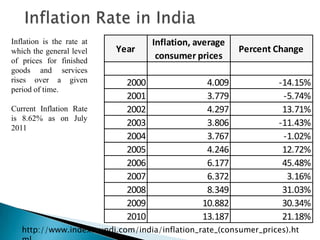
Inflation is the rate at            Inflation, average
which the general level    Year                          Percent Change
of prices for finished
                                     consumer prices
goods and services
rises over a given           2000                4.009           -14.15%
period of time.
                             2001                3.779            -5.74%
Current Inflation Rate       2002                4.297            13.71%
is 8.62% as on July
2011
                             2003                3.806           -11.43%
                             2004                3.767            -1.02%
                             2005                4.246            12.72%
                             2006                6.177            45.48%
                             2007                6.372             3.16%
                             2008                8.349            31.03%
                             2009               10.882            30.34%
                             2010               13.187            21.18%
   http://www.indexmundi.com/india/inflation_rate_(consumer_prices).ht
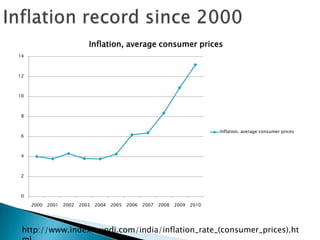
Inflation, average consumer prices
14


12


10


 8


                                                                                  Inflation, average consumer prices
 6


 4


 2


 0

     2000   2001   2002   2003   2004   2005   2006   2007   2008   2009   2010


 http://www.indexmundi.com/india/inflation_rate_(consumer_prices).ht
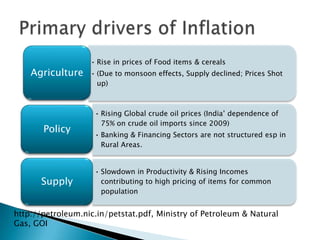
• Rise in prices of Food items & cereals
    Agriculture    • (Due to monsoon effects, Supply declined; Prices Shot
                     up)


                    • Rising Global crude oil prices (India’ dependence of
                      75% on crude oil imports since 2009)
       Policy
                    • Banking & Financing Sectors are not structured esp in
                      Rural Areas.


                    • Slowdown in Productivity & Rising Incomes
       Supply         contributing to high pricing of items for common
                      population


http://petroleum.nic.in/petstat.pdf, Ministry of Petroleum & Natural
Gas, GOI
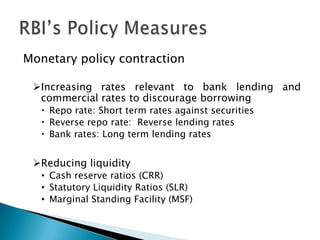
Monetary policy contraction

 Increasing rates relevant to bank lending and
  commercial rates to discourage borrowing
    Repo rate: Short term rates against securities
    Reverse repo rate: Reverse lending rates
    Bank rates: Long term lending rates


 Reducing liquidity
   • Cash reserve ratios (CRR)
   • Statutory Liquidity Ratios (SLR)
   • Marginal Standing Facility (MSF)
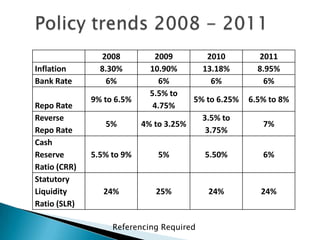
2008          2009          2010         2011
Inflation       8.30%        10.90%        13.18%        8.95%
Bank Rate        6%            6%            6%           6%
                             5.5% to
              9% to 6.5%                 5% to 6.25%   6.5% to 8%
Repo Rate                     4.75%
Reverse                                    3.5% to
                 5%        4% to 3.25%                    7%
Repo Rate                                   3.75%
Cash
Reserve       5.5% to 9%       5%          5.50%          6%
Ratio (CRR)
Statutory
Liquidity        24%          25%           24%           24%
Ratio (SLR)

                   Referencing Required
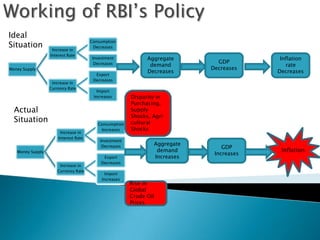
Working of RBI’s Policy
Ideal
                                      Consumption
Situation          Increase in
                                       Decreases

                  Interest Rate
                                      Investment             Aggregate                   Inflation
                                       Decreases                             GDP
                                                              demand                       rate
Money Supply                                                               Decreases
                                                             Decreases                  Decreases
                                        Export
                                       Decreases
                   Increase in
                  Currency Rate
                                         Import
                                       Increases       Disparity in
                                                       Purchasing,
  Actual                                               Supply
                                                       Shocks, Agri
  Situation                              Consumption   cultural
                                           Increases   Shocks
                       Increase in
                      Interest Rate
                                          Investment
                                                               Aggregate
                                           Decreases                           GDP
   Money Supply                                                 demand                   Inflation
                                                                            Increases
                                           Export              Increases
                                          Decreases
                      Increase in
                     Currency Rate
                                             Import
                                           Increases
                                                       Rise in
                                                       Global
                                                       Crude Oil
                                                       Prices
   Fiscal Policies in tandem with Monetary
    Policies
   Supply Side Constraints
      Agriculture Sector
      Infrastructure
    Development of SME Sectors
   Relative downward inflexibility in the
    commercial interest rate structure
Thank You

Controlling Inflation In India

  • 2.
    Inflation is therate at Inflation, average which the general level Year Percent Change of prices for finished consumer prices goods and services rises over a given 2000 4.009 -14.15% period of time. 2001 3.779 -5.74% Current Inflation Rate 2002 4.297 13.71% is 8.62% as on July 2011 2003 3.806 -11.43% 2004 3.767 -1.02% 2005 4.246 12.72% 2006 6.177 45.48% 2007 6.372 3.16% 2008 8.349 31.03% 2009 10.882 30.34% 2010 13.187 21.18% http://www.indexmundi.com/india/inflation_rate_(consumer_prices).ht
  • 3.
    Inflation, average consumerprices 14 12 10 8 Inflation, average consumer prices 6 4 2 0 2000 2001 2002 2003 2004 2005 2006 2007 2008 2009 2010 http://www.indexmundi.com/india/inflation_rate_(consumer_prices).ht
  • 5.
    • Rise inprices of Food items & cereals Agriculture • (Due to monsoon effects, Supply declined; Prices Shot up) • Rising Global crude oil prices (India’ dependence of 75% on crude oil imports since 2009) Policy • Banking & Financing Sectors are not structured esp in Rural Areas. • Slowdown in Productivity & Rising Incomes Supply contributing to high pricing of items for common population http://petroleum.nic.in/petstat.pdf, Ministry of Petroleum & Natural Gas, GOI
  • 6.
    Monetary policy contraction Increasing rates relevant to bank lending and commercial rates to discourage borrowing  Repo rate: Short term rates against securities  Reverse repo rate: Reverse lending rates  Bank rates: Long term lending rates Reducing liquidity • Cash reserve ratios (CRR) • Statutory Liquidity Ratios (SLR) • Marginal Standing Facility (MSF)
  • 7.
    2008 2009 2010 2011 Inflation 8.30% 10.90% 13.18% 8.95% Bank Rate 6% 6% 6% 6% 5.5% to 9% to 6.5% 5% to 6.25% 6.5% to 8% Repo Rate 4.75% Reverse 3.5% to 5% 4% to 3.25% 7% Repo Rate 3.75% Cash Reserve 5.5% to 9% 5% 5.50% 6% Ratio (CRR) Statutory Liquidity 24% 25% 24% 24% Ratio (SLR) Referencing Required
  • 8.
    Working of RBI’sPolicy Ideal Consumption Situation Increase in Decreases Interest Rate Investment Aggregate Inflation Decreases GDP demand rate Money Supply Decreases Decreases Decreases Export Decreases Increase in Currency Rate Import Increases Disparity in Purchasing, Actual Supply Shocks, Agri Situation Consumption cultural Increases Shocks Increase in Interest Rate Investment Aggregate Decreases GDP Money Supply demand Inflation Increases Export Increases Decreases Increase in Currency Rate Import Increases Rise in Global Crude Oil Prices
  • 9.
    Fiscal Policies in tandem with Monetary Policies  Supply Side Constraints  Agriculture Sector  Infrastructure  Development of SME Sectors  Relative downward inflexibility in the commercial interest rate structure
  • 10.