Information and Communication Technologies
have recently gained groundswell of interest.
It is a significant research area for many
scholars around the globe. Their nature has
highly changed the face of education over the
last few decades.
I C T
Indeed, a small percentage of schools in
some countries achieved high levels of
effective use of ICT to support and change
the teaching and learning process in many
subject areas. Others are still in the early
phase of Information and Communication
Technologies adoption.
ICT has positive impact on students’
performances in primary schools
particularly in English language and less in
science. Schools with higher level of e-
maturity show a rapid increase in
performances in scores compared to those
with lower level.
Many pupils
consider ICT tools
very helpful in
that it helps them
to do assignments
teachers see that
ICT enables
students with
special needs or
difficulties
Many teachers use ICT to support
innovative pedagogy. It states: “New
technologies that provide a good fit
with existing practices, such as
interactive whiteboards are first to be
embedded, but others like video
conferencing, digital video and virtual
learning environments are now being
incorporated, providing evidence of
ongoing learning by the workforce.
 ICT allow for a higher quality lessons through collaboration with teachers in
planning and preparing resources (Ofsted, 2002). Students learn new skills:
analytical, including improvements in reading comprehension (Lewin et al,
2000). ICT also develop some writing skills: spelling, grammar, punctuation,
editing and re-drafting (Lewin et al, 2000).
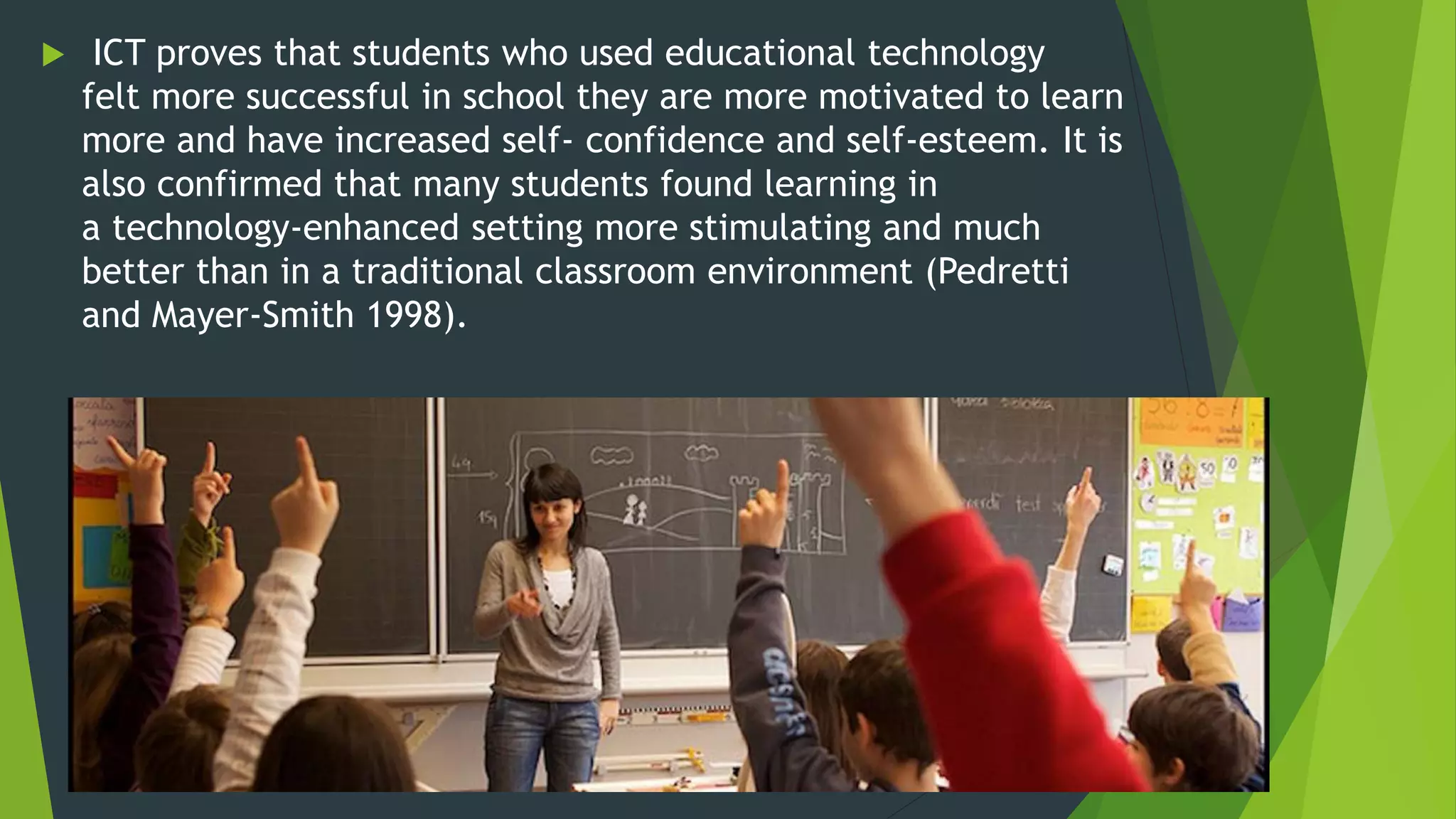
 ICT proves that students who used educational technology
felt more successful in school they are more motivated to learn
more and have increased self- confidence and self-esteem. It is
also confirmed that many students found learning in
a technology-enhanced setting more stimulating and much
better than in a traditional classroom environment (Pedretti
and Mayer-Smith 1998).

Ict presentation

  • 1.
    Information and CommunicationTechnologies have recently gained groundswell of interest. It is a significant research area for many scholars around the globe. Their nature has highly changed the face of education over the last few decades. I C T
  • 2.
    Indeed, a smallpercentage of schools in some countries achieved high levels of effective use of ICT to support and change the teaching and learning process in many subject areas. Others are still in the early phase of Information and Communication Technologies adoption. ICT has positive impact on students’ performances in primary schools particularly in English language and less in science. Schools with higher level of e- maturity show a rapid increase in performances in scores compared to those with lower level.
  • 3.
    Many pupils consider ICTtools very helpful in that it helps them to do assignments teachers see that ICT enables students with special needs or difficulties Many teachers use ICT to support innovative pedagogy. It states: “New technologies that provide a good fit with existing practices, such as interactive whiteboards are first to be embedded, but others like video conferencing, digital video and virtual learning environments are now being incorporated, providing evidence of ongoing learning by the workforce.
  • 4.
     ICT allowfor a higher quality lessons through collaboration with teachers in planning and preparing resources (Ofsted, 2002). Students learn new skills: analytical, including improvements in reading comprehension (Lewin et al, 2000). ICT also develop some writing skills: spelling, grammar, punctuation, editing and re-drafting (Lewin et al, 2000).
  • 5.
     ICT provesthat students who used educational technology felt more successful in school they are more motivated to learn more and have increased self- confidence and self-esteem. It is also confirmed that many students found learning in a technology-enhanced setting more stimulating and much better than in a traditional classroom environment (Pedretti and Mayer-Smith 1998).