1
The Use of Technology
in Education
BY-
120110120048
G H Patel College of Engineering &
Technology
2
17th
Anniversary
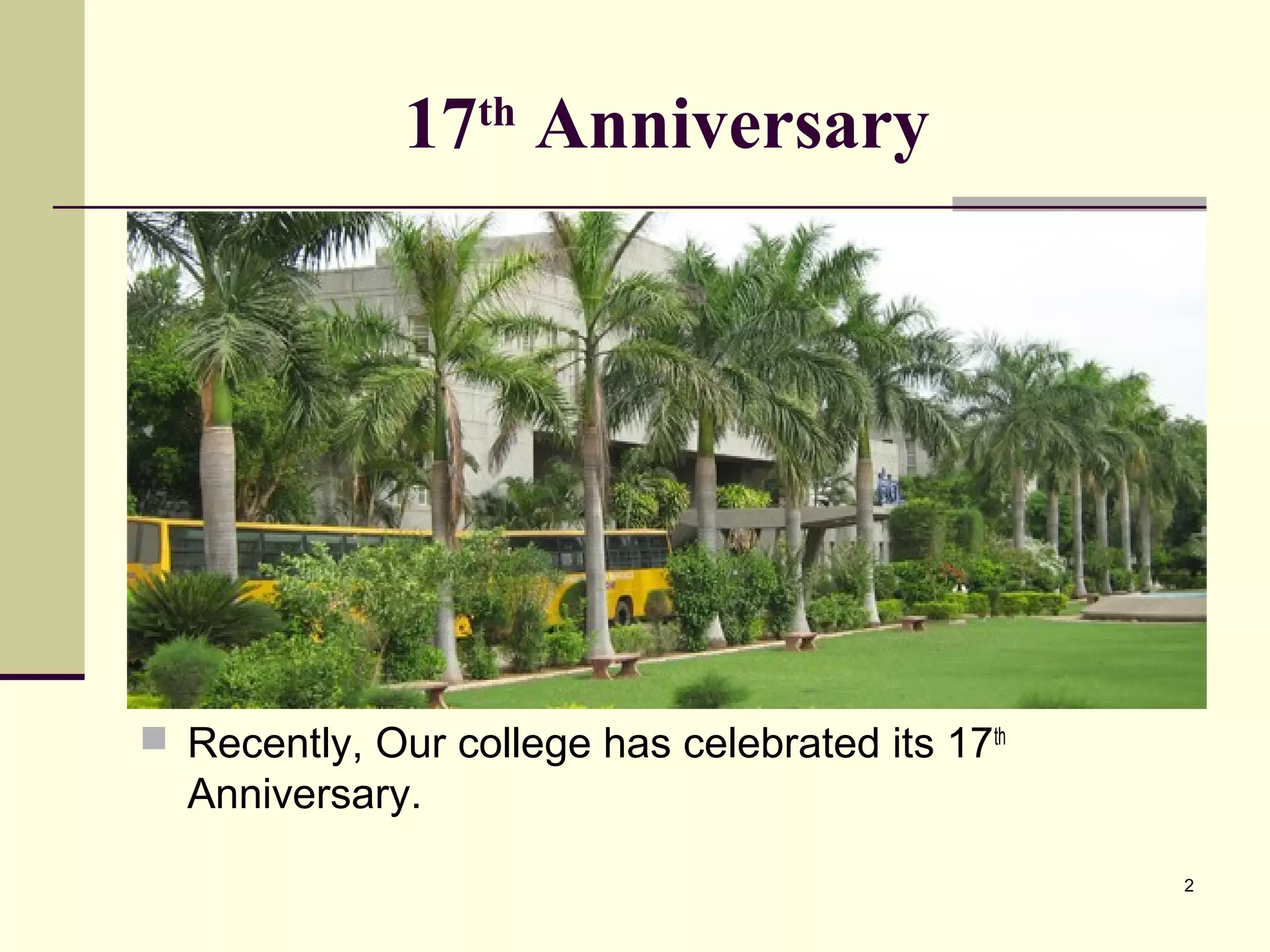
 Recently, Our college has celebrated its 17th
Anniversary.
3
What is Technology?
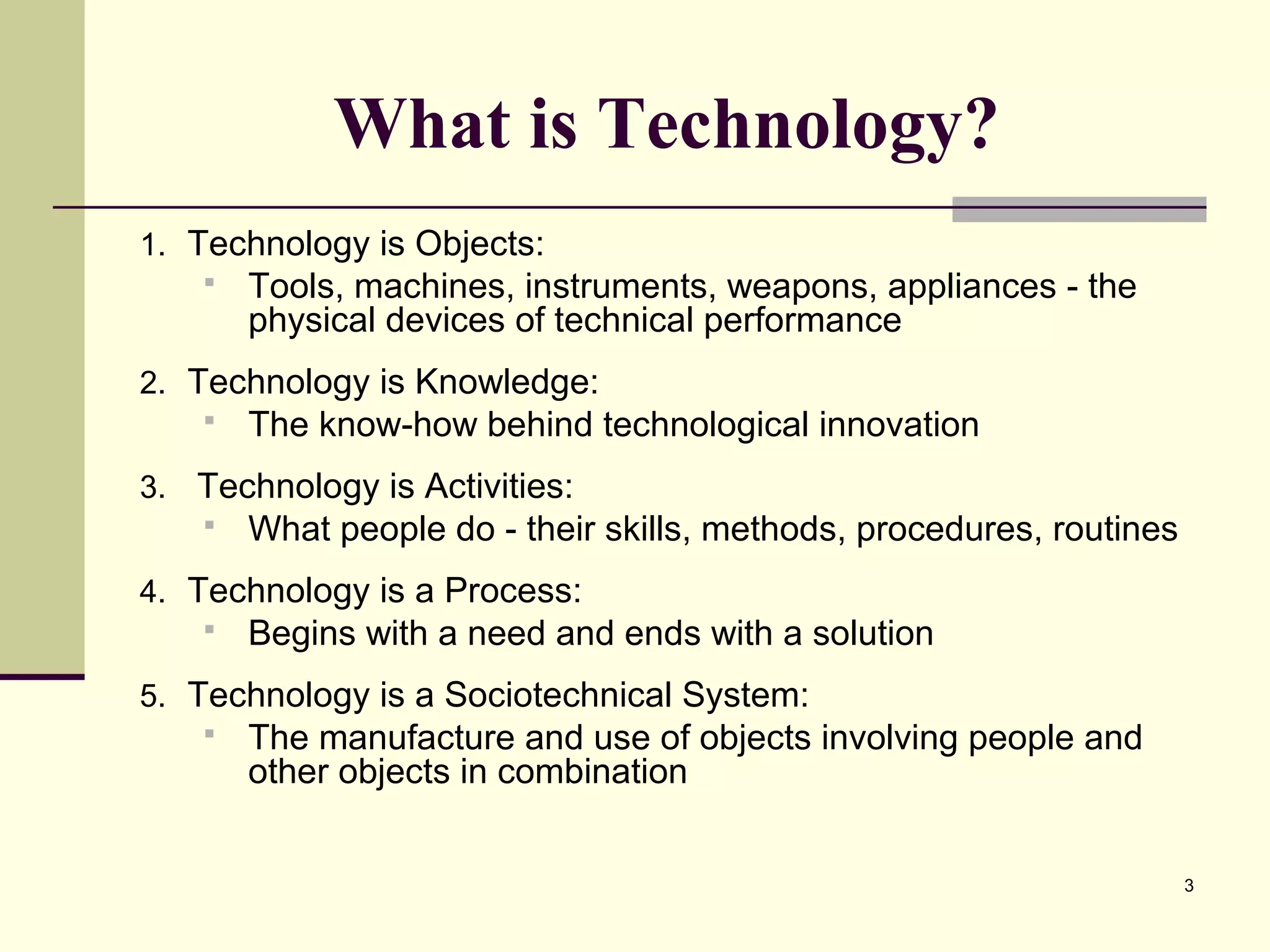
1. Technology is Objects:
 Tools, machines, instruments, weapons, appliances - the
physical devices of technical performance
2. Technology is Knowledge:
 The know-how behind technological innovation
3. Technology is Activities:
 What people do - their skills, methods, procedures, routines
4. Technology is a Process:
 Begins with a need and ends with a solution
5. Technology is a Sociotechnical System:
 The manufacture and use of objects involving people and
other objects in combination
4
Purpose of Technology in
Education
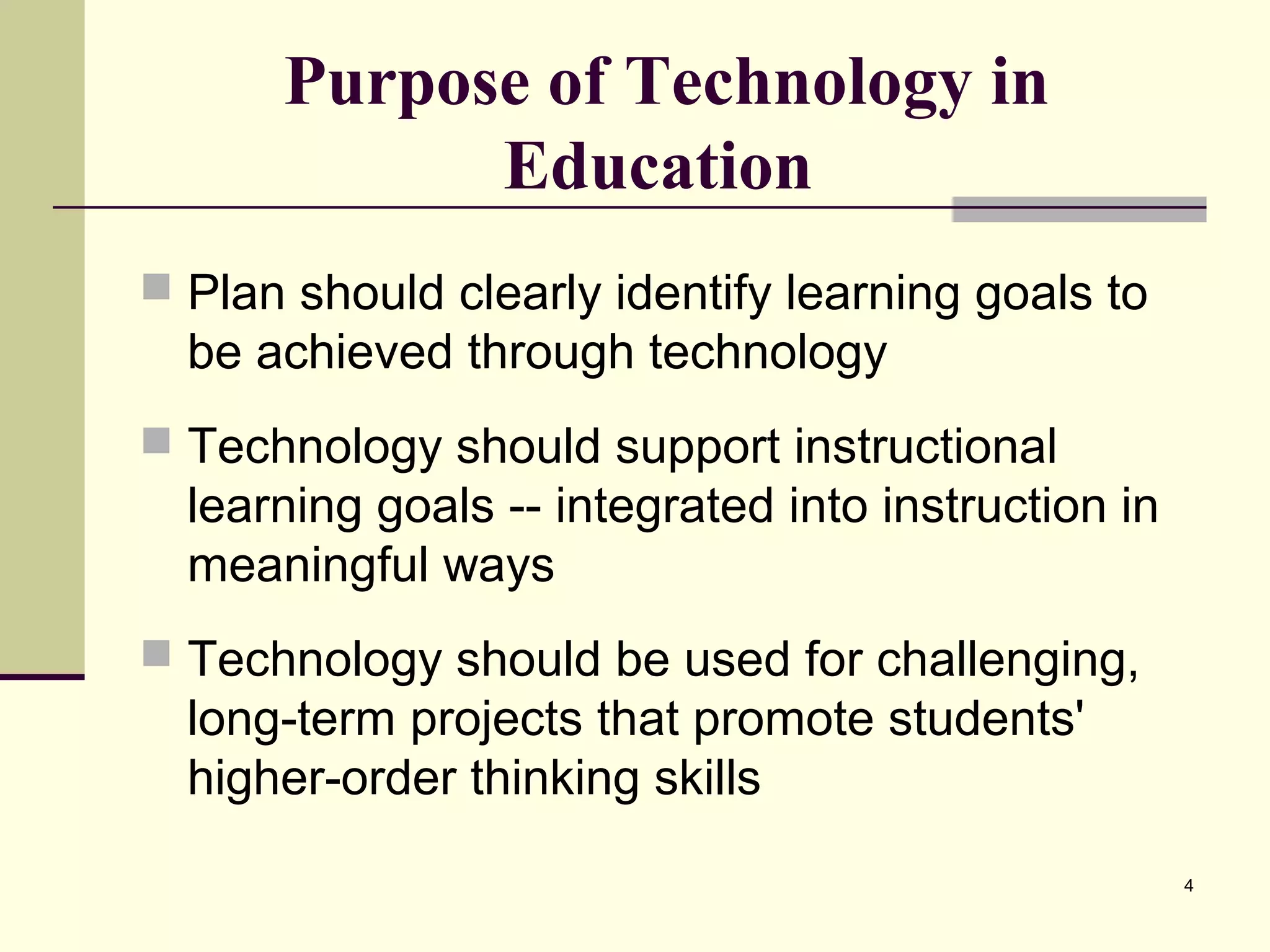
 Plan should clearly identify learning goals to
be achieved through technology
 Technology should support instructional
learning goals -- integrated into instruction in
meaningful ways
 Technology should be used for challenging,
long-term projects that promote students'
higher-order thinking skills
5
Technology Problem Solving
 How can administrators get the most out of
education technology?
 How can faculty get the most out of education
technology?
 How can students get the most out of
education technology?
6
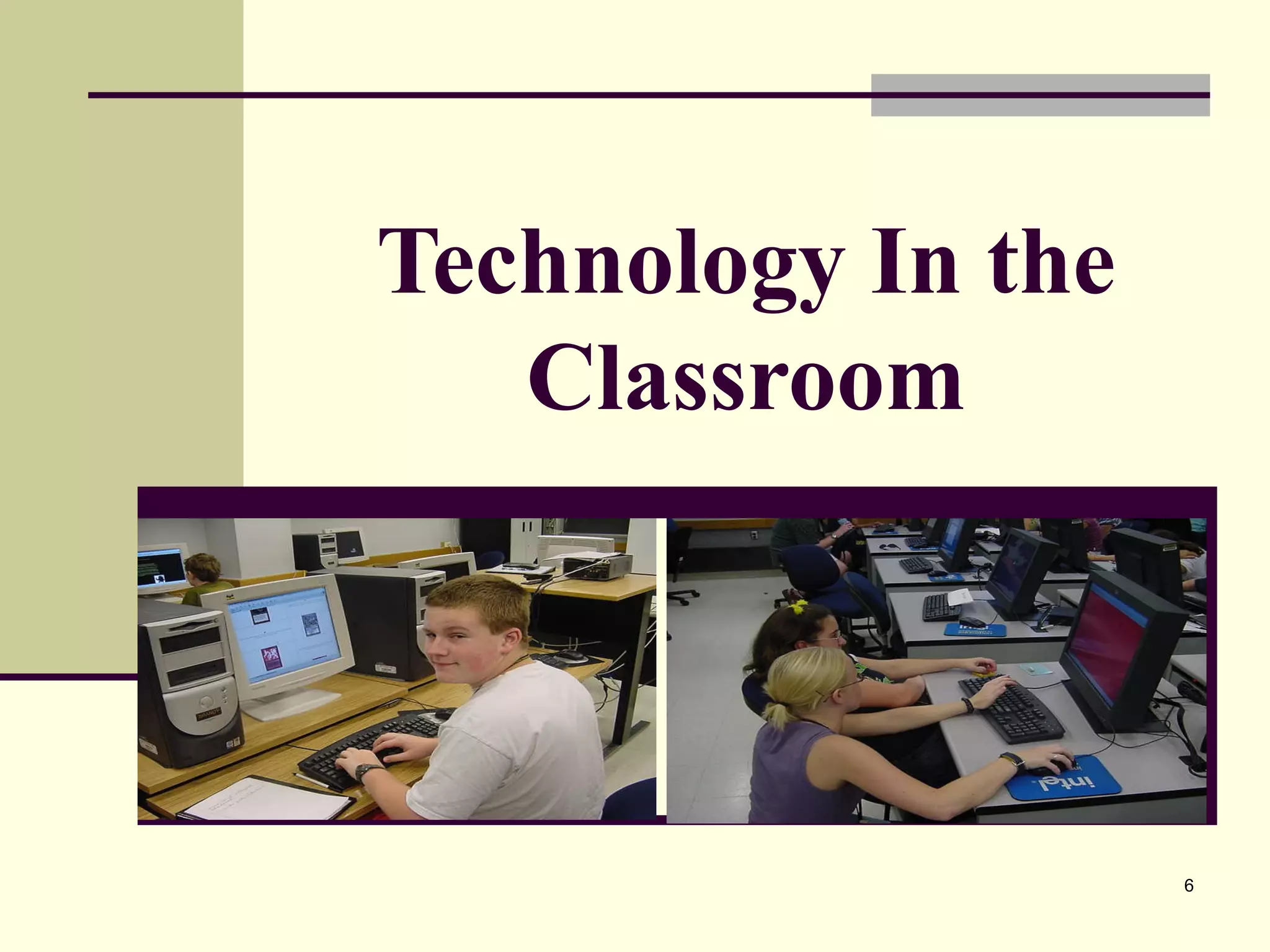
Technology In the
Classroom
7
How can we make things better?
 Make Technology:
 Pervasive
 Natural to use
 Wireless
 Effortless
 Easy to use a little or a
lot
 Provide standard
desktop for instructors
 Make it easy to combine
methodologies
 Blackboard,
transparencies, video..
 Provide technical staff
 “Security blanket”
8
Obtaining, Organizing, and Using New
Technology
 Classrooms, labs
 Wireless networks
 Technology vendors
 Partnerships with the private sector
9
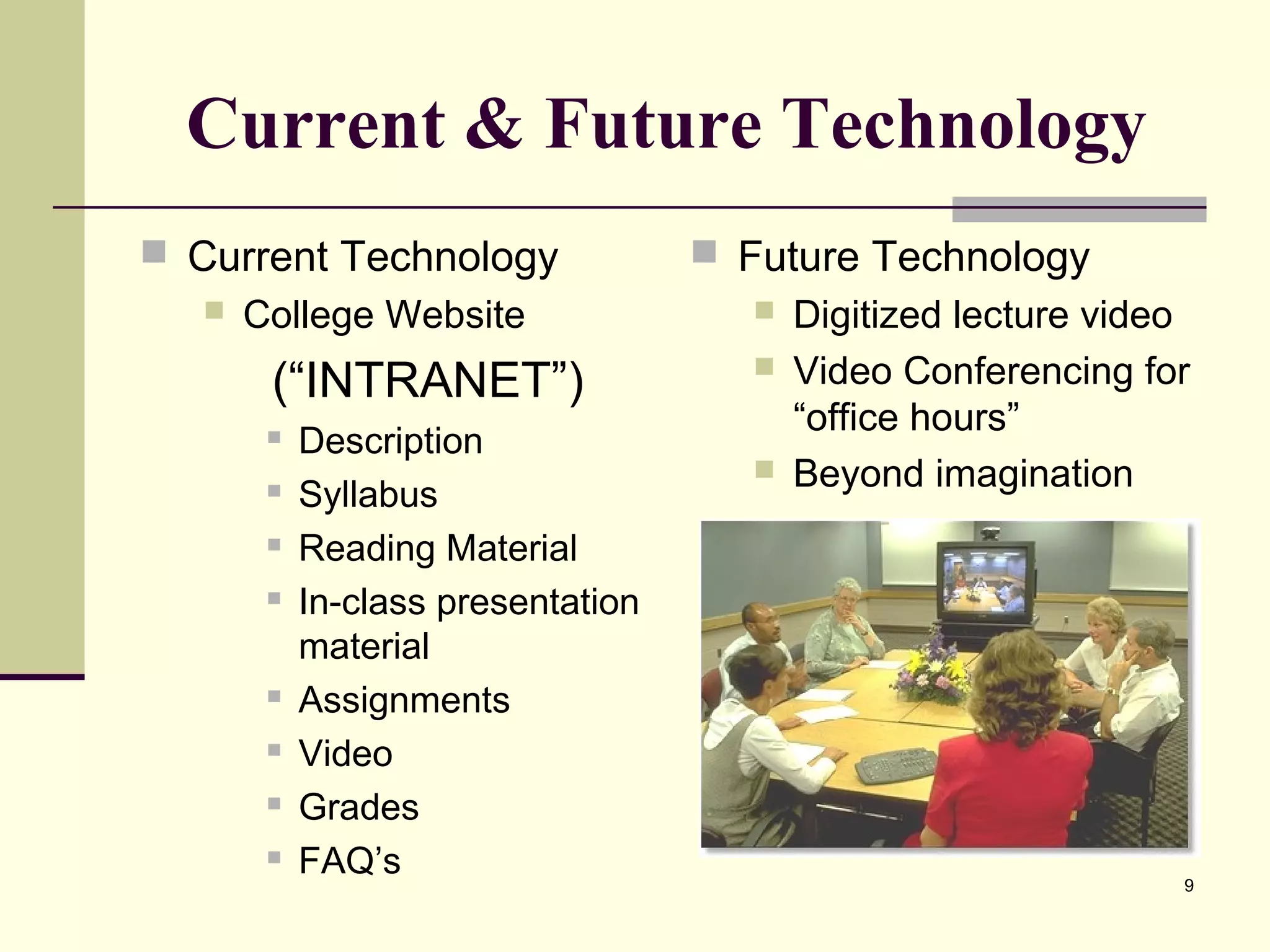
Current & Future Technology
 Current Technology
 College Website
(“INTRANET”)
 Description
 Syllabus
 Reading Material
 In-class presentation
material
 Assignments
 Video
 Grades
 FAQ’s
 Future Technology
 Digitized lecture video
 Video Conferencing for
“office hours”
 Beyond imagination
10
Distance Education
11
New Concepts…
 “Distance Education”
“Distance Learning”
“E-Learning”
12
Trends in Distance Education
 More people interested
in:
 Supplementing
education
 Getting degree
 Non-credit education
 Industry and Military
interested in cost-
effective ways to train
 Becoming more
expensive to provide
traditional classrooms
and labs
 Technology available in
homes, libraries,
community centers
becoming very
sophisticated
Trends would all seem to converge with
Distance Education – people taking
classes without going to class
13
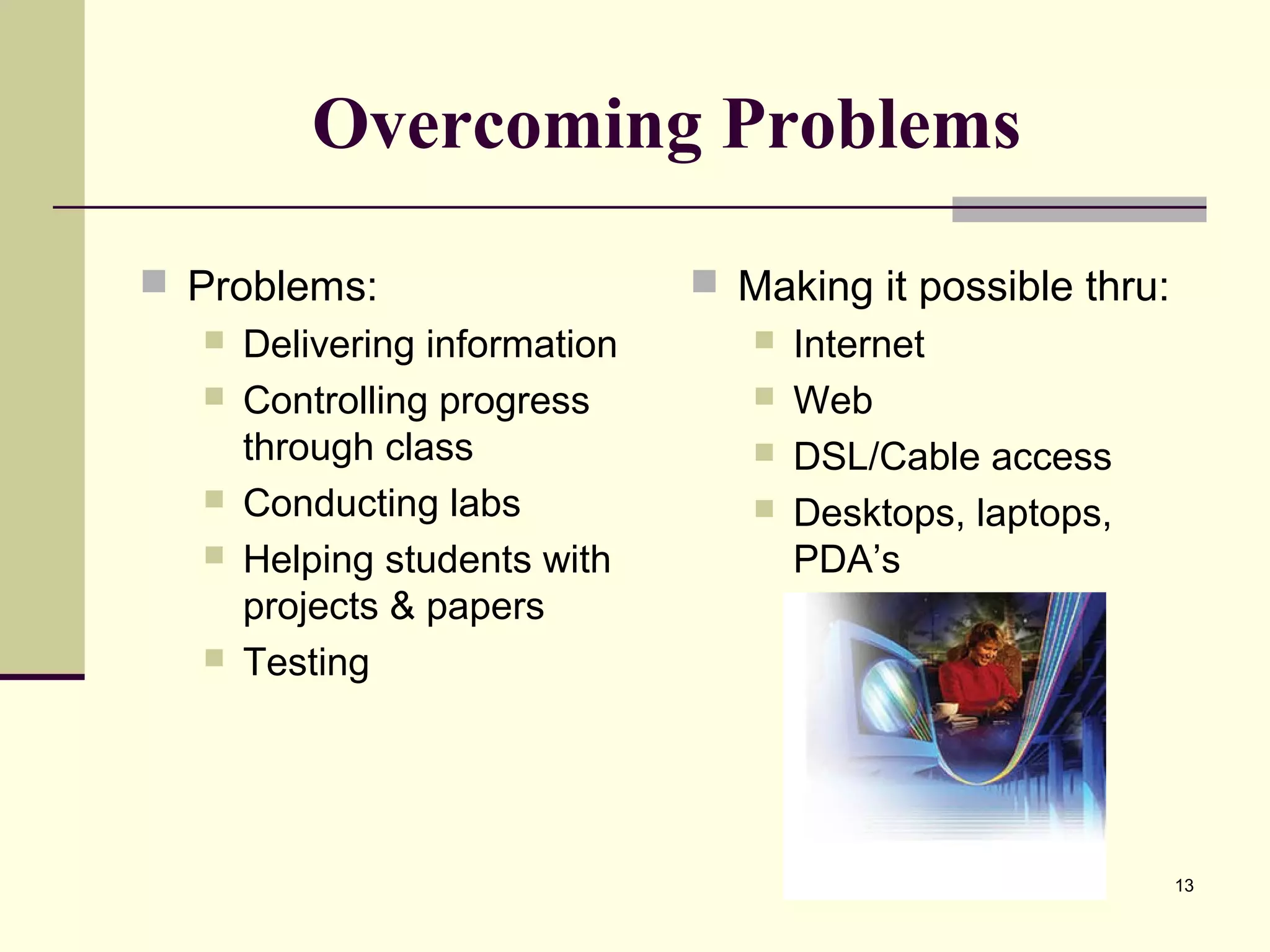
Overcoming Problems
 Problems:
 Delivering information
 Controlling progress
through class
 Conducting labs
 Helping students with
projects & papers
 Testing
 Making it possible thru:
 Internet
 Web
 DSL/Cable access
 Desktops, laptops,
PDA’s
14
Value added by Instructor
 Providing websites, slides, demos,
animations is not enough
 Most critical component - Instructor
 No technology will replace human interaction
 Instructors can “read” students in classroom
 Instructors can provide further explanation
 Instructors can guide discussion in a different
direction
15
Two sides of Coins
As, technology has its own “pro’s” and “cons”.
Technology may not always be appropriate in
every educational setting.
So, one should only think while taking use of
the word “TECHNOLOGY”
“What limits should be placed on
its use?”

120110120048 csp2

  • 1.
    1 The Use ofTechnology in Education BY- 120110120048 G H Patel College of Engineering & Technology
  • 2.
    2 17th Anniversary  Recently, Ourcollege has celebrated its 17th Anniversary.
  • 3.
    3 What is Technology? 1.Technology is Objects:  Tools, machines, instruments, weapons, appliances - the physical devices of technical performance 2. Technology is Knowledge:  The know-how behind technological innovation 3. Technology is Activities:  What people do - their skills, methods, procedures, routines 4. Technology is a Process:  Begins with a need and ends with a solution 5. Technology is a Sociotechnical System:  The manufacture and use of objects involving people and other objects in combination
  • 4.
    4 Purpose of Technologyin Education  Plan should clearly identify learning goals to be achieved through technology  Technology should support instructional learning goals -- integrated into instruction in meaningful ways  Technology should be used for challenging, long-term projects that promote students' higher-order thinking skills
  • 5.
    5 Technology Problem Solving How can administrators get the most out of education technology?  How can faculty get the most out of education technology?  How can students get the most out of education technology?
  • 6.
  • 7.
    7 How can wemake things better?  Make Technology:  Pervasive  Natural to use  Wireless  Effortless  Easy to use a little or a lot  Provide standard desktop for instructors  Make it easy to combine methodologies  Blackboard, transparencies, video..  Provide technical staff  “Security blanket”
  • 8.
    8 Obtaining, Organizing, andUsing New Technology  Classrooms, labs  Wireless networks  Technology vendors  Partnerships with the private sector
  • 9.
    9 Current & FutureTechnology  Current Technology  College Website (“INTRANET”)  Description  Syllabus  Reading Material  In-class presentation material  Assignments  Video  Grades  FAQ’s  Future Technology  Digitized lecture video  Video Conferencing for “office hours”  Beyond imagination
  • 10.
  • 11.
    11 New Concepts…  “DistanceEducation” “Distance Learning” “E-Learning”
  • 12.
    12 Trends in DistanceEducation  More people interested in:  Supplementing education  Getting degree  Non-credit education  Industry and Military interested in cost- effective ways to train  Becoming more expensive to provide traditional classrooms and labs  Technology available in homes, libraries, community centers becoming very sophisticated Trends would all seem to converge with Distance Education – people taking classes without going to class
  • 13.
    13 Overcoming Problems  Problems: Delivering information  Controlling progress through class  Conducting labs  Helping students with projects & papers  Testing  Making it possible thru:  Internet  Web  DSL/Cable access  Desktops, laptops, PDA’s
  • 14.
    14 Value added byInstructor  Providing websites, slides, demos, animations is not enough  Most critical component - Instructor  No technology will replace human interaction  Instructors can “read” students in classroom  Instructors can provide further explanation  Instructors can guide discussion in a different direction
  • 15.
    15 Two sides ofCoins As, technology has its own “pro’s” and “cons”. Technology may not always be appropriate in every educational setting. So, one should only think while taking use of the word “TECHNOLOGY” “What limits should be placed on its use?”