S-215

Unit 1
Firefighter Safety
in the Interface
Unit 1 – Firefighter Safety in the Interface

Slide 1-1
S-215

• Describe operating principles and
unique safety concerns to
firefighters in the interface.
• Describe escape routes, temporary
refuge areas, and safety zones as
they apply to firefighting in the
interface.
Unit 1 – Firefighter Safety in the Interface

Slide 1-2
S-215

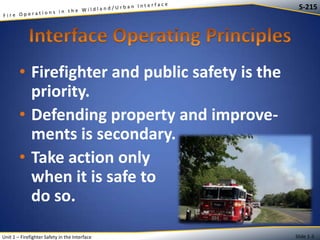
• Firefighter and public safety is the
priority.
• Defending property and improvements is secondary.
• Take action only
when it is safe to
do so.
Unit 1 – Firefighter Safety in the Interface

Slide 1-3
S-215

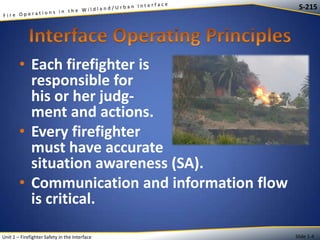
• Each firefighter is
responsible for
his or her judgment and actions.
• Every firefighter
must have accurate
situation awareness (SA).
• Communication and information flow
is critical.
Unit 1 – Firefighter Safety in the Interface

Slide 1-4
S-215

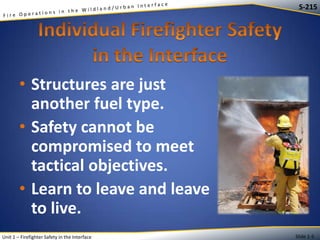
• Structures are just
another fuel type.
• Safety cannot be
compromised to meet
tactical objectives.
• Learn to leave and leave
to live.
Unit 1 – Firefighter Safety in the Interface

Slide 1-5
S-215

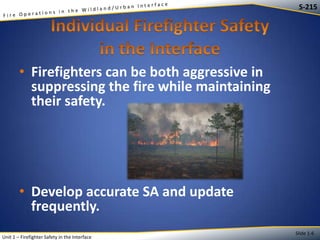
• Firefighters can be both aggressive in
suppressing the fire while maintaining
their safety.

• Develop accurate SA and update
frequently.
Unit 1 – Firefighter Safety in the Interface

Slide 1-6
S-215

• Three Fire Orders
– Which ones apply to SA?

• Look Up, Look Down, and
Look Around Indicators
• Risk Management
Process
Unit 1 – Firefighter Safety in the Interface

Slide 1-7
S-215

• Every firefighter must understand and
recognize limitations to their SA.
• Apply your
experience, planning, training, and
personal judgment to
observe, orient, decide, and act in
preparation for the worst-case
scenario.
Unit 1 – Firefighter Safety in the Interface

Slide 1-8
S-215

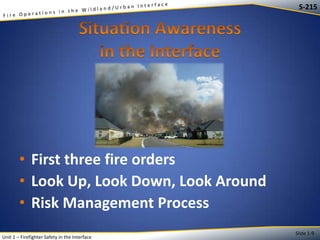
• First three fire orders
• Look Up, Look Down, Look Around
• Risk Management Process
Unit 1 – Firefighter Safety in the Interface

Slide 1-9
S-215

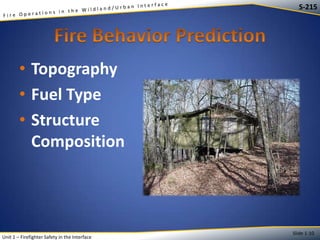
• Topography
• Fuel Type
• Structure
Composition

Unit 1 – Firefighter Safety in the Interface

Slide 1-10
S-215

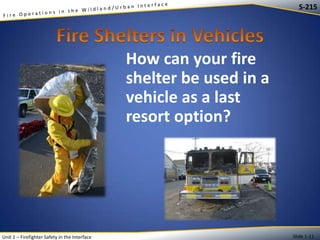
How can your fire
shelter be used in a
vehicle as a last
resort option?

Unit 1 – Firefighter Safety in the Interface

Slide 1-11
S-215

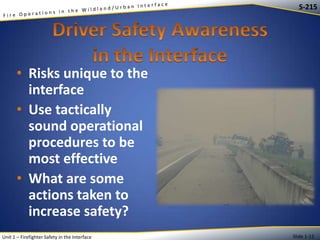
• Risks unique to the
interface
• Use tactically
sound operational
procedures to be
most effective
• What are some
actions taken to
increase safety?
Unit 1 – Firefighter Safety in the Interface

Slide 1-12
S-215

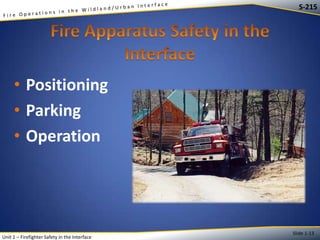
• Positioning
• Parking
• Operation

Unit 1 – Firefighter Safety in the Interface

Slide 1-13
S-215

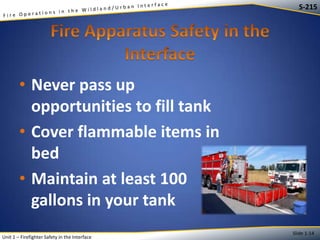
• Never pass up
opportunities to fill tank
• Cover flammable items in
bed
• Maintain at least 100
gallons in your tank
Unit 1 – Firefighter Safety in the Interface

Slide 1-14
S-215

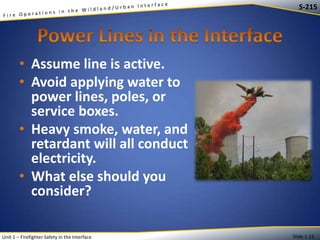
• Assume line is active.
• Avoid applying water to
power lines, poles, or
service boxes.
• Heavy smoke, water, and
retardant will all conduct
electricity.
• What else should you
consider?
Unit 1 – Firefighter Safety in the Interface

Slide 1-15
S-215

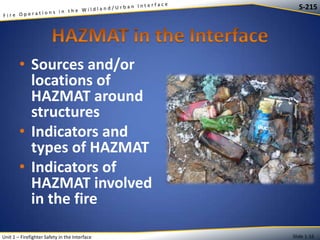
• Sources and/or
locations of
HAZMAT around
structures
• Indicators and
types of HAZMAT
• Indicators of
HAZMAT involved
in the fire
Unit 1 – Firefighter Safety in the Interface

Slide 1-16
S-215

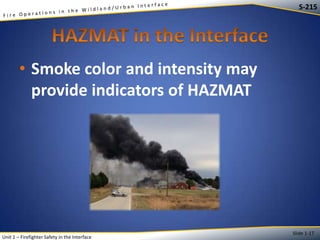
• Smoke color and intensity may
provide indicators of HAZMAT

Unit 1 – Firefighter Safety in the Interface

Slide 1-17
S-215

• Differences for purely wildland fire
vs. interface fires.
• Safety zones in IRPG are not for
interface fires.
• Do not commit to stay and protect a
structure unless an adequate escape
route and safety zone are available.
Unit 1 – Firefighter Safety in the Interface

Slide 1-18
S-215

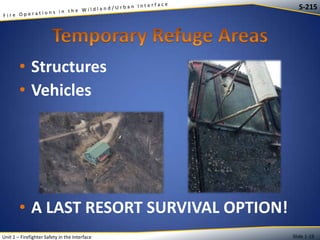
• Structures
• Vehicles

• A LAST RESORT SURVIVAL OPTION!
Unit 1 – Firefighter Safety in the Interface

Slide 1-19
S-215

• Values at risk can be
replaced, individual human life
cannot.
• Defend structures only when it is
safe to do so.
• The interface can vary in complexity
like any wildland fire incident.
Unit 1 – Firefighter Safety in the Interface

Slide 1-20
S-215

• Describe operating principles and
unique safety concerns to
firefighters in the interface.
• Describe escape routes, temporary
refuge areas, and safety zones as
they apply to firefighting in the
interface.
Unit 1 – Firefighter Safety in the Interface

Slide 1-21

S215 unit 1

  • 1.
    S-215 Unit 1 Firefighter Safety inthe Interface Unit 1 – Firefighter Safety in the Interface Slide 1-1
  • 2.
    S-215 • Describe operatingprinciples and unique safety concerns to firefighters in the interface. • Describe escape routes, temporary refuge areas, and safety zones as they apply to firefighting in the interface. Unit 1 – Firefighter Safety in the Interface Slide 1-2
  • 3.
    S-215 • Firefighter andpublic safety is the priority. • Defending property and improvements is secondary. • Take action only when it is safe to do so. Unit 1 – Firefighter Safety in the Interface Slide 1-3
  • 4.
    S-215 • Each firefighteris responsible for his or her judgment and actions. • Every firefighter must have accurate situation awareness (SA). • Communication and information flow is critical. Unit 1 – Firefighter Safety in the Interface Slide 1-4
  • 5.
    S-215 • Structures arejust another fuel type. • Safety cannot be compromised to meet tactical objectives. • Learn to leave and leave to live. Unit 1 – Firefighter Safety in the Interface Slide 1-5
  • 6.
    S-215 • Firefighters canbe both aggressive in suppressing the fire while maintaining their safety. • Develop accurate SA and update frequently. Unit 1 – Firefighter Safety in the Interface Slide 1-6
  • 7.
    S-215 • Three FireOrders – Which ones apply to SA? • Look Up, Look Down, and Look Around Indicators • Risk Management Process Unit 1 – Firefighter Safety in the Interface Slide 1-7
  • 8.
    S-215 • Every firefightermust understand and recognize limitations to their SA. • Apply your experience, planning, training, and personal judgment to observe, orient, decide, and act in preparation for the worst-case scenario. Unit 1 – Firefighter Safety in the Interface Slide 1-8
  • 9.
    S-215 • First threefire orders • Look Up, Look Down, Look Around • Risk Management Process Unit 1 – Firefighter Safety in the Interface Slide 1-9
  • 10.
    S-215 • Topography • FuelType • Structure Composition Unit 1 – Firefighter Safety in the Interface Slide 1-10
  • 11.
    S-215 How can yourfire shelter be used in a vehicle as a last resort option? Unit 1 – Firefighter Safety in the Interface Slide 1-11
  • 12.
    S-215 • Risks uniqueto the interface • Use tactically sound operational procedures to be most effective • What are some actions taken to increase safety? Unit 1 – Firefighter Safety in the Interface Slide 1-12
  • 13.
    S-215 • Positioning • Parking •Operation Unit 1 – Firefighter Safety in the Interface Slide 1-13
  • 14.
    S-215 • Never passup opportunities to fill tank • Cover flammable items in bed • Maintain at least 100 gallons in your tank Unit 1 – Firefighter Safety in the Interface Slide 1-14
  • 15.
    S-215 • Assume lineis active. • Avoid applying water to power lines, poles, or service boxes. • Heavy smoke, water, and retardant will all conduct electricity. • What else should you consider? Unit 1 – Firefighter Safety in the Interface Slide 1-15
  • 16.
    S-215 • Sources and/or locationsof HAZMAT around structures • Indicators and types of HAZMAT • Indicators of HAZMAT involved in the fire Unit 1 – Firefighter Safety in the Interface Slide 1-16
  • 17.
    S-215 • Smoke colorand intensity may provide indicators of HAZMAT Unit 1 – Firefighter Safety in the Interface Slide 1-17
  • 18.
    S-215 • Differences forpurely wildland fire vs. interface fires. • Safety zones in IRPG are not for interface fires. • Do not commit to stay and protect a structure unless an adequate escape route and safety zone are available. Unit 1 – Firefighter Safety in the Interface Slide 1-18
  • 19.
    S-215 • Structures • Vehicles •A LAST RESORT SURVIVAL OPTION! Unit 1 – Firefighter Safety in the Interface Slide 1-19
  • 20.
    S-215 • Values atrisk can be replaced, individual human life cannot. • Defend structures only when it is safe to do so. • The interface can vary in complexity like any wildland fire incident. Unit 1 – Firefighter Safety in the Interface Slide 1-20
  • 21.
    S-215 • Describe operatingprinciples and unique safety concerns to firefighters in the interface. • Describe escape routes, temporary refuge areas, and safety zones as they apply to firefighting in the interface. Unit 1 – Firefighter Safety in the Interface Slide 1-21