By: Castillo Ayanna Jean D.
Baustista Danica Ashley
Montalbo, Florenz
Prado, Kamille
De tabali, Jessa Nicole
Escueta, John Matthew
Castro, Luis
Ong, Evan Jay
Elayda, Fox
Lara, Karl Nicolo
Beltran, Francis
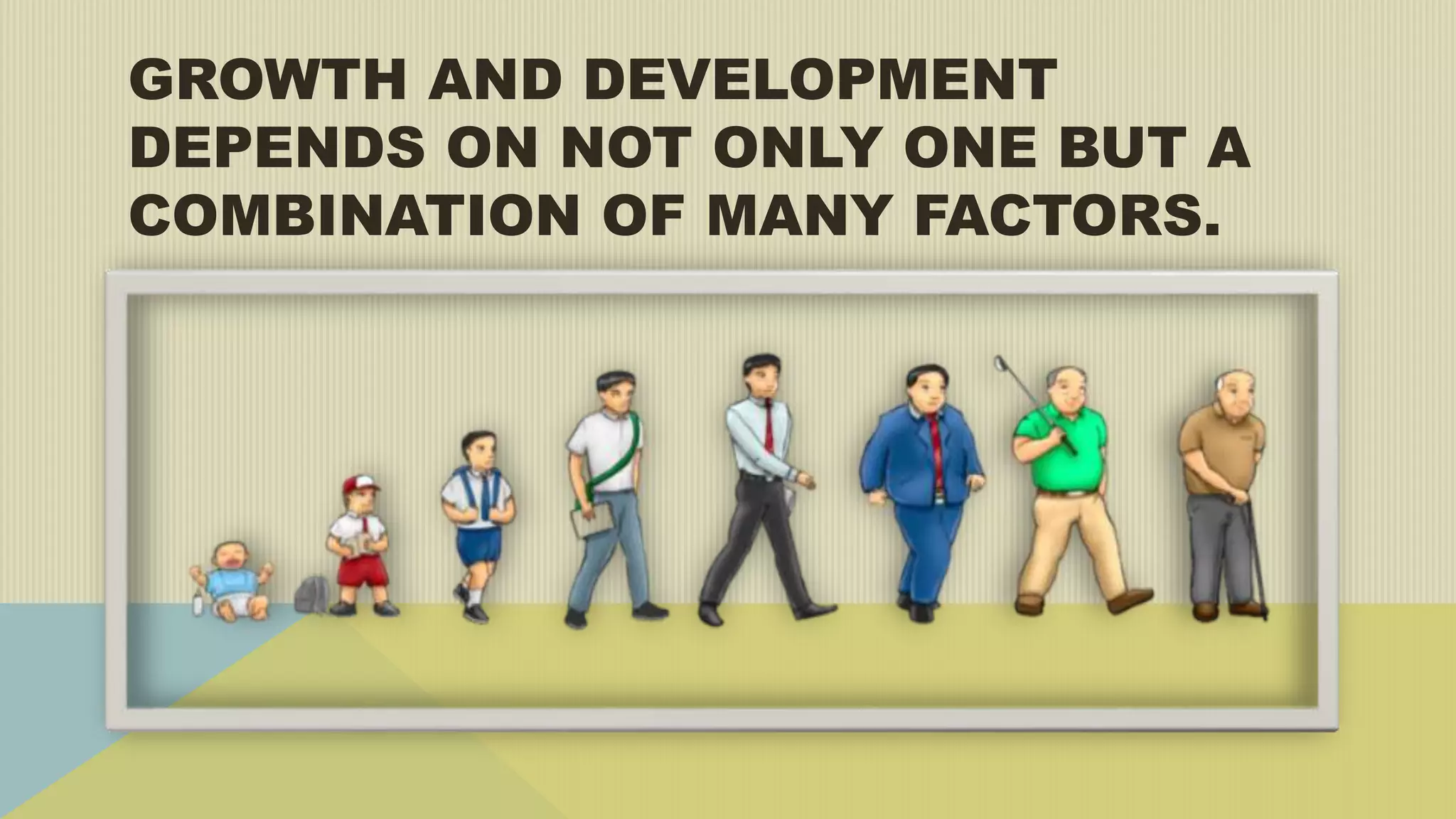
GROWTH AND DEVELOPMENT
DEPENDS ON NOT ONLY ONE BUT A
COMBINATION OF MANY FACTORS.
 DEVELOPMENT- the act or process of growing or causing something to
become larger or more advanced
 GROWTH- is an increase in the size of the body as a whole or the size
attained by specific parts of the body. It is a fundamental characteristic of
all living organisms; A form of motion.
 HUMAN DEVELOPMENT- The pattern or movement or change that
begins at conception and continues through the lifespan.
-Includes growth and decline
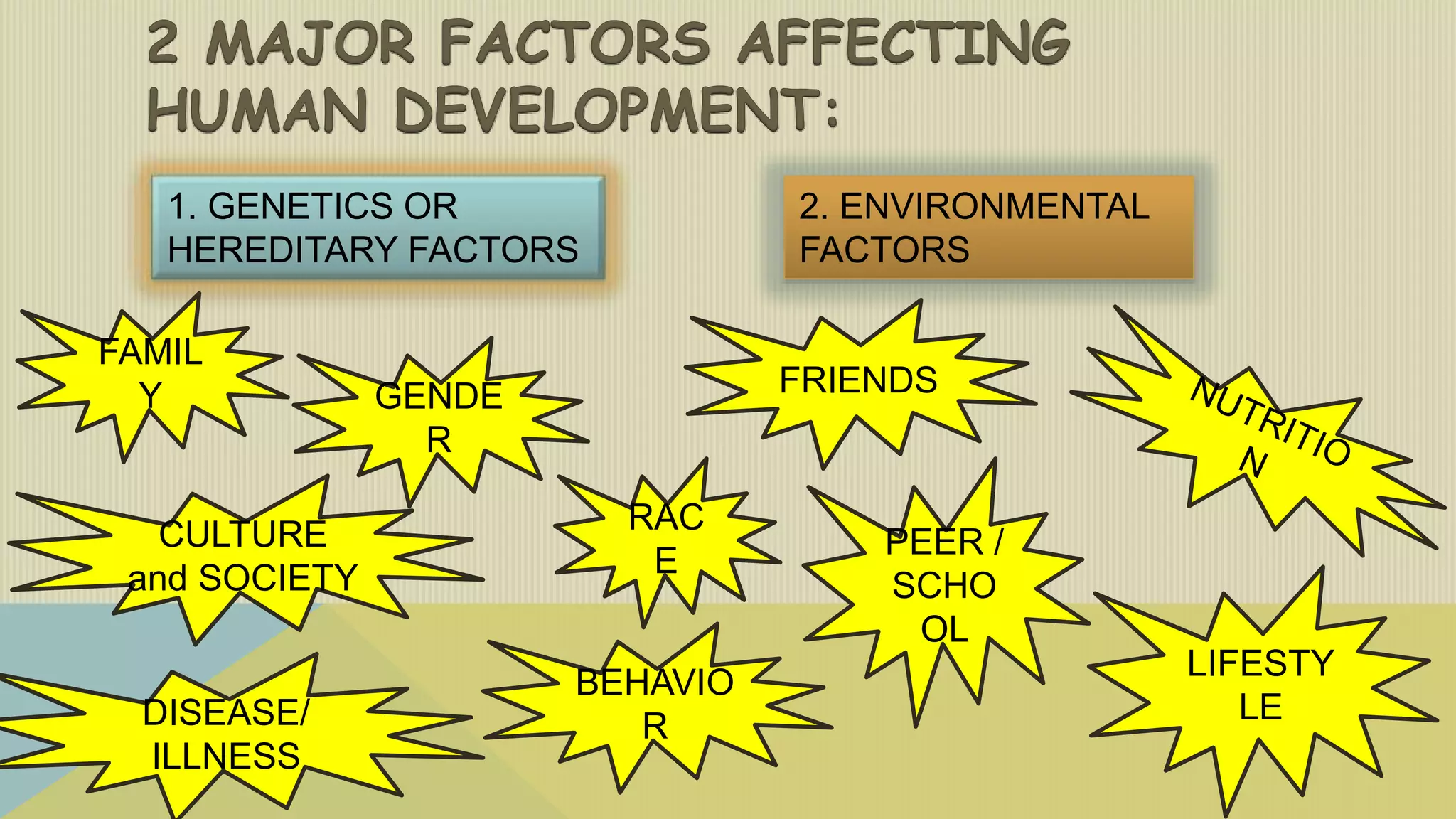
1. GENETICS OR
HEREDITARY FACTORS
2. ENVIRONMENTAL
FACTORS
FAMIL
Y GENDE
R
FRIENDS
DISEASE/
ILLNESS
RAC
E
BEHAVIO
R
CULTURE
and SOCIETY
LIFESTY
LE
PEER /
SCHO
OL
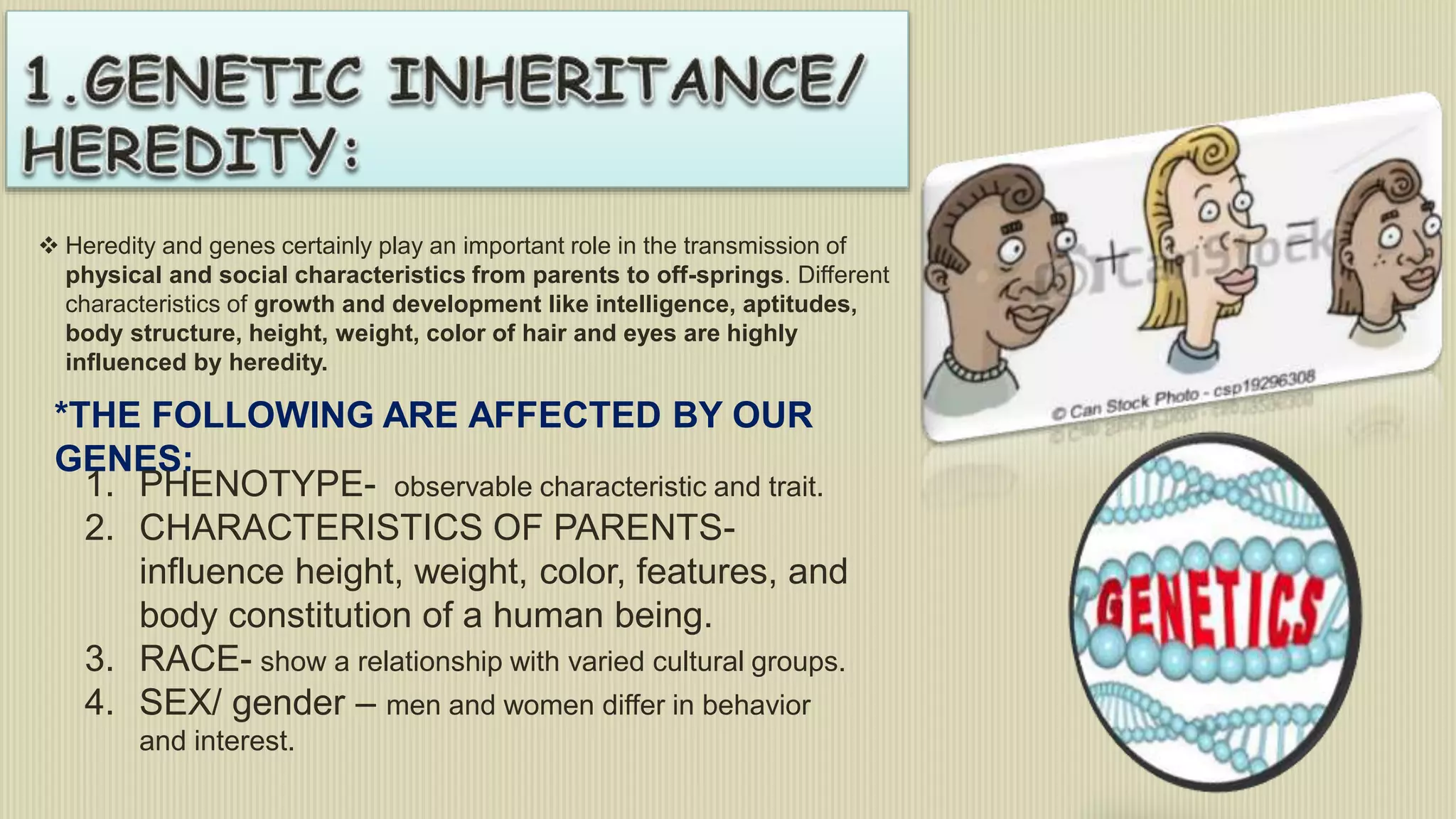
 Heredity and genes certainly play an important role in the transmission of
physical and social characteristics from parents to off-springs. Different
characteristics of growth and development like intelligence, aptitudes,
body structure, height, weight, color of hair and eyes are highly
influenced by heredity.
*THE FOLLOWING ARE AFFECTED BY OUR
GENES:
1. PHENOTYPE- observable characteristic and trait.
2. CHARACTERISTICS OF PARENTS-
influence height, weight, color, features, and
body constitution of a human being.
3. RACE- show a relationship with varied cultural groups.
4. SEX/ gender – men and women differ in behavior
and interest.
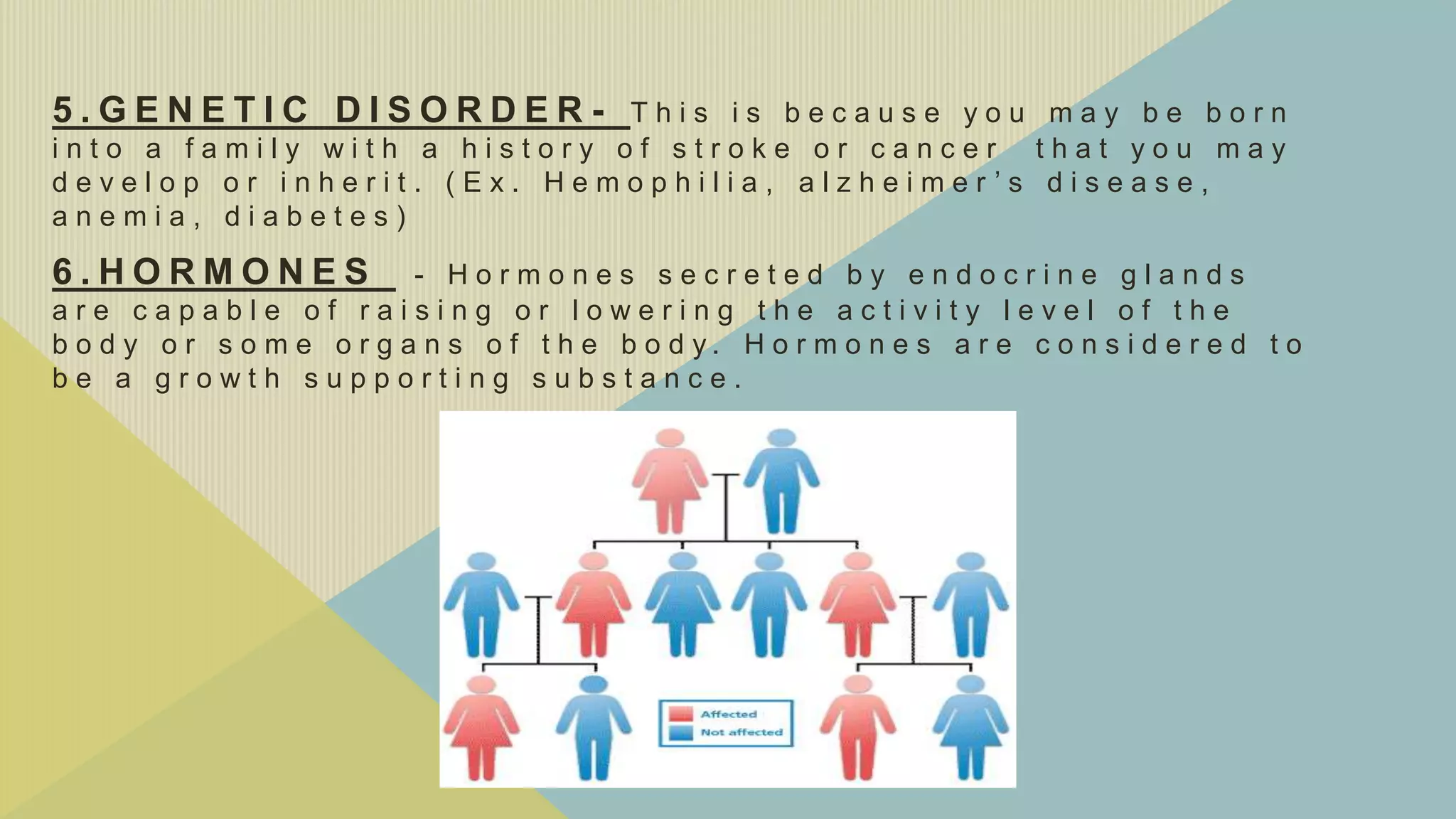
5 . G E N E T I C D I S O R D E R - T h i s i s b e c a u s e y o u m a y b e b o r n
i n t o a f a m i l y w i t h a h i s t o r y o f s t r o k e o r c a n c e r t h a t y o u m a y
d e v e l o p o r i n h e r i t . ( E x . H e m o p h i l i a , a l z h e i m e r ’ s d i s e a s e ,
a n e m i a , d i a b e t e s )
6 . H O R M O N E S - H o r m o n e s s e c r e t e d b y e n d o c r i n e g l a n d s
a r e c a p a b l e o f r a i s i n g o r l o w e r i n g t h e a c t i v i t y l e v e l o f t h e
b o d y o r s o m e o r g a n s o f t h e b o d y . H o r m o n e s a r e c o n s i d e r e d t o
b e a g r o w t h s u p p o r t i n g s u b s t a n c e .
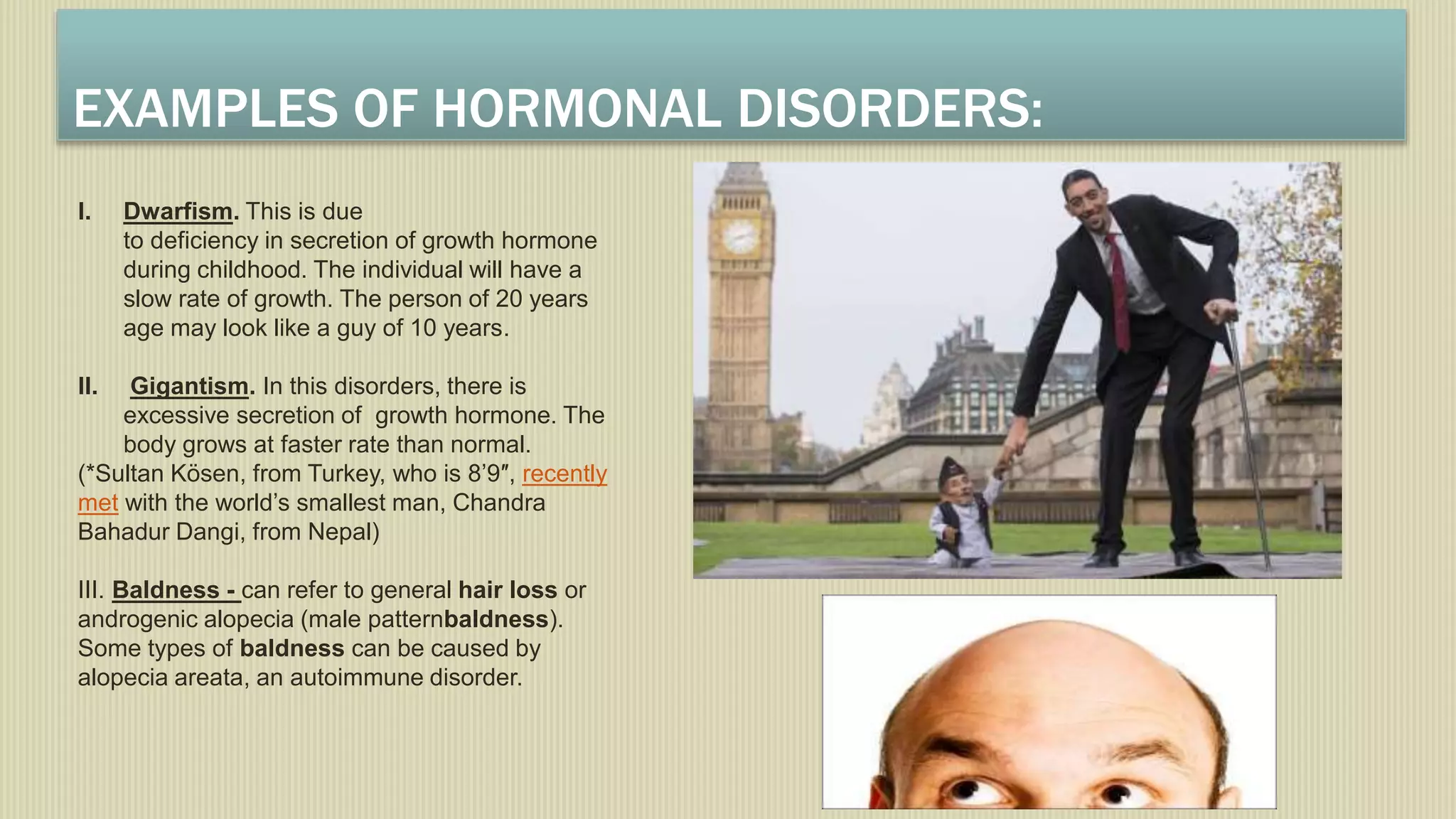
EXAMPLES OF HORMONAL DISORDERS:
I. Dwarfism. This is due
to deficiency in secretion of growth hormone
during childhood. The individual will have a
slow rate of growth. The person of 20 years
age may look like a guy of 10 years.
II. Gigantism. In this disorders, there is
excessive secretion of growth hormone. The
body grows at faster rate than normal.
(*Sultan Kösen, from Turkey, who is 8’9″, recently
met with the world’s smallest man, Chandra
Bahadur Dangi, from Nepal)
III. Baldness - can refer to general hair loss or
androgenic alopecia (male patternbaldness).
Some types of baldness can be caused by
alopecia areata, an autoimmune disorder.
Environmental influences on human physical growth and development has
focused on the influences of social and economic factors; family and
household characteristics; urbanization/modernization; nutrition; and
features of the physical environment such as altitude, temperature and
climate. Continuing in this tradition are current investigations into the roles
of pollutants and other aspects of the human-made environment in
affecting patterns of human growth and development, specifically the timing
of sexual maturation and the development of obesity.
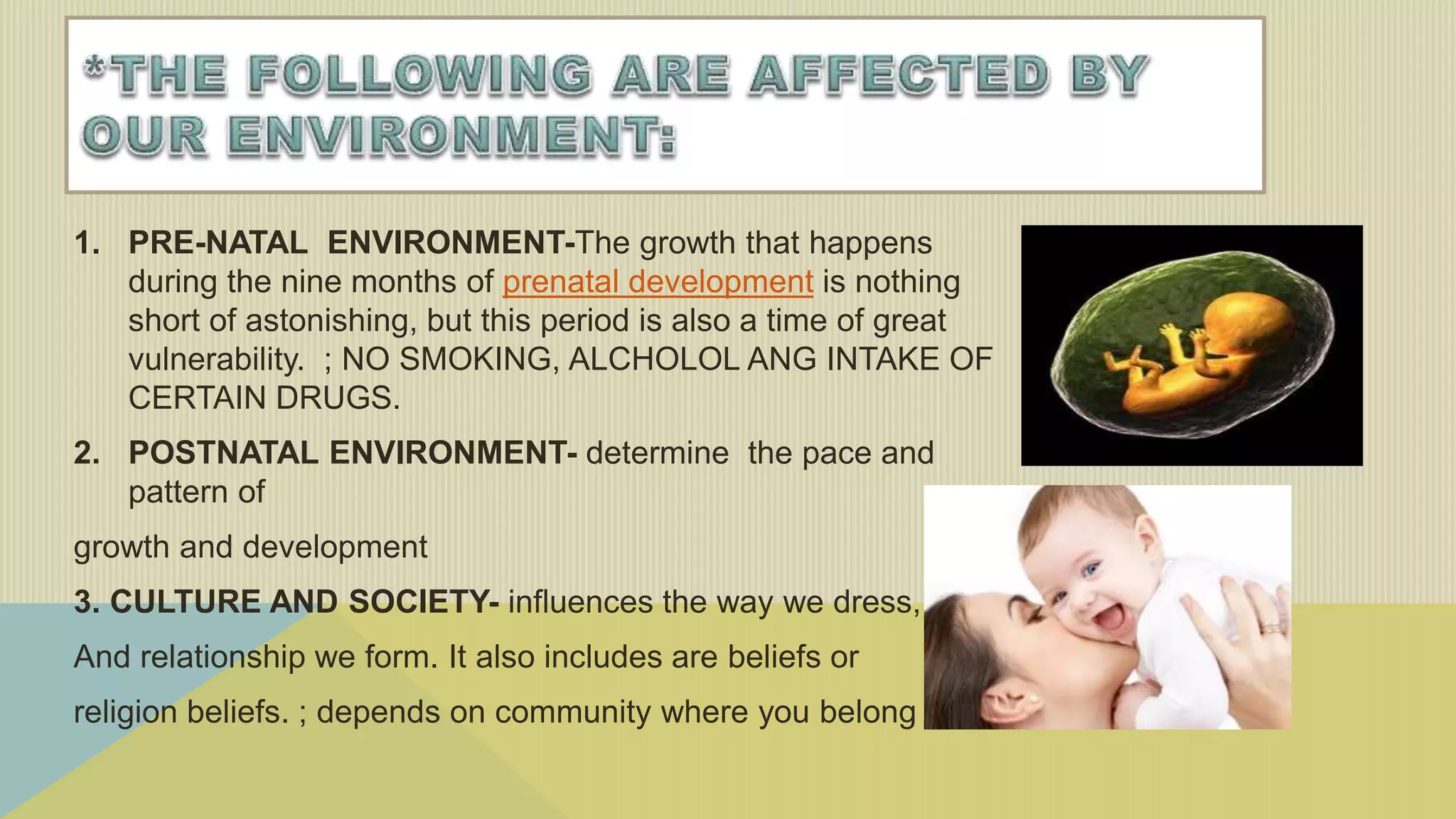
1. PRE-NATAL ENVIRONMENT-The growth that happens
during the nine months of prenatal development is nothing
short of astonishing, but this period is also a time of great
vulnerability. ; NO SMOKING, ALCHOLOL ANG INTAKE OF
CERTAIN DRUGS.
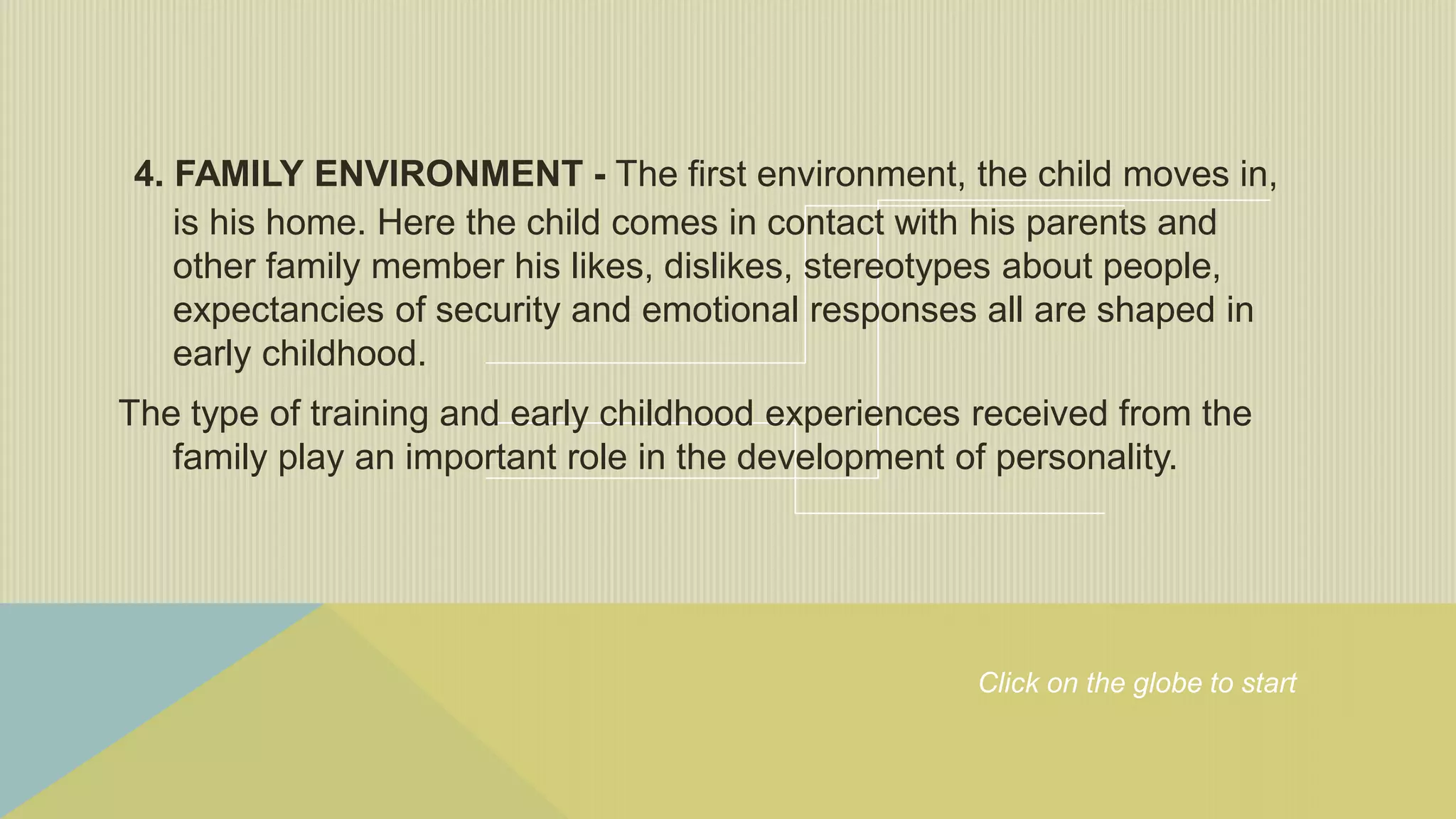
2. POSTNATAL ENVIRONMENT- determine the pace and
pattern of
growth and development
3. CULTURE AND SOCIETY- influences the way we dress, diet
And relationship we form. It also includes are beliefs or
religion beliefs. ; depends on community where you belong
Click on the globe to start
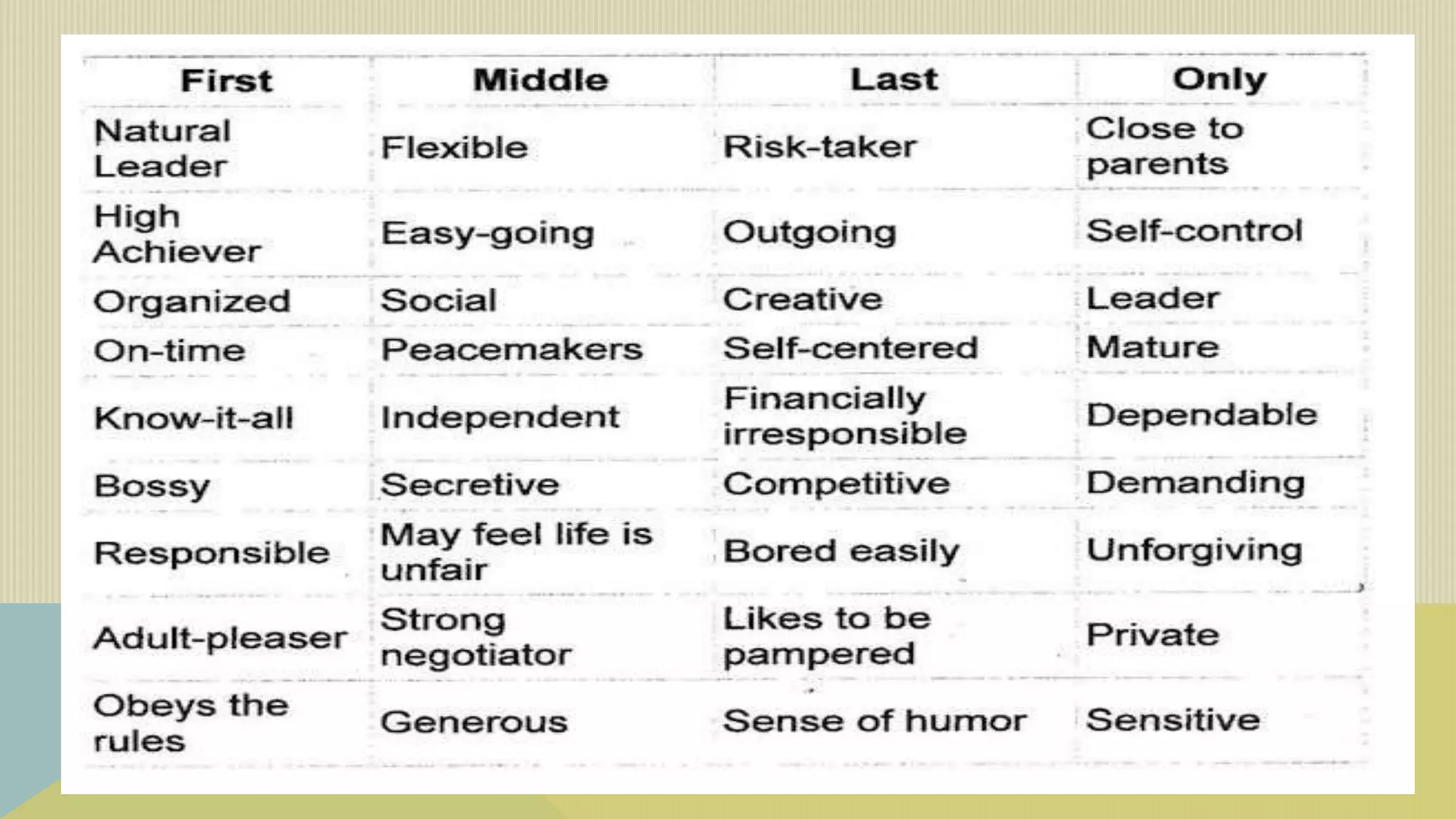
4. FAMILY ENVIRONMENT - The first environment, the child moves in,
is his home. Here the child comes in contact with his parents and
other family member his likes, dislikes, stereotypes about people,
expectancies of security and emotional responses all are shaped in
early childhood.
The type of training and early childhood experiences received from the
family play an important role in the development of personality.
5. SCHOOL ENVIRONMENT
School play an important role in molding the personality of a child because a
significant part of a child's life is spent in school. In school a child comes in
contact with his teachers whose personality may influence them. Concepts,
theories, good values and manners are taught in school.
6. PEER GROUPS ENVIRONMENT
When a child socialize with other individuals of his or her age, he/she learns the
ways, values and manners of these individuals. The people in which we are
closest to often shape who we are because personality will be influenced and
modified through his/her interaction with peers. Keeping company with people
who add value to our lives, will go a long way to building the personality that
truly works for you in your work, family and social life.
7. NUTRITION
Growth of children from PEM, anemia and vitamin deficiency status is retarded.
Over eating and obesity accelerates somatic growth.
8. CLIMATE
Velocity of growth may alter in different season (usually higher in spring and low
in summer months.
Infections and infestations are common in hot and humid climates.
.
9. TRAUMA
Fracture of the end of the bone damages the growth epiphysis and thus
hampers the skeletal growth.

Factors affecting-human-development

  • 1.
    By: Castillo AyannaJean D. Baustista Danica Ashley Montalbo, Florenz Prado, Kamille De tabali, Jessa Nicole Escueta, John Matthew Castro, Luis Ong, Evan Jay Elayda, Fox Lara, Karl Nicolo Beltran, Francis
  • 2.
    GROWTH AND DEVELOPMENT DEPENDSON NOT ONLY ONE BUT A COMBINATION OF MANY FACTORS.
  • 3.
     DEVELOPMENT- theact or process of growing or causing something to become larger or more advanced  GROWTH- is an increase in the size of the body as a whole or the size attained by specific parts of the body. It is a fundamental characteristic of all living organisms; A form of motion.  HUMAN DEVELOPMENT- The pattern or movement or change that begins at conception and continues through the lifespan. -Includes growth and decline
  • 5.
    1. GENETICS OR HEREDITARYFACTORS 2. ENVIRONMENTAL FACTORS FAMIL Y GENDE R FRIENDS DISEASE/ ILLNESS RAC E BEHAVIO R CULTURE and SOCIETY LIFESTY LE PEER / SCHO OL
  • 6.
     Heredity andgenes certainly play an important role in the transmission of physical and social characteristics from parents to off-springs. Different characteristics of growth and development like intelligence, aptitudes, body structure, height, weight, color of hair and eyes are highly influenced by heredity. *THE FOLLOWING ARE AFFECTED BY OUR GENES: 1. PHENOTYPE- observable characteristic and trait. 2. CHARACTERISTICS OF PARENTS- influence height, weight, color, features, and body constitution of a human being. 3. RACE- show a relationship with varied cultural groups. 4. SEX/ gender – men and women differ in behavior and interest.
  • 7.
    5 . GE N E T I C D I S O R D E R - T h i s i s b e c a u s e y o u m a y b e b o r n i n t o a f a m i l y w i t h a h i s t o r y o f s t r o k e o r c a n c e r t h a t y o u m a y d e v e l o p o r i n h e r i t . ( E x . H e m o p h i l i a , a l z h e i m e r ’ s d i s e a s e , a n e m i a , d i a b e t e s ) 6 . H O R M O N E S - H o r m o n e s s e c r e t e d b y e n d o c r i n e g l a n d s a r e c a p a b l e o f r a i s i n g o r l o w e r i n g t h e a c t i v i t y l e v e l o f t h e b o d y o r s o m e o r g a n s o f t h e b o d y . H o r m o n e s a r e c o n s i d e r e d t o b e a g r o w t h s u p p o r t i n g s u b s t a n c e .
  • 8.
    EXAMPLES OF HORMONALDISORDERS: I. Dwarfism. This is due to deficiency in secretion of growth hormone during childhood. The individual will have a slow rate of growth. The person of 20 years age may look like a guy of 10 years. II. Gigantism. In this disorders, there is excessive secretion of growth hormone. The body grows at faster rate than normal. (*Sultan Kösen, from Turkey, who is 8’9″, recently met with the world’s smallest man, Chandra Bahadur Dangi, from Nepal) III. Baldness - can refer to general hair loss or androgenic alopecia (male patternbaldness). Some types of baldness can be caused by alopecia areata, an autoimmune disorder.
  • 9.
    Environmental influences onhuman physical growth and development has focused on the influences of social and economic factors; family and household characteristics; urbanization/modernization; nutrition; and features of the physical environment such as altitude, temperature and climate. Continuing in this tradition are current investigations into the roles of pollutants and other aspects of the human-made environment in affecting patterns of human growth and development, specifically the timing of sexual maturation and the development of obesity.
  • 10.
    1. PRE-NATAL ENVIRONMENT-Thegrowth that happens during the nine months of prenatal development is nothing short of astonishing, but this period is also a time of great vulnerability. ; NO SMOKING, ALCHOLOL ANG INTAKE OF CERTAIN DRUGS. 2. POSTNATAL ENVIRONMENT- determine the pace and pattern of growth and development 3. CULTURE AND SOCIETY- influences the way we dress, diet And relationship we form. It also includes are beliefs or religion beliefs. ; depends on community where you belong
  • 11.
    Click on theglobe to start 4. FAMILY ENVIRONMENT - The first environment, the child moves in, is his home. Here the child comes in contact with his parents and other family member his likes, dislikes, stereotypes about people, expectancies of security and emotional responses all are shaped in early childhood. The type of training and early childhood experiences received from the family play an important role in the development of personality.
  • 13.
    5. SCHOOL ENVIRONMENT Schoolplay an important role in molding the personality of a child because a significant part of a child's life is spent in school. In school a child comes in contact with his teachers whose personality may influence them. Concepts, theories, good values and manners are taught in school.
  • 14.
    6. PEER GROUPSENVIRONMENT When a child socialize with other individuals of his or her age, he/she learns the ways, values and manners of these individuals. The people in which we are closest to often shape who we are because personality will be influenced and modified through his/her interaction with peers. Keeping company with people who add value to our lives, will go a long way to building the personality that truly works for you in your work, family and social life.
  • 15.
    7. NUTRITION Growth ofchildren from PEM, anemia and vitamin deficiency status is retarded. Over eating and obesity accelerates somatic growth.
  • 16.
    8. CLIMATE Velocity ofgrowth may alter in different season (usually higher in spring and low in summer months. Infections and infestations are common in hot and humid climates.
  • 17.
    . 9. TRAUMA Fracture ofthe end of the bone damages the growth epiphysis and thus hampers the skeletal growth.

Editor's Notes

  • #4 This template is in wide-screen format and demonstrates how transitions, animations, and multimedia choreography can be used to enrich a presentation.