A Presentation On
By:
Vipul Chavda
Cleantech Water
20,4th Floor,
Ratna Business Square
Opp. H.K.College,
Ashram Road, Ahmedabad.
• Contents
• Waste Water Pollutants / Impact
• Type of Treatment for STP
• Typical STP for Residential Complex
• Three rules for Better STP
• Proper Design
• Proper Engineering
• Proper Operation & Maintenance
• Waste Water Pollutants
• Compliance with Law
• Resource Recovery – Water is Precious
• Improved Surface / Ground Water Quality
• Improved Public Health
• Long-term Sustainability
• Why Waste Water Treatment ??
• Pollutants in Sewage
• BOD ( Bio-Logical Oxygen Demand)
• COD (Chemical Oxygen Demand)
• TSS ( Total Suspended Solids )
• pH
• Oil & Grease
• Type of Treatment for STP
• Aerobic Treatment
• Takes Place in the
presence of Air
• Air can be provided by
External Sources
• The Organic Pollutants
are converted in carbon
DI-oxide and Water.
• AnAerobic Treatment
• Takes place in the
absence of Air
• The Organic Pollutants
are converted by
anaerobic organisms to a
gas containing Methane
and Carbon Di-oxide
• Comparison
• Aerobic Treatment
• No Smell around the Area
• Consumes more
electrical energy
• Sludge Production is high
• AnAerobic Treatment
• Smell all around the
plant area
• Energy consumption is
low
• Sludge Production is low
• Different Technologies to Treat Waste Water
• Activated Sludge Process
• Extended Aeration Process
• Submerged Aerated Fixed Film
• Moving Bed Bio Reactor
• Sequential Batch reactor
• Electro Oxidation
• Membrane Bio Reactor
• Rotating Bio Logical Contactor
• Moving Bed Bio Reactor
• In the MBBR bio film technology the bio film grows
protected within engineered plastic carriers, which are
carefully designed with high internal surface area.
• These bio-film carriers are suspended and thoroughly
mixed throughout the water phase.
• With these technology it is possible to handle
extremely high loading conditions without any problem
of clogging and treat industrial, municipal, and
domestic sewage or waste water on relatively low foot
print area.
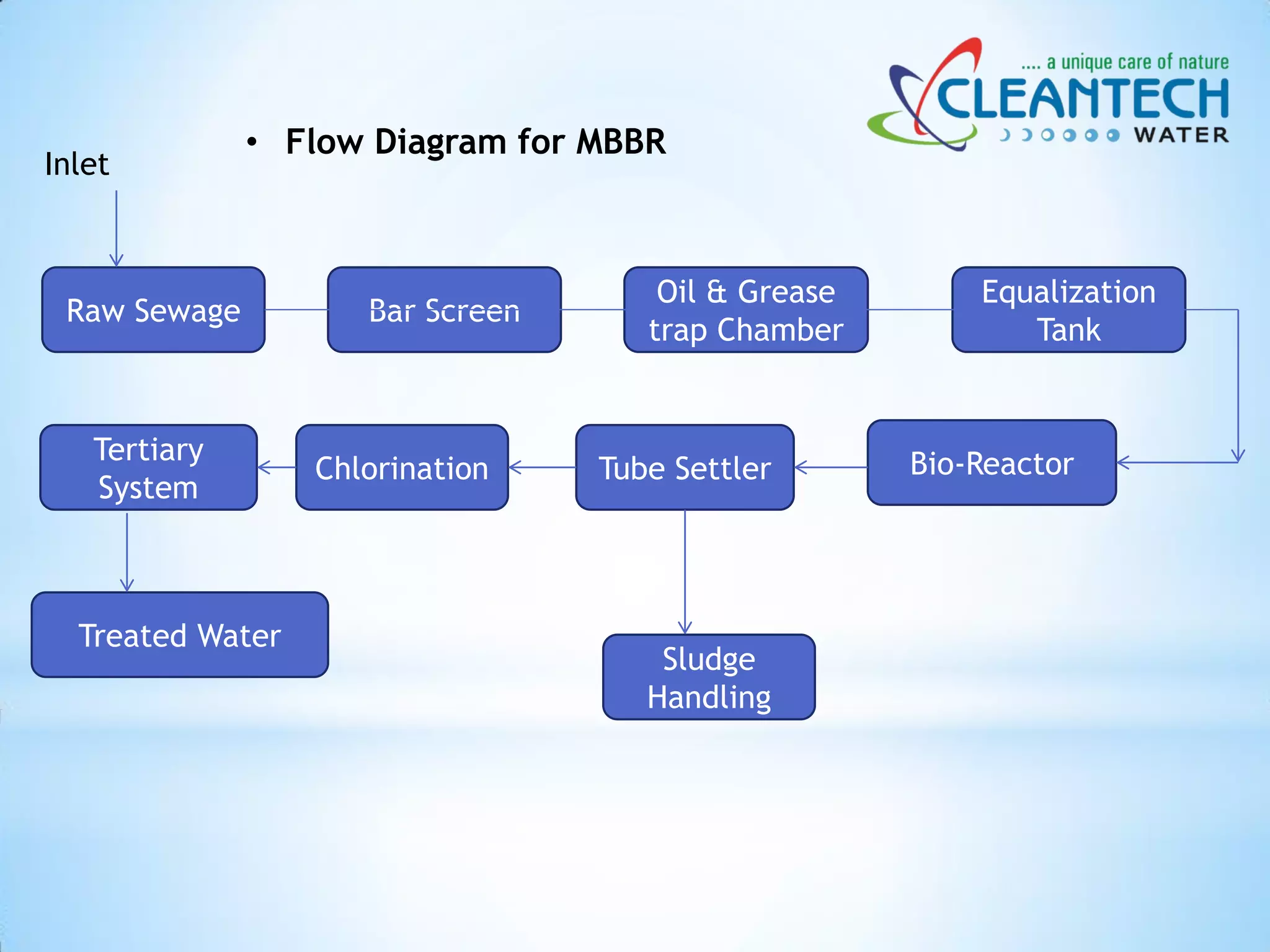
Raw Sewage Bar Screen
Oil & Grease
trap Chamber
Equalization
Tank
Bio-ReactorTube SettlerChlorination
Tertiary
System
Treated Water
Sludge
Handling
Inlet
• Flow Diagram for MBBR
Images
• Operating Parameter
Parameter Inlet Outlet
pH 7 to 8 6 to 7.5
BOD 250-350 mg/l <30 mg/l
COD 400-600 mg/l <100 mg/l
TSS 200-300 <20 mg/l
Oil & Grease 100 <5
Flow Sheet for MBBR Process
Presented By
Vipul Chavda
B.E. Chemical , MBA
Director
Cleantech Water
+91-9558996411

Cleantech MBBR sewage treatment plant Presentation

  • 1.
    A Presentation On By: VipulChavda Cleantech Water 20,4th Floor, Ratna Business Square Opp. H.K.College, Ashram Road, Ahmedabad.
  • 2.
    • Contents • WasteWater Pollutants / Impact • Type of Treatment for STP • Typical STP for Residential Complex • Three rules for Better STP • Proper Design • Proper Engineering • Proper Operation & Maintenance
  • 3.
    • Waste WaterPollutants • Compliance with Law • Resource Recovery – Water is Precious • Improved Surface / Ground Water Quality • Improved Public Health • Long-term Sustainability • Why Waste Water Treatment ?? • Pollutants in Sewage • BOD ( Bio-Logical Oxygen Demand) • COD (Chemical Oxygen Demand) • TSS ( Total Suspended Solids ) • pH • Oil & Grease
  • 4.
    • Type ofTreatment for STP • Aerobic Treatment • Takes Place in the presence of Air • Air can be provided by External Sources • The Organic Pollutants are converted in carbon DI-oxide and Water. • AnAerobic Treatment • Takes place in the absence of Air • The Organic Pollutants are converted by anaerobic organisms to a gas containing Methane and Carbon Di-oxide
  • 5.
    • Comparison • AerobicTreatment • No Smell around the Area • Consumes more electrical energy • Sludge Production is high • AnAerobic Treatment • Smell all around the plant area • Energy consumption is low • Sludge Production is low
  • 6.
    • Different Technologiesto Treat Waste Water • Activated Sludge Process • Extended Aeration Process • Submerged Aerated Fixed Film • Moving Bed Bio Reactor • Sequential Batch reactor • Electro Oxidation • Membrane Bio Reactor • Rotating Bio Logical Contactor
  • 7.
    • Moving BedBio Reactor • In the MBBR bio film technology the bio film grows protected within engineered plastic carriers, which are carefully designed with high internal surface area. • These bio-film carriers are suspended and thoroughly mixed throughout the water phase. • With these technology it is possible to handle extremely high loading conditions without any problem of clogging and treat industrial, municipal, and domestic sewage or waste water on relatively low foot print area.
  • 8.
    Raw Sewage BarScreen Oil & Grease trap Chamber Equalization Tank Bio-ReactorTube SettlerChlorination Tertiary System Treated Water Sludge Handling Inlet • Flow Diagram for MBBR
  • 9.
  • 10.
    • Operating Parameter ParameterInlet Outlet pH 7 to 8 6 to 7.5 BOD 250-350 mg/l <30 mg/l COD 400-600 mg/l <100 mg/l TSS 200-300 <20 mg/l Oil & Grease 100 <5
  • 11.
    Flow Sheet forMBBR Process
  • 12.
    Presented By Vipul Chavda B.E.Chemical , MBA Director Cleantech Water +91-9558996411