Assessing the Internal
Environment of the Firm
Value-Chain Analysis
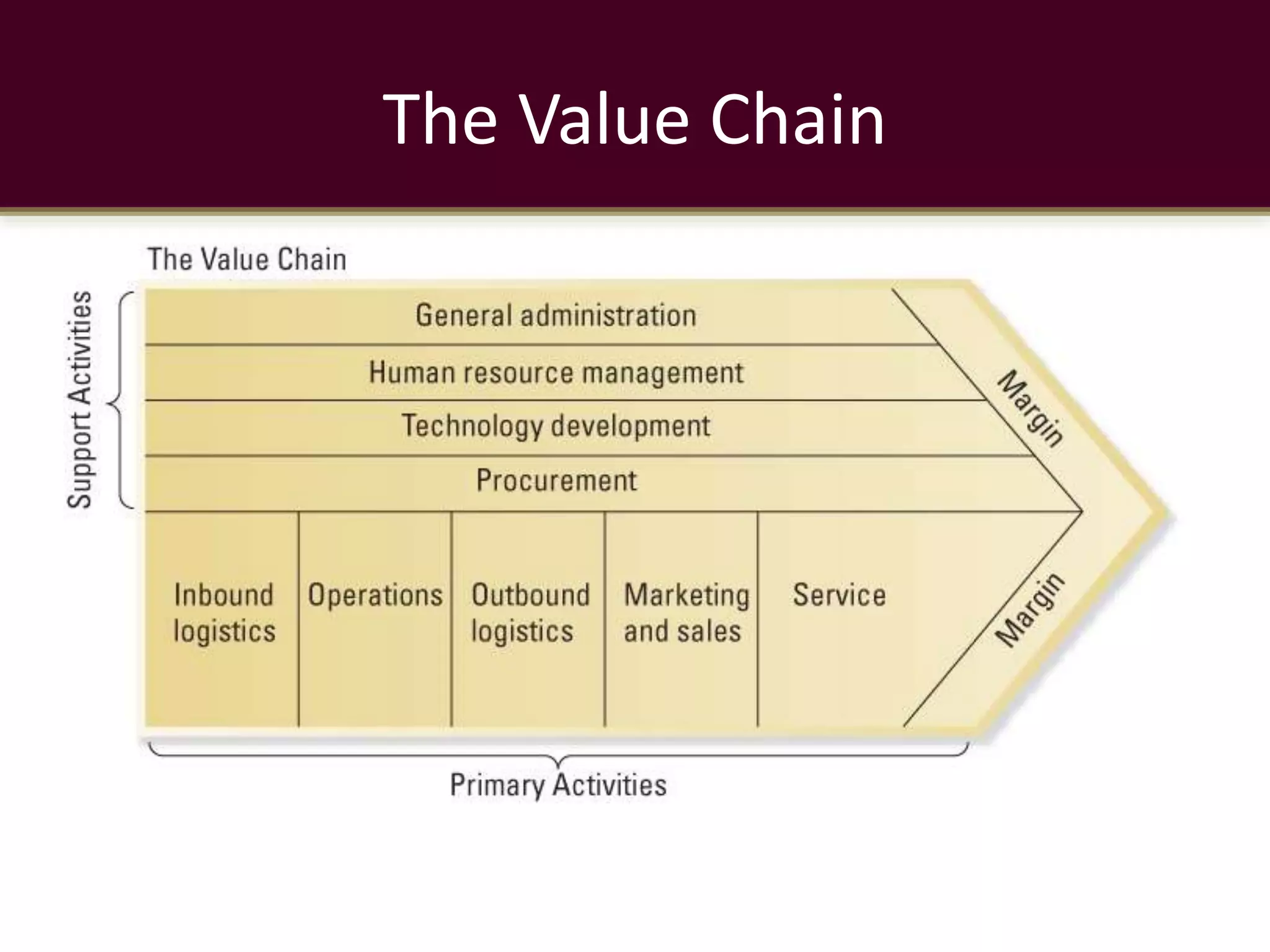
Value-chain analysis
 a strategic analysis of an organization that
uses value creating activities.
Value is the amount that buyers are willing
to pay for what a firm provides them and is
measured by total revenue
Value-Chain Analysis
Primary activities
 contribute to the physical creation of the
product or service, its sale and transfer to the
buyer, and its service after the sale.
 inbound logistics, operations, outbound
logistics, marketing and sales, and service
Value-Chain Analysis
Support activities
 activities of the value chain that either add
value by themselves or add value through
important relationships with both primary
activities and other support activities
 procurement, technology development,
human resource management, and general
administration.
The Value Chain
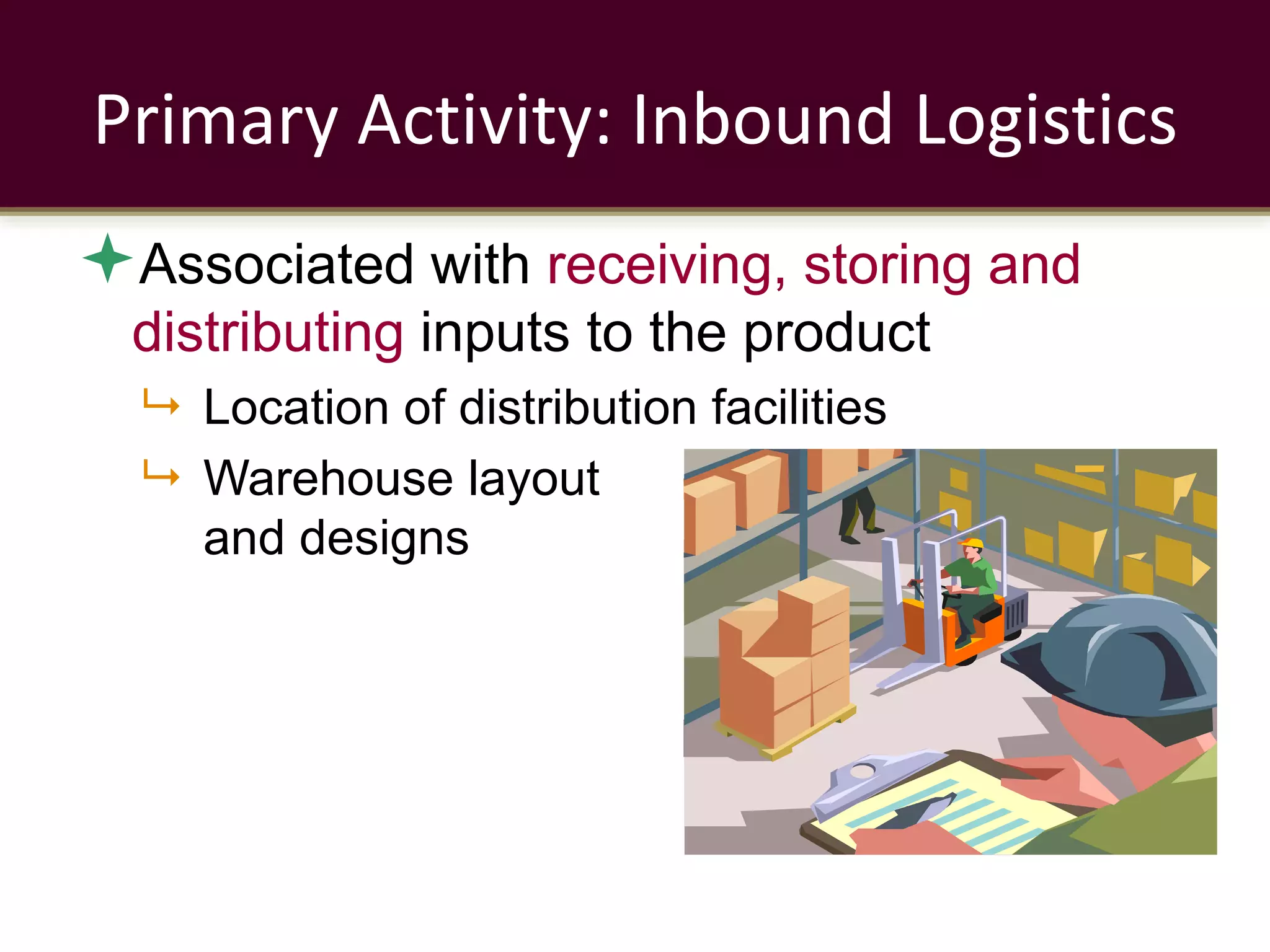
Primary Activity: Inbound Logistics
Associated with receiving, storing and
distributing inputs to the product
 Location of distribution facilities
 Warehouse layout
and designs
Primary Activity: Operations
Associated with transforming inputs into
the final product form
 Efficient plant operations
 Incorporation of appropriate process
technology
 Efficient plant layout and workflow design
Primary Activity: Outbound Logistics
Associated with collecting, storing, and
distributing the product or service to
buyers
 Effective shipping processes to provide quick
delivery and minimize damages
 Shipping of goods in large lot sizes to
minimize transportation costs.
Primary Activity: Marketing and Sales
Associated with purchases of products
and services by end users and the
inducements used to get them to make
purchases
 Innovative approaches to promotion and
advertising
 Proper identification of customer segments
and needs
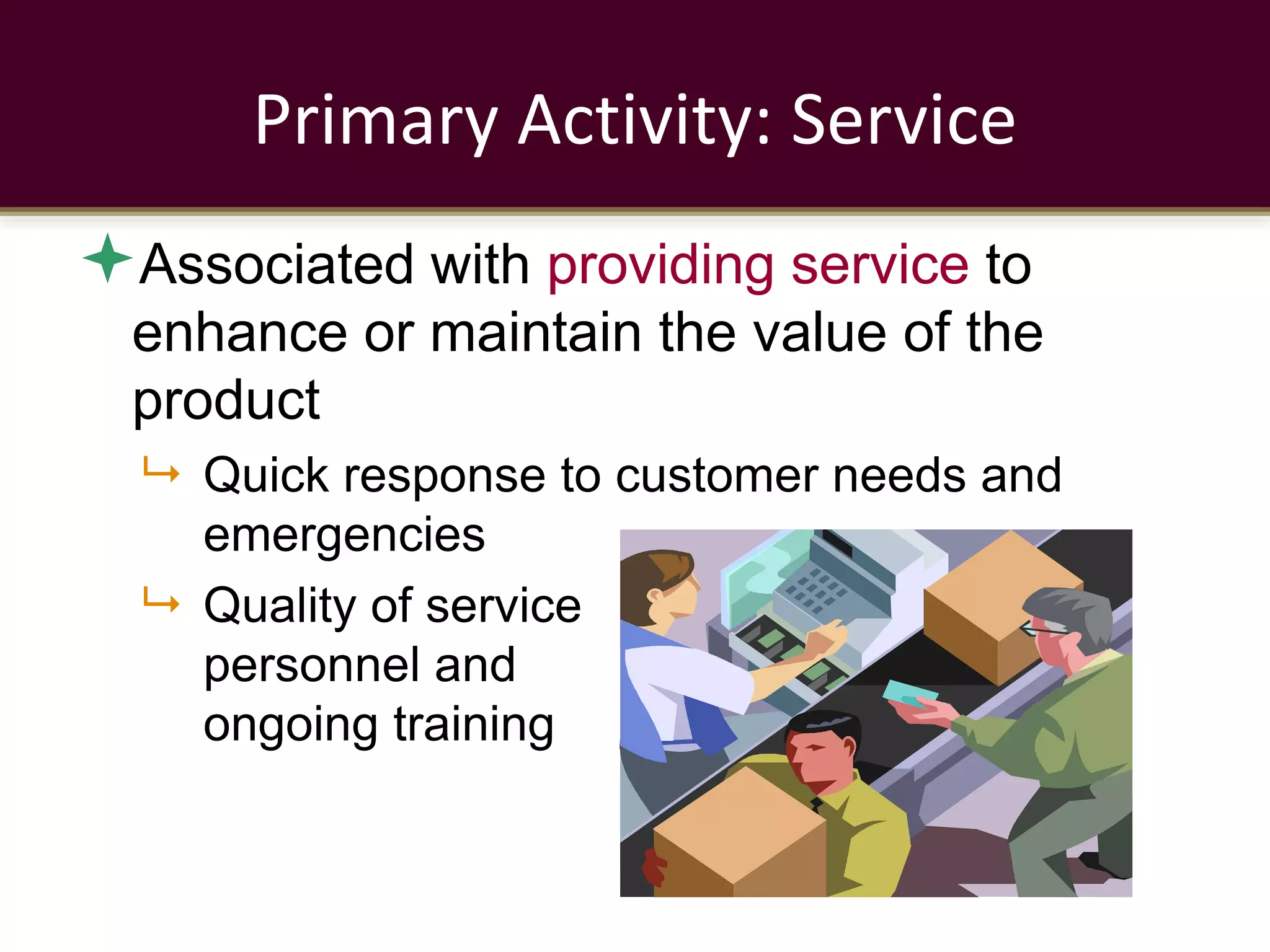
Primary Activity: Service
Associated with providing service to
enhance or maintain the value of the
product
 Quick response to customer needs and
emergencies
 Quality of service
personnel and
ongoing training
Support Activity: Procurement
Function of purchasing inputs used in the
firm’s value chain
 Procurement of raw material inputs
 Development of collaborative “win-win”
relationships with suppliers
 Analysis and selection of alternate sources
of inputs to minimize dependence on one
supplier
Support Activity:
Human Resource Management
Activities involved in the recruiting, hiring,
training, development, and compensation
of all types of personnel
 Effective recruiting, development, and
retention mechanisms for employees
 Quality relations with trade unions
 Reward and incentive programs to motivate
all employees
Support Activity:
Technology Development
Related to a wide range of activities and
those embodied in processes and
equipment and the product itself
 Effective R&D activities for process and
product initiatives
 Positive collaborative relationships between
R&D and other departments
 Excellent professional qualifications of
personnel
Support Activity:
General Administration
Typically supports the entire value chain
and not individual activities
 Effective planning systems
 Excellent relationships with diverse
stakeholder groups
 Effective information technology to integrate
value-creating activities
Value chain Google
Inbound logistics
Google does not reveal the details of its supply-chain
management and inbound logistics to the public. The
company is reported to be attempting a digital transformation
in supply-chain via projects aimed at automated drone
delivery of products.
Google maintains a dedicated supplier site, where suppliers
can submit invoice for payment, check invoice status and deal
with a range of other administrative aspects of their
cooperation with the company in a convenient manner.
3-15
Operations
Google operates via more than 70 offices in more than 40
countries internationally. Google offices are famous for their
creative design and the presence of distinctive features such as
sharing cubes, video games, pool tables, pianos, cafes and others.
Google headquarters in Mountain View, California consists of
about 4.8 million square feet of office and building space, along
with about 15 acres of land that can be ground for more office
space in the future.
All spheres of Google’s operations are guided by its organizational
culture based on challenging the status quo and adopting an
unconventional approach in getting things done.
3-16
Value chain Google
Outbound logistics
Online search and integration of advertisements into
search results represents Google’s core business and
there is no outbound logistics associated with
running this business. Google also sells physical
technological products such as Smart watches,
Nexus Phones, Chrome cast, Chrome books,
technological accessories and other products via its
website www.store.google.com. In 2015 Google also
opened its first fully-branded physical store in
London. 3-17
Value chain Google
Marketing and sales
Google’s marketing strategy relies on integration of online
and offline communication channels to communicate the
marketing message. Popular components of marketing
communication mix such as advertising, events and
experiences and public relations are used by Google
extensively, whereas the company uses sales promotions
and direct marketing sparingly. Google sales are
predominantly conducted via online sales channel and the
company started to utilize traditional offline sales channel
only recently.
3-18
Value chain Google
Service
Google forums play an instrumental role in terms of
assisting customers to deal with a wide range of
technical and other issues. Interestingly, as of May
2015, attempts to find Google’s customer services
phone numbers have proved to be unsuccessful. This
must be due to cost considerations taking into
account hundreds of millions of Google customers
around the globe.
3-19
Value chain Google
ANY QUERIES???
3-20
3-21

Value chain with example of IT industry

  • 1.
  • 2.
    Value-Chain Analysis Value-chain analysis a strategic analysis of an organization that uses value creating activities. Value is the amount that buyers are willing to pay for what a firm provides them and is measured by total revenue
  • 3.
    Value-Chain Analysis Primary activities contribute to the physical creation of the product or service, its sale and transfer to the buyer, and its service after the sale.  inbound logistics, operations, outbound logistics, marketing and sales, and service
  • 4.
    Value-Chain Analysis Support activities activities of the value chain that either add value by themselves or add value through important relationships with both primary activities and other support activities  procurement, technology development, human resource management, and general administration.
  • 5.
  • 6.
    Primary Activity: InboundLogistics Associated with receiving, storing and distributing inputs to the product  Location of distribution facilities  Warehouse layout and designs
  • 7.
    Primary Activity: Operations Associatedwith transforming inputs into the final product form  Efficient plant operations  Incorporation of appropriate process technology  Efficient plant layout and workflow design
  • 8.
    Primary Activity: OutboundLogistics Associated with collecting, storing, and distributing the product or service to buyers  Effective shipping processes to provide quick delivery and minimize damages  Shipping of goods in large lot sizes to minimize transportation costs.
  • 9.
    Primary Activity: Marketingand Sales Associated with purchases of products and services by end users and the inducements used to get them to make purchases  Innovative approaches to promotion and advertising  Proper identification of customer segments and needs
  • 10.
    Primary Activity: Service Associatedwith providing service to enhance or maintain the value of the product  Quick response to customer needs and emergencies  Quality of service personnel and ongoing training
  • 11.
    Support Activity: Procurement Functionof purchasing inputs used in the firm’s value chain  Procurement of raw material inputs  Development of collaborative “win-win” relationships with suppliers  Analysis and selection of alternate sources of inputs to minimize dependence on one supplier
  • 12.
    Support Activity: Human ResourceManagement Activities involved in the recruiting, hiring, training, development, and compensation of all types of personnel  Effective recruiting, development, and retention mechanisms for employees  Quality relations with trade unions  Reward and incentive programs to motivate all employees
  • 13.
    Support Activity: Technology Development Relatedto a wide range of activities and those embodied in processes and equipment and the product itself  Effective R&D activities for process and product initiatives  Positive collaborative relationships between R&D and other departments  Excellent professional qualifications of personnel
  • 14.
    Support Activity: General Administration Typicallysupports the entire value chain and not individual activities  Effective planning systems  Excellent relationships with diverse stakeholder groups  Effective information technology to integrate value-creating activities
  • 15.
    Value chain Google Inboundlogistics Google does not reveal the details of its supply-chain management and inbound logistics to the public. The company is reported to be attempting a digital transformation in supply-chain via projects aimed at automated drone delivery of products. Google maintains a dedicated supplier site, where suppliers can submit invoice for payment, check invoice status and deal with a range of other administrative aspects of their cooperation with the company in a convenient manner. 3-15
  • 16.
    Operations Google operates viamore than 70 offices in more than 40 countries internationally. Google offices are famous for their creative design and the presence of distinctive features such as sharing cubes, video games, pool tables, pianos, cafes and others. Google headquarters in Mountain View, California consists of about 4.8 million square feet of office and building space, along with about 15 acres of land that can be ground for more office space in the future. All spheres of Google’s operations are guided by its organizational culture based on challenging the status quo and adopting an unconventional approach in getting things done. 3-16 Value chain Google
  • 17.
    Outbound logistics Online searchand integration of advertisements into search results represents Google’s core business and there is no outbound logistics associated with running this business. Google also sells physical technological products such as Smart watches, Nexus Phones, Chrome cast, Chrome books, technological accessories and other products via its website www.store.google.com. In 2015 Google also opened its first fully-branded physical store in London. 3-17 Value chain Google
  • 18.
    Marketing and sales Google’smarketing strategy relies on integration of online and offline communication channels to communicate the marketing message. Popular components of marketing communication mix such as advertising, events and experiences and public relations are used by Google extensively, whereas the company uses sales promotions and direct marketing sparingly. Google sales are predominantly conducted via online sales channel and the company started to utilize traditional offline sales channel only recently. 3-18 Value chain Google
  • 19.
    Service Google forums playan instrumental role in terms of assisting customers to deal with a wide range of technical and other issues. Interestingly, as of May 2015, attempts to find Google’s customer services phone numbers have proved to be unsuccessful. This must be due to cost considerations taking into account hundreds of millions of Google customers around the globe. 3-19 Value chain Google
  • 20.
  • 21.

Editor's Notes

  • #3 Creating value for buyers that exceeds the costs of production is a key concept used in analyzing a firm’s competitive position.
  • #7 Associated with receiving, storing and distributing inputs to the product Location of distribution facilities Material and inventory control systems Systems to reduce time to send “returns” to suppliers Warehouse layout and designs
  • #8 Associated with transforming inputs into the final product form Efficient plant operations Incorporation of appropriate process technology Quality production control systems Efficient plant layout and workflow design
  • #9 Associated with collecting, storing, and distributing the product or service to buyers Effective shipping processes to provide quick delivery and minimize damages Efficient finished goods warehousing processes Shipping of goods in large lot sizes to minimize transportation costs. Quality material handling equipment
  • #10 Associated with purchases of products and services by end users and the inducements used to get them to make purchases Highly motivated and competent sales force Innovative approaches to promotion and advertising Selection of most appropriate distribution channels Proper identification of customer segments and needs Effective pricing strategies
  • #11 Associated with providing service to enhance or maintain the value of the product Effective use of procedures to solicit customer feedback and to act on information Quick response to customer needs and emergencies Ability to furnish replacement parts Effective management of parts and equipment inventory Quality of service personnel and ongoing training Warranty and guarantee policies
  • #12 Function of purchasing inputs used in the firm’s value chain Procurement of raw material inputs Development of collaborative “win-win” relationships with suppliers Effective procedures to purchase advertising and media services Analysis and selection of alternate sources of inputs to minimize dependence on one supplier Ability to make proper lease versus buy decisions
  • #13 Activities involved in the recruiting, hiring, training, development, and compensation of all types of personnel Effective recruiting, development, and retention mechanisms for employees Quality relations with trade unions Quality work environment to maximize overall employee performance and minimize absenteeism Reward and incentive programs to motivate all employees
  • #14 Related to a wide range of activities and those embodied in processes and equipment and the product itself Effective R&D activities for process and product initiatives Positive collaborative relationships between R&D and other departments State-of-the art facilities and equipment Culture to enhance creativity and innovation Excellent professional qualifications of personnel Ability to meet critical deadlines
  • #15 Typically supports the entire value chain and not individual activities Effective planning systems Ability of top management to anticipate and act on key environmental trends and events Ability to obtain low-cost funds for capital expenditures and working capital Excellent relationships with diverse stakeholder groups Ability to coordinate and integrate activities across the value chain Highly visible to inculcate organizational culture, reputation, and values