CONSTRUCTION TYPES
CODE ANALYSIS
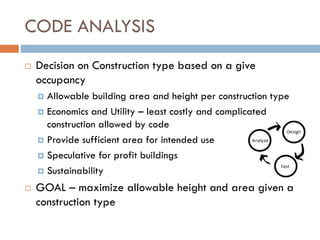
 Decision on Construction type based on a give
occupancy
 Allowable building area and height per construction type
 Economics and Utility – least costly and complicated
construction allowed by code
 Provide sufficient area for intended use
 Speculative for profit buildings
 Sustainability
 GOAL – maximize allowable height and area given a
construction type
 Building elements
 Columns, floor/ceiling systems, interior walls, and
vertical shafts
 Structural elements
 Support the weight of the building
 Fire resistance principle based on desire to limit
spread of fire from:
 One building to another
 One area to another
 One floor to another
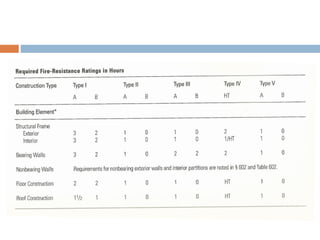
 Codes define construction types by defining the
kinds of materials to be used for building and
construction elements
 Establishes the minimum hourly fire rating of
building elements
 Materials categorized as noncombustible, limited
combustible, and combustible
 Fire rating – Hourly fire endurance rating not
fireproof
 Non combustible – ‘material of which no part will
ignite and burn when subjected to fire’ – 1997 UBC
 Masonry, concrete, steel
 Combustible – wood and plastics
 A protected – additional covering must be added
to add the fire resistance of the material
 B unprotected – nothing added
 Required ratings for specific structural elements may
vary
 Construction types divided into subcategories
 Protected (A) – structural components must have
added fire protective enclosure that adds to the fire
resistance of the material
 Unprotected (B) – no additional treatment or
covering required to be added to the structural
components
 Every building must have a construction type
classification
 If even one of the construction type criteria is failed
to be met, it then falls into the next least resistive
category
 Interior project modifications must make sure that
any modifications to the building or structural
elements does not change their construction type
requirements
 Use of performance codes may be allowed
 Older buildings where construction type is not easily
determined
 Structural material fire ratings impossible to classify
 Matching existing construction will result in below
standard requirements
 Requires ‘appropriate’ fire resistance for the
structural member, potential exposure to fire, height
and use of the building
 Hour fire rating represents length of time material or
assembly must resist fire
 How easily they ignite
 How long they burn once ignited
 How quickly flames spread
 How much heat the material generates
 Higher hour rating indicates noncombustible materials
are required
 Low hour ratings indicates that fire-resistant or limited
combustible materials are allowed (amount may be
limited)
 Noncombustible materials – will not ignite, burn,
support combustion, or release flammable vapors
when subject to fire or heat
 ASTME136 Standard Test Method for Behavior of
Materials in a Vertical Tube Furnace at 750
degrees Celsius
 Steel
 Iron
 Concrete
 Masonry
 Combustible materials – will ignite and continue to
burn once flame source is removed
 Wood
 Can be chemically treated to achieve some fire
resistance
 Fire-retardant treated wood FRTW
 Fire treated wood can be used in most rated walls
 Can also be used as finish material – trims
 Fire resistant if cross section is large enough –
Heavy timber
 Builds a layer of char during a fire that helps
protect the rest of the timber
 Columns 8x8”
 Beams 6x10”
 Fire resistant and limited combustible materials can
be used in combination with other materials to
create rated assemblies
 Wood studs with gypsum board on both sides – 1
hour rated wall
TYPE I AND II CONSTRUCTION
 Steel and concrete – considered noncombustible
 Difference between types is the required fire rating of the structural
elements
 High rise and large buildings
 Type IA construction – highest level of fire-resistance-rated
construction – passive protection for all elements of the structure
 Type IB – permits reduction of 1 hr. in structural frame and ½ hr. in
roof construction
 Type IIA – allows active or passive protection on all members
 Type IIB – allows unprotected noncombustible building elements
 Combustible materials of limited quantity and used in conditions
where they will not contribute or compromise the resistance of
structural members
TYPE III CONSTRUCTION
 Mixed combustible and noncombustible elements
 Exterior is non combustible – masonry
 Interior structural and roof may be wood
 Small office building or urban buildings adjacent to each other
 Type III buildings have mix of combustible and noncombustible
construction – construction type resulted from prevention of
fires between buildings by igniting the exterior walls – interior
allowed to be combustible
TYPE IV CONSTRUCTION
 Heavy timber
 No concealed spaces such as soffits, plenums or suspended
ceilings
 Type IV address safety in manufacturing and storage buildings
– exterior walls of noncombustible construction and interior
structure and floors made up of heavy timber members
 No concealed spaces in building elements
 Floor framing minimum nominal thickness 3” and held away
from exterior wall and must have fire blocking
TYPE V CONSTRUCTION
 Most combustible
 All wood
 Exterior may be brick veneer, siding or stucco
 Typically small buildings – residential house,
dentist’s office, convenience store
 Allows any material permitted by codes
 Fire resistance is provided by adding fire resistant
materials to encapsulate the structural members
EXAMPLE
 You are asked to design an office in a floor of an
existing building
 Before deciding on the rating and materials of
interior walls and ceilings. Identify building
construction type
 Is the frame wood, steel, concrete block or other
masonry?
 What are the exterior walls?
 Are the floors wood or concrete?
 It is possible to have two construction types in the same
building
 Construction types must be separated from each other
 Vertical separation – Fire Wall
 Party Wall is similar – shared lot line between two parcels of
land
 Must extend from foundation through the roof to the parapet
 Must remain stable even if one side of the wall collapses during fire
 Horizontal separation – horizontal assembly
 Must extend over the entire floor to the exterior or another
vertical fire wall
 Stricter construction types is linked to large
occupancies, thus allowing more evacuation time
 Assembly
 Hazardous
 Institutional
 Sustainability requirements
 Steel and concrete – typical structural material
 Steel often made of 100% recyclable content and
recyclable afterwards
 Concrete can be made up of recycled content and
recyclable afterwards
 Wood – renewable material
 Must come from sustainably managed forests
 Height and Area of a building limited by
 Occupancy type
 Construction type
 Whether or not building is sprinklered
 Whether there are adjacent buildings

Construction types

  • 1.
  • 2.
    CODE ANALYSIS  Decisionon Construction type based on a give occupancy  Allowable building area and height per construction type  Economics and Utility – least costly and complicated construction allowed by code  Provide sufficient area for intended use  Speculative for profit buildings  Sustainability  GOAL – maximize allowable height and area given a construction type
  • 3.
     Building elements Columns, floor/ceiling systems, interior walls, and vertical shafts  Structural elements  Support the weight of the building
  • 4.
     Fire resistanceprinciple based on desire to limit spread of fire from:  One building to another  One area to another  One floor to another
  • 5.
     Codes defineconstruction types by defining the kinds of materials to be used for building and construction elements  Establishes the minimum hourly fire rating of building elements  Materials categorized as noncombustible, limited combustible, and combustible
  • 6.
     Fire rating– Hourly fire endurance rating not fireproof  Non combustible – ‘material of which no part will ignite and burn when subjected to fire’ – 1997 UBC  Masonry, concrete, steel  Combustible – wood and plastics
  • 7.
     A protected– additional covering must be added to add the fire resistance of the material  B unprotected – nothing added
  • 9.
     Required ratingsfor specific structural elements may vary  Construction types divided into subcategories  Protected (A) – structural components must have added fire protective enclosure that adds to the fire resistance of the material  Unprotected (B) – no additional treatment or covering required to be added to the structural components
  • 10.
     Every buildingmust have a construction type classification  If even one of the construction type criteria is failed to be met, it then falls into the next least resistive category  Interior project modifications must make sure that any modifications to the building or structural elements does not change their construction type requirements
  • 11.
     Use ofperformance codes may be allowed  Older buildings where construction type is not easily determined  Structural material fire ratings impossible to classify  Matching existing construction will result in below standard requirements  Requires ‘appropriate’ fire resistance for the structural member, potential exposure to fire, height and use of the building
  • 12.
     Hour firerating represents length of time material or assembly must resist fire  How easily they ignite  How long they burn once ignited  How quickly flames spread  How much heat the material generates  Higher hour rating indicates noncombustible materials are required  Low hour ratings indicates that fire-resistant or limited combustible materials are allowed (amount may be limited)
  • 13.
     Noncombustible materials– will not ignite, burn, support combustion, or release flammable vapors when subject to fire or heat  ASTME136 Standard Test Method for Behavior of Materials in a Vertical Tube Furnace at 750 degrees Celsius  Steel  Iron  Concrete  Masonry
  • 14.
     Combustible materials– will ignite and continue to burn once flame source is removed  Wood  Can be chemically treated to achieve some fire resistance  Fire-retardant treated wood FRTW  Fire treated wood can be used in most rated walls  Can also be used as finish material – trims
  • 15.
     Fire resistantif cross section is large enough – Heavy timber  Builds a layer of char during a fire that helps protect the rest of the timber  Columns 8x8”  Beams 6x10”
  • 16.
     Fire resistantand limited combustible materials can be used in combination with other materials to create rated assemblies  Wood studs with gypsum board on both sides – 1 hour rated wall
  • 17.
    TYPE I ANDII CONSTRUCTION  Steel and concrete – considered noncombustible  Difference between types is the required fire rating of the structural elements  High rise and large buildings  Type IA construction – highest level of fire-resistance-rated construction – passive protection for all elements of the structure  Type IB – permits reduction of 1 hr. in structural frame and ½ hr. in roof construction  Type IIA – allows active or passive protection on all members  Type IIB – allows unprotected noncombustible building elements  Combustible materials of limited quantity and used in conditions where they will not contribute or compromise the resistance of structural members
  • 18.
    TYPE III CONSTRUCTION Mixed combustible and noncombustible elements  Exterior is non combustible – masonry  Interior structural and roof may be wood  Small office building or urban buildings adjacent to each other  Type III buildings have mix of combustible and noncombustible construction – construction type resulted from prevention of fires between buildings by igniting the exterior walls – interior allowed to be combustible
  • 19.
    TYPE IV CONSTRUCTION Heavy timber  No concealed spaces such as soffits, plenums or suspended ceilings  Type IV address safety in manufacturing and storage buildings – exterior walls of noncombustible construction and interior structure and floors made up of heavy timber members  No concealed spaces in building elements  Floor framing minimum nominal thickness 3” and held away from exterior wall and must have fire blocking
  • 20.
    TYPE V CONSTRUCTION Most combustible  All wood  Exterior may be brick veneer, siding or stucco  Typically small buildings – residential house, dentist’s office, convenience store  Allows any material permitted by codes  Fire resistance is provided by adding fire resistant materials to encapsulate the structural members
  • 21.
    EXAMPLE  You areasked to design an office in a floor of an existing building  Before deciding on the rating and materials of interior walls and ceilings. Identify building construction type  Is the frame wood, steel, concrete block or other masonry?  What are the exterior walls?  Are the floors wood or concrete?
  • 22.
     It ispossible to have two construction types in the same building  Construction types must be separated from each other  Vertical separation – Fire Wall  Party Wall is similar – shared lot line between two parcels of land  Must extend from foundation through the roof to the parapet  Must remain stable even if one side of the wall collapses during fire  Horizontal separation – horizontal assembly  Must extend over the entire floor to the exterior or another vertical fire wall
  • 23.
     Stricter constructiontypes is linked to large occupancies, thus allowing more evacuation time  Assembly  Hazardous  Institutional
  • 24.
     Sustainability requirements Steel and concrete – typical structural material  Steel often made of 100% recyclable content and recyclable afterwards  Concrete can be made up of recycled content and recyclable afterwards  Wood – renewable material  Must come from sustainably managed forests
  • 25.
     Height andArea of a building limited by  Occupancy type  Construction type  Whether or not building is sprinklered  Whether there are adjacent buildings