ARCHITECTURAL
CONCEPT
DEVELOPMENT
AMU – AUP Dep’t Integrated Design –
Project I
Lecture BY:
Alemea G.
(MSc)
Architectural Concept
Development
 Lecture Content
 What is Concept?
 Why is it important to have a concept in your
design?
 How to communicate your concept?
ARCHiTeCTural Concept Development
 DEFINITION-OF-
CONCEPT
 Idea
 Theory
 Notion
 Parti (French)
 Conception
 Abstraction
 Philosophy
 Belief
 Inspiration
 Image
 View
 Intention
 Plan
 Fancy
 Thought
 Impression
 Hypothesis
 Supposition
 … design
ARCHiTeCTural Concept Development
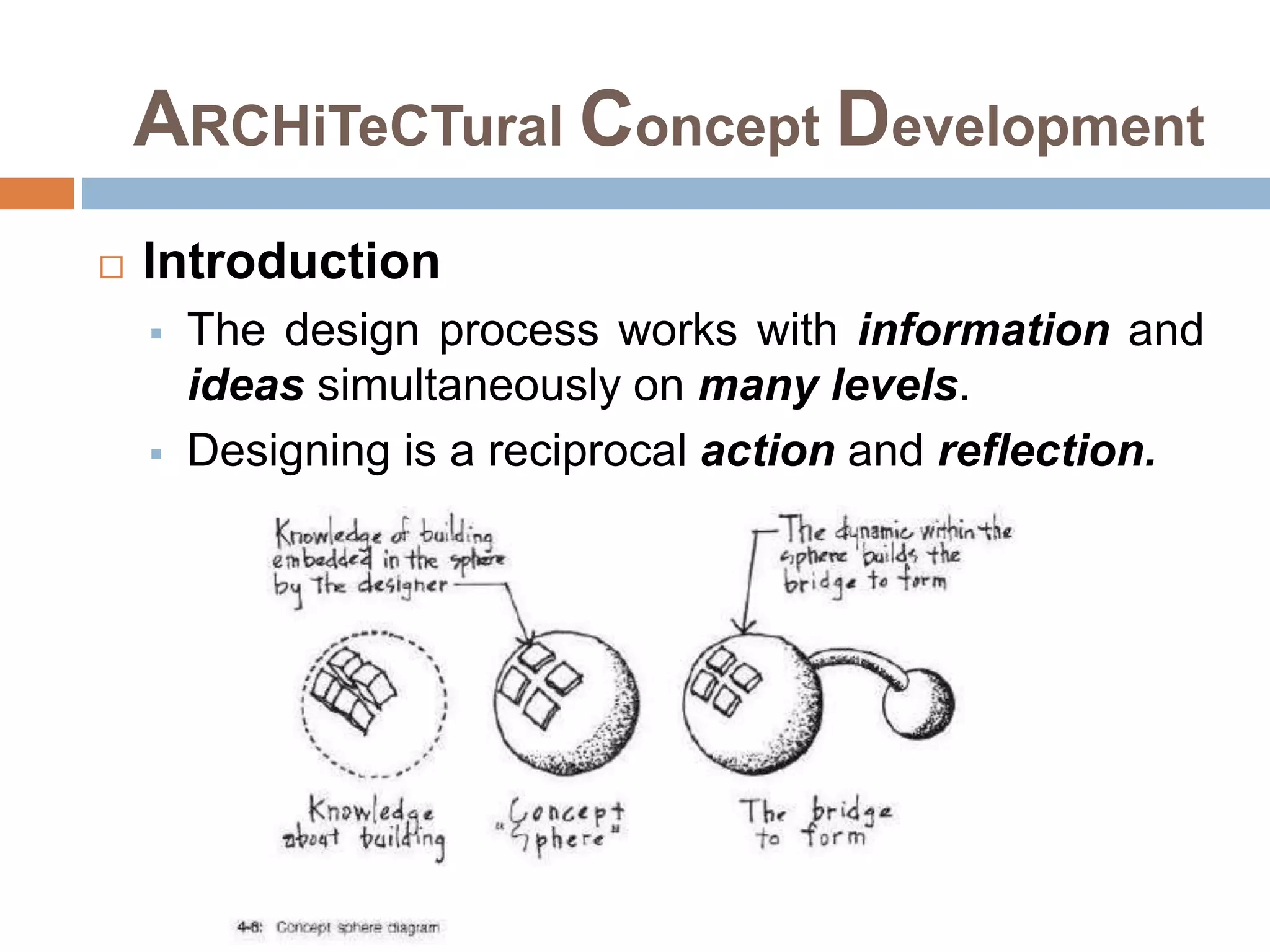
 Introduction
 The design process works with information and
ideas simultaneously on many levels.
 Designing is a reciprocal action and reflection.
ARCHiTeCTural Concept Development
 Introduction
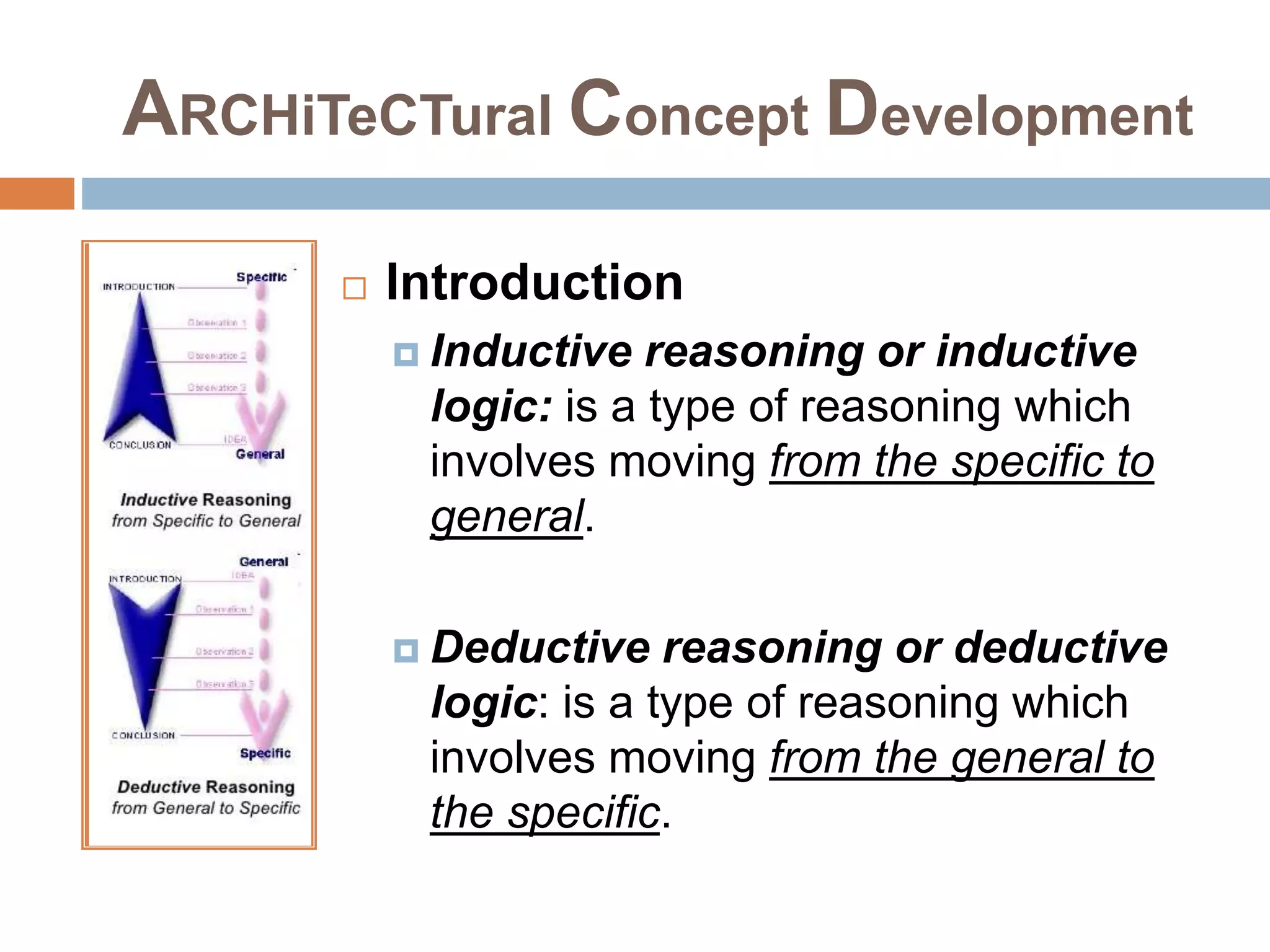
 Inductive reasoning or inductive
logic: is a type of reasoning which
involves moving from the specific to
general.
 Deductive reasoning or deductive
logic: is a type of reasoning which
involves moving from the general to
the specific.
ARCHiTeCTural Concept Development
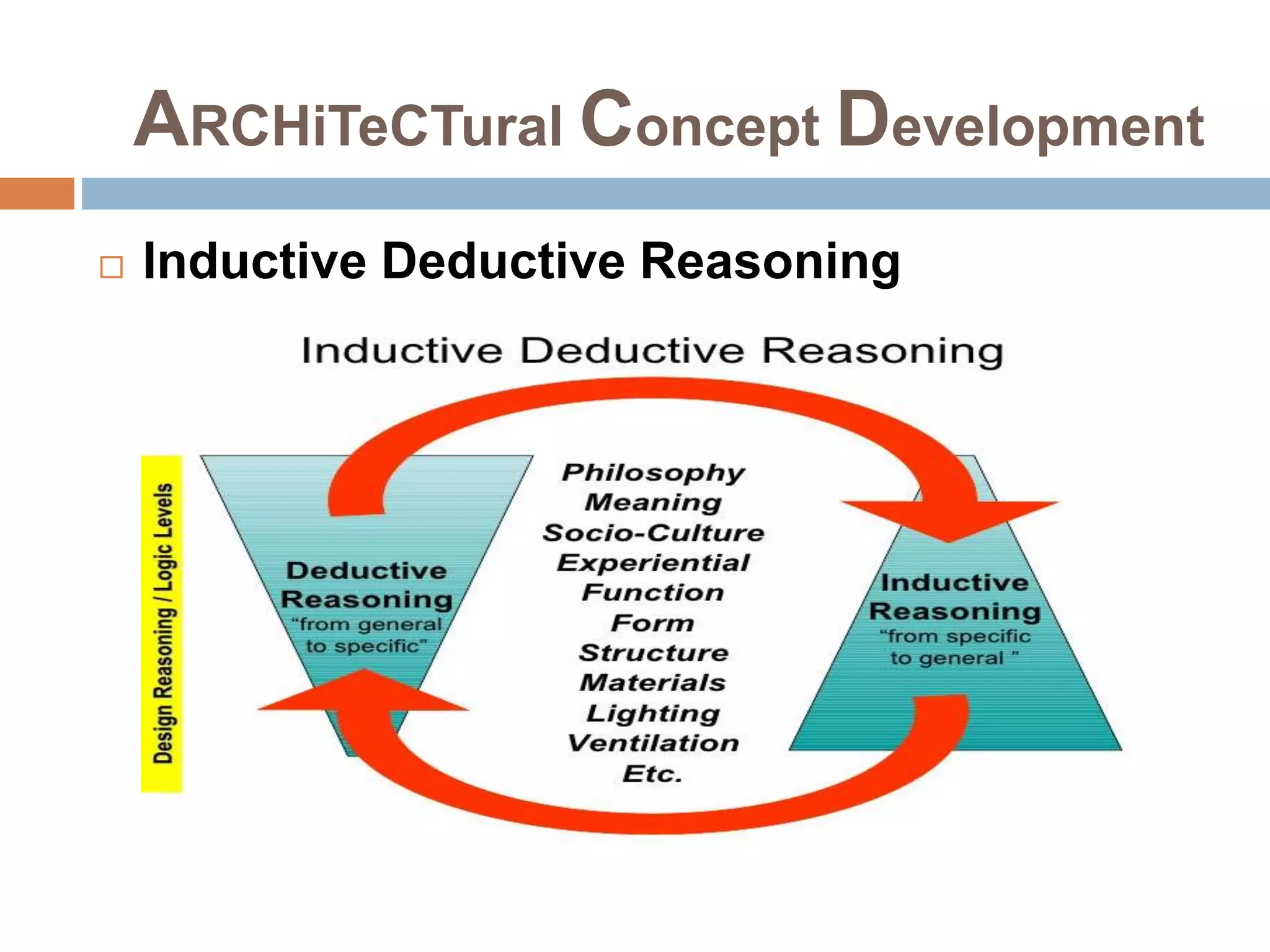
 Inductive Deductive Reasoning
ARCHiTeCTural Concept Development
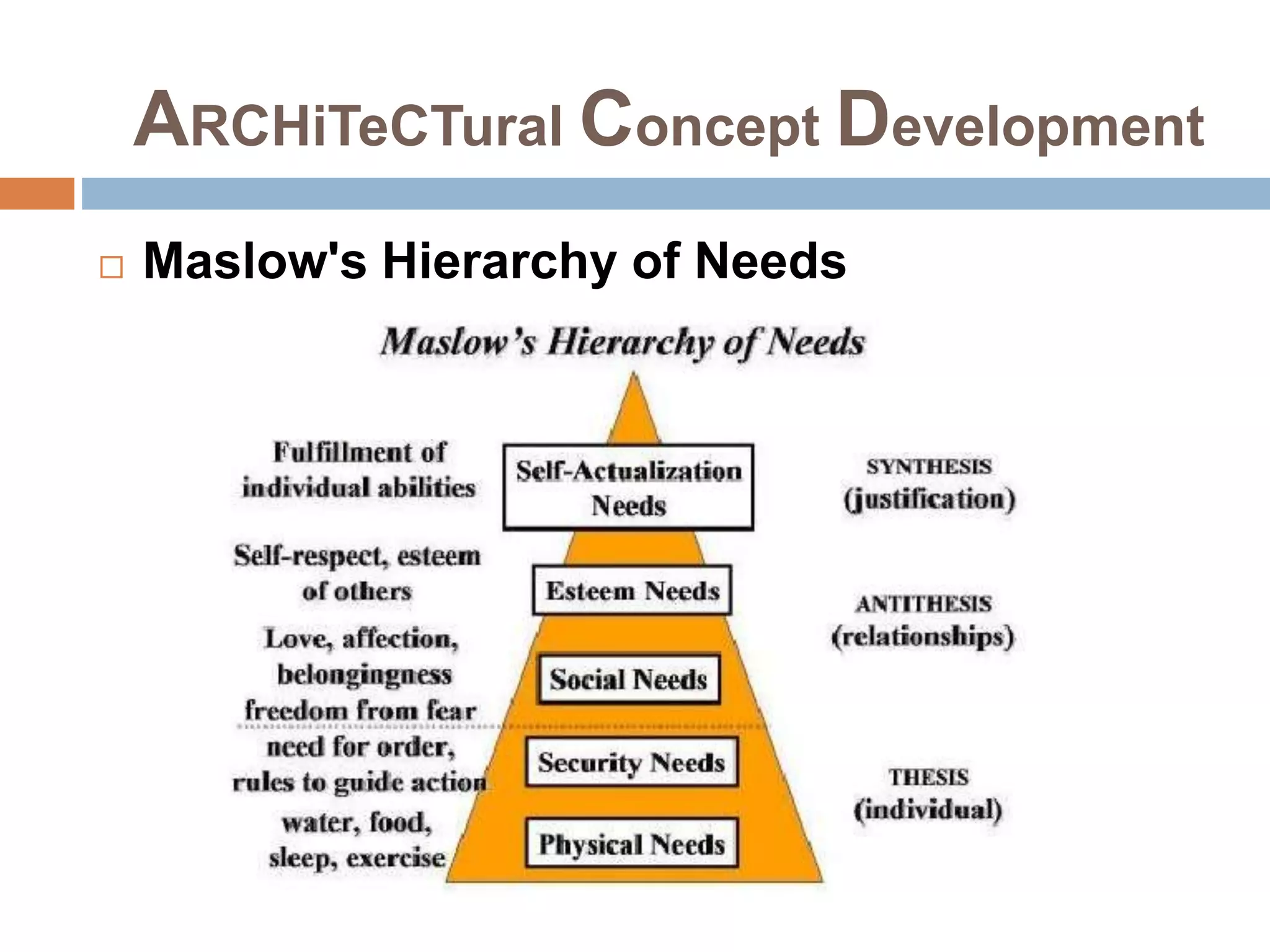
 Maslow's Hierarchy of Needs
ARCHiTeCTural Concept Development
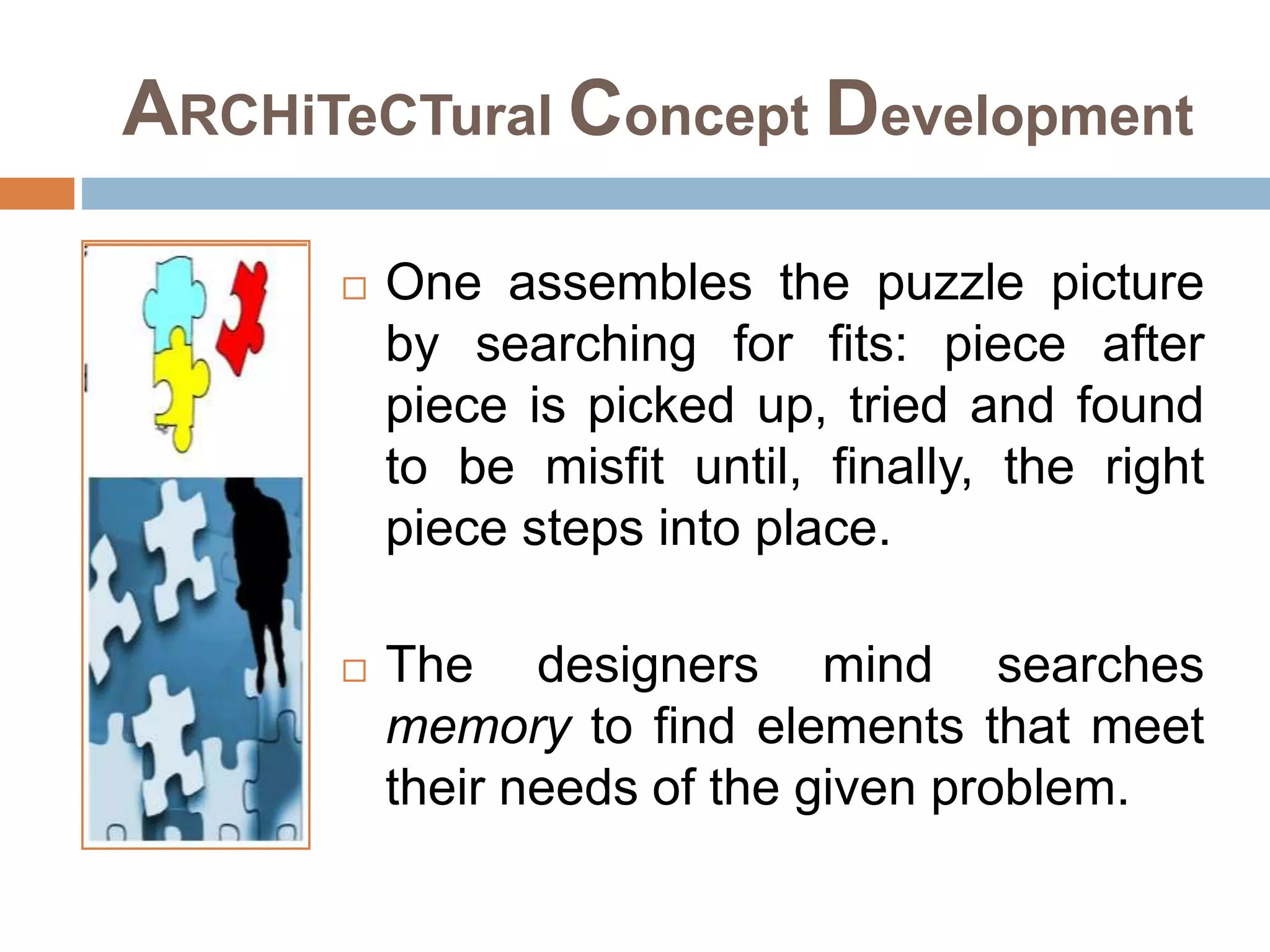
 One assembles the puzzle picture
by searching for fits: piece after
piece is picked up, tried and found
to be misfit until, finally, the right
piece steps into place.
 The designers mind searches
memory to find elements that meet
their needs of the given problem.
ARCHiTeCTural Concept Development
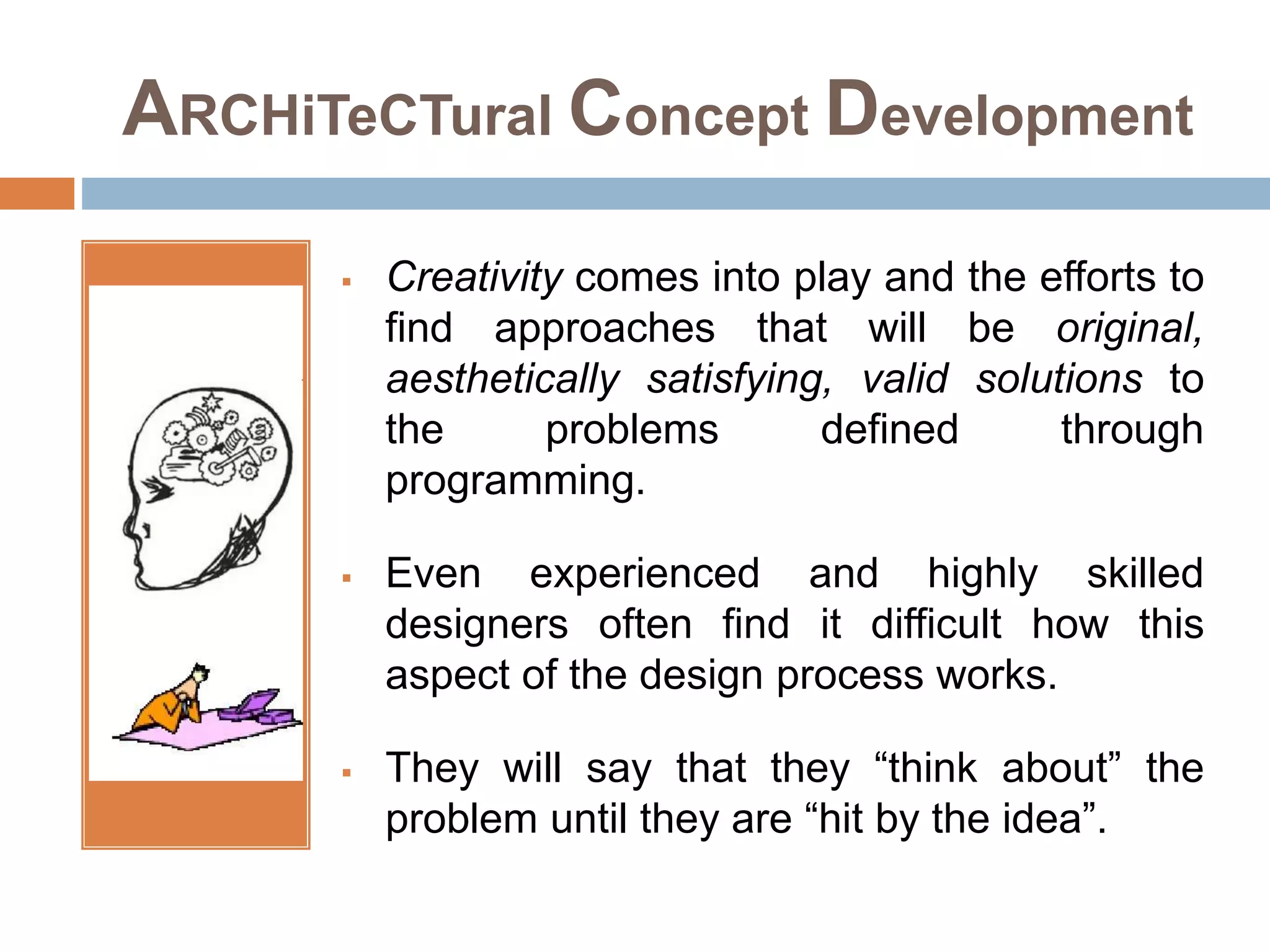
 Creativity comes into play and the efforts to
find approaches that will be original,
aesthetically satisfying, valid solutions to
the problems defined through
programming.
 Even experienced and highly skilled
designers often find it difficult how this
aspect of the design process works.
 They will say that they “think about” the
problem until they are “hit by the idea”.
ARCHiTeCTural Concept Development
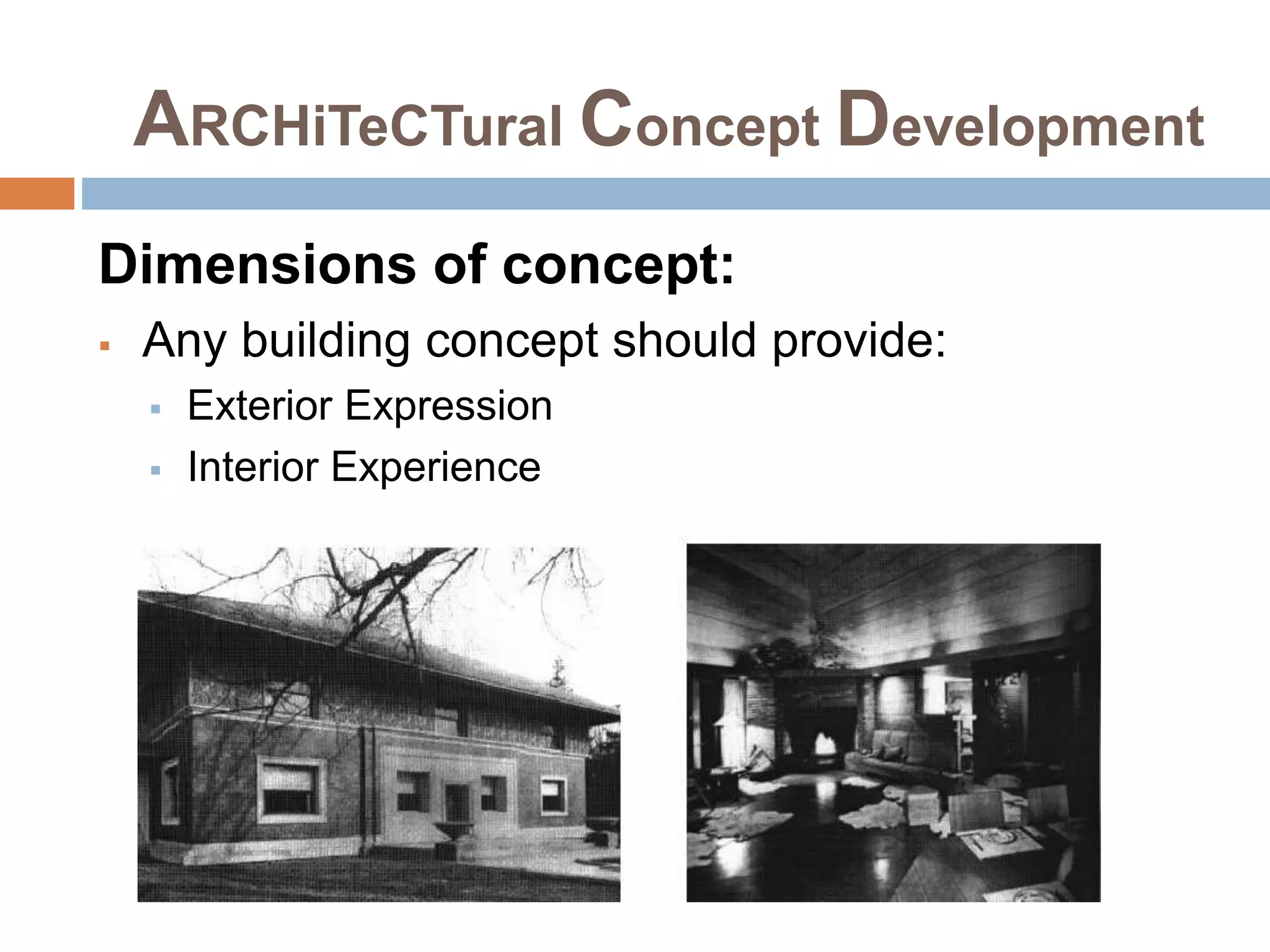
Dimensions of concept:
 Any building concept should provide:
 Exterior Expression
 Interior Experience
ARCHiTeCTural Concept
Development
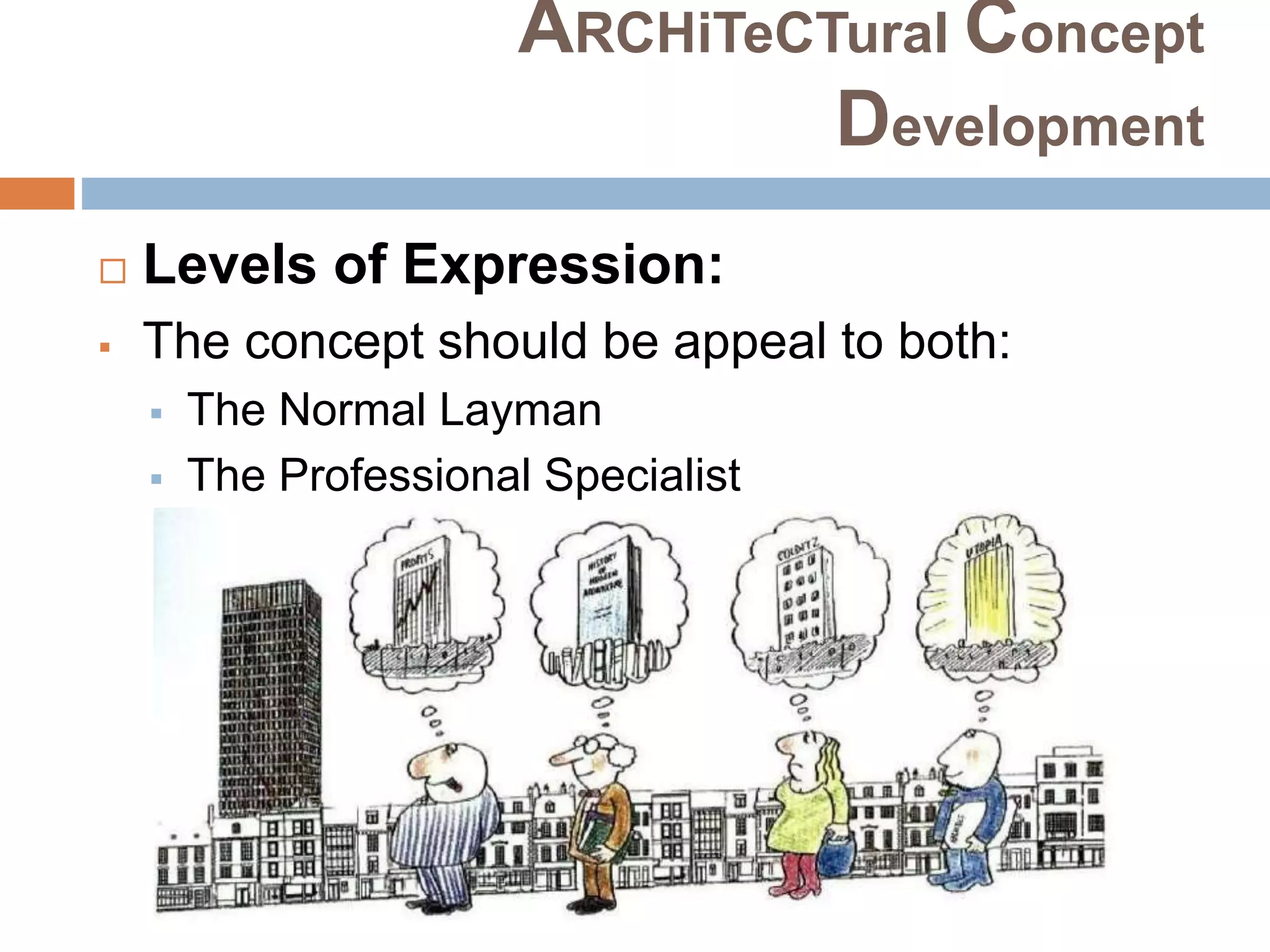
 Levels of Expression:
 The concept should be appeal to both:
 The Normal Layman
 The Professional Specialist
ARCHiTeCTural Concept Development
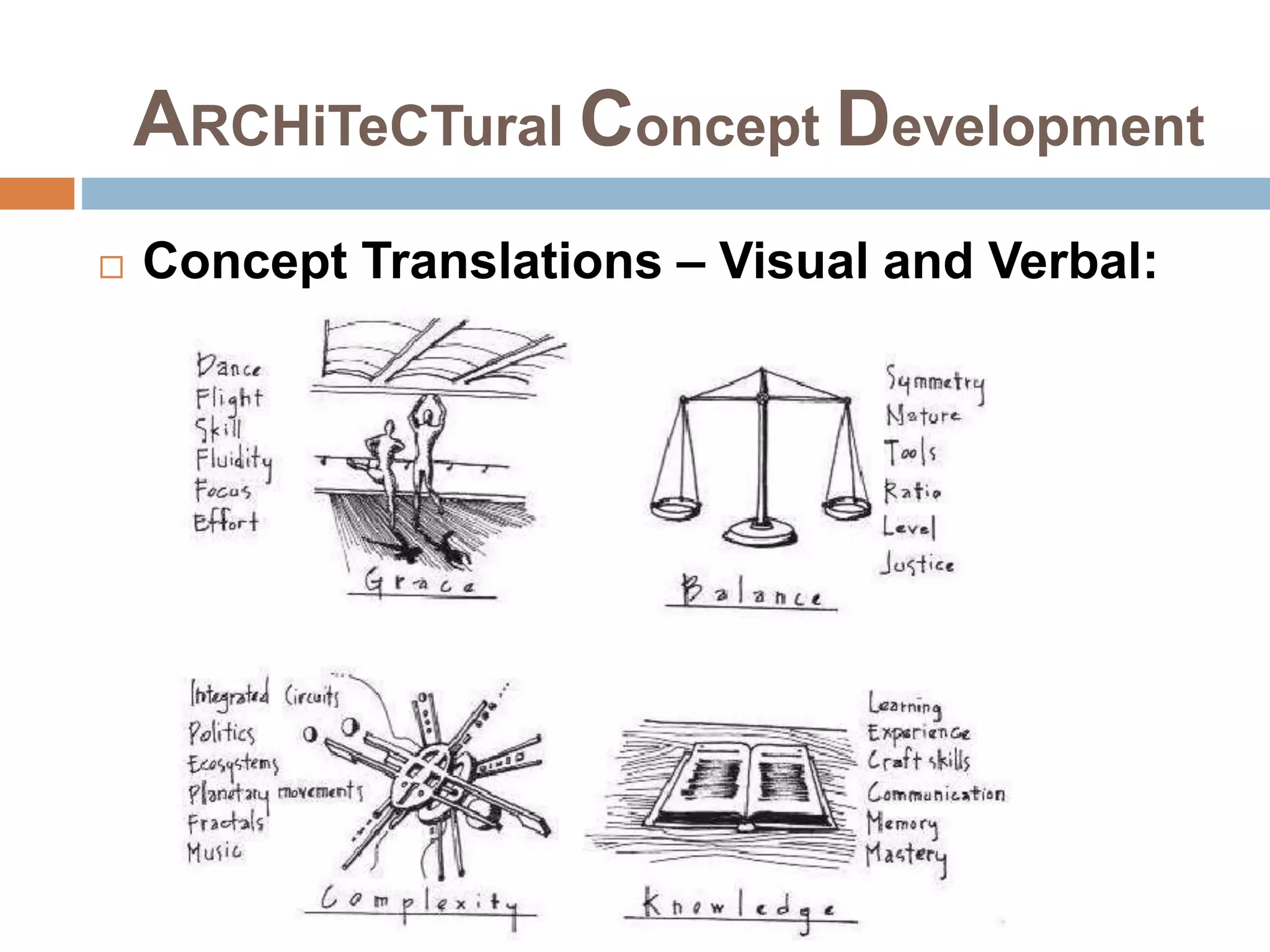
 Concept Translations – Visual and Verbal:
ARCHiTeCTural Concept Development
 There are three broad categories of metaphor:
 Intangible: the metaphorical departure is a concept,
idea, human condition, or a particular quality
(individuality, tradition, culture, community, etc.)
 Tangible: the metaphorical departure stems strictly
from some visual or material character (a house as a
castle, the roof of a temple as the sky, etc.)
 Combined: in this kind of metaphor the conceptual
and the visual overlap (the computer and the beehive,
both being boxes or relevant proportions, yet having
the qualities of discipline, organization, corporation).
ARCHiTeCTural Concept Development
SELECTED
EXAMPLES
OF WELL-
KNOWN
TANGIBLE
METAPHORS
ARCHiTeCTural Concept Development
Design
Concept
Generation
ARCHiTeCTural Concept Development
Design
Concept
Generation
ARCHiTeCTural Concept Development
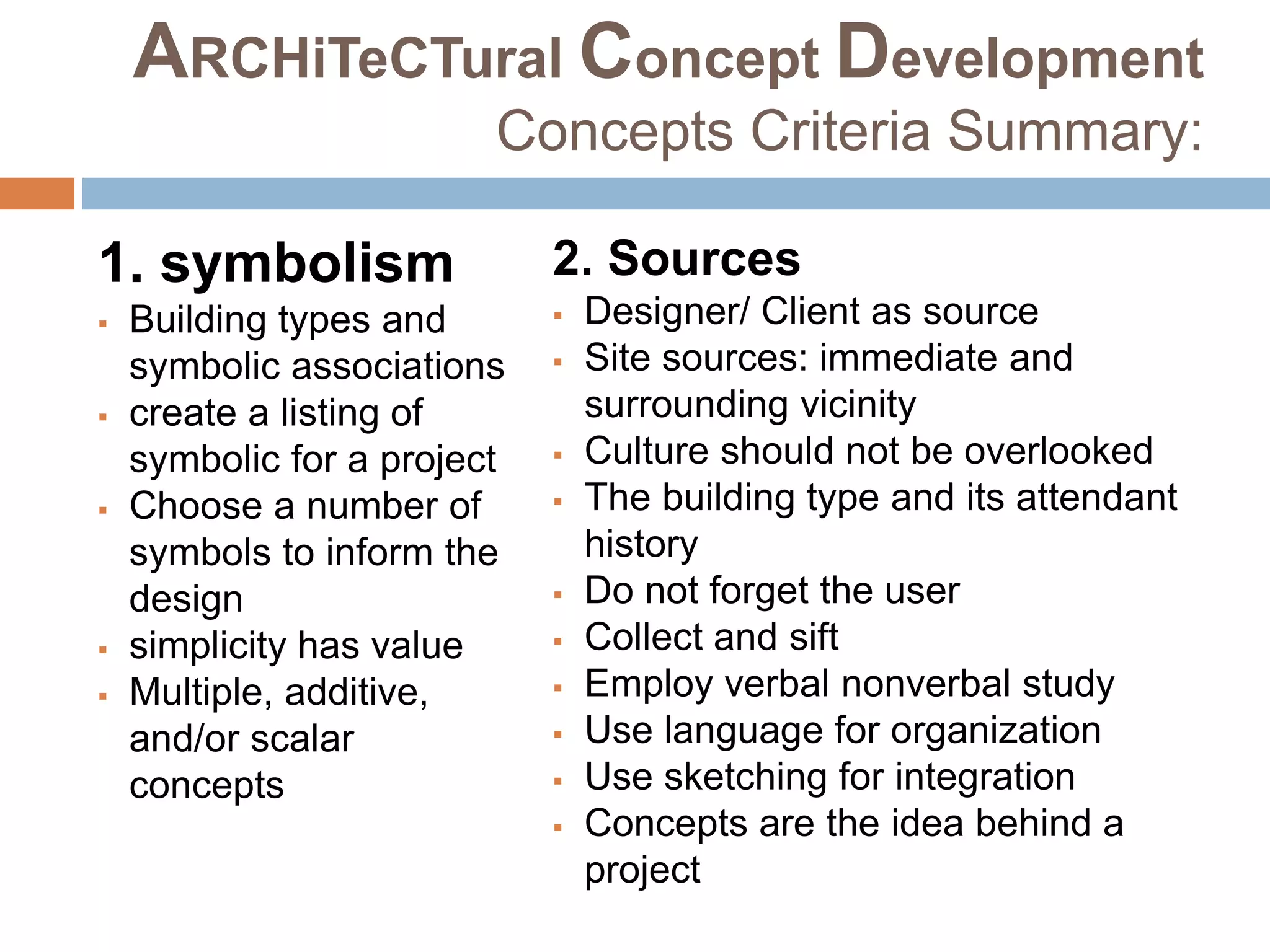
Concepts Criteria Summary:
1. symbolism
 Building types and
symbolic associations
 create a listing of
symbolic for a project
 Choose a number of
symbols to inform the
design
 simplicity has value
 Multiple, additive,
and/or scalar
concepts
2. Sources
 Designer/ Client as source
 Site sources: immediate and
surrounding vicinity
 Culture should not be overlooked
 The building type and its attendant
history
 Do not forget the user
 Collect and sift
 Employ verbal nonverbal study
 Use language for organization
 Use sketching for integration
 Concepts are the idea behind a
project
ARCHiTeCTural Concept Development
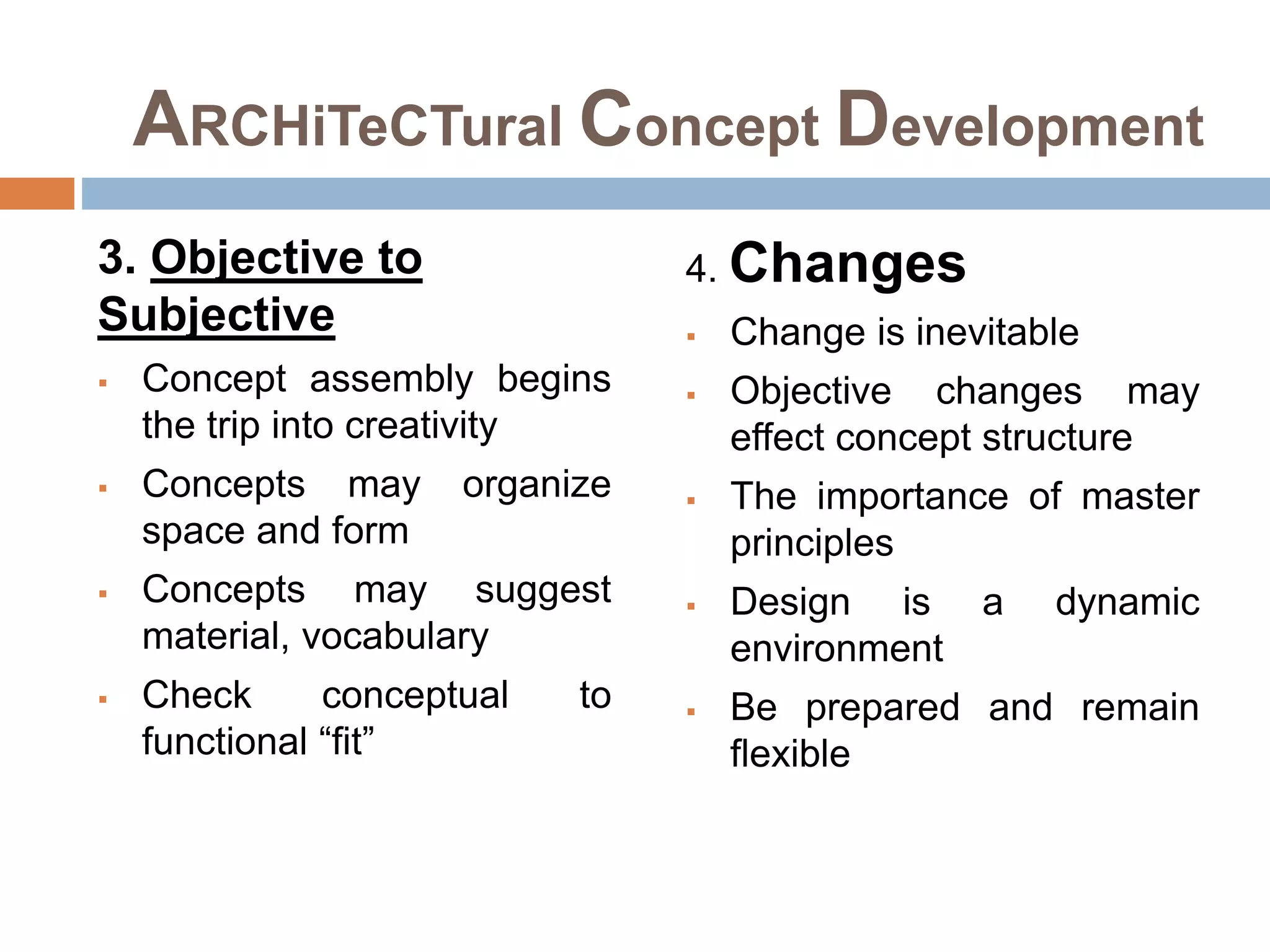
3. Objective to
Subjective
 Concept assembly begins
the trip into creativity
 Concepts may organize
space and form
 Concepts may suggest
material, vocabulary
 Check conceptual to
functional “fit”
4. Changes
 Change is inevitable
 Objective changes may
effect concept structure
 The importance of master
principles
 Design is a dynamic
environment
 Be prepared and remain
flexible
ARCHiTeCTural Concept Development
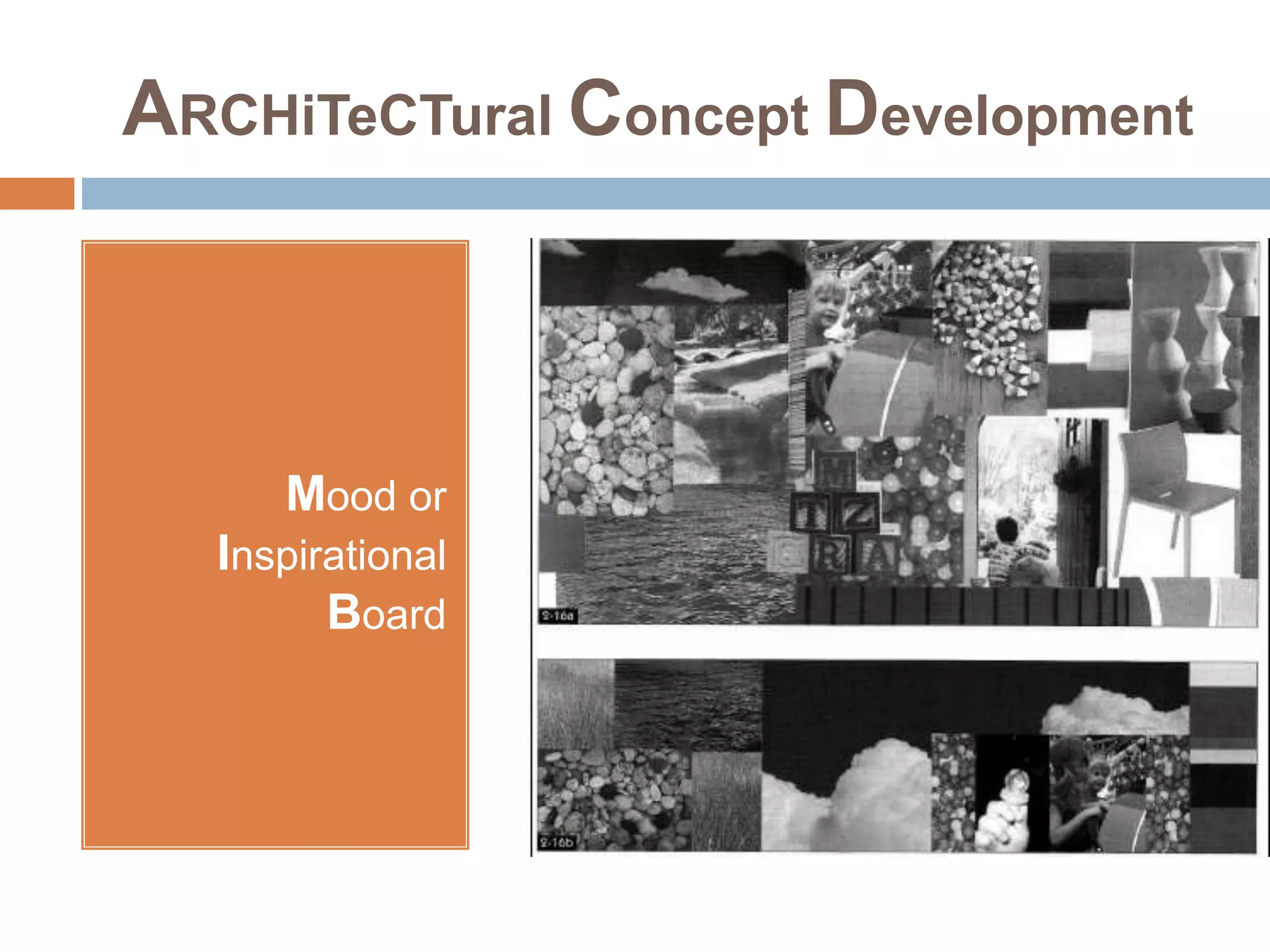
Mood or
Inspirational
Board
ARCHiTeCTural Concept Development
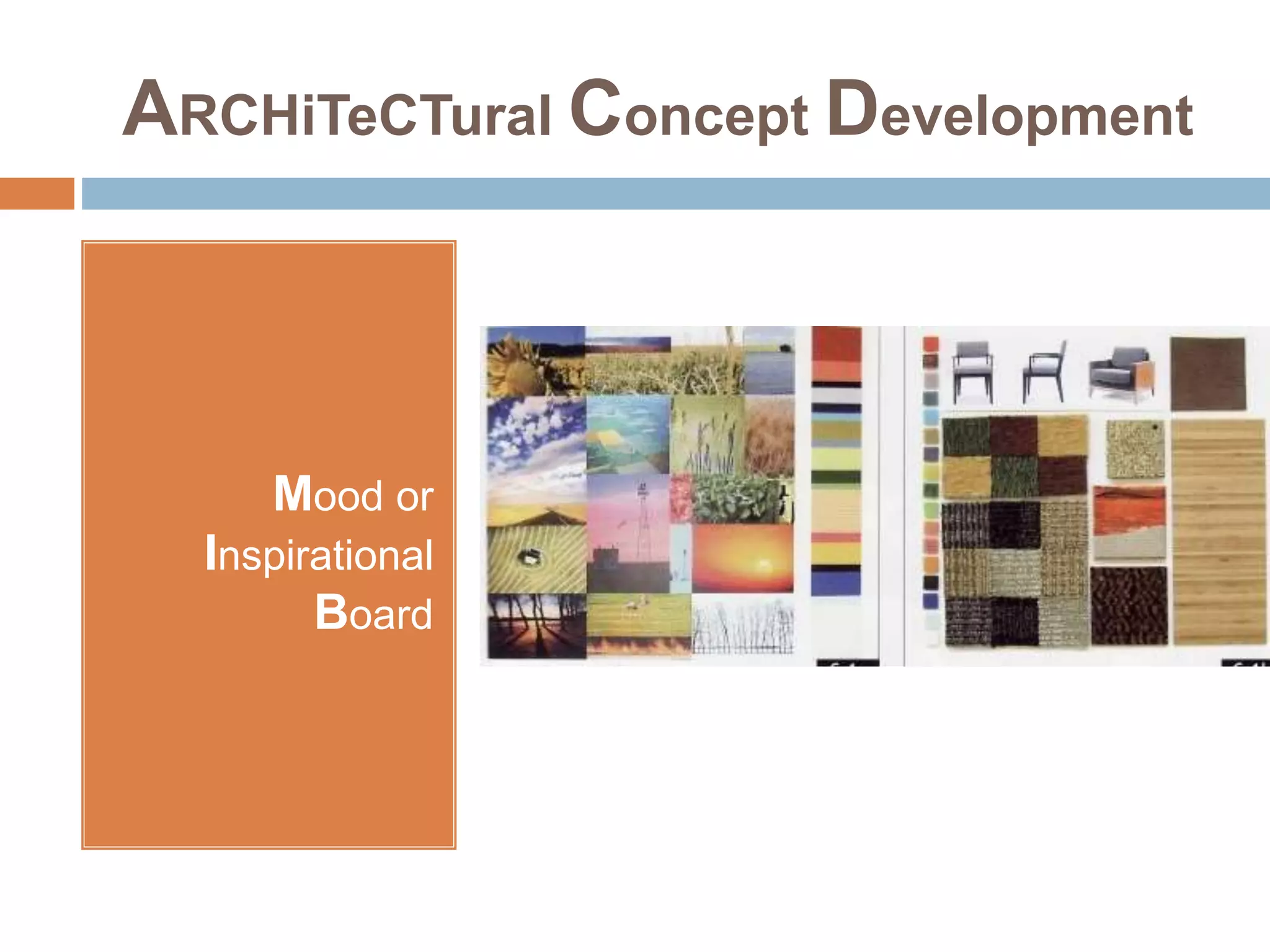
Mood or
Inspirational
Board
ARCHiTeCTural Concept Development
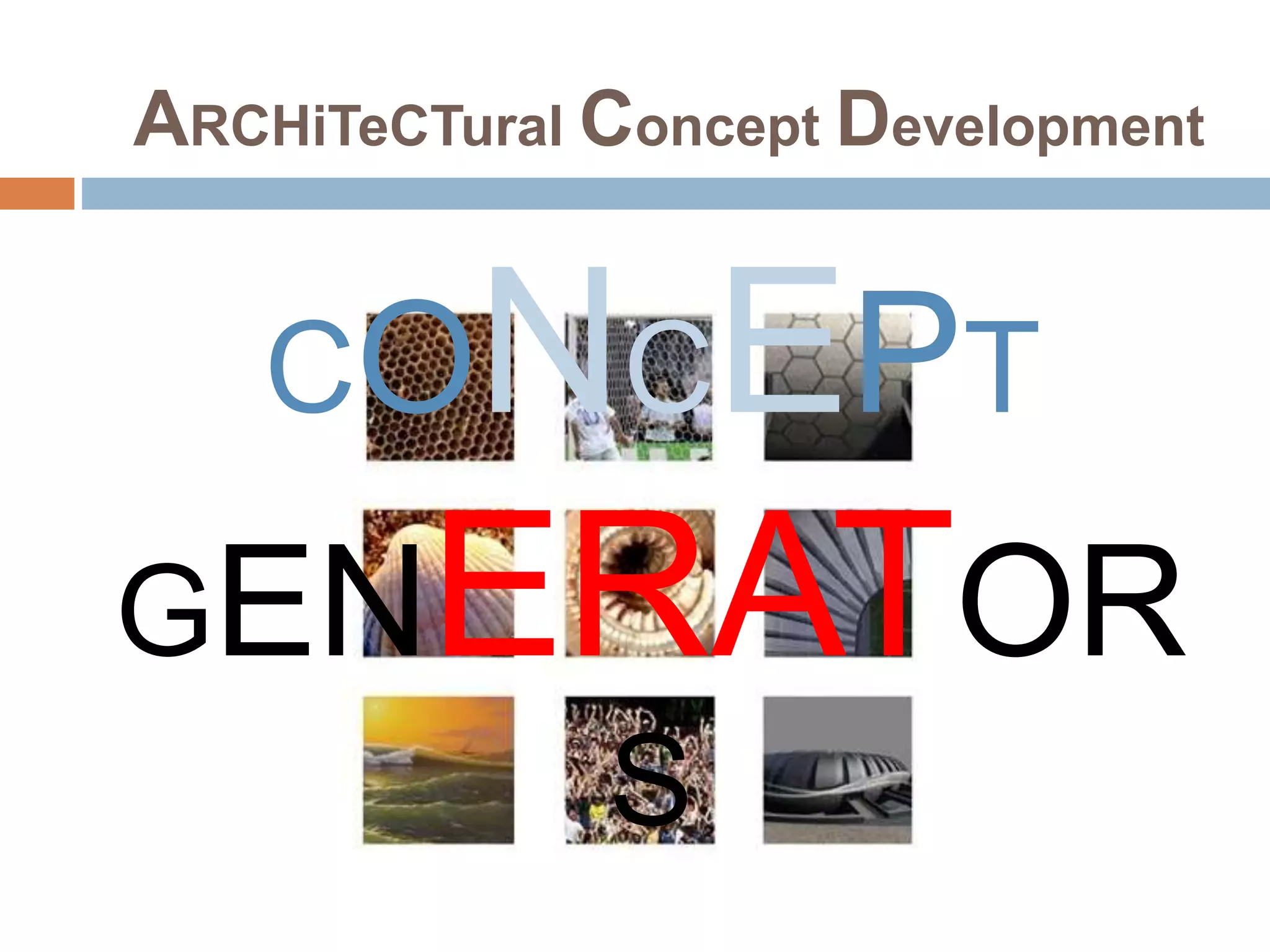
CONCEPT
GENERATOR
S
ARCHiTeCTural Concept Development
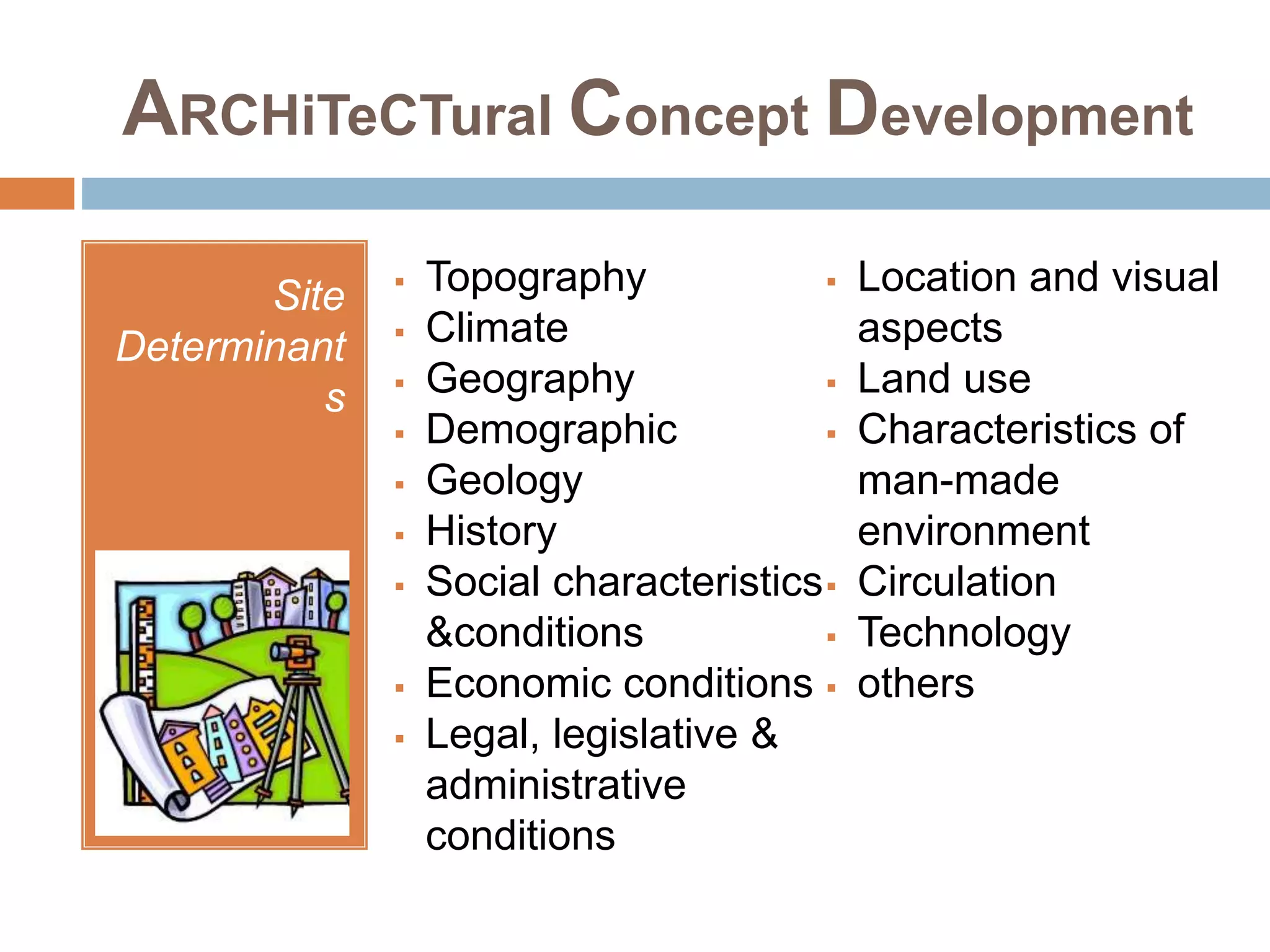
Site
Determinant
s
 Topography
 Climate
 Geography
 Demographic
 Geology
 History
 Social characteristics
&conditions
 Economic conditions
 Legal, legislative &
administrative
conditions
 Location and visual
aspects
 Land use
 Characteristics of
man-made
environment
 Circulation
 Technology
 others
ARCHiTeCTural Concept Development
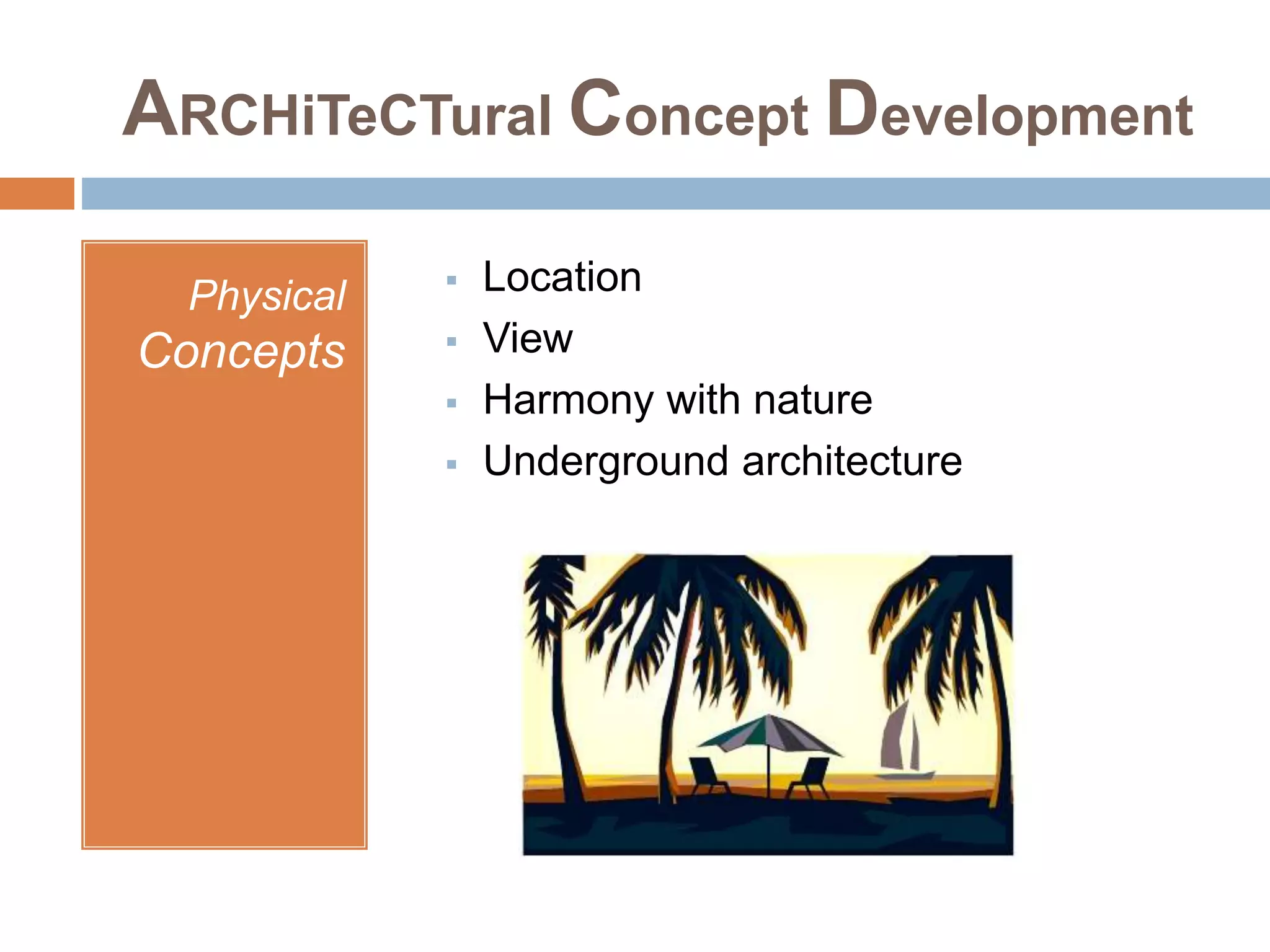
Physical
Concepts
 Location
 View
 Harmony with nature
 Underground architecture
ARCHiTeCTural Concept Development
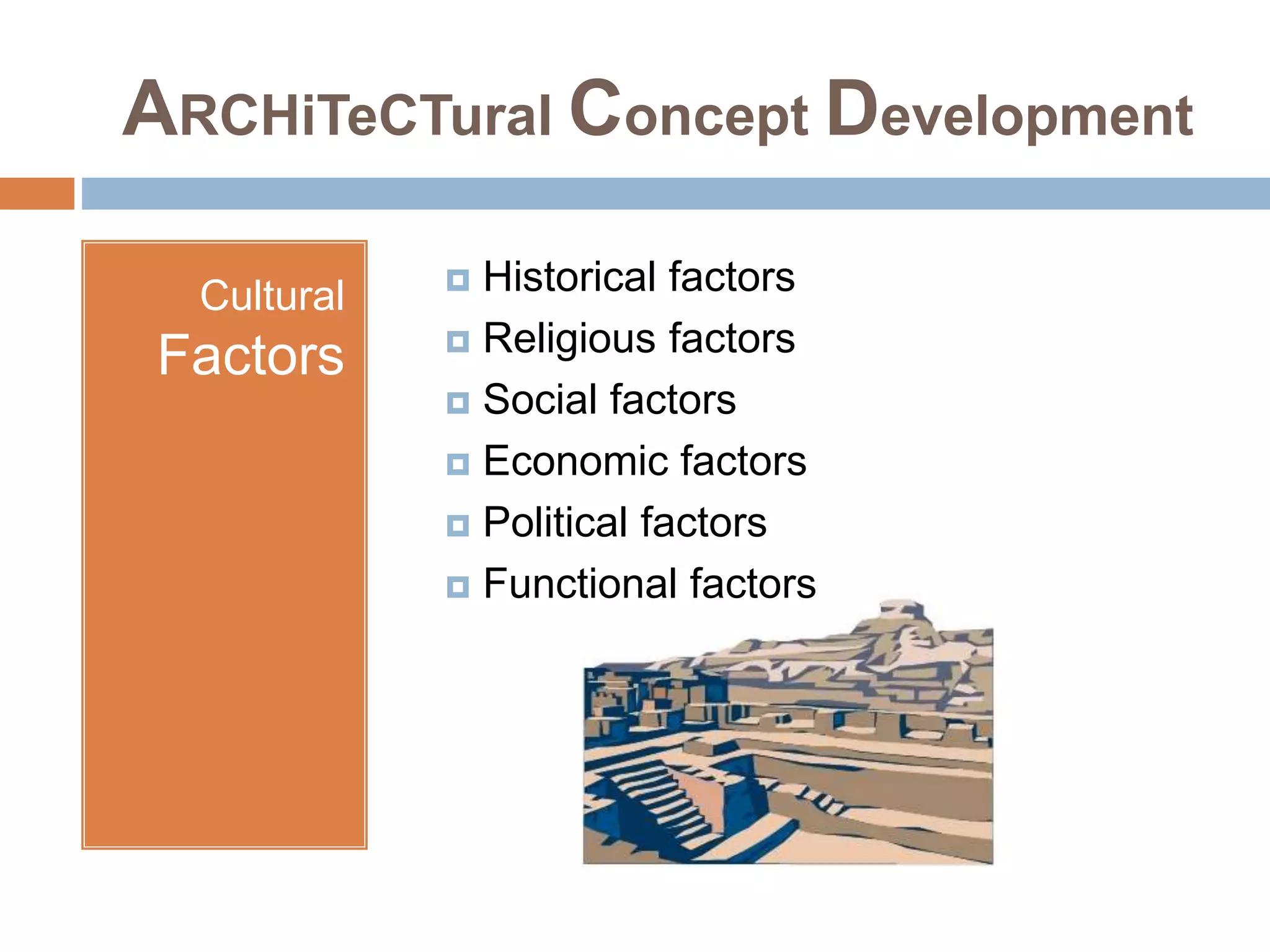
Cultural
Factors
 Historical factors
 Religious factors
 Social factors
 Economic factors
 Political factors
 Functional factors
ARCHiTeCTural Concept Development
SPATIAL
RELATIONS
 The pragmatic space
 The perceptual space
 The existential space
 The cognitive space
 The abstract space
ARCHiTeCTural Concept Development
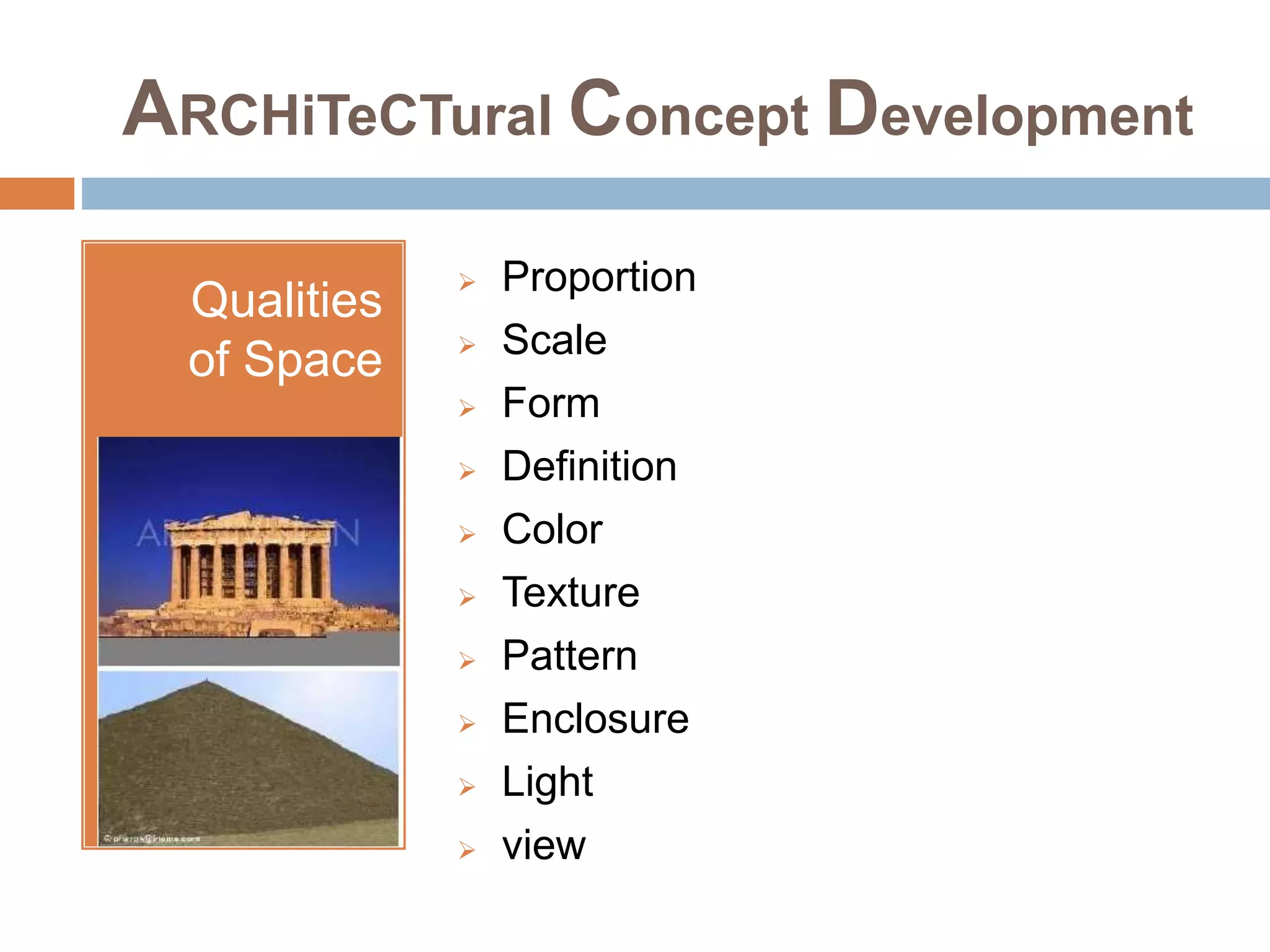
Qualities
of Space
 Proportion
 Scale
 Form
 Definition
 Color
 Texture
 Pattern
 Enclosure
 Light
 view
ARCHiTeCTural Concept Development
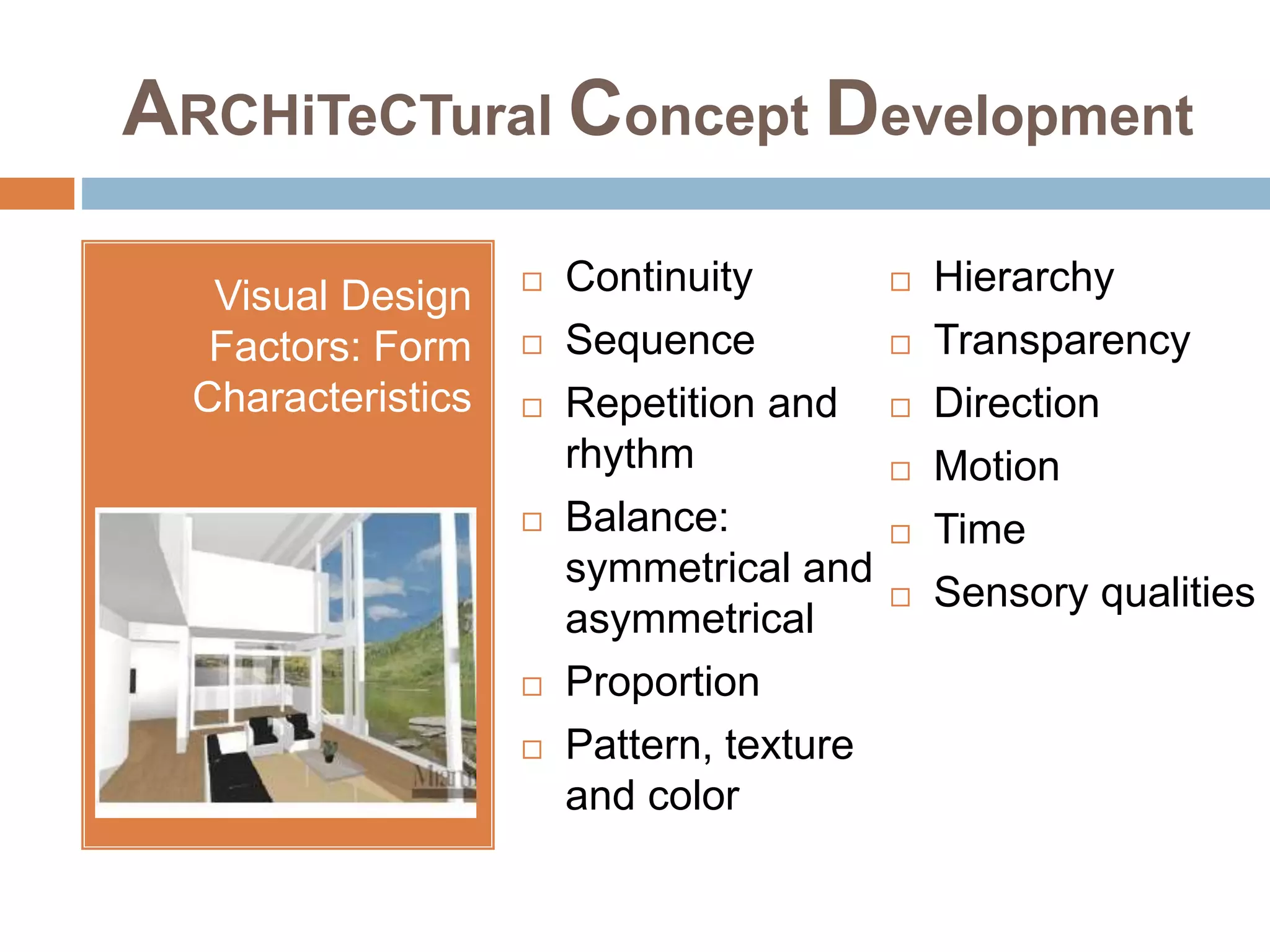
Visual Design
Factors: Form
Characteristics
 Continuity
 Sequence
 Repetition and
rhythm
 Balance:
symmetrical and
asymmetrical
 Proportion
 Pattern, texture
and color
 Hierarchy
 Transparency
 Direction
 Motion
 Time
 Sensory qualities
ARCHiTeCTural Concept Development
 Visual Design Factors: Visual Factors
 Visual Perception: structural approach- Evaluative
Approach
 Orientation
 Spacescape
 Lynch 1(image of the city): path, node, edge, district,
and landmarks
 Lynch 2 (Theory of Place): Legibility, Structure and
Identity, imageability and Sequentiality
ARCHiTeCTural Concept Development
 Visual design Factors: Visual
Organization
 Gestalt theory (proximity, similarity, Continuity,
closure)
 Law of proximity
 Law of similarity
 Law of continuity: good continuance
 Law of closure: forces of organization
 Symmetry, inclusiveness, unity, harmony, regularity,
consciseness, Maximal Simplicity
ARCHiTeCTural Concept Development
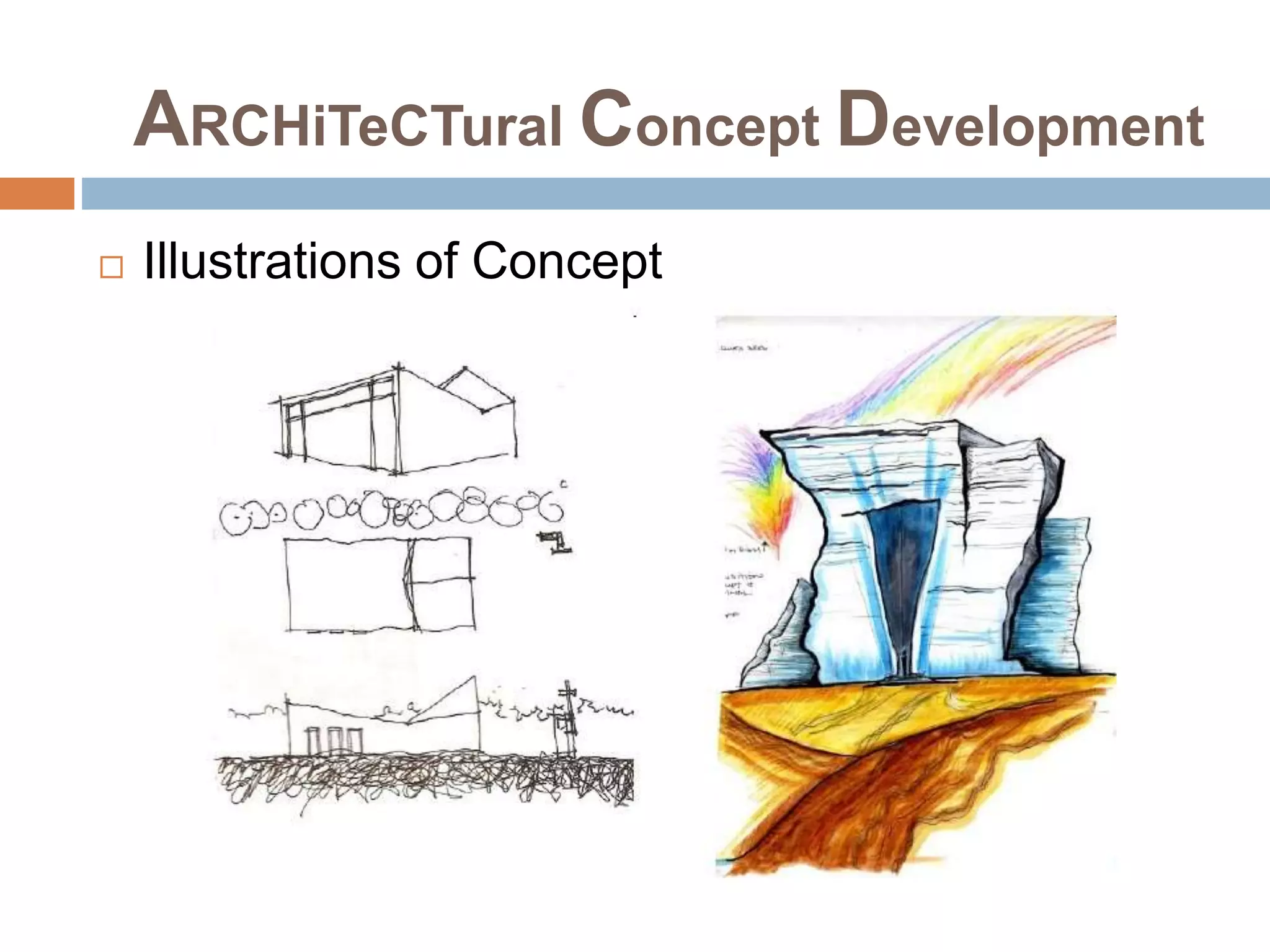
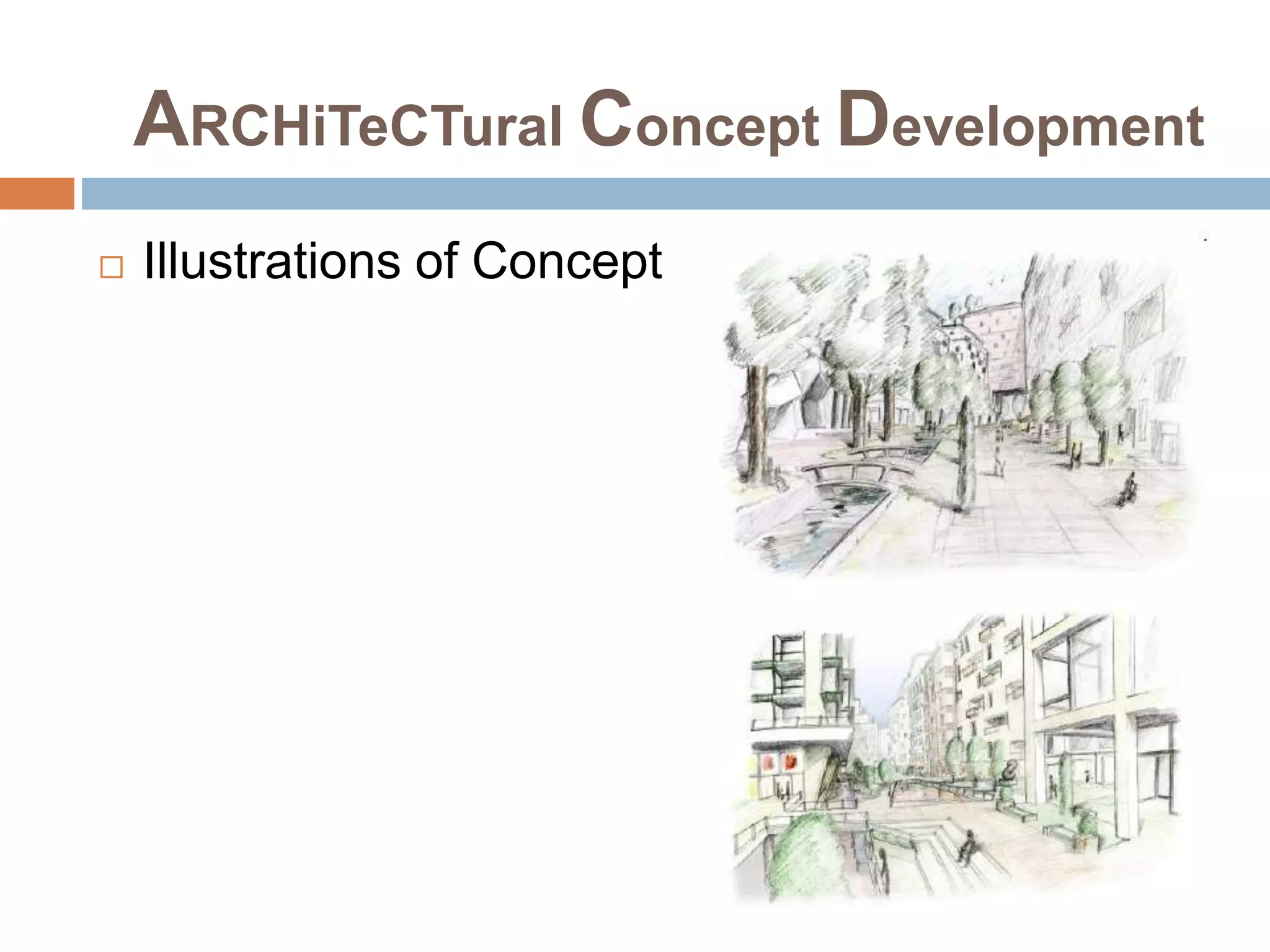
illustrations of
Concept
ARCHiTeCTural Concept Development
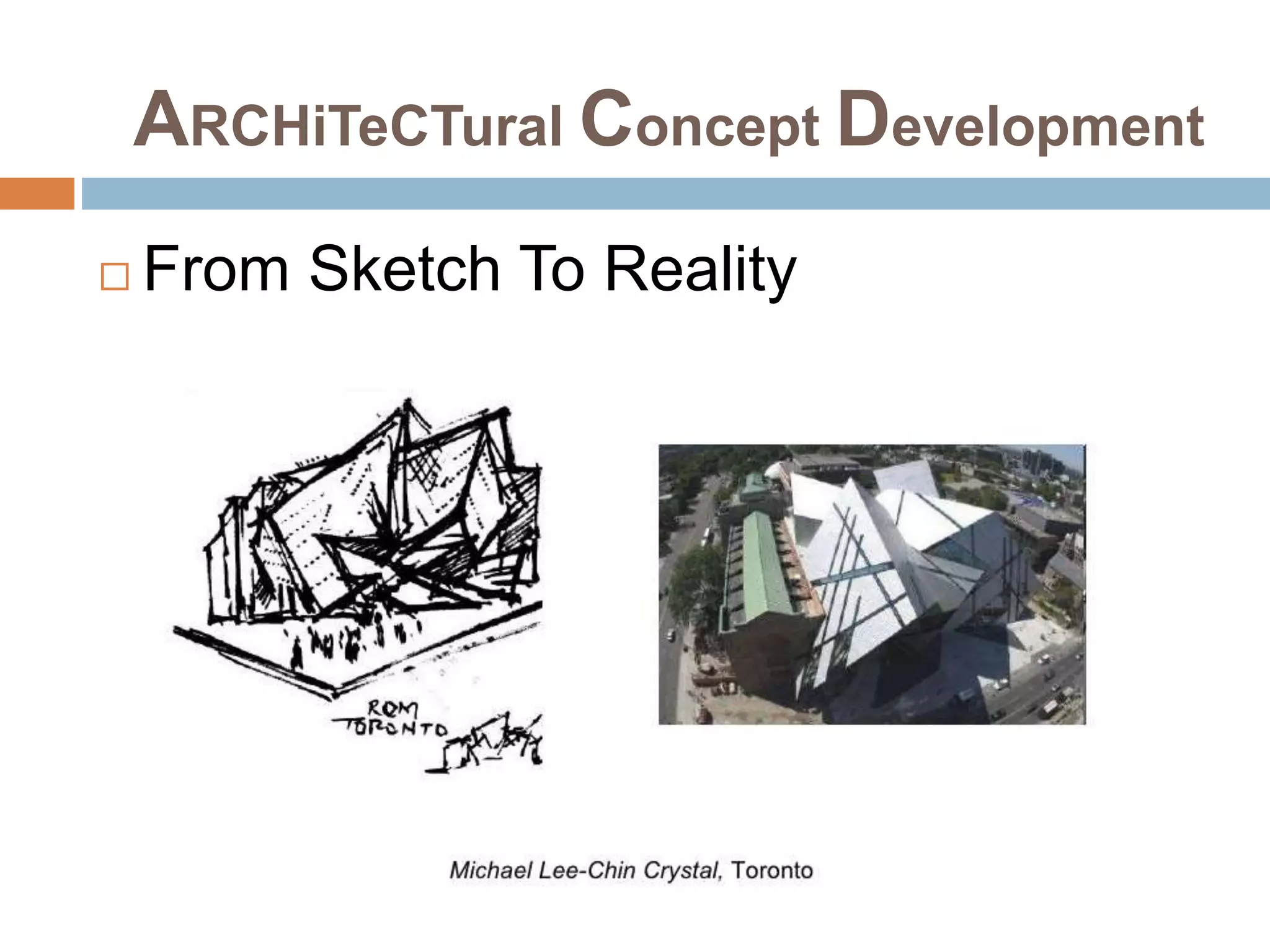
 From Sketch To Reality
ARCHiTeCTural Concept Development
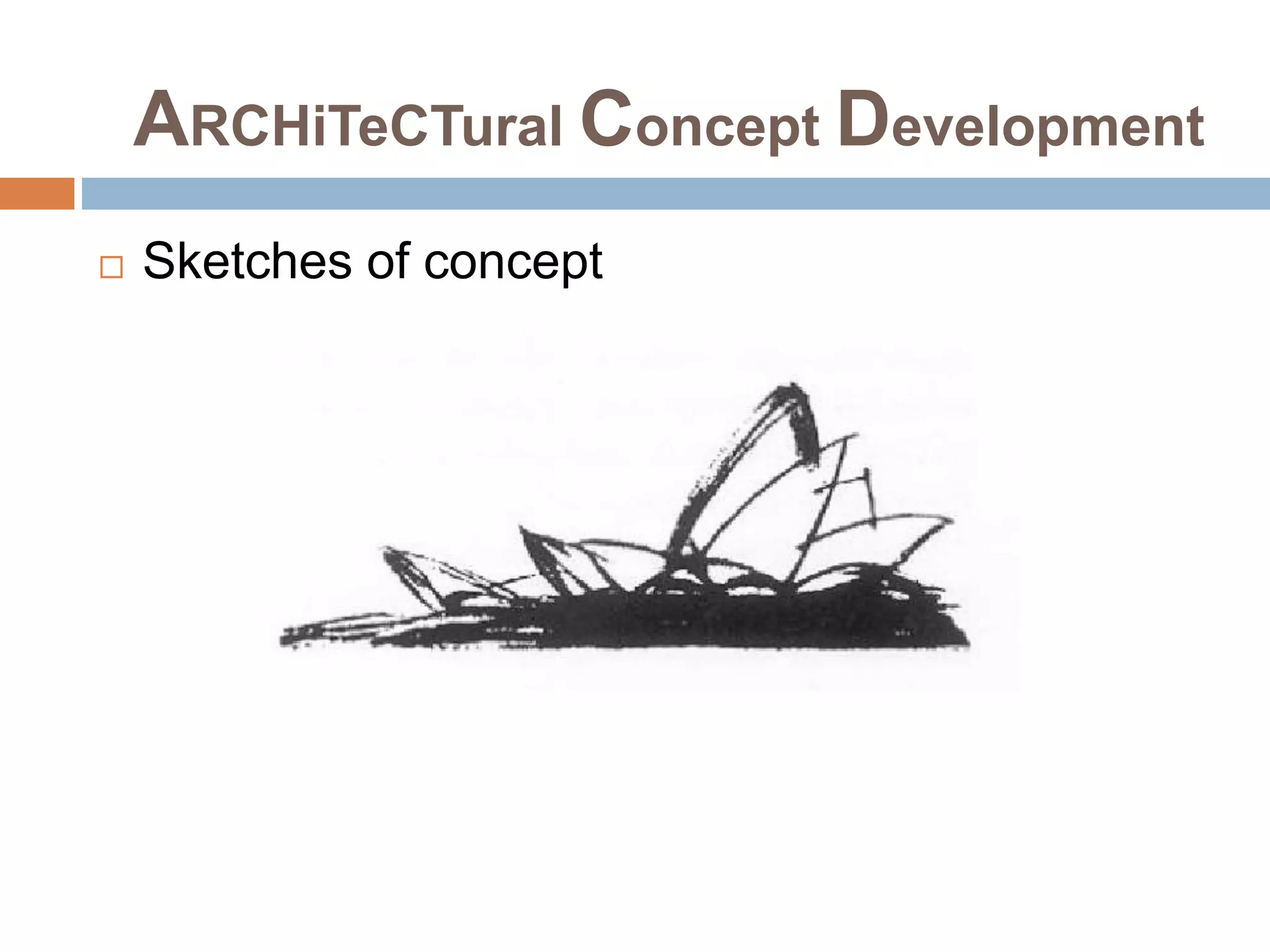
Sketches of Concept
ARCHiTeCTural Concept Development
 Sketches of concept
ARCHiTeCTural Concept Development
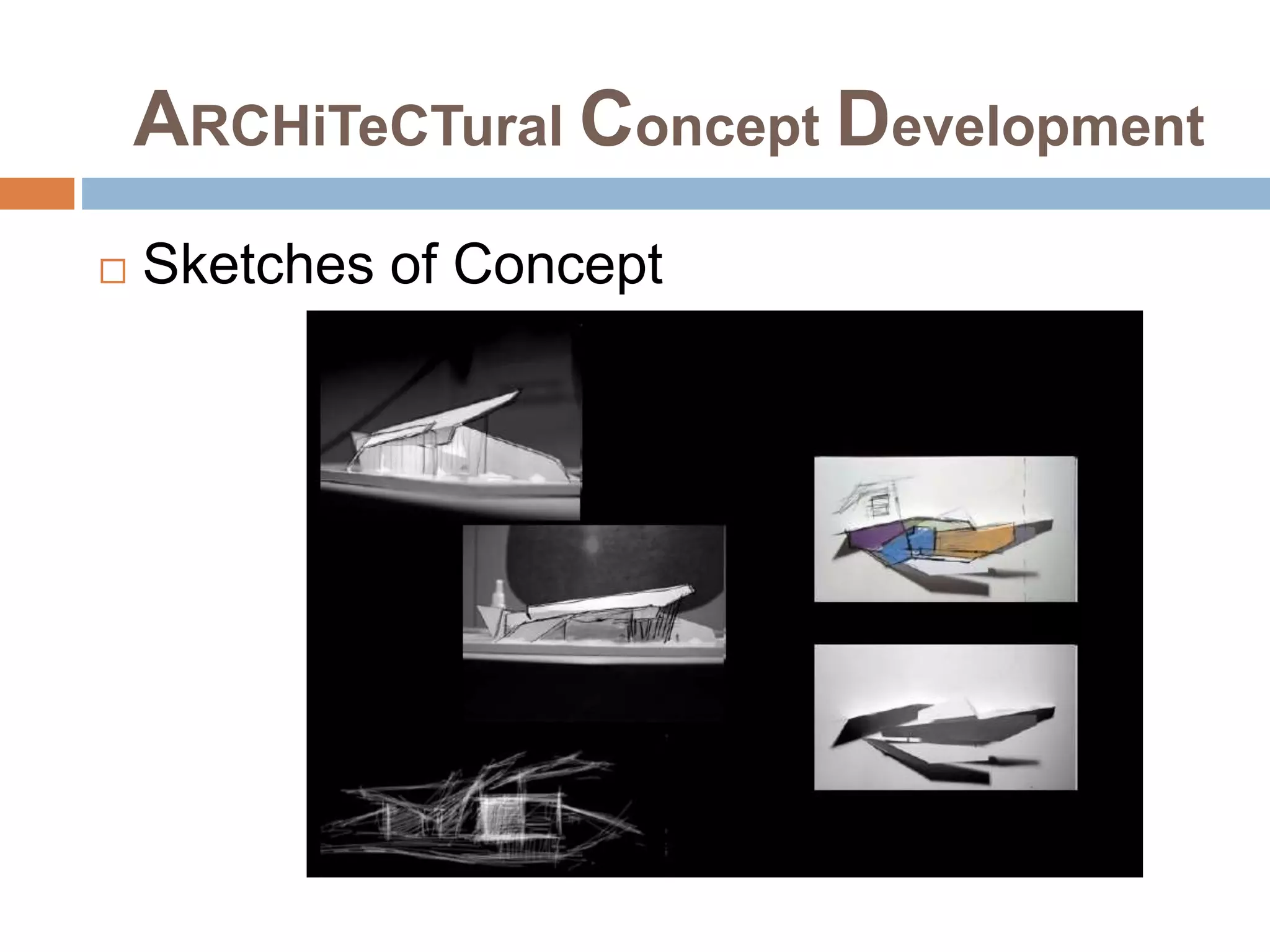
 Sketches of Concept
ARCHiTeCTural Concept Development
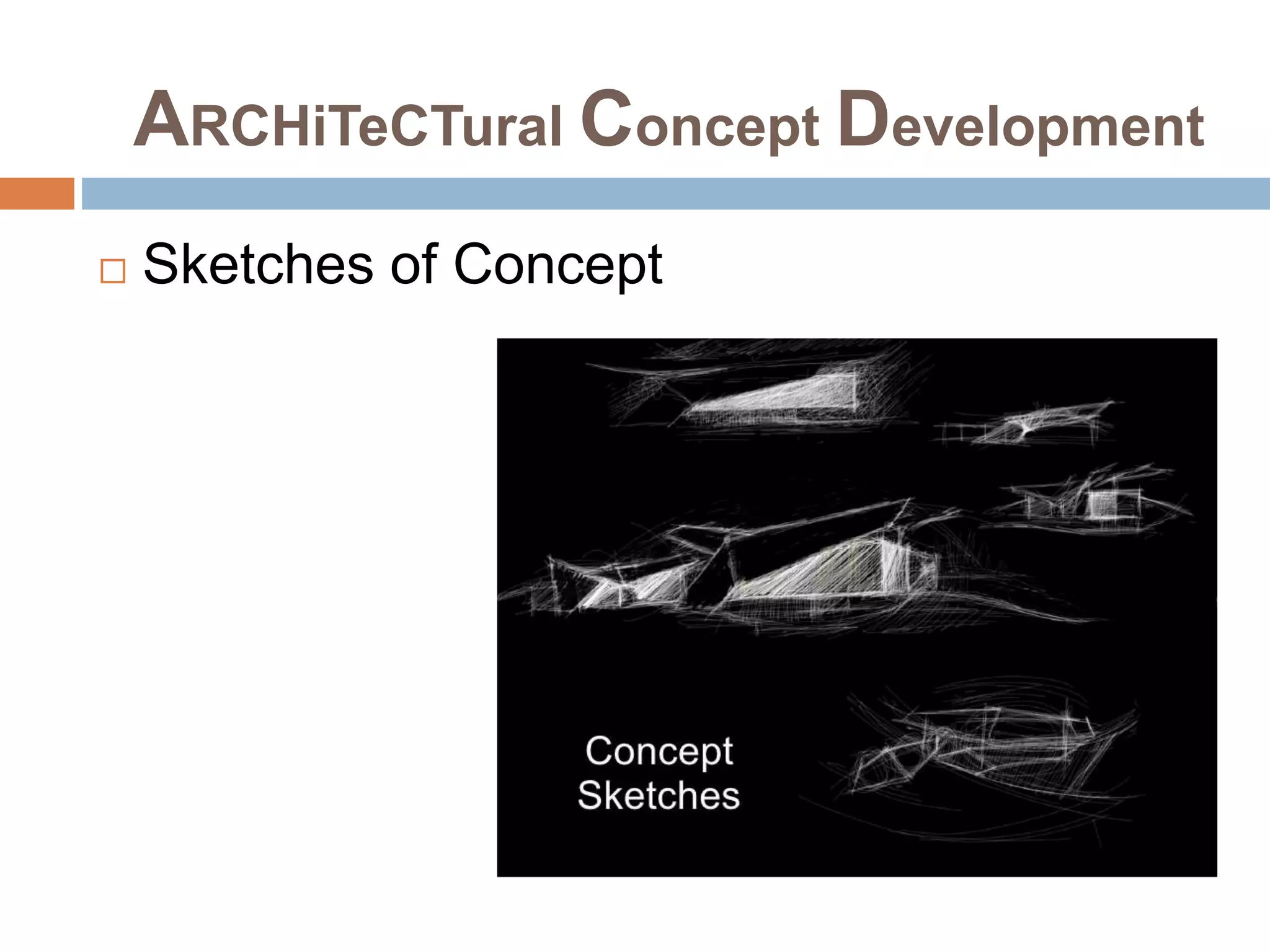
 Sketches of Concept
ARCHiTeCTural Concept Development
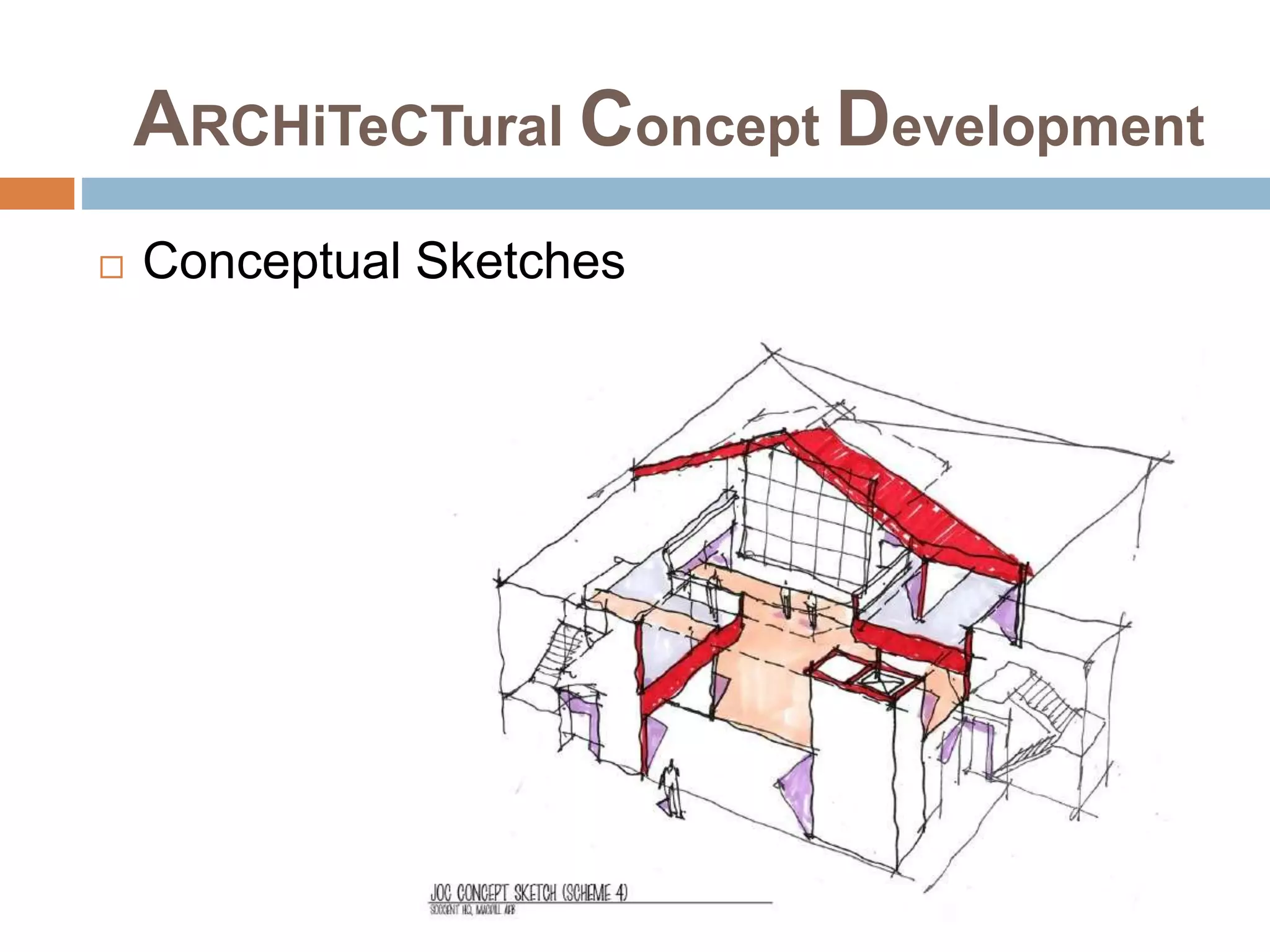
 Conceptual Sketches
ARCHiTeCTural Concept Development
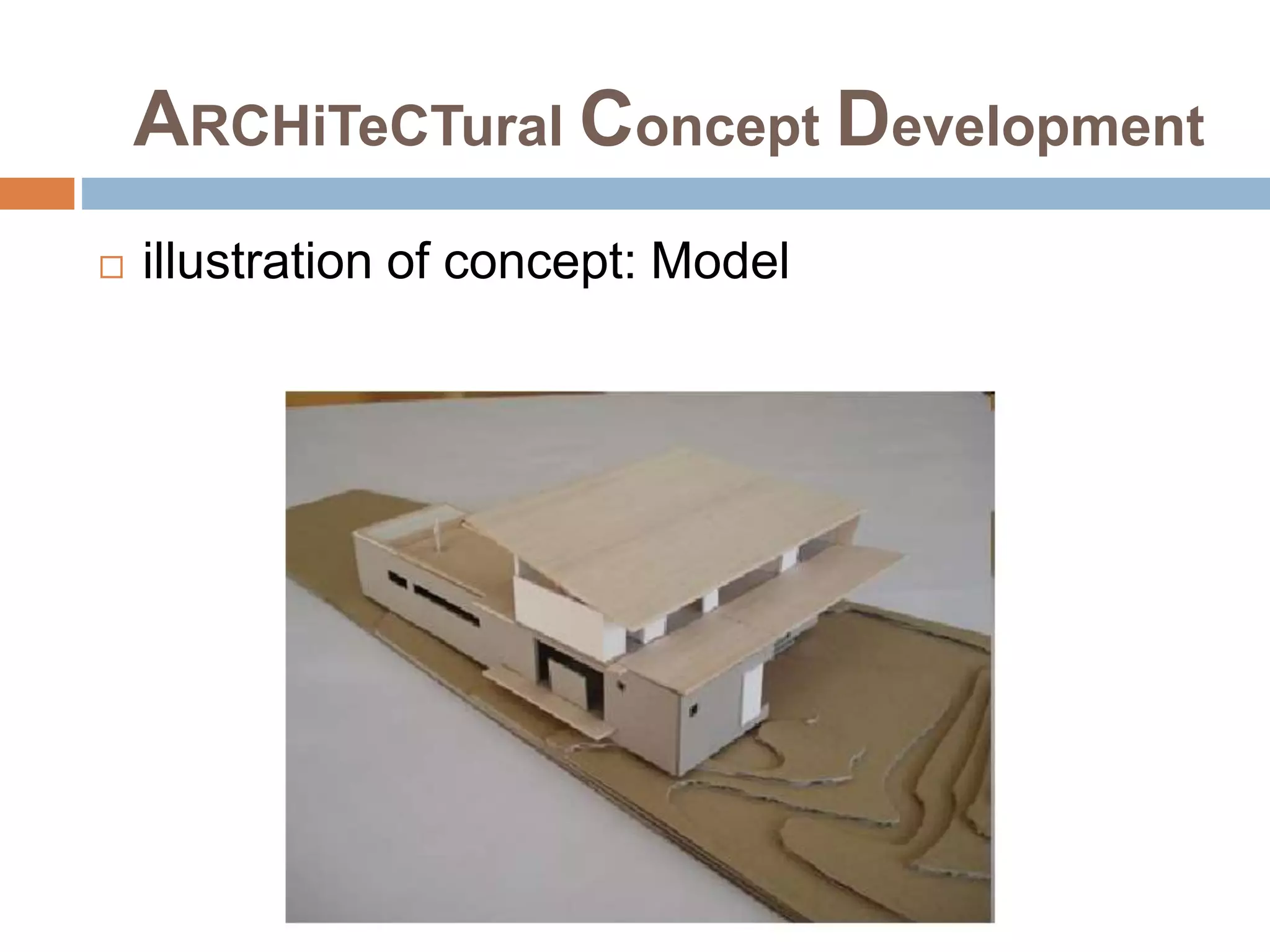
 illustration of concept: Model
ARCHiTeCTural Concept Development
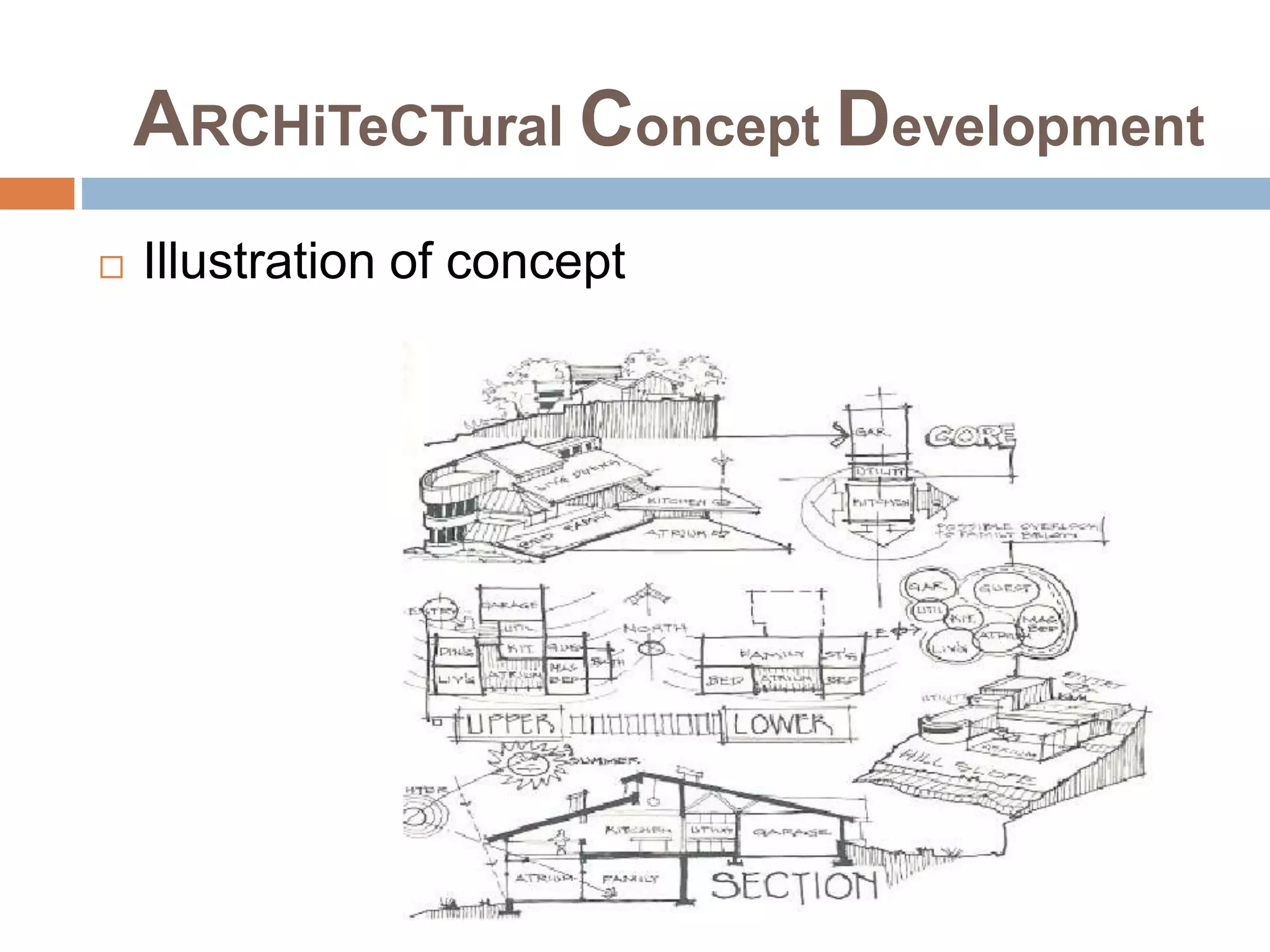
 Illustration of concept
ARCHiTeCTural Concept Development
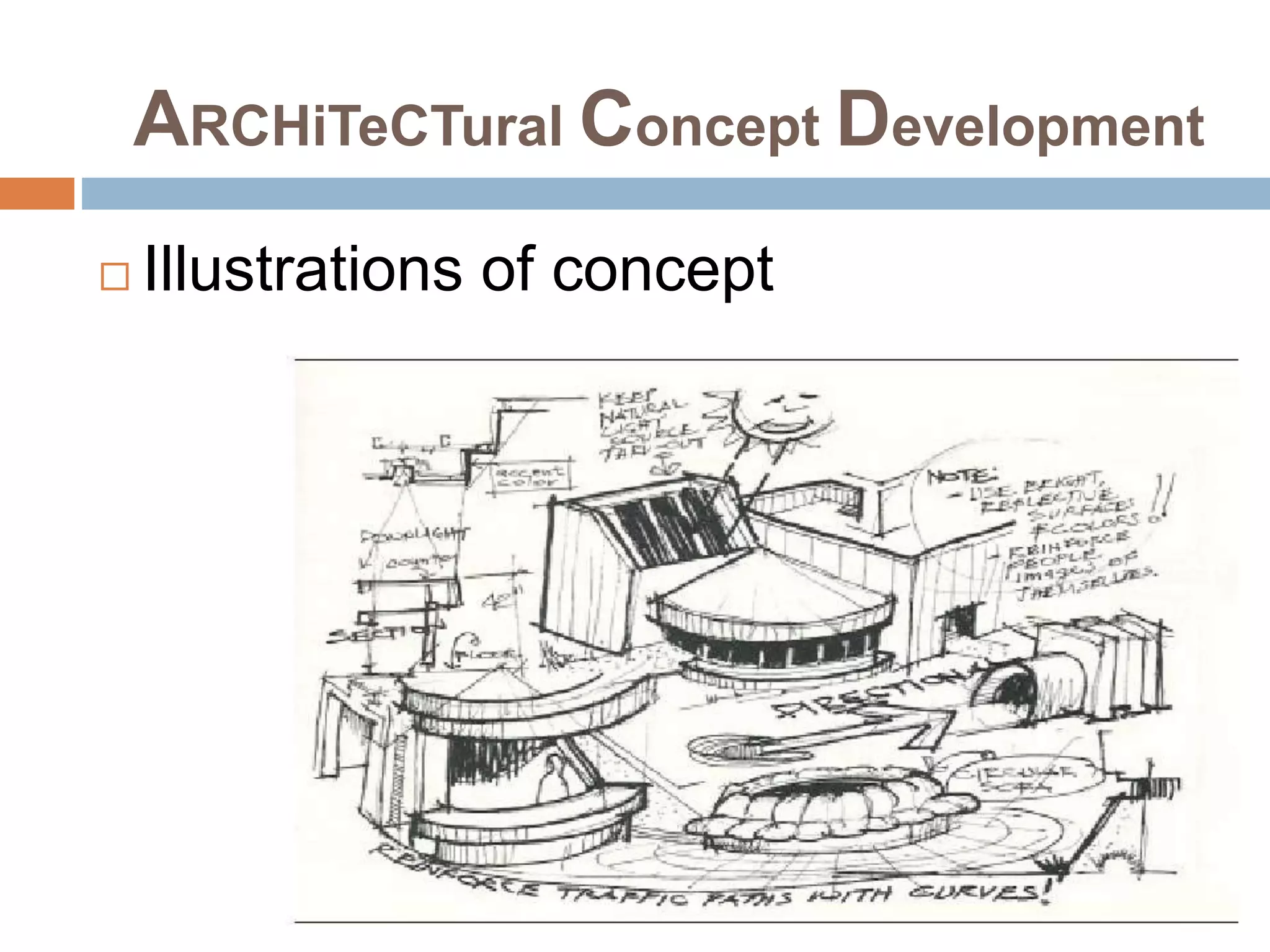
 Illustrations of concept
ARCHiTeCTural Concept Development
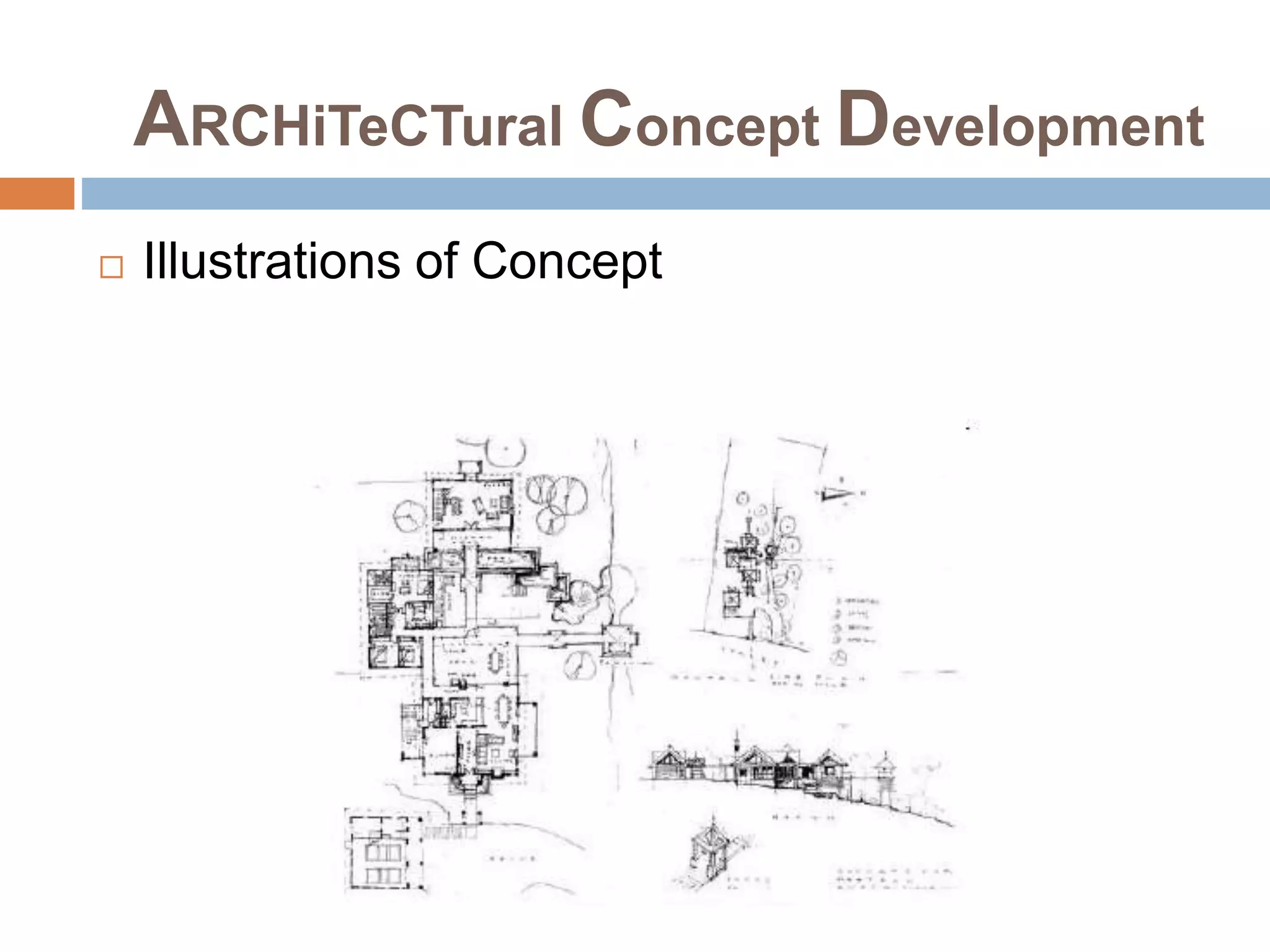
 Illustrations of Concept
ARCHiTeCTural Concept Development
 Illustrations of Concept
ARCHiTeCTural Concept Development
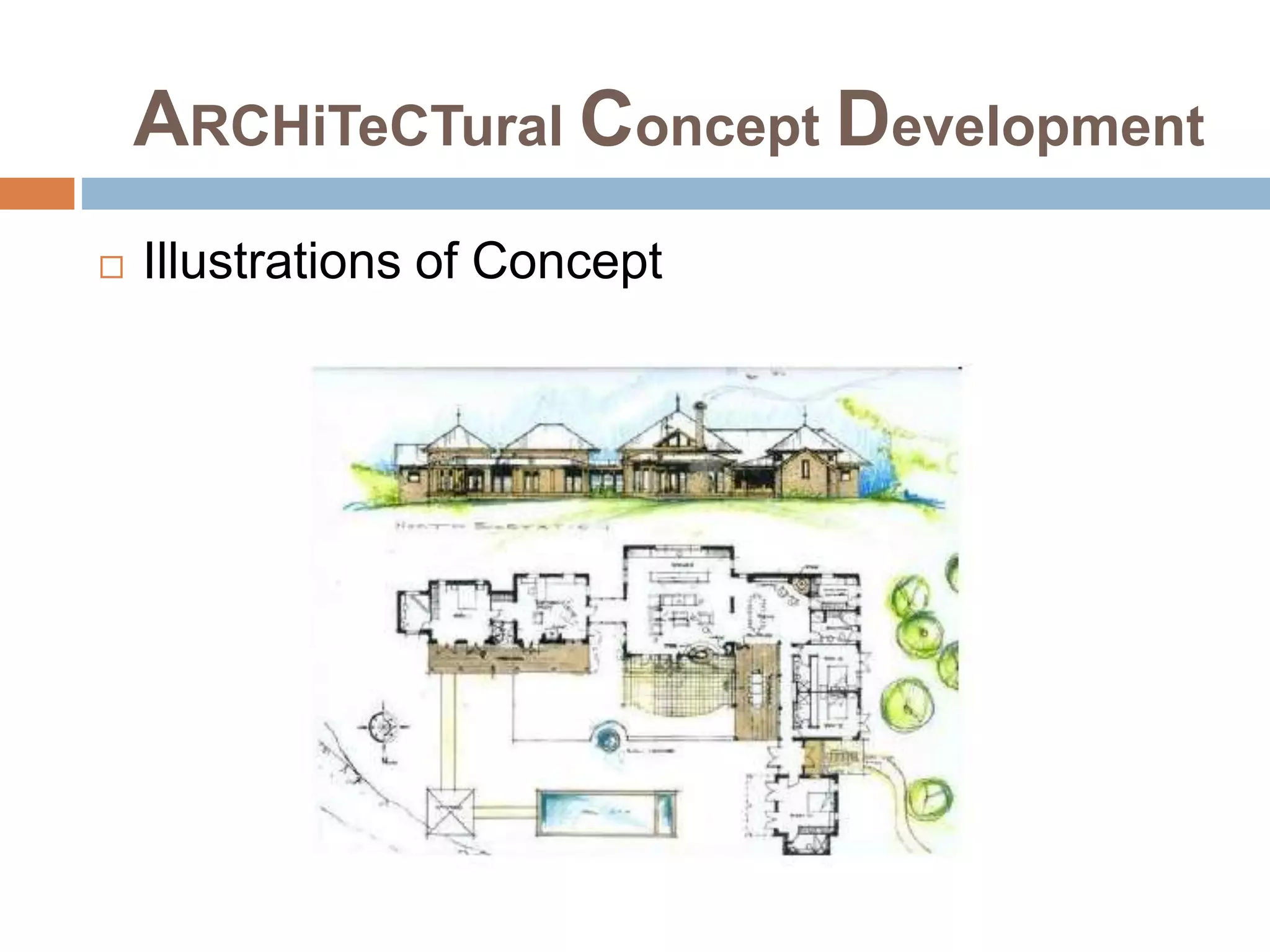
 Illustrations of Concept
ARCHiTeCTural Concept Development
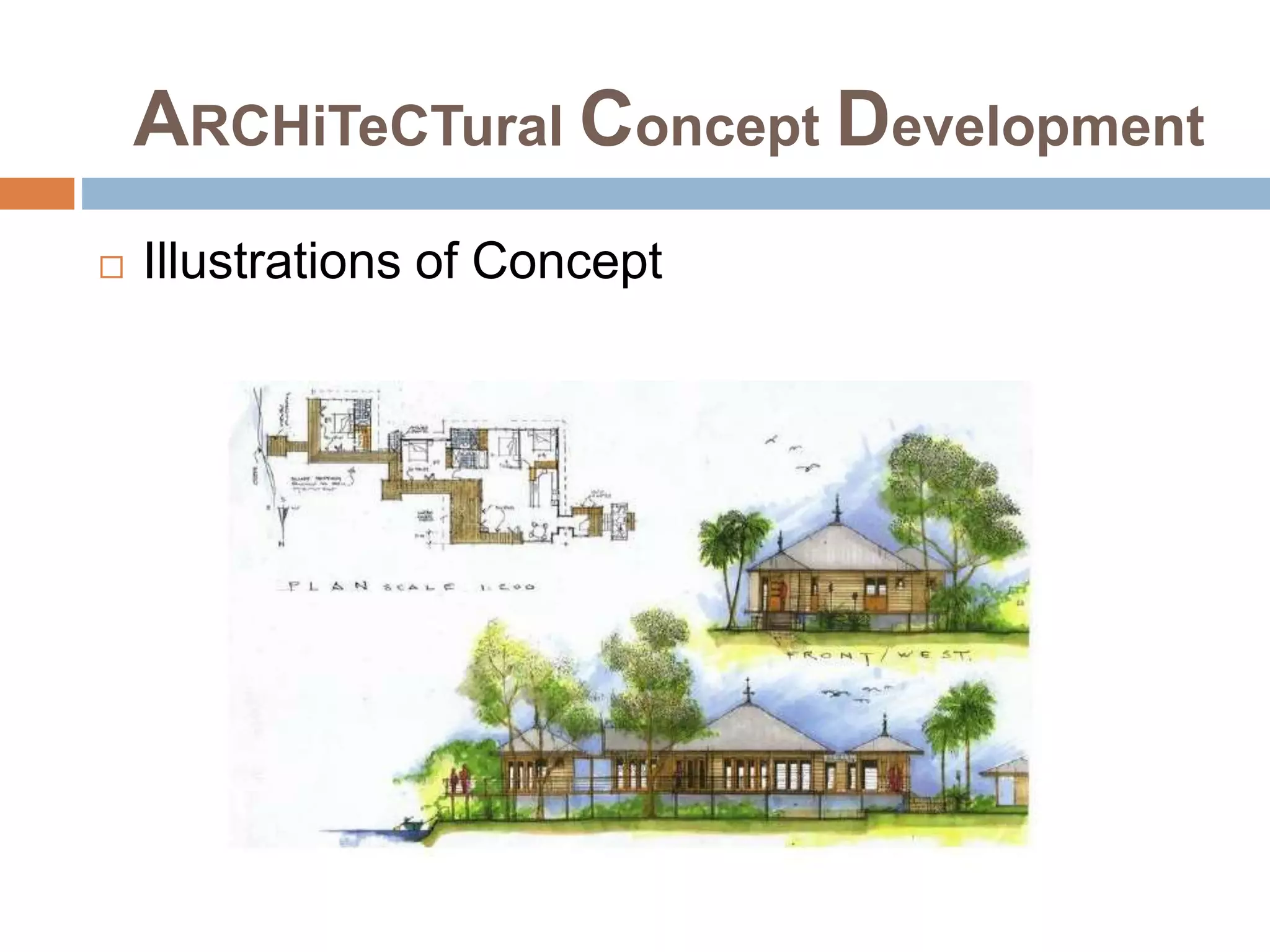
 Illustrations of Concept
ARCHiTeCTural Concept Development
 Illustrations of Concept
ARCHiTeCTural Concept Development
Examples of
Drawings
ARCHiTeCTural Concept Development
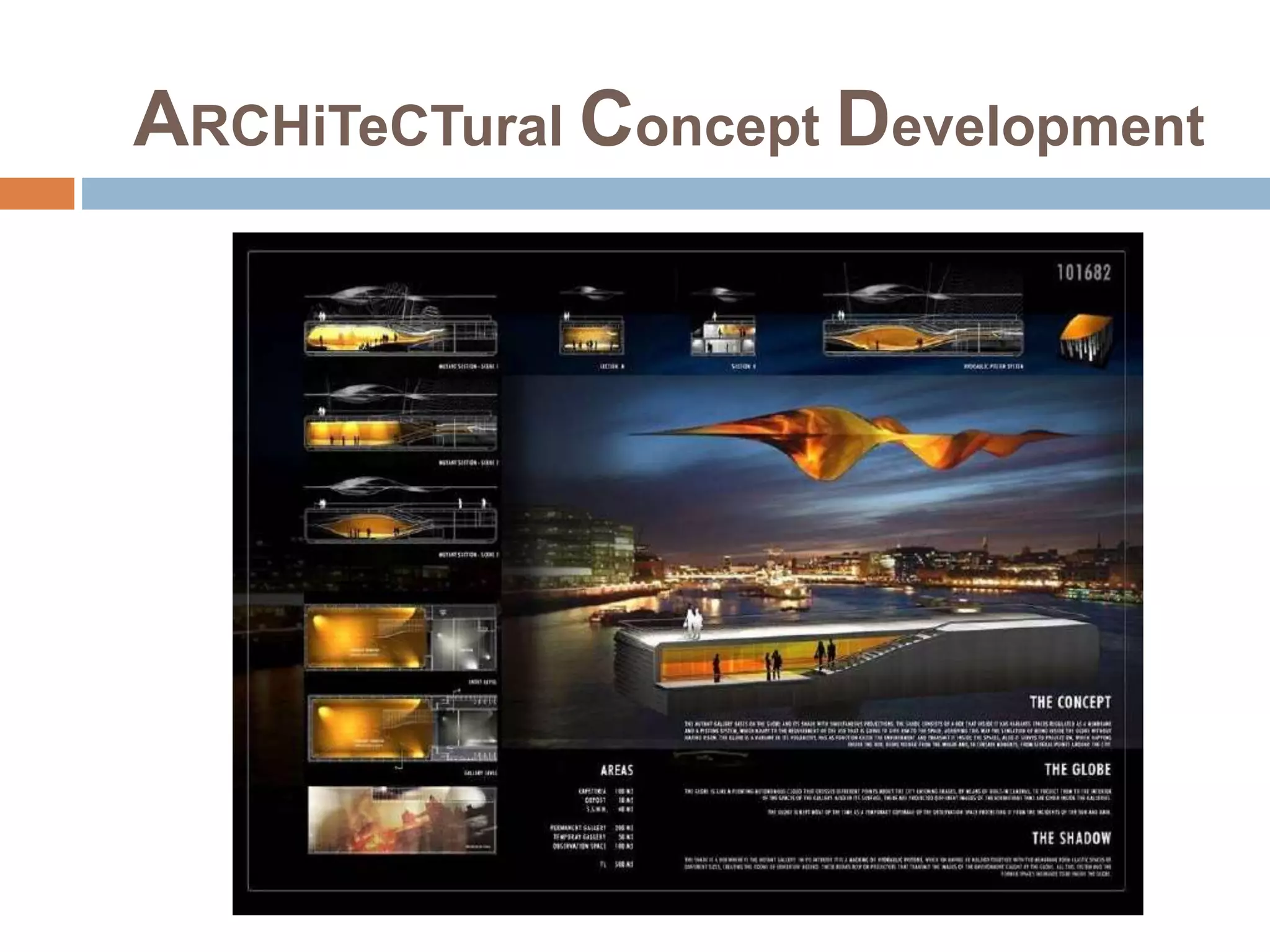
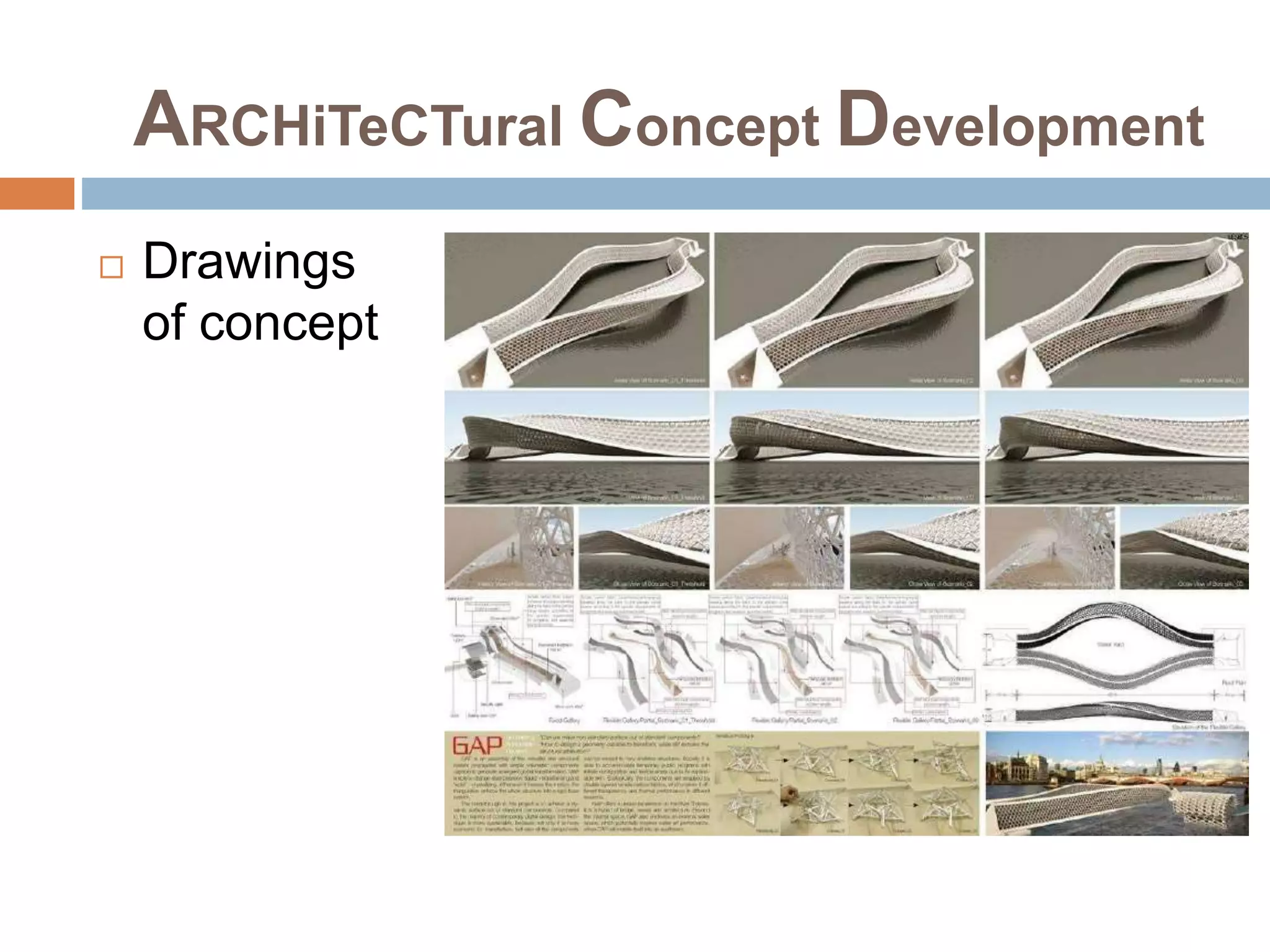
 Drawings
of concept
ARCHiTeCTural Concept Development
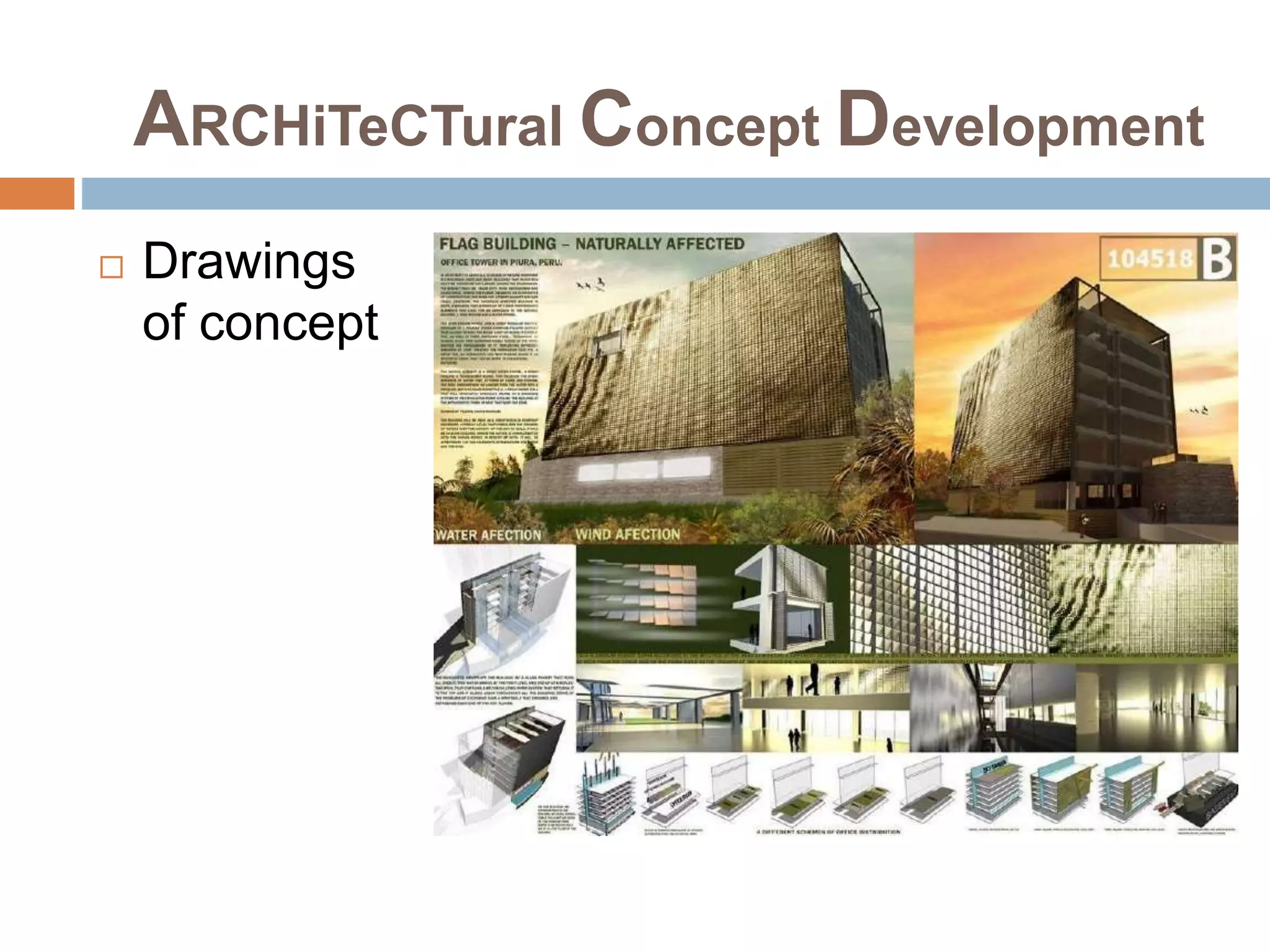
 Drawings
of concept
Thank
You

Lecture 1 - 28-Mar-2016 - Architectural Concept development.ppt