FoodCrumbles.com
Food Science Basics
Session 1: Introduction
FoodCrumbles.com
Ready, to immerse yourself in the world of
food science?
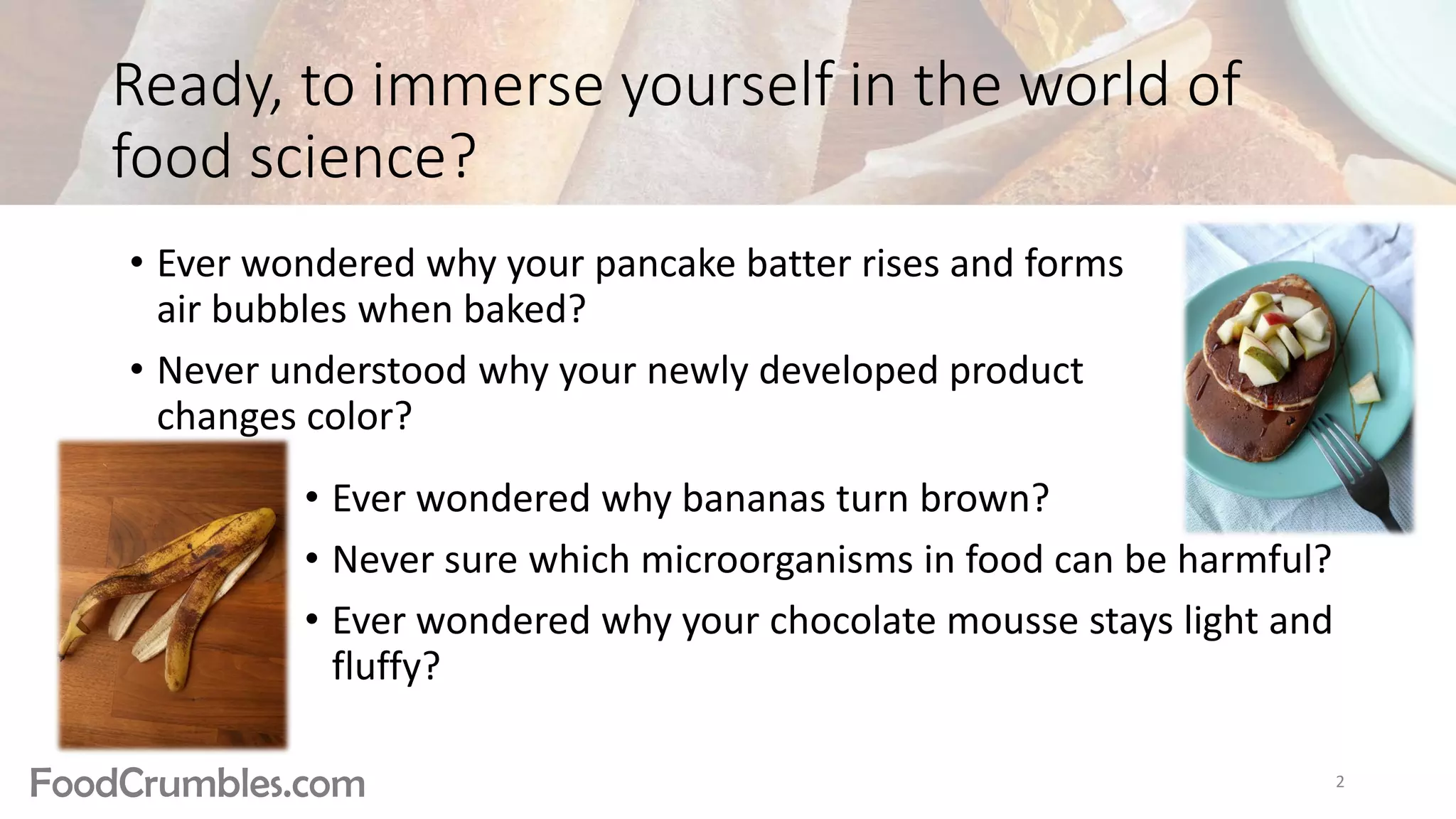
• Ever wondered why bananas turn brown?
• Never sure which microorganisms in food can be harmful?
• Ever wondered why your chocolate mousse stays light and
fluffy?
• Ever wondered why your pancake batter rises and forms
air bubbles when baked?
• Never understood why your newly developed product
changes color?
2
FoodCrumbles.com
You’re at the right place
• Food Science Basics will:
• Cover the very basics of food science
• Give an introduction on food chemistry, food physics and food microbiology
• Get your interest for a better understanding of food rolling!
• For whom you ask?
3
FoodCrumbles.com
For who has this course been developed?
• Food Professionals without a background in food science – who want
to learn more about the chemistry, physics and microbiology of food.
• Food Bloggers – who want to improve their understanding in food in
order to develop better recipes and help their readers
• Chefs – who want to step up their game and understand why certain
recipes work whereas others don’t
• (High school) students – who want to see what their science
knowledge can be used for
4
FoodCrumbles.com
Content
• Session 1: Introduction
• Session 2: Food Chemistry Basics
• Atoms & molecules
• Session 3: Food Chemistry Chemical reactions
• Transformations of molecules, pH
• Session 4: Food Physics
• Water activity, foams, emulsions
• Session 5: Food Microbiology
• Pathogenic microorganisms, fermentation basics
• Session 6: Close-out, applying our knowledge
5
FoodCrumbles.com
Let’s get going!
Assignment 1 – Read: What is Food Science?
Food is so complex, there are a lot of things to study. Just think about
broccoli:
• Why is it green?
• How come the color changes during cooking and storage?
• Why does broccoli taste like broccoli? Which molecules make up the taste?
• What happens when you freeze broccoli?
• What happens when broccoli starts to rot?
6
FoodCrumbles.com
Food Science disciplines
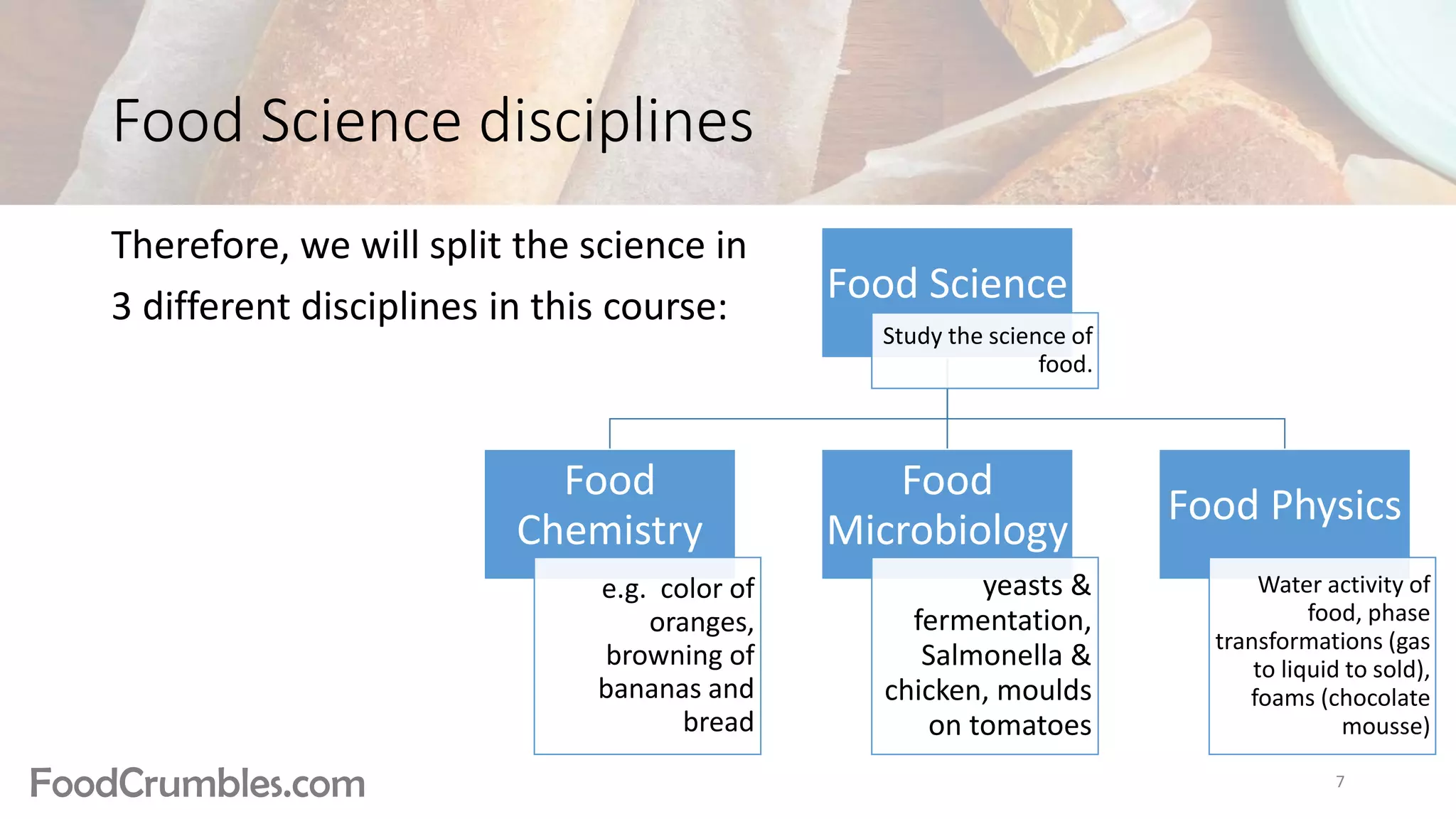
Therefore, we will split the science in
3 different disciplines in this course:
7
Food Science
Study the science of
food.
Food
Chemistry
e.g. color of
oranges,
browning of
bananas and
bread
Food
Microbiology
yeasts &
fermentation,
Salmonella &
chicken, moulds
on tomatoes
Food Physics
Water activity of
food, phase
transformations (gas
to liquid to sold),
foams (chocolate
mousse)
FoodCrumbles.com
Food Science disciplines
Assignment 2 - Read: The introduction of the three disciplines:
• Food Chemistry (if you want, have a look here as well!)
• Food Physics
• Food Microbiology
8
FoodCrumbles.com
Test your knowledge
• This very brief introduction should give you a feel for the food science
basics.
• In the next 5 sessions we will dive into the details of the identified
disciplines.
Be sure to take the test to determine whether you’ve understand
everything correctly on the official course page:
foodcrumbles.teachable.com.
9

Food science basics session 1 slides

  • 1.
  • 2.
    FoodCrumbles.com Ready, to immerseyourself in the world of food science? • Ever wondered why bananas turn brown? • Never sure which microorganisms in food can be harmful? • Ever wondered why your chocolate mousse stays light and fluffy? • Ever wondered why your pancake batter rises and forms air bubbles when baked? • Never understood why your newly developed product changes color? 2
  • 3.
    FoodCrumbles.com You’re at theright place • Food Science Basics will: • Cover the very basics of food science • Give an introduction on food chemistry, food physics and food microbiology • Get your interest for a better understanding of food rolling! • For whom you ask? 3
  • 4.
    FoodCrumbles.com For who hasthis course been developed? • Food Professionals without a background in food science – who want to learn more about the chemistry, physics and microbiology of food. • Food Bloggers – who want to improve their understanding in food in order to develop better recipes and help their readers • Chefs – who want to step up their game and understand why certain recipes work whereas others don’t • (High school) students – who want to see what their science knowledge can be used for 4
  • 5.
    FoodCrumbles.com Content • Session 1:Introduction • Session 2: Food Chemistry Basics • Atoms & molecules • Session 3: Food Chemistry Chemical reactions • Transformations of molecules, pH • Session 4: Food Physics • Water activity, foams, emulsions • Session 5: Food Microbiology • Pathogenic microorganisms, fermentation basics • Session 6: Close-out, applying our knowledge 5
  • 6.
    FoodCrumbles.com Let’s get going! Assignment1 – Read: What is Food Science? Food is so complex, there are a lot of things to study. Just think about broccoli: • Why is it green? • How come the color changes during cooking and storage? • Why does broccoli taste like broccoli? Which molecules make up the taste? • What happens when you freeze broccoli? • What happens when broccoli starts to rot? 6
  • 7.
    FoodCrumbles.com Food Science disciplines Therefore,we will split the science in 3 different disciplines in this course: 7 Food Science Study the science of food. Food Chemistry e.g. color of oranges, browning of bananas and bread Food Microbiology yeasts & fermentation, Salmonella & chicken, moulds on tomatoes Food Physics Water activity of food, phase transformations (gas to liquid to sold), foams (chocolate mousse)
  • 8.
    FoodCrumbles.com Food Science disciplines Assignment2 - Read: The introduction of the three disciplines: • Food Chemistry (if you want, have a look here as well!) • Food Physics • Food Microbiology 8
  • 9.
    FoodCrumbles.com Test your knowledge •This very brief introduction should give you a feel for the food science basics. • In the next 5 sessions we will dive into the details of the identified disciplines. Be sure to take the test to determine whether you’ve understand everything correctly on the official course page: foodcrumbles.teachable.com. 9